Burnley doesn’t look risky at first glance. It’s compact. Familiar. Most people recognise the same faces on their morning route. But scratch the surface, and you see something else entirely. Retail corridors that empty fast after dark. Industrial estates sit quietly for hours at a time. Construction sites are exposed overnight. A night-time economy that compresses risk into short, intense windows. That’s where manned guarding comes in. Not as a last resort, and not as a show of force, but as a steady, human layer of control.
Why Burnley businesses need manned guarding isn’t just about crime statistics. It’s about deterrence, visibility, and response in a town where problems rarely announce themselves loudly. Anti-social behaviour, retail theft, opportunistic trespass, and site intrusion tend to arrive quietly, then escalate. This guide breaks down what manned guarding actually looks like in Burnley. The legal framework. The real costs. How guards operate day to day. And where the future of on-site security is heading for local businesses.

Understanding Manned Guarding Basics in Burnley
What Is Manned Guarding and How Does It Differ from Static or Remote Security in Burnley
At its core, manned guarding is straightforward. A trained security professional is physically present at your site. They observe. They intervene. They make decisions in real time.
That last part is the difference. Static security often means a fixed post. A guard at a door. A reception desk. A gatehouse. Useful, yes, but limited. Mobile patrols widen coverage, moving through car parks, yards, and internal routes. CCTV-only setups, on the other hand, don’t act at all. They watch. Sometimes from miles away.
In Burnley and Blackburn, physical presence matters more than many business owners expect. Sites sit close together. Industrial estates back onto residential streets. Retail units are rarely isolated. When something looks wrong, it escalates quickly. A person on site can interrupt that chain early. A camera cannot. There’s also the psychological element. People behave differently when they know someone is watching and able to respond. That alone prevents a large share of incidents.
How Burnley’s Crime Profile Shapes the Need for Manned Guarding
Burnley doesn’t suffer from constant high-profile crime. What it experiences instead is repetition.
Retail theft that happens in small amounts, often by the same individuals. Vandalism that targets the same sites. Fly-tipping in predictable corners of industrial estates. Opportunistic intrusion rather than organised attacks.
Town-centre risks tend to revolve around people. Shoplifting. Aggressive behaviour. Disorder during busy periods. Industrial-edge risks are quieter but more expensive. Stolen fuel. Damaged vehicles. Tools disappearing overnight. Manned guarding works here because it disrupts patterns. Criminal behaviour in Burnley often relies on familiarity. Once a site stops being predictable, offenders move on.
Peak Crime Hours for Burnley Businesses
Many assume night is the danger zone. That’s only half true. Retail theft in Burnley peaks during the day. Mid-afternoon. Early evening. Times when staff are juggling customers, deliveries, and tills all at once. That’s when visibility drops.
Night-time brings a different risk profile. Break-ins. Vandalism. Unauthorised access to yards and sites. Early mornings, especially before deliveries start, are another weak spot. Builders’ yards and warehouses are quiet. Too quiet.
Understanding these rhythms is what separates effective guarding from box-ticking coverage.
Burnley-Specific Warehouse and Industrial Estate Vulnerabilities
Industrial estates in Burnley share common traits. Open layouts. Shared access roads. Fencing that looks secure but hasn’t been tested in years. Logistics yards attract attention because vehicles come and go. That movement creates cover. Fuel theft, interference with parked HGVs, and unauthorised access happen more often than businesses realise. A guard walking the perimeter notices small changes. A padlock turned the wrong way. A gate that didn’t quite latch. These details don’t show up on motion alerts, but they matter.
Addressing Anti-Social Behaviour in Burnley Retail Parks
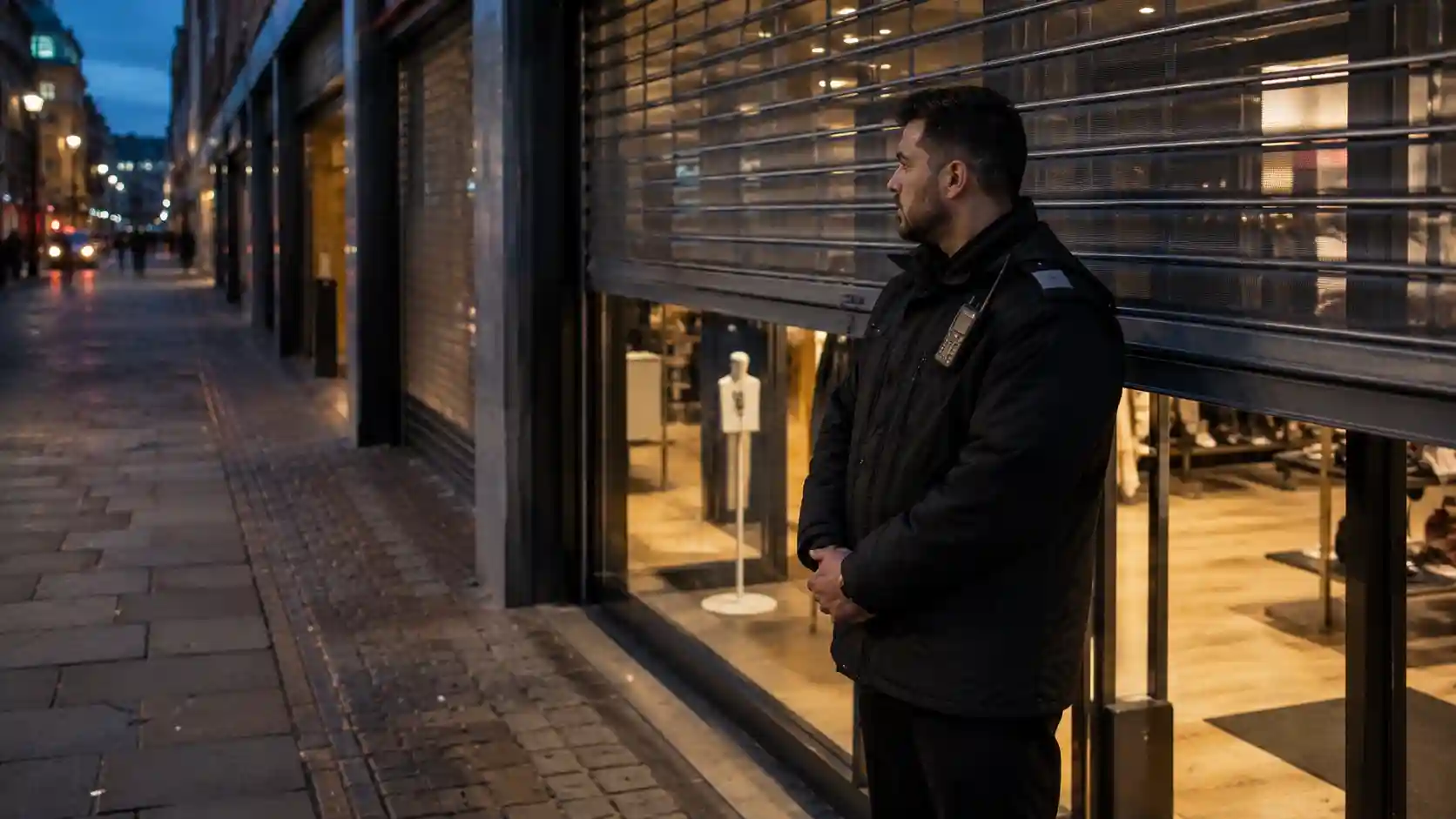
Not all security problems involve crime. Retail parks in Burnley often struggle with loitering, intimidation, and general disorder. Groups hanging around entrances. Arguments spilling out of shops. Staff feel uneasy closing up. A visible guard shifts the tone. Not by being aggressive. By being present. Available. Calm. Customers notice it too. So do staff. And people causing problems tend to leave before anything escalates.
Rising Retail Theft and Daytime Guarding Demand in Burnley
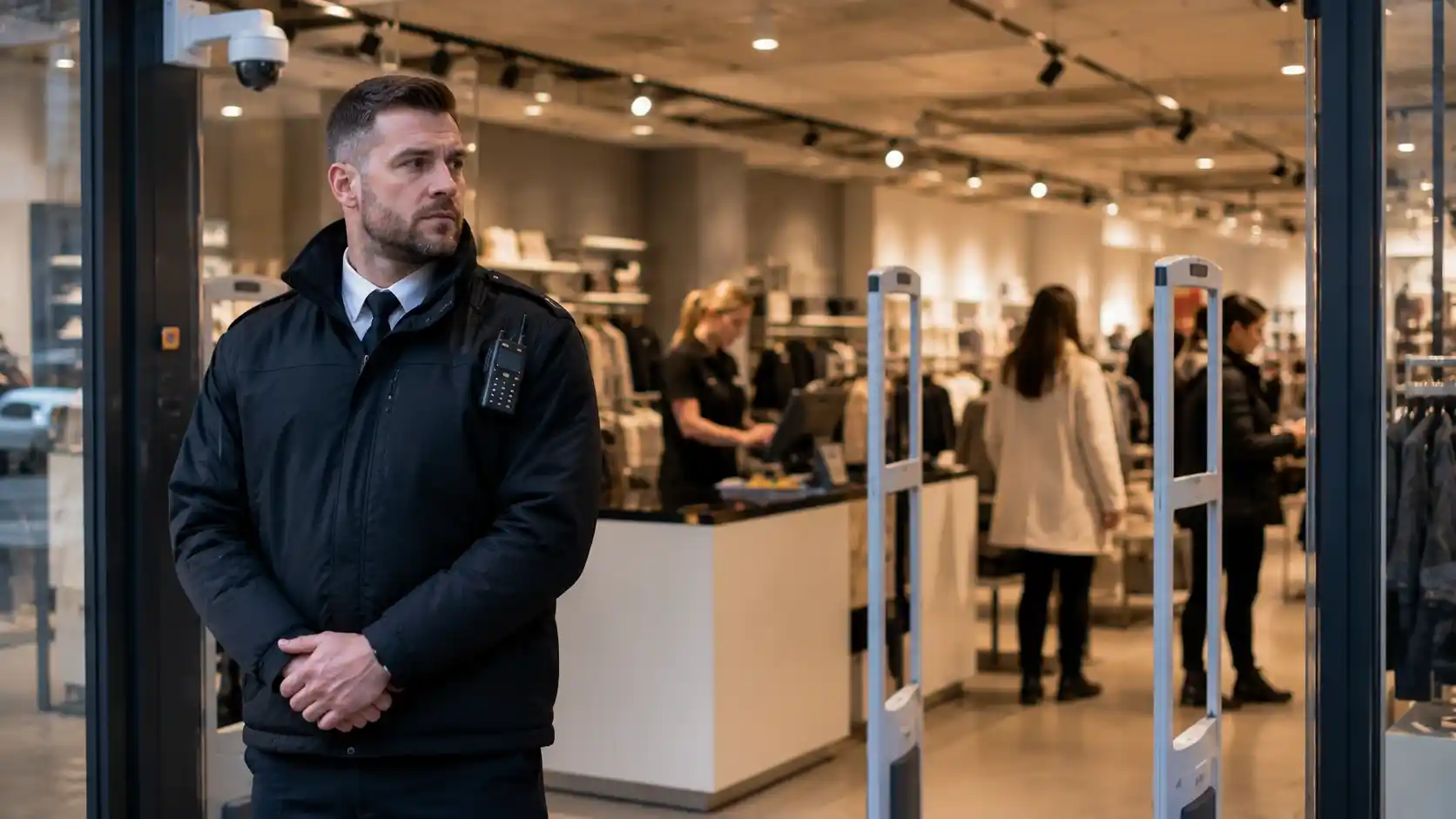
Retail theft in Burnley has become more brazen. Smaller thefts. Higher frequency. Less fear of being challenged. Daytime has grown, and that is not a hidden patrol, but it is a visible presence. Guards deter theft simply by being seen. They also support staff, who shouldn’t be expected to confront offenders. Loss prevention improves. Staff turnover drops. Confidence returns. Those benefits rarely show up on balance sheets, but businesses feel them.
Day vs Night Manned Guarding Risks in Burnley
Day guarding is people-focused. Customer interaction. Conflict management. Access control. Night guarding is asset-focused. Perimeter checks. Alarm response. Early detection of intrusion. The skill sets overlap, but the mindset differs. Day guards read behaviour. Night guards read environments. Treating both roles the same weakens coverage.
Seasonal Pressures on Burnley Security Demand
Burnley’s security needs spike in bursts. Football match days bring foot traffic, emotion, and alcohol. Seasonal shopping periods compress risk into short windows. Holidays leave sites unattended longer than usual. Crime follows opportunity. Manned guarding absorbs these spikes far better than fixed systems.
Transport Routes and Their Security Impact in Burnley
Bus stations, arterial roads, and access routes influence nearby businesses more than most realise. Foot traffic brings customers. It also brings spill-over behaviour. Disputes. Opportunistic theft. Late-night movement after services slow down. Businesses near transport routes often need guarding, not because of what happens inside, but because of what happens just outside.
Economic Factors Driving Manned Guarding Demand in Burnley
Cost-of-living pressures don’t just affect households. They affect crime patterns. Low-value, high-frequency theft increases. Sites see more opportunistic behaviour. Businesses tighten margins and can’t absorb losses as easily. Manned guarding becomes part of resilience planning. Not panic spending. Planned risk control.
Business Growth and Industrial Security Needs in Burnley
Burnley’s industrial and mixed-use developments continue to expand. More logistics. More manufacturing. More shared sites. Growth brings opportunity. It also brings complexity. As sites scale, informal oversight stops working. Security becomes a system, not an afterthought. Manned guarding is often the first structured layer businesses add when growth outpaces visibility.
Legal and Compliance Requirements for Manned Guarding in Burnley
SIA Licensing Requirements for Burnley Security Guards
If a person is providing security in Burnley, they need an SIA licence. There’s no workaround and no local exemption. Whether the role involves guarding a shop floor, controlling access at a warehouse gate, or patrolling a construction site, licensing is mandatory. What often gets missed is the licence type. A guard licensed for door supervision isn’t automatically licensed for CCTV operation. Someone patrolling a site may need a different badge than someone managing public access. It’s not about bureaucracy. It’s about competence tied to the role.
Burnley businesses don’t need to memorise licence codes. They do need to ask one question: Is this licence correct for what you’re doing on my site?
Legal Penalties for Using Unlicensed Guards in Burnley
Using an unlicensed guard isn’t a minor oversight. It’s a criminal offence. Fines are one outcome. Prosecution is another. Insurance refusal is the quiet one that hurts most. If an incident occurs and an unlicensed guard is involved, insurers may step away without hesitation. There’s also reputation. Burnley is not a large market. Word travels. Once a business is known for cutting corners on safety, trust becomes expensive to rebuild.
DBS Checks and Vetting Expectations
Not every guard role legally requires a DBS check. But many should have one anyway. Sites involving staff interaction, sensitive areas, or lone working demand higher trust. That’s where DBS screening matters. Alongside that sits BS 7858 vetting. Employment history checks. Identity verification. Gap explanations. It’s slow, quiet work. No one notices it when it’s done right. Everyone notices when it isn’t.
Insurance Requirements When Hiring Manned Guards
Security providers should carry public liability insurance and employer’s liability insurance as a baseline. Some also hold professional indemnity cover, depending on the service scope. Burnley businesses should ask for certificates, not assurances. If a guard causes damage, injures someone, or misses an incident, insurance determines where responsibility lies. Assumptions don’t hold up well in claims meetings.
Data Protection Compliance for Guarding with CCTV in Burnley
When guards use or monitor CCTV, they handle personal data. That brings GDPR into play. Who can view footage? How incidents are recorded. How long is it stored? All of it matters. Mishandling footage can result in complaints or enforcement action, even when intentions were good. Well-trained guards understand these boundaries. Poorly trained ones learn the hard way.
VAT Treatment for Manned Guarding Services
Manned guarding services are subject to standard VAT in the UK. This affects budgeting, contract pricing, and invoice reconciliation areas, like Preston. Clear invoicing avoids disputes. Businesses should know exactly what’s included in the quoted rate and what isn’t. Confusion around VAT tends to surface late, usually after invoices have stacked up. Clarity upfront saves friction later.
Burnley Council and Lancashire-Specific Construction Security Rules
Construction sites in Burnley often fall under closer local authority attention, particularly when located near housing or public footpaths. Councils expect visible security measures. Controlled access. Clear responsibility for site safety outside working hours. Theft and trespass aren’t just losses; they can become safety incidents. Security on construction sites protects more than materials. It protects people who shouldn’t be there at all.
Compliance Documentation Burnley Businesses Should Request
Before any guard steps on site, businesses should ask for proof. SIA ACS accreditation. Training records. Incident reporting samples. Insurance certificates. These documents show how a provider operates when no one is watching. Providers who hesitate usually aren’t hiding paperwork. They’re hiding the process.
Mandatory Security Company Licensing and Client Implications
Security company licensing isn’t just a badge. It brings oversight. Licensed firms are audited. Standards are reviewed. Failures have consequences. That structure improves service consistency and reduces client exposure. For Burnley businesses, this means clearer accountability when something goes wrong. No finger-pointing. No grey areas.
Recent SIA Changes Impacting Burnley Guard Hiring
The SIA updates requirements more often than many realise. Licence renewals. Refresher training. Updated competencies. These changes affect staffing availability and timelines. Businesses that plan security reactively tend to feel shortages more sharply. Those who plan ahead rarely notice disruption.
Labour Laws and Overtime Pay for Security Guards
Security work often stretches into long shifts, nights, and weekends. Labour law still applies. Working Time Regulations govern rest periods, maximum hours, and overtime. Fatigued guards miss details. Missed details turn into incidents. Compliance here isn’t just about legality. It’s about performance.
Post-Brexit Rules Affecting EU Nationals in Burnley Security Roles
Right-to-work checks are stricter than they used to be. EU nationals now need an appropriate status to work in security roles. This has tightened labour supply in parts of Lancashire, including Burnley. Staffing challenges aren’t always about provider quality. Sometimes they’re about regulation catching up with reality.
Role of Manned Guarding in Event Licensing in Burnley
Temporary events often require security plans as part of licensing approval. This includes stewarding, access control, and incident response. Manned guarding helps organisers meet these conditions and demonstrates a duty of care. Events without proper security don’t stay calm for long.
Collaboration Between Lancashire Police and Private Guards
Private guards don’t replace police. They bridge gaps. Guards observe. Report. Escalate. Clear communication with Lancashire Police improves response speed and reduces confusion during incidents. The strongest relationships are built before anything goes wrong.
Police Crime Data Informing Burnley Guard Deployment
Effective guarding uses data. Police crime trends highlight hotspots, timings, and repeat behaviours. Security plans that ignore this information rely on guesswork. Plans that use it adapt faster and prevent more.
Burnley BCRP and Business Security Partnerships
Local business crime reduction partnerships quietly shape how security operates across Burnley. Information sharing. Repeat offender alerts. Coordinated responses. Manned guarding fits into this wider system, not outside it. Security works best when it’s shared, not siloed.
Costs, Contracts, and Deployment of Manned Guarding in Burnley
Typical Manned Guarding Costs in Burnley
There’s no single hourly rate that fits every Burnley site. Anyone offering one is guessing. Town-centre locations usually cost more. Foot traffic is higher. Interaction with the public is constant. Guards need stronger conflict management skills. That all pushes rates up. When thinking about costs, it helps to remember the environment you’re guarding. Burnley’s crime environment makes the case for manned guarding very tangible.
According to the Police.uk crime data, violent offences accounted for 47 reported incidents per 1,000 residents, making this the single largest category affecting people and business sites. Anti-social behaviour wasn’t far behind, with 46 incidents per 1,000, highlighting how public disorder and loitering can disrupt retail areas, night-time venues, and industrial zones alike. Industrial estates tend to be cheaper per hour, but not always. Remote yards, night shifts, or high-value stock change the calculation. A quiet warehouse at 3 a.m. can carry more risk than a busy shop at noon. The mistake many businesses make is comparing rates without comparing risk. Cheap coverage that fails costs more in the end.
Deployment Timelines for Burnley Security Teams
Getting guards on site isn’t instant, but it’s not slow either. If a provider already has vetted, licensed staff available, deployment can happen within days. Sometimes sooner for urgent cover. Recruits take longer. Vetting, licence checks, and training can’t be rushed.
Mobilisation also includes site familiarisation. Access points. Alarm systems. Local risks. Guards who arrive blind are more likely to miss something early on. Timelines and speed matter more than preparation.
Common Contract Lengths in Burnley
Short-term contracts work for events, seasonal spikes, or emergency cover. They’re flexible, but usually more expensive per hour. Rolling contracts are common for retail and light industrial sites. They offer continuity without locking businesses in.
Long-term agreements suit high-risk sites and 24/7 coverage. They stabilise staffing and pricing, but only if service levels stay high. There’s no best option, only what fits the site.
Notice Periods and Exit Clauses
Most guarding contracts include notice periods. Thirty days is typical. Some require more. Exit clauses matter. Not just when things go wrong, but when business needs change. Site closures. Reduced hours. Budget shifts. Flexibility protects both sides. Rigid contracts usually favour the provider, not the client.
Wage Increases and Their Impact on Burnley Guarding Costs (2025)
National Living Wage increases have a direct effect on guarding costs. There’s no avoiding it. Security work is labour-heavy. Wages form the bulk of the cost. When pay rises, rates follow. Providers absorbing wage increases for long periods usually cut corners elsewhere. Burnley businesses should expect gradual increases, not sudden spikes. Transparency matters here. So does planning.
Inflation and Long-Term Contract Pricing
Inflation doesn’t just affect wages. Fuel. Uniforms. Training. Insurance. All of it feeds into long-term pricing. Fixed-rate contracts sound attractive, but they can become unstable if costs shift too far. Some agreements include review clauses to handle this. Others don’t. Predictability is good. Flexibility keeps services sustainable.
Insurance Premium Reductions Through Manned Guarding
Insurers pay attention to guarding. Especially when it’s consistent and professional. Visible manned security reduces claims. Fewer break-ins. Less vandalism. Lower risk exposure. Over time, that can translate into better premiums or smoother renewals. It’s not automatic. But it’s common.
Procurement Act 2023 and Public Sector Guarding in Burnley
Public sector contracts now operate under tighter procurement rules. Transparency, value, and compliance matter more than ever. For Burnley organisations bidding for or supplying public-sector guarding, this changes documentation, timelines, and evaluation criteria. Lowest price alone rarely wins. Quality, compliance history, and resilience now carry more weight.
Training, Daily Operations, and Guard Duties in Burnley
Training Standards for Retail and Industrial Guards
Training for manned guarding in Burnley isn’t one-size-fits-all. Put a guard in a shop, and the job becomes about people before anything else. Spotting a shift in behaviour. Stepping in early. Calming things down before voices rise or staff feel cornered. Safety matters. First aid and fire safety still matter, of course, but so does knowing when to be seen and when to fade into the background.
Move that same guard to a warehouse or an industrial site, and the focus changes. Nights are quieter. Risks are less obvious. There may be no one else around if something goes wrong. That’s why training leans hard on judgment, awareness, and self-reliance. Machinery, long perimeters, and isolation all shape how decisions are made.
Different settings. Same standard. The guards who perform best aren’t the ones ticking boxes. They’re the ones who stay calm when there’s no script to follow.
Start-of-Shift Procedures for Burnley Guards
Every shift begins with context. Guards arriving on site review handover notes, recent incidents, and any changes to site activity. A delivery scheduled earlier than usual or an area under repair can alter risk in small but important ways. The first few minutes will set the tone for the entire shift. Skipping this step creates blind spots. Experienced guards know that preparation at the start of a shift prevents confusion later, especially during busy retail hours or quiet overnight periods.
Site Arrival Checks and Risk Assessments
When a guard arrives on site, the first few minutes matter. They look around. Not casually, but with intent. Gates, doors, fencing, and the edges people forget about. Anything out of place stands out fast when you know how a site is meant to feel.
This isn’t about ticking boxes. It’s instinct backed by experience. A gate left ajar. A lock that doesn’t sit right. A scuffed panel that wasn’t there yesterday. Small things, but they’re often the start of bigger problems. Catching them early saves time, money, and a lot of noise later on.
Shift Handover Processes in Burnley
Shift handovers are where continuity lives or dies. Guards exchange information through written logs, but also through direct conversation. Incidents, near misses, and behavioural patterns are discussed so nothing is lost between shifts.
This process matters most on 24-hour sites, where small details can carry over. A rushed handover increases risk. A thorough one reduces it.
Patrol Frequency and Coverage Expectations
Patrol routines in Lancaster are designed to be unpredictable. During the day, patrols focus on visibility and deterrence, especially in retail and mixed-use locations. At night, attention shifts to detection and response, with routes adjusted to avoid patterns.
Guards vary their timing and movement to prevent criminals from anticipating their presence. Consistency in coverage does not mean repetition in behaviour.
Perimeter and Utility Tampering Checks
Perimeter checks go beyond fences and gates. Guards monitor utilities such as power supplies, water points, and lighting systems, looking for signs of interference. Small changes often signal larger intent, especially on industrial estates and construction sites. Recognising these early indicators allows for swift reporting and action before serious damage or theft occurs.
Mandatory Logbook and Digital Reporting
Every shift produces a record. Guards document patrols, incidents, and observations in either physical logbooks or digital systems. These entries don’t need to be lengthy, but they must be accurate and timely. Logs protect both the client and the guard. They provide accountability, support investigations, and demonstrate compliance during audits or insurance reviews.
Equipment Functionality Checks
Guards rely on their equipment, and they check it early. Radios are tested, body-worn cameras verified, and alarm interfaces reviewed. Identifying faults at the start of a shift prevents delays during critical moments. Reliable equipment supports calm decision-making. Faulty equipment creates risk.
Alarm Responses During Early Hours
Early-morning alarms are common across Burnley, particularly on industrial and retail park sites. Guards are trained to respond methodically, assessing the situation before escalating. Most activations are false alarms, but complacency is never an option. The focus is on controlled response, clear communication, and appropriate escalation to supervisors or emergency services when required.
Visitor Management and Access Control
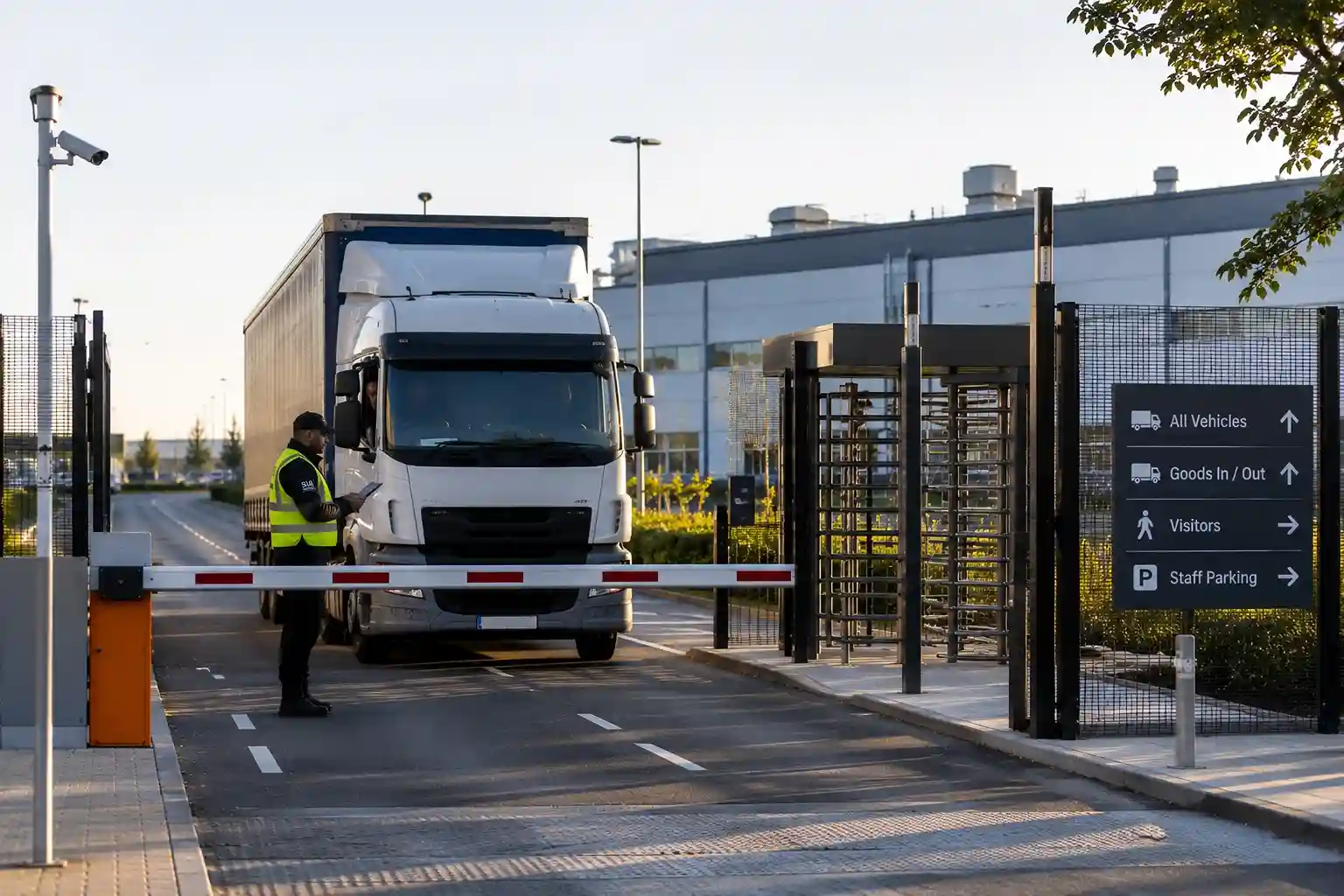
Every person who walks in matters. Guards check ID, ask why someone is there, and decide where they can go. No rushing it. No assumptions. Contractors, delivery drivers, and short-term staff all follow the same rules. Access limits prevent problems before they start. Fewer wrong turns mean less risk. Restricted areas stay restricted. Staff feel safer. Visitors know what’s expected. When it’s done well, the place runs smoother. It looks organised. It feels secure. And people notice, even if they don’t say it.
CCTV System Checks by On-Site Guards
On-site guards play a critical role in CCTV effectiveness. They conduct visual checks to confirm cameras are operational, views are clear, and timestamps are accurate. Any faults are reported promptly to avoid gaps in coverage. CCTV works best when it is actively supported by human oversight rather than left unattended.
Fire Safety and Emergency Preparedness
Fire safety is part of the daily routine. Guards check fire panels, emergency exits, and evacuation routes during their shift. Familiarity with site-specific emergency procedures ensures a swift response if an incident occurs. In emergencies, training replaces hesitation. Guards act because they already know what to do.
Car Park and Lighting Inspections
Car parks and external areas receive regular attention. Guards assess lighting levels, visibility, and potential hiding spots. Poor lighting increases risk for both crime and personal safety. Well-maintained external spaces contribute to deterrence and reassure staff and customers.
Supervisor Reporting Frequency During Night Shifts
Night shifts can be isolating, especially on large or remote sites. Regular supervisor check-ins support guard welfare and maintain performance standards. These interactions also provide an opportunity to identify fatigue or emerging risks. Consistent communication strengthens overall site security.
End-of-Shift Secure-Down Procedures
As a shift ends, guards complete final checks to ensure the site is secure. Doors are locked, alarms set, logs finalised, and handover notes prepared. This process prevents vulnerabilities during shift transitions. Security lapses often occur at the edges of operations. Secure-down procedures close those gaps.
24/7 Shift Patterns in Burnley
Continuous guarding requires structured shift patterns. Rotations are designed to manage fatigue and maintain alertness, particularly for night work. Adequate rest periods are built into schedules to protect guard well-being. A well-rested guard is a more effective guard.
Emergency Response Time Expectations
Emergency response expectations in Burnley depend on site type, risk profile, and escalation agreements. Guards are trained to respond immediately on site and coordinate with Lancashire emergency services when thresholds are met. Effective response is not just about speed. It’s about making the right decision at the right moment.
Performance, Risks, and Staffing Challenges in Burnley
Key KPIs for Measuring Guard Performance
Good guarding isn’t measured by how quiet a site feels. That’s the trap. In Burnley, the most useful indicators are simple and practical. Fewer repeat incidents. Faster response when something does happen. Clear, timely reporting that tells the full story instead of just logging a time and date. A guard who spots trouble early and defuses it may never appear in a headline or an incident log. That still counts as performance. Often, it’s the strongest sign that the system is working.
Weather Impacts on Burnley Guarding Effectiveness
Burnley weather doesn’t play fair. Rain arrives sideways. Cold settles in and stays. Fog rolls through without warning. Outdoor patrols slow down in poor conditions. Visibility drops. Footing becomes an issue. A soaked uniform or frozen hands affect concentration, no matter how experienced the guard is. Weather doesn’t stop crime, though. It changes how it shows up. Guards adapt, or they fall behind.
Documenting Weather-Affected Patrol Conditions
When conditions interfere with patrols, that needs to be written down. Not as an excuse, but as context. Recording heavy rain, ice, or low visibility protects both the guard and the business. It explains gaps in coverage, adjusted routes, or delayed responses. More importantly, it shows that decisions were made with safety in mind. Good logs tell the whole story, not just the comfortable parts.
Health Impacts of Long Security Shifts
Long shifts take their toll. There’s no way around that. Physical fatigue creeps in first. Legs stiffen. Reaction times are slow. If shifts stack up without enough recovery, alertness drops next. That’s when mistakes happen in Burnley, where night guarding is common on industrial sites, managing shift length isn’t a luxury. It’s a risk control.
Mental Health Support for Night-Shift Guards
Night work is isolating. Quiet sites. Long hours. Little human contact. Over time, that isolation weighs on people. Responsible employers recognise this and build support into their operations. Regular supervisor check-ins. Access to mental health resources. Rotations that prevent guards from being stuck on nights indefinitely. A guard who feels supported performs better. It’s that simple.
Environmental Regulations Affecting Outdoor Patrols
Security work doesn’t exist outside the rules that govern everything else. Noise restrictions affect patrol vehicles. Lighting regulations limit what can be installed on sites. Emissions rules influence fleet choices. Burnley businesses need guarding providers who understand these limits and work within them, not around them. Compliance avoids fines. It also avoids friction with neighbours and local authorities.
Retention Strategies Used by Burnley Security Firms
Staffing is one of the biggest challenges in guarding today. Burnley is no exception. The firms doing well focus on the basics done properly. Fair pay. Predictable rotas. Training that leads somewhere, not just a certificate in a folder. Clear paths into supervision or specialist roles. Guards stay where they feel valued. When they stay, sites stay safer.
Technology and Future Trends in Burnley Manned Guarding
How Technology Is Reshaping Manned Guarding in Burnley
Technology hasn’t replaced guards in Burnley. It’s changed how they’re used. Sites that once needed four people on constant patrol can now run leaner without becoming exposed. Smarter cameras. Better access control. Live dashboards that show what’s happening before someone radios it in. The key change is focus. Guards spend less time walking empty ground and more time responding to what actually matters. When used properly, tech sharpens judgment instead of dulling it.
Post-COVID Changes in Burnley Security Protocols
COVID didn’t just pass through and disappear. It left habits behind. Guards are now more involved in managing flow. Controlling entry points. Watching numbers. Keeping exits clear during busy periods. Hygiene checks and surface awareness are still part of daily routines, especially in public-facing sites. Crowd behaviour changed too. People are less patient. More reactive. Guards adapt by staying visible and proactive, rather than stepping in only when things escalate.
AI Surveillance Supporting Manned Guards
AI surveillance works best when it stays in the background. Instead of staring at screens, guards receive alerts. Unusual movement. Loitering where it shouldn’t happen. Behaviour that doesn’t match the time or place. The guard decides what to do next.
That human judgment is the filter. AI flags. Guards act. In Burnley sites where staffing is tight, that balance makes a real difference.
Remote Monitoring as a Force Multiplier
Remote monitoring doesn’t replace on-site presence. It stretches it. A control room can watch multiple locations, support lone guards, and escalate incidents quickly. If something triggers overnight, the response is faster because someone is already paying attention. For many Burnley businesses, the future isn’t fully manned or fully remote. It’s hybrid. The right mix for the risk.
Drone Patrol Integration in Industrial Burnley
Large industrial sites are hard to cover on foot. Always have been. Drones add visibility without adding fatigue. They check rooflines, outer fencing, and blind spots in minutes. Guards on the ground handle access points and response. This isn’t science fiction. It’s already happening on wider sites where traditional patrols leave gaps.
Predictive Analytics for Guarding Decisions
Patterns matter. Time of day. Season. Past incidents. Predictive tools analyse this data and highlight when risks are most likely to rise. That helps businesses adjust coverage before something goes wrong, not after. It’s not about predicting crime. It’s about planning smarter.
Upskilling and New Certifications for Guards
Modern guarding demands more than a licence. Guards now train on systems as well as sites. CCTV platforms. Access control software. Data handling. Alongside this, compliance training continues to evolve, especially around counter-terrorism awareness and public safety. The better trained the guard, the less technology needs babysitting.
Green Security Practices in Burnley
Sustainability is creeping into security, quietly. Electric patrol vehicles reduce fuel costs and noise. Energy-efficient lighting improves visibility without waste. Smarter scheduling cuts unnecessary movement. Green practices aren’t just ethical. They’re practical.
Martyn’s Law and Its Impact on Burnley Venues
Martyn’s Law will change expectations for public venues. More planning. Clearer responsibilities. Stronger visible security. For Burnley venues, this means better-trained guards, clearer emergency procedures, and closer coordination with local authorities. It won’t be optional. Preparation will matter. Those who plan early will find the transition easier.
Conclusion
Manned guarding in Burnley isn’t only about stopping crime in the moment. It’s about keeping businesses steady when conditions change. Retail theft rises, sites expand, regulations tighten, and staffing pressures don’t ease on their own. A trained guard on site brings judgment, presence, and accountability that cameras and alarms can’t replace, Blackpool.
Legal compliance matters. So do contracts, costs, and daily operations. When those pieces are handled properly, guarding stops being a reaction and becomes part of how a business protects its people, its stock, and its reputation. That’s the real reason why Burnley businesses need manned guarding. It supports resilience as much as security.
For decision-makers weighing long-term risk, professional guarding is not an expense to minimise. It’s a strategic layer of protection that adapts as the business grows. That is why Burnley businesses need manned guarding now more than ever, because stability is built by those who plan ahead, not those who wait for problems to arrive.
FAQs
How much does manned guarding cost in Burnley per hour?
It depends, and anyone giving a flat number upfront is guessing. A calm shop during weekday hours costs far less than a warehouse on the edge of town at night. Risk, location, and the type of guard needed all shape the final rate. Prices usually make sense once someone has actually walked the site.
Do all Burnley security guards need SIA licences?
Yes. No shortcuts. If a guard is carrying out licensable work, they must hold a valid SIA licence. It’s a legal requirement, and responsibility doesn’t stop with the provider. Businesses should always check, not assume.
Is manned guarding necessary for small Burnley retailers?
Not around the clock, but often at key times. Smaller shops feel theft more sharply because margins are tighter. Even part-time daytime cover can change behaviour, protect staff, and reduce losses without committing to full-time guarding.
Can manned guarding reduce insurance premiums in Burnley?
Sometimes. Insurers look at patterns. Fewer incidents, quicker responses, better site control. Over time, professional guarding can improve a site’s risk profile. It won’t guarantee lower premiums, but it often helps conversations go more smoothly.
How quickly can guards be deployed in Burnley?
If licensed staff are already available, cover can start within days. Emergency situations move faster. Longer-term roles take more care, because rushing the wrong person onto a site usually creates problems later.
Are night guards more expensive than day guards in Burnley?
Most of the time, yes. Night work carries more risk and fewer safety nets. Lone working, limited visibility, and slower backup all factor into pricing.
How does manned guarding support CCTV systems?
CCTV shows what’s happening. Guards decide what to do about it. An on-site presence means alerts get checked properly, incidents are verified quickly, and problems don’t sit on a screen until it’s too late.
What types of Burnley businesses benefit most from manned guarding?
Anywhere people, stock, or reputation are exposed. Retailers, warehouses, construction sites, hospitality venues, and industrial estates. If a loss would hurt, guarding usually earns its place.