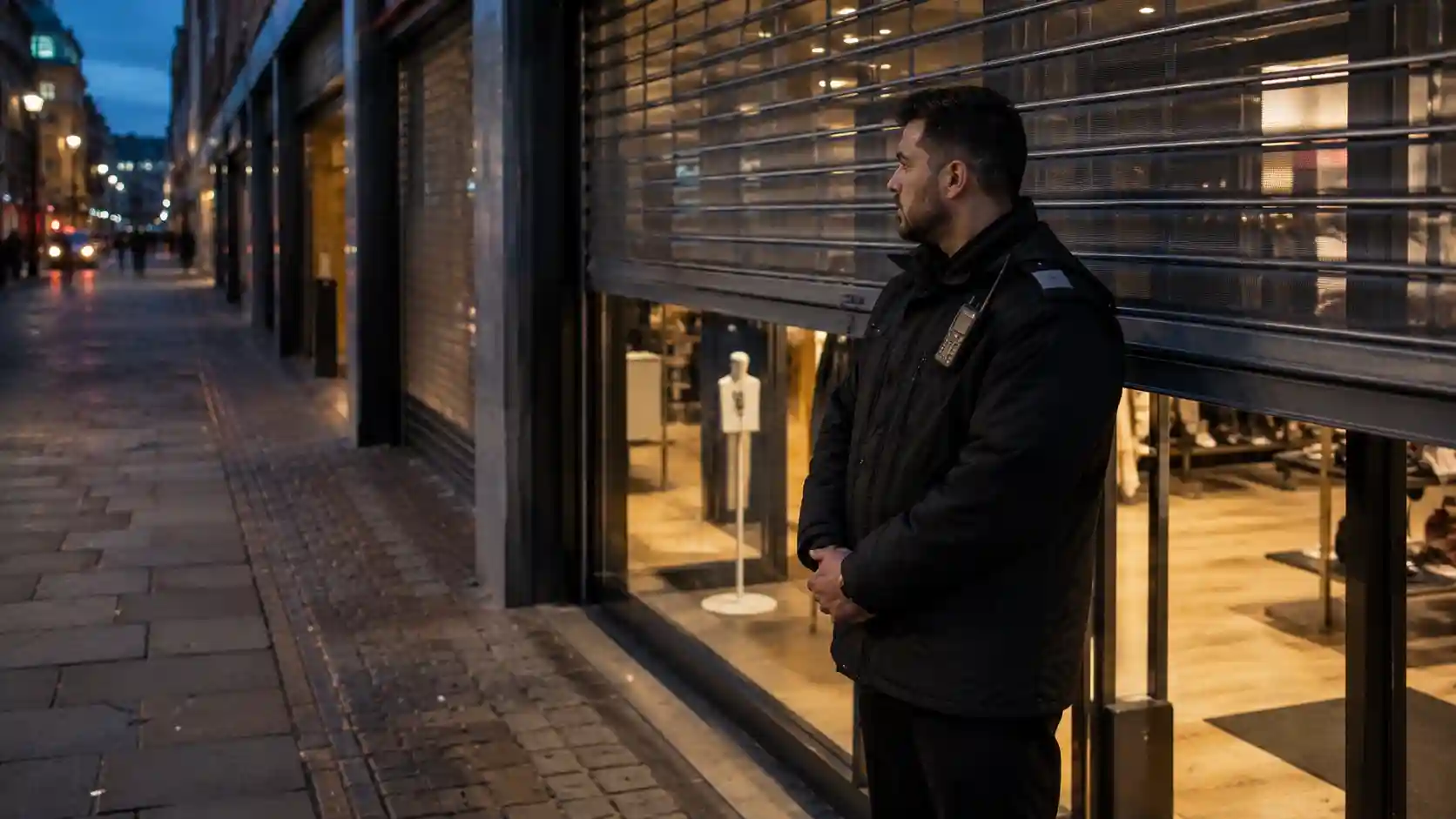
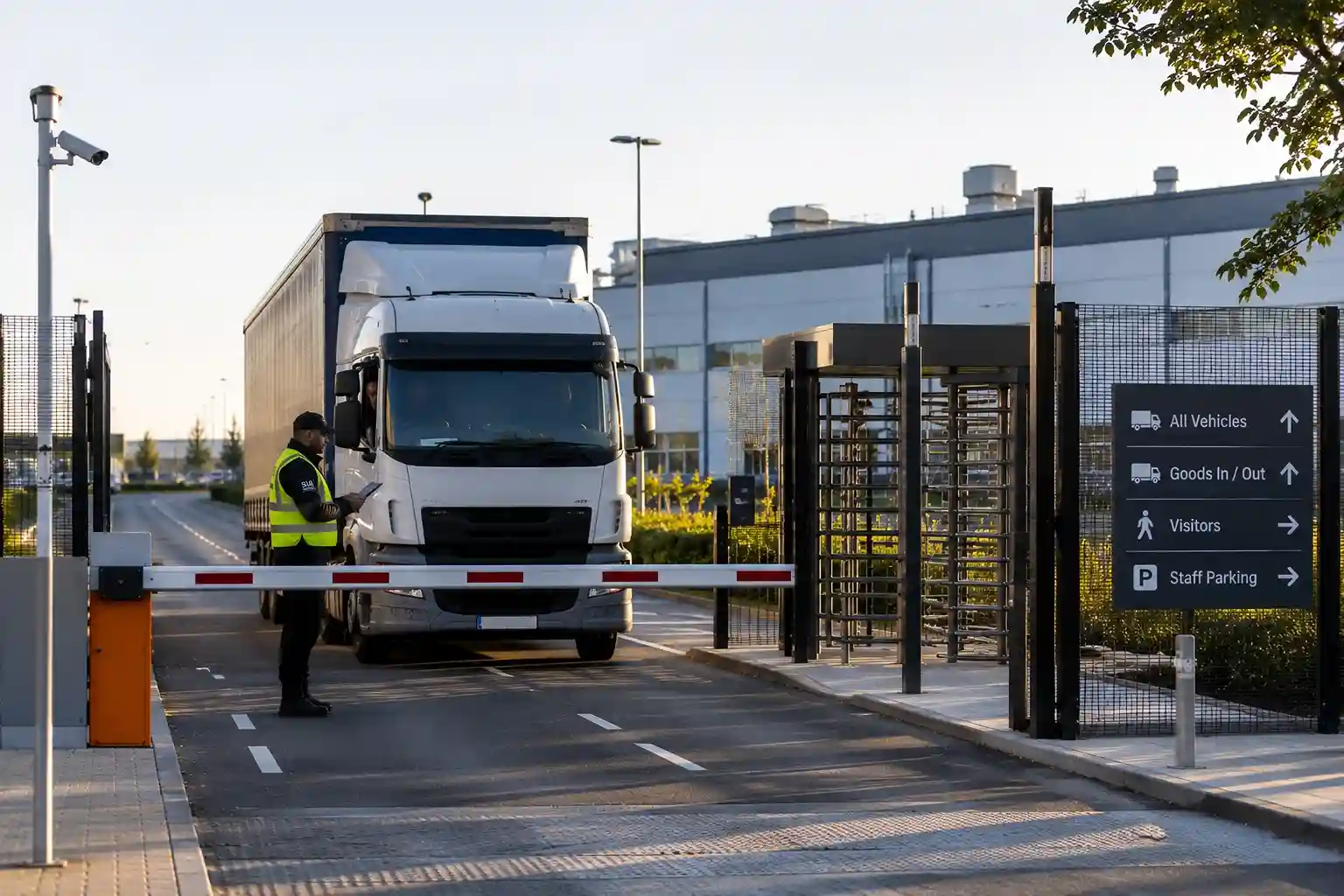
Chester doesn’t behave like a typical commercial city. It’s historic, yes, but it’s also busy, porous, and constantly in motion. A medieval city centre sits next to modern retail streets. Tourists mix with commuters crossing borders daily. Industrial estates operate quietly on the outskirts while nightlife hums well past midnight closer in. That blend creates opportunity. It also creates exposure.
For many Chester businesses, security problems don’t arrive as dramatic break-ins. They creep in. Opportunistic theft during busy trading hours. Anti-social behaviour that escalates slowly. Construction materials that disappear one pallet at a time. Remote cameras notice some of it. They rarely stop it.
This is why manned guarding in Chester has shifted from “last resort” to practical infrastructure. A trained, visible presence changes behaviour in ways technology alone cannot. And as retail theft, site intrusion, and public-facing risks continue to rise, more local businesses are recognising that guarding isn’t about reacting anymore, it’s about staying ahead.
Understanding Manned Guarding Basics in Chester
What Is Manned Guarding and How Does It Differ from Static or Remote Security in Chester
Manned guarding is often explained in neat definitions. In reality, it’s messier and more useful than that. At its core, it means placing trained security guards on-site to observe, intervene, and respond in real time. Not after an alert. Not after the footage is reviewed. In the moment, things start to feel wrong. That’s where it separates itself from static or remote security.
Static guarding usually anchors a single point: a front desk, a gatehouse, a loading bay. Mobile patrols move deliberately, breaking patterns and checking areas where people assume no one is watching. Remote monitoring relies on technology, CCTV, sensors, alarms, and effective tools, but only as smart as their thresholds.
Chester businesses often need all three. But when something ambiguous happens,a customer hovering too long, a delivery van arriving at an odd hour, a group testing boundaries, cameras hesitate. Guards don’t. Human judgment fills the gap technology leaves behind, especially in a city where layouts are irregular, and behaviour rarely follows a script.
How Chester’s Crime Patterns Influence Demand for Manned Guarding
Crime in Chester doesn’t shout. It blends. Retail theft often hides inside legitimate footfall. Hospitality incidents build slowly before tipping. Logistics sites face quiet, methodical attempts rather than rushed break-ins.
Recent local police data shows that 39 shoplifting offences, while anti-social behaviour and public order incidents both stand at 24 cases each. On paper, those numbers might not look dramatic. On the ground, they shape how risk actually feels.
That variety forces businesses to think differently about security. What works on a retail street doesn’t translate cleanly to an industrial estate. City-centre locations deal with density, distraction, and anonymity. Outskirts deal with time, darkness, and distance from help.
This is why manned guarding in Chester isn’t about blanket coverage. It’s about placement and timing. Guards positioned where behaviour changes, not just where assets sit, deliver far more value than cameras pointed at doors no one uses.
Peak Crime Hours for Chester Businesses
Many Chester businesses still expect trouble after closing time. That assumption misses most of the damage. For retail environments, losses peak during busy trading hours. Midday to early evening. Staff are focused on service. Shelves are full. Distraction is easy. Theft slips through unnoticed.
Night-time risks exist, of course. Break-ins, attempted access, perimeter breaches. But they’re less frequent than slow, cumulative losses during the day. Weekends shift the balance again. Footfall increases. Alcohol enters the picture. Around pubs and hospitality venues, incidents become less about property and more about behaviour, arguments, disorder, and crowd pressure. Manned guards align coverage to these rhythms. Security that ignores timing rarely works.
Chester-Specific Vulnerabilities for Warehouse and Industrial Security
Warehouses around Chester share a familiar profile. Located just beyond the centre. Close enough to main roads. Far enough to feel unsupervised. Industrial estates often rely on layered controls,fencing, cameras, and alarms, but suffer from predictable routines. Delivery windows repeat. Lighting fades at the edges. Shared access roads create blind spots.
Losses here aren’t usually dramatic. They’re incremental. A pallet goes missing. Fuel siphoned. Tools lifted. A visible security presence disrupts that slow erosion. Mobile patrols introduce uncertainty. Guards notice when something feels off, even if nothing has technically broken a rule yet. That preventative effect is hard to measure. It’s also why it works.
Addressing Anti-Social Behaviour in Chester Retail Parks
Retail parks rarely start with crime. They start with discomfort. Groups loiter. The music plays too loudly. Bikes cut across walkways. Customers hesitate at entrances. Staff sense tension but don’t want to escalate. This is where manned guards earn their keep.
Not through confrontation. Through calm authority. A uniform presence resets expectations instantly. Behaviour changes without a word being spoken. CCTV records. Guards influence. In retail security, influence matters more.
Retail Theft Trends and the Rise of Daytime Manned Patrols in Chester
Retail theft in Chester has become quieter and more coordinated. Offenders exploit busy floors, understaffed moments, and predictable layouts. Theft happens in fragments, small items, repeated visits, and different faces. Daytime manned patrols counter this by being deliberately noticeable. Guards move. Make eye contact. Change routes. Engage just enough to be remembered. Deterrence happens before reaction. And once theft is prevented, there’s no incident to report, which is precisely the point.
Day vs Night Manned Guarding Risks in Chester
Day guarding is outward-facing. Night guarding turns inward. During the day, guards interact constantly with staff, customers, and contractors. Their tools are communication and awareness. At night, the risks are quieter. Isolation. Fatigue. Weather. Reduced visibility.
Lone-working becomes a factor. Lighting flaws matter more. Patrol routes must balance coverage with personal safety. Chester sites that rotate guards between day and night without adjustment often see performance slip. Different hours demand different mindsets.
Seasonal Events and Tourism Impact on Guarding Needs in Chester
Chester doesn’t experience steady pressure. It spikes. Summer tourism floods historic streets. Christmas markets compress crowds. Race days and festivals strain access points. Temporary structures appear. Normal routines are broken.
Manned guarding absorbs these disruptions. Extra staff can be added quickly. Patrol patterns shift. Access control tightens where needed. Most event-related incidents stem from volume, not malice. Guards help manage that volume before it overwhelms the space.
Transport Links and Security Pressures in Chester
Transport hubs shape behaviour. Chester’s railway station and surrounding pedestrian routes funnel people through predictable paths, day and night. That concentration creates opportunity. Opportunistic theft. Unauthorised access to nearby sites. Loitering that spills outward. Security guards positioned near transport-adjacent businesses act as friction. They have a slow movement. Observe patterns. Intervene early. Again, judgment does the heavy lifting. This pressure is not unique to Chester, and also, Similar patterns show up around busy hubs in Liverpool and Preston, where footfall peaks blur the line between public movement and private property.
Economic Growth and Business Expansion Driving Manned Guarding Demand
Chester continues to grow in layers. New developments sit beside old ones. Mixed-use spaces blur public and private boundaries. With that growth comes complexity. More access points. More shared areas. More assets are exposed to casual risk.
Manned guarding supports this evolution quietly. Protecting property. Managing access. Keeping order without drawing attention to itself. For many Chester businesses, security is no longer about responding to incidents. It’s about maintaining control as operations expand. And that’s where well-deployed guards still outperform any single piece of technology.
Legal and Compliance Requirements for Manned Guarding in Chester
Legal compliance in security isn’t background noise. It’s structural. When it fails, everything above it, insurance, reputation, even basic operational safety, starts to wobble.
For Chester businesses using manned guarding, the rules aren’t abstract. They touch who you can hire, how they work, what they’re allowed to do, and what happens if something goes wrong. And something always goes wrong eventually.
SIA Licensing Requirements for Security Guards in Chester
Every security guard working in Chester must hold a valid SIA licence for the role they’re performing. That’s not a courtesy requirement. It’s the law. Licences are individual, not transferable, and role-specific. A guard licensed for static guarding cannot automatically perform door supervision or close-protection tasks. Even seemingly small shifts in duty can push a guard outside their licensed scope.
Responsible security providers check licences constantly, not just at onboarding. Expired badges, incorrect roles, or mismatched duties expose Chester businesses to risks they often don’t realise they’ve inherited.
Penalties for Using Unlicensed Security Guards in Chester
The penalties are not theoretical. Using unlicensed security guards can lead to prosecution, significant fines and in some cases criminal liability, but the legal risk is only part of the picture.
If an incident occurs and an unlicensed guard is involved, insurers may refuse to pay out. Contracts can be voided. And reputational damage, especially for public-facing Chester businesses, travels faster than any court process. Cheap cover has a habit of becoming very expensive.
DBS Checks and Vetting Expectations for Chester Businesses
DBS checks sit in a grey area legally, which often causes confusion. Not every guarding role legally requires a DBS check. But many Chester environments expect it as standard, retail, education-adjacent sites, healthcare facilities, and public venues in particular.
Enhanced DBS checks are usually applied where guards interact closely with vulnerable individuals or in sensitive areas. Standard checks cover basic criminal history. What matters most is consistency. Businesses that accept “we don’t usually do DBS” explanations are often the ones exposed when scrutiny arrives later.
Insurance Requirements When Hiring Manned Guards in the UK
Two types of insurance matter here: public liability and employer’s liability. Public liability covers damage or injury caused to third parties. Employer’s liability covers the guards themselves. Both must be current, adequate, and appropriate to the scope of work being performed in Chester.
Businesses should ask to see certificates. Not summaries. Not assurances. Actual documentation. One uninsured incident can unravel years of careful risk management.
Data Protection and CCTV Integration Compliance
When manned guarding intersects with CCTV, UK GDPR comes into play immediately. Security guards monitoring footage must understand access limitations, data handling rules, and incident recording standards. “Just watching screens” doesn’t exempt anyone from responsibility.
In Chester, where many sites combine historic layouts with modern surveillance, compliance depends on training, not technology. Guards need to know when to observe, when to record, and when to escalate, without breaching privacy law.
VAT Treatment of Manned Guarding Services
Manned guarding services are VAT-rated. That sounds simple. In practice, it often isn’t. Budgeting mistakes happen when businesses calculate security costs without accounting for VAT, especially on long-term contracts. For Chester SMEs operating on tight margins, that oversight can distort forecasts quickly. Transparent providers flag VAT early. Others let it surface later.
Chester Council and Local Authority Expectations for Construction Site Security
Construction sites in and around Chester face increasing scrutiny from local authorities. Planning conditions may require active site security, especially where public access, shared boundaries, or high-value materials are involved. Fencing and signage alone rarely satisfy these expectations. Manned guarding demonstrates active duty of care. It also provides incident records if questions are raised later, something static measures can’t offer.
Documentation That Proves a Security Firm’s Compliance History
Compliance isn’t claimed. It’s shown. Accreditations like SIA Approved Contractor Scheme (ACS) status matter. So do audit results, training records, and incident logs. These documents tell you how a security firm behaves when no one is watching. Chester businesses that review this material upfront tend to avoid problems later.
Security Company Licensing and What It Means for Chester Clients
Licensed security companies in Chester operate under higher scrutiny. That scrutiny protects clients. It means structured recruitment. Regular audits. Clear accountability. And, critically, traceability when something needs explaining. For Chester businesses, working with licensed providers reduces liability, not because incidents disappear, but because responses are defensible.
Labour Laws, Overtime, and Wage Compliance
Security work runs long hours. That makes labour law compliance non-negotiable. Working Time Regulations limit hours. Overtime must be paid correctly. Holiday entitlement applies, even to night guards and rotating shifts. When providers cut corners here, it eventually shows in fatigue, mistakes, or staff turnover. All of which increases risk on your site.
Post-Brexit Rules Affecting EU Nationals Working as Guards
Post-Brexit, right-to-work checks are mandatory for all guards, including EU nationals. This isn’t just an HR detail. It’s a legal requirement that, if ignored, can expose Chester businesses to penalties even if the guard is supplied by a third party. Reputable firms document this rigorously. Others don’t.
Event Licensing and the Role of Manned Guarding in Chester
Events bring temporary risk. Councils know this. Temporary Event Notices and licensing conditions often require a visible, trained security presence. Crowd control, access management, and emergency response planning all rely on guards doing more than standing still.
In Chester, where events often take place in confined or historic spaces, manned guarding becomes part of the licence to operate, not an optional add-on.
Collaboration Between Private Guards and Local Police
Effective manned guarding doesn’t operate in isolation. Clear escalation protocols, accurate reporting, and information sharing with local police matter. Not constantly, but when thresholds are crossed.
Security guards who understand when to observe and when to involve authorities protect both the business and the wider community. That balance is learned, not improvised.
Costs, Contracts, and Deployment of Manned Guarding in Chester
Money is usually where security conversations turn uncomfortable. Not because guarding is unusually expensive, but because the costs are often misunderstood. In Chester, pricing isn’t arbitrary. It’s shaped by risk, location, timing, and the kind of guard you actually need, not the one that looks cheapest on paper.
Typical Manned Guarding Costs: Chester City Centre vs Outskirts
City-centre guarding costs more. There’s no way around that. Higher footfall, greater public interaction, and denser risk profiles push prices up. Guards working in central Chester are dealing with crowds, retail theft, and behavioural incidents, not just locked doors. That requires experience, communication skills, and confidence, traits that command higher rates.
Outskirts and industrial areas tend to cost less per hour, but the savings aren’t always what they appear. Longer shifts, isolation risks, and patrol requirements add complexity. A single guard covering a large perimeter can be more expensive than two covering a compact site.
The real cost drivers are consistent:
- Risk level
- Hours of coverage
- Guard skill and licensing
- Lone-working considerations
- Site layout
Deployment Timelines: How Quickly Guards Can Be Mobilised in Chester
Deployment speed depends on context. Emergency cover, after a break-in, vandalism, or sudden staffing gap, can often be arranged within hours if a provider has capacity. That said, emergency deployments are rarely optimal. They prioritise speed over familiarity.
Planned contracts work differently. Site surveys. Risk assessments. Guard matching. All of that takes time. But the outcome is better, guards who understand your site, your staff, and your pressures. Chester businesses that plan ahead usually pay less over time. Those who react often pay more for less tailored coverage.
Common Contract Lengths for Chester Businesses
Short-term contracts appeal when risk feels temporary. A construction phase. A seasonal spike. A one-off event. They work, but they come at a premium. Higher hourly rates. Less continuity. More guard rotation. This is a pattern seen not only in Chester, but across nearby hubs like Warrington, where project-led demand often drives short bursts of cover.
Long-term contracts stabilise things. Pricing evens out. Guards become familiar faces. Incidents drop, not because risk disappears, but because patterns are recognised early. For many Cheshire business security setups, a blended approach works best: core coverage year-round, with short-term scaling when pressure increases.
Notice Periods and Contract Flexibility
Most manned guarding contracts include notice periods. Thirty days is common. Longer agreements may extend that. What matters more than length is flexibility. Can you scale up quickly during peak periods? Scale down when risk reduces? Adjust hours without renegotiating the entire agreement? Rigid contracts look cheaper at first glance. They rarely stay that way.
Wage Pressures and Their Impact on Guarding Costs in 2025
Security wages are rising. They have to. Minimum wage increases affect base costs immediately. On top of that, experienced guards, those trusted with retail confrontation, lone sites, or public-facing roles, command premiums.
In Chester, where sites vary widely, skills matter. Paying slightly more for a capable guard often reduces incidents enough to offset the difference. Cheap labour shows up eventually. Usually, there are mistakes.
Inflation and Long-Term Pricing Stability
Inflation has changed how guarding contracts are structured. Index-linked pricing is becoming more common, especially on multi-year agreements. It offers transparency, even if it removes the illusion of fixed pricing. For Chester businesses budgeting long-term, predictability often matters more than locking in the lowest possible rate.
Insurance Premium Reductions Linked to Manned Guarding
Insurers pay attention to behaviour, not promises. Sites with consistent manned guarding tend to report fewer claims. Fewer claims lead to conversations. Those conversations sometimes lead to reduced premiums or better terms. This doesn’t happen overnight. But over time, effective guarding becomes part of a broader risk mitigation strategy, not just a line item.
Procurement Act 2023 and Public Sector Guarding Contracts in Chester
For public-sector and quasi-public organisations, the Procurement Act 2023 has raised the bar. Transparency matters more. Value-for-money must be demonstrable. Decisions need justification beyond the lowest price. In this environment, manned guarding providers are judged on compliance history, staff retention, training investment, and service continuity, not just hourly rates. For Chester institutions, this has pushed security procurement closer to strategic planning than reactive purchasing.
Training, Daily Operations, and Guard Duties in Chester
Good manned guarding doesn’t announce itself.
When it works, most people barely notice it’s there—until it isn’t.
In Chester, where retail streets, industrial estates, historic buildings, and event venues sit side by side, guard training and daily operations have to flex. One rigid playbook doesn’t survive real-world conditions for long.
Training Standards for Retail, Industrial, and Event Guards
Retail guards in Chester are trained first and foremost in conflict management. Not physical force, but tone, timing, and judgement. A shoplifting incident at midday needs a different response than aggressive behaviour near closing time. Knowing the difference matters. Industrial and warehouse guards lean harder on procedural discipline. Permit systems. Vehicle checks. Access control. The risks are quieter, but the consequences are bigger.
Event guards sit somewhere in between. Crowd awareness, dynamic risk assessment, and calm authority. They’re trained to read mood shifts before they become problems. Across all sectors, first aid training isn’t optional anymore. Guards are often the first on scene, long before emergency services arrive. That reality shapes modern training standards.
Start-of-Shift Procedures for Chester Manned Guards
Every shift starts the same way. Or it should. A visual sweep. Doors, fences, lighting, and obvious changes.Then systems, alarms, radios, and access controls. Then the logbook.
Site familiarisation isn’t a one-time thing either. Chester sites evolve. Temporary barriers appear. New tenants move in. Delivery routes change. Guards are expected to notice those shifts early, not after something goes wrong. A rushed start usually leads to a messy middle.
Shift Handovers and Incident Briefings
This is where experience shows. Good handovers aren’t just “nothing to report.” They’re specific. Who loitered. Which door is stuck? Which alarm triggered late but reset itself? Logbook continuity matters more than people realise. Small details, carried over shift to shift, often explain bigger incidents later. In effective on-site security in Chester, information doesn’t vanish at 6 am.
Patrol Routines and Frequency
Not every site needs constant movement. Not every site should stay static. Static guarding works where visibility is the deterrent, such as retail entrances, reception areas, and controlled access points.
Roaming patrols suit larger or quieter spaces. Industrial yards. Perimeter routes. Low-visibility corners that cameras miss. In practice, most Chester businesses use a blend. Stillness where presence matters. Movement where surprise works better.
Perimeter, Access, and Utility Checks
Perimeter checks aren’t glamorous. They’re essential. Gates left unsecured. Temporary fencing has been moved. Fire exits blocked by convenience. These are the kinds of things guards catch when they’re doing the job properly.
Utility checks, power supplies, generators, and plant rooms matter most at night, when failures don’t announce themselves. Many incidents start as minor faults that nobody notices early enough.
CCTV, Alarm, and Equipment Inspections
Technology doesn’t replace guards. It gives them tools. Cameras need checking. Alarms need testing. Radios need batteries that actually last a full shift. A guard who trusts faulty equipment is more vulnerable than one who knows its limits. Regular functional testing keeps expectations realistic.
Emergency Response and Reporting Protocols
Emergencies don’t follow scripts, but responses should. Fire incidents prioritise evacuation and communication. Medical situations focus on first aid and accurate handover to paramedics. Intrusions demand containment, observation, and escalation, not reckless confrontation. Clear reporting after the fact matters just as much as the response itself. Reports protect businesses, support insurers, and inform future risk planning.
End-of-Shift Secure-Down Procedures
The end of a shift is not the time to rush. Lock-ups are deliberate. Final patrols matter. Alarm activation is checked, not assumed. Reports are written while details are fresh. Not hours later. Not vaguely. Clear, factual, complete. A good shift ends quietly. That’s usually a sign it was done right.
24/7 Coverage and Shift Patterns
Round-the-clock guarding brings its own risks, mainly fatigue. Effective manned guarding in Chester relies on smart shift patterns, adequate breaks, and rotation where possible. Tired guards miss things. Alert ones prevent problems before they form. Managing human limits is part of professional security. Ignoring them is where failures creep in.
Performance, Risks, and Staffing Challenges in Chester
Security performance doesn’t usually collapse in one dramatic moment.
It drifts. A guard arrives a little later than planned. A patrol route becomes predictable. An incident report loses detail because the night was long and cold. Over time, those small shifts change outcomes. For Chester businesses relying on manned guarding, understanding performance and staffing risks is just as important as choosing the provider in the first place.
Key KPIs for Measuring Manned Guarding Effectiveness
The most reliable indicators of effective manned guarding in Chester aren’t flashy metrics. They’re practical, sometimes unglamorous, and brutally honest.
Incident reduction is the obvious one, but context matters. A site reporting zero incidents may be well-secured, or it may be under-reported. Experienced facilities managers look for patterns instead. Fewer repeat issues. Faster resolution. Less escalation.
Response times tell another story. Not just how quickly a guard reacts, but how decisively. A fast response that worsens a situation isn’t a success. Calm, proportionate action usually beats speed alone. Good providers don’t hide behind dashboards. They explain what the numbers actually mean on the ground.
Weather and Environmental Challenges in Chester
Chester isn’t kind to complacent security planning. Rain blurs camera lenses. Cold slows reaction times. Poor winter visibility changes how sites feel after dark. Guards working outdoor patrols in these conditions need equipment, breaks, and realistic expectations.
Flood-prone areas near rivers and older infrastructure introduce another layer of risk. Access routes change. Lighting fails. What worked in summer may quietly stop working in November. This is where on-site security in Chester outperforms remote-only setups. A human can adapt to weather in real time. A camera can’t.
Health and Mental Well-being of Long-Shift Guards
Long shifts don’t just test stamina. They test judgment. Night work, in particular, carries hidden risks. Reduced alertness. Isolation. Disrupted sleep cycles. Over time, these affect decision-making more than most clients realise.
Responsible security providers in Cheshire business security now treat wellbeing as a performance issue, not a “nice to have.” Regular breaks. Rotated shifts. Access to mental health support. Clear escalation channels when a guard feels unsafe or overwhelmed. Burnt-out guards don’t protect assets. They just occupy space.
Retention Strategies Amid Local Labour Shortages
Staffing is the quiet pressure point across Chester’s security sector. Good guards have options. Retail, logistics, events, they all compete for the same people. Retention now hinges on three things. Pay matters, but predictability matters more. Consistent hours. Transparent overtime. No last-minute rota chaos.
Training keeps guards engaged. Not just mandatory refreshers, but meaningful skill development, conflict management, leadership, and specialist site knowledge. And career pathways make the difference between short-term cover and long-term reliability. Supervisory roles. Site-lead positions. Progression that feels real. Businesses that understand this get better continuity. Fewer mistakes. Stronger site knowledge.
Technology and Future Trends in Chester Manned Guarding
Technology hasn’t replaced manned guarding in Chester. It’s changed how guards think, move, and decide. The future isn’t guards or systems. It’s guards who understand systems and know when to ignore them.
How Technology Is Reshaping On-Site Guarding
Paper logbooks are fading fast across on-site security in Chester. Digital reporting now dominates day-to-day operations. Incidents are logged in real time, complete with timestamps, photographs, and escalation trails. That means fewer grey areas when insurers ask questions, and far less reliance on memory after a long shift.
But the real shift is accountability. Digital systems don’t just record what happened. They show what didn’t, missed patrols, delayed responses, gaps that would once have gone unnoticed. For well-run manned guarding Chester operations, that transparency strengthens trust rather than threatening it.
Post-COVID Changes in Guarding Protocols
Some changes never rolled back. Post-COVID guarding still prioritises space awareness, not just access control. Guards are more alert to crowd density, choke points, and queues that quietly become flashpoints. Hygiene protocols remain embedded, too. Shared radios, access terminals, and visitor badges are now managed with routines that didn’t exist five years ago.
In busy Chester venues, guards have also become informal crowd managers, guiding movement rather than policing it. That soft presence matters more than many risk assessments admit.
AI Surveillance and Human Oversight
AI watches constantly. Humans interpret selectively. Analytics flag unusual movement, loitering, or access patterns across retail, logistics, and mixed-use sites. Useful, until it isn’t.
False positives are the real risk. Rain triggering motion alerts. Delivery drivers are misread as intruders. Tourists linger where staff rarely stop. This is where security guards Chester still anchor the system. They decide what deserves attention and what can be safely ignored. AI narrows focus; humans apply judgment. Without that balance, technology creates noise instead of security.
Remote Monitoring as a Force Multiplier
Remote control rooms don’t replace guards on the ground. They extend them. For large Chester sites, overnight monitoring teams support lone guards by watching blind spots, tracking alarms, and coordinating responses before situations escalate.
When done properly, remote monitoring reduces fatigue. Guards don’t have to be everywhere at once. They arrive informed, not reactive. This layered approach is becoming standard across Cheshire business security, especially for warehouses and construction sites. This same setup is increasingly common across nearby hubs like Birkenhead, where mixed-use estates face similar overnight risks.
Drone Integration for Large Chester Sites
They work best on expansive, low-footfall sites: logistics hubs, industrial estates, infrastructure projects on Chester’s outskirts. Quick perimeter sweeps. Roof checks. Boundary verification after alarms. But drones don’t confront. They don’t reassure staff. And they don’t de-escalate. Used wisely, they support manned guarding rather than compete with it.
Predictive Analytics for Risk Planning
Historical crime data now informs guard deployment before contracts even start. Patterns matter. Time of day. Seasonality. Local events. Delivery schedules. Predictive tools help Chester businesses position guards where risk emerges, not just where incidents have already happened. It’s quieter, smarter security, and far more cost-effective over time.
Upskilling and New Certifications for Guards
Modern guarding demands more than presence. Today’s guards are trained to operate CCTV platforms, manage access systems, and interpret digital alerts without losing situational awareness. Technology competence is no longer optional. The best providers invest continuously, ensuring guards stay confident rather than overwhelmed by new tools. Confidence shows, especially in high-pressure moments.
Green and Sustainable Security Practices
Sustainability has reached security operations. Electric patrol vehicles reduce noise and emissions on large sites. Energy-efficient lighting improves visibility without inflating costs. Digital reporting cuts paper waste entirely. For Chester organisations with ESG targets, sustainable manned guarding now supports compliance rather than conflicting with it.
Martyn’s Law and Future Guarding Requirements for Chester Venues
Martyn’s Law will change expectations, not just paperwork. Venues will need guards trained in threat recognition, emergency response, and structured evacuation, not improvisation. Preparedness becomes demonstrable, auditable, and ongoing.
For Chester’s event spaces, hospitality venues, and public-facing sites, this means manned guarding will shift from deterrence to active resilience.
Conclusion
Security in Chester has shifted from being a background concern to a board-level conversation. The mix of historic streets, busy retail zones, logistics corridors, and an active visitor economy creates risks that don’t sit neatly in one box—and don’t stay still for long. That’s why manned guarding in Chester works best when it’s proactive, compliant, and rooted in local understanding.
Well-trained, SIA-licensed guards do more than stand watch. They read behaviour, manage pressure points, protect people as well as property, and keep businesses on the right side of regulation. Over time, that presence reduces incidents, stabilises insurance costs, and prevents the kind of disruption that quietly drains profit and reputation.
The strongest guarding strategies also look ahead. Technology, data-led planning, and upskilled personnel are already shaping the next phase of Cheshire business security, and Chester organisations that adapt early tend to feel the benefits first.
Frequently Asked Questions
1. How much does manned guarding typically cost in Chester?
Costs vary. City-centre retail and hospitality roles usually cost more than outskirts or industrial posts because of higher footfall, customer interaction and incident risk. Expect factors to drive price: hours needed, night versus day cover, required SIA licences, lone-working risk and any specialist skills (events, first aid, crowd management). If you want a realistic budget range for your site, a short site survey will give a far better estimate than a headline hourly rate.
2. Do Chester businesses legally need SIA-licensed guards?
Yes, the activity being performed falls under the regulated front-line security roles that are guarding premises, access control, door supervision and the staff must hold the correct SIA licence. That licence is individual and role-specific, so always check the badge and expiry. Using unlicensed personnel creates legal, insurance and reputational risk for the business.
3. Is manned guarding better than CCTV-only security in Chester?
Not “better” universally, but humans cover what cameras cannot. CCTV records and alerts; guards interpret, deter and de-escalate in real time. In mixed environments, historic city streets, busy retail zones or spread-out industrial yards around Chester, combining manned guarding with tech usually yields the best results.
4. How quickly can guards be deployed to a Chester site?
It depends on the provider and the situation. Emergency cover can often be arranged within hours if a supplier has capacity; planned, high-quality deployments take longer because of site surveys, risk assessments and briefing. For reliable protection, plan ahead; for urgent gaps, expect higher short-term costs.
5. Are night guards more expensive than daytime guards in Chester?
Generally, yes. Night shifts bring extra challenges. Guards are often on their own. Fatigue sets in faster. Darkness hides risks and makes vigilance harder. Because of this, pay tends to be higher, reflecting both the responsibility and the hazards involved.
6. What types of Chester businesses benefit most from manned guarding?
Retail and hospitality (city centre shops, nightlife venues), construction sites, warehouses and logistics hubs, event venues and mixed-use developments all gain clear benefits. In short, any operation with public access, valuable stock, or isolated perimeter areas will usually see measurable value from trained, local guards.
7. How does manned guarding help with insurance compliance?
Insurance isn’t just paperwork; it’s about showing you take risk seriously. A guard on-site does more than watch; they prevent incidents before they happen. SIA-compliant, trained personnel reduce exposure to theft, vandalism, and accidents.
8. Will Martyn’s Law affect small venues in Chester?
Martyn’s Law (planned requirements for protective security at public venues) will raise expectations around preparedness, training and proportionate measures. Small venues should watch how the law is implemented locally, but early action, basic threat planning, trained staff, visible and proportionate guarding, will reduce future disruption and make compliance simpler when rules apply.