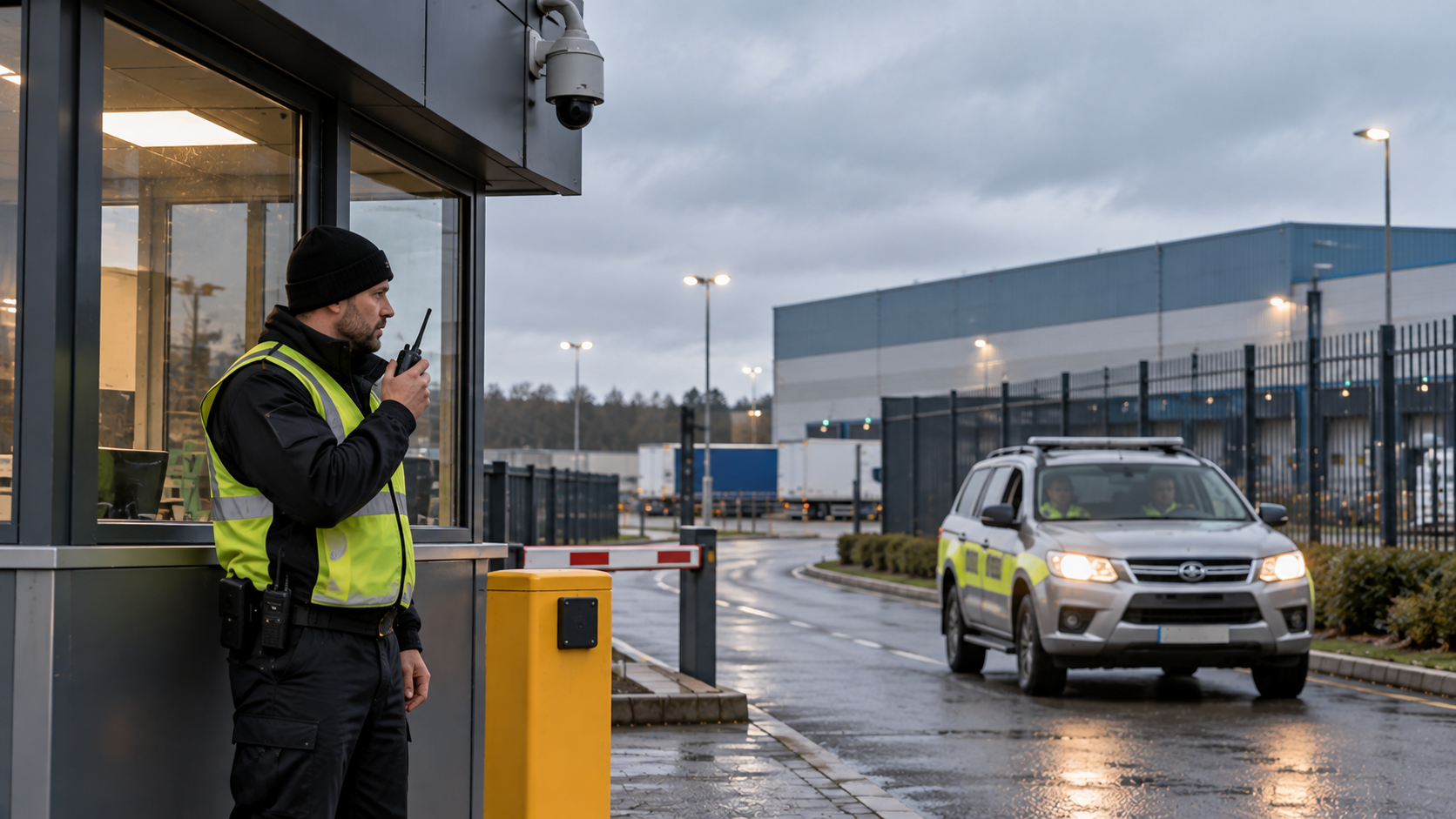
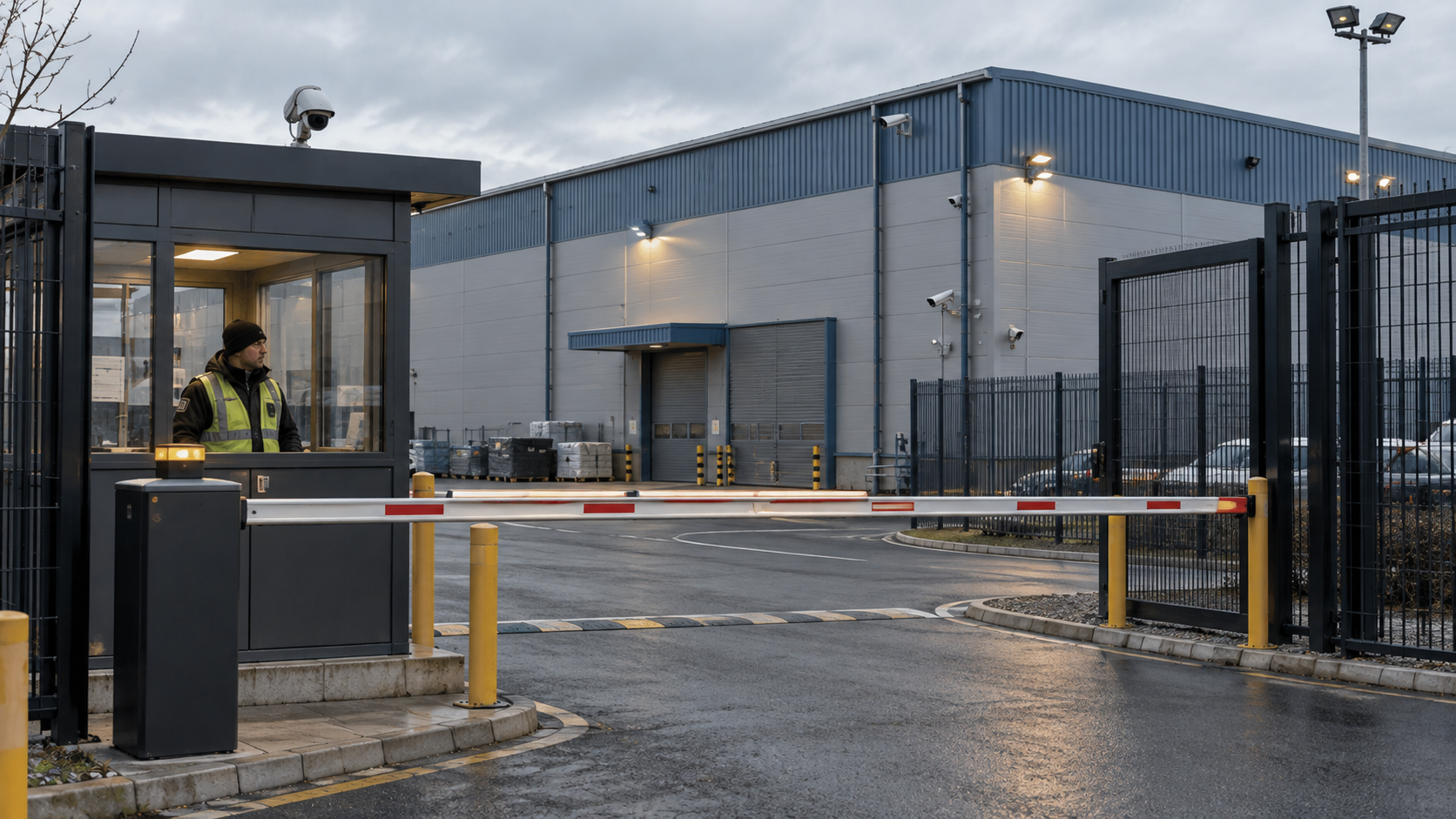
Hull is not a closed system. It never really has been. Goods move through the port day and night. Industrial estates stretch out toward places like Hessle, Melton, and Saltend. Retail parks pull steady footfall through the day, then empty out quickly. Nearby towns such as Beverley, Cottingham, Goole, and the wider Yorkshire & The Humber region feed into this flow constantly.
That movement shapes risk. Not dramatically, but persistently. Security issues here rarely arrive with force. They appear through access routes, delivery schedules, and quiet gaps between activities. Many Hull businesses still approach protection as a reaction. Cameras go up after an incident. Alarms are upgraded when something feels wrong. For a while, that feels enough.
Then routines shift. A neighbouring unit changes use. Trading hours stretch later. An event redirects foot traffic past a site that used to sit unnoticed. The technology stays the same, but the environment does not.
This is why manned guarding for Hull businesses is increasingly part of planning rather than response. In places where public and private boundaries blur, on-site security considerations for Hull sites become harder to solve with systems alone. Understanding why Hull businesses need manned guarding begins with how sites actually operate. Timing, movement, and access points all shape real-world exposure within broader security risk management for Hull businesses.

1. Manned Guarding Basics in Hull
What Manned Guarding Means for Hull Businesses
A camera might record a person moving through a yard. A guard asks why they are there. That difference matters.
At its core, manned guarding means placing trained security personnel on site to observe, deter, and respond when necessary. But that definition only scratches the surface.
In Hull, the value of a guard is not just that someone is present. It is that someone is thinking.
A human guard can interpret tone. They notice when behaviour doesn’t quite fit the setting. They recognise when a routine changes, even if no alarm triggers. That judgement is difficult to encode into a system, especially on sites where activity varies hour by hour.
This is why physical security presence in Hull workplaces plays a different role than it might in a closed, single-use site. Many local businesses operate in spaces that are semi-public by design. Retail parks. Shared industrial estates. Office buildings with multiple tenants and contractors. In these settings, risk rarely arrives with force. It arrives quietly, wrapped in normality.
Manned Guarding vs Static and Remote-Only Security in Hull
Static guarding usually places a guard at a fixed point. A reception desk. A gatehouse. An entry booth. These roles have value, especially for access control and visitor management. But they are limited by geography.
Hull has many sites where risk does not present itself at the front door. It appears at the side gate that rarely opens. The rear loading bay is used once a day. The stretch of fencing that backs onto a quiet road after hours.
Remote monitoring adds another layer. Cameras can cover wide areas. Control rooms can respond quickly. But remote systems depend on visibility and triggers. They struggle with nuance. A suspicious vehicle was parked just outside the boundary. A door that is technically closed but not secure. A person lingering without crossing a defined line.
For this reason, Hull businesses often use guarding alongside CCTV rather than instead of it. Technology extends vision. Guards provide context. Together, they reduce blind spots that appear when access, movement, and timing overlap.
Local Crime Patterns and Site-Specific Risk in Hull
Crime data can be useful, but it rarely explains exposure on its own. Hull businesses that rely only on headline figures often miss how incidents actually take shape on the ground.
Risk here tends to gather where activity thins out, not where attention is loudest. A site with steady daytime use can become vulnerable once routines pause. Access points that feel irrelevant during working hours gain importance once supervision drops. Boundaries that look clear on plans often blur in practice.
Reading local crime patterns and site-specific risk in Hull means looking at how a site behaves over time.
- When does it lose natural oversight?
- Which areas stop being used but remain accessible?
- Where does casual movement turn into unsupervised access without anyone noticing?
Two nearby sites can face very different exposure because of the layout alone. One benefits from passing traffic or neighbouring activity. Another sits just far enough back to be forgotten once the lights go out. Retail environments show the same pattern. Busy spaces can empty suddenly, leaving long gaps before anyone realises something feels wrong.
This is why context matters more than averages. Risk follows pause, access, and assumption, not reputation.
Peak Risk Hours for Hull Businesses
Risk does not behave the same way throughout the day.
During daylight hours, issues tend to centre on people.
- Customer disputes
- Opportunistic theft
- Delivery congestion creates confusion
In the evening and overnight, the focus shifts based on perimeter testing, trespass, and attempts to access plant, tools, or stock.
What matters is not just whether a site is busy or quiet, but how predictable those changes are. Offenders notice routines. They test boundaries when attention drops.
This is why security risk management for Hull businesses depends heavily on timing. Two sites with similar layouts can face very different exposure depending on operating hours, staffing patterns, and surrounding activity.
Hull-Specific Warehouse and Logistics Vulnerabilities
Hull’s logistics and warehousing sector benefits from proximity to the port and major routes. That same advantage creates complexity.
Constant vehicle movement provides cover. Contractors, drivers, and visitors blend into the background. Quiet periods can arrive suddenly once shifts end. After hours, industrial estates around Saltend or the outskirts toward Goole can feel empty, even when valuable stock remains inside.
Remote alarms detect intrusion after the fact. A guard on site can intercept earlier, challenge presence, and secure vulnerable points before loss escalates. This is why the cost of manned guarding for warehouses and retail parks in Hull is often justified by prevention rather than response.
Retail Parks and Anti-Social Behaviour in Hull
Retail parks face a different mix of issues. Theft is one part of it. So is low-level disorder.
Loitering, vehicle-related incidents, and confrontational behaviour can unsettle staff and customers long before anything technically illegal occurs. These situations often develop in daylight, when footfall is high, and attention is divided.
As a result, manned guarding for Hull businesses increasingly includes daytime patrols. Presence alone changes behaviour. Early intervention keeps problems small, which is often the most effective outcome.
Seasonal Events and Temporary Risk Spikes in Hull
Hull’s event calendar reshapes the city regularly. Festivals, waterfront events, and regeneration-led openings draw crowds into areas that are usually quieter.
- Temporary structures appear
- Alcohol consumption increases
- Late-night movement extends beyond standard patterns
For nearby businesses, this changes exposure quickly.
During these periods, on-site security considerations for Hull sites often need adjustment. What worked the previous month may not be enough when footfall triples or access routes shift.
Transport Routes, Access Corridors, and Security Exposure
Bus corridors, arterial roads, and pedestrian routes create predictable movement patterns. Businesses located near these routes experience sudden surges of people, especially during events or service disruptions.
Security planning that ignores movement corridors tends to underestimate risk. Guards help manage these grey areas where responsibility overlaps between public and private spaces.
Economic Change and Business Growth in Hull
Hull continues to evolve. Regeneration projects, expanding industrial footprints, and increased logistics activity bring opportunity. They also introduce new access points, new routines, and new vulnerabilities.
Growth changes how sites are used. Security that once felt adequate can become outdated quietly. This is why security risk management for Hull businesses needs to adapt alongside development, not trail behind it.
2. Legal and Compliance Requirements for Manned Guarding in Hull
Legal compliance is where many security decisions quietly fail. Not because the rules are unclear, but because they are assumed rather than checked. In Hull, as elsewhere in the UK, manned guarding sits inside a defined regulatory framework. Ignoring it doesn’t just create risk. It transfers liability directly onto the business.
SIA Licensing Requirements in Hull
Any individual carrying out licensable security activity must hold a valid SIA licence. This includes guarding premises, controlling access, and patrolling. The rule applies uniformly across Hull, East Riding, and the wider Yorkshire & The Humber region.
For clients, the responsibility does not stop with the supplier. Whether working with a national provider or a security company in Hull, businesses are expected to verify that guards deployed on their site are properly licensed. This is a core part of UK security compliance and SIA regulations, and it is one of the first checks insurers and auditors make.
Licences are time-limited and role-specific. A mismatch between licence type and duties can still place a business in breach, even if a guard holds a badge.
Legal Penalties for Using Unlicensed Guards
Using unlicensed guards is not a technical oversight. It is a criminal offence. Penalties can include fines, prosecution, and invalidation of insurance cover.
For Hull businesses operating in regulated sectors or under public scrutiny, the reputational damage often outweighs the financial cost. Incidents involving unlicensed staff tend to surface quickly during investigations, planning reviews, or insurance claims.
DBS Checks and Vetting Expectations
DBS checks form part of the SIA licensing process. Clients should expect confirmation that appropriate checks have been completed, not access to certificates themselves. Data protection law restricts what can be shared.
The practical question for businesses is simple: can the supplier confirm, in writing, that all deployed guards meet DBS and licensing requirements? If the answer is vague, that’s a warning sign.
BS 7858 Vetting and Why It Matters
BS 7858 vetting goes further than basic checks. It verifies identity, employment history, and suitability for work in secure environments. This matters because guards often handle sensitive access, keys, or evidence.
From an insurance perspective, BS 7858 supports insurance requirements for manned guarding in the UK. Many underwriters now expect it as standard for higher-risk sites such as warehouses, construction zones, and retail parks.
CCTV, Data Protection, and Guard Interaction
CCTV stops being a background system once people actively use it. When guards interact with footage, data protection shifts from policy into daily decision-making; access must be deliberate, not assumed.
Businesses need clarity on who can view recordings, when review is justified, and how use is logged. Problems usually arise during incidents, when footage is shared too loosely or retained without purpose. Clear boundaries reduce exposure and protect the integrity of any investigation.
VAT Treatment of Manned Guarding Services
- Manned guarding services are standard-rated for VAT.
- There is no reduced rate.
- Hull businesses should factor this into forecasts, particularly for long-term or 24/7 cover.
Hull Council and Construction-Site Security Expectations
Construction and regeneration sites often carry planning conditions that require security measures. Temporary layouts, plant storage, and proximity to public routes increase exposure.
Hull City Council and neighbouring authorities may attach specific requirements around fencing, patrols, or access control. These conditions should be reviewed alongside security contracts to avoid gaps.
Security Business Licensing and Compliance History
Reputable suppliers provide compliance documentation without resistance. This includes SIA licences, insurance certificates, vetting standards, and internal policies.
For Hull clients, verification protects more than compliance. It protects continuity. A supplier removed mid-contract for non-compliance creates an operational disruption that few businesses plan for.
Labour Law, Overtime, and Right-to-Work Checks
Guards are subject to UK labour law. Working-time limits, overtime rules, and right-to-work verification apply. For clients, this is about assurance rather than management.
Suppliers should be able to confirm compliance without shifting responsibility back onto the business.
Post-Brexit Implications for Guard Deployment
Post-Brexit changes have tightened verification requirements. Hull businesses should expect suppliers to manage right-to-work checks robustly, especially for long-term deployments.
Event Licensing and the Role of Manned Guarding in Hull
Public events, festivals, and large venues often require documented security plans. Guards play a key role in access control, crowd safety, and escalation procedures.
This is particularly relevant for waterfront events and city-centre activity where public and private responsibilities overlap.
Collaboration with Local Police and Business Partnerships
Private guarding does not operate in isolation. Information sharing through local partnerships supports data-led deployment and coordinated response.
For Hull businesses, this collaboration helps align on-site security with wider community safety efforts without overstepping boundaries.
3. Costs, Contracts, and Deployment in Hull
Cost is often the first question asked and the least useful one on its own. The more useful question is why costs differ and what those differences signal about risk and coverage.
What Drives the Cost of Manned Guarding in Hull
Pricing is shaped by more than one factor. Location plays a role, with city-adjacent sites and public interaction driving higher costs than isolated units. Shift patterns matter too, as continuous cover spreads cost more evenly than short, irregular shifts.
Risk profile plays a role. A quiet office reception does not carry the same exposure as a warehouse operating overnight. This is why the cost of manned guarding for warehouses and retail parks in Hull often reflects prevention rather than response.
Hull City-Centre vs Peripheral Site Costs
City-centre and waterfront-adjacent sites face different pressures. Access complexity, footfall, and interaction increase expectations. Peripheral sites trade that for isolation and delayed response.
Neither is cheaper by default. They are simply exposed in different ways.
Deployment Timelines for Hull Sites
Urgent cover can often be arranged within days, sometimes sooner if a supplier already operates nearby. Planned deployments take longer. Induction, site familiarisation, and documentation matter.
Rushed deployment increases error. Most businesses underestimate how much preparation affects effectiveness.
Contract Lengths and Notice Periods
- Short-term contracts suit temporary risk.
- Long-term agreements support stability and better planning.
- Notice periods protect both parties from sudden gaps.
For Hull businesses with seasonal exposure, flexibility matters more than headline rates.
Inflation, Pricing Stability, and Forecasting
Guarding costs tend to rise gradually. Wage pressure, compliance requirements, and training expectations push prices upward over time.
Long-term contracts often include review clauses tied to inflation indices. This supports predictability and aligns with insurance requirements for manned guarding in the UK.
How Manned Guarding Supports Insurance Assessments
- Insurers value clear structure, backed by patrol logs, incident reports, proof of presence, and defined escalation.
- Manned guarding does not guarantee lower premiums, but it often reduces perceived risk. That difference matters during renewal.
Procurement Act 2023 and Public-Sector Contracts in Hull
- Public-sector contracts now emphasise transparency, compliance, and social value. This raises standards across the industry.
- Private-sector businesses benefit indirectly as expectations shift upward, making compliance easier to verify.
4. Training, Daily Operations, and Guard Duties in Hull
Training and daily routines are where manned guarding either proves its value or quietly fails. Not because guards forget what to do, but because routines lose relevance when sites change, and expectations are assumed rather than reinforced. In Hull, where businesses often operate across mixed-use estates, waterfront zones, and shared access routes, relevance matters more than formality.
Training Standards for Hull Retail, Industrial, and Construction Sites
Training is not universal. Nor should it be. A guard placed at a retail park in Hull faces different pressures than one covering an industrial unit near the docks or a regeneration site on the edge of the city centre.
Retail-focused roles emphasise awareness, de-escalation, and public interaction. Guards must read behaviour without escalating tension. Industrial and logistics environments shift the focus toward perimeter awareness, access control, and lone-worker safety. Construction sites introduce yet another layer: temporary layouts, changing hazards, and increased theft risk tied to tools and materials.
What matters for Hull businesses is not how many certificates a guard holds, but whether their training matches the environment they are stepping into. Mismatched training rarely causes immediate incidents. It causes the following factors:
- Slow failures
- Missed signals
- Late responses
- Incomplete reporting
Start-of-Shift Procedures on Hull Sites
The first minutes of a shift often shape everything that follows. Experienced guards do not rush into patrols. They pause to read the site.
- What changed since the last shift?
- What feels out of place?
- Which areas deserve attention first?
In Hull, this situational awareness matters because sites rarely behave the same way two days in a row. Delivery schedules shift. Neighbouring units operate different hours. Weather alters visibility, especially on exposed industrial estates or waterfront-adjacent locations.
A structured start-of-shift routine is not bureaucracy. It is how guards recalibrate to the site as it exists today, not as it looked on paper.
Shift Handovers and Continuity
Incidents rarely exist in isolation. Patterns emerge across shifts, not within them. This is why handovers matter more than most businesses realise.
A proper handover goes beyond “nothing to report.” It captures context. Repeated vehicle movements. Doors that required adjustment. Areas where lighting failed intermittently. Small details that do not justify escalation alone, but add up over time.
In Hull, where many sites operate extended hours or 24/7 schedules, poor handovers create blind spots. Information gets lost. The same issues repeat. Effective continuity depends on guards passing understanding forward, not just ticking off tasks.
Patrol Routines Without Over-Specification
Patrol routines should never be predictable. Predictability invites testing.
Rather than rigid schedules, effective guarding relies on frequency ranges and variation. High-risk periods demand closer attention. Quiet stretches still need presence, but not in ways that advertise patterns.
This is where access control, patrol routines, and incident response intersect. Patrols are not about walking distance. They are about coverage logic.
- Which areas lose oversight first?
- Which access points become vulnerable once activity drops?
Hull sites with shared yards, rear access routes, or multiple tenants benefit most from patrol strategies that adapt to how space is actually used, not how it was designed.
Alarm Response and Early-Shift Incidents
Early-shift hours often reveal weaknesses. Ambient noise is low. Activity stands out. Alarms trigger more clearly, whether caused by intrusion, mechanical fault, or environmental factors.
Guards responding to alarms follow structured escalation. They attend safely, assess the cause, secure the area, document findings, and notify control or emergency services when required.
Even false alarms matter. Patterns in false triggers often point to vulnerabilities. Poorly secured doors. Faulty sensors. Areas exposed to weather. Ignoring these patterns turns minor issues into larger failures later.
Logging, Reporting, and Audit Value
Daily logs are often misunderstood. They are not written for supervisors alone. They exist for insurers, auditors, and, occasionally, investigators.
Effective reporting records what was seen, not just what happened. Unusual behaviour. Repeated access attempts. Environmental issues. These details give businesses evidence of due diligence and situational awareness.
For Hull businesses operating in regulated sectors or under insurance scrutiny, consistent documentation supports claims, reviews, and renewals. When records are vague, risk becomes harder to defend.
Secure-Down and End-of-Shift Procedures
End-of-shift routines close the loop. Final perimeter checks. Door and gate verification. Lighting confirmation. Equipment return. Outstanding issues were noted clearly for the next team.
Consistency here reduces overnight exposure. Most incidents that escalate overnight trace back to small omissions earlier in the evening.
- A door is not fully secured
- A light was left on
- A fault not logged
In Hull’s varied commercial environments, secure-down routines protect continuity. They ensure the site is left in a known state, not an assumed one.
5. Performance, Risks, and Operational Challenges
Performance in manned guarding is rarely about dramatic incidents. Most of the time, it shows up quietly, in consistency, awareness, and how small problems are handled before they grow. For Hull businesses, the challenge is not deciding whether guards are present, but whether their presence is actually reducing exposure in a measurable way.
KPIs Hull Businesses Should Track
Key performance indicators for manned guarding do not need to be complicated. In fact, the most useful ones tend to be simple and repeatable.
Patrol completion is a baseline. Are patrols happening when they should, and is there evidence to support that? Time-stamped proof-of-presence matters more than written assurances. It shows coverage exists where it is supposed to.
Response time is another indicator. How quickly does a guard move from awareness to attention when something triggers attention? This applies to alarms, disputes, or unusual activity. Slow responses do not always indicate negligence, but repeated delays often signal resourcing or planning gaps.
Reporting quality completes the picture. Clear, consistent logs tell a story over time. Vague notes hide patterns. Detailed observations reveal them. For Hull businesses, these KPIs provide early warning long before incidents escalate.
Weather and Environmental Impact on Hull Sites
Hull’s geography introduces environmental factors that influence guarding effectiveness. Wind, rain, fog, and darkness reduce visibility, especially on exposed industrial estates and waterfront-adjacent sites. Poor weather changes how sound carries and how movement appears on cameras.
Guards working outdoors document weather conditions for a reason.
- It explains patrol timing changes.
- It contextualises visibility limitations.
- It provides clarity later if an incident is reviewed.
Environmental conditions affect infrastructure, causing temporary fencing to shift, gates to warp, and lighting to fail sooner than expected. Businesses that factor weather into performance assessment tend to identify vulnerabilities earlier.
Fatigue and Shift Length
Fatigue is a risk factor, not a staffing issue. Long shifts reduce concentration and slow reaction time, particularly during quiet night hours when stimulation is low. In Hull, where overnight cover is common on industrial and logistics sites, this matters.
From a business perspective, the concern is not how shifts are scheduled internally, but whether fatigue increases operational risk. Missed details, delayed responses, and incomplete reporting often trace back to attention drift rather than lack of intent.
Acknowledging this risk allows businesses to ask better questions about coverage design without stepping into workforce management.
Environmental Regulations Affecting Outdoor Guarding
Outdoor guarding operates under environmental constraints that are easy to overlook. Lighting levels must meet safety standards. Noise must be controlled, particularly during night hours near residential areas. Waste handling around construction and industrial sites follows specific rules.
Guards are often the first to notice when these conditions slip.
- A failed light in a car park.
- A generator running longer than permitted.
- Debris is accumulating near access routes.
Documenting these issues protects businesses from regulatory scrutiny as much as from security risk.
Environmental compliance and security performance intersect more often than expected. Ignoring one usually weakens the other.
6. Technology and Future Trends in Hull Manned Guarding
Technology has not replaced manned guarding in Hull. It has changed where attention goes and how decisions are made. The most effective sites no longer treat people and systems as separate layers. They treat them as one working model.
What matters is not how advanced the technology looks, but whether it improves judgment, speed, and clarity on the ground.
CCTV and Manned Guarding as a Combined Model
CCTV works best when someone is present to act on what it reveals. Cameras extend visibility, but they do not resolve uncertainty. A guard does.
For Hull businesses, this is often the point where decision-makers ask: when should Hull businesses use manned guarding instead of CCTV alone? The answer usually isn’t either-or. It’s timing and context. Sites with changing routines, shared access, or public interaction benefit most when footage supports human response rather than replacing it.
Verification is where the value lies. A guard can confirm whether an alert reflects a real issue, intervene early, and prevent unnecessary escalation.
AI Surveillance as Decision Support
AI-assisted surveillance tools are now common across larger commercial sites. They flag unusual movement, repeat patterns, or perimeter testing across multiple feeds. What they do not do is decide on a response.
In Hull, AI works best as a prioritisation tool. It points guards toward areas that deserve attention sooner. It reduces the time spent scanning empty footage. It sharpens focus during busy or low-visibility periods.
The decision still rests with the person on site. AI supports judgment. It does not replace it.
Remote Monitoring and Lone-Worker Oversight
Remote monitoring centres increasingly support on-site teams. They verify alarms, provide additional viewpoints, and act as welfare checkpoints for lone guards during extended patrols.
For large industrial sites or isolated locations on the outskirts of Hull or toward the East Riding, this layered oversight reduces risk without removing on-site presence. It adds reassurance rather than dependency.
Drone Use on Large Hull Industrial Sites
Drones are appearing on select sites with large footprints. These risks are most common across logistics hubs, industrial estates, and construction zones with wide perimeters.
Their value lies in speed and coverage. A drone can scan an area in minutes that would take much longer on foot. Thermal imaging adds night-time visibility. Live feeds guide guards toward issues faster.
Drones do not replace patrols. They expand awareness; however, foot presence still resolves incidents.
Predictive Analytics for Hull Security Planning
Data-led tools now analyse incident history, time-of-day trends, weather conditions, and nearby activity to model risk. This helps businesses decide when coverage should increase and where attention should focus.
For Hull businesses operating across variable schedules or seasonal demand, predictive analytics reduces guesswork. They support planning decisions rather than reacting to loss.
Upskilling and New Guard Competencies
As systems evolve, guards require broader awareness. Not deeper specialisation, but adaptability.
Digital reporting platforms, basic AI interpretation, counter-terror awareness, and evidence handling are becoming standard expectations. These skills help guards operate confidently within modern security environments without turning the role into a technical one.
Green Security Practices
Sustainability is influencing security decisions. Electric patrol vehicles. Motion-triggered lighting. Digital logs replacing paper. Energy-efficient CCTV towers.
Hull businesses increasingly consider environmental impact alongside risk management. Green practices do not weaken security. When applied properly, they often improve efficiency.
Martyn’s Law and Future Venue Security in Hull
Martyn’s Law will raise expectations for protective security at public venues, festivals, and large events. Training, planning, and documentation requirements will increase.
For Hull venues, especially those hosting waterfront events or operating near busy transport routes, this will formalise practices that many already follow. Manned guarding will play a central role in crowd awareness, access control, and incident escalation.
7. Conclusion
Understanding why Hull businesses need manned guarding is not about reacting to crime. It is about recognising how risk forms in real environments. Port activity, industrial expansion, retail footfall, regeneration, and public events. These forces shape exposure quietly and continuously.
Manned guarding offers something technology cannot deliver alone: judgement. The ability to interpret behaviour, adapt to change, and intervene before small issues escalate. When combined with systems like CCTV, AI, and remote monitoring, it strengthens resilience rather than replacing human oversight.
For decision-makers, the question is rarely whether guarding is affordable. It is whether gaps exist that systems cannot close on their own. In many cases, how on-site security reduces operational risk for Hull businesses becomes clear once timing, access, and movement are examined honestly.
Good security planning does not rely on fear or urgency. It relies on understanding how sites actually operate, and choosing measures that support continuity, compliance, and confidence over the long term.
8. Frequently Asked Questions
1. Do Hull businesses legally need SIA-licensed guards?
Yes. Any guard performing licensable activities must hold a valid SIA licence. Clients are responsible for verifying this.
2. When should Hull businesses use manned guarding instead of CCTV alone?
When sites rely on judgment, early intervention, or flexible response rather than alerts alone.
3. How quickly can manned guarding be deployed in Hull?
Urgent cover may be arranged within days. Planned deployments typically take longer to ensure proper induction and setup.
4. What are the legal requirements for hiring security guards in Hull?
SIA licensing, appropriate vetting, insurance cover, and compliance with data protection law.
5. How does manned guarding affect insurance for Hull businesses?
Insurers often view documented guarding as reduced risk, particularly where logs and escalation procedures are clear.
6. Is guarding required on Hull construction and regeneration sites?
Often yes, especially where planning conditions or public proximity increase exposure.
7. How is guarding performance measured on Hull commercial sites?
Through patrol verification, response times, and the quality of incident reporting.
8. Will Martyn’s Law change security expectations for Hull venues?
Yes. It will raise standards for planning, training, and documentation at public-facing sites.