Glasgow works hard. Shops open early and close late; industrial estates run busy arterial roads, while warehouses move stock around the clock. Offices, campuses, hospitals, and nightlife venues operate on different rhythms, often within the same few streets. That overlap matters.
Security risk in Glasgow rarely comes from isolated threats. It grows from movement. From people passing through spaces not designed for constant use. From quiet periods that follow busy ones. From sites that feel watched during the day and forgotten after dark. These shifts create opportunity, and opportunity is what most incidents respond to.
Cameras capture events, alarms respond instantly, and remote monitoring verifies what is actually happening on site. But none of those systems can read intent. They cannot challenge behaviour, adjust in real time, or decide when something small is about to become a larger problem. That gap is where on-site presence still carries weight.
For many organisations, the question is no longer whether security exists, but whether it matches how the site actually behaves. Why Glasgow businesses need manned guarding often comes down to judgment, continuity, and accountability. Not visibility for its own sake, but someone present who understands the space, notices change, and acts before disruption spreads.
That balance is what separates proportionate protection from unnecessary spending.
Manned Guarding Basics in Glasgow
What Manned Guarding Really Means on the Ground
When people talk about manned guarding, they often imagine a guard standing at a gate. In reality, it’s an active role that covers assessment, deterrence and resolution.
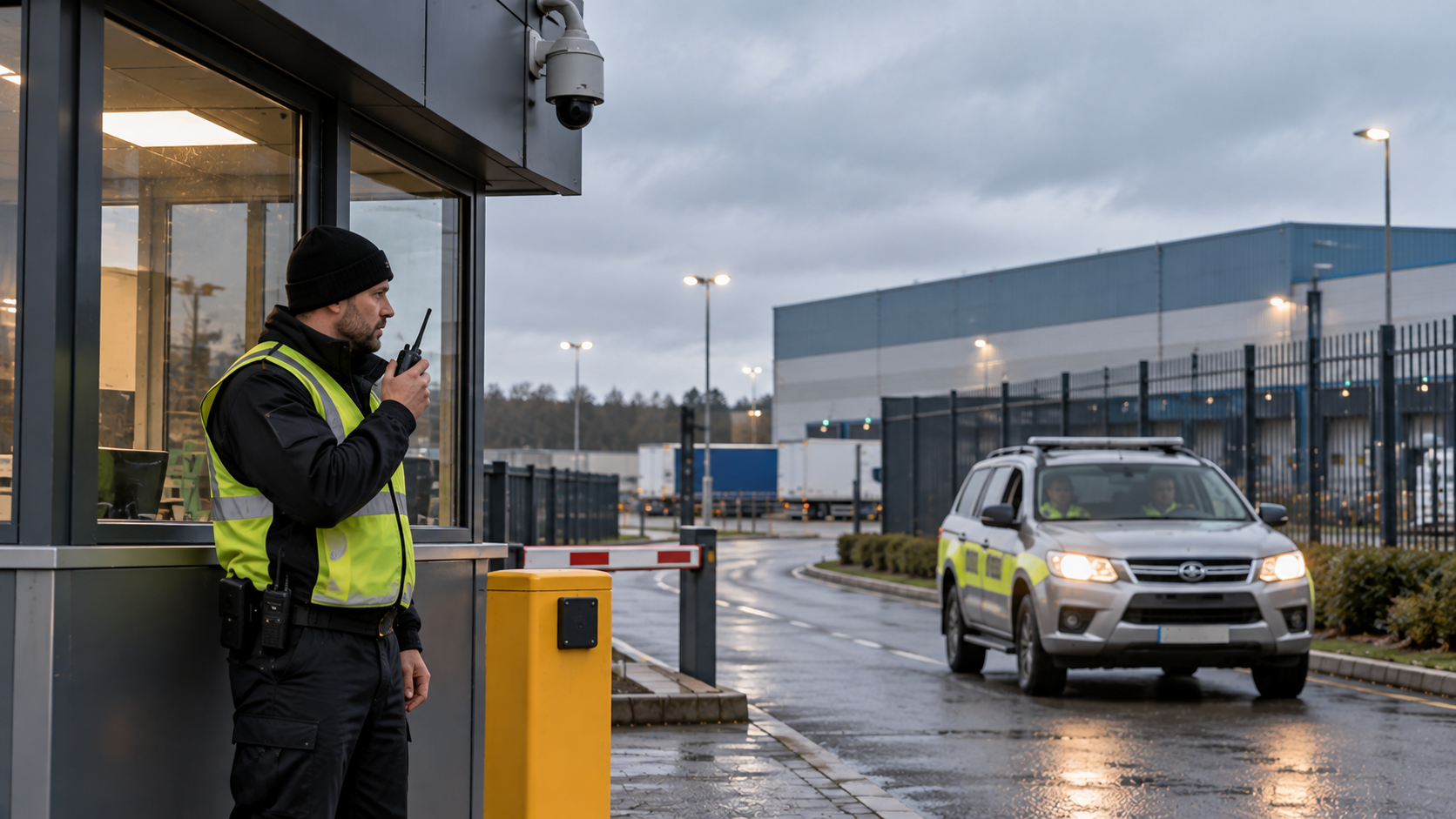
Manned guarding combines presence with decision-making. In Glasgow, guards patrol, observe behaviour, interact with visitors, and respond to unexpected activity. They do not simply stand still or watch screens. They interpret situations and act in ways that technology cannot.
This distinction sets manned guarding apart from static security posts and remote monitoring alone. Static posts cover fixed points like entrances. Remote systems watch from afar. Neither can, on their own, judge intent, read behaviour or adapt to unfolding events; tasks trained personnel do and must perform without hesitation.
How Crime Patterns in Glasgow Shape Guarding Demand
Glasgow’s commercial areas see patterns of unwanted activity that matter more than raw numbers.
Retail theft, for example, often occurs where footfall is high, and stalls or displays break lines of sight. Warehouses and distribution hubs near shared road networks attract opportunistic intrusion when lighting falls and staff numbers thin.
Across Scotland, public crime data highlights these trends from shoplifting to vandalism in mixed-use zones. You can review official crime statistics for Glasgow using the Police.uk crime mapping portal.
Understanding where and when incidents happen allows businesses to plan guard deployment around exposure, not just perception. For many operators, this is where Why Glasgow businesses need manned guarding becomes a practical consideration rather than a theoretical one, rooted in patterns they see week after week.
Daylight Exposure: What Glasgow Businesses See Most
In daytime hours, three risk themes repeat:
- Movement + opportunity — retail and public spaces fill with shoppers, couriers and deliveries.
- Transactions and disputes — customer-staff conflicts and misunderstandings can escalate quickly.
- Temporary blind spots — high foot traffic crowds can conceal theft or interference.
These are not theoretical hazards; they are grounded in the way parts of the city buzz during business hours. Guards deployed during these windows help reduce the chance that small issues become costly incidents.
After Dark: Why Quiet Hours Can Be Risky
The night brings a different challenge. As staff leave and pedestrian traffic thins, patterns change. Darkness narrows visibility. Fewer witnesses are present. Perimeters become more attractive to those testing gates or fences.
In areas near transport links or late-night venues, these conditions can invite:
- Trespass
- Vandalism
- Perimeter probing
On these shifts, guards focus less on customer interaction and more on coverage, patrol patterns, and escalation readiness, responding to detectable signals before they become losses.
Glasgow Logistics and Industrial Sites: Unique Vulnerabilities
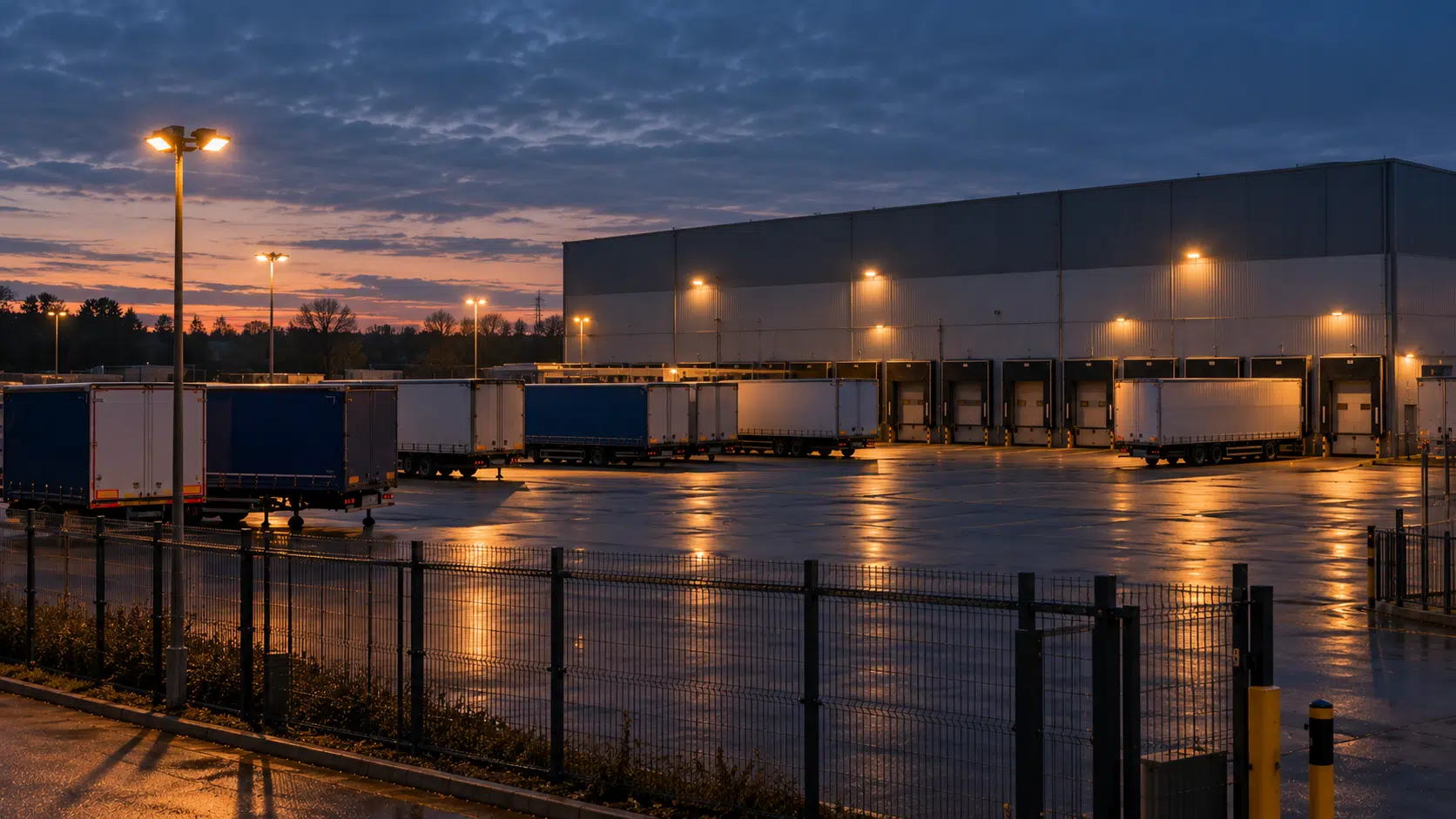
Many logistics and warehousing facilities lie close to major roads, shared access lanes, and public footpaths. These overlapping movement channels create entry points simply because traffic converges there.
Common weak spots include:
- Multiple unsupervised loading bays
- Long fencing lines with poor natural surveillance
- Dark corners between buildings
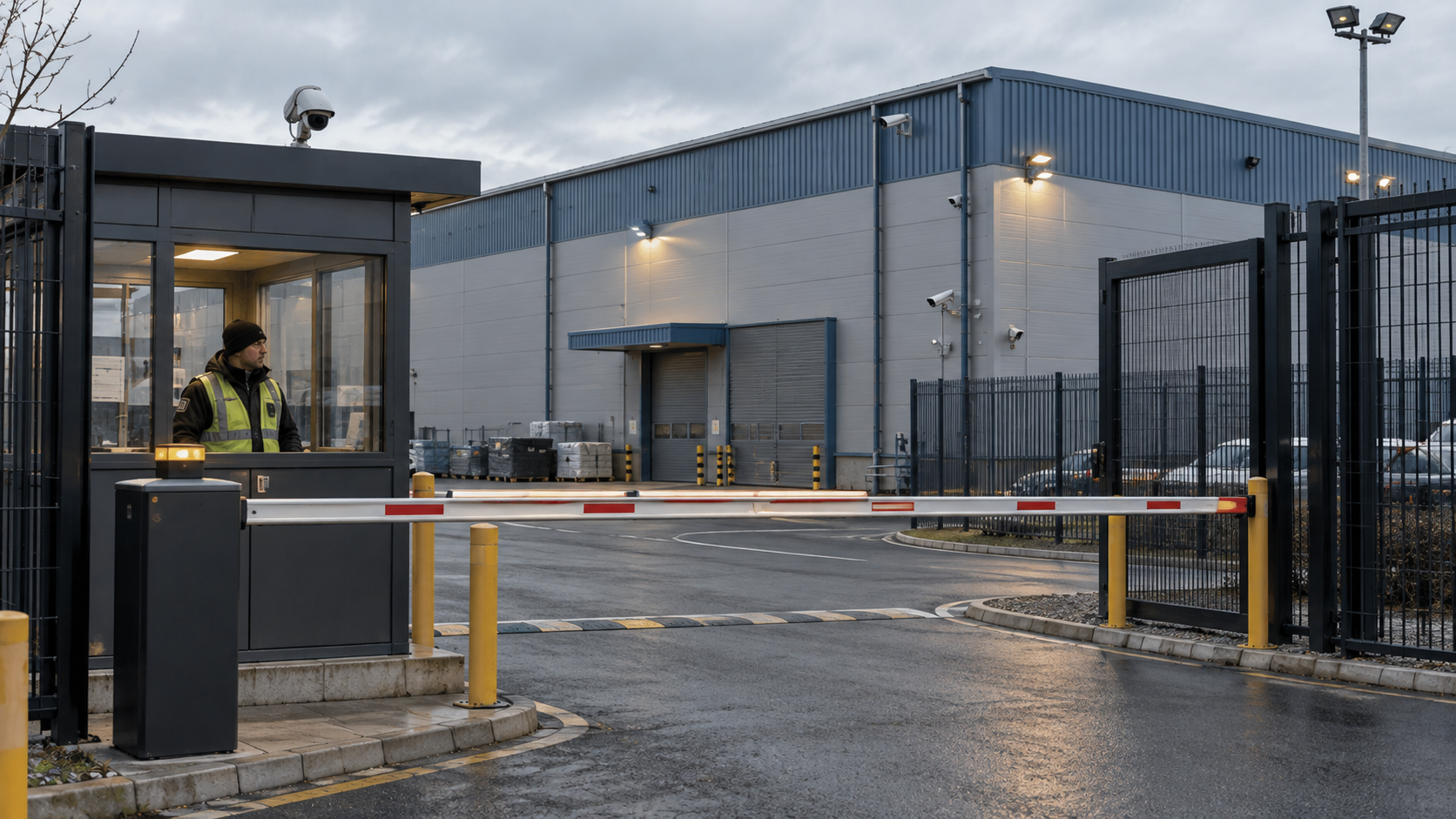
CCTV can detect movement, but guards can intercept it, challenge it, and secure entry points in real time. That ability helps turn reactive alerts into preventive action.
The exposure around shared access routes and outer estates follows a familiar pattern. Industrial centres such as Aberdeen have faced comparable boundary risks across logistics and energy-related sites for years.
Retail Parks and Behavioural Deterrence
Retail parks blend parking, shop entrances, pedestrian paths and leisure facilities, making them complex from a security perspective. Here, manned guarding reduces unwanted behaviour in ways cameras struggle to do on their own.
Visible personnel:
- Interrupt loitering
- Reduce vehicle-related disruption
- Manage low-level disorder before it spreads
In practice, this sends a clear message: the site is not unattended, even in busy periods.
Event-Driven Shifts in Risk That Matter
Glasgow plays host to festivals, concerts, football matches and public events throughout the year. These events increase footfall, shift movement patterns and create temporary pressure points.
Event-adjacent businesses sometimes underestimate how quickly normal routines change during these windows. Manned guarding allows for flexible, short-term coverage that responds to temporary spikes in foot traffic and behaviour change.
This is not panic. It is a proportionate adaptation to predictable shifts in exposure. High-impact venues in smaller cities often face sudden changes in risk. Stirling illustrates how short-term footfall surges can reshape security needs very quickly.
Transport Nodes as Security Boundaries
Transport infrastructure, underground stations, bus hubs, and tram corridors intersect with commercial zones. These spots see surges of movement that are hard to interpret from static cameras alone.
When public and private spaces blur, responsibility becomes shared. On-site guards monitor these thresholds closely. Their presence reduces the chance that erratic behaviour moves into private property.
Glasgow’s Development Landscape and Guarding Needs
Security needs evolve as the city grows. New developments, repurposed buildings, and regeneration zones change how people move and where risk pools form.
Growth brings more spaces to manage. More access points. More transitions between day and night economies. Manned guarding in Glasgow allows businesses to adapt their security posture as the city’s footprint changes.
Legal & Compliance Requirements for Manned Guarding in Glasgow
SIA Licensing Requirements in Scotland
In the UK, anyone performing licensable security duties must be properly authorised. In Scotland, that licence comes from the Security Industry Authority (SIA). SIA licensed security guards Scotland are trained and vetted to operate in the private security sector. They are verified to meet regulatory standards, which means businesses can be confident guards on site have passed background checks and met training requirements.
These licensing and vetting rules apply consistently across Scotland, which is why businesses operating in multiple regions must treat compliance as a baseline rather than a local variation.
The UK Government clearly sets out which activities require an SIA licence: guarding property, escorting goods, controlling access and responding to incidents are all licensable. Understand the SIA licence conditions that apply to your role.
Operating without an SIA licence is not a minor oversight. It is a criminal offence. Both the guard and the employer can face prosecution. For business owners, that means diligence at the point of engagement, verifying licences before guards ever set foot on your site.
BS 7858 Vetting and Why It Matters to Clients
Beyond an SIA badge, best practice in guarding includes vetting to recognised standards. BS 7858 security vetting UK is a British Standard that sets out how personnel should be screened before they work in a secure environment. It goes deeper than basic criminal records checks by verifying identity, employment history, and character references.
Insurers, auditors, and regulated clients increasingly expect BS 7858 compliance on higher-risk sites. The standard exists because guards often handle sensitive tasks: access control, key custody, and evidence support. When someone in that role fails screening, the consequences ripple beyond that individual. Proper vetting makes those consequences far less likely.
DBS Checks and Client Expectations
DBS (Disclosure and Barring Service) checks form part of the security vetting process. They provide insight into criminal records. In Scotland, DBS checks are integrated into licensing procedures rather than issued as standalone certificates for clients to hold. This keeps personal data protected.
What clients should expect is written confirmation that guards on their site have undergone appropriate checks as part of their SIA licence and BS 7858 vetting. That confirmation is a simple but powerful compliance checkpoint.
Security Company Licensing and Compliance History
It is not only individuals who must be compliant. Security firms themselves must operate within legal parameters. While the SIA does not issue a single, universal “company licence” for all operations, many contracts, especially public-sector ones, require suppliers to hold appropriate business authorisations and compliance records.
When engaging a security company in Glasgow, due diligence should begin well before a contract is signed. Reputable providers will be able to present the following without hesitation:
- SIA individual licences for each guard
- Evidence of vetting standards applied (BS 7858)
- Insurance certificates
- Internal policies on oversight and incident reporting
A security team without transparent documentation is a risk. It’s that simple.
Insurance Requirements for Glasgow Businesses
Insurance sits at the intersection of compliance and risk management. Public liability and employer’s liability coverages are standard when you engage guarding teams. These protect a business if a guard injures a visitor or if operational activity causes property loss.
However, insurers do more than check paper. Many now require evidence of:
- SIA licences held by guards on site
- Documented patrol logs
- Escalation procedures
- Incident reporting capability
If a claim arises and documentation is incomplete, carriers may limit or decline coverage. For construction sites or larger commercial premises, insurance companies may insist on periodic audits of security practices before they accept risk.
CCTV, GDPR, and Human Oversight
CCTV is a powerful tool, but it is not neutral. When CCTV is part of your protection mix, UK data protection law applies. That means:
- Clear signage alerting people that cameras are operating
- Defined purpose for recording (security, safety)
- Secure storage and controlled access to footage
- Set retention periods
CCTV and manned guarding integration works well when policy binds camera systems and human response. Guards should know who can watch footage, how long it can be stored, and when it should be handed over to the police. That integration protects not just your site, but your compliance posture.
VAT and Tax Treatment of Manned Guarding
From a tax perspective, security services, including manned guarding, are usually standard-rated for VAT in the UK. That means there is no reduced rate or exemption simply because a service protects people or property.
For budget planning, businesses must include VAT in forecasts and contractual pricing. When you compare quotes, make sure you know whether figures include VAT. Mistakes here are common and often costly.
Council Rules and Construction-Site Security in Glasgow
Local authority planning conditions sometimes attach specific security requirements to construction or event permits. These can include:
- Perimeter patrols
- Controlled access points
- Fixed barrier arrangements
These are not national laws, but conditions tied to permissions. When they are present, compliance is enforceable and can influence insurance and liability expectations. Always review planning conditions before work begins to ensure security plans align.
Labour Law, Overtime, and Post-Brexit Realities
Guards are workers, not contractors. UK labour law applies the same protections you would see in any other sector:
- Legal working hours and overtime compensation
- Right-to-work checks (especially important for EU nationals after Brexit)
- Fair treatment standards
Poor record-keeping here can jeopardise SIA licences and expose businesses to fines. Compliance is not a checkbox. It is part of risk management.
Event Licensing, Protect Duty, and Martyn’s Law
The landscape of protective security is shifting. Under the emerging Protect Duty (often called Martyn’s Law), venues and events across the UK, including those in Glasgow, will face elevated expectations for protective measures.
This law will require stronger planning, documentation, and preparedness for public safety. Manned guarding is likely to play a central role in meeting those expectations, especially where crowd management and prompt escalation are needed.
Police Collaboration and Data-Led Deployment
Private security no longer works in isolation. In many areas, including Glasgow, manned guarding firms and local policing partners share data and insight. Structures like Business Crime Reduction Partnerships (BCRPs) allow businesses to understand where incidents cluster and how patrols can be aligned with real local activity.
This collaboration reduces guesswork and focuses resources where they do the most good.
Costs, Contracts, and Deployment in Glasgow
What Drives the Cost of Manned Guarding for Glasgow Businesses
Businesses often ask for a simple hourly rate. In practice, the cost of manned guarding reflects how a site behaves, not just how large it is.
Location is one of the biggest drivers. City-centre premises usually cost more to secure than suburban or peripheral sites. The reason is not prestige. It is complexity. Higher footfall, mixed use, longer operating hours, and constant interaction all raise the level of attention required from on-site teams.
Risk profile matters just as much. A quiet office entrance with controlled access does not cost the same as a logistics yard with multiple loading bays and nighttime vehicle movement. The more unpredictable the environment, the more planning and supervision the service requires.
Skill requirements also influence pricing. Guards trained in conflict management, emergency response, first aid, or customer-facing roles typically sit at a higher rate. This is not about seniority. It reflects responsibility and exposure.
Finally, technology expectations play a role. Digital patrol systems, incident-reporting platforms, or body-worn cameras add accountability and evidence, but they also add cost. The question for businesses is whether those tools reduce risk elsewhere, particularly with insurers.
City-Centre Versus Suburban Guarding Costs
In central Glasgow, guarding often involves constant interaction. Guards manage access, respond to queries, and observe behaviour throughout the day. The pace is faster. Decisions are made more frequently. That environment carries a higher operational load.
Suburban or edge-of-city sites trade interaction for coverage. Guards walk longer patrol routes, monitor wider perimeters, and operate with fewer interruptions. The work is quieter, but not simpler. Long gaps between incidents can increase risk if coverage is thin.
This is why pricing varies across Greater Glasgow. It reflects how demanding the site is to manage safely, not how visible it appears to be.
Inflation, Cost Pressure, and Forward Pricing
Guarding costs have risen steadily in recent years. Not suddenly and unpredictably, but incrementally.
Statutory pay levels rise over time. Training requirements expand alongside them, and compliance expectations become tighter. None of these changes reverse once they are in place, and for labour-led services like manned guarding, the cost impact flows straight into pricing.
Well-structured contracts account for this. Many include agreed review points linked to inflation indicators. This allows costs to move gradually rather than spiking at renewal. From a business perspective, that predictability matters more than chasing the lowest initial rate.
Under-priced guarding often fails quietly.
- High turnover
- Inconsistent coverage
- Weak reporting
Those issues rarely show on an invoice, but they surface during incidents, audits, or insurance claims.
Deployment Timelines in Glasgow
How quickly guards can be deployed depends on the situation.
After an incident or sudden vulnerability, urgent cover may be needed. Local suppliers can often mobilise within days rather than weeks. Planned deployments take longer. Induction, site familiarisation, uniforming, and documentation all need time.
Rushing mobilisation increases risk. Guards who do not know a site cannot protect it properly.
Contract Lengths and Notice Periods
Most guarding contracts fall into three broad categories.
- Short-term contracts cover temporary exposure. Construction start-ups. Event periods. Post-incident stabilisation. They cost more per hour but offer flexibility.
- Medium-term contracts, often six or twelve months, suit retail parks, industrial units, and shared commercial sites. They balance cost control with continuity.
- Long-term contracts provide stability. They support consistent coverage, clearer escalation procedures, and better site familiarity. Notice periods are longer, but disruption is lower.
Choosing the right length is about matching security to risk, not locking into convenience.
Insurance Implications and Risk Reduction
Insurers look beyond presence. They assess the process.
Businesses with structured manned guarding often benefit from lower perceived risk. Underwriters value patrol logs, access records, incident reports, and proof-of-presence data. These show not just that guards were on site, but that risks were actively managed.
In many cases, the cost of guarding is partially offset by reduced premiums or improved claim outcomes. That benefit rarely appears on day one. It shows over time.
Public-Sector Procurement and Wider Market Impact
Under the Procurement Act 2023, public-sector buyers now prioritise value, transparency, and compliance over the lowest price. That shift affects private markets too.
As standards rise, poorly specified guarding becomes harder to justify. For Glasgow businesses, this means clearer expectations, stronger documentation, and fewer grey areas in service delivery. Similar procurement pressures are already visible in cities such as Edinburgh, where public-sector expectations have quietly influenced private contracts as well.
Performance, Risks, and Operational Challenges in Glasgow
What Performance Really Looks Like on a Live Site
Good guarding performance is rarely dramatic. Most of the time, nothing happens. That silence is not accidental.
For businesses, performance is best measured by what doesn’t escalate. Fewer unresolved incidents. Shorter disruptions. Clear records when something does occur. The most useful indicators are simple: how quickly guards respond, whether patrols are completed as planned, how clear reports are, and whether visitors are managed consistently.
In Glasgow, where many sites operate close to public routes and shared spaces, response time matters more than raw presence. A guard who reaches a loading bay within minutes prevents loss. One who arrives late writes a report instead.
Reporting Quality as a Risk Control Tool
Incident reports are often treated as paperwork. In reality, they are one of the highest risk controls a business has.
Clear reporting builds a timeline. It shows what was noticed, when it was noticed, and how it was handled. Insurers rely on that clarity. So do auditors and investigators. Vague logs weaken claims. Precise ones protect decisions.
Patterns also surface through reporting. Repeated fence checks in the same corner. Alarms that trigger during similar weather conditions. Vehicles appear at predictable times. These details inform adjustments long before a serious incident occurs.
Good performance is visible on paper before it ever appears in statistics.
Weather as an Operational Risk, Not an Excuse
Glasgow’s weather shapes behaviour more than many businesses expect. Heavy rain reduces visibility and foot traffic. Cold nights push people toward shelter. High winds create noise, movement, and distraction.
Guards document weather conditions because they explain risk. A delayed patrol during icy conditions is different from a missed patrol with no explanation. Wind-triggered alarms reveal vulnerable fixtures. Rain highlights lighting failures and drainage issues.
These notes are not defensive, but they are diagnostic. They help businesses understand how environmental factors influence exposure.
Fatigue, Quiet Hours, and Decision Quality
Risk increases when attention drops, not when activity spikes.
Long night shifts on quiet sites place real strain on concentration. When incidents are absent, awareness can slowly fade, and routines take over. This is when small signals are missed, such as a door not fully closed, a light switched off, or a gate that fails to latch cleanly.
Well-run operations manage this through structure.
- Clear patrol intervals.
- Supervisor check-ins.
- Defined routines that keep guards moving and engaged.
These measures exist to protect decision quality, not to control behaviour. For businesses, the outcome is consistency.
Environmental and Safety Compliance Pressures
Security operations intersect with environmental rules more often than expected. Lighting levels in car parks. Noise complaints during night patrols. Temporary works around scaffolding or barriers.
Guards document these conditions because compliance failures carry costs. Councils inspect. Neighbours complain. Insurers ask questions after incidents. A record showing that issues were noticed and escalated protects the organisation.
Ignoring these details does not make them disappear. Recording them gives businesses options.
The Risk of Under-Specification
One of the most common challenges is not poor guarding, but poorly specified guarding.
When coverage does not match how a site behaves, gaps appear. Too few patrols during peak hours. Too much coverage when nothing happens. Performance suffers quietly until an incident exposes it.
In Glasgow’s mixed-use environments, specification matters. Sites change behaviour by time of day, season, and surrounding activity. Guarding that adapts performs better than guarding that simply exists.
The challenge is not complexity. It is alignment.
Technology and Future Trends in Glasgow Manned Guarding
Technology as a Force Multiplier, Not a Replacement
Technology has changed how guarding works, but it has not changed why guards are needed.
Digital patrol systems now timestamp movement and confirm presence. Incident-reporting platforms attach photos, videos, and notes in real time. For businesses, this creates an audit trail that did not exist a decade ago. It shows not just that someone was on site, but what they saw and what they did.
What technology does not do is decide whether behaviour is suspicious, harmless, or escalating. That decision still sits with the person on the ground. In Glasgow’s mixed-use environments, that judgement matters more than detection alone.
Post-COVID Changes That Still Shape Guarding
Many sites never returned to predictable occupancy after COVID. Offices are empty earlier. Warehouses run longer hours. Retail footfall spikes unevenly.
This irregular use has increased the value of on-site awareness. Guards now manage spaces that change character throughout the day. Access points that were quiet at noon may be busy by evening. Areas once locked now reopen for hybrid working.
Security that relies only on schedules struggles in these conditions. Manned guarding adapts more easily because it responds to what is happening, not what was planned.
AI-Assisted Surveillance in Practical Terms
AI surveillance tools are increasingly used across Glasgow, especially on larger sites. These systems flag unusual movement, repeated behaviour, or loitering across camera feeds.
The key point is this: AI highlights patterns. It does not interpret context.
A flagged alert still requires a human decision.
- Is the behaviour normal for this time and place?
- Does it require challenge, monitoring, or no action at all?
Businesses that treat AI as guidance rather than authority get better outcomes.
Remote Monitoring and Hybrid Security Models
Remote monitoring centres now verify alarms, guide on-site response, and maintain oversight during lone-worker patrols. For many Glasgow businesses, hybrid models have become standard.
This approach reduces false call-outs and focuses guard time where it matters. The two systems support each other rather than compete, such as
- Cameras confirm
- Guards respond
Hybrid models also scale more easily. During seasonal peaks or short-term risk spikes, coverage can increase without restructuring the entire operation.
Drone Support on Large or Complex Sites
Drones are appearing on large industrial estates and logistics hubs, particularly those with long perimeters or hard-to-access zones. They provide rapid visibility and thermal imaging during night hours.
Their role is limited but effective, with drones providing observation while guards handle response. For businesses, this allows faster confirmation without replacing foot patrols responsible for resolution and reporting.
Predictive Analytics and Smarter Deployment
Security data is increasingly analysed over time. Patrol logs, incident reports, weather notes, and alarm triggers now feed into models that highlight trends.
These insights help businesses answer practical questions:
- When does risk rise?
- Which areas attract repeat issues?
- Where does coverage need adjustment?
This is not guesswork. It is informed planning.
Skills, Sustainability, and New Expectations
Guards today are expected to understand digital systems, basic data protection, and counter-terror awareness. These skills reflect changing risk, not industry fashion.
Sustainability is also shaping procurement. Electric patrol vehicles, efficient lighting, and digital reporting reduce environmental impact. For many organisations, these factors now influence contract decisions.
Martyn’s Law and the Next Shift in Expectations
The UK government’s proposed Protect Duty, often called Martyn’s Law, will raise expectations for preparedness at venues and public-facing sites. Guidance published by the Home Office already signals a move toward structured planning and documented response.
For Glasgow venues, this will not mean more theatre. It will mean clearer roles, better records, and guards trained to spot vulnerability early.
Conclusion: Making Confident Security Decisions in Glasgow
Security decisions in Glasgow are rarely about extremes. Most businesses are not choosing between doing nothing and doing everything. They are deciding how closely their security setup matches the way their site actually behaves.
That is why Glasgow businesses need manned guarding to become a practical question, not a theoretical one. Movement changes by the hour. Quiet periods follow busy ones. Access points multiply as operations grow. Technology helps record and alert, but it cannot judge when behaviour shifts or when a small issue is about to spread.
Manned guarding works best when it is proportionate, coverage aligns with operating hours, and presence focuses on transition points. When reporting feeds back into planning rather than sitting unused.
For many organisations, a short review of layout, timings, and recent incidents is enough to reveal gaps. Not weaknesses, but mismatches. Addressing those early protects people, property, and continuity without overcommitting resources.
Clarity, consistency, and judgment are what reduce risk over time. Everything else supports that foundation.
Request a tailored security assessment today.
Frequently Asked Questions
1. Do Glasgow businesses legally need manned guarding?
Not in every case. However, if a business carries out licensable security activities such as access control or patrols, those duties must be performed by properly licensed guards.
2. When should a business use on-site security guards in Glasgow?
CCTV and alarms have limits when site design or operating hours introduce coverage gaps. Those limits become clearer when behaviour changes by time of day or incidents follow a pattern.
3. What is the cost of manned guarding for Glasgow businesses?
There is no fixed rate. Costs depend on location, risk level, hours of cover, and skill requirements. City-centre and high-activity sites usually cost more than quieter locations.
4. Are SIA licences mandatory for guards working in Scotland?
Yes. Any guard carrying out licensable security work must hold a valid SIA licence. Using unlicensed guards is a criminal offence and can affect insurance cover.
5. How does manned guarding compare to CCTV-only security in Glasgow?
CCTV observes and records. Guards interpret situations and act in real time. Many businesses use both together rather than relying on one alone.
6. What legal requirements apply when hiring security guards in Scotland?
Key requirements include SIA licensing, appropriate vetting, valid insurance, compliance with data-protection rules, and adherence to UK labour law.
7. Can manned guarding reduce insurance premiums?
Often, yes. Insurers value patrol logs, incident records, and proof of active risk management, which can lower perceived risk over time.
8. Will Martyn’s Law affect Glasgow venues and events?
Yes. The Protect Duty will increase expectations around planning, documentation, and preparedness for public-facing sites and venues.