Introduction
Retail businesses in Carlisle operate within a distinct local context. The city serves as a commercial hub for Cumbria, attracting shoppers from surrounding towns and rural areas. This creates predictable footfall peaks around the city centre, retail parks, and transport-linked shopping zones. While this activity supports trade, it also increases exposure to theft, antisocial behaviour, and opportunistic crime particularly during busy periods and seasonal surges. National retail crime reporting consistently identifies theft and antisocial behaviour as the most common incidents affecting UK retailers, with higher concentration during peak trading times.
Retail security in Carlisle is not only about preventing shoplifting. Many local businesses face a broader mix of risks, including staff safety concerns, repeat offenders targeting familiar stores, and incidents linked to alcohol-related disorder during evenings and weekends. Smaller retailers and independent stores are often more exposed, as they operate with lean staffing and limited back-of-house controls compared to national chains.
For Carlisle businesses, retail security plays a practical role in managing risk rather than reacting to incidents. It helps owners and managers demonstrate due diligence, protect staff, and maintain a safe shopping environment without disrupting customer experience. Understanding when retail security is justified and how it aligns with local crime patterns, legal responsibilities, and operational realities is essential for making informed, defensible decisions.
Table of Contents
Understanding Retail Security Basics in Carlisle
What retail security means in practice
Retail security refers to the use of trained security personnel and supporting measures to protect shops, staff, customers, and stock during trading hours and vulnerable periods. In Carlisle and wider parts of Cumbria, this is most often applied as store-based guarding, visible deterrence, or shared coverage across retail zones, rather than the large-scale static guarding typically seen in industrial environments elsewhere in the North West.
Unlike static or remote-only security such as CCTV or alarm systems, retail security relies on human judgement. A guard can identify suspicious behaviour, manage confrontations, support staff during incidents, and intervene early before theft or disorder escalates. This ability to assess intent and respond in real time is what distinguishes retail security from purely technology-led solutions.
For many retailers operating in Carlisle and comparable regional centres across Cumbria, the decision is not “guards or cameras”, but how human presence complements existing systems particularly where staff safety, open access layouts, or repeat theft are ongoing concerns.
How local crime patterns shape retail security needs
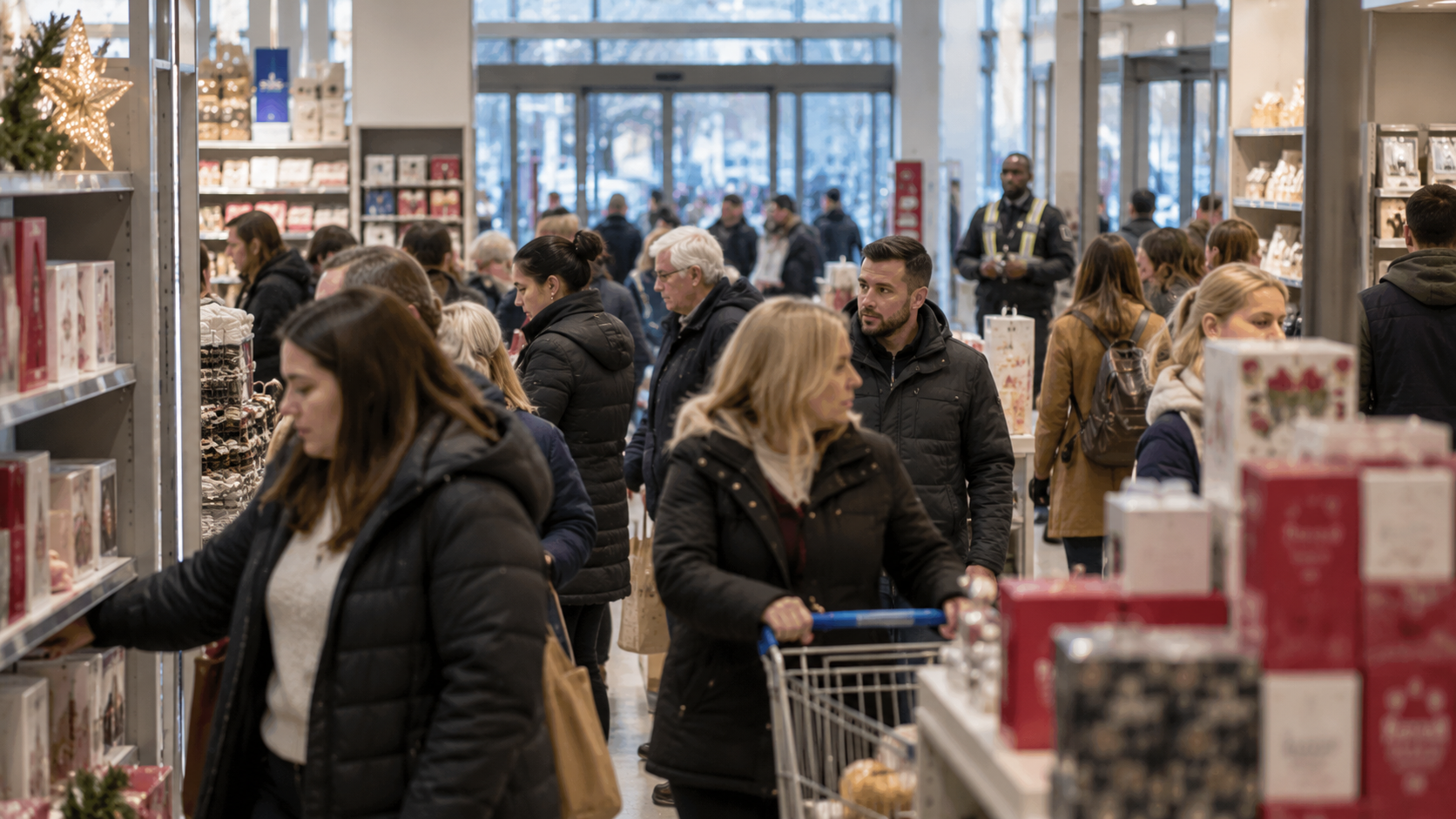
Carlisle’s retail crime profile reflects its role as a regional shopping destination. The city centre, retail parks, and transport-adjacent shopping areas experience concentrated footfall at predictable times, creating opportunity-driven offences rather than organised crime alone.
Retailers commonly face:
- Opportunistic shoplifting during peak trading hours
- Repeat offenders targeting familiar layouts and staff routines
- Antisocial behaviour linked to evenings, weekends, and alcohol-related activity
These patterns make retail security less about overnight protection and more about visible, daytime deterrence and rapid response, particularly during busy trading windows.
High-risk retail environments in Carlisle
Not all retail settings face the same level of exposure. In Carlisle, higher-risk environments typically include:
- City centre stores with open layouts and high customer turnover
- Retail parks where offenders can move between multiple stores quickly
- Convenience and value retailers with fast-moving goods
- Late-opening stores affected by evening footfall and nearby nightlife
Smaller independent retailers are often more vulnerable because staffing levels are lower, and employees may be required to manage both customers and security issues simultaneously.
Retail security versus static and remote-only solutions
Static security tools, CCTV, alarms, and remote monitoring remain important, but they are reactive by nature. They record incidents or alerts after a breach has occurred.
Retail security personnel provide:
- Immediate presence that discourages theft
- Early intervention before incidents escalate
- Support for staff during confrontations
- On-the-spot decision-making where judgement matters
For Carlisle retailers, this distinction matters most during trading hours, when customer experience, staff confidence, and loss prevention must be balanced.
Daytime versus evening retail security risks
Retail risk in Carlisle shifts by time of day.
- Daytime risks centre on shoplifting, distraction theft, and repeat offenders blending into footfall.
- Evening risks are more likely to involve antisocial behaviour, staff intimidation, or disorder spilling over from nearby venues.
Retail security planning needs to reflect these differences, rather than applying uniform coverage across all hours.
Seasonal and event-driven pressures
Seasonal trading periods such as Christmas, sales events, or local festivals create temporary risk spikes. Higher footfall, temporary staff, and increased stock levels can stretch internal controls.
In these periods, retail security acts as a short-term risk stabiliser, helping businesses manage exposure without making permanent staffing changes.
Why this matters for decision-makers
For Carlisle retailers, understanding retail security basics is about knowing when human presence adds value, not defaulting to the highest level of protection. The goal is proportionate risk management protecting staff, stock, and reputation while maintaining a welcoming retail environment.
Security that is poorly matched to local risk either fails to prevent loss or creates unnecessary cost. Getting the basics right allows businesses to justify decisions internally, to insurers, and to stakeholders with confidence.
Legal and Compliance Requirements for Retail Security in Carlisle
SIA licensing requirements for retail security staff
Any individual carrying out licensable security activities in a retail environment such as guarding premises, preventing theft, or managing incidents must hold a valid Security Industry Authority (SIA) licence. This applies across Carlisle and the wider UK.
For retailers, this is not a technical detail. Using unlicensed security staff exposes the business to legal liability, potential fines, and insurance complications. Even where a third-party security provider is used, responsibility does not disappear. Retailers are expected to take reasonable steps to ensure that guards on site are correctly licensed.
Penalties for using unlicensed security personnel
Employing or knowingly using unlicensed security staff is a criminal offence. Penalties can include:
- Significant fines
- Potential prosecution
- Reputational damage, particularly if an incident occurs
For retail businesses, the risk is amplified because incidents often involve customers or staff. Any enforcement action following a theft, confrontation, or injury can quickly draw attention to whether security arrangements were compliant.
DBS checks and retail security expectations
While DBS checks are not legally mandatory for all security roles, they are widely expected in retail environments where guards interact directly with the public, staff, and cash-handling areas.
From a retailer’s perspective, DBS vetting supports:
- Staff confidence
- Insurer expectations
- Risk reduction where guards may handle sensitive situations
Most reputable retail security providers will include DBS checks as standard, even where the law does not strictly require them.
Insurance requirements when hiring retail security
Retailers should expect any security provider operating in Carlisle to carry:
- Public liability insurance
- Employer’s liability insurance
This matters because liability can extend beyond the guard to the business itself if an incident occurs on the premises. Insurers may also require evidence that security arrangements meet recognised standards before offering favourable terms or paying out on claims.
Data protection and CCTV integration
Retail security often works alongside CCTV systems. When guards monitor or respond to camera footage, UK GDPR and Data Protection Act obligations apply.
For retailers, compliance means:
- Clear signage informing customers of CCTV use
- Proper handling of recorded footage
- Restricted access to data
Poor data handling can lead to complaints, fines, or regulatory scrutiny particularly in customer-facing retail settings.
VAT considerations for retail security services
Manned retail security services are generally subject to VAT. This affects budgeting and procurement decisions, especially for smaller retailers or those comparing in-house measures versus contracted services.
Understanding VAT treatment helps retailers assess the true cost of security, rather than being surprised by additional charges later.
Local authority considerations in Carlisle
While Carlisle does not impose unique retail security licensing beyond national requirements, local authority expectations may still apply in certain contexts such as late-opening stores, shopping areas near licensed premises, or temporary retail events.
Retailers operating extended hours or during events should ensure security arrangements align with any conditions attached to local permissions or licences.
Evidence of a security provider’s compliance
Retail decision-makers should expect clear documentation demonstrating compliance, including:
- Valid SIA licences for deployed staff
- Proof of insurance
- Vetting and screening standards (such as BS 7858)
This documentation is not just administrative. It supports internal governance, insurer discussions, and audit requirements.
Mandatory company licensing and what it means for retailers
Where security companies themselves are subject to licensing or accreditation schemes, this provides an additional layer of assurance. For retailers, this reduces the risk of service failure, regulatory exposure, or sudden contract disruption.
Mandatory licensing frameworks exist to protect end users, retailers included not the security industry itself.
Labour law and retail security continuity
UK labour laws governing working hours and overtime affect how retail security is delivered, particularly during peak trading periods. While retailers do not manage guards directly, unrealistic cost-cutting can lead to understaffed shifts or service gaps.
Understanding this helps retailers recognise why unusually low-cost security arrangements often fail under pressure.
Event-driven retail security considerations
Retailers participating in promotions, late-night shopping, or local events may face additional expectations around crowd management and safety. In these cases, compliant security arrangements help demonstrate that reasonable steps were taken to protect customers and staff.
Working alongside local police and partnerships
Retail security in Carlisle operates alongside Cumbria Constabulary and, where applicable, local business crime partnerships. While guards are not law enforcement, effective coordination supports:
- Incident reporting
- Evidence sharing
- Consistent responses to repeat offenders
For retailers, this cooperation improves outcomes without increasing internal workload.
Why legal compliance matters for Carlisle retailers
Legal and compliance requirements are not abstract rules. They shape:
- Liability exposure
- Insurance outcomes
- Staff and customer safety
- Business reputation
Retail security that fails to meet these standards may appear cost-effective initially but often becomes a liability when incidents occur. Understanding the compliance landscape allows Carlisle retailers to make informed, defensible decisions about how security is planned and delivered.
Costs, Contracts, and Deployment for Retail Security in Carlisle
Typical cost drivers for retail security in Carlisle
Retail security costs in Carlisle are generally lower than in large metropolitan centres, but pricing still varies based on several practical factors rather than postcode alone.
Key cost drivers include:
- Trading hours (standard daytime cover vs late-night or early-morning shifts)
- Store size and layout, including entrances, exits, and stock visibility
- Risk exposure, such as repeat theft, antisocial behaviour, or proximity to transport links
- Level of responsibility, for example deterrence-only presence versus active incident handling
City-centre retail units, especially those close to transport routes or evening economy areas, tend to face higher security costs than suburban or retail-park locations due to increased footfall and incident likelihood.
City-centre vs suburban retail security considerations
Security company in Carlisle often require a more visible or responsive security presence during peak hours, weekends, and seasonal shopping periods. Suburban stores may need fewer hours of coverage but still require consistent protection during known risk windows, such as early mornings or closing times.
The cost difference is less about geography and more about when incidents are most likely to occur and how quickly they must be managed.
Deployment timelines for retail security
In most cases, deploying retail security in Carlisle can be achieved within a few days to two weeks, depending on:
- Required shift patterns
- Compliance checks and site induction
- Whether the deployment is short-term or ongoing
Urgent deployments are possible, but rapid mobilisation often carries higher costs and should be planned carefully to avoid service disruption.
Common contract lengths for retail security
Retail security contracts typically fall into one of three categories:
- Short-term cover, used for seasonal trading, refurbishments, or temporary risk increases
- Rolling monthly contracts, offering flexibility for changing retail conditions
- Longer fixed-term agreements, often chosen by larger retailers seeking cost stability
Longer contracts can offer pricing predictability, but only if the scope and risk profile are clearly defined from the outset.
Notice periods and contract flexibility
Standard notice periods for retail security contracts often range from 30 to 90 days. Retailers should pay close attention to notice clauses, especially when trading hours fluctuate or store formats change.
Contracts that are too rigid can leave businesses paying for unnecessary coverage, while overly flexible agreements may lack consistency and service continuity.
Impact of wage pressures on retail security costs
Security staff wages are influenced by minimum wage increases and wider labour market conditions. In 2025, these pressures continue to affect retail security pricing. For retailers, this means:
- Extremely low-cost security is often unsustainable
- Underpriced services may result in inconsistent coverage or reduced effectiveness
Understanding this helps businesses distinguish between fair pricing and false economy.
Inflation and long-term contract pricing
Inflation affects fuel, uniforms, training, and compliance costs, all of which influence retail security pricing. Longer-term contracts may include review clauses to account for these changes.
Retailers should ensure pricing mechanisms are transparent, so cost adjustments are predictable rather than sudden.
Insurance considerations and cost justification
Insurers increasingly assess whether reasonable security measures are in place when evaluating claims related to theft, vandalism, or staff injury. While manned retail security does not automatically reduce premiums, it can:
- Strengthen risk assessments
- Support claims defensibility
- Reduce the likelihood of repeated losses
Public sector and regulated retail environments
Retailers operating within publicly owned spaces or under local authority agreements may encounter procurement rules influenced by the Procurement Act 2023. This emphasises transparency, value, and compliance rather than lowest cost alone.
For affected businesses, security contracts must be clearly documented, compliant, and defensible under audit conditions.
Planning deployment to avoid unnecessary cost
The most effective retail security strategies in Carlisle are not based on maximum coverage but on targeted deployment:
- Aligning guard hours with known risk periods
- Adjusting cover during seasonal peaks
- Reviewing incident data regularly
This approach helps retailers control costs while maintaining adequate protection for staff, customers, and stock.
Training, Operations, and Daily Duties for Retail Security in Carlisle
Effective retail security depends less on constant activity and more on consistent, well-understood routines carried out by trained personnel. For retailers in Carlisle, as well as comparable town-centre environments such as Crewe and Bolton, these routines are designed to reduce theft, manage incidents calmly, and protect staff and customers during busy trading periods.
Training standards for retail security environments
Retail security officers operating in Carlisle are expected to hold valid SIA licensing, with training that reflects the realities of customer-facing environments. Retail-focused training typically covers:
- Conflict management and de-escalation
- Theft prevention and evidence handling
- Customer interaction and staff support
- Emergency response procedures
From a business perspective, this training matters because poorly handled incidents can escalate quickly, creating reputational, legal, and safety risks.
Shift commencement and site awareness
At the start of each shift, retail security officers focus on understanding the current operating environment, rather than immediately patrolling.
This usually involves:
- Reviewing recent incidents or concerns raised by store management
- Understanding expected footfall patterns for the day
- Identifying any temporary risks, such as promotions, deliveries, or staffing gaps
This preparation helps ensure security presence is aligned with actual retail activity, not assumptions.
Handover continuity and information sharing
In retail environments with extended opening hours, handovers between security shifts are critical. Guards rely on brief, clear handover information covering:
- Known offenders or repeat issues
- Changes to store layout or stock positioning
- Any unresolved incidents from previous shifts
For retailers, this continuity prevents repeated problems being treated as isolated events.
Patrol routines within retail spaces
Retail patrols in Carlisle are typically low-disruption and visible, designed to deter theft without creating an unwelcoming atmosphere. Rather than fixed schedules, patrol frequency often adjusts based on:
- Customer density
- Time of day
- Known theft patterns
This flexible approach reduces predictability and improves deterrence.
Access control and internal monitoring
Security officers monitor access points such as:
- Staff-only doors
- Delivery entrances
- Stockroom access
In retail settings, many thefts involve internal access misuse rather than forced entry. Guard presence around these areas helps reduce opportunity-based loss.
Use of CCTV and monitoring systems
Where CCTV is in place, guards do not passively observe screens. Instead, they:
- Monitor known risk zones
- Respond to alerts or suspicious behaviour
- Support evidence collection when incidents occur
For businesses, this improves post-incident reporting and supports insurance or police involvement when needed.
Incident response and alarm handling
When alarms are triggered or incidents occur, retail guards are trained to:
- Assess risk before intervening
- Protect staff and customers first
- Escalate appropriately to management or emergency services
This measured response reduces the likelihood of injury, confrontation, or liability.
Fire safety and environmental awareness
Retail security duties also include awareness of fire exits, alarm panels, and evacuation procedures. Guards help ensure:
- Fire exits remain unobstructed
- Lighting is adequate in customer and staff areas
- Hazards are identified early
These checks support compliance and staff safety without interrupting trade.
Documentation and reporting
Retail security officers maintain concise records of:
- Theft attempts or successful incidents
- Aggressive or antisocial behaviour
- Safety or access concerns
For Carlisle retailers, these records are valuable for identifying patterns, adjusting staffing, and justifying security decisions internally or to insurers.
End-of-shift secure-down procedures
At closing time or shift end, guards support secure-down processes, which may include:
- Monitoring customer exits
- Checking access points
- Confirming alarm activation
This reduces overnight risk and ensures accountability at handover points.
Why these routines matter to Carlisle retailers
From a business standpoint, the value of retail security lies in:
- Predictable, professional behaviour
- Calm handling of incidents
- Reduced loss and disruption
- Improved staff confidence
Security operations that are visible but measured help maintain a safe shopping environment without negatively affecting customer experience.
Performance, Risks, and Operational Challenges for Retail Security in Carlisle
Measuring retail security effectiveness is not about counting patrols or hours worked. For Carlisle businesses, performance is best judged by whether security reduces loss, supports staff, and prevents disruption without negatively affecting the customer experience.
This section explains how retailers should assess performance, understand operational risks, and recognise the limits of what security can and cannot control.
Key performance indicators that matter to retailers
Retail security performance should be evaluated using outcome-focused indicators, not operational vanity metrics.
Meaningful KPIs typically include:
- Reduction in repeat theft or known offender incidents
- Fewer escalated confrontations involving staff
- Improved response time to incidents during peak trading hours
- Quality and consistency of incident reporting
- Staff feedback on feeling supported and safe
These indicators help management determine whether security presence is aligned with real risk rather than simply providing visibility.
Understanding risk exposure beyond theft
In Carlisle’s retail environment, risk is not limited to shoplifting. Many incidents involve:
- Aggressive behaviour linked to alcohol or substance misuse
- Antisocial activity spilling over from nearby public spaces
- Disputes between customers and staff during busy periods
Security performance should be assessed on how effectively these situations are de-escalated, not just recorded.
Impact of weather and seasonal conditions
Carlisle’s weather patterns can indirectly affect retail security performance. Poor weather often leads to:
- Increased indoor congregation
- Shorter staff response windows
- Higher stress levels during peak footfall
While guards do not “control” weather, effective security planning accounts for how conditions influence customer behaviour and risk timing.
Fatigue and long trading hours: a business risk
Extended opening hours, late-night trading, and seasonal peaks increase operational strain. From a retailer’s perspective, the risk is not how shifts are managed internally, but whether:
- Alertness drops during quieter hours
- Incident response slows late in the day
- Reporting quality declines over time
These risks highlight why performance reviews should focus on consistency, not just presence.
Health, wellbeing, and duty of care considerations
Retailers have a duty to ensure their premises remain safe for staff and customers. Security effectiveness can be compromised if:
- Incidents are handled confrontationally
- Guards are placed in situations beyond their remit
- Escalation pathways are unclear
Clear boundaries and escalation protocols reduce both liability and operational risk.
Environmental and site-specific challenges
Certain retail locations in Carlisle face unique challenges, including:
- Shared entrances with other businesses
- Limited visibility in older retail layouts
- External areas that attract loitering
Security performance must be assessed in the context of these constraints rather than against generic benchmarks.
Limitations of retail security
It is important for businesses to recognise what retail security can and cannot achieve.
Security can:
- Deter opportunistic theft
- Respond quickly to incidents
- Support staff confidence
Security cannot:
- Eliminate all theft
- Replace good store design or staffing
- Compensate for unclear policies
Understanding these limits helps retailers set realistic expectations and evaluate performance fairly.
Why performance evaluation matters
For Carlisle retailers, regular performance review:
- Supports insurance discussions
- Helps justify ongoing security spend
- Identifies whether risks are changing over time
Most importantly, it ensures security remains a support function for the business, not a static cost.
Technology and Future Trends in Retail Security in Carlisle
Technology is reshaping how retail security operates, but it is not replacing physical presence. For Carlisle businesses, the most effective security strategies combine trained personnel with technology that improves visibility, response times, and accountability.
The evolving role of technology in retail security
Retail security has moved beyond static guarding. In Carlisle, technology is increasingly used to:
- Extend visibility across large or complex retail spaces
- Support faster incident response
- Improve evidence quality for investigations and insurance claims
The key shift is not automation, but better-informed human intervention.
Post-COVID changes in retail security expectations
Since COVID, retailers have placed greater emphasis on:
- Managing customer behaviour and queues
- Supporting staff during confrontational interactions
- Monitoring occupancy and congestion
Security now plays a broader role in maintaining order and reassurance, especially during peak trading periods.
AI surveillance as a support tool, not a replacement
AI-enabled CCTV systems can identify patterns such as:
- Repeated loitering
- Unusual movement in stock areas
- Crowd density changes
For Carlisle retailers, AI works best when:
- Used to flag potential issues
- Combined with human judgement
- Integrated into existing CCTV systems
AI enhances awareness but does not replace on-site decision-making.
Remote monitoring and response integration
Remote monitoring centres increasingly support on-site retail security by:
- Providing after-hours surveillance
- Verifying alarms before escalation
- Supporting lone guards during quieter periods
This layered approach helps retailers balance cost, coverage, and response reliability.
Drones and emerging surveillance tools
Drone use in retail security remains limited and situational. Where applicable, it is more relevant for:
- Large retail parks
- Perimeter monitoring after hours
For most Carlisle high-street retailers, drones are supplementary rather than essential.
Predictive analytics for risk planning
Predictive tools use historical incident data to:
- Identify high-risk trading hours
- Highlight vulnerable store layouts
- Inform staffing and patrol planning
For retailers, this supports proactive planning rather than reactive deployment.
Environmental and sustainability considerations
Green security practices are becoming more relevant, particularly in urban retail settings. These include:
- Energy-efficient CCTV systems
- Reduced vehicle patrol reliance
- Smart lighting linked to occupancy
Sustainable security planning can support wider corporate responsibility goals without compromising safety.
Martyn’s Law and future compliance expectations
Martyn’s Law will place greater emphasis on preparedness for serious incidents in publicly accessible venues. For Carlisle retailers, this is likely to affect:
- Larger stores and shopping centres
- Staff awareness and incident response planning
- Documentation and risk assessments
While not all retailers will face the same obligations, understanding future expectations helps businesses plan responsibly.
What this means for Carlisle retailers
Technology should be viewed as a force multiplier, not a substitute for trained personnel. The most resilient retail security strategies:
- Combine people and technology
- Adapt to changing risk patterns
- Remain proportionate to store size and exposure
Retailers who understand these trends are better positioned to make informed, defensible security decisions.
Conclusion: Making Informed Retail Security Decisions in Carlisle
Retail businesses in Carlisle operate in an environment shaped by seasonal footfall, a compact city centre, and a mix of independent and national retailers. These factors influence how and when security risks arise, from opportunistic theft during busy trading periods to staff safety concerns during quieter hours.
Retail security is not a one-size-fits-all solution. Its value lies in helping businesses manage risk proportionately, meet legal responsibilities, and maintain a safe environment for staff and customers. When planned properly, retail security supports operational stability, protects reputation, and provides reassurance without disrupting the shopping experience.
For Carlisle businesses, the key is not whether to invest in retail security, but how to align security measures with actual exposure, compliance obligations, and trading patterns. Taking a considered, evidence-based approach allows decision-makers to justify spending internally and adapt as risks change over time.
Frequently Asked Questions: Retail Security in Carlisle
1. Do all retail businesses in Carlisle need on-site security?
No. Security requirements depend on factors such as store size, location, opening hours, footfall, and incident history. Some retailers benefit from full-time presence, while others require coverage only during peak periods.
2. When is retail security most needed in Carlisle?
Risk typically increases during weekends, late trading hours, seasonal sales, and events that drive higher footfall into the city centre and retail parks.
3. Can retail security help reduce shoplifting without affecting customer experience?
Yes. When delivered professionally, visible security acts as a deterrent while maintaining a welcoming environment. The goal is reassurance, not intimidation.
4. Is CCTV alone enough for retail security?
CCTV is valuable, but it works best when combined with on-site presence. Cameras record incidents; security personnel help prevent and manage them in real time.
5. What legal responsibilities do retailers have regarding security?
Retailers must ensure security staff are appropriately licensed and vetted and that any surveillance complies with data protection laws. Security arrangements should support, not replace, wider health and safety obligations.
6. How does retail security support insurance requirements?
Insurers often view effective security measures as risk mitigation. Clear incident records and visible deterrence can support claims and, in some cases, influence premiums.
7. Are smaller independent retailers in Carlisle at higher risk?
Smaller stores may be more exposed due to limited staffing and layout constraints. However, security needs should be assessed individually rather than assumed based on size.
8. How should retail security performance be reviewed?
Performance should be measured by outcomes, such as reduced incidents, improved staff confidence, and effective incident handling, rather than by hours or patrol counts.
9. Will future legislation affect retail security requirements?
Upcoming regulations, such as Martyn’s Law, may introduce additional expectations for larger or publicly accessible retail venues. Staying informed allows businesses to plan ahead.