Retail security in Bath is not a cosmetic choice or a box-ticking exercise. It’s a business-risk decision shaped by how the city actually trades, day to day, season to season, hour to hour.
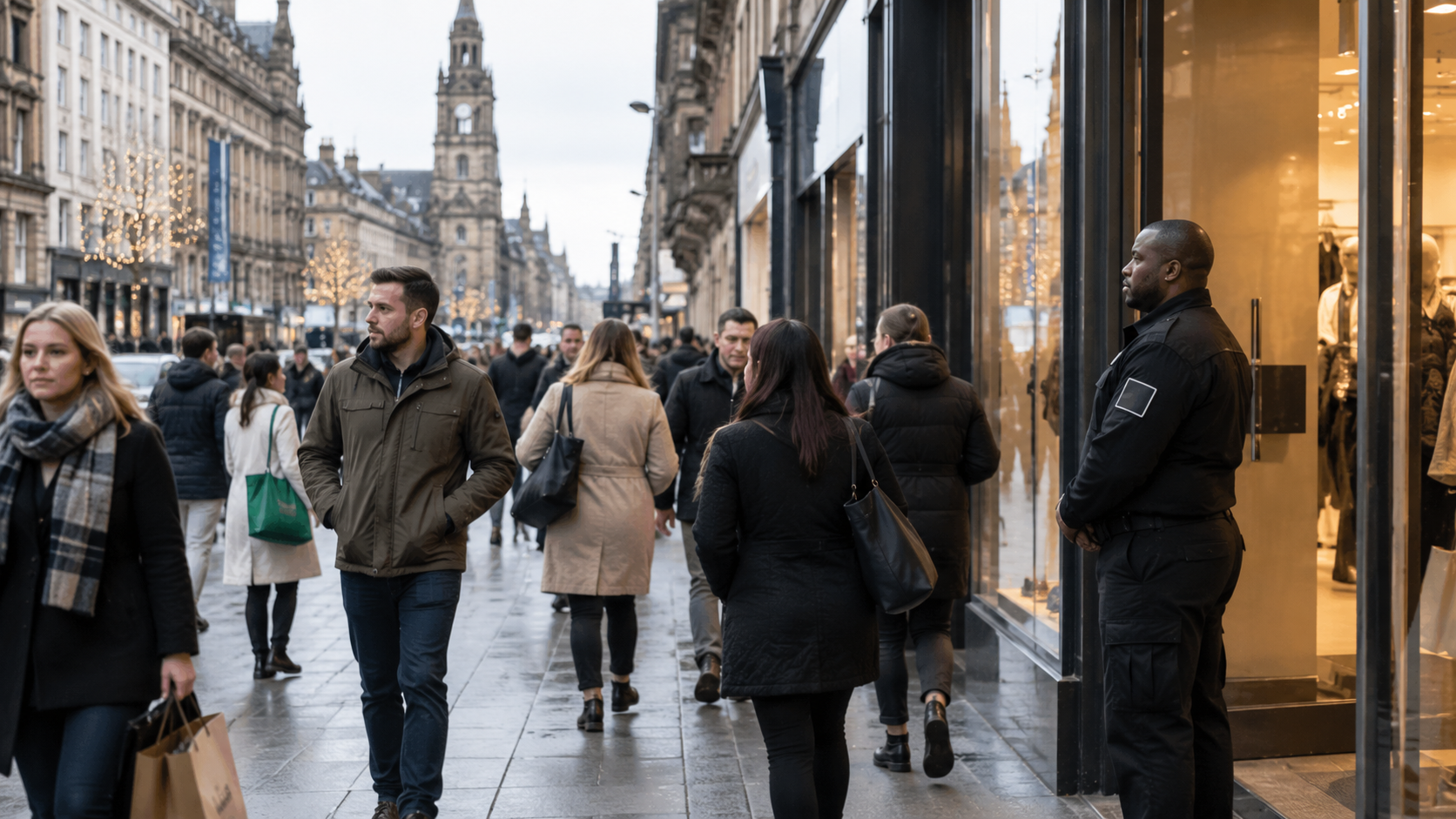
Bath’s retail economy is unusual. Heritage streets funnel high footfall through narrow spaces. Independent shops sit alongside national brands. Tourism drives spikes that feel welcome at the till but complicated on the shop floor. On busy days, opportunity and vulnerability rise together. On quieter days, stores can feel exposed rather than protected.
Retail security, in this context, isn’t about projecting toughness. It’s about maintaining control in environments that were never designed for modern retail pressures. Theft, anti-social behaviour, staff intimidation, and opportunistic crime rarely arrive announced. They emerge when attention slips, routines thin out, or visibility drops.
For business owners and site managers, the real question isn’t whether incidents happen in Bath; they do. The question is whether your operation is structured to absorb those risks without disruption.
Losses don’t only show up in stock shrinkage. They surface in staff confidence, insurance conversations, and the quiet decisions customers make about where they feel comfortable spending time.
This article frames retail security as part of operational planning, alongside staffing, insurance, and opening hours, not as an add-on. Because in Bath, how you protect a retail space is inseparable from how you run it.
Retail Security Basics In Bath
Scope And Definition Of Retail Security In Bath Trading Environments
Retail security in Bath is not the same thing as putting a guard by the door and hoping for the best. In practical terms, it is the controlled management of people, behaviour, and risk within an open commercial environment. Shops invite the public in. That openness is the opportunity, and the weakness.
Unlike static guarding, which focuses on protecting a fixed asset after hours, retail security operates in live trading conditions. Staff are serving customers. Stock is on display. Decisions have to be made in seconds, often in full view of the public.
Remote-only security, such as CCTV monitoring, plays a role, but it cannot intervene, de-escalate, or adjust behaviour in real time. In Bath’s compact retail streets, those human judgements matter more than technology alone ever could.
Local Crime Patterns Shaping Retail Security Demand In Bath
Bath does not experience crime in the same way as larger urban centres like Bristol, but that does not mean retail risk is low. It is different. More opportunistic. More dependent on footfall and timing.
High visitor numbers create anonymity. Independent retailers, common across Bath’s centre, often operate with small teams and limited back-of-house space. That combination makes shops attractive to low-level theft, distraction offences, and repeat offenders who know the area well.
Across the wider South West, Devon, Cornwall, and Gloucestershire included, retail crime follows similar patterns: fewer high-impact incidents, more frequent low-value losses. Individually manageable. Cumulatively damaging.
Timing-Based Retail Crime Exposure Across Bath Shopping Areas
In Bath, risk shifts with the clock. Crime is rarely evenly distributed. Late mornings and early afternoons bring peak footfall, especially during tourist season. Crowding creates cover for theft. Evenings introduce different pressures: reduced staffing, tired teams, and fewer passers-by willing to intervene or report issues.
Certain windows are consistently higher risk:
- Busy weekends when queues form, and staff attention narrows
- Early evening trading hours when shops begin to quieten
- Closing periods, when cash handling and secure-down routines overlap
Retail security planning that ignores timing usually overpays in the wrong places and under-protects the moments that matter most.
Retail-Specific Site Vulnerabilities In Bath
Bath’s built environment shapes risk in ways modern retail parks do not. Many stores operate in listed buildings with:
- Limited sightlines
- Narrow entrances
- Multiple internal rooms
- Constrained storage and staff-only areas
These features complicate surveillance and increase blind spots. Add high-value, easily concealed goods, clothing, cosmetics, souvenirs, and exposure rises quickly.
Unlike newer developments across parts of the South West, Bath’s heritage streets rarely allow redesign. Security has to work with the space, not against it. That often requires human adaptability rather than fixed technical solutions.
Managing Anti-Social Behaviour In Bath Retail Locations
Not all retail risk involves theft. Anti-social behaviour, verbal abuse, aggressive loitering, and intoxication create a quieter but serious problem. Staff feel unsafe. Customers cut visits short. Tension becomes normalised.
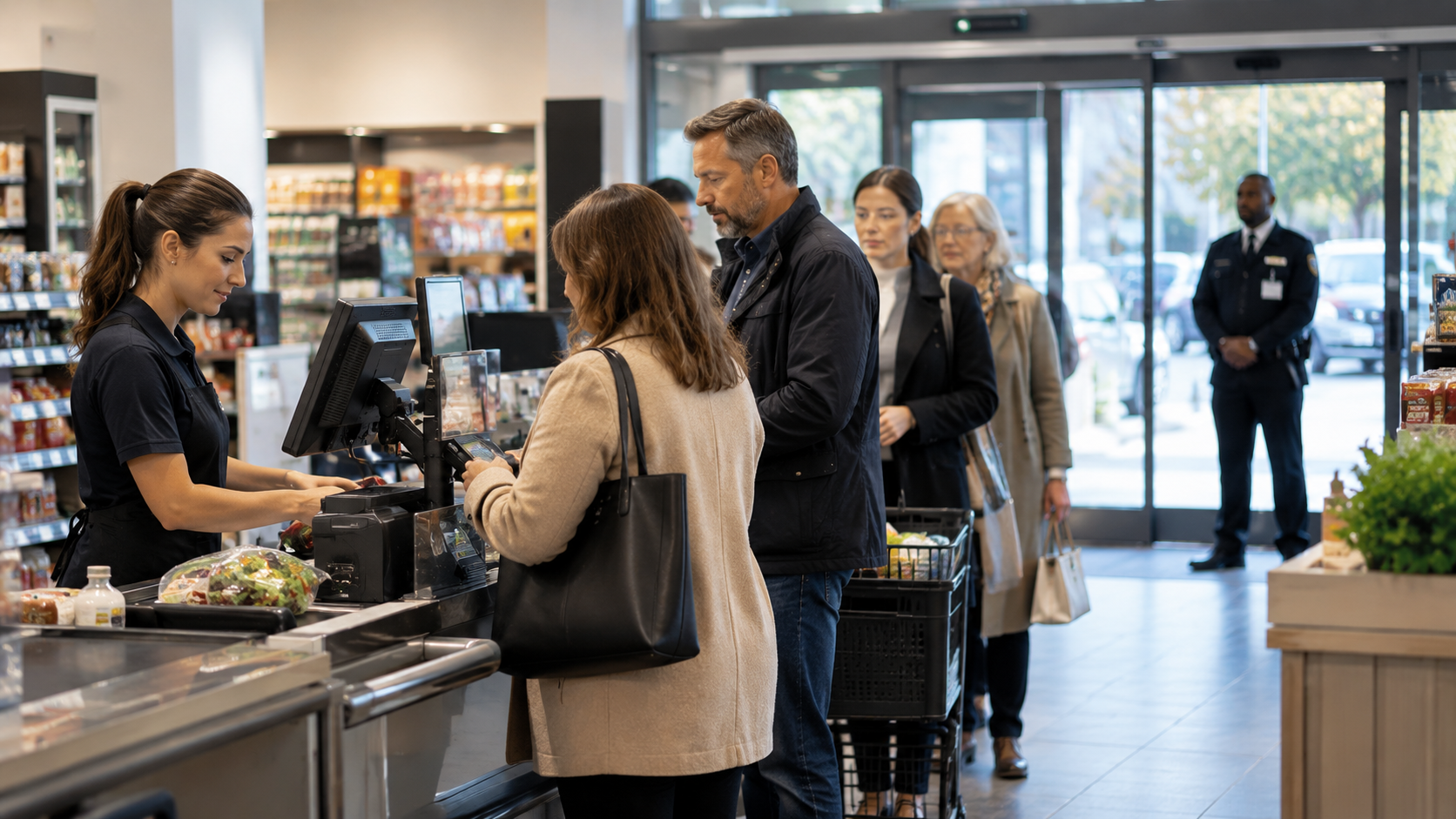
Retail security addresses this not through force, but through early intervention. A visible, trained presence can redirect behaviour before it escalates. Just as importantly, it gives staff confidence that they are not expected to manage confrontation alone.
In a city reliant on reputation and visitor experience, this type of control protects the brand as much as stock.
Daytime Retail Theft Trends And Deterrence Requirements
Daytime theft has become the dominant retail security concern. It thrives on distraction. Busy counters. Short-staffed floors. Polite assumptions that “it probably won’t happen here”.
In Bath, where customer experience is paramount, deterrence must be subtle. The goal is not to create a hostile environment but to remove opportunity. A professional presence changes behaviour long before an incident occurs.
Most theft is prevented, not confronted, and that distinction matters to business owners reviewing loss figures months later.
Comparative Risk Profile Between Daytime And Nighttime Retail Operations
Daytime risk is about volume and distraction. Nighttime risk is about isolation and consequence.
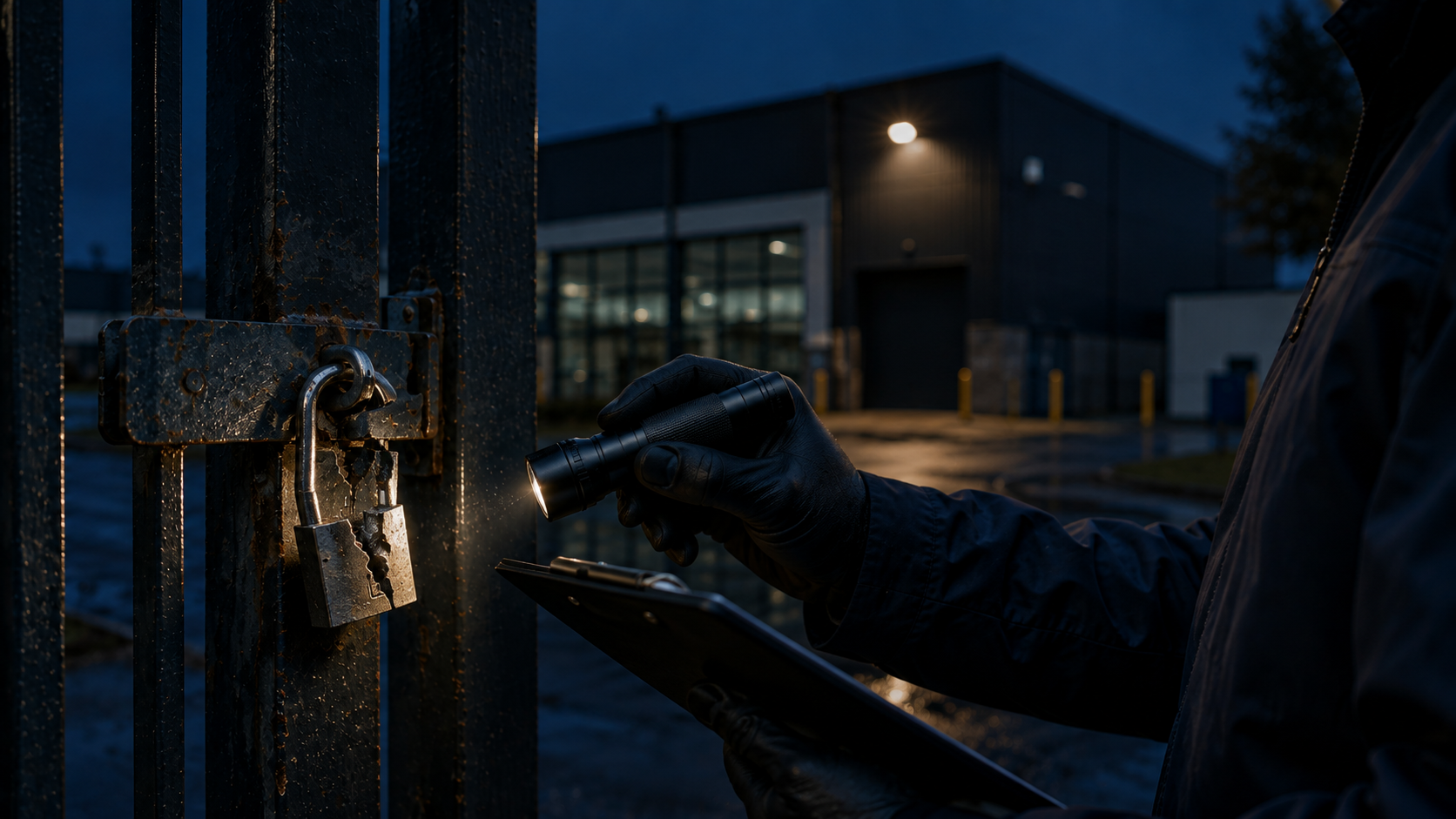
After hours, incidents are fewer but heavier: attempted break-ins, alarm activations, lone-worker exposure during late trading or secure-down. The skill set required changes. Awareness replaces visibility. Procedure replaces deterrence.
Treating day and night as identical risk periods is a common planning mistake. Effective retail security adjusts posture, not just staffing hours.
Seasonal Trading, Tourism, And Event-Driven Retail Security Pressures
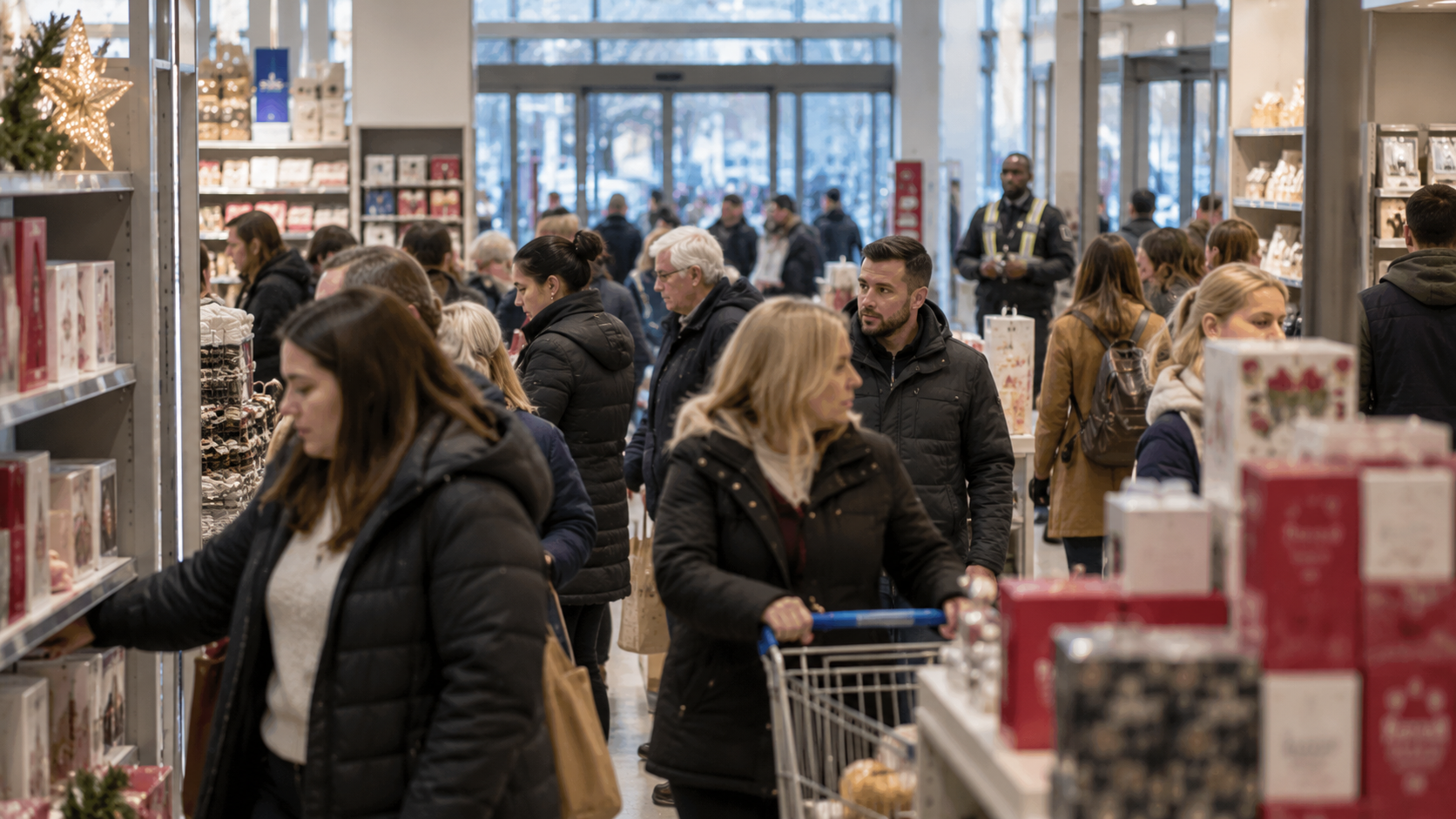
Bath’s calendar matters. School holidays, Christmas markets, festivals, and summer tourism all compress risk into short periods. Footfall surges. Temporary staff join teams. Normal routines bend.
Retailers across the South West see similar patterns, but Bath’s density magnifies them. Security planning that works in February can unravel in August. Short-term uplift strategies, rather than permanent overstaffing, are often the most commercially sensible response.
Economic Conditions And Their Influence On Retail Security Planning
Economic pressure changes behaviour on both sides of the counter. Customers become more price-sensitive. Theft becomes more rationalised. Retailers tighten margins and question every cost.
This is where retail security decisions become strategic. Under-provision saves money briefly, then leaks it quietly through shrinkage, staff turnover, and insurance friction. Over-provision wastes resources and disrupts experience.
In Bath, as across the wider South West, the most resilient retailers treat security as part of operational balance, not a reaction, and not a gamble.
Legal And Compliance Requirements For Retail Security In Bath
Statutory Licensing Obligations For Retail Security Personnel
In Bath, retail security follows the same laws as the rest of England and Wales. The rules do not change just because Bath is seen as a low-crime city.
Anyone working in retail security must hold a valid licence from the Security Industry Authority (SIA). This includes guarding shops, preventing theft, and dealing with disorder.
This rule is not optional. A guard may look professional, but without the right licence, the risk falls on the retailer. Licensing shows that guards have basic training, proper identity checks, and an understanding of the law.
In simple terms, an SIA licence proves compliance. It helps insurers, police, and local authorities see that a retailer is taking security seriously, not cutting corners.
Legal Exposure And Penalties For Non-Compliant Retail Security Use
Using unlicensed retail security is a criminal offence. The consequences land quickly and awkwardly. Fines can be substantial. Directors can be held personally liable. Insurance claims may be questioned or declined.
For Bath retailers, particularly independents operating on narrow margins, the greater risk is reputational. Enforcement action does not stay quiet. In a city where trust and brand perception matter, being seen as cutting corners on compliance can cause longer-term damage than the original incident ever would.
Across the South West, including Bristol and parts of Gloucestershire, enforcement patterns show that non-compliance is often discovered after an incident, not during routine checks. That timing makes recovery harder.
Vetting Standards And DBS Expectations In Retail Environments
Licensing alone is not the full picture. Retailers are expected to ensure guards have been vetted to recognised standards, including background screening under BS 7858 and, where appropriate, checks through the Disclosure and Barring Service.
Not every retail role requires the same level of DBS check. However, environments involving vulnerable individuals, repeated staff interaction, or sensitive access points often justify enhanced scrutiny.
The key is proportionality. Over-vetting wastes money. Under-vetting creates risk that only becomes visible when something goes wrong. Experienced retailers treat vetting as risk control, not paperwork.
Insurance Requirements Linked To Retail Security Provision
Insurance is where compliance decisions quietly show their value. Most UK insurers expect retail security providers to carry:
- Public liability insurance
- Employers’ liability insurance
- Professional indemnity cover where advisory roles exist
More importantly, insurers increasingly look at how security is delivered. Properly licensed, vetted guards can stabilise premiums, reduce excess exposure, and simplify renewals. Poorly documented arrangements raise questions that slow claims and increase scrutiny.
In Bath, where many stores operate in listed or high-value premises, insurers are particularly sensitive to procedural discipline.
Data Protection, CCTV Use, And Guard Responsibilities
Retail security often operates alongside CCTV. This is where legal lines blur for some businesses. Guards may observe, report, or assist with monitoring, but responsibility for data protection remains with the retailer.
Compliance means:
- Clear signage explaining surveillance
- Defined purposes for recording
- Controlled access to footage
- Lawful handling of subject access requests
Security personnel must understand these boundaries. Not as legal experts, but as operational professionals who know when to observe, when to escalate, and when to step back. Mistakes here don’t just trigger complaints; they invite regulatory attention.
VAT Treatment And Financial Compliance For Retail Security Services
Retail security services are generally subject to VAT. There are no special exemptions simply because a site is small or seasonal. Misunderstanding this creates budgeting errors that surface later, often during audits or contract disputes.
Retailers should expect:
- Transparent VAT invoicing
- Clear separation between labour and ancillary charges
- Consistency across contract periods
Where pricing looks artificially low, VAT treatment is often where corners are being cut.
Evidence Of Compliance And Governance Standards
A compliant retail security arrangement leaves a paper trail. Not excessive. Just credible. Retailers should expect access to:
- Valid SIA licence records
- Proof of insurance
- Vetting confirmations
- Training certification summaries
- Incident reporting procedures
This documentation protects the retailer first. It demonstrates governance if something goes wrong and reassures insurers that controls were in place.
Legislative Change And Martyn’s Law Implications For Bath Retail Venues
Proposed counter-terrorism legislation, often referred to as Martyn’s Law, is expected to increase duty-of-care expectations for publicly accessible venues. While not all Bath retailers will fall within its scope, shopping areas, larger stores, and mixed-use sites may face new planning and preparedness requirements.
This is not about panic. It’s about readiness. Retailers who already integrate security into operational planning will adapt more easily than those starting from scratch.
Police Coordination And Information-Led Retail Security Deployment
Effective retail security rarely operates in isolation. In Bath and the wider South West, coordination with local policing, particularly Avon and Somerset Police, supports information-led deployment.
Shared intelligence helps retailers anticipate patterns rather than react to incidents. It informs timing, visibility, and escalation decisions. For businesses, this kind of alignment is less about enforcement and more about predictability. And predictability, in retail, is where real control lives.
Costs, Contracts, And Retail Security Deployment In Bath
Retail Security Pricing Dynamics Across Bath Locations
Retail security costs in Bath are shaped less by headline crime rates and more by trading reality. A shop on a high-footfall heritage street faces different pressures than one on the edge of the city or in a quieter neighbourhood centre.
City-centre locations typically command higher rates. Footfall is heavier. Incidents are more frequent, even if they’re low-level. Guards are expected to engage, observe, and intervene with judgment rather than simply stand watch. That skill mix has a cost attached to it.
Move outward, and pricing softens slightly, but not always as much as retailers expect. Smaller teams, limited escape routes, and reduced evening activity can raise lone-worker and closing-time risk.
Across the wider South West, whether in Bristol or market towns in Gloucestershire, the same pattern appears: cost follows exposure, not postcode alone.
Mobilisation Timelines For Retail Security Deployment
Retailers often underestimate how long it takes to deploy security properly. Not because providers move slowly, but because compliance and planning take time.
In Bath, a realistic mobilisation window usually sits between one and three weeks. This allows for:
- Licence and vetting verification
- Site-specific briefing
- Alignment with trading hours and peak risk periods
- Coordination with existing staff routines
Shorter timelines are possible, particularly for short-term uplift during events or seasonal peaks. However, rapid deployment should still raise questions. If guards arrive without a clear site understanding, early effectiveness drops, and retailers feel that gap immediately.
Contract Duration Models Used In Retail Security Services
Most Bath retailers operate on fixed-term contracts rather than rolling, open-ended arrangements. Twelve months is common. It offers stability without locking businesses into outdated assumptions.
Shorter contracts, three to six months, are typically used for:
- Seasonal trading periods
- Refurbishments or relocations
- Trial phases where risk levels are still being assessed
Longer contracts can deliver better rate stability, but only if risk is well understood at the outset. Across regions like Devon and Cornwall, retailers who commit long-term without review clauses often find themselves paying for coverage that no longer fits how they trade.
Termination Terms And Notice Period Considerations
Notice periods are rarely exciting reading, but they matter when circumstances change. Typical retail security contracts include notice periods of 30 to 90 days. Some extend longer, particularly where staff have been dedicated exclusively to one site.
From a retailer’s perspective, flexibility is protection. Notice terms should allow adjustment if:
- Trading hours change
- Store layouts are redesigned
- Risk profiles shift due to local conditions
Termination clauses are not about planning failure. They’re about acknowledging that retail is fluid. Contracts that resist change tend to age badly.
Inflation, Wage Pressure, And Long-Term Cost Forecasting
Security pricing does not exist in isolation from the wider economy. Wage increases, inflation, and compliance costs all flow through to contract values.
In recent years, retailers across Bath and the South West have seen gradual upward pressure rather than sudden spikes. The danger sits at the other end of the spectrum. Rates that appear insulated from inflation often hide compromises, reduced continuity, weaker oversight, or compliance shortcuts that surface later.
Long-term forecasting works best when retailers:
- Build modest annual uplifts into budgets
- Review deployment annually rather than reactively
- Treat security as an operating cost, not an emergency expense
Predictability, not minimisation, is what keeps costs under control.
Insurance Alignment And Risk-Reduction Value Of Retail Security
One of the quieter benefits of retail security sits with insurers. Well-documented, professionally delivered security reduces uncertainty. That matters.
Retailers may see:
- Fewer claim challenges
- More stable renewal discussions
- Reduced pressure for additional controls
This doesn’t mean premiums automatically fall. It means conversations become smoother and outcomes more predictable. In Bath, where many retailers operate from high-value or listed premises, that predictability is often more valuable than marginal savings.
Security that aligns with insurance expectations rarely feels dramatic. It just works in the background, supporting continuity, protecting staff, and giving decision-makers fewer unpleasant surprises.
Training, Daily Operations, And Retail Security Duties
Mandatory And Role-Specific Training Standards For Retail Security
Retail security training in Bath starts with national rules. Guards must hold the correct SIA licence. This shows they are trained in conflict control, legal limits, and public safety. That is the minimum standard, not the end goal.
Retail work needs extra skills. Guards must know how to deal with customers, spot theft early, and stay calm in busy shops. They also need to understand that their behaviour reflects the store, not just security.
A guard trained only for warehouses or building sites may struggle on a Bath high street. Retailers across the South West, from Bristol to tourist towns in Cornwall, value good judgement more than physical presence.
Training matters because errors are easy to see. In retail, every action happens in front of customers.
Shift Commencement Procedures In Bath Retail Settings
A retail security shift does not begin at the moment a guard walks through the door. It begins with context.
In Bath, that usually means a short briefing that reflects how the store is trading that day. Are there promotions running? Is footfall expected to spike due to weather or events? Have there been recent incidents nearby? Guards need this information early, before patterns set in.
Effective shifts often include:
- Confirmation of trading hours and staffing levels
- Review of known risks or repeat issues
- Alignment with store management on expectations
This process doesn’t need to be formal or slow. It just needs to be deliberate.
Shift Handover And Continuity Controls In Retail Operations
Poor handovers create gaps. Retail crime tends to slip into those gaps quietly. When one guard replaces another, continuity matters more than detail. The incoming guard needs to know what changed during the shift, not every minor observation.
Was there suspicious behaviour? Was it an area consistently busy or problematic? Did anything feel unresolved?
Across Bath and neighbouring areas in Gloucestershire, retailers who insist on basic handover discipline see fewer repeat incidents. Not because guards work harder, but because information carries forward instead of resetting.
Patrol Frequency And Visibility During Retail Trading Hours
Retail patrols are not about covering distance. They’re about being seen at the right moments.
In busy Bath trading periods, visibility near entrances, fitting rooms, and high-value displays tends to matter more than constant movement. During quieter hours, light patrols help reassure staff and discourage opportunistic behaviour.
There is no fixed timetable that fits every store. The right frequency responds to:
- Footfall volume
- Store layout
- Time of day
- Seasonal pressure
Rigid patrol schedules often look impressive on paper and underperform in reality.
Incident And Alarm Response During Early And Late Retail Hours
Early mornings and late evenings carry a different tone. Fewer people. Less ambient oversight. When alarms activate or incidents occur during these windows, the response needs to be calm and structured.
Retail security guards are typically the first human presence on site. Their role is not to investigate like police, but to assess, report, and protect. That includes knowing when not to intervene directly.
In Bath and surrounding counties like Devon, retailers value guards who understand escalation thresholds. Overreaction creates risk. Underreaction invites it.
End-Of-Day Secure-Down And Lone-Worker Risk Controls
Closing time is one of the most exposed moments in retail. Cash handling, stock movement, and reduced staffing converge in a short window.
Retail security supports secure-down by:
- Maintaining a visible presence during the final trading minutes
- Assisting with controlled exits
- Supporting lone workers once doors close
This is not about rushing staff out. It’s about slowing the process just enough to stay safe. In heritage-heavy cities like Bath, where back entrances and storage areas are often awkwardly placed, these controls reduce the chance of something going wrong when attention drops.
Done well, retail security operations feel unremarkable. That’s the point. They protect staff, support trading, and quietly reduce risk, without turning the shop floor into a checkpoint.
Performance, Risks, And Operational Challenges In Retail Security
Measuring Retail Security Effectiveness Through Performance Indicators
Measuring retail security performance in Bath is less about counting incidents and more about understanding what didn’t happen. That distinction matters. Most effective security work leaves little behind except calmer staff and steadier trading.
Retailers typically look beyond raw theft numbers and focus on indicators that reflect control and confidence:
- Incident frequency and escalation: Are issues being resolved early, or drifting into formal interventions?
- Staff feedback: Do teams feel supported during busy or tense periods?
- Repeat offender patterns: Are the same behaviours returning, or being quietly discouraged?
- Insurance interactions: Are claims smoother and less contested over time?
These KPIs are not abstract. They shape boardroom conversations and budget decisions. Retailers across the South West often discover that stable security performance correlates with lower operational friction elsewhere. Fewer staff absences. Less shrinkage anxiety. More predictable trading days.
The mistake is chasing perfect metrics. Retail environments are fluid. The goal is trend awareness, not statistical purity.
Environmental And Operational Factors Affecting Retail Security Outcomes
Bath’s environment shapes how retail security performs in ways spreadsheets can’t capture. Weather, footfall, and urban layout all influence outcomes.
Heavy rain pushes crowds indoors. Narrow heritage streets funnel people through small entrances. Seasonal tourism compresses footfall into short bursts. Each of these changes alters behaviour and opportunity.
Operationally, small shifts matter:
- Temporary staff unfamiliar with store routines
- Layout changes during promotions
- Reduced visibility caused by seasonal displays
These factors don’t signal failure. They signal adjustment points. Retailers who recognise this treat security as responsive rather than fixed. The same guard presence may work well on a quiet Tuesday and struggle on a Saturday in August. That’s not inconsistency. It’s context.
Across coastal and tourist-driven regions like Devon and Cornwall, retailers face similar dynamics. Performance improves when security planning acknowledges the environment instead of fighting it.
Structural And Planning Risks That Undermine Retail Security Coverage
Most retail security failures aren’t dramatic. They’re structural. Quiet. Built into planning assumptions that no one revisits.
Common risks include:
- Mismatched coverage: Guards are scheduled when the risk is low, absent when it peaks
- Over-reliance on presence: Assuming visibility alone deters all behaviour
- Poor integration: Security operating separately from store management routines
- Static contracts: Coverage frozen while trading patterns change
In Bath, these risks are amplified by building constraints and mixed-use areas. A layout that worked last year may no longer align with customer flow. A closing routine that felt safe in winter may feel exposed during summer evenings.
Retailers who review security only after an incident tend to overcorrect. Those who review it as part of routine operational planning tend to make smaller, smarter adjustments.
The challenge is not eliminating risk. That’s unrealistic. The challenge is recognising where risk quietly accumulates and addressing it before it becomes disruptive. In retail security, effectiveness often shows up not in reports, but in the absence of unpleasant surprises.
Technology And Future Trends In Bath Retail Security
Evolution Of Retail Security Models Through Technology Integration
Retail security in Bath has shifted quietly over the past decade. Not through dramatic reinvention, but through layering. Technology no longer sits apart from on-site security; it wraps around it.
CCTV used to be retrospective. Now it’s operational. Access control, incident logging, and mobile reporting tools feed into how guards position themselves and how managers make decisions. In compact urban centres like Bath, similar in layout challenges to parts of Bristol, this integration matters. Space is tight. Sightlines are imperfect. Technology fills gaps without removing the need for human judgment.
The strongest retail security models now combine presence with information. No more equipment. Better coordination.
AI-Enabled Surveillance As A Support Tool For Retail Security
AI-enabled surveillance has entered retail environments gradually, often without fanfare. Its role is not enforcement. It’s attention management.
AI systems can flag unusual movement patterns, repeat behaviours, or crowd density changes. For guards, this acts as a prompt rather than an instruction. It highlights where focus may be needed, not what action must be taken.
That distinction is important. AI does not replace the discretion required on the shop floor. It supports it. Retailers across the South West, including in Gloucestershire, are finding that AI adds value when treated as a second set of eyes, not a decision-maker. Overselling it creates risk. Used proportionately, it reduces noise.
Remote Monitoring And Hybrid Retail Security Models
Remote monitoring has become more common, particularly outside peak trading hours. In Bath, this often supports early mornings, late evenings, or periods when stores are closed but still vulnerable.
Hybrid models typically combine:
- On-site security during live trading
- Remote monitoring during low-activity periods
- Escalation protocols linking both
This approach allows retailers to maintain coverage without blanket staffing. It also provides continuity. Alarms are not isolated events. They are part of a monitored pattern.
In regions like Devon and Cornwall, hybrid models are often driven by geography. In Bath, they’re driven by density and heritage constraints. Different reasons. Same principle.
Predictive Analytics And Data-Led Retail Security Planning
Predictive analytics sounds abstract, but in retail security, it’s often simple. Patterns repeat. Days cluster. Risks concentrate.
Data from incident logs, footfall trends, and seasonal performance help retailers anticipate pressure points rather than react to them. This doesn’t mean forecasting crime with certainty. It means asking better questions:
- When do incidents usually rise?
- Which layouts create blind spots?
- How does staffing level correlate with issues?
Retailers using data in this way tend to adjust coverage earlier and more precisely. It’s planning by observation, not speculation.
Sustainable And Green Practices In Modern Retail Security
Sustainability has edged into security planning, often indirectly. Fewer unnecessary patrols. Energy-efficient surveillance systems. Reduced travel through smarter rostering.
Green practices in retail security are not about optics. They’re about efficiency. Battery-powered devices are replacing older systems. Digital reporting reduces paperwork. Longer equipment lifecycles.
In historic cities like Bath, where infrastructure upgrades are constrained, incremental improvement matters more than sweeping change.
Regulatory Readiness And Future Compliance Considerations
Future-facing retail security planning increasingly includes regulatory awareness. Data protection expectations continue to tighten. Duty-of-care standards are evolving. Proposed counter-terrorism legislation will likely reshape responsibilities for larger or busier retail venues.
Retailers who already integrate technology, documentation, and proportionate security practices will adapt more easily. Those starting from a minimal baseline may feel the pressure.
The direction of travel is clear. More accountability. More evidence. More expectation that security decisions are deliberate, not improvised.
Technology will not remove responsibility from retailers in Bath. It will make that responsibility more visible.
Conclusion: Making Informed Retail Security Decisions In Bath
Retail security decisions work best when they’re made calmly, with context, not after something has already gone wrong. In a city like Bath, risk rarely announces itself loudly. It builds quietly through footfall patterns, seasonal pressure, layout constraints, and moments when staff attention is stretched thin.
What this article has aimed to show is that retail security is not a standalone function. It sits alongside insurance planning, staffing models, opening hours, and customer experience. When those elements drift out of alignment, security gaps appear. When they’re considered together, risk becomes manageable rather than disruptive.
There is no universal template. A small independent shop on a heritage street faces different pressures than a multi-site retailer or a destination store during peak tourism. That’s why thoughtful planning matters more than headline solutions. Presence, compliance, timing, and proportionality all carry weight, and ignoring any one of them usually costs more later.
Ultimately, the question behind Why Bath businesses need Retail Security? is not about fear or overprotection. It’s about control. Control over how a space operates, how staff feel at work, and how predictable trading days remain under pressure.
Well-planned retail security doesn’t dominate the shop floor. It supports it quietly. And in Bath, that balance is often what separates resilient businesses from reactive ones.
Frequently Asked Questions
When do Bath retailers actually need on-site retail security?
Most retailers consider on-site security when footfall rises, incidents repeat, or staff begin to feel exposed. In Bath, that often aligns with tourism peaks, late trading hours, or stores with open layouts and high-value stock.
How does retail security differ for independent stores and chains in Bath?
Independents tend to need flexible, highly visible support that blends into the shop floor. Chains often focus on consistency, reporting, and alignment across sites. The risks overlap, but the operating pressures are different.
What legal checks should retailers complete before hiring security?
Retailers should confirm valid SIA licences, appropriate vetting standards, and up-to-date insurance. These checks protect the business if incidents escalate or claims arise later.
Is retail security necessary outside peak tourist seasons?
Often, yes. Quieter periods can feel more exposed, especially during early mornings or evenings. Risk doesn’t disappear when footfall drops. It changes shape.
How does retail security protect staff as well as stock?
A trained presence reduces confrontation, supports de-escalation, and ensures staff are not left to manage difficult situations alone.
Can retail security reduce insurance claims for Bath businesses?
It can reduce frequency and friction. Insurers value predictability, clear procedures, and evidence of control.
What mistakes do retailers make when planning security coverage?
Common errors include copying other stores, ignoring timing, or treating security as static while trading patterns shift.
How should retailers balance visible security with customer experience?
By focusing on professionalism, awareness, and proportionate presence, security should reassure, not dominate.