Why Cornwall businesses need Retail Security is a practical question for any owner balancing seasonal footfall, remote sites, and the rising cost of risk. Cornwall’s retail scene is unusual: busy summer high streets and coastal tourist hubs sit alongside quiet market towns and isolated farm shops. That mix changes the threat picture predictable peaks in theft and anti-social behaviour, plus long response times in rural parishes.
This guide focuses on what business leaders must know to make procurement and insurance decisions. It explains how manned Retail Security reduces immediate losses, supports CCTV evidence gathering, and deters repeat offending without drowning you in operational detail. We will look at timing (when risks spike), site exposure (which locations need human presence), and cost trade-offs (why a one-size-fits-all contract often fails in Cornwall).
Think of this as a briefing you can share with finance or the facilities team: clear, evidence-led, and pragmatic. By the end, you should be able to judge whether manned guarding is the right hedge for your business risks, what compliance to expect, where spending genuinely reduces loss rather than just cost, and how to balance seasonal demand with insurance expectations. And where to start next, with steps.
Retail Security Basics in Cornwall
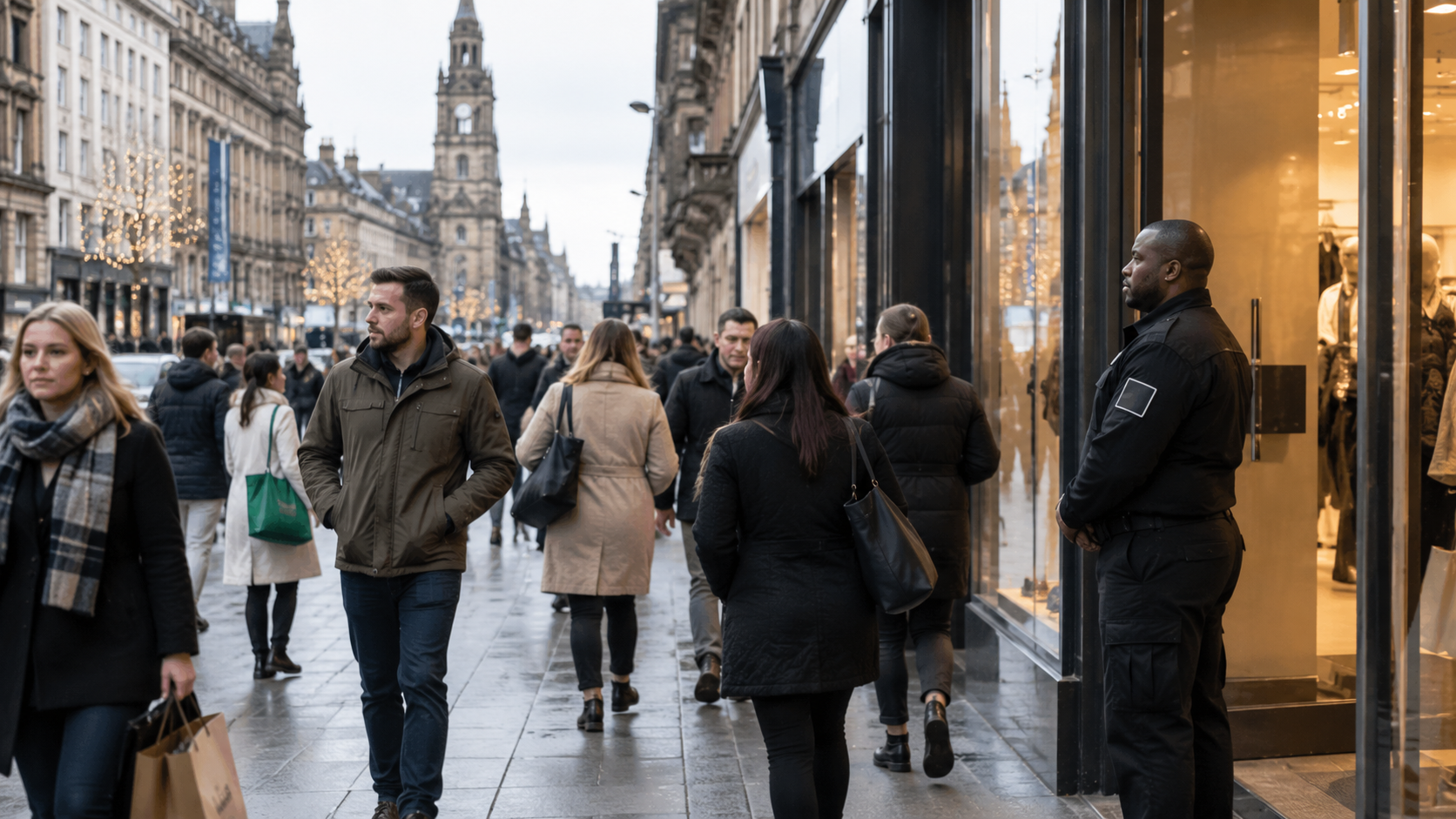
Retail Security, at its core, is about visible human presence. Not cameras alone. Not alarms reacting after the fact. It’s the use of trained, licensed guards to deter, detect, and address risk as it occurs, particularly in customer-facing environments.
That distinction matters in Cornwall, where retail risk isn’t constant; it surges, dips, and shifts with time, weather, and visitors.
What Retail Security means in practice (and what it isn’t)
Retail Security typically involves:
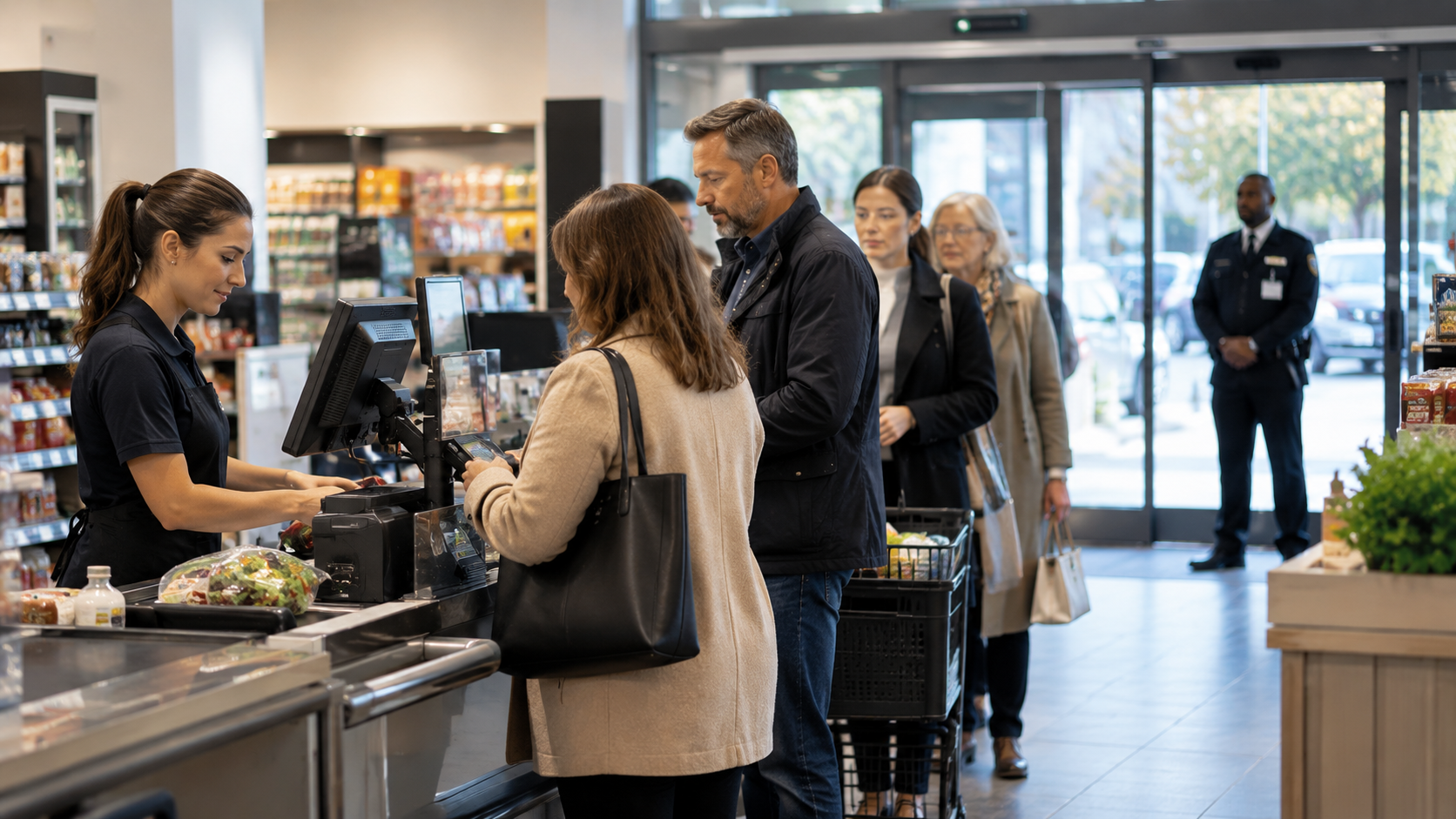
- A uniformed guard positioned on-site during trading hours
- Active monitoring of customer behaviour, entrances, and vulnerable areas
- Early intervention in theft, abuse, or disorder before incidents escalate
How this differs from static or remote-only security:
- Static guarding often focuses on access control or overnight protection
- Remote monitoring relies on alerts after an incident begins
- Retail Security prioritises deterrence, judgement, and real-time response
In busy Cornish retail settings, that difference is critical, particularly when compared with larger urban centres such as Bristol, where retail crime patterns tend to be more consistent throughout the year.
Why local crime patterns change the security needs
Cornwall doesn’t experience constant pressure from urban crime. Instead, risk is shaped by:
- Seasonal population spikes
- Tourism-driven footfall
- Alcohol-related disorder in coastal towns
- Longer police response times in rural areas
This creates opportunity-based crime, not always organised, but still costly.
When retail risk is highest in Cornwall
Retail incidents tend to cluster around:
- Late afternoons and early evenings during peak tourist months
- Weekends and bank holidays
- Poor-weather days when indoor retail footfall surges
- Shoulder seasons, when staffing is lean, but footfall remains unpredictable
This pattern contrasts with neighbouring areas such as Devon, where larger population centres can experience steadier retail risk rather than sharp seasonal spikes
Sector-specific vulnerabilities you’ll see locally
Different Cornish business types face different pressures:
- High street shops: shoplifting, verbal abuse, distraction theft
- Retail parks: anti-social behaviour, vehicle-related incidents, loitering
- Warehouses & trade counters: isolation, poor lighting, opportunistic theft
- Late-opening stores: alcohol-related disorder and lone-worker risk
A single approach rarely works across all of them. This contrasts with historic city centres such as Bath, where dense footfall, restricted access routes, and heritage-led planning place different constraints on how Retail Security is deployed
Day risks vs night risks: not the same problem
- Daytime: theft, confrontation, refund fraud, aggressive behaviour
- Evenings: intoxication-related incidents, vandalism, intimidation
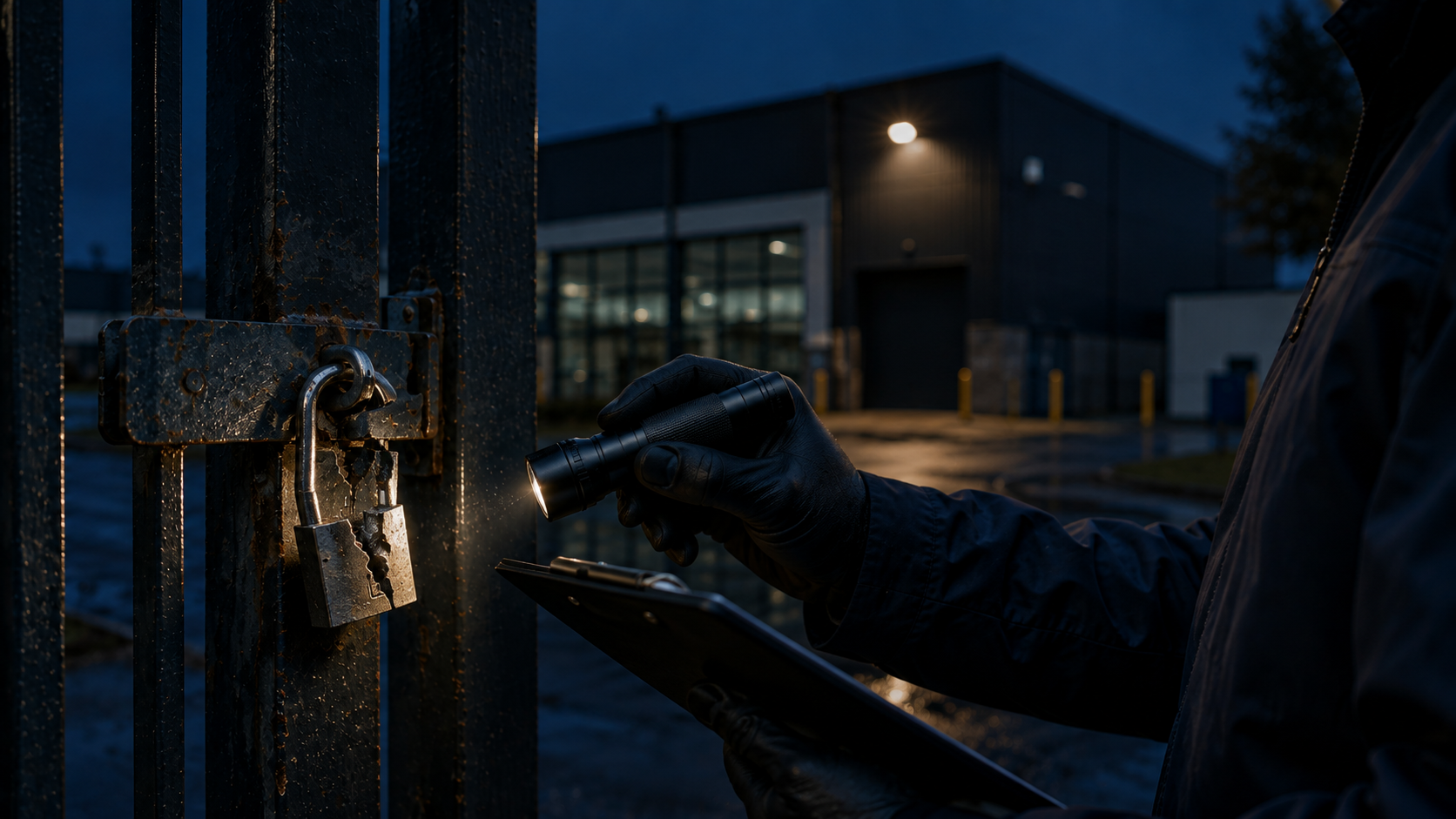
- Night-time (where applicable): break-ins, trespass, delayed response
Retail Security focuses mainly on day and early evening risk, where human judgement matters most.
Why economic and business growth still matter
Cornwall’s growing mix of:
- Independent retailers
- Seasonal pop-ups
- Expanding industrial and logistics sites
has increased the need for flexible, visible security, especially where staffing levels fluctuate, and loss prevention must be justified to insurers.
Retail Security here isn’t about constant guarding. It’s about being present when risk is most likely to appear.
Legal and Compliance Requirements for Retail Security in Cornwall
Legal compliance is where many security decisions quietly succeed or fail. Not because businesses ignore the rules, but because they underestimate how quickly liability shifts once a guard is placed on-site. In Cornwall, that risk is amplified by seasonal trading, temporary events, and retail locations operating far from urban support networks.
This section explains what actually matters, not every regulation, but the ones that affect insurance validity, enforcement action, and incident outcomes.
SIA licensing: who is responsible if it goes wrong?
Any individual performing licensable guarding duties must hold a valid licence issued by the Security Industry Authority. This applies uniformly across England and Wales, including Cornwall.
What business owners often miss:
- Responsibility does not sit only with the guard
- Businesses that knowingly or negligently use unlicensed guards can face investigation
- Penalties may include fines, prosecution, and invalidated insurance claims
Enforcement activity tends to increase in:
- Tourist-heavy periods
- Licensed retail environments
- Public-facing sites linked to events
In practical terms, licensing checks should never be assumed; they should be documented.
Vetting standards: BS 7858 and when DBS really matters
Most credible Retail Security contracts are underpinned by BS 7858 vetting, the industry-recognised screening standard set by the British Standards Institution.
This includes:
- Identity verification
- Employment history checks
- Right-to-work validation
DBS checks are not legally mandatory for every guard. However, in Cornwall, they are commonly expected where:
- Retail sites are family-oriented or tourist-facing
- Premises are near schools, transport hubs, or seasonal attractions
- Guards may interact closely with vulnerable members of the public
Insurers frequently treat DBS status as a risk-mitigation factor rather than a legal requirement.
Insurance: what your policy assumes is already in place
Most business insurance policies quietly assume compliant guarding. Guidance from bodies such as the Association of British Insurers reflects this.
At a minimum, you should expect:
- Public liability insurance
- Employer’s liability insurance
- Contractual clarity around indemnity
If a guard is unlicensed, improperly vetted, or working outside scope, insurers may dispute claims even when the original incident is criminal.
CCTV, Retail Security, and data protection obligations
Retail Security often operates alongside CCTV systems. That combination brings data protection responsibilities under UK GDPR, overseen by the Information Commissioner’s Office.
From a business perspective, compliance usually hinges on:
- Clear and visible signage
- Defined purposes for monitoring
- Secure storage and controlled access to footage
- Reasonable retention periods
Poor data handling can trigger regulatory action independently of any theft or incident.
VAT, contracts, and labour law considerations
Manned Retail Security services are typically VAT-rated, which affects budgeting and procurement approvals.
Contracts should clearly address:
- Overtime treatment during extended summer trading hours
- Rest periods and working time compliance
- How pay structures align with UK labour law
Post-Brexit right-to-work rules also apply. Businesses don’t manage guard immigration status directly, but failures at the provider level can still disrupt service continuity.
Local authority rules, events, and policing coordination
Cornwall councils may impose additional conditions for:
- Construction sites visible to the public
- Seasonal markets, festivals, and coastal events
- Retail premises operating under alcohol licences
Retail Security often forms part of the event licensing plan, supporting crowd management, incident response, and liaison with emergency services.
While private guards do not replace policing, coordination with local police teams is common during higher-risk periods. Deployment decisions are often informed by:
- Historic incident patterns
- Seasonal demand
- Public order considerations
Looking ahead, Martyn’s Law (Protect Duty) will formalise expectations for venues managing public access. Its direction is clear: documented risk assessment and proportionate, visible security measures.
What proves compliance in practice?
Before appointing a Retail Security provider, Cornwall businesses should expect evidence such as:
- Valid SIA licences for deployed guards
- BS 7858 vetting confirmation
- Insurance certificates
- Clear incident reporting processes
- A demonstrable compliance history
Legal compliance isn’t about paperwork volume. It’s about ensuring that when something goes wrong, and occasionally it will, your business is protected, not exposed.
Costs, Contracts, and Deployment for Retail Security in Cornwall
Cost is often where Retail Security decisions stall. Not because guarding is unaffordable, but because pricing feels opaque and hard to justify internally. In Cornwall, the picture is shaped less by city-centre intensity and more by geography, seasonality, and access.
This section breaks down what actually drives cost, how contracts are structured, and why deployment speed matters more than headline rates.
What drives Retail Security costs in Cornwall?
There is no flat “Cornwall rate.” Pricing reflects a mix of operational realities:
- Location type
- Busy town centres and tourist hubs
- Suburban retail parks
- Isolated rural or coastal sites
- Timing
- Daytime presence during peak footfall
- Evenings and weekends
- Seasonal uplift during summer months
- Risk profile
- Alcohol-adjacent retail
- Lone-worker environments
- History of theft or anti-social behaviour
Urban-style pricing models don’t always translate well here. Travel time, cover resilience, and response expectations play a bigger role than postcodes alone, particularly when compared with counties such as Gloucestershire, where site density and transport access can simplify deployment.
Town centres vs out-of-town and rural sites
In practice, Cornwall businesses often see:
- Higher hourly rates for remote or hard-to-cover locations
- More flexible scheduling for town-centre retail
- Premiums during peak tourist season, when demand spikes
The real difference isn’t urban versus suburban. It’s access and predictability.
Deployment timelines: how quickly can guards be on-site?
For most Retail Security requirements:
- Short-notice cover can sometimes be arranged within days
- Planned deployments typically allow for vetting and induction
- Seasonal scaling requires earlier planning to avoid gaps
Mobilisation speed matters to insurers. Delayed cover after an incident or policy change can increase exposure during already high-risk periods.
Contract length and notice periods
Most Retail Security contracts fall into:
- Short-term or seasonal agreements (common in Cornwall)
- 6–12 month contracts for year-round retail
- Rolling extensions to manage summer demand
Notice periods are usually:
- 30 days for short-term arrangements
- 60–90 days for longer contracts
Clear notice terms reduce disputes and help maintain service continuity.
Wage pressure, inflation, and 2025 pricing reality
Retail Security pricing is influenced by:
- Increases in statutory wages
- Rising fuel and logistics costs
- Training and compliance overheads
Inflation doesn’t just raise rates — it affects contract stability. Underpriced guarding often leads to inconsistent cover, which ultimately increases risk rather than reducing it.
Insurance impact: where guarding pays for itself
Well-structured Retail Security can support:
- Reduced theft claims
- Lower incident severity
- Improved insurer confidence
Guidance from bodies such as the Association of British Insurers consistently links visible risk management to stronger underwriting outcomes. Guarding rarely removes risk entirely, but it can make it measurable and manageable.
Public sector contracts and procurement rules
For councils and publicly funded sites, the UK Government Procurement Act 2023 changes how security services are tendered.
In practice, this means:
- Greater emphasis on compliance and value, not just cost
- Clearer audit trails
- Stronger scrutiny of contract performance
Even private businesses increasingly mirror these standards to satisfy insurers and stakeholders.
The commercial reality
Retail Security in Cornwall isn’t about finding the cheapest hourly rate. It’s about:
- Paying for cover when risk actually peaks
- Structuring contracts that flex with seasonality
- Ensuring deployment speed matches insurance expectations
When cost, contract terms, and risk are aligned, Retail Security becomes a predictable business expense rather than an emergency response.
Training, Daily Operations, and Guard Duties in Cornwall Retail Environments
For decision-makers, this section isn’t about learning how to run a guard force. It’s about understanding whether daily security routines genuinely reduce risk, satisfy insurers, and hold up during busy trading periods. In Cornwall, those routines have to work across quiet winters, crowded summers, and sites that don’t benefit from fast external response.
Training standards for retail-facing guards
Manned guards working in retail environments are expected to meet training standards that prioritise judgement and restraint, not enforcement.
In practice, this includes:
- Role-specific induction for retail environments
- Conflict management and de-escalation training
- Awareness of shoplifting tactics, refund fraud, and distraction theft
- Lone-worker awareness for early mornings and late evenings
- Familiarity with public conduct expectations in tourist-facing locations
The objective is simple: prevent incidents escalating into confrontations that expose the business to liability.
What happens when a guard starts a shift
The most important work often happens before the first patrol.
At shift start, guards typically:
- Review handover notes and previous incident logs
- Check for unresolved issues from the prior shift
- Familiarise themselves with the day’s trading patterns, deliveries, or events
- Reconfirm emergency procedures specific to the site
This step is critical in Cornwall, where conditions can change quickly during seasonal peaks.
First physical checks on arrival
Once briefed, guards usually move to immediate site checks:
- Verifying radios, alarms, and body-worn equipment
- Confirming CCTV systems are operational where integrated
- Checking lighting at entrances, car parks, and delivery bays
- Reviewing internal access points used by staff or contractors
These early checks close gaps before customer footfall increases.
Patrol frequency and perimeter focus
Retail patrols are risk-led, not time-led.
Typical patterns include:
- Increased patrol frequency during peak footfall
- Targeted attention to high-value areas and known blind spots
- Early perimeter checks on industrial or warehouse-adjacent sites
- Adjustments during poor weather, darkness, or reduced staffing
Rigid patrol schedules matter less than visibility and unpredictability.
Logbooks, reporting, and continuity
Documentation isn’t paperwork for its own sake. It’s how performance is measured.
Guards usually maintain:
- Time-stamped patrol records
- Incident and observation logs
- Notes on emerging behaviour patterns
- Equipment or safety issues requiring follow-up
Clear reporting supports audits, insurance queries, and informed redeployment decisions.
Alarm response and early-hours incidents
During early shifts or quiet trading periods, guards are trained to:
- Safely verify alarms before escalation
- Follow agreed response protocols
- Coordinate with supervisors or monitoring centres
In more remote Cornish locations, measured response often matters more than speed alone.
Fire safety, lighting, and utilities
Routine safety checks typically include:
- Fire exits and alarm panels
- Emergency lighting and external illumination
- Signs of tampering with utilities or external fixtures
These checks reduce secondary risks that can complicate incidents later.
Supervision, reporting lines, and night coverage
Where 24/7 Retail Security is required:
- Shift patterns are designed to manage fatigue
- Night shifts involve more frequent supervisory check-ins
- Guards confirm response expectations at duty commencement
Response times vary by site and location, but the goal is consistency and control until support arrives.
End-of-shift secure-down and handover
Before leaving site, guards ensure:
- Logs and reports are complete
- Outstanding risks are flagged clearly
- The site is left in a known, secure state
In retail environments, the quality of this handover often determines whether the next shift starts calmly or reactively. That’s why training and daily routines matter. Not as a checklist, but as the framework that keeps Retail Security effective, proportionate, and defensible.
Performance, Risks, and Operational Challenges in Cornwall Retail Security
For most businesses, Retail Security only becomes visible when something goes wrong. Performance management exists to stop that happening. In Cornwall, where sites are shaped by weather, seasonality, and distance from support services, measuring whether guarding is actually effective matters as much as having guards on-site in the first place.
This section examines how businesses assess performance, the risks that undermine it, and why continuity, not staffing theory, is the real concern.
KPIs that genuinely reflect Retail Security performance
The most useful KPIs are not about activity volume. They focus on outcomes and consistency.
Common performance indicators include:
- Incident frequency and severity over time
- Response times to alarms or emerging situations
- Accuracy and completeness of incident reporting
- Visibility and deterrence impact during peak hours
- Compliance with agreed patrol and coverage windows
In Cornwall, where risk fluctuates seasonally, trends matter more than single incidents.
Weather as a performance variable, not an inconvenience
Weather plays a bigger role in Cornwall than in dense urban centres.
High winds, heavy rain, coastal conditions, and reduced daylight affect:
- Patrol visibility
- Lighting reliability
- Footfall patterns
- Staff and vehicle access
Effective Retail Security adapts patrol focus during poor weather rather than following fixed routines. This is especially relevant for retail parks, car parks, and semi-rural sites.
How weather-related risk is documented
Weather isn’t just an operational issue; it’s a reporting one.
Guards typically note:
- Conditions affecting visibility or access
- Areas temporarily excluded from patrol for safety
- Increased congregation or shelter-seeking behaviour
- Lighting or surface hazards created by the weather
This context helps explain incident timing and supports insurance or audit reviews later.
Shift length and its impact on performance
Long or irregular shifts don’t just affect well-being, they affect judgement.
From a client perspective, extended hours can increase:
- Reduced alertness
- Slower reaction times
- Higher likelihood of missed observations
That’s why performance-focused contracts consider shift design, not just coverage hours. In Cornwall, where cover can stretch during summer months, this becomes a continuity issue rather than a staffing debate.
Mental strain and night-shift risk
Night shifts carry different pressures, particularly at isolated or quiet sites.
Risks businesses should be aware of include:
- Reduced stimulation leading to inattention
- Heightened stress during lone working
- Slower escalation decisions without immediate support
Effective Retail Security arrangements address this through supervision structures, clear escalation routes, and regular check-ins, not by expecting individual guards to absorb the pressure.
Environmental and regulatory constraints
Outdoor patrols must also align with environmental and safety expectations.
Relevant considerations include:
- Safe working conditions during extreme weather
- Adequate lighting for night patrols
- Compliance with local safety and environmental regulations
Ignoring these factors doesn’t just affect guards; it also increases the site operator’s liability.
Continuity risk: the real challenge businesses face
Labour market pressures are often discussed at the industry level. For businesses, the issue is simpler: will security coverage remain consistent when risk peaks?
From a client standpoint, continuity risk shows up as:
- Last-minute cover changes
- Reduced familiarity with the site
- Inconsistent reporting quality
This is why underpriced contracts often fail. They don’t allow for stable service delivery during high-demand periods.
Why performance management protects the business, not the provider
Strong performance oversight:
- Demonstrates due diligence
- Supports insurance discussions
- Provides evidence of proportionate risk management
- Reduces escalation when incidents are reviewed externally
In Cornwall, where Retail Security often has to justify its value during quiet months and prove its necessity during busy ones, performance tracking creates that narrative.
Retail Security performance isn’t measured by how busy guards look. It’s measured by whether risk stays under control, incidents remain proportionate, and the business remains protected when conditions are least predictable.
Technology and Future Trends in Cornwall Retail Security
Technology has reshaped how Retail Security works, but not in the way many businesses first expect. It hasn’t removed the need for manned guarding. Instead, it has changed how guards are deployed, supported, and evaluated. In Cornwall, where sites range from busy tourist hubs to isolated coastal retail, that support role is often more valuable than automation alone.
How technology has changed modern Retail Security
Across the UK, Retail Security has shifted from reactive presence to risk-informed coverage. Guards are no longer isolated from systems; they operate alongside tools that improve visibility and decision-making.
Key changes include:
- Better integration between guards and surveillance systems
- Faster escalation pathways during incidents
- Improved evidence quality for insurers and police
- More flexible coverage during peak and off-peak periods
For Cornwall businesses, this matters because risk is uneven and seasonal.
Post-COVID changes that still affect retail sites
Post-pandemic retail patterns haven’t fully normalised. Many Cornish retailers now deal with:
- Compressed peak trading windows
- Higher tolerance thresholds for anti-social behaviour
- Reduced staffing resilience during busy periods
Retail Security protocols have shifted to focus more on early intervention, queue management during surges, and visible reassurance rather than enforcement-heavy responses.
AI surveillance as a support tool, not a replacement
AI-enabled CCTV is increasingly common, but its value lies in supporting guards, not replacing them.
Used properly, AI can:
- Flag unusual movement patterns
- Highlight loitering or repeated behaviour
- Reduce monitoring fatigue
What it can’t do is judge intent, manage confrontation, or de-escalate tension. In Cornwall’s retail environments especially tourist-facing sites that human judgement remains critical.
AI works best when it directs attention, allowing guards to act sooner and more proportionately.
Remote monitoring and hybrid security models
Remote monitoring has become a practical complement to manned Retail Security, particularly for:
- Early mornings and late evenings
- Smaller sites with variable footfall
- Multi-site retail operations
In Cornwall, hybrid models often allow:
- On-site guards during high-risk trading hours
- Remote support during quieter periods
- Faster escalation when alarms or alerts trigger
This approach helps control costs without compromising cover.
Drones: niche, but growing in relevance
Drone patrols are not a retail default, but they are emerging in specific contexts:
- Large retail parks
- Adjacent industrial or logistics areas
- Sites with difficult terrain or limited visibility
In Cornwall, drones are more likely to support perimeter awareness rather than replace foot patrols. Regulatory restrictions and weather conditions mean they remain supplementary tools.
Predictive analytics and planning ahead
Predictive tools are increasingly used to assess:
- Seasonal incident trends
- Footfall-driven risk
- Timing-based vulnerabilities
For businesses, this helps justify when guarding is needed, not just whether it is. In a region like Cornwall, where risk peaks sharply rather than steadily, this insight supports smarter deployment decisions.
Upskilling and modern guard competencies
As technology evolves, guards are expected to be more than just a presence.
Common upskilling areas now include:
- CCTV system awareness
- Incident documentation using digital platforms
- Data protection awareness
- Familiarity with remote monitoring coordination
These competencies improve reporting quality and reduce friction between systems and people.
Green and sustainable security practices
Environmental considerations are increasingly shaping Retail Security planning.
Emerging practices include:
- Energy-efficient lighting to support night patrols
- Reduced vehicle use through smarter patrol planning
- Shared monitoring infrastructure across sites
In Cornwall’s outdoor retail environments, sustainability often aligns with practicality rather than policy.
Martyn’s Law and future compliance expectations
The forthcoming Protect Duty (Martyn’s Law), outlined by the UK Government, will raise expectations for venues managing public access.
While final requirements are still evolving, the direction is clear:
- Documented risk assessment
- Proportionate security measures
- Clear coordination between people and systems
Retail Security will increasingly be judged on preparedness, not just presence.
Conclusion
Why Cornwall businesses need Retail Security ultimately comes down to the uneven, seasonal, and often unpredictable risk. Coastal tourism, fluctuating footfall, and a mix of urban, rural, and remote retail sites create pressures that cameras or alarms alone can’t always manage. Manned Retail Security brings judgement into that environment, the ability to deter issues early, respond proportionately, and support insurance and compliance requirements when incidents occur.
For most businesses, the question isn’t whether security is needed year-round, but when and where it delivers the most value. Understanding legal duties, cost drivers, operational limits, and how technology supports guarding helps leaders justify spending internally and plan ahead rather than react. In Cornwall’s retail landscape, effective security is rarely about maximum coverage. It’s about right-sized, well-timed protection that keeps staff safe, losses controlled, and risk defensible.
Frequently Asked Questions (FAQs)
1. Do all Cornwall retailers need manned Retail Security?
Not necessarily. Many businesses only require manned cover during peak seasons, extended trading hours, or after repeat incidents. The need depends on footfall, location, trading hours, and insurance expectations rather than size alone.
2. Is Retail Security mainly a daytime requirement?
Often, yes. In Cornwall, many retail risks peak during busy daytime and early evening trading, especially in tourist areas. Night-time cover may still be needed for late-opening stores or sites with isolation risks.
3. How does Retail Security differ from having CCTV only?
CCTV records incidents; manned Retail Security can prevent or de-escalate them. Guards provide visible deterrence, judgement, and immediate response, while CCTV supports evidence and oversight.
4. Will having Retail Security reduce my insurance premiums?
It can help, but it’s not automatic. Insurers look at visible risk management, incident reduction, and compliance. Well-documented guarding arrangements often strengthen underwriting discussions.
5. Is Retail Security flexible enough for seasonal businesses?
Yes, many Cornwall retailers use short-term or seasonal contracts that scale up during the summer months and scale back during off-peak periods, provided planning is done early.
6. Are guards allowed to physically intervene with shoplifters?
Intervention must always be proportionate and lawful. Most Retail Security focuses on deterrence, observation, and controlled response rather than physical confrontation.
7. How will Martyn’s Law affect retail venues?
For certain public-facing sites, it will increase expectations around documented risk assessment and preparedness. Manned Retail Security is likely to play a supporting role rather than a standalone solution.