Introduction
Retail businesses across Gloucestershire operate in a varied local landscape that includes historic market towns such as Cheltenham, Stroud, and Cirencester, larger retail centres in Gloucester, and out-of-town retail parks serving both local residents and seasonal visitors. This mix creates uneven footfall, predictable peak trading periods, and differing exposure to risk depending on location, store format, and trading hours. For many retailers, security decisions are shaped less by isolated serious incidents and more by the cumulative impact of everyday loss, disruption, and staff safety concerns.
Police-recorded data for Gloucestershire consistently shows shoplifting as one of the most commonly reported offences affecting retail locations, underlining that loss is typically driven by repeat, low-level incidents rather than rare extreme events.
Retail security in Gloucestershire is primarily about managing operational risk rather than responding to extreme threats. High-street stores often deal with repeat shop theft, distraction offences, and antisocial behaviour linked to evening economy activity, while retail parks face organised theft targeting easily resold goods and quieter periods with limited natural surveillance. Smaller independent retailers may lack the staffing depth to monitor activity consistently, while larger stores must balance visibility across wider floor space without affecting the customer experience.
In this article, retail security helps Gloucestershire businesses protect stock, support frontline staff, and demonstrate due diligence to insurers and stakeholders. Understanding how local crime patterns, legal responsibilities, and practical deployment options intersect allows retailers to decide when security is proportionate, how it should be structured, and how it supports normal trading rather than disrupting it.
Table of Contents
Retail Security Basics in Gloucestershire
Retail security in Gloucestershire and across the wider South West focuses on managing visible, recurring risks rather than responding to high-severity incidents. It is shaped by the region’s mix of historic town centres, commuter-linked retail hubs, and destination shopping areas that attract both local residents and visitors. Understanding how retail security differs from static or remote-only measures, and how local crime patterns affect risk, helps businesses apply security proportionately rather than reactively.
What retail security means in practice
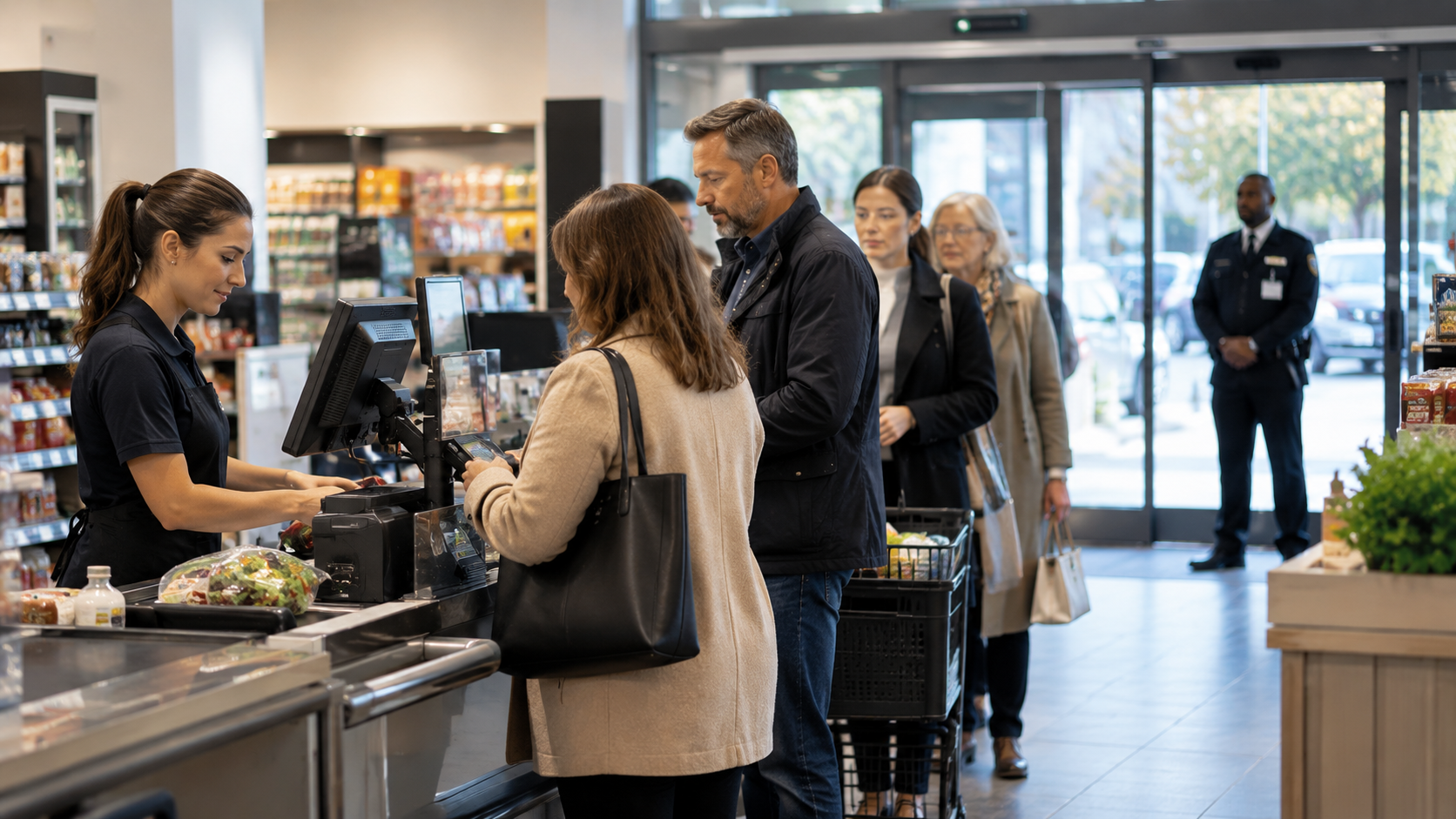
Retail security refers to on-site, preventative measures designed to deter theft, manage antisocial behaviour, and protect staff and customers during trading hours. Unlike static security, such as CCTV alone or remote alarm monitoring, retail security introduces a human presence that can observe behaviour in real time, intervene early, and adapt to changing conditions on the shop floor. In Gloucestershire’s smaller high streets and market towns, this visibility often matters more than technology alone, particularly where offenders are repeat visitors who exploit predictable routines.
How Gloucestershire’s crime profile shapes retail risk
Recorded crime data across Gloucestershire consistently shows shoplifting as one of the most common offences affecting retail areas. This tends to cluster around busy daytime trading periods, late afternoons, and early evenings rather than overnight hours. Unlike major metropolitan centres, retail crime here is often opportunistic rather than confrontational, involving distraction theft, concealed items, or coordinated activity between multiple stores in close proximity. Retail security therefore focuses on deterrence and disruption rather than response to violence.
Peak risk periods for Gloucestershire retailers
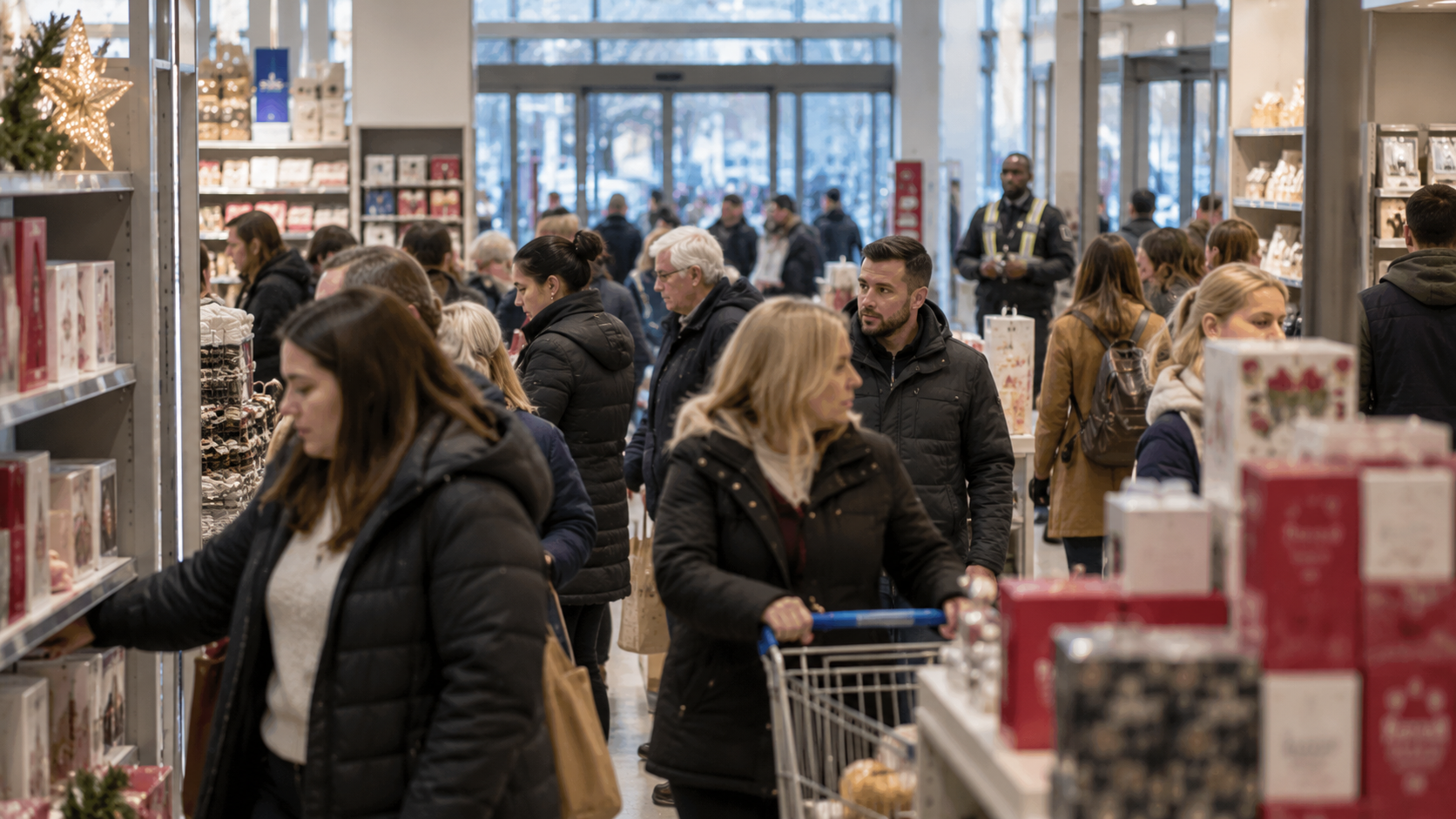
Risk levels typically rise during predictable high-footfall windows: weekends, school holidays, seasonal sales, and event-driven spikes in towns like Cheltenham. Late trading hours increase staff vulnerability, particularly for smaller stores with limited staffing. Retail parks experience different patterns, with quieter midweek periods presenting opportunities for organised theft targeting high-value, easily resold goods.
Sector-specific vulnerabilities within retail
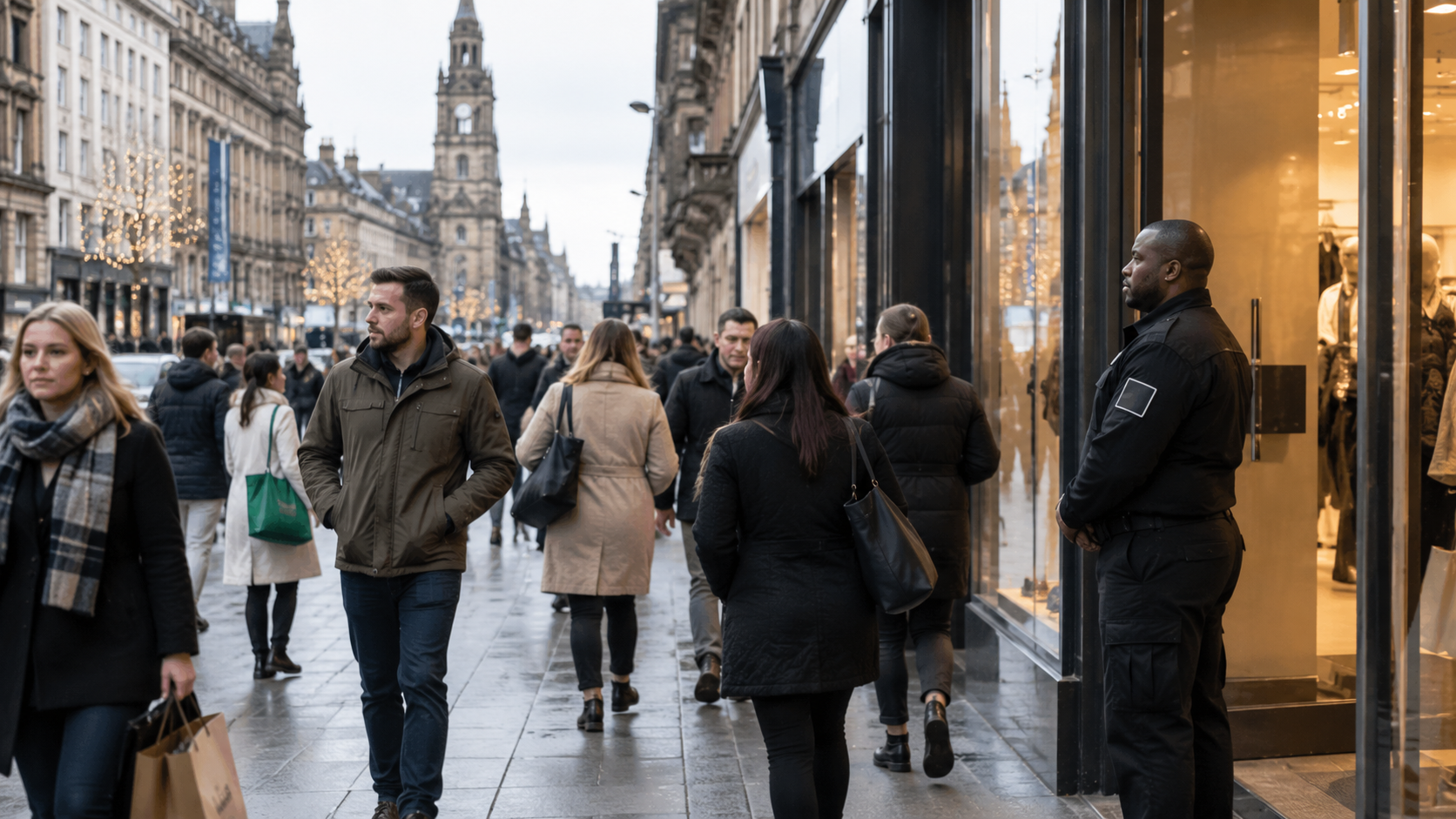
Independent retailers and convenience stores are more exposed to repeat low-level theft and staff intimidation, while larger supermarkets and chain stores must manage wider floor areas and self-service zones. Retail parks around Gloucester and Cheltenham face vehicle-linked theft and rapid exit risks, whereas historic town centres deal more with pedestrian flow and limited sightlines. These differences mean retail security in Gloucestershire is rarely uniform and must reflect the site’s layout and customer profile.
Daytime versus evening retail security risks
Daytime risks are usually linked to distraction and concealment theft during busy periods, while evening risks shift towards staff safety, antisocial behaviour, and reduced natural surveillance. Retail security strategies often change across the trading day, prioritising visibility and engagement earlier on, and reassurance and incident management later.
Seasonal and event-driven pressures
Gloucestershire’s calendar influences retail risk. Events such as race meetings, festivals, and seasonal tourism increase transient footfall, making it harder for staff to identify suspicious behaviour. During these periods, retail security supports crowd management, reduces theft linked to anonymity, and helps stores maintain a calm trading environment.
The role of local transport and commuter flow
Retail areas near transport links experience higher levels of transient footfall, particularly at peak commuter times. This creates opportunities for offenders to move quickly between locations. Retail security helps disrupt this pattern by increasing perceived risk and slowing down offending behaviour.
Economic and growth-related influences
As Gloucestershire continues to develop commercially, particularly around retail parks and mixed-use developments, opportunities for retail crime also increase. Security demand tends to rise alongside growth, not because areas become unsafe, but because larger, busier retail environments present more opportunity if risks are unmanaged.
Overall, retail security in Gloucestershire is about recognising patterns of opportunity, timing, and site exposure. When aligned to local conditions, it helps businesses reduce loss, protect staff, and maintain a safe customer experience without resorting to excessive or disruptive measures.
Legal and Compliance Requirements for Retail Security in Gloucestershire
Retail security in Gloucestershire, including key areas such as Devon and Bath, operates within a clearly defined UK legal and regulatory framework. For business owners and managers, compliance is not just about avoiding penalties; it is about demonstrating due diligence to insurers, local authorities, and, where relevant, landlords and licensing bodies. Understanding these requirements helps retailers apply security confidently and defensibly.
SIA licensing requirements for retail security staff
Any individual carrying out licensable retail security activities in Gloucestershire must hold a valid Security Industry Authority (SIA) licence. This applies to roles such as store detectives, loss prevention officers, and security staff involved in preventing theft, managing conflict, or removing individuals from premises. Using unlicensed personnel exposes businesses to criminal penalties, reputational damage, and potential insurance invalidation. Responsibility sits with both the security provider and the retailer engaging the service.
Penalties for non-compliance
Employing or contracting unlicensed retail security staff is a criminal offence under UK law. Penalties can include fines and, in serious cases, prosecution. For Gloucestershire retailers, enforcement risk is not theoretical; insurers and local authorities increasingly check licensing compliance following incidents, particularly where staff or customers are injured.
Vetting standards: BS 7858 and DBS expectations
Reputable retail security providers in Gloucestershire follow BS 7858 vetting standards, which include identity checks, employment history verification, and right-to-work confirmation. While DBS checks are not legally required for all retail security roles, they are widely expected, especially in stores frequented by vulnerable individuals or located near schools, colleges, and transport hubs. From a risk perspective, many insurers view DBS screening as part of good practice rather than an optional extra.
Insurance requirements and liability considerations
Retailers hiring security must ensure that the provider carries appropriate public liability and employer’s liability insurance. From the retailer’s side, insurers often expect security arrangements to be proportionate, properly contracted, and delivered by licensed personnel. Poorly structured security arrangements can complicate claims following theft, assault, or property damage.
Data protection and CCTV integration
Where retail security operates alongside CCTV, businesses must comply with UK GDPR and Data Protection Act requirements. This includes lawful use of footage, clear signage, controlled access to recordings, and appropriate data retention periods. In Gloucestershire’s town-centre stores, where CCTV often covers public-facing areas, failures in data handling can create legal exposure unrelated to the original security incident.
VAT treatment of retail security services
Retail security services are generally subject to VAT at the standard rate. For Gloucestershire businesses, this affects cost comparisons and budgeting, particularly for long-term contracts. VAT treatment does not vary locally, but it is a frequent source of confusion when comparing in-house measures with contracted services.
Local authority and premises-specific considerations
While there are no Gloucestershire-only licensing rules for retail security, some premises operate under conditions set by local councils or landlords, particularly in shopping centres and mixed-use developments. These conditions may specify minimum security standards, reporting requirements, or incident coordination procedures.
Event licensing and temporary retail activity
Pop-up retail, seasonal markets, and event-linked trading in locations such as Cheltenham or Gloucester may fall under event licensing conditions. In these cases, retail security plays a role in demonstrating crowd management, theft prevention, and public safety compliance to licensing authorities.
Martyn’s Law and future retail security obligations
Martyn’s Law (the proposed Protect Duty) is expected to introduce clearer requirements for publicly accessible venues, including some retail environments. While not yet fully implemented, Gloucestershire retailers should expect increased emphasis on risk assessment, preparedness, and proportionate security measures rather than mandatory guarding across all sites.
Documentation and compliance evidence
Retailers should expect security providers to supply clear documentation, including SIA licence details, insurance certificates, vetting confirmation, and incident reporting processes. This documentation is increasingly requested during insurance renewals, lease negotiations, and post-incident reviews.
In Gloucestershire, legal and compliance requirements for retail security are less about local variation and more about consistent application of national standards. Retailers who understand these obligations are better placed to structure security that protects staff and stock while standing up to legal, insurance, and regulatory scrutiny.
Costs, Contracts, and Deployment for Retail Security in Gloucestershire
For retailers in Gloucestershire, the decision to introduce on-site security is usually driven by loss levels, staff safety concerns, or insurance pressure rather than a desire for visible deterrence alone. Understanding how costs are structured, how contracts typically work, and how quickly security can be deployed helps businesses plan retail security in a way that is proportionate and financially defensible.
Typical cost drivers for retail security
Retail security costs in Gloucestershire are influenced by several practical factors rather than a single headline rate. Store size, opening hours, footfall levels, and the level of responsibility placed on security staff all affect pricing. A small high-street store requiring peak-hour coverage will be cost very differently from a large retail park unit needing full-day presence. Additional responsibilities such as incident reporting, staff support, or coordination with CCTV monitoring can also influence overall cost.
City-centre vs suburban and retail park pricing
Retailers in Gloucester, Cheltenham, and other busy centres often face higher security costs than suburban or market-town locations. Higher footfall, increased theft opportunity, and late-evening trading hours raise risk exposure and, in turn, security pricing. Out-of-town retail parks and smaller town centres may see lower hourly rates, but longer coverage periods can narrow the difference in total spend.
Mobilisation and deployment timelines
Retail security can usually be mobilised quickly once risk requirements are agreed. In Gloucestershire, short-term or interim cover can often be arranged within days for stores facing sudden theft spikes or staffing gaps. Longer-term deployments take more time, as they involve site familiarisation, compliance checks, and coordination with store management. Businesses should plan ahead where possible, particularly ahead of seasonal trading peaks.
Contract lengths and flexibility
Most retail security contracts in Gloucestershire fall into either short-term arrangements, such as seasonal cover, or rolling long-term agreements. Shorter contracts offer flexibility but tend to come at a higher hourly rate. Longer agreements provide pricing stability and operational continuity, which is often important for stores with ongoing loss-prevention challenges.
Notice periods and exit terms
Standard notice periods typically range from a few weeks to several months, depending on contract length and service scope. Retailers should review notice terms carefully, particularly if security is introduced as a trial measure. Clear exit clauses allow businesses to adjust security levels without being locked into arrangements that no longer reflect risk.
Inflation, wages, and future pricing pressure
Retail security pricing in 2025 is increasingly shaped by wider economic conditions. Wage pressures, pension contributions, and compliance costs all feed into contract pricing. For Gloucestershire retailers, this means that long-term contracts may include annual reviews or index-linked increases rather than fixed rates over multiple years.
Insurance considerations and cost offsets
Well-structured retail security can support discussions with insurers, particularly where theft or staff incidents have led to increased premiums. While security does not automatically reduce insurance costs, insurers often view documented, proportionate security measures as a positive risk-management step. Over time, this can help offset part of the security investment through improved insurability or more stable premiums.
Public sector and regulated retail environments
Where retail operates within publicly owned premises or mixed-use developments, procurement rules may apply. The Procurement Act 2023 is shaping how public sector and quasi-public retail security contracts are tendered, with greater emphasis on transparency, compliance, and value rather than lowest price alone. Retailers operating in these environments should expect more formal contract structures and documentation requirements.
For Gloucestershire businesses, retail security costs and contracts are less about finding the cheapest option and more about aligning spend with actual risk. Clear contract terms, realistic deployment timelines, and an understanding of how security supports insurance and operational resilience help retailers make decisions that stand up to scrutiny long after the initial deployment.
Training, Daily Operations, and Retail Security Duties in Gloucestershire
For retail businesses in Gloucestershire, the value of on-site security is closely tied to how well security staff are trained and how consistently daily routines are followed. Effective retail security is not about constant intervention; it is about predictable presence, awareness of the retail environment, and disciplined reporting that reduces risk over time.
Training standards for retail security staff
Retail security personnel operating in Gloucestershire are expected to meet nationally recognised standards before deployment. This includes valid SIA licensing and appropriate background vetting. Beyond licensing, retail-focused training is critical. Guards must understand customer-facing environments, conflict management, theft indicators, and how to support staff without escalating routine situations. Training should reflect the realities of busy high streets in Cheltenham or Gloucester as well as larger retail parks where visibility and coverage are more challenging.
Start-of-shift routines and site awareness
At the beginning of each shift, retail security staff focus on situational awareness rather than physical patrol alone. This typically involves reviewing handover notes, understanding any recent incidents, and checking that store layouts, access points, and alarm systems remain unchanged. In Gloucestershire stores with extended trading hours, this early familiarisation is particularly important to identify vulnerabilities created by staffing changes or late-evening footfall.
Shift handovers and continuity
Effective handovers are essential in retail environments where incidents may build over multiple shifts. In Gloucestershire, security continuity often depends on clear communication between outgoing and incoming staff. Handover notes usually cover theft patterns, known repeat offenders, staff concerns, and any temporary operational issues such as faulty lighting or access points. This reduces reliance on individual judgement and ensures consistent risk management.
Patrol routines within retail settings
Retail patrols are structured around customer flow rather than rigid schedules. Guards typically vary patrol timing to avoid predictability, focusing on high-risk areas such as changing rooms, high-value product zones, and store exits. In retail parks and larger units, perimeter visibility and car park oversight may also form part of routine checks, particularly during quieter trading periods.
Reporting and documentation
Daily reporting is a core part of retail security operations in Gloucestershire. Guards maintain logbooks or digital records covering incidents, suspicious behaviour, staff interactions, and environmental issues such as poor lighting or obstructed exits. These records are not administrative formalities; they provide evidence for insurers, support management decisions, and help retailers identify patterns rather than isolated events.
Alarm response and incident handling
When alarms are triggered during trading or early opening hours, retail security staff are expected to follow predefined response procedures. This usually involves verifying the cause, maintaining staff safety, and escalating appropriately rather than acting independently. In Gloucestershire’s mixed-use retail locations, coordination with store management and, where necessary, emergency services is a key part of responsible response.
Fire safety and environmental checks
Retail security duties often include basic fire safety awareness, such as monitoring escape routes, checking that fire exits remain unobstructed, and noting any hazards that could increase risk during evacuation. In multi-store retail parks, lighting checks in shared areas and car parks are particularly relevant to staff and customer safety during evening hours.
End-of-shift secure-down procedures
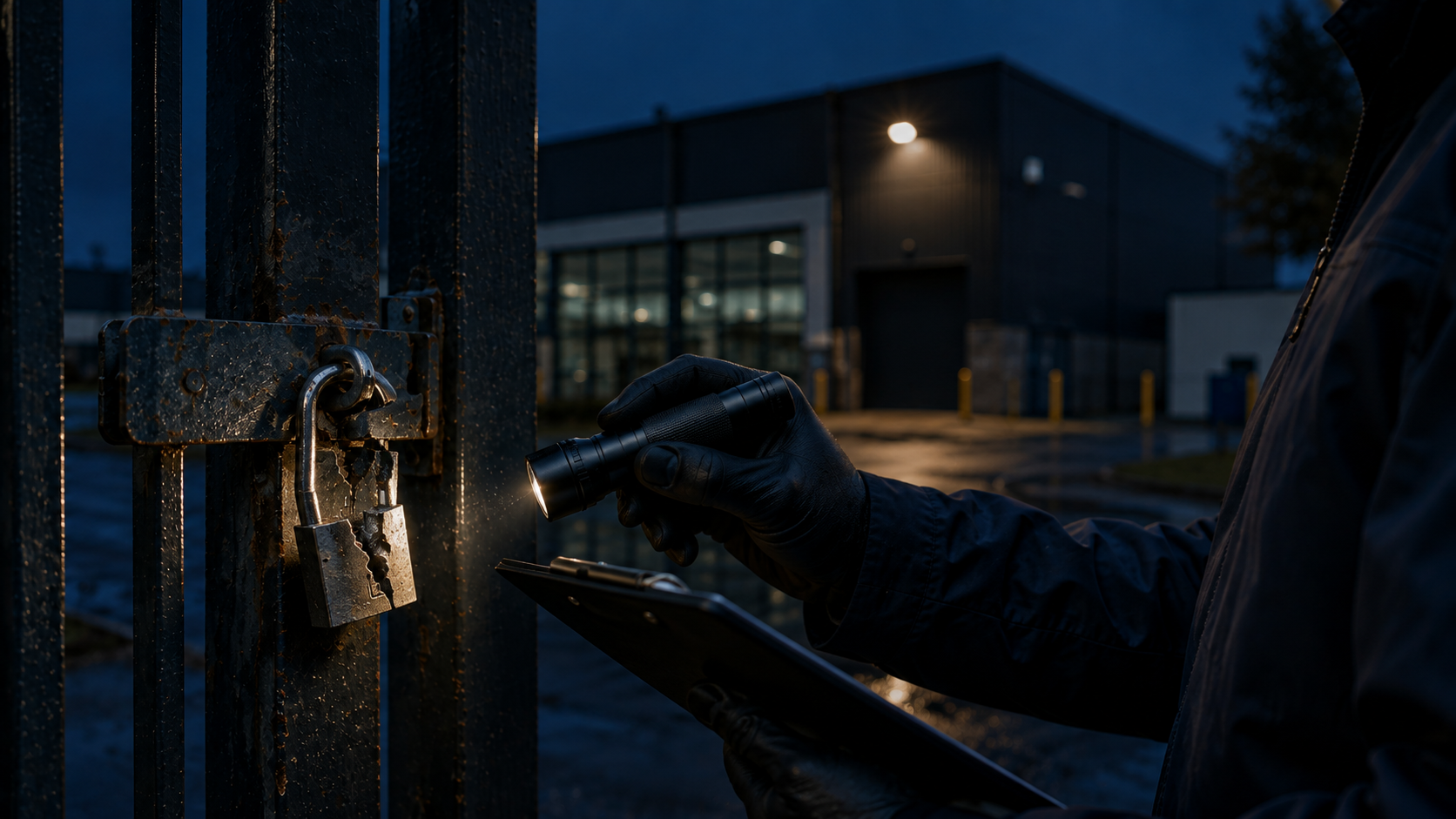
At the end of a shift, retail security staff ensure that agreed secure-down procedures are followed. This may include confirming that access points are locked, alarms are set correctly, and outstanding issues are logged for follow-up. For Gloucestershire retailers, especially independents with limited management cover, this structured close-down reduces reliance on informal checks.
Shift patterns and coverage planning
Retail security coverage in Gloucestershire often reflects trading patterns rather than 24/7 guarding. Daytime presence may focus on theft deterrence and staff support, while evening or weekend shifts address antisocial behaviour and reduced staffing levels. Where extended coverage is required, predictable shift patterns help maintain consistency without increasing fatigue-related risk.
Overall, training and daily operations in retail security are about reducing uncertainty. When routines are clear, reporting is consistent, and staff understand the retail environment they are protecting, Gloucestershire businesses gain practical risk reduction without disrupting normal trading.
Performance, Risks, and Operational Challenges in Retail Security Gloucestershire
For retail businesses in Gloucestershire, measuring security performance and understanding operational risk is more useful than focusing on headline incident numbers. Effective retail security is judged by consistency, visibility, and how well it supports normal trading without creating friction for staff or customers.
Key performance indicators (KPIs) for retail security
Retailers should focus on KPIs that reflect risk reduction rather than enforcement activity. Commonly used measures include incident frequency trends, repeat theft occurrences, response times to in-store issues, quality of incident reporting, and staff feedback on feeling supported during trading hours. In Gloucestershire’s mixed retail landscape ranging from market towns to retail parks, KPIs should be reviewed alongside footfall patterns and trading hours, not in isolation.
Reporting quality and management oversight
Accurate, consistent reporting is a core indicator of retail security effectiveness. Clear incident logs help businesses identify patterns such as repeat offenders, peak theft times, or vulnerabilities linked to staffing levels. For Gloucestershire retailers, well-maintained reports also support insurance discussions and demonstrate due diligence if incidents escalate or are challenged later.
Environmental and seasonal risks
While weather plays a limited direct role in indoor retail security, it can still influence risk indirectly. Poor weather often pushes higher footfall into enclosed shopping centres and retail parks, increasing congestion and distraction-based theft opportunities. Seasonal conditions, especially darker winter evenings, also affect staff safety during opening and closing routines in car parks and peripheral store areas.
Shift length and fatigue-related risks
Extended or poorly structured shifts can reduce alertness and consistency, increasing the likelihood of missed incidents or delayed responses. For retailers, this is less about how guards are managed internally and more about understanding that overly long coverage periods may reduce effectiveness. Well-balanced coverage aligned to trading risk periods is generally more reliable than continuous presence without variation.
Mental wellbeing and night-time cover
Retail security during late trading hours or weekends can involve higher exposure to antisocial behaviour, particularly around transport links and leisure-adjacent retail areas. Businesses should ensure that night or late-shift coverage includes clear escalation routes and supervisory support. This protects service continuity and reduces the risk of inconsistent decision-making during higher-pressure periods.
Regulatory and environmental considerations
Outdoor elements of retail security such as car park patrols or perimeter monitoring must account for health and safety expectations and environmental regulations. Adequate lighting, safe walking routes, and realistic patrol expectations are essential to avoid unnecessary risk while maintaining visibility.
Staffing stability as an operational risk
Rather than focusing on recruitment or retention strategies, retailers should view staffing stability as a service continuity issue. Frequent changes in on-site security personnel can weaken site familiarity, reduce deterrence, and disrupt relationships with store staff. For Gloucestershire businesses, continuity often matters more than headcount, particularly in locations exposed to repeat, low-level offending.
Overall, strong retail security performance in Gloucestershire comes from realistic KPIs, reliable reporting, and an understanding of how operational pressures affect consistency. When risks are managed proactively and expectations are clear, retail security supports both loss prevention and a stable trading environment without becoming intrusive or reactive.
Technology and Future Trends in Retail Security Gloucestershire
Technology is increasingly shaping how retail security is planned and delivered across Gloucestershire. Rather than replacing physical security measures, modern tools are being used to improve visibility, consistency, and decision-making particularly in a county with a mix of historic town centres, retail parks, and semi-rural shopping locations.
Integration of CCTV with on-site retail security
CCTV remains a central component of retail security, but its role has evolved. In Gloucestershire stores, CCTV is most effective when paired with on-site presence rather than used in isolation. Live monitoring, clearer camera placement, and better incident playback allow retailers to identify patterns such as repeat theft routes, blind spots, and peak risk periods. This integration supports quicker responses and stronger evidence handling without increasing disruption on the shop floor.
AI analytics as a support tool, not a replacement
AI-enabled video analytics are increasingly used to flag unusual behaviour, loitering, or movement patterns that may indicate theft risk. For Gloucestershire retailers, particularly those operating larger stores or retail parks, AI helps prioritise attention during busy trading hours. Importantly, these systems act as decision-support tools, highlighting risk rather than making enforcement decisions on their own.
Remote monitoring and hybrid security models
Remote monitoring is becoming more common for lower-risk trading hours, back-of-house areas, and overnight periods. In Gloucestershire, where some retail sites experience fluctuating footfall depending on season or location, hybrid models can provide coverage without full on-site presence at all times. This approach is often used to maintain visibility while managing costs and operational flexibility.
Limited but emerging use of drones
Drone use in retail security remains limited and highly situational. In Gloucestershire, drones are more likely to be relevant for large retail parks or mixed-use commercial estates rather than high streets. When used, they tend to support perimeter awareness rather than replace ground-level observation, and their deployment must remain proportionate and compliant with aviation and privacy regulations.
Predictive analytics and risk planning
Retailers are increasingly using data from incidents, footfall, and trading patterns to plan security coverage more precisely. Predictive analytics help Gloucestershire businesses anticipate when additional security is justified for example during seasonal sales, student term periods, or major local events rather than relying on static year-round coverage models.
Skills and awareness in modern retail security
As technology becomes more embedded, retail security personnel are expected to understand systems such as digital reporting tools, body-worn cameras, and integrated alarm platforms. From a business perspective, this matters because technology only adds value when it is used consistently and correctly, supporting clearer documentation and smoother escalation when incidents occur.
Sustainability and green security practices
Environmental considerations are beginning to influence retail security decisions. Energy-efficient lighting in car parks, low-power CCTV systems, and reduced vehicle patrols where foot patrols are sufficient are all examples seen across Gloucestershire. These measures help reduce environmental impact while maintaining visibility and safety.
Martyn’s Law and future retail implications
Martyn’s Law is expected to affect larger retail venues, shopping centres, and mixed-use destinations by increasing expectations around risk assessment, preparedness, and visible security measures. For Gloucestershire retailers operating larger premises or hosting events, future compliance is likely to involve clearer procedures, better coordination with local authorities, and more structured security planning rather than dramatic operational changes.
Overall, technology in Gloucestershire retail security is best viewed as a force multiplier. When aligned with local risk patterns and operational realities, it improves consistency, insight, and resilience supporting safer trading environments without undermining customer experience.
Conclusion
Retail security in Gloucestershire is ultimately about proportionate risk management rather than visible enforcement. The county’s mix of historic high streets, market towns, retail parks, and semi-rural shopping destinations creates uneven exposure to theft, antisocial behaviour, and staff safety risks. What works in a busy town centre such as Cheltenham or Gloucester may not be appropriate for a smaller market town or edge-of-town retail park.
For business owners and managers, the key decision is not whether retail security is useful, but when it becomes justified, defensible, and aligned with operational realities. Well-planned retail security helps protect stock, supports staff confidence, and demonstrates due diligence to insurers and regulators, without disrupting the customer experience. When security decisions are grounded in local risk patterns, legal obligations, and clear performance expectations, Gloucestershire retailers are better positioned to manage loss proactively rather than reacting after incidents occur.
FAQs: Retail Security in Gloucestershire
1. When should a retail business in Gloucestershire consider dedicated security support?
Retailers typically consider security when losses become repeatable rather than occasional, when staff raise safety concerns, or when footfall peaks create supervision gaps. Seasonal trading periods and evening opening hours often trigger this review.
2. Do small independent shops in Gloucestershire need retail security?
Not always. However, independents are often more exposed to repeat offenders and distraction theft. Proportionate measures, such as part-time security or peak-hour coverage, can be more effective than full-time deployment.
3. How do crime patterns differ between town centres and retail parks in Gloucestershire?
Town centres tend to see higher levels of opportunistic theft and antisocial behaviour linked to footfall and transport hubs. Retail parks often face organised theft, vehicle-based offences, and lower natural surveillance during quieter hours.
4. What legal requirements apply to retail security staff in Gloucestershire?
Security personnel must hold valid SIA licences, be appropriately vetted, and operate in line with UK employment and data protection laws. Businesses remain responsible for ensuring any contracted provider meets these requirements.
5. Can retail security help with insurance and liability concerns?
Yes. Insurers often view structured retail security as evidence of risk management, particularly for repeat loss locations. This can support claims defensibility and, in some cases, influence premium discussions.
6. Is CCTV alone enough for most Gloucestershire retailers?
CCTV helps with deterrence and evidence, but on its own it rarely prevents loss in real time. Many retailers find it more effective when combined with active supervision during high-risk periods.
7. How quickly can retail security be deployed in Gloucestershire?
Deployment timelines vary, but many arrangements can be mobilised within days once risk scope, hours, and site requirements are agreed. Temporary or seasonal cover is common for short-term needs.
8. How should retailers measure whether security is working?
Common indicators include reductions in repeat theft, fewer staff incidents, improved reporting quality, and clearer incident timelines. The aim is not zero incidents, but better control and visibility.
9. Will future regulations like Martyn’s Law affect Gloucestershire retailers?
Larger retail venues and shopping centres are most likely to be affected. The focus will be on preparedness, documented risk assessments, and clear procedures rather than increased day-to-day disruption.