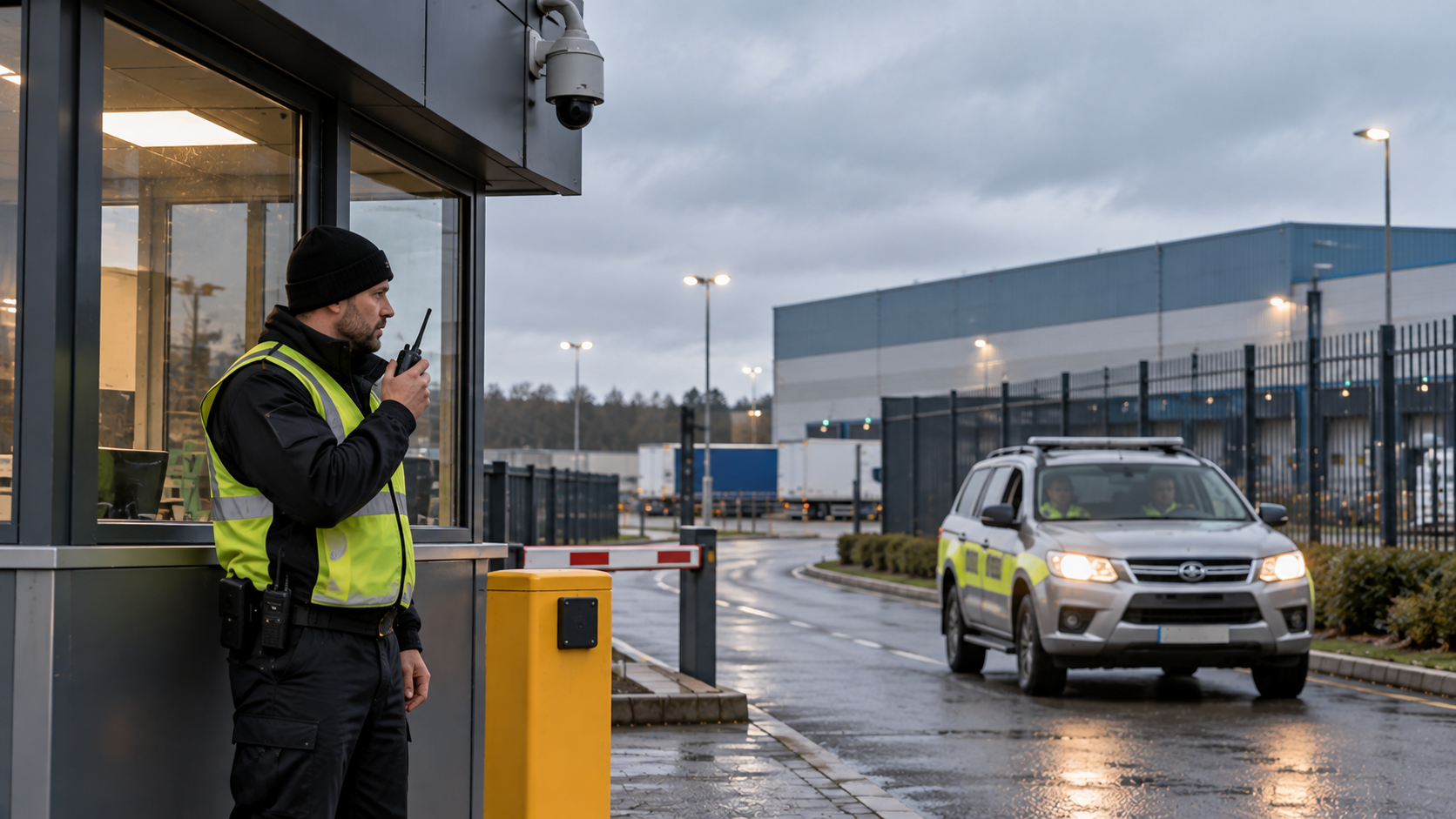
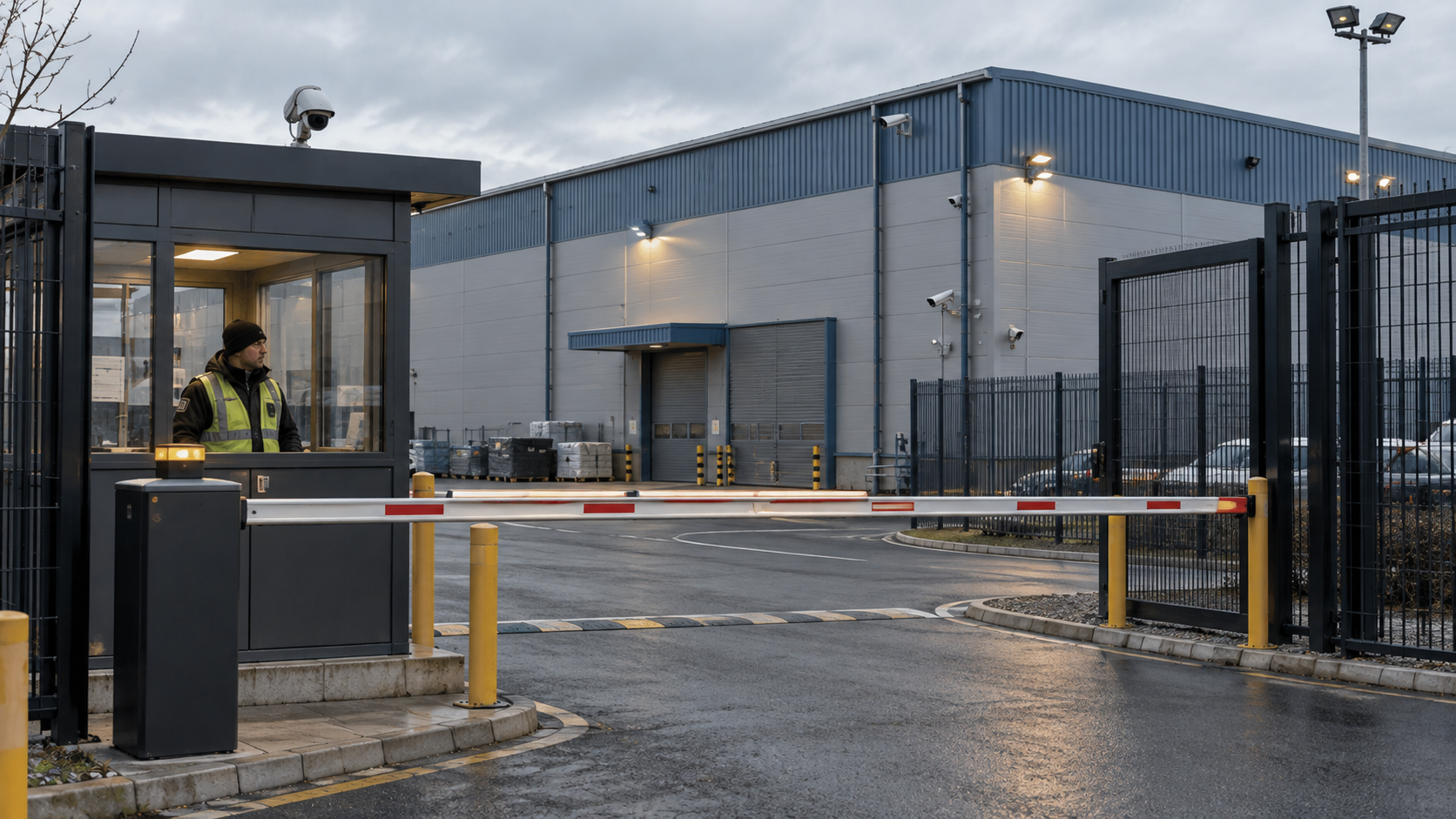
Retail risk in Stirling doesn’t behave as it does in larger cities. Footfall rises and falls quickly, shaped by tourism seasons, university term times, and coach arrivals that can turn a quiet street busy in minutes. The city centre’s historic layout adds another layer: narrow frontages, limited sightlines, and mixed-use buildings where retail, hospitality, and residential space sit side by side. Those conditions influence when problems occur just as much as where they occur.
For business owners and operators in Stirling, Retail Security is rarely about constant coverage. It’s about managing short, predictable pressure points, busy afternoons during peak season, early evenings when staff numbers thin, or closing times when retail parks and car parks become vulnerable. Static measures help, but they struggle to adapt when trading patterns change from one week to the next.
This guide is designed to support practical decisions. It looks at how manned Retail Security fits Stirling’s business mix, how it supports legal and insurance expectations, and where it genuinely reduces risk rather than simply adding cost. Instead of assuming that more security is always better, it focuses on proportion, timing, and site-specific exposure.
That perspective is central to why Stirling businesses need Retail Security. When human presence is applied thoughtfully, aligned with local footfall, layout, and trading rhythm, it can protect staff, reduce disruption, and make retail risk easier to manage in a city defined by movement rather than volume.

Retail Security Basics in Stirling: Small-city Rhythms, Historic Layout, Visitor Pulses
Stirling’s retail landscape is defined by short, intense pulses of activity rather than constant urban churn. Coachloads of visitors, students between terms, and weekend shoppers can turn a quiet high street into a busy one within an hour. Add a compact, historic centre with narrow approaches and mixed shop-fronts, and you’ve got the exact conditions where human judgement and flexible presence make the difference.
What is Retail Security, and how does it differ from static or remote-only cover in Stirling?
Retail Security = visible, trained people placed where timing + layout create risk. In Stirling, that usually means:
- Mobile, customer-facing patrols during visitor peaks.
- Short, tactical deployments around coach/rail arrivals.
- Liaison with staff and quick, low-level engagement (calm verbal interventions).
How it differs:
- Static security is useful for fixed points (service entries, night-time secure-down), but struggles with rapid changes in footfall across a compact area.
- Remote monitoring is valuable for evidence and overnight efficiency, but often misses the small behaviours a human can defuse in the moment.
How do Stirling’s local crime patterns shape demand?
Stirling sees more opportunistic theft and anti-social behaviour around peaks than constant organised retail crime. Key drivers:
- Short-term visitors and coach tourism (weekends, bank holidays).
- Evening clusters near popular hospitality streets.
- Student pulses (term starts/ends).
These create predictable windows where a temporary, visible guard presence is disproportionately effective.
Peak hours and where guards add most value
Typical high-risk windows in Stirling:
- Late morning → early afternoon (coach arrivals, sightseeing).
- Early evening (hospitality spillover & student movement).
- Event kickoffs (match days, festivals).
Place guards at entrances, tills, taxi/coach drop zones and car parks, not hidden behind service doors, and you prevent escalation more often than you react to it.
Warehouse & trade-counter vulnerabilities
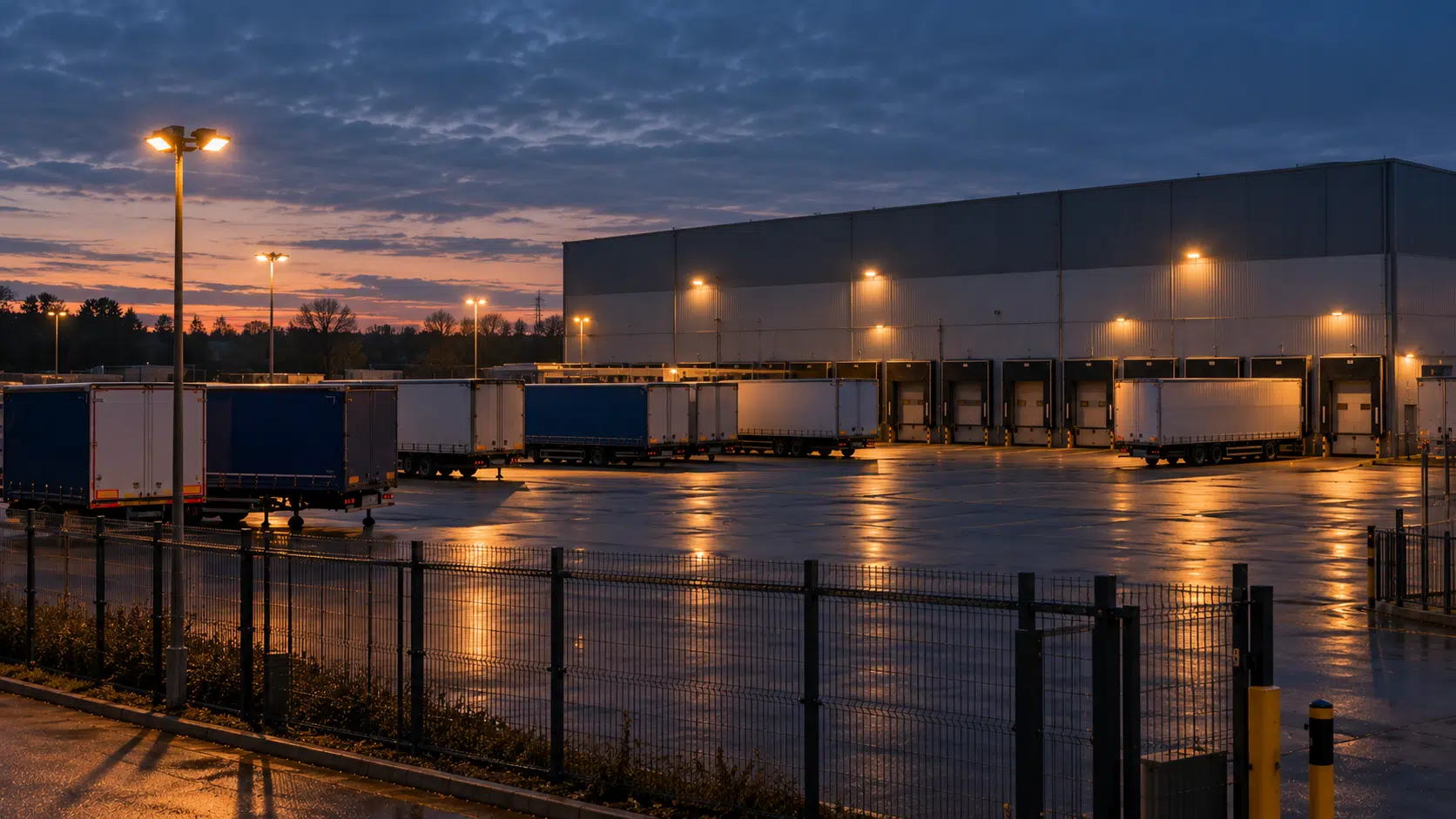
Although Stirling is not a major logistics hub, edge-of-town trade counters and small warehousing present weaknesses:
- Poor lighting and minimal CCTV around the rear loading bays.
- Contractors use multiple informal access points.
- High-value stock staged briefly for collection.
Manned guarding here focuses on perimeter checks during collection windows and visible presence when deliveries are scheduled.
How Retail Security addresses anti-social behaviour in Stirling retail parks
Practical, low-escalation tactics that work:
- Short, visible patrol sweeps at closing times.
- Calm engagement and movement-on notices rather than immediate enforcement.
- Coordination with CCTV and local council community officers for persistent groups.
This combination reduces nuisance without heavy-handed policing.
Rising retail theft and demand for daytime manned patrols
When theft increases in short bursts (e.g., seasonal theft during tourist peaks), Stirling businesses often prefer targeted daytime patrols to longer night contracts because they stop losses where they most commonly occur.
Differences between day and night risks in Stirling
- Day: petty theft, distraction techniques, staff abuse. Prevention and evidence capture matter.
- Night: vandalism, break-ins at isolated units, vehicle damage. Deterrence and secure-down procedures are the priority.
In Stirling, the best value is usually in transition periods (day→evening) rather than flat 24/7 cover.
Seasonal events and student cycles: how guarding needs change
Events (such as summer festivals and university events) create predictable demand spikes. Planning should include short, formalised surge cover and pre-arranged liaison with venue stewards and local police where appropriate. (For comparison of event pressures in larger cities, see coverage differences in Edinburgh.)
Transport hubs and impact on retail security
Stirling’s train and coach links concentrate flow in narrow windows, similar (on a smaller scale) to issues seen in Glasgow and Dundee, and mean guards should be deployed at arrival points and adjacent retail areas during timetabled spikes.
Economic trends and industrial demand
Local growth (new student intake, hospitality expansion) changes when and where guarding is effective. Unlike the shift-driven pattern in Aberdeen, Stirling’s security needs are driven by visitor and student seasonality, making short-term, measurable trials especially useful.
Legal & compliance requirements in Stirling
Legal problems usually show up after an incident, during an insurance claim, or when a licence is reviewed. For Stirling businesses, the practical question is simple: can you prove you did the right checks and followed the rules? Below is what that means in practice, plus quick contract-ready evidence you can ask suppliers to provide.
SIA licensing: who needs a licence and why it matters
Any person carrying out licensable guarding duties must hold a valid SIA licence (security guarding, door supervision, CCTV/public space surveillance, etc.). That requirement is national; it applies in Stirling as it does across the UK, and the licence is the basic legal permission for front-line guarding work.
Practical buyer checks:
- Ask for the operative’s SIA licence number and check it at contract start.
- Keep a dated screenshot or copy in your contract file.
- Require providers to confirm that all deployed operatives hold the correct licence type for their role.
Penalties & enforcement: what happens if rules are ignored
Using unlicensed operatives, failing to follow licence conditions, or obstructing SIA enquiries are offences the regulator can enforce. Enforcement can include fines, prosecutions, and reputational damage, and these failings also frequently cause insurers to dispute claims. Treat licence checks as a non-negotiable procurement item.
Quick contract clause: “Supplier confirms all operatives will hold and maintain appropriate SIA licences. Supplier will provide evidence within 48 hours of the request.”
Vetting, DBS and BS 7858: what “good vetting” looks like
Best practice for screening security staff is BS 7858 (identity, employment history, right-to-work, and checks appropriate to the role). DBS checks are not automatically required for every guard, but they are commonly requested where staff have close contact with vulnerable people (e.g., at events or in certain retail environments) or where landlords/insurers request higher assurance. Ask for a BS7858 summary and note which roles included basic/standard/enhanced criminal record checks.
What to request in tenders:
- A BS7858 statement or summary vetting checklist.
- Clarity on which roles had DBS checks and what level (basic/standard/enhanced).
- Right-to-work evidence for all operatives (see below).
Insurance: The cover you must expect to see
Operationally, insurers expect lawful, vetted, and insured guarding. At a minimum, a provider should carry:
- Employers’ liability insurance (statutory minimum and usually at least £5m).
- Public liability insurance appropriate to the activity and client risk.
Request certificates of insurance (dates, limits, insurer name) before onboarding and include a contractual obligation to notify you of changes. Failure to obtain these may jeopardise future claims.
CCTV, data protection & sharing footage with Police Scotland
CCTV use must comply with UK GDPR and ICO guidance (including clear signage, retention rules, and access controls). If your site shares footage with Police Scotland, use the recognised digital upload path (DESC) or agreed local protocols so that evidence is accepted and auditable. Keep a short log of every disclosure (date, footage ID, recipient) for insurance and legal purposes.
Practical steps:
- Maintain a one-page CCTV policy (signage, retention, access owners).
- Log every footage disclosure and retain copies of the police reference numbers.
VAT, procurement and public-sector considerations
Manned security services are typically standard-rated or VATable in procurement. For public-sector or grant-funded contracts, procurement documents should make the VAT treatment and total landed cost explicit, rather than hiding them in headline hourly figures. For local public contracts, expect stricter mobilisation and continuity requirements in tender scoring.
Events, licensing & local council rules
If security is part of an event or licence condition, you must evidence a proportionate plan to Stirling Council’s licensing processes (public processions, events). The council operates a licensing forum and will expect clear risk assessments and named contacts for security measures submitted with event notifications. Include your security annexe with event plans.
Right-to-work & post-Brexit checks (practical risk)
Employers (and suppliers) must perform right-to-work checks and retain proof. Post-Brexit and recent guidance make these checks particularly important; a supplier’s failure to complete them can create continuity risk if staff are later found ineligible. Ask providers for their right-to-work process and sample audit trails.
Mandatory business licensing
Policy work and industry consultations on mandatory business-level licensing have progressed in 2024–25; reforms are under discussion and may introduce stricter company-level obligations. For now, rely on robust due diligence (SIA licences, BS7858, insurance) and monitor regulatory announcements, as background changes could affect supplier capacity and costs.
Police partnership & local evidence-sharing protocols
Police Scotland routinely works with commercial operators. Use established routes (DESC) and local police contacts to speed investigations. Agree on a local contact and an MoU or simple protocol for evidence sharing and escalation to avoid delays when incidents occur.
Costs, Contracts & Deployment in Stirling
In Stirling, you are not usually buying a fixed daily guard headcount; you’re buying certainty at moments that matter, such as coach arrivals, evening clusters, and event days. That changes what drives price: travel and standby, surge cover, vetting/mobilisation time, and inflation-linked labour costs.
Typical cost drivers (historic centre vs retail parks/outskirts)
- Historic town-centre
- Short patrol routes and high visibility needs (customer-facing conduct) lower travel but higher expectations for front-of-house skills.
- Peak-focused deployments (midday tourist surge, early evening) are often cheaper when scheduled.
- Retail parks & suburbs
- Longer travel times, vehicle-equipped patrols, and the need for perimeter checks raise delivery costs.
- Reliability matters: fewer local relief staff -> higher standby costs.
Practical rule: a retail-park shift covering perimeter checks, delivery-bay attendance and car-park patrols will often cost more to run reliably than a similarly sized patrol in the compact city centre because you’re buying resilience (travel, backup, induction).
How long does mobilisation actually take?
- Emergency short-notice: 24–72 hours is possible for basic presence, but expect limited vetting/induction.
- Planned mobilisation: 7–21 days is typical to allow BS7858 checks, SIA licence verification and a site induction.
- Seasonal scaling: 4–8 weeks for dependable capacity during major events or university term starts.
Why? Legal vetting and right-to-work checks take time; don’t sign a contract expecting full, compliant deployment inside a day without a mobilisation premium.
Contract lengths & notice periods that buyers see
- Short/seasonal: 1–3 months (notice 7–30 days).
- Medium: 6–12 months (notice 30–60 days).
- Long: 12+ months with indexation/KPI schedules (notice 60–90 days).
Include explicit mobilisation, stand-down, and exit clauses to prevent an abrupt supplier exit from leaving you exposed.
Labour cost pressures (2024–25 & beyond)
Wages are the single biggest cost driver. The statutory National Living Wage rose substantially in recent years (for example, government rates were updated through 2024–25). Buyers should plan for wage and living-wage pressures to continue shaping hourly rates and standby charges.
Market data also shows average security pay rising into the mid-teens per hour across the UK. Those base wages drive the headline hourly costs you see from suppliers.
Practical contracting advice:
- Use CPI or clearly defined wage-trigger clauses for multi-year deals.
- Ask for transparent staff cost breakdowns (basic pay + employer NI + training uplift).
Inflation and long-term pricing
Inflation forces suppliers to shift from fixed multi-year rates to index-linked models or regular review windows. Insist on:
- Maximum annual uplift caps, and
- Clear cost-driver explanations (labour, fuel, training).
This keeps pricing predictable while reflecting real cost movements.
How guarding can affect insurance conversations
Guarding doesn’t automatically cut premiums, but well-documented, proportionate guarding reduces frequency and severity of loss, which insurers favour. Require a supplier “security evidence pack” (time-stamped patrol logs, CCTV clips linked to incidents, incident-resolution notes) to support underwriting and renewals. The ABI explains that insurers assess many factors documented risk reduction improves discussions.
Procurement Act 2023: what public-sector buyers now expect
The Procurement Act 2023 emphasises value, resilience and transparency. For public or council-run retail sites, that means tenders will favour:
- Demonstrable mobilisation plans and continuity, not just the lowest cost.
- KPIs, audit rights and social-value evidence in scoring.
- Clear documentation of how supplier capacity is secured for peaks.
If you’re bidding for public work (or want to match public standards), prepare a mobilisation plan, KPI dashboard and evidence of social value.
Training, Daily Operations & Guard Duties in Stirling
In Stirling, the useful question isn’t “what should a guard do?” so much as “what decisions should a guard be ready to make at each phase of the trading day?” Training and routines must support judgement across short visitor surges, term-time pulses, and quiet, weather-affected windows.
Training standards you should expect
Guards deployed in Stirling retail environments should have a combination of regulatory and practical training:
- SIA licence for the role they perform.
- Public-facing conflict management & de-escalation (customer-service tone for tourist settings).
- First aid / basic medical response for busy public spaces.
- Lone-worker & fatigue awareness for early/late shifts.
- Digital incident reporting & CCTV evidence handling (how to tag/export footage).
- Site-specific familiarisation (historic centre access, coach-drop protocols, event stewarding when needed).
These skills prioritise judgement, evidence capture, and safe public interaction, not heavy-handed enforcement.
Start-of-shift: immediate checks and first decisions
On arrival, a guard’s priority is to assess immediate risk rather than to begin a long patrol.
Typical first-minute checklist:
- Read the handover log for outstanding issues, scheduled deliveries, or events.
- Test comms and kit: radio, bodycam, torch, panic alarm.
- Verify CCTV feed and recording status (quick playback).
- Quick lighting sweep of entrances, coach/taxi drop-off points, and visible car-park zones.
- Note and escalate any faults before footfall increases.
If a major fault is found (e.g., a non-functioning alarm or a dark car park), the guard records it and alerts the supervisor, as one action often prevents bigger problems later.
Handover discipline: short, sharp, effective
Good handovers in Stirling follow a simple rule:
- Outgoing lists three items (incidents, faults, actions).
- Incoming repeats them and records acceptance.
- Any unresolved item is given an action owner and a deadline.
This keeps continuity tight during short surges and rotating teams (e.g., tourist-season rostering).
Patrol cadence: risk-led, not clock-driven
Patrols change with pressure, not by rote.
- Peak windows (coach arrivals, lunchtime tourist flow, early evening): hotspots checked every 10–20 minutes (entrances, tills, taxi/coach points).
- Transition/delivery windows: focus on loading bays, rear access and staff entrances.
- Quiet periods/night: evidence-focused checks every 45–90 minutes with targeted spot-checks of known weak points.
Documented patrol routes and variable cadence prevent predictable loops that opportunists exploit.
Perimeter & industrial checks (edge sites)
For small warehouses, trade counters or retail-park edges, the first perimeter tasks are:
- Confirm gates/roller doors are locked, and seals are intact.
- Check delivery bays and any temporary staging areas.
- Verify CCTV coverage of yard areas; log any blind spots.
- Record vehicle registrations for incoming/outgoing trucks if required.
Equipment verification & alarm response
Start-of-duty verification must include:
- Radios, bodycams, torches, and panic alarms tested and logged.
- CCTV recording confirmed (date/time stamp check).
Alarm approach protocol:
- Verify remotely where possible (CCTV).
- Notify supervisor/monitoring and request backup.
- Approach safely. If required, do not enter unknown or hostile spaces alone.
- Record every step with times and names.
Visitor logging & access checks
On-site procedure for visitors/deliveries:
- Log name/company, vehicle reg, time in/out, who escorted them.
- Check ID where appropriate.
- Note any contractors’ permit-to-work or site induction status.
This traceability matters for incident follow-up and insurance.
CCTV & internal access verifications
At shift start, guards should:
- Confirm camera angles and storage health for key cameras (tills, entrances, yard).
- Check internal access points: staff doors, stockrooms, and fire exits ensure they close and lock correctly, and that fire doors are not propped open.
Reporting, fire & lighting checks
Hourly or post-patrol entries should include:
- Time-stamped patrol notes and any anomalies (including weather impact).
- Fire panel normal, exits unobstructed, no propped doors.
- Car-park and external light status; log burned-out units and their locations.
These concise records are the evidence insurers and auditors want.
Tamper detection & end-of-shift secure-down
Guards note signs of tampering (e.g., exposed cables, open meter cupboards) and photograph when safe. Before leaving:
- Ensure all access points are secured, alarms set, and keys logged.
- Complete handover notes highlighting outstanding risks.
Shift patterns, welfare & expected response times
For 24/7 cover in Stirling, buy rostering that:
- Overlaps at peak times for handover continuity.
- Limits continuous night duty to 8 hours and mandates supervisor check-ins (every 30–60 minutes for lone night posts).
- Guarantees standby relief for short-notice needs.
Typical private guard response SLA for local relief: 5–20 minutes depending on proximity; for emergencies, always call 999 (police response times vary by demand).
Performance, risks & staffing challenges in Stirling
In Stirling, security performance is about holding cover during pressure windows (coach arrivals, early-evening hospitality clusters, term-time surges). The real risk is not that someone’s on-site; it’s that quality falls when you most need it.
Below, you can understand, how weather and environment show up in logs, the real health impacts of long or fragmented shifts, mental-health safeguards buyers should expect, regulatory constraints on outdoor patrols, and the market behaviours you’ll see from suppliers when labour is tight.
KPIs that actually tell you if the cover worked
Forget counting footsteps. Track outcomes that translate to business risk:
- Coverage adherence: % of agreed patrols or presence during agreed risk windows (not every hour).
- Mean time to verify/escalate: time from alert to confirmed action (shows whether monitoring + human response is tight).
- Patrol completion rate: % of scheduled patrols completed with timestamped evidence.
- Report quality index: scored for timestamps, witnesses, CCTV links, photos and clear outcome.
- Incident repeat rate: number of repeat incidents at the same hotspot (reveals deterrence failure).
- Loss-per-period: £ loss in a comparable period vs. baseline (the commercial measure).
- Welfare-check cadence: frequency of supervisory check-ins for lone/night posts (a proxy for sustained decision quality).
Ask your supplier for a monthly dashboard containing these metrics; they are what insurers and operations teams actually use.
Weather: how it weakens protection and how guards should record it
Stirling’s weather (rain, wind, occasional snow/ice) can quickly change visibility and patrol routes. Make sure logs treat weather as operational context, not an excuse.
Minimal weather-log fields to require:
- Condition (rain/wind/ice)
- Visibility/lighting (reduced/normal)
- Route change (yes/no + reason)
- Action taken (e.g., “north car park reduced patrols CCTV cross-cover requested”)
- Photo attached (if safe)
This short standard transforms weather from “it was raining” into verifiable evidence that explains patrol adjustments.
Health impacts of long or fragmented shifts
Long or broken shifts degrade judgement in predictable ways:
- Narrowed attention and missed behavioural cues.
- Slower cognitive processing during confrontations.
- Increase in minor reporting errors (times, witness names).
For a buyer, the symptom is continuity erosion: identical hours covered but with falling protective value. Contracts that ignore rostering, overlap, and relief create this hidden risk.
Mental health & night-shift welfare
You don’t design HR programmes, but you should insist that providers can demonstrate welfare safeguards:
- Supervisor check-ins for lone/night posts (e.g., every 30–60 minutes, logged).
- Debrief procedures after stressful incidents (timestamped, owner-assigned).
- Fatigue-aware rostering evidence (maximum continuous duty, guaranteed rest windows).
These are straightforward contract asks that reduce missed detections and liability exposure.
Environmental & regulatory constraints on outdoor patrols
Stirling’s historic centre and conservation areas introduce limits that matter operationally:
- Lighting restrictions (heritage areas may limit bright floodlighting).
- Vehicular or idling limits near sensitive zones (affects rapid relief).
- Access restrictions for event routes or temporary road closures.
Require documented patrol routes showing how the supplier mitigates these constraints (e.g., CCTV cross-coverage, timed checks, vehicle-free patrol plans).
Staffing pressure: market behaviours you’ll observe
When labour is tight, suppliers tend to adapt in ways that affect you:
- Small relief pools / guaranteed standby: stabilising but costly.
- Hybrid cover: on-site during peaks, remote monitoring off-peak.
- Short-notice mobilisation premiums for guaranteed 24–72h cover.
These are commercial behaviours to evaluate whether they explain price differences and continuity reliability. For student-heavy evening economies (compare locally with Dundee), hybrid models are common.
Technology & future trends in Stirling retail security
Technology doesn’t replace guards in Stirling; it sharpens where and when they work. In a compact, historic city with heavy visitor traffic, the right mix of cameras, analytics, and remote support helps crews focus on coach arrivals, market days, and early-evening hospitality clusters.
From cameras to decision-support: the practical shift
CCTV was once a post-incident evidence tool. Today, it’s frequently a real-time pointer.
What technology now provides:
- Early flags (loitering, multiple approaches to tills) help a guard decide where to patrol next.
- Faster evidence capture (timestamped clips ready for upload) so incidents are handled quickly with Police Scotland.
- Audit trails that support insurers and licensing bodies.
In Stirling, this matters during short windows; a ten-minute flag at a coach drop can let a guard intercept a theft before it happens. For comparison, shift-focused tech use in port cities like Aberdeen centres on rapid crew-turnover windows; Stirling uses similar tech logic but applied to visitor spikes.
Post-COVID changes that stuck around
After the pandemic, many retailers kept leaner front-of-house staffing and doubled down on tech to maintain coverage. Practical outcomes for Stirling:
- More reliance on remote monitoring for overnight/quiet hours.
- Greater emphasis on visible daytime presence backed by tech to target patrols.
- Faster digital incident reporting so insurers and police have usable evidence immediately.
This hybrid approach balances cost and presence in a city where constant on-site cover is rarely necessary.
AI surveillance
AI analytics are useful for pattern spotting: repeated loitering, simultaneous approaches, or crowd clustering near a high-value display.
What to expect:
- Use cases that work: retail parks, coach drop-off points, and busy market stalls.
- Limitations: AI can’t de-escalate; it flags, humans decide.
- Buyer ask: request data on false-positive rates or a short sample of AI alerts (so you know how noisy the system is).
In event-heavy contexts (think festival or tournament days similar to those in Edinburgh), AI helps pre-position teams before crowds peak.
Remote monitoring + hybrid models = cost-smart coverage
A common Stirling model:
- Remote monitoring overnight and during long quiet stretches.
- On-site guards during timed spikes (coach arrivals, event starts, market days).
- Clear scripted escalation so remote alerts become immediate guard tasks, not unanswered alarms.
This keeps human judgement where it counts and reduces unnecessary night-time staffing costs.
Drones: occasional, regulated, and weather-sensitive
Drones can help with perimeter checks for large retail parks or evidence capture after a repeated issue, but Stirling’s conservation areas, tight sightlines and variable weather limit routine use. If a provider suggests drones, require CAA-compliant operator proof and a clear mission plan.
Predictive analytics: planning cover rather than guessing it
Predictive tools combine historic incidents, coach timetables, market days and weather to suggest when extra cover is likely to be needed. For Stirling that means:
- Adding a roving guard on high-risk event days.
- Scheduling additional visibility around known tourist arrival times.
These tools don’t replace local knowledge; they augment it.
Upskilling & new essential certifications
Beyond SIA licences, modern expectations include:
- Digital incident reporting competence (exporting clips, tagging).
- Basic AI-alert validation skills (knowing when an alert is credible).
- Data-handling awareness (ICO/GDPR basics) for anyone accessing footage.
If drones are used, operators need the appropriate CAA certificates.
Green/security practices that fit Stirling
Small, practical moves often work best:
- Plan patrols to reduce vehicle use (clustered routes between hotspots).
- Use low-glare, energy-efficient lighting in conservation-sensitive areas.
- Share monitoring infrastructure among nearby sites where viable.
These steps cut costs and respect Stirling’s heritage constraints.
Martyn’s Law (Protect Duty)
Protect Duty increases the need to document who will act on alerts and how public-facing venues reduce risk. For Stirling venues that host events or attract coachloads, the immediate actions are simple:
- Map public access points.
- Show how tech and people combine to detect and respond.
- Record responsibilities in a short, publishable plan.
Conclusion
Stirling’s retail risk is shaped by short, sharp bursts of activity: coachloads, term-time shifts, market days and early-evening hospitality clusters. That pattern means the right security choice is rarely “more hours”; it’s better-timed presence, well evidencedand scaled to real pressure points. Choose visibility where people arrive and where sightlines are poor; back it with tidy reporting, CCTV links and simple escalation so insurers and police can act quickly; and favour flexible, short trials that match peak windows rather than blanket, year-round cover.
If you’re deciding today: map the top 3 weekly pressure windows, trial targeted manned patrols for a month, and measure coverage adherence, incident repeat rate and report quality. That loop try, measure, adjust answers why Stirling businesses need Retail Security in a way your board, landlord and insurer can defend.
Frequently Asked Questions
1. Do small Stirling shops need manned guards?
Often not full-time. Short, targeted trials during peak visitor hours, events or after repeat incidents are usually the most cost-effective first step.
2. Will a guard reduce my insurance premium?
Not automatically. Insurers value documented, proportionate risk control and good evidence (time-stamped logs, CCTV clips). Well-evidenced guarding makes renewal conversations easier.
3. What checks should I ask a security supplier to provide?
Request SIA licence numbers, a BS 7858 vetting summary, employer’s and public-liability insurance certificates, and a one-page CCTV/data-handling policy.
4. How quickly can a team be deployed if we need short-notice cover?
Basic presence can sometimes be supplied in 24–72 hours, but full compliant mobilisation (vetting, induction) typically requires 7–21 days and may carry a premium.
5. Can CCTV replace guards in Stirling’s historic centre?
No, CCTV is vital for evidence and remote verification, but visible guards deter, de-escalate and manage people in real time — especially in narrow, mixed-use streets.
6. Are drones useful for Stirling retail sites?
Occasionally, for perimeter checks or evidence capture after repeated issues, but conservation rules, tight spaces and weather usually limit routine use.
7. What KPIs should I track first?
Start with coverage adherence (presence during agreed risk windows), mean time to verify/escalate, incident repeat rate, report quality, and loss-per-period.
8. How should weather be logged in patrols?
Require a short weather field in each patrol entry (condition, visibility, route changes, action taken) and photos where safe, this helps explain patrol adjustments to insurers.
9. How flexible are contracts for seasonal or event demand?
Very flexible. Look for seasonal, peak-window or rolling contracts with clear mobilisation, notice and evidence-pack requirements rather than long fixed-hour commitments.
10. What’s the best low-effort way to decide if I need guarding?
Create a one-page risk brief (top times, places, recent incidents). Use it to justify a short, measurable trial rather than committing to a long contract up front.