Factories in St Helens operate in a very specific reality. Production lines run on shifts, goods move in and out at set windows, and downtime is rarely contained to a single department. Factory security, in this context, is not about visible presence alone. It is about protecting continuity, keeping operations running when one incident could stall an entire day’s output.
Local manufacturing density, access to arterial logistics routes, and the concentration of industrial estates mean risks here are practical rather than theoretical. Insurers understand this. Expectations are shaped not just by what happens on-site, but by patterns seen across North West England, where production-led businesses face similar exposure.
That is why St Helens businesses need Factory Security is ultimately a planning question. It sits alongside insurance, compliance, and operational resilience, not fear, and not guesswork.
Factory Security Basics in St Helens
What factory security means in an industrial St Helens context
In St Helens, factory security is less about guarding a building and more about protecting a working system. A live site has moving parts: people, vehicles, stock, and machinery. Security exists to hold that together.
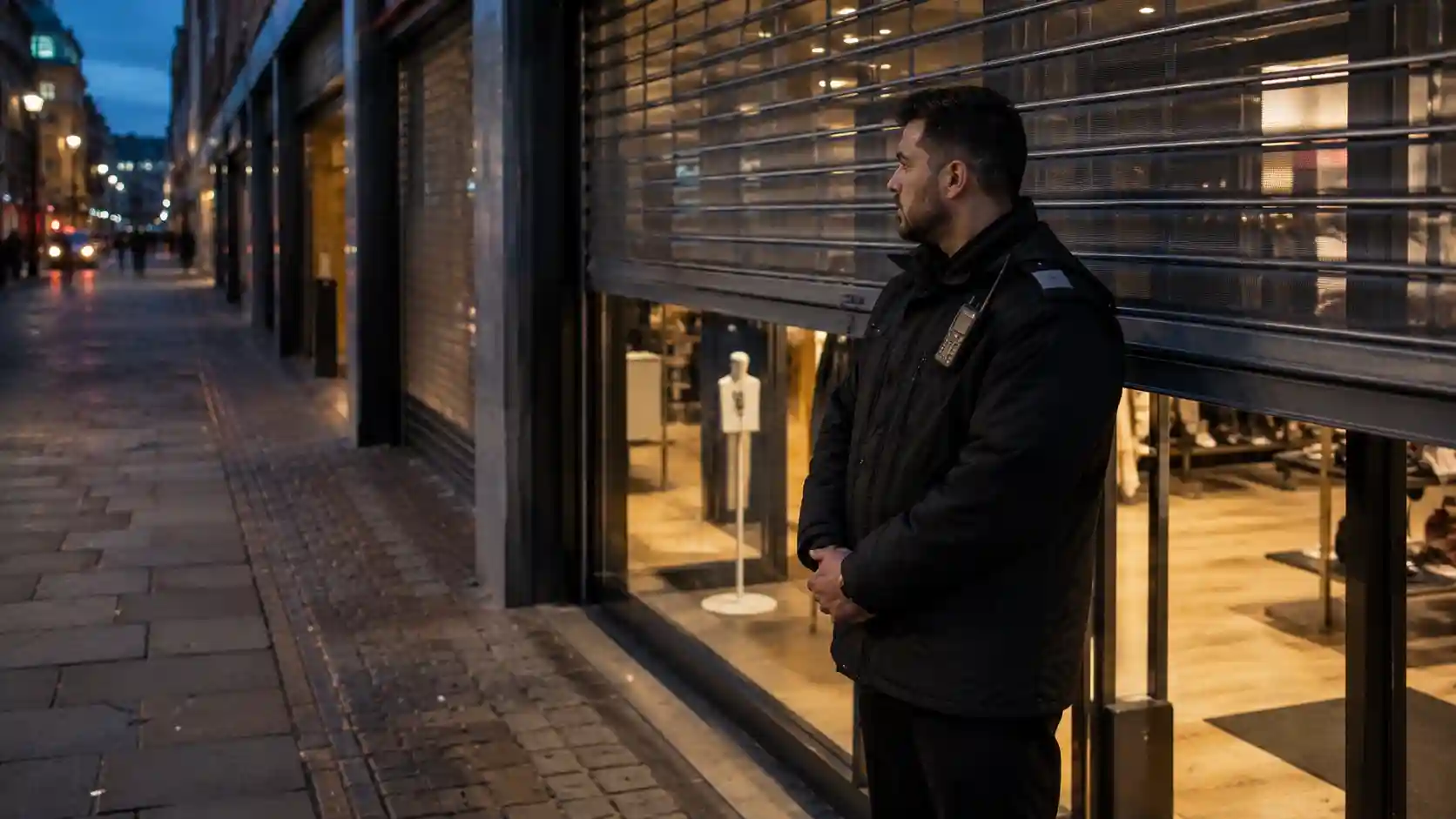
At its core, factory security combines trained on-site guards, controlled access, and oversight of critical areas so production can continue without interruption. It differs sharply from static or remote-only security. Cameras can record events, but they cannot challenge unfamiliar behaviour, pause a risky delivery, or recognise when something feels off on the floor. A guard can. That human judgement is the point.
This is where operational continuity matters. Factories are judged by output and reliability. Security supports that by reducing disruption rather than simply reacting after something goes wrong.
How St Helens’ industrial profile shapes security exposure
St Helens is a working town. Factories, yards, and industrial estates shape daily life. Materials arrive on time. Goods leave on set schedules. When one step slows, the effect spreads across the site.
Across Merseyside, factories share some patterns, but St Helens sites often sit close to homes, shops, and shared roads. This brings more people and movement near gates and fences, especially early in the morning and late at night.
Because of this, security planning focuses on boundaries and control of movement. The aim is to manage access and reduce mistakes. This approach fits how these factories really work, not how security looks on paper.
Crime and risk patterns affecting factories in St Helens
Factory risk rarely announces itself. It follows timing. Quiet periods. Familiar routines. The moments when attention drops.
In St Helens, exposure often increases during shift changes and low-supervision windows. This is less about headline crime figures and more about shift-change vulnerability when authorised access blends into unauthorised presence.
By contrast, factories operating in Lancashire often report wider perimeter challenges due to scale and isolation. In St Helens, risk is tighter and more concentrated. It’s about proximity, shared access routes, and predictable patterns that can be observed over time.
Understanding this difference helps businesses avoid over-engineering security in the wrong places.
High-risk factory environments and operational vulnerabilities
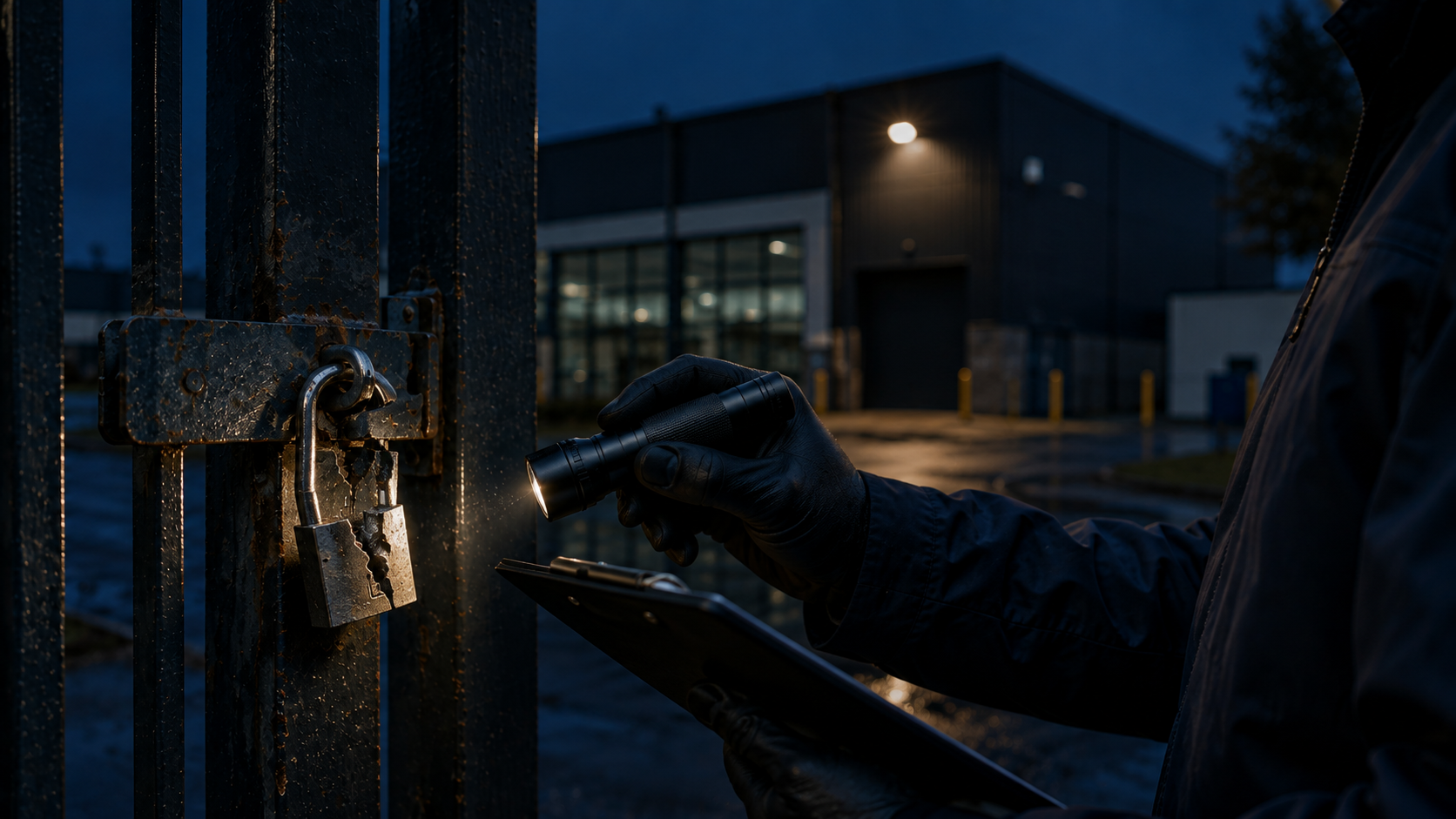
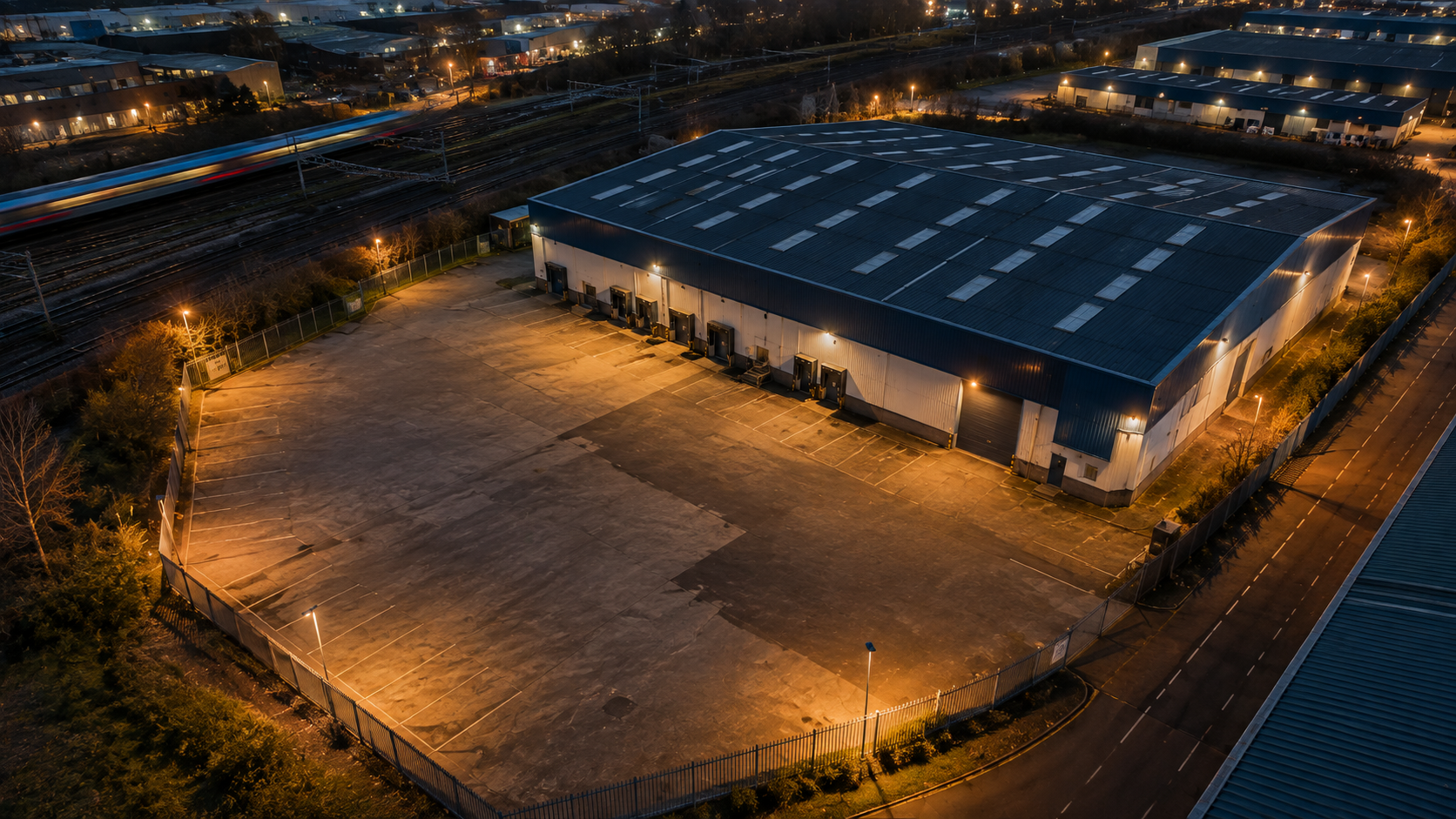
Certain areas draw attention because they matter operationally. Loading bay exposure is an obvious example. Goods pause there. Doors stay open. Movement is constant. It’s efficient and vulnerable.
Plant rooms, material storage zones, and boundary fencing carry different risks, but they share one thing: interference here creates knock-on effects. A damaged gate can halt deliveries. A compromised area can delay production checks.
For operators managing sites across the North West, consistency becomes the challenge. What works on one estate may not translate directly to another. Factory security has to flex without losing standards.
Day vs night factory security risks
Daytime risk tends to hide in plain sight. High footfall. Contractors. Deliveries. The challenge is verifying who should be there and who should not.
At night, the picture changes. Fewer people. Less noise. More reliance on routines. night-time intrusion becomes a concern not because it is dramatic, but because it can go unnoticed until damage is done.
Unattended production areas and idle machinery introduce a different kind of exposure. Security at night is less about volume of activity and more about awareness and response speed. That difference matters when planning coverage.
Seasonal and economic factors influencing factory security demand
Factory security demand is rarely static. Production cycles shift. Temporary labour comes and goes. Supply chain pressure builds during peak periods.
In growth areas like Oldham, expansion has shown how increased output often stretches existing security assumptions. More throughput means more access points, more people, and more margin for error.
In St Helens, similar pressures appear during seasonal surges or contract wins. Security decisions made for a quieter period may not hold under strain. Planning for that variability rather than reacting to it is where factory security proves its value.
Legal and compliance requirements for Factory Security in St Helens
Factory security is not just a choice. It is a legal duty. In St Helens, manufacturers are judged on whether they took sensible steps to prevent risks that could be expected, not only on what went wrong. Security plans sit inside that test. This matters most when insurers, regulators, or investigators start asking why controls were set a certain way. The focus is practical. Did the site act responsibly, keep records, and reduce known risks, or did it rely on assumptions that cannot be defended later?
SIA licensing requirements for factory security guards
Any individual carrying out licensable guarding activity must hold a valid SIA licence. For factories, this usually covers access control, patrols, and incident response. The obligation sits with the business as much as the Security Company in St Helens.
Using unlicensed guards exposes a factory to regulatory enforcement action. That can include fines, invalidated insurance cover, and uncomfortable scrutiny if an incident occurs. It also weakens your position when proving that reasonable precautions were in place.
BS 7858 vetting and workforce screening for factories
Factories face stricter expectations than offices for a reason. Guards often operate near high-value machinery, sensitive processes, and controlled materials. BS 7858 vetting exists to reduce insider risk by ensuring proper employment history verification before a guard ever sets foot on site.
For factory owners, this matters because vetting failures tend to surface after incidents, not before. Strong screening protects against internal exposure that cameras and alarms simply cannot detect.
DBS checks and contextual expectations
DBS checks are not automatically required for every factory guard. However, expectations change when guards work around vulnerable staff, sensitive production, or controlled substances.
In those environments, DBS disclosure expectations often come from insurers rather than statute. Ignoring that context can create gaps between what is technically legal and what is practically defensible.
Security company licensing and compliance documentation
Before signing any contract, factory owners should request evidence of a documented audit trail. That includes SIA approvals, vetting processes, insurance certificates, and training records.
This paperwork is not for filing away. It is what demonstrates due diligence if an incident escalates into a claim or investigation. Factories that cannot evidence compliance tend to carry the risk themselves.
Insurance requirements linked to factory security
Insurers assess guarded and unguarded production sites very differently. Visible measures matter less than structure, consistency, and accountability.
From an underwriting perspective, factory security supports insurer risk profiling. Well-planned guarding reduces uncertainty. Poorly defined arrangements do the opposite, even if guards are technically present.
Data protection and CCTV use on factory premises
CCTV is common in factories, but it carries responsibility. Footage often captures staff, contractors, and visitors in operational areas.
Compliance hinges on lawful CCTV processing under UK GDPR. That means clear purpose, controlled access, and proper retention. Guards must understand these boundaries, or the system becomes a liability rather than protection.
VAT treatment of factory security services
Security services are typically subject to VAT. For manufacturers, this affects budgeting, cash flow, and contract comparisons.
Understanding VAT early avoids surprises and supports long-term cost certainty, especially where security is built into multi-year operational planning rather than treated as a temporary fix.
Local authority and site-specific compliance considerations
Industrial regulation is rarely uniform. Local authorities interpret and enforce standards differently depending on site history, layout, and risk profile.
Factories in Rochdale have faced increased scrutiny around industrial compliance following regeneration and redevelopment. While St Helens operates under its own authority, parallels like this influence how expectations evolve across the region.
Labour law and post-Brexit considerations for factory guarding
Labour law affects factory security more than many owners expect. Working time rules, right-to-work checks, and contractual stability all influence whether guarding arrangements remain lawful and reliable.
Post-Brexit changes have increased attention on compliance because staffing instability can directly undermine service consistency risk. From a factory perspective, legal clarity supports continuity just as much as physical security does.
Costs, contracts, and deployment of Factory Security in St Helens
Cost is usually where factory security conversations become uncomfortable. Not because security is expensive in isolation, but because it sits at the intersection of labour, compliance, insurance, and operational risk. In St Helens, those pressures tend to surface quickly once a site moves beyond basic deterrence and starts planning for continuity.
This section looks at cost in the way finance teams and insurers do: as an outcome of decisions, not a number pulled from a rate card.
Typical factory security cost drivers in St Helens
Hourly rates are the visible part of pricing, but they are rarely the whole story. What really shapes cost are security cost drivers that sit behind the scenes.
Factory size, operating hours, access complexity, and the level of supervision required all matter. A site with multiple entry points, frequent deliveries, and overlapping shifts demands more coordination than a single-gate operation. Add specialist requirements, such as safeguarding high-value machinery or controlling hazardous zones, and adjust costs accordingly.
This is why two factories of similar size can see very different security budgets. The risk profile, not the postcode, usually explains the gap.
Industrial estate vs peripheral site cost differences
Location changes how security is deployed. Industrial estates benefit from shared infrastructure, neighbouring activity, and predictable movement patterns. Peripheral sites, by contrast, often face longer response routes, fewer passive deterrents, and greater reliance on on-site presence.
Deployment planning has to account for that. A guard covering a compact estate can focus on access management and patrol efficiency. A more isolated factory may require extended coverage simply to maintain visibility and response confidence.
These differences rarely show up in headline pricing but strongly influence how resources are allocated day to day.
Wage pressure and inflation impacts on factory security costs
Security costs do not exist in a vacuum, and Wage increases, statutory changes, and inflation all feed into long-term pricing. For factories planning beyond a single financial year, this matters.
Forward-looking cost discussions are less about predicting exact rates and more about understanding exposure. Contracts that ignore inflation entirely often become unstable. Those who acknowledge it transparently tend to hold up better under scrutiny.
The goal is not to chase the lowest figure, but to avoid arrangements that unravel when economic conditions tighten.
Contract length options for factory security
Short-term factory security contracts suit changing sites and trials, but usually cost more and disrupt continuity. Longer agreements favour stability, deeper site knowledge, and insurer confidence. Neither is automatically better. The right choice depends on how steady operations are and how predictable risks remain over time.
Notice periods and mobilisation timelines
Factories should be realistic about how quickly security can change. Mobilisation takes time: vetting, induction, sand ite familiarisation. Immediate cover is possible, but it is rarely optimal.
Notice periods exist to protect both sides from rushed transitions. When factories ignore this, they often absorb the risk themselves during handover gaps. Clear timelines support continuity, and vague expectations tend to do the opposite.
Insurance premium reductions through factory security
Insurers rarely reduce premiums simply because guards are present. What they look for is structure: defined coverage, documented procedures, and consistent reporting.
Well-planned factory security supports underwriting decisions by reducing uncertainty. It demonstrates that risks are identified and managed, not just reacted to. Over time, this can influence how a site is priced, not always immediately, but meaningfully. The absence of security, by contrast, often leaves insurers with little choice but to price in assumption-based risk.
Public-sector and regulated factory procurement
For factories operating within regulated supply chains, procurement rules add another layer. The Procurement Act 2023 has reinforced expectations around transparency, value, and compliance.
Across North West England, public-sector-linked sites are paying closer attention to how security contracts are structured and justified. Coastal distribution and manufacturing activity near Southport has shown how regulatory oversight can extend beyond the factory gate when public interest is involved.
In St Helens, this means factory security decisions increasingly need to stand up not just operationally, but on paper as well.
Training, daily operations, and guard duties in factory environments
Training and daily operations are where factory security either quietly works or slowly unravels. On paper, most sites look compliant. In practice, the difference comes down to how guards are prepared, how routines are followed, and how information moves between shifts. In St Helens, where factories often run extended hours and rely on predictable movement, small operational gaps tend to line up neatly with crime patterns. Not dramatic ones. Mundane ones. The sort that repeats until someone notices.
This section focuses on impact. What actually reduces risk? What insurers care about. And what tends to fail first when training and operations are treated as background noise.
Training standards relevant to factory security
Factory security training starts with context. Guards are not there to “secure a building”; they are operating inside live industrial systems. That means understanding industrial safety rules, restricted zones, vehicle movements, and the knock-on effect of a single mistake.
Industrial safety awareness is non-negotiable. Guards must recognise hazards, know when not to intervene physically, and understand how security actions interact with production workflows. Poorly trained guards often increase risk by blocking processes or mishandling routine situations.
From an insurance perspective, training demonstrates intent. It shows that the business understands its duty of care beyond basic compliance. That matters when incidents escalate beyond minor loss.
Start-of-shift security priorities on factory sites
The first minutes of a shift quietly shape the rest of it. Early checks establish whether the site has changed since the previous handover, doors left unsecured, alarms isolated, or areas accessed out of hours.
These checks matter because local crime patterns often exploit predictability. In St Helens, incidents linked to unauthorised access and opportunistic theft tend to occur during early-morning and late-evening windows, when staffing transitions create brief blind spots. A guard who understands that context approaches the start of the shift differently.
This is where access management protocols come into play. They are not about bureaucracy. They are about confirming that what should be controlled still is.
Patrol routines and access control in factories
Patrols are frequently misunderstood. They are not about covering distance or ticking boxes. They exist to introduce uncertainty into environments that would otherwise be predictable.
Effective patrol routines focus on critical areas, loading bays, storage zones,and boundary points, rather than uniform coverage. Guards who understand site-specific risk adjust their movement. Sometimes they pause. Sometimes they double back. Sometimes they spend longer where nothing appears to be happening.
That variation matters. Crime in factory environments often relies on routine being observed and exploited over time. Breaking that rhythm is one of the few consistently effective deterrents available.
Shift handovers and incident continuity
Most factory security failures don’t start with an incident. They start with information loss.
Shift handovers are where context either survives or disappears. A brief note about a door behaving oddly. A contractor was seen twice where they should have been once. These details rarely feel urgent in isolation. Together, they explain patterns.
Poor handovers weaken liability defence. If an incident occurs and there is no documented continuity, businesses struggle to show that risks were identified and managed. Insurers notice this. Investigators do too.
Fire safety and emergency preparedness in factories
Fire risk in factories is not theoretical. Machinery, materials, and extended operating hours raise exposure well above that of offices or retail units.
Security guards are often the first to spot early indicators, blocked exits, alarms isolated for convenience, and lighting failures in peripheral areas. Their role is not to replace fire officers, but to maintain readiness.
From an insurer’s standpoint, consistent fire safety checks demonstrate operational discipline. They reduce uncertainty around how a site would respond under pressure, which directly affects risk assessment.
24/7 factory security coverage models
Continuous operations change how security works. Fatigue, repetition, and complacency become real risks when sites never fully shut down.
24/7 coverage models rely on structured shift patterns, clear supervision, and realistic expectations of human performance. Overstretching guards rarely saves money in the long run. It increases error rates and weakens reporting quality.
In factories operating around the clock, crime patterns often mirror fatigue cycles rather than calendar time. Incidents cluster when attention dips. Well-designed coverage acknowledges that reality instead of pretending every hour carries the same risk.
Why this matters in practice
Training and daily operations are not the visible part of factory security, but they are the most defensible. When something goes wrong, and eventually, something always does, this is the layer that shows whether risks were anticipated or ignored.
For St Helens factories, where production continuity and insurance scrutiny go hand in hand, operational discipline is not optional. It is the quiet mechanism that keeps problems small and explanations credible.
Performance, risks, and operational challenges in Factory Security
Performance is where factory security becomes real. A site can have trained guards, valid licences, and full coverage, yet still be exposed if performance is judged in the wrong way. In factories, problems rarely arrive with noise or warning. They build slowly. Small issues repeat. Reports feel routine. Oversight becomes assumed rather than checked.
This is why performance matters more than presence. Effective factory security shows itself in how risks are noticed early, how patterns are understood, and how gaps are addressed before they grow. Operational challenges usually appear long before a serious incident occurs. They sit in everyday habits, familiar routes, and unchecked assumptions. This section focuses on recognising those signals and understanding what truly separates working security from security that only looks complete on paper.
KPIs that matter for factory security performance
Many factories default to easy metrics: hours covered, patrols completed, incidents logged. These numbers look neat on a spreadsheet, but they rarely tell you whether risk is being reduced.
What matters more is whether security activity aligns with exposure. Are access points consistently controlled during peak movement? Are recurring low-level issues being identified early, or logged and forgotten? Is response time measured against site layout rather than generic targets?
One of the most telling indicators is performance reporting standards. Clear, consistent reporting shows whether guards understand what matters on site and whether supervisors are actively reviewing patterns rather than isolated events. When reporting degrades, risk usually follows, quietly, then suddenly.
Weather and environmental impacts on factory patrols
Factories do not operate in controlled indoor environments alone. Perimeters, yards, and access routes are exposed to the elements, and weather has a direct effect on how patrols are carried out.
Poor visibility, heavy rain, or icy surfaces change patrol behaviour. Guards slow down. Certain areas are avoided. Checks become quicker and less thorough. That shift is understandable, but it needs to be acknowledged and managed.
From a risk perspective, weather-related adjustments matter because incidents often cluster when conditions discourage thorough patrols. Exposed industrial sites are particularly vulnerable during prolonged poor weather, when routine checks subtly degrade over time rather than failing outright.
Health and fatigue considerations for long factory shifts
Fatigue is an operational risk, not a well-being footnote. Long shifts, repetitive environments, and overnight coverage all affect attention, decision-making, and reporting accuracy.
In factory settings, this matters because small oversights carry disproportionate consequences. A missed access breach. An alarm is assumed to be a fault. A pattern not joined up because each incident felt insignificant on its own.
Fatigue doesn’t usually lead to dramatic failures. It leads to incomplete information. That’s what weakens risk management and makes post-incident explanations harder to defend. Well-run security models acknowledge human limits and design coverage accordingly, rather than assuming consistency across every hour of the day.
Operational stability and service continuity risks
Under-priced factory security often fails in predictable ways. Not immediately. Gradually.
Coverage becomes thinner. Supervision drops off. Familiarity with the site erodes as continuity breaks. Reporting becomes generic because guards are rotated too frequently to understand context. None of this looks critical in isolation. Together, it undermines the entire security function.
For factory owners, the risk here is not just increased exposure, but weakened defensibility. When something does go wrong, the question is no longer whether guards were present, but whether the security model was realistically capable of managing known risks.
Operational stability, consistent coverage, clear oversight, and retained site knowledge are what turn factory security from a cost line into a control measure. Without it, even well-intentioned arrangements tend to unravel under pressure.
Why performance scrutiny matters
Factory security is not about being perfect. It is about being clear and prepared. When performance measures match real risks, and when people account for tiredness, weather, and shift changes, security becomes steady and reliable. For factories working under insurance checks or outside review, this clarity helps keep incidents small and manageable. Security may not remove risk, but it helps explain and control it.
Performance, risks, and operational challenges in Factory Security
Performance shows whether factory security really works. Guards can be trained, licensed, and on-site, but problems can still happen if performance is measured the wrong way. In factories, risk does not appear suddenly. It grows over time. Small issues repeat. Reports become routine. Checks are assumed instead of confirmed.
Good factory security is not just about being present. It is about noticing problems early and dealing with them before they spread. Most operational challenges appear long before a serious incident. They sit in daily habits, fixed routes, and things people stop questioning. This section explains how to spot those signs and understand the difference between security that works and security that only looks complete.
KPIs that actually matter for factory security performance
Many factories measure what is easy to count. Hours worked. Patrols done. Incidents written down. These numbers look neat, but they often miss the real point. The real question is simple: Is the site safer than it was before?
What matters more in daily factory life includes:
- Whether doors, gates, and access points are controlled when people move the most
- Whether guards challenge the same issues every time, not just once
- Whether small problems stop repeating, instead of quietly coming back
Context also matters:
- Response time should match the site layout and shift patterns, not generic targets
- Reports should explain what is happening, not just list events
- Information should lead to changes, not sit unused in a folder
Good security reporting helps people think and decide. Bad reporting only proves someone was present.
How weather and the environment change patrol effectiveness
Factories are open spaces. The weather affects how patrols work. Rain, fog, and ice change how guards move around yards, fences, and gates. This happens in real life, not in theory.
Common effects include:
- Poor visibility and slippery ground slow movement and shorten checks.
- Long periods of bad weather reduce patrol depth over time.
- Guards adjust how they move to stay safe, even when trying to do their job well.
These changes matter. Problems often appear when routines are tight, not broken. When the weather shifts, patrol plans should shift too. Assuming patrols work the same in all conditions increases risk.
Health, fatigue, and the quiet erosion of vigilance
Fatigue rarely announces itself as a crisis. It shows up as small omissions. A check was completed a little too quickly. An assumption made without verification. A log entry written without context because it did not feel urgent at the time.
In factory security, those small changes matter. Long shifts, overnight coverage, and repetitive environments steadily tax attention and judgement, particularly where activity levels rise and fall rather than staying constant.
Warning signs often include:
- Less detail in log entries and fewer explanatory notes.
- Fragmented awareness, where related minor events are not joined up across shifts.
- Shortcuts are taken during monotonous periods, especially at night.
Security models that accept human limits and design coverage, breaks, and supervision around them tend to hold up better than those that assume performance remains flat across every hour.
Operational stability and why under-priced security fails
When factory security is priced below what the risk profile demands, failure tends to unfold slowly. Supervision thins. Continuity weakens. Familiarity with the site fades as rotation increases. None of this looks dramatic on its own.
Typical symptoms include:
- Fragmented coverage driven by frequent guard changes.
- Reporting that becomes generic because the site context is never fully absorbed.
- Loss of local knowledge combined with limited supervisory presence.
The result is not just increased exposure, but reduced defensibility. When something eventually goes wrong, attention turns to whether the security model was ever capable of managing known risks, not whether guards appeared on a rota.
Operational stability, consistent coverage, clear oversight, and retained site understanding are what allow factory security to function as a genuine control rather than a nominal safeguard.
Why scrutiny of performance matters
Performance management in factory security is not about chasing perfection. It is about credibility. When indicators reflect real exposure, when environmental and human factors are acknowledged, and when continuity is treated as fundamental rather than optional, security becomes explainable. That explainability is what keeps incidents contained, supports insurance positions, and prevents operational disruption from spiralling out of control. Risk will never disappear entirely. The aim is to keep it visible, understood, and defensible.
Technology and future trends in Factory Security for St Helens
Technology has changed how factory security is planned, but it has not changed why it exists. For manufacturers in St Helens, the role of technology is to improve visibility, consistency, and decision-making rather than to replace on-site judgement. The most effective approaches treat technology as an extension of operational discipline, not a shortcut around it.
Integrating CCTV with manned factory security
Most factories have cameras, but cameras alone do not keep a site safe. They only show what happened after the fact. The real value comes when CCTV works alongside trained guards on site.
Guards understand the factory. They know what normal movement looks like and what feels out of place. When they use live camera views, they can act early, not just watch later. This mix also creates clear records of decisions and actions. That matters when insurers or regulators ask not just what was recorded, but how situations were handled.
AI analytics as decision support for factories
AI tools help factories notice things that people might miss. Cameras with analytics can flag odd movement or areas that need a closer look. This helps when sites are busy and always moving.
AI does not understand the job on its own. It cannot judge what is normal for a shift or a task. People still decide what matters and what to do next. When used with care, AI supports awareness and helps teams respond faster, without taking control away from human judgement.
Remote monitoring for multi-site manufacturers
Remote monitoring helps manufacturers that run several sites or long hours. A staffed control room brings live CCTV, sensor alerts and access logs onto one screen so odd patterns are easy to spot. Operators can flag an event, save the footage, and send a confirmed alert to the right on-site person faster than a phone chain. It also fixes who responds, what is logged, and which managers are told. Remote teams speed up escalation and back local staff; they do not replace boots on the ground. The real benefit is steadier standards, cleaner handovers between shifts, and fewer missed signals, not cutting staff.
Drone use on large industrial estates
Drones, which are sometimes used on large factory sites where the land is wide and hard to watch from the ground. They help check long fences, open yards, or dark edges where people do not often walk. This is useful when areas are quiet or hard to see clearly.
In parts of the North West, some factories sit next to open land or unused space. In these cases, drones can help with quick checks after an alarm or incident. They do not replace guards. People still make decisions. Drones simply help teams see more, without adding extra staff everywhere.
Predictive analytics for factory risk planning
Forecasting tools scan past incidents, access logs and site conditions to show where trouble is most likely to start. They help plan, not fight a live event. The real gain is focus. Security teams use the signals to pick patrol routes, shore up specific doors and gates, or put short-term controls in place during busy runs. They are not magic; they give clues that cut guesswork and let teams act before small faults become big problems.
Sustainable and low-impact factory security practices
Factories are starting to run security with a lighter footprint. Good examples are LED site lighting that stays bright where it matters, cutting pointless patrol miles when cameras and sensors can do the same job, and shift plans that match staffing to real peaks in activity rather than habit.
These moves usually come from wider net-zero or cost plans, not from security teams wanting fewer guards, so the trick is simple: tie every efficiency to a clear risk test. If a change lowers visibility or stretches response times, it fails the test. If it trims waste without raising risk, it earns a place in the plan.
Martyn’s Law and its relevance to factory-adjacent premises
Martyn’s Law mainly applies to places that the public can enter, but it also affects factories in certain situations. This includes sites that allow visitors to use shared spaces or sit next to event areas. In these cases, security planning must be clear and practical. Access points should be controlled, visitors should be logged, and staff should know what to do if something feels wrong.
For factories in St Helens, this is not a theory. Many sites receive contractors, suppliers, or inspectors during normal operations. When people move between public and working areas, normal boundaries change. Security planning must reflect that change. Clear roles, simple rules, and agreed response steps help factories meet expectations without disrupting daily work.
Conclusion
For manufacturers in St Helens, factory security tends to matter most when nothing appears to be happening. The days run smoothly. Deliveries arrive. Shifts change over without fuss. That quiet is not accidental. It comes from having control in places where people, machinery, and materials overlap, and where small lapses can ripple quickly into lost output or awkward questions later.
Good security work rarely announces itself. It sits in the background, supporting compliance, satisfying insurers, and keeping operations steady without demanding attention. When it is designed well, it helps businesses avoid disruption rather than recover from it, which is a far less expensive position to be in.
Across the wider North West, the direction of travel is clear. Insurers and partners increasingly expect security decisions to be deliberate and proportionate, grounded in how sites actually function day to day. Cost control follows the same logic. It is less about spending less and more about avoiding arrangements that look fine on paper but fail under pressure.
That is the practical answer to Why St Helens businesses need Factory Security. Not fear. Not formality. Just sensible control, applied early enough to keep problems small and operations moving.
Frequently Asked Questions
Why do factories in St Helens face different security risks than offices?
Factories mix people, machines and vehicles, raising operational risks that quickly disrupt production and safety.
Is factory security legally required in the UK?
No single law mandates guards; SIA rules, duty of care, and insurers often expect security.
How much does factory security typically cost in St Helens?
Costs depend on risk profile, hours, access complexity, training, and inflation; budgets must reflect these.
Do factory security guards need specialist training?
Yes. Guards need industrial safety, hazard awareness, contractor protocols, and incident reporting aligned with production.
How does factory security affect insurance premiums?
Structured security improves underwriting by showing control, reducing uncertainty, and supporting more for insurers.
How quickly can factory security be deployed in the North West?
Deployment takes days because of vetting, induction, and logistics; rapid cover needs documented temporary plans.
What is the difference between factory and warehouse security?
Factories protect processes and equipment as well as stock; security integrates with production and safety.
How does technology improve factory security without replacing guards?
Technology filters data, flags anomalies, and supports decisions, while human experience and on-site awareness remain essential for understanding context.