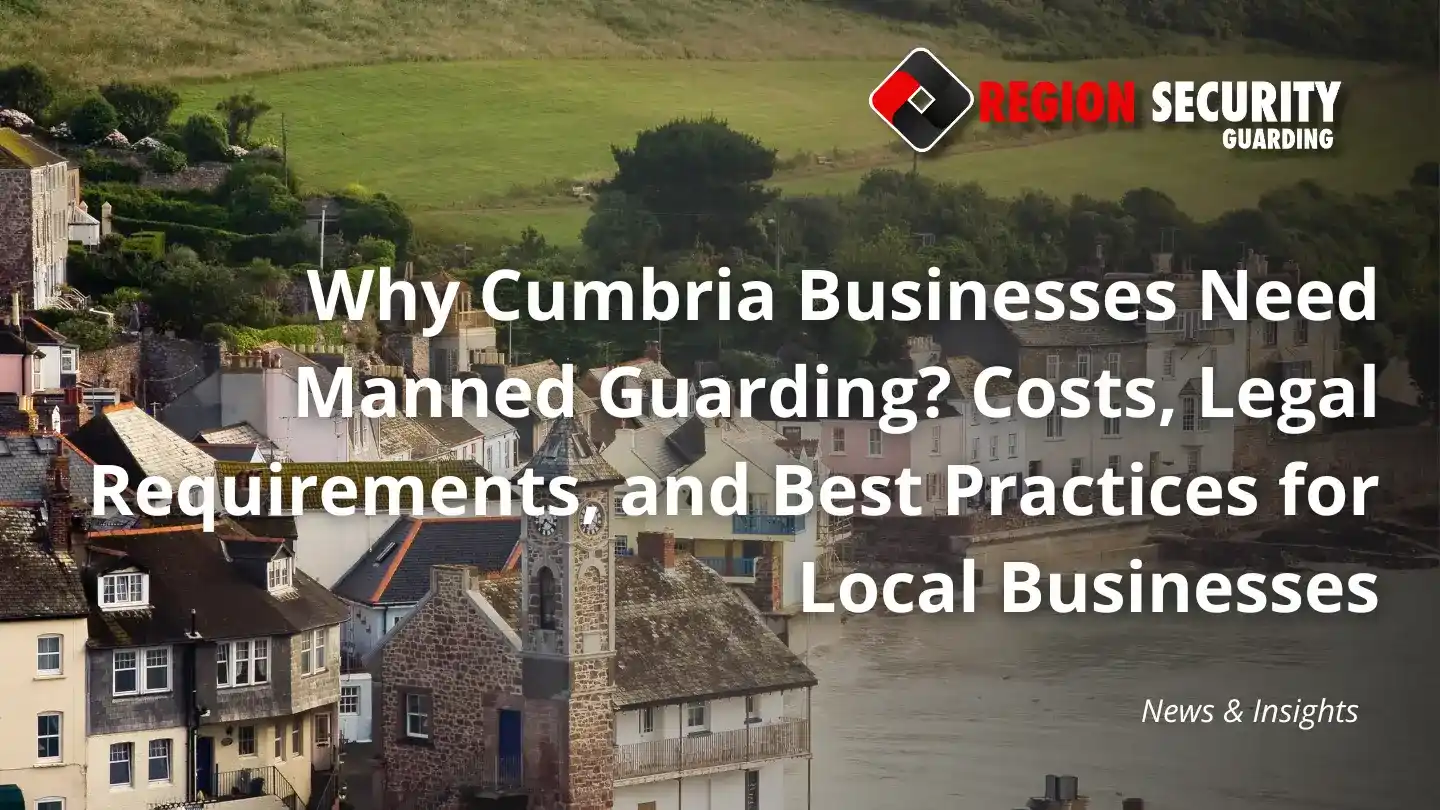
Cumbria doesn’t behave like a big city, and that’s exactly the point. Businesses here operate across long rural stretches, exposed coastal routes, tourist-heavy towns, and industrial estates that sit miles from immediate backup.
When something goes wrong, response times are rarely instant. That reality is one of the clearest reasons why Cumbria businesses need manned guarding, not as a luxury, but as a practical layer of control.
A visible physical security presence changes behaviour. People think twice. Incidents de-escalate before they escalate. In places like Carlisle, Barrow-in-Furness, or along Lake District trade routes, deterrence matters more than reaction.
Security guarding for Cumbria businesses also looks very different from metropolitan models. There’s less anonymity, fewer redundancies, and far more reliance on judgment at ground level.
This guide explores how local businesses use business security services Cumbria to manage risk, meet legal obligations, control costs, and prepare for what’s coming next, without overengineering solutions that don’t fit the landscape.
Understanding Manned Guarding Basics in Cumbria
What Manned Guarding Means in Practice for Cumbria Businesses
At its simplest, manned guarding is about people on the ground. Real guards. Real judgement. Not just cameras blinking away in the dark. In Cumbria, that distinction matters more than many business owners realise.
Static guarding might involve a guard staying fixed at a gate or reception desk. Remote-only solutions rely heavily on CCTV and off-site monitoring. Manned guarding, by contrast, brings mobility, discretion, and decision-making together.
In dispersed industrial estates or rural sites where help isn’t five minutes away, human judgment fills the gaps technology can’t. A trained guard can spot when something “just feels off”, an unfamiliar vehicle idling too long, a delivery at the wrong hour, or a person wandering with no clear purpose. Those moments rarely trigger alarms, but they’re often where incidents begin.
How Cumbria’s Crime Profile Shapes Guarding Requirements
Crime in Cumbria doesn’t mirror large cities, and that shapes how security is deployed. Urban centres like Carlisle see more retail-related incidents and public-facing disorder. Rural estates and coastal facilities, on the other hand, deal with isolation, opportunistic theft, and trespass that can go unnoticed for hours.
This is why crime prevention for local businesses leans heavily on deterrence. A visible guard alters behaviour immediately. People are less likely to test boundaries when someone is clearly watching, walking, and engaging. In areas where anonymity is low and response times are longer, that deterrent effect often matters more than any reactive measure.
Peak Crime Hours and Their Impact on Guard Scheduling
Crime doesn’t show up on cue. But numbers from Police.uk local statistics give us firm footholds to look at when risks actually peak. For example, in Keswick over the latest year, shoplifting accounted for 16% of reported incidents and burglary around 12%, while violent and sexual offences made up 28%, not irrelevant to guard planning at all.
That tells a story about timing:
- Retail spaces feel pressure when footfall is dense, often shading into late afternoon and early evening, a period when staff are juggling customers and fewer eyes are watching back corners.
- Warehousing and distribution facilities usually quiet down as dusk settles. Police.uk crime maps show that theft and trespass reports rise in the overnight to pre-dawn hours, exactly when natural supervision dwindles.
- Construction sites, silent after crews pack up, pick up most of their reported loss and interference cases when darkness has taken over, not during broad daylight.
And then there’s Cumbria’s seasonal twist: darkness arrives early in winter, sometimes before 4 pm in places like Carlisle and Barrow-in-Furness. That catapults what many think of as “evening risk” into what most people would still call daytime business hours, stretching vulnerability into times when guards really need to be sharp.
This is why scheduling rotas in Cumbria isn’t a flat “day vs night” split. They’re crafted around when incidents actually happen, not just when people punch clocks.
Warehouse and Logistics Vulnerabilities Unique to Cumbria
Warehouses in Cumbria face challenges that many urban sites don’t. Long access roads. Minimal natural surveillance. Easy entry points once perimeter fencing is breached. Fuel theft, cargo interference, and unauthorised access are common risks, particularly for logistics hubs operating overnight.
This is where on-site security guarding Cumbria businesses becomes critical. Guards don’t just patrol fences; they monitor movement, challenge unfamiliar vehicles, and coordinate with site managers when something doesn’t align with expected activity.
Managing Anti-Social Behaviour in Retail Parks and Town Centres
Retail parks and town centres often deal with low-level disorder rather than serious crime. Groups gathering late. Intimidating behaviour. Minor vandalism. Left unchecked, these issues escalate and drive customers away.
Guards play an early intervention role here. A calm word. A visible presence. A timely request to move on. When needed, guards liaise with local authorities or police, providing context and continuity that remote systems can’t offer.
Rising Retail Theft and the Shift Toward Daytime Guarding
Economic pressure has changed retail crime patterns. Shoplifting is no longer confined to quiet moments; it happens in full view, during trading hours. As a result, many retailers now prioritise daytime coverage.
Visible guards near entrances act as a psychological barrier. Not confrontational. Just present. The difference between prevention and response becomes clear here, stopping incidents before staff are put in difficult situations.
Comparing Day vs Night Manned Guarding Risks
Daytime guarding is people-heavy. Conflict management, communication, and judgment are key. Night guarding shifts the focus. Fewer interactions, higher risks. Intrusion, vandalism, lone-worker safety.
In Cumbria, night guards often operate in isolation, especially on rural sites. That reality demands stronger protocols, regular check-ins, and experienced personnel who understand when to engage and when to hold position.
Seasonal Events and Tourism Pressure on Security Demand
Tourism changes everything. Lake District footfall, festivals, fairs, and seasonal trade all increase temporary risk. More people. More vehicles. More opportunities for incidents.
During peak periods, manned guarding services in Cumbria are often scaled up quickly to manage access, protect assets, and maintain order. These aren’t permanent problems, but they require flexible, short-term solutions that technology alone can’t deliver.
Transport, Infrastructure, and Access Risks
Ports, depots, car parks, and rural transport hubs present complex challenges:
- open layouts
- constant movement
- limited fencing
Human monitoring consistently outperforms CCTV in these spaces because guards can interpret behaviour, not just movement.
Economic Growth and Industrial Expansion in Cumbria
Cumbria’s industrial and logistics growth brings opportunity and exposure. New developments mean unfamiliar risks, evolving access points, and changing traffic patterns. As sites expand, so does the need for professional manned security guards Cumbria businesses can trust to adapt, assess, and respond in real time.
Legal and Compliance Requirements for Manned Guarding in Cumbria
SIA Licensing Requirements for Security Guards in Cumbria
Any individual carrying out licensable security activity must hold a valid Security Industry Authority (SIA) licence. That includes guarding premises, patrolling sites, controlling access, and providing event security. The licence type matters. A guard licensed for CCTV monitoring is not automatically licensed for physical manned guarding, and vice versa.
Employers and clients share responsibility here. It’s not enough to take a photocopy at onboarding and forget about it. Businesses are expected to verify licences, check expiry dates, and ensure guards are deployed only within the scope of their licence. In practice, this is where many slip up, especially during busy periods when cover is arranged quickly.
Legal Penalties for Using Unlicensed Guards
The consequences are rarely minor. Using an unlicensed guard can result in:
- Criminal prosecution and substantial fines
- Contracts being deemed invalid, which can void insurance
- Long-term reputational damage, particularly in close-knit Cumbria business communities
Once enforcement bodies become involved, scrutiny tends to widen. One failure often leads to a deeper audit.
DBS Checks and Vetting Expectations for Security Personnel
Not all security roles legally require a DBS check, but many environments strongly justify it. Retail, events, hospitality, and any site involving vulnerable people or sensitive access usually expect enhanced vetting.
Good providers go further than the minimum. They carry out full identity checks, employment history verification, and right-to-work confirmation. In Cumbria, where guards may work alone or with limited supervision, thorough vetting isn’t box-ticking; it’s risk management.
Mandatory Insurance When Hiring Manned Guards
There are three core insurance policies businesses should always confirm:
- Public liability insurance for injury or property damage
- Employer’s liability insurance, which is a legal requirement
- Professional indemnity insurance, covering procedural or reporting failures
It’s worth checking policy wording carefully. Not all insurance automatically covers the exact activities taking place on-site, particularly on construction or industrial premises.
Data Protection Compliance When Guards Use CCTV
Once manned guards interact with CCTV systems, GDPR obligations apply in full. This includes how footage is viewed, stored, shared, and deleted. Incident footage cannot be treated casually or accessed without justification.
Businesses must ensure clear signage is in place, access to recordings is restricted, and retention periods are defined. Poor data handling can result in fines that outweigh the cost of the original security contract.
VAT Treatment of Manned Guarding Services
Manned guarding services are generally subject to VAT. Confusion often arises when businesses assume security is exempt or zero-rated. It usually isn’t.
This matters for budgeting and procurement. Misunderstanding VAT treatment can distort cost comparisons and create problems during audits or contract renewals.
Cumbria Council Rules for Construction Site Security
Local councils across Cumbria expect construction sites to be properly secured, particularly outside working hours. This often includes:
- Robust perimeter control
- Visible guarding or patrols
- Documented security procedures
Planning conditions and enforcement notices may explicitly reference security. Non-compliance can delay projects and trigger inspections.
Proving a Security Company’s Compliance History
Reputable providers are transparent. They should be able to supply:
- SIA Approved Contractor Scheme status
- Training records
- Audit results
- Examples of incident reporting
Hesitation or vague assurances are warning signs. Compliance should be demonstrable, not implied.
Security Company Licensing and Client Risk
Hiring a licensed provider does not automatically remove client responsibility. Businesses are still expected to exercise due diligence. If something goes wrong, investigators look at the whole chain, not just the contractor. The safest arrangements are documented, reviewed regularly, and clearly define responsibilities.
How SIA Licensing Changes Affect Guard Availability
Licence renewals can take weeks. Delays happen. Combined with labour shortages, this can suddenly reduce available cover, especially in rural parts of Cumbria. Forward planning matters. Tracking licence expiry dates and building continuity into contracts avoids last-minute gaps.
Employment Law and Overtime for Manned Guards
Working Time Regulations apply to security staff like any other workforce. Rest periods, maximum hours, and overtime limits are not optional. Excessive shifts increase error rates and liability. If a contract quietly relies on overworking guards, it’s a risk, operationally and legally.
Post-Brexit Labour Rules and EU Security Staff
Post-Brexit labour rules quietly reshaped the security workforce, and Cumbria felt it more than most. Right-to-work checks are now non-negotiable, but the practical impact runs deeper than compliance. Fewer EU nationals are available for night shifts, remote sites, or seasonal work, especially in coastal and rural areas where travel is harder to justify.
For businesses, this translates into tighter availability, longer lead times, and higher reliance on locally based guards. It’s one reason why continuity planning matters. Providers who already understand Cumbria’s labour landscape are far better positioned than those trying to parachute staff in at short notice.
Role of Manned Guarding in Event Licensing
Event security is rarely optional, even when it’s treated that way during early planning. Local councils routinely require professionally trained security as a condition of licensing, particularly for events involving alcohol, large crowds, or late operating hours.
Manned guards aren’t just there to “stand by”. They manage access points, monitor crowd density, intervene early when tensions rise, and coordinate emergency responses if needed.
From experience, licensing discussions move much faster when security plans are clear, realistic, and backed by trained personnel who understand crowd behaviour, not just numbers on a risk assessment.
Collaboration Between Cumbria Constabulary and Private Guards
Effective manned guarding works best when it complements local policing rather than operating in isolation. In Cumbria, that collaboration is practical, not theoretical. Guards are often the first on scene, the consistent presence, the ones who notice patterns developing over weeks rather than hours.
Clear escalation protocols, accurate incident reporting, and professional communication all matter. When private guards provide reliable information, it supports Cumbria Constabulary’s wider crime reduction efforts. When they don’t, trust erodes quickly. Collaboration isn’t about authority; it’s about credibility.
Using Police Data to Inform Guard Deployment
The strongest guarding strategies are built on evidence, not instinct alone. Police data, crime hotspots, seasonal spikes, and repeat incident types help shape where guards are placed, when coverage increases, and where deterrence will be most effective.
In Cumbria, seasonal planning is especially important. Tourism cycles, darker winters, and temporary population surges all change risk profiles. Businesses that align guard deployment with real data tend to see fewer incidents, not because guards react faster, but because problems are anticipated earlier.
Why Compliance Becomes a Competitive Advantage
Here’s the part often overlooked: strong compliance isn’t just about avoiding penalties. It becomes a differentiator. Businesses that work with fully compliant security providers face fewer disruptions, smoother insurance renewals, and less friction with regulators and local authorities.
In a county where reputation travels fast, doing things properly carries weight. Compliance, when handled well, stops being a burden and starts functioning as quiet protection, working in the background, exactly as good security should.
Costs, Contracts, and Deployment of Manned Guarding in Cumbria
Typical Manned Guarding Costs Across Cumbria
There isn’t a single rate card that works across the county. Town centres like Carlisle or Barrow-in-Furness tend to sit at one end of the scale, while rural and coastal sites push costs upward. Distance matters. So does isolation.
Guards travelling to remote industrial estates or construction sites often incur what providers call ‘isolation’ or ‘travel’ premiums. These aren’t arbitrary. They reflect longer journeys, fewer nearby relief staff, and increased lone-worker considerations.
Night shifts also command higher rates than daytime cover, largely due to unsociable hours and elevated risk. When businesses ask about the cost of hiring manned security guards in Cumbria, this is usually where the variation comes from.
Factors That Influence Guarding Prices
Hourly rates are only part of the story. Prices shift based on what the site actually demands. Higher-risk environments require additional training. Complex layouts need longer patrol routes.
Public-facing locations increase the likelihood of confrontation. All of that feeds into cost. A quiet warehouse with controlled access isn’t priced the same way as a busy retail park or a live construction site with multiple contractors coming and going.
Deployment Timelines for New Security Contracts
Speed depends on context. Emergency cover can sometimes be deployed within hours, particularly if a provider already operates nearby. Planned mobilisation takes longer. Site surveys, risk assessments, inductions, and rota planning all have to happen first.
Seasonal demand complicates things. Summer tourism, winter darkness, and event-heavy periods stretch availability. Businesses that plan ahead generally pay less and secure better continuity than those reacting after an incident.
Common Contract Lengths in Cumbria
Cumbria sees a mix of short-term, rolling, and long-term guarding contracts. Construction sites often opt for fixed-term arrangements tied to project timelines. Retailers and manufacturers lean toward rolling contracts with built-in flexibility. Long-term agreements usually offer better value, but only when risk levels are stable and sites aren’t changing rapidly.
Standard Notice Periods and Exit Clauses
On paper, notice periods look tidy. Two weeks here, a month there. In reality, they’re stress tests. Short notice gives flexibility, but in rural Cumbria, it can unravel fast, cover disappears, replacements are scarce, and sites are left exposed longer than anyone planned.
The better contracts acknowledge this. They allow exit when circumstances genuinely change, but they also discourage knee-jerk withdrawals that create security gaps no one can realistically plug overnight.
Wage Increases and Their Impact on 2025 Pricing
Security wages aren’t rising in isolation. Minimum wage changes, staff shortages, and the cost of keeping experienced guards are all colliding. Most 2025 price increases aren’t about profit margins; they’re about stability.
Paying a little more often means keeping the same guard on site, someone who knows the layout, the risks, and the routine, instead of cycling through cheaper, unfamiliar faces and absorbing the hidden cost of inconsistency.
Inflation and Long-Term Contract Adjustments
Long-term contracts increasingly include indexation clauses. These allow prices to adjust in line with inflation, protecting both parties from sudden shocks. While some businesses resist this, fixed pricing over several years can quickly become unrealistic. Predictable adjustments tend to work better than abrupt renegotiations.
Insurance Premium Reductions Linked to Manned Guarding
One overlooked benefit of manned guarding is its impact on insurance. Insurers often look favourably on documented security measures, particularly where guards provide patrol logs, incident reports, and visible deterrence. Fewer claims, clearer evidence, and reduced losses can translate into premium reductions over time.
Procurement Act 2023 and Public Sector Contracts
For public sector clients, the Procurement Act 2023 has changed expectations. Transparency, compliance, and value-for-money are now scrutinised more closely. Security providers must demonstrate not just cost efficiency, but operational resilience and legal compliance. For businesses bidding into public frameworks, understanding this landscape is no longer optional.
In Cumbria, cost isn’t just about the hourly rate. It’s about realism, what it actually takes to protect a site properly, in the places where response times are longer, and margins for error are thinner.
Training, Operations, and Daily Duties of Manned Guards in Cumbria
Manned guarding in Cumbria is not about standing still and “keeping an eye out.” It’s operational work, shaped by geography, weather, isolation, and the reality that help is often further away than businesses expect. That’s why training and daily discipline matter as much as presence.
Training Standards and Role-Specific Preparation
Every guard begins with mandatory SIA training, but that’s only the foundation. In Cumbria, effective guarding depends on how well that core training is adapted to the site and sector.
Retail environments demand conflict awareness and calm communication. Construction sites introduce safety risks, moving plant, and permit systems. Industrial and logistics locations bring utilities, hazardous materials, and restricted access zones into play. Tourism-led sites require crowd awareness and situational judgement during peak periods.
Conflict management and de-escalation sit at the centre of all this. Not confrontation, control. Guards are trained to slow situations down, read behaviour, and intervene early. First aid, fire marshal duties, and emergency response training become especially important in rural areas, where guards may be the only trained responder on site for long periods.
Site Induction, Risk Context, and Local Awareness
Before a guard starts work, proper induction is important. Site risk checks are not general forms. They show where problems are most likely to happen. Past incidents, repeat trespass areas, delivery times, and local crime all affect how a guard should protect the site.
Sites across Cumbria are very different. Coastal sites face strong weather and poor visibility. Rural industrial estates are often isolated and poorly lit. Town-centre sites deal with crowds and public contact. Guards need to know the layout, entry points, weak spots, and who to contact in an emergency. Clear communication with site managers helps guards act quickly and with confidence.
The First Phase of a Shift: Control, Orientation, and Verification
The opening phase of a shift is about establishing control. Arrival is logged. Time confirmed. Handover notes reviewed carefully, not skimmed. Any unresolved incidents, equipment faults, or unusual activity from the previous shift are noted.
A brief visual sweep follows. This isn’t a full patrol yet. Its orientation. What looks different? What doesn’t belong? Experienced guards rely on familiarity to spot subtle changes early, before they escalate.
Physical Security Checks and Equipment Readiness
Perimeter checks come next. Fences, gates, locks, and access points are tested, not assumed secure. In rural Cumbria, small weaknesses are often exploited because sites are quiet and response times are longer.
Equipment checks are equally critical. Radios are tested. Body cameras activated. Panic alarms verified. Torches and spare batteries matter more than many realise during long winter nights. CCTV systems are reviewed for blind spots or faults, and backup communication methods are confirmed in case primary systems fail.
Patrol Strategy, Frequency, and Adaptation
Patrolling isn’t about repetition. Static presence has value, but mobility deters. High-risk areas receive more attention. Routes are varied intentionally to avoid predictability.
Weather plays a real role here. Fog, heavy rain, ice, or high winds all affect visibility and safety. Patrol frequency and routes adjust accordingly. In Cumbria, flexibility is part of competence, not a deviation from procedure.
External Areas, Utilities, and Infrastructure Risks
Most incidents begin outside. Car parks, loading bays, storage yards, and utility access points are where theft, tampering, and trespass usually start. Guards inspect substations, fuel points, and service areas for signs of interference.
A visible physical security presence in these areas changes behaviour immediately. People are less likely to test boundaries when they know someone is actively moving, observing, and capable of responding.
Access Control, Visitors, and Alarm Response
Internal access control is where routine discipline prevents serious breaches. IDs are checked properly. Contractors and deliveries are logged accurately. Out-of-hours access is challenged without hesitation.
Tailgating remains one of the most common failures across sites. Preventing it requires confidence and consistency, not aggression.
Alarm activations demand verification, not panic. Lone-worker protocols guide how guards assess risk safely. Escalation follows clear steps: supervisor first, police when appropriate. The aim is containment until support arrives, not unnecessary confrontation.
Monitoring, Reporting, and Emergency Readiness
When guards monitor CCTV, it’s an active task. Screens are used to support patrols, not replace them. Suspicious behaviour is reported promptly. Footage handling follows strict data protection rules.
Fire safety checks are routine, not reactive. Exits are inspected. Alarm panels checked. Assembly points confirmed. Guards know procedures before smoke appears.
Lighting inspections matter more than many businesses realise. Poor visibility increases risk. Faults are reported quickly, and temporary mitigation is put in place where possible.
Documentation, Handover, and Shift Structure
Documentation underpins everything. Patrols are logged with timestamps. Incidents are recorded clearly and factually. These records support audits, insurance claims, and investigations.
End-of-shift procedures include a final perimeter sweep, securing access points, activating alarms, and handing over detailed notes to the next guard. Continuity depends on clarity.
Shift patterns for 24/7 coverage balance fatigue management with operational needs. In Cumbria’s rural areas, planning accounts for travel, weather disruption, and response limitations. Welfare checks during night shifts aren’t optional; they’re part of responsible operations.
Emergency Response Expectations Across Cumbria
Response times vary by location. Guards in Carlisle operate differently from those in Barrow-in-Furness or Kendal. Coordination with Cumbria Constabulary follows established protocols, with guards managing scenes until authorities arrive.
In Cumbria, effective manned guarding isn’t about doing more. It’s about doing the right things, consistently, in environments where mistakes carry greater consequences.
Performance, Risks, and Staffing Challenges in Cumbria
Defining Performance Expectations for Manned Guarding Services in Cumbria
Good manned guarding in Cumbria is not about how often a guard steps in. It is about how rarely problems happen in the first place. Simply having someone on site is not enough. A guard who stands in one spot all day may look active, but that does not always reduce risk.
Effective guarding focuses on results. These include fewer thefts, calmer spaces, and clear routines that put off trouble. Rural and coastal sites need different measures than busy town centres.
A warehouse near Workington may see fewer incidents than a shop in Carlisle, but one break-in can cause much greater damage. Guard performance should match the real risks of the site, not targets designed for city locations.
Key Performance Indicators Businesses Should Track
Good security risk management relies on indicators that reflect reality. Response times matter, but so does patrol accuracy. Did guards complete routes as planned, or were areas skipped? Incident reports should be timely, clear, and factual, not rushed notes written hours later.
Visibility is harder to quantify but still measurable. Reduced loitering, fewer challenges at access points, and positive staff feedback all indicate effective deterrence. Regular audits and client feedback close the loop, turning day-to-day guarding into something accountable rather than assumed.
Measuring Incident Prevention Rather Than Incident Response
For crime prevention for local businesses, the most valuable incidents are the ones that never happen. Proactive guarding reduces escalation. A near-miss, someone challenged and left the site, is often a success, not a failure.
Tracking these moments matters. Patterns of attempted access, repeated loitering, or seasonal spikes tell a story over time. In Cumbria, where emergency response can be slower, prevention carries more weight. Stopping a problem early is often safer and cheaper than managing it once it’s fully developed.
Weather and Environmental Risks Affecting Guard Effectiveness
The weather runs the show here. Heavy rain blurs sightlines. Fog throws off distance and direction. Ice turns a simple walk into a genuine hazard. Along the coast, Barrow-in-Furness is a good example; wind makes things harder again.
All of this changes how patrols work. Routes take longer. Some areas become unsafe. Good guards adapt. That isn’t cutting corners. It’s doing the job properly. Ignoring conditions only creates new risks.
Documenting Weather-Related Operational Adjustments
When patrols change due to weather, it needs to be recorded. Logging conditions explain why routes were altered or timings adjusted. This documentation supports audits, insurance claims, and compliance reviews.
More importantly, it shows professional judgement. Security guarding for Cumbria businesses isn’t rigid; it’s responsive. Clear records demonstrate that decisions were made deliberately, not carelessly.
Physical Health Risks of Long and Isolated Shifts
Long shifts take a toll. Fatigue dulls awareness. Repetitive patrols strain joints and muscles. Lone working increases exposure to risk, particularly on remote sites.
This is where trained security personnel matter. Guards who understand their own limits, take breaks correctly, and follow lone-worker protocols perform better over time. Guard wellbeing isn’t a soft issue; it directly affects service quality and incident prevention.
Mental Health Challenges for Night and Lone Guards
Night shifts bring isolation. Vigilance fatigue creeps in quietly. Add occasional confrontation, and the mental load increases fast.
Professional security company Cumbria need support structures: regular welfare checks, supervisor contact, and clear escalation routes. Employers have a duty of care here, not just morally, but legally. Guards who feel supported stay alert longer and make better decisions under pressure.
Environmental and Regulatory Constraints on Outdoor Guarding
Outdoor guarding must comply with health and safety expectations. PPE isn’t optional in adverse conditions. Breaks matter during extreme cold or heat. Pushing guards beyond safe limits creates compliance risks that can outweigh any perceived coverage benefit.
Effective security risk management balances coverage with sustainability. A guard who’s exhausted or unsafe isn’t protecting anything.
Labour Shortages and Recruitment Challenges in Cumbria
Recruitment in Cumbria is tough. Local labour pools are smaller. Security competes with logistics, tourism, and construction, often for the same people. Rural travel distances make some roles harder to fill.
This reality affects availability and pricing. Businesses that understand it tend to plan earlier and secure better continuity than those reacting after an incident.
Retention Strategies Used by Cumbria Security Providers
Retention is where good providers separate themselves. Competitive pay helps, but predictability matters just as much. Local deployment reduces travel fatigue. Upskilling creates progression rather than churn.
Strong business security services Cumbria depend on familiar faces. Guards who know the site, the staff, and the risks don’t just perform better; they prevent problems before they surface.
In Cumbria, performance isn’t loud. It’s consistent, informed, and resilient. That’s what keeps sites secure when conditions aren’t ideal, which, more often than not, they aren’t.
Technology and Future Trends in Cumbria Manned Guarding
How Technology Is Changing On-Site Security Guarding in Cumbria
Across the county, on-site security guarding in Cumbria is shifting from guard-only coverage to hybrid models. Cameras, sensors, analytics, and remote support are layered in, not to replace guards, but to give them better information and backup.
That distinction matters. On dispersed sites, technology fills gaps between patrols. It flags movement, highlights patterns, and reduces blind spots. But it doesn’t make decisions. In Cumbria’s rural and coastal locations, human judgement remains the difference between a harmless anomaly and a genuine risk. A guard can assess intent. Technology can’t.
Post-COVID Changes to Manned Guarding Protocols
COVID changed more than health rules. It changed what people expect from security. Guards now help control entry, check how many people are on site, and manage how people move around buildings. Temperature checks may be gone, but the way of thinking remains.
In Cumbria, manned security guards are often the first point of contact. They offer reassurance and clear direction. They deal with issues calmly, using communication rather than force. They also help enforce health and safety rules as part of their daily work. Stopping crime is still important, but it is no longer their only role.
AI Surveillance as a Support Tool for Manned Guards
AI surveillance has matured enough to be useful when used properly. Motion detection, behaviour analysis, and automated alerts help guards prioritise attention. Fewer false alarms means less fatigue and faster response when something genuinely unusual happens.
From a security risk management perspective, the benefit isn’t automation; it’s focus. AI filters noise. Guards decide what matters. Ethical use and data protection sit alongside this. AI systems must be transparent, justified, and compliant with GDPR. Used carelessly, they introduce as much risk as they remove.
Remote Monitoring as a Force Multiplier for Cumbria Sites
Remote monitoring works best when it’s invisible. Control rooms can support lone guards, confirm alarms, and provide oversight during night shifts. For some sites, this reduces the need for multiple guards without reducing deterrence.
This model is increasingly common in manned guarding services in Cumbria, particularly where budgets are tight, but risk remains high. The key is integration. Remote monitoring supports physical patrols; it doesn’t substitute for them. When that balance tips, effectiveness drops quickly.
Drone Patrols for Rural and Industrial Locations
Drones aren’t novelties anymore, but they’re still specialist tools. They earn their keep on large estates, active construction sites, and the kind of isolated industrial ground where a single perimeter walk can take half an hour.
In parts of Cumbria and Wirral, especially where sites sit back from main roads or edge onto open land, a drone can cover that ground in minutes. Rooflines checked. Remote fencing scanned. No one put in harm’s way.
That speed has value, but it comes with limits. Regulation matters. Airspace rules, privacy concerns, operator licensing, all of it applies every time. The weather has a say as well. Strong wind, poor visibility, heavy rain. A grounded drone is just an expensive box.
You see the same pattern on sprawling industrial estates in places like Oldham or across logistics-heavy zones in Trafford. Drones help extend visibility, especially where sites are large and uneven. What they don’t do is replace the person on the ground.
Despite the headlines, drones don’t challenge intruders. They don’t manage access or make judgment calls when something feels off. They spot. They confirm. The physical security presence stays grounded, literally, and that’s where decisions are made.
Used properly, drones support manned guarding in Cumbria rather than competing with it. They shorten response times, reduce blind spots, and give guards better information to work with. But when it comes to control, accountability, and action, it’s still the human presence that carries the weight.
Predictive Analytics for Security Planning in Cumbria
Predictive analytics turns historical data into foresight. Incident logs, access records, and seasonal trends reveal patterns that aren’t obvious day to day.
For crime prevention for local businesses, this means smarter scheduling. More coverage during tourism peaks. Adjusted patrols during darker months. Focused deterrence where incidents tend to cluster. It’s not prediction in the cinematic sense; it’s informed planning.
Upskilling and Certification Trends for Security Guards
Modern guarding demands more from people, not less. Guards are increasingly trained in advanced conflict management, counter-terror awareness, and mental health first aid. Technology literacy matters too. Understanding systems reduces misuse and improves response.
Well-trained security personnel adapt faster. They interpret alerts accurately, communicate clearly, and maintain professionalism under pressure. Upskilling isn’t just career development; it’s operational resilience.
Sustainable and Green Security Practices
Sustainability has entered security quietly. Low-emission patrol vehicles, energy-efficient lighting, and smarter infrastructure reduce environmental impact without sacrificing coverage.
For many business security services in Cumbria, sustainability isn’t branding; it’s practicality. Lower fuel use, reduced maintenance, and efficient systems often save money as well as emissions.
Martyn’s Law and Its Impact on Future Guarding Requirements
Martyn’s Law will reshape expectations for venue security. Increased responsibility, clearer documentation, and formal training requirements are coming.
Cumbria venues, especially those hosting events, will need to adapt. That means better-trained guards, clearer procedures, and demonstrable preparedness. The legal requirements for manned guarding in the UK are moving toward prevention, not reaction.
The future of manned guarding in Cumbria isn’t high-tech or low-tech. It’s balanced. People supported by systems. Judgement backed by data. And security that fits the place it’s protecting, not a model borrowed from somewhere else.
Conclusion
Across Cumbria, pressure is growing. Rules are getting stricter. Risks are harder to predict. Losses from theft, delays, or poor compliance don’t stay hidden for long. They show up quickly and often cost more than expected.
Manned guarding isn’t about overspending. It’s about control. Having a trained guard on site helps stop problems early. It reduces risk, discourages bad behaviour, and gives businesses time to respond when something goes wrong. That’s the real benefit of manned guarding for businesses in Cumbria: fewer incidents, clearer responsibility, and smoother daily operations.
The value also goes beyond hourly costs. One mistake can lead to lost insurance cover, project delays, or damage to a business’s reputation. Those costs are far higher than doing security properly from the start.
So the real question isn’t just why Cumbria businesses need manned guarding? It’s whether they’ve taken the time to look at their risks and speak to providers who truly understand the local environment.
Frequently Asked Questions
Are manned security guards worth it for Cumbria businesses?
Often, yes. The real value shows up as fewer repeat incidents and calmer sites, not constant drama. In Cumbria, where sites are remote and response times can be longer, a trained guard often prevents losses before they start. Think prevention, not patrols.
What is the cost of hiring manned security guards in Cumbria?
There’s no single figure. Town centres, rural estates, night shifts and isolated locations all price differently. Travel time, specialist training and unsociable hours push rates up. Budget for capability, not just a headline hourly rate.
What legal requirements apply to manned guarding in the UK?
Guards need valid SIA licences. Employers and contractors must check licences, hold the right insurance, follow employment law, and respect data-protection rules (CCTV). Right-to-work checks are mandatory. Short cover isn’t a loophole; standards still apply.
Do small businesses in Cumbria benefit from manned guarding?
Yes, often more than large firms. Small sites have less tolerance for loss and disruption. Targeted, time-bound guarding at peak risk times can protect margins without forcing a long contract.
How quickly can manned guarding be deployed in Cumbria?
Sometimes, within hours for emergency cover, if a provider has local capacity. But peak seasons squeeze availability. Planned deployments with site surveys and inductions are more reliable and cheaper in the long run.
Can manned guarding reduce insurance premiums?
It can. Insurers respond to evidence: patrol logs, incident reports and demonstrable deterrence help. Don’t expect instant cuts, but well-documented security often lowers long-term risk profiles.
What are the best manned guarding practices for small businesses in Cumbria?
Start with a real risk assessment. Use guarding for peak-risk hours. Require SIA licences, clear handovers, and digital patrol logs. Keep solutions simple and review them every season.
How does manned guarding support crime prevention for local businesses?
Mostly by stopping things early. A guard’s presence changes behaviour. Early challenge, clear reporting, and steady routines turn potential incidents into non-events. Quiet prevention beats firefighting every time.