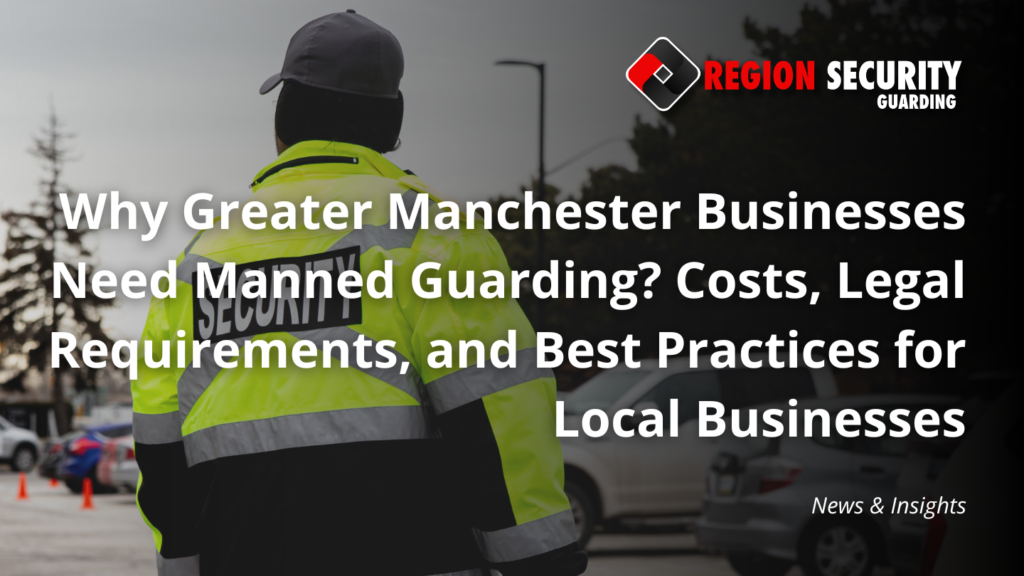
Security needs keep shifting, and many local owners now ask a direct question: Why Greater Manchester businesses need manned guarding in the first place? The answer is rarely one thing.
Shops face theft. Sites deal with break-ins. Offices worry about who walks through the door. A trained guard adds a steady, real-time layer of protection that cameras alone cannot provide.
But choosing this service brings other points to weigh. Costs rise and fall with the level of cover. The law sets rules you must follow. Good practice shapes how safe your staff and space feel each day.
This guide breaks these parts down so you can decide what truly works for your business.
Table of Contents
Understanding Manned Guarding Basics in Greater Manchester
Defining Manned Guarding vs. Static Security in Greater Manchester
Manned guarding means a trained, licensed guard stands on your site when things happen. They use judgment, quick reading of people, and calm responses that no remote operator can match. A guard can walk toward a risk, speak to someone causing concern, guide a lost visitor, or break up tension before it grows.
These actions form a large part of daily security guard duties and responsibilities, and they carry a human touch that tech cannot copy.
Static security is different. CCTV, alarms, and fixed sensors record or alert after something has already begun. They cannot reassure staff, talk someone down, or stop a person from pushing deeper into a restricted space.
A guard’s simple presence changes how people behave. It builds trust and helps shape a safer workplace culture.
Greater Manchester’s Crime Profile and Guarding Needs
Greater Manchester shows some of the highest crime levels in the region. Manchester City reports around 155 crimes per 1,000 people (police.uk). Theft, disorder, and vehicle crime take up a large share of that figure.
Retail theft in particular has grown fast, with organised groups targeting high-value items and causing major losses for shops of all sizes. Police have made thousands of arrests, but the pressure on businesses remains.
This is why so many companies now rely on security guard companies Manchester for a steady, real-world line of defence. Cameras can record a threat, but they cannot step in when a customer becomes aggressive or a trespasser slips into a loading bay.
Risk changes through the day.
- Night: quiet sites attract burglars, vandals, and people testing weak entry points.
- Day: theft rises, and anti-social behaviour becomes more visible, especially in retail zones with heavy footfall.
As daytime theft climbs, many stores turn to active patrols. This shift reshapes loss prevention strategies for businesses, blending tech with on-site support. Guards watch movement inside the shop floor and act before the stock disappears.
These loss prevention strategies for businesses succeed because offenders know a guard responds faster than any camera system.
Sector-Specific Vulnerabilities and Guarding Strategies
Warehouses and logistics hubs around Trafford Park face a wide range of risks. Large outdoor areas, high-value loads, and heavy traffic make them prime targets.
Internal theft can sit hidden for months. On-site security services help by checking drivers, watching loading points, and patrolling remote corners where issues often start.
Retail parks deal with different pressures. People gather, loiter, or cause disruption. Small acts of damage can grow if staff feel alone. A visible guard sets clear boundaries, supports workers, and makes visitors feel safer.
Transport hubs linked to the tram network bring constant movement. Crowds shift fast. Arguments can spark without warning. Guards with strong communication skills help direct passengers, settle disputes, and keep busy platforms under control.
Seasonal events, such as Manchester Pride, change the entire pace of the city. Businesses experience surges in footfall. Many sites bring in door supervisors for entry checks, crowd flow, and rapid responses during urgent moments.
Risk Differentials: Day, Night, and Operational Security
Day and night guarding demand different methods.
Day shifts focus on people entering and leaving, visitor help, and watching for internal theft.
Night shifts focus on the building itself. Guards carry out perimeter checks, fire safety rounds, and keep an eye on any signs of forced access.
Greater Manchester’s growing industrial and construction sectors add new layers of risk. Fresh sites open across the region with tools, metals, and machinery that thieves target fast.
Many companies take on on-site security services to cut downtime, prevent equipment loss, and keep operations safe day and night.
Legal and Compliance Requirements: The SIA Licence
Security in Greater Manchester runs on rules that leave no space for shortcuts. One gap in compliance can shut down a contract or place a business under legal fire.
That is why commercial security solutions UK are built on strict licensing, proper checks, and a clear line of accountability. The legal framework is not a box-tick; it is the foundation that keeps staff, sites, and the public safe.
The Pillars of UK Security Compliance
Every guard working in Greater Manchester must hold a valid SIA licence. It does not matter if they work the front door at a busy venue or patrol a quiet industrial estate. The licence confirms the guard is trained, screened, and legally allowed to work. Identity checks, criminal history checks, right to work, and proof of age all sit inside the process.
The penalties for ignoring these steps are severe. Under UK manned guarding legal requirements, both the guard and the employer can face fines or prosecution. In extreme cases, imprisonment is possible.
This is why businesses insist on SIA licensed security guards; anything less puts the entire operation at risk.
Some roles ask for extra checks. While the SIA already runs a criminal record check, sectors dealing with vulnerable groups may request enhanced screening. It depends on the contract, not the licence alone.
Training standards have also changed. First aid, conflict control, and scenario-based work now play a larger part in licence qualifications. These updates force security guard companies in Manchester to raise entry standards and improve staff development. This shift makes SIA compliance for employers more important than ever.
Contractual and Labour Law Obligations
Labour law shapes how guards work day to day. There is no set overtime rate in the UK, but pay must stay above the legal minimum. Working hours must follow the 48-hour weekly limit unless the worker signs out of it. Holiday pay must include regular overtime, which often surprises businesses using long shifts.
VAT rules stay simple. Most commercial security solutions in the UK fall under the standard VAT rate, without special treatment.
Insurance protection is non-negotiable. A reputable firm holds:
- Public Liability Insurance’
- Employers’ Liability Insurance
- Professional Indemnity Insurance.
These policies protect everyone involved: clients, guards, and the public.
Data, Policing, and Local Regulations
Guards often handle CCTV footage or access records. When they do, they fall under strict data protection law. That means clear purpose, secure storage, and proper signage. Mishandling data can damage a case or break the law outright.
Construction sites bring their own rules. Local authorities may set conditions on noise, access, fencing, and working hours. Guards enforce these standards on site and keep projects within legal boundaries.
Partnerships also help. Manchester’s business networks and crime-reduction groups allow guards to share real-time intelligence. This improves crime deterrence for business premises, especially in high-risk zones.
Police cooperation exists, but only through formal agreements that protect personal data. These measures keep information sharing controlled and lawful.
The Mandate of Martyn’s Law
Manchester understands the cost of inadequate event security. Martyn’s Law will bring that understanding into national policy. The law divides venues into Standard and Enhanced tiers based on capacity. Each tier carries duties that reshape how events are prepared for threats.
Manned guards sit at the centre of these duties. They support risk assessments, carry out searches, manage entry points, and move fast during emergencies.
The law raises the skill level expected from SIA licensed security guards, pushing the industry toward more trained personnel and clearer procedures.
Martyn’s Law becomes part of UK manned guarding legal requirements, turning strong security practice into a legal obligation. For venues across Greater Manchester, this is not just a change in paperwork; it is a change in mindset.
Costs, Contracts, and Deployment in Greater Manchester
Manned guarding costs in Greater Manchester change with location, risk, and the type of security a site needs. These shifts make cost planning feel complex, but once you see the drivers, the numbers start to make sense.
Businesses that understand these patterns make stronger decisions and avoid overspending on the wrong services.
The Cost Drivers for Manned Guarding Services
City centre guarding sits at the top of the range. Crowds, late hours, transport issues, and higher risk all push rates upward. This mix shapes manned guarding pricing in Manchester and shows why central locations rarely match suburban pricing.
In surrounding areas like Trafford Park, Bolton, and Stockport, prices are usually low. Travel is smoother, risks differ, and operations feel more controlled. But specialist industrial locations do not always follow this trend.
High-risk industrial spaces still need trained operatives, so their prices stay closer to city levels. This uneven landscape explains why security guards cost UK shifts so much across short distances.
Wage changes also matter. When the National Living Wage rises, hourly rates move with it. Labour drives most costs in on-site security services, so price changes show up fast.
Inflation adds pressure on long-term contracts. If prices stay fixed for too long, quality can slip. Good contracts include fair review points, so guards remain trained, paid, and motivated.
Key Factors That Shape Guarding Costs
- How busy the area is
- Type of threats on site
- Guard skill level required
- Training or certification needs
- Travel and shift patterns
- Wage increases and inflation
Strategic Contract Negotiation and Deployment
Manned guarding contracts usually run for 12–36 months, giving both sides enough time to build a stable working plan. Longer terms often deliver better continuity, because the same guards stay on site and learn the environment properly.
Notice periods sit around 90–180 days, which allows suppliers to redeploy staff safely and legally. This prevents rushed transitions and protects service quality.
Deployment can be fast when needed. Emergency cover might start within a few days, but a full, site-trained team takes longer. A complete setup includes vetting, uniforms, briefings, and detailed site familiarisation. This slower start creates stronger outcomes on the ground.
Insurance providers also look closely at security arrangements. A clear security risk assessment process and a stable team of SIA licensed security guards often lead to reduced premiums. Insurers reward structure, planning, and visible prevention activity.
Public sector contracts now feel the impact of the Procurement Act 2023. The Act puts social value, fairness, and performance front and centre. It also opens more space for local security guard companies Manchester, as smaller firms can compete based on quality rather than size.
Smart Moves When Planning a Guarding Contract
- Ask how the provider keeps staff retention high
- Review the company’s emergency deployment plan
- Check what training guards receive beyond basics
- Look for clear escalation and reporting procedures
- Ensure your contract has fair price-review terms
- Confirm how site risks will be assessed and updated
Training, Operations, and Daily Duties in Greater Manchester
Good guarding work shows in the small things. It lives in habits, quick judgment, and calm decisions made in busy or quiet moments. Manchester sites rely on guards who know their work well and can shift from routine tasks to urgent action without losing control.
Guard Training and Professional Standards
Retail guarding in Manchester needs more than a licence. Stores face crowds, fast movement, and constant stock risk. Guards learn how to calm tense behaviour, speak clearly to customers, and spot early signs of theft.
These skills support loss prevention strategies for businesses, especially in places where small actions can prevent large losses.
At the start of each duty, guards refresh emergency steps. They review the fire plan, check escape routes, and understand what to do during equipment failure or a more serious threat. Knowing these steps early keeps reactions sharp when stress levels rise.
The First Hour: Mobilisation and Setup
The opening hour shapes the whole shift. A careful start builds control.
Shift Handover: Incoming guards read the logbook, check notes from the last shift, and confirm keys and gear. This keeps on-site security services smooth and avoids gaps in awareness.
Perimeter Checks: Industrial sites need quick outdoor checks. Guards look for forced entry, broken locks, and damage to gates or fencing. High-risk areas get checked first. These early rounds support steady access control and monitoring.
Equipment Verification: Tools must work. Radios, patrol devices, cameras, and CCTV must run without issues. Guards fix or report faults before moving on. Reliable equipment prevents weak spots later.
Logbook Entry: A fresh entry marks the start of duty. Guards note the time, weather, equipment status, and any early findings. These details help supervisors track patterns and review safety later.
Initial Site Check: The first action on site is simple: secure the main entry point. Guards check all doors, shutters, and systems respond. This step confirms that access control and monitoring are active and ready.
Patrols, Responses, and Documentation
Patrols keep sites alert. Risk levels set the pace. Some sites need hourly rounds. Others need more frequent checks during quiet hours. Guards record each pass using digital tools to show coverage and keep reports accurate.
Alarms need steady action. Guards follow a clear pattern: look, secure, and inform. They check the source, contain the issue, and then report it up the chain or to GMP. This creates a reliable emergency response by security guards, even when working with limited backup.
Fire checks stay important. Guards look at exits, fire doors, and equipment points. Night shifts need extra care since fewer people are around to notice problems.
Communication continues through the shift. Guards check in with supervisors every one to two hours, which protects lone workers and keeps the command structure active.
At the end of duty, guards secure the site. They sweep each area, close windows and doors, check equipment, and complete the final log entry. This clean handover prepares the next guard and keeps the site in a safe condition.
Performance, Risks, and Staffing Challenges
Security only works when the people behind it stay sharp. Uniforms alone do not keep sites safe; habits do.
The manned guarding services Greater Manchester face crowded spaces, long nights, and sudden changes. To judge their work, businesses need clear measures. To keep them performing well, they need real support. This balance shapes every shift.
Measuring Performance and Managing Risk
Good guarding shows up in numbers long before it shows up in headlines. Companies track how often incidents drop after guards arrive. They watch response times during alarms, especially in busy areas like Salford or Trafford.
Quick action can stop small issues from turning into bigger ones. Patrol routes must be completed and logged. Compliance checks reveal whether guards follow procedures. Feedback from staff and customers shows whether the site feels safe during daily operations. These simple tools create a full picture of performance without guesswork.
Manchester’s weather brings its own layer of risk. Heavy rain can make cameras blurry. Wind blocks sound. Cold slows movement. Guards adapt by shifting patrol routes, adjusting timing, and noting these changes in reports. These small adjustments protect coverage and help managers understand the conditions behind each shift.
Long shifts test the body and the mind. Fatigue reduces reaction speed and weakens judgment. A tired guard might miss a detail that a rested guard would spot. This is why breaks, warm areas, and steady hydration matter. These habits support workplace safety and incident reporting because clear thinking results in clear decisions.
Night shifts change everything. The silence feels heavier. Movement feels slower. Guards work alone on industrial estates or retail parks, sometimes for hours. Employers must offer mental health support through open communication, counselling options, and steady check-ins.
A guard who feels heard stays focused and less isolated. This support matters even more for those working on construction site security, where the environment can feel harsh at night.
Workforce Strategies Used by Greater Manchester Security Firms
Manchester security firms are changing how they manage guards as labour pressure increases. The focus is on daily working methods, not constant hiring. These are the key approaches shaping how teams operate on site.
- Smarter shift planning: Night work is spread more evenly. Long runs of late shifts are reduced. Guards are placed on sites that match their experience. This helps maintain focus and lowers the risk of errors during quiet hours.
- Clear and practical incentives: Firms reward steady attendance, proper conduct, and accurate reports. These rewards are simple. They support standards without adding pressure or competition between guards.
- Site-focused training: Guards receive training based on the risks of their assigned location. This includes access control, public interaction, and emergency response. Familiarity improves confidence and reduces hesitation.
- Direct communication channels: Rotas are shared earlier. Site rules are explained clearly. Supervisors remain reachable during shifts. Guards know who to contact and what steps to follow.
- Health and wellbeing support: Rest areas are provided where possible. Welfare checks are routine. Mental health support is available for lone and night workers. These steps reduce stress and fatigue.
- Use of guard feedback: Firms gather feedback from guards on site conditions and patrol routines. This input helps refine planning and improve coverage.
These workforce strategies help Greater Manchester security firms maintain steady operations and reliable manned guarding services across Greater Manchester.
Technology and Future Trends in Greater Manchester Manned Guarding
Security in Greater Manchester is changing fast. Guards still walk sites and speak with people, but now they work beside tools that think faster than the old systems.
The job has become a blend of instinct and technology. It makes guarding sharper, quicker, and more aware of what happens around the city.
The Integrated Security Model
Technology has changed what a guard does each day. The role moved from watching events unfold to acting on real-time information. A guard now uses data, alerts, and digital signals to guide decisions. This shift makes on-site security services stronger and more controlled.
AI adds another layer. These systems scan crowds, spot strange behaviour, and notice things humans might miss. They cut false alarms and push guards toward genuine threats. With AI pointing out risks, guards react with more focus and less delay.
Remote monitoring teams work in the background. They watch many sites at once and notify mobile security patrols in Manchester when something needs a person on the ground. The guard becomes the responder. The monitoring centre becomes the lookout. Together, they form a complete system, one that now shapes modern commercial security solutions UK.
Drones are starting to appear across large zones like Trafford Park and Port Salford. They give aerial views of wide perimeters, open yards, and active construction site security areas. The footage helps ground teams understand what is happening before they reach the scene. It adds speed without losing safety.
Predictive analytics pushes the model even further. These tools look at past crime numbers, weather swings, local events, and traffic flow. They highlight moments when risk might rise. This helps teams plan staffing for manned guarding services in Greater Manchester before pressure builds.
Predictive tools often track:
- Match days and stadium events
- Seasonal shopping peaks
- Weather that reduces visibility
- Shifts in crime patterns across districts
These small clues help teams prepare instead of react.
Upskilling and Green Practices
As tools grow smarter, guards must grow with them. Teams across Manchester train in advanced CCTV use, digital logs, and counter-terror steps linked to Martyn’s Law. First aid training is now common too, giving guards the confidence to act fast during emergencies.
Green practices are rising as well. Many companies want safer sites with lower environmental impact. Outdoor patrols now use electric vehicles instead of fuel-based ones. LED lighting helps save energy. Digital logs replace paper. Even patrol routes get planned to cut wasted travel by mobile security patrols in Manchester.
New green habits taking shape:
- Electric patrol carts
- Low-energy lighting on night routes
- Digital forms for reporting
- Smarter patrol schedules
These upgrades show growth within business security services in Manchester, proving that strong security can stay modern, fast, and responsible at the same time.
Conclusion: Securing the Future of Greater Manchester Business
Manned guarding services in Greater Manchester give local companies a stronger footing in a city that moves fast.
They answer a growing question for many owners: Why Greater Manchester businesses need manned guarding? A trained guard can ease conflict, guide people, and react to sudden risks with calm judgment. Technology helps, but the human element still leads.
Now is the time for businesses to carry out a clear security risk assessment process and choose a partner they can trust. Region Security Guarding offers SIA licensed security guards ready for these needs.
If you want steadier protection for your site, contact us and speak with our team today.
FAQs
1. How do I estimate the true cost of manned guarding?
Look at the hours needed, the risks on your site, and the level of skill the guard must have. CCTV helps with alerts, but a guard can act, calm people, and stop problems early. Many sites choose both for a stronger cover.
2. What is the difference between a Security Guard licence and a Door Supervisor licence?
A Security Guard licence covers general guarding. A Door Supervisor licence adds training for crowded or high-risk places, especially where alcohol is present.
3. How can I check if a security firm follows UK labour laws?
Ask for proof of right-to-work checks, training records, and working-hour rules. A compliant firm pays fair wages and follows legal shift limits.
4. How fast can SIA licensed security guards be deployed to a construction site?
Temporary cover can be arranged within days. A full, trained team usually needs a short setup period.
5. What is “Mobile Security Patrols Manchester”?
It means guards visit your site at set or random times. They inspect key areas and respond to alerts. It works well for wide estates or quiet zones.
6. What role does a guard play in fire safety?
They check exits, watch for hazards, guide people during evacuations, and report unsafe areas.
7. How will Martyn’s Law affect venue security?
Venues must plan ahead, train staff, and prepare for serious threats.
8. Can guard services link with my CCTV and alarms?
Yes. Most firms connect their work to your systems for faster, clearer responses.