Most security problems do not announce themselves. They surface during ordinary moments, when routines feel safe, and nothing seems serious enough to question.
A door stays unsecured because it usually is. A van crosses a service yard because vans pass through all day. Someone pauses near an entrance a little too long, but not long enough to raise an alarm. Each moment feels minor. Taken together, they explain how many incidents actually begin.
Derby’s business layout makes these gaps easier to miss. Retail units sit beside delivery routes. Industrial estates share access points and perimeter lines. Construction sites expand, pause, and reshape themselves while neighbouring businesses continue working around them. Activity overlaps. Responsibility spreads thin. Risk forms quietly, without intent.
Technology plays a role, but it does not decide. Cameras watch. Systems log. Alerts sound. None of them judge whether a situation needs a calm challenge now, closer attention later, or immediate control before it drifts. That decision still falls to a person on-site.
This is why Derby businesses need manned guarding to be reconsidered across many sectors, not because of a single headline incident, but because daily operations have changed. Sites cover more ground. Hours stretch longer. Movement feels less predictable. Security models that once fit neatly no longer match how Derby sites actually function.
That gap is where exposure now lives.
1. Manned Guarding Basics in Derby
What Manned Guarding Looks Like on Real Derby Sites
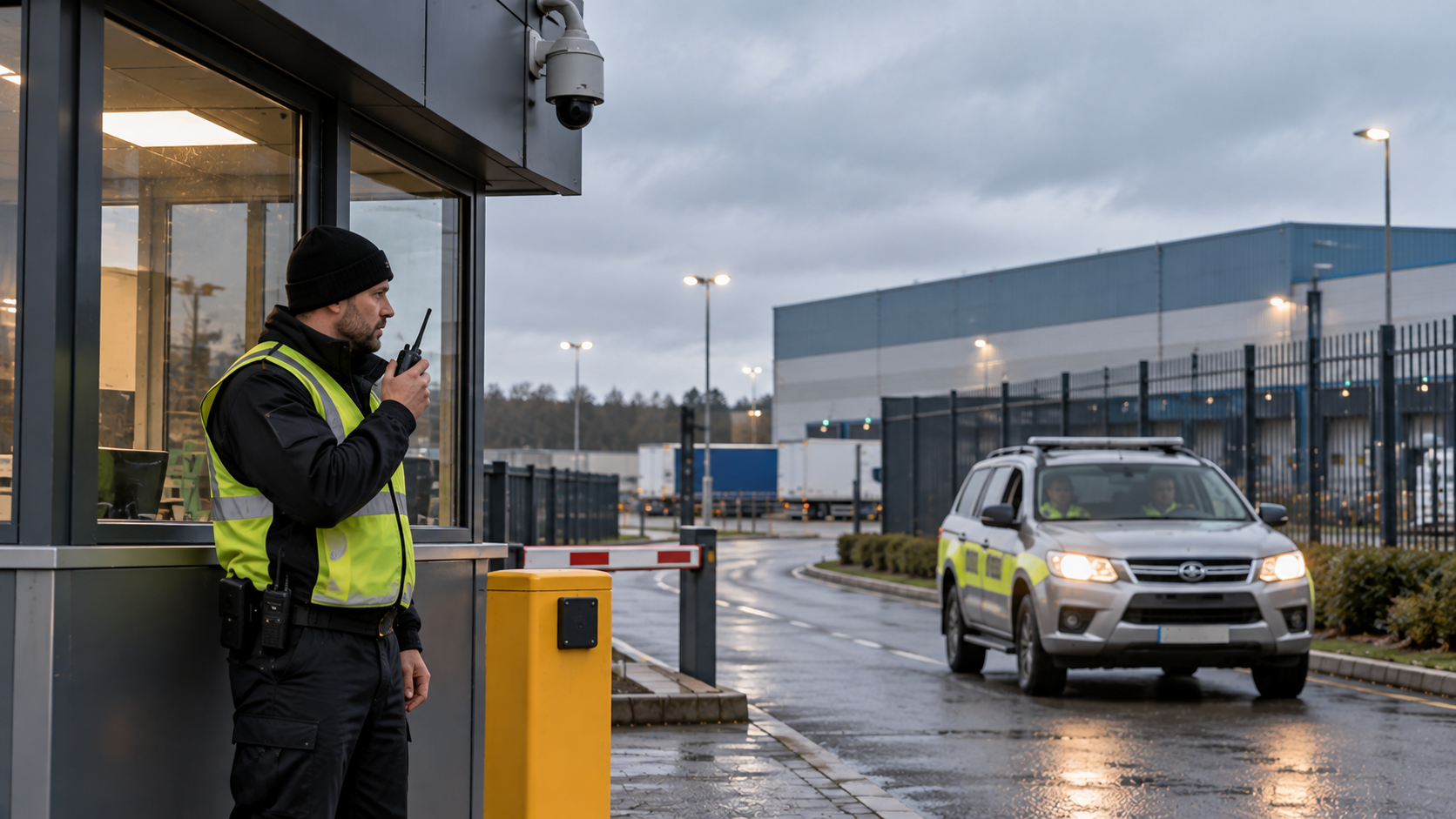
Manned guarding means having trained security personnel physically present on site, with the authority to observe, question, intervene, and report. In practice, it’s less about force and more about judgment.
Static security fixes attention to one place. Remote monitoring relies on alerts and response times. Derby on-site manned security moves with the site itself. Patrol routes change as activity changes. Attention follows behaviour, not just screens.
That flexibility matters in Derby, where many sites are intentionally open. Shared entrances. Multiple loading points. Mixed-use developments. These environments don’t respond well to rigid security models. They rely on someone noticing when “normal” starts to drift.
Local Crime Patterns Affecting Derby Businesses
Loss and disruption in Derby rarely come from dramatic break-ins. More often, they follow patterns that repeat because no one interrupts them.
Daytime retail theft that blends into customer traffic. After-hours access on industrial estates where lighting is uneven and activity is unexpected. Construction sites where layouts change faster than procedures do. These incidents depend on familiarity, not force.
Understanding local crime patterns affecting Derby businesses means looking beyond statistics. The following terms matter more than totals, such as
- Timing,
- Access, and
- Supervision
A consistent security presence changes the equation simply by being there, paying attention, and asking questions early.
Why Timing Often Matters More Than Location
Retail environments are most exposed when footfall is high and staff attention is divided. Warehouses face greater vulnerability during night hours and early-morning changeovers. Construction sites are often at risk in the spaces between activity: evenings, weekends, and phased downtime.
This is why asking when Derby businesses need on-site security guards usually leads to better decisions than asking where. Day shifts focus on visibility and interaction. Night shifts focus on patrols, perimeter checks, and escalation discipline. Treating both the same is a common source of failure.
Sector-Specific Vulnerabilities Across Derby
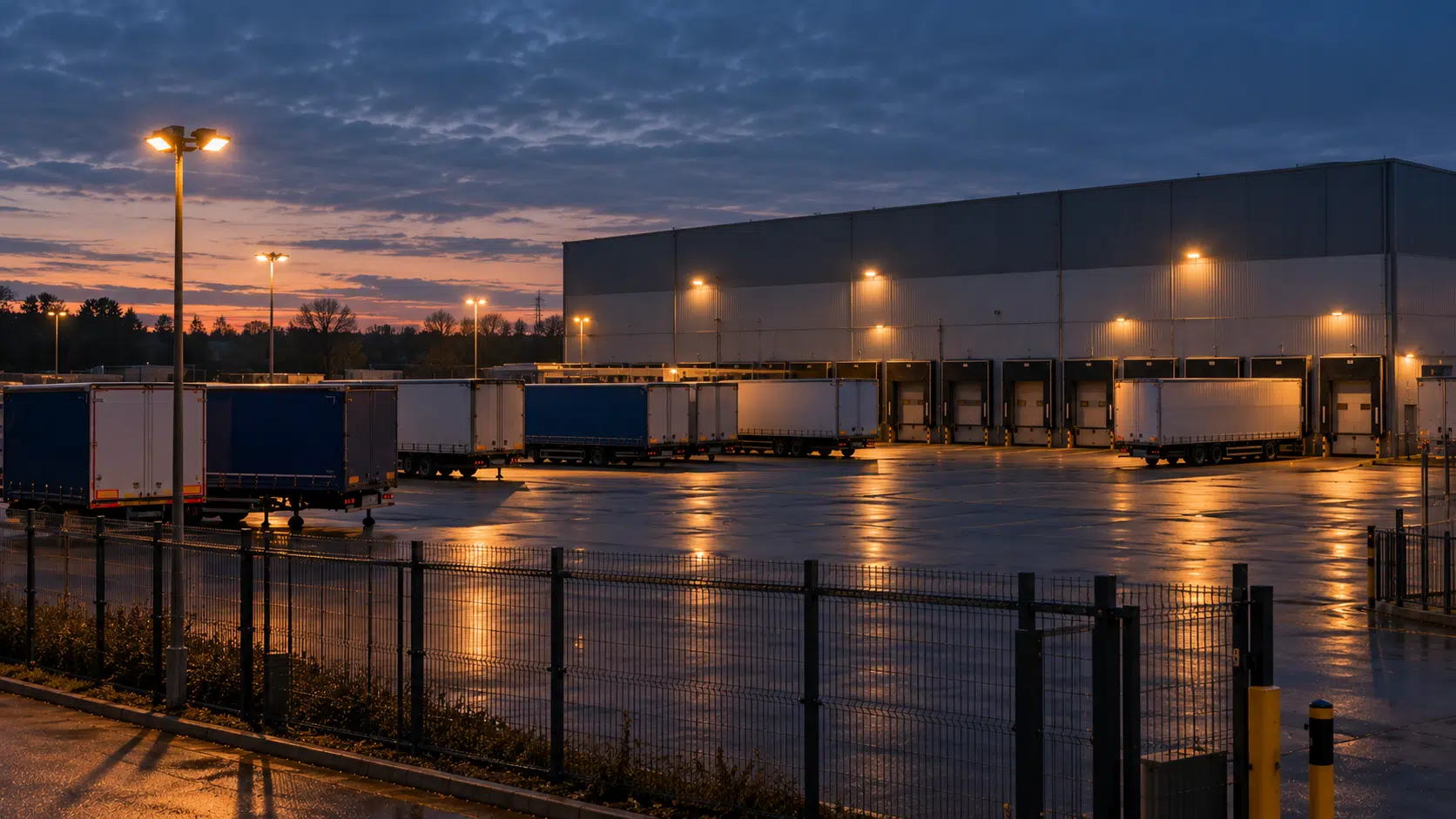
Industrial estates around Derby often sit at the edges of town.
- Wide perimeters
- Multiple access points
- Long quiet periods
Retail parks face a different mix: anti-social behaviour, vehicle-related incidents, and coordinated theft during trading hours.
Construction sites add another layer. Temporary fencing. Changing access routes. Contractors rotating in and out. Fixed systems struggle to keep up with that pace of change.
A manned security presence for Derby businesses adapts in real time. It closes gaps as they appear, rather than documenting them after the fact.
Low-Level Disorder and Why It Escalates
Not every issue triggers an alarm. Many of the most disruptive ones never do.
Loitering turns into arguments. Intimidating behaviour unsettles staff or customers, and when it goes unchecked, it escalates fast.
That’s why business premises security in Derby increasingly includes daytime guarding, not just overnight cover. Presence sets expectations. Early engagement prevents larger problems from forming.
Temporary Risk Shifts and Seasonal Pressure
Derby’s risk profile isn’t static. Retail peaks, local events, and phased construction work change how people move through sites for short periods of time. These shifts don’t always justify permanent security changes, but they do justify temporary ones.
This is where local manned guarding services in Derby are often used flexibly. During higher-risk periods, patrols increase, hours shift, and temporary cover fills the gaps.
Growth, Expansion, and the Quiet Security Gap
Security demand doesn’t rise only when crime rises. It rises when businesses grow.
- New units open.
- Operating hours extend.
- Access routes change.
- Familiar routines disappear.
Even without an increase in incidents, exposure increases quietly.
This is often when Derby business security services are reviewed. Not because something has gone wrong, but because the old model no longer reflects how the site actually operates.
2. Legal and Compliance Requirements for Manned Guarding in Derby
Security often feels like an operational decision. In practice, it is a legal one first. The moment a guard steps onto a site, formal duties apply. Some are obvious, while others only surface when an incident is reviewed and paperwork is pulled apart.
SIA Licensing: The Baseline That Cannot Be Skipped
In Derby, as across the UK, anyone carrying out licensable security work must hold a valid SIA licence. This includes guarding premises, controlling access, and conducting patrols. There are no local carve-outs. No informal exceptions. A guard without a licence is not a technical oversight. It is a breach.
Licensing confirms that the individual has completed approved training and passed identity and criminal record checks. Licences must be current and, in most cases, worn while on duty. When unlicensed guards are used, responsibility does not stop with the supplier. The client is exposed as well.
When incidents escalate, licensing is one of the first things reviewed. Not later, but immediately.
Vetting Standards: BS 7858 and DBS in Context
Licensing is only the starting point. Most credible guarding arrangements rely on BS 7858 security vetting. This standard goes further than a simple background check. It examines identity, employment history, and criminal records across a defined period.
DBS checks sit within this process, but clients should not expect to see certificates themselves. Data protection rules apply. What businesses should receive instead is written assurance that everyone deployed on site meets the required vetting standards.
This is not about suspicion. Guards often have access to sensitive areas, systems, and incident information. Screening reflects that responsibility.
Company Licensing and Compliance History
Regulation does not stop with individuals. Depending on the services offered, security firms may also need an SIA business licence. This focuses on governance, financial stability, and operational controls.
For Derby businesses, basic due diligence should always include:
- Individual SIA licences
- Company licensing, where applicable
- BS 7858 vetting records
- Insurance documentation
- Clear operating and incident-reporting procedures
A compliant provider will supply these without resistance. For Derby businesses, choosing a security company in Derby is less about proximity and more about proof: individual SIA licences, company authorisation where required, vetted personnel under BS 7858, and insurance that stands up under scrutiny.
Insurance Expectations and Liability Exposure
Manned guarding changes how insurers view risk. Public liability and employer’s liability cover are usually required as a minimum. Policy limits differ, but documentation carries weight. Insurers look for the following structure,
- Patrol records,
- Incident logs,
- Escalation steps that make sense.
When these are missing, even reasonable decisions become harder to defend after the fact.
CCTV, Data Protection, and Human Oversight
When guarding works alongside CCTV, data protection duties apply. Clear signage, a defined purpose, controlled access, and sensible retention are not optional.
Guards often review footage or support investigations. That interaction must sit within a written policy. Compliance here protects businesses just as much as it protects the public.
VAT and Cost Treatment
Manned guarding services are standard-rated for VAT in the UK. There are no reduced rates. This affects budgeting, contract pricing, and long-term forecasting. Any comparison between in-house cover and contracted guarding needs to account for this properly.
Local Authority Conditions and Construction Sites
Some Derby construction projects operate under planning conditions that include security requirements. These may specify patrol frequency, access controls, or temporary cover during certain phases.
There is no single checklist. Obligations sit within the planning approval itself. When guarding arrangements ignore those conditions, compliance problems extend beyond security.
Events, Martyn’s Law, and Changing Expectations
Expectations for venue and event security are rising. Proposed measures under Martyn’s Law point toward stronger planning, clearer procedures, and defined responsibilities for on-site teams.
Manned guarding is likely to carry more responsibility in these settings, particularly around access control, crowd safety, and escalation decisions.
Police Collaboration and Local Intelligence
Private guarding in Derby does not operate in isolation. Local partnerships and police-led information sharing influence how patrols are planned and where attention is focused. Guarding that reflects local intelligence performs better than cover based on generic assumptions.
Legal compliance is not a tick-box exercise. It determines whether manned guarding supports a business under scrutiny or becomes another problem to explain when questions are asked.
3. Costs, Contracts, and Deployment in Derby
Cost usually comes up first when manned guarding is discussed. That’s understandable. It’s visible and easy to compare. It also tells you very little on its own.
In Derby, pricing only makes sense when it is viewed alongside risk, timing, and how a site actually behaves across a normal week. Not how it looks on a plan. Not how it operates on a quiet day.
There is no standard rate that applies across the city. Businesses pay different amounts because their exposure is different. Sometimes subtly, and sometimes not.
What Drives the Cost of Manned Guarding in Derby
Pricing in Derby rarely hinges on a single factor. It’s shaped by several pressures pulling in different directions.
Location is the obvious one. City-centre sites and busy retail areas tend to cost more than quieter edge-of-town premises. Not because the role is more demanding in theory, but because situations escalate faster when more people are involved.
Hours matter just as much. Cover during peak trading periods carries a different load than overnight patrols. Short or broken shifts often cost more per hour than steady coverage. Efficiency drops when schedules are fragmented.
Risk level sits underneath all of this. A quiet reception desk is not priced like a warehouse with constant vehicle movement, multiple loading bays, and limited visibility after dark. Construction sites bring another set of complications. Layouts shift. Access changes. What was secure last week may no longer be.
Skill expectations add further weight. Guards trained to manage conflict, deal with the public, provide first aid, or control access are priced differently from basic static cover. The role shapes the rate more than the badge does.
Then there’s oversight. Digital patrol systems, structured reporting, and supervisor checks improve accountability. They also affect cost.
Taken together, these pressures explain why the cost of manned guarding for commercial sites in Derby can vary so widely without being arbitrary.
City-Centre Sites Versus Out-of-Town Premises
City-centre sites in Derby usually deal with higher footfall and constant interaction. When problems arise, they do so quickly. That raises responsibility as much as it raises risk.
Out-of-town industrial estates look calmer, but appearances mislead. Wide perimeters, long response distances, and quiet periods create their own exposure. Neither setting is cheaper by default. They simply demand attention in different ways. Pricing follows that reality.
Contract Lengths and Notice Periods
Most manned guarding contracts in Derby fall into familiar patterns.
Short-term cover is often used for construction start-ups or temporary spikes in risk. These arrangements may last weeks or a few months. Hourly rates are higher because mobilisation costs are spread thin.
Medium-term contracts, usually six or twelve months, suit retail parks, logistics sites, and shared premises. They allow pricing to settle and performance to be judged properly.
Long-term contracts, often running two or three years, work best where operations are stable. They usually include review points rather than fixed assumptions.
Notice periods reflect the same logic. Short-term cover may allow one or two weeks. Standard contracts often sit around a month. Larger or multi-site arrangements may require longer to avoid disruption.
Deployment and Mobilisation Timelines
“How fast can guards be on site?” sounds like a simple question. It isn’t.
Urgent cover can often be arranged within 24 to 72 hours if the requirement is clear and the supplier already operates locally. Planned deployments take longer for good reason. Inductions and proper familiarisation matter because rushed starts tend to create quiet failures later. Most early contract problems trace back to skipped preparation, not slow response.
Inflation, Wage Pressure, and Predictable Cost Movement
Guarding costs in Derby are unlikely to drop sharply. Labour-based services move with wages, compliance demands, and operating costs. What businesses tend to see instead is gradual movement over time.
Many contracts now include inflation-linked review clauses. These smooth adjustments, rather than forcing sudden increases at renewal, are made. For planning and budgeting, that steadiness matters.
Insurance, Risk Reduction, and Value Beyond Price
Insurance rarely features in early cost discussions. It should.
Insurers look favourably on structured, well-documented manned guarding.
- Patrol records.
- Incident logs.
- Proof-of-presence.
These reduce uncertainty when claims arise.
While guarding has a clear cost, it often offsets risk elsewhere.
- Lower premiums.
- Fewer disputes.
- Cleaner claims handling.
These effects tend to appear quietly, over time.
Procurement Expectations and Public-Sector Influence
Changes introduced under the Procurement Act 2023 have raised expectations around transparency and record-keeping. While aimed at public bodies, those standards increasingly shape private contracts as well.
For Derby businesses, stronger documentation is becoming a normal practice rather than an added extra.
Why Price Alone Rarely Tells the Story
A guard in a quiet business park outside Derby does not cost the same as one covering a busy retail frontage or logistics yard. When pricing feels uneven, it usually reflects real differences in exposure.
Underpriced guarding tends to fail without drama. Missed patrols. Thin reporting. Inexperienced cover. The cost shows up later, just not on the original invoice.
The real question is not whether guarding feels expensive. It is whether the service actually matches the risk it is meant to manage.
4. Training, Daily Operations, and Guard Duties in Derby
Training and daily routines rarely get much attention when contracts are agreed upon. They should. This is where guarding either settles into the background and works quietly, or begins to fray without anyone noticing.
On Derby sites, the difference is usually visible within the first few weeks.
Training Standards That Actually Matter on Derby Sites
Every licensed guard meets a baseline. That alone is not the point. What matters is whether training matches the environment the guard is stepping into.
Retail sites in Derby demand a different approach from industrial yards or construction zones. Guards in public-facing settings need to manage tension without escalating it. Industrial sites rely more on perimeter awareness, vehicle movement control, and lone-working discipline. Construction sites change too often for rigid routines to hold.
Good training prepares guards to adjust. Poor training assumes the site will behave as expected. It rarely does.
The Start of a Shift: Where Most Control Is Set
The first minutes of a shift shape everything that follows. This is when guards absorb context rather than instructions.
Most Derby sites rely on guards reviewing handover notes, checking for unresolved issues, and taking a quick walk of the perimeter or frontage. Nothing formal. Just confirmation that the site looks how it should.
Small changes tend to show up here first. A gate that doesn’t quite close. Lighting that’s failed overnight. A door that feels lighter than it should. Miss these early, and they repeat later.
Patrols, Presence, and Access Control
Patrol routines exist for a reason, but predictability weakens them. On many Derby sites, effective guarding comes from variation rather than frequency.
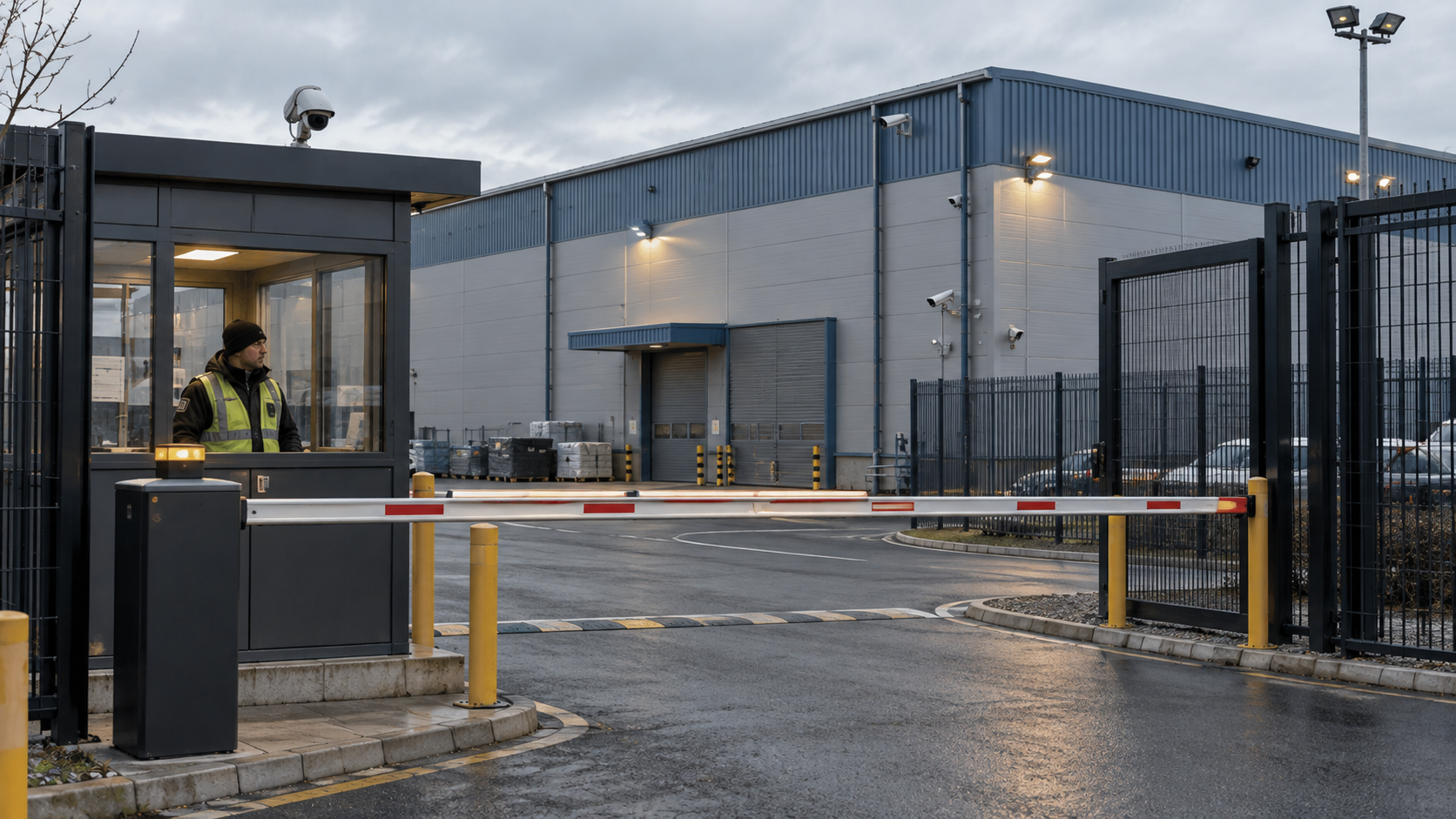
Access points receive early attention. Entrances, loading bays, service routes. These areas shape how risk enters a site. Once patrols settle into a rhythm, guards focus on blind spots and places that feel temporarily neglected.
This is where access control, patrol routines, and incident response overlap. Guards are not just walking routes. They are watching how people move through space.
Shift Handovers and the Risk of Gaps
Most failures do not happen mid-shift. They happen between them.
Handover notes carry more weight than many businesses realise. A repeated visitor. An alarm that triggered twice without cause. A delivery is expected later than usual. These details stop incidents from forming quietly.
Where handovers are rushed or vague, continuity breaks; where they are clear, patterns surface early.
Reporting That Serves a Purpose
Logs are not written for their own sake. On Derby sites, they serve three functions:
- Memory,
- Accountability, and
- Protection.
Patrol records show presence. Incident notes explain decisions. Maintenance issues highlight risks that security alone cannot fix. When reporting is thin or inconsistent, problems repeat without explanation.
Clear reporting does not need to be long. It needs to be useful.
Alarm Responses and Early Escalation
False alarms are rarely meaningless. They point to weak doors, environmental triggers, or predictable testing behaviour.
When alarms activate during quiet hours, guards follow a calm sequence: attend safely, assess the cause, record findings, and escalate only when needed. Overreaction creates noise. Underreaction creates risk.
Most Derby businesses benefit from guards who understand that difference.
End-of-Shift Secure-Down
Before a shift ends, guards tend to retrace the site in reverse. The focus stays simple: doors, gates, lighting, access points, equipment, nothing more.
This final sweep closes the loop. It ensures that the next shift inherits a stable site, not unanswered questions.
Why Daily Operations Matter More Than They Appear
From the outside, daily guarding routines can look repetitive. They aren’t. They are how small issues are caught before they grow.
Well-run operations reduce incidents without drawing attention to themselves. Poorly run ones fail quietly, until something breaks the pattern.
In Derby, where many sites operate on overlapping schedules and shared access, consistency is what keeps security effective without becoming intrusive.
5. Performance, Risks, and Operational Challenges in Derby
Performance in manned guarding is rarely about dramatic interventions. Most of the time, it shows up in what does not happen. Fewer repeat incidents, quieter shifts, and problems spotted early enough to stay small.
That makes performance harder to judge unless businesses know what to look for.
What Performance Actually Looks Like on Derby Sites
The most useful indicators are simple.
Patrols were completed when they should have. Reports written clearly and on time. Issues are followed up on rather than logged and forgotten. Guards present where they are expected to be, without needing constant prompts.
On Derby sites, these basics often reveal more than any headline metric. When they slip, risk tends to follow.
KPIs That Help, and Those That Don’t
Some performance measures add clarity. Others create noise.
Useful indicators usually include:
- Proof-of-presence on patrols
- Response time from alert to attendance
- Quality and consistency of incident reporting
- Visitor and access control compliance
What matters is pattern, not perfection. One missed patrol is an anomaly. Repeated gaps point to a problem forming.
Weather and Environmental Effects
Derby’s weather plays a quiet role in how guarding performs. Heavy rain reduces visibility. Fog limits depth perception. Ice changes how patrols move across car parks and yards.
Good guards note these conditions, not as excuses, but as context. Weather entries in logs explain delays, route changes, and increased risk from loose materials or unsecured fencing. These details matter when incidents are reviewed later.
Fatigue, Long Shifts, and Decision Quality
Long shifts affect attention. This is not a criticism. It’s biology.
On quiet night shifts, concentration drops first. Small details are missed. Decisions slow down. That’s when repeat incidents start to appear. Not because guards don’t care, but because fatigue narrows focus.
Sites that rotate duties, stagger patrols, and maintain supervisor check-ins tend to see steadier performance over time.
Mental Load and Isolation
Some Derby sites are large, quiet, and isolated. Industrial estates at night. Construction zones outside active hours. Lone working increases mental load even when nothing happens.
Regular check-ins matter here, not as control, but as support. Guards who feel monitored only for compliance perform differently from those who know support is available when something feels wrong.
Environmental and Regulatory Pressures
Outdoor patrols operate within wider rules. Lighting levels. Noise restrictions at night. Safe handling of waste, fuel, or plant equipment.
Guards often become the first to notice breaches in these areas. When they are ignored, risk compounds. When they are logged and addressed, problems rarely escalate.
Why Operational Challenges Are Often Invisible
From the outside, guarding can look unchanged even as effectiveness slips. The uniform is still there. The patrols still happen. But context is missing.
Performance problems rarely arrive suddenly. They build through small gaps left unattended.
In Derby, where many sites operate with shared access and overlapping schedules, those gaps matter more than most businesses expect.
6. Technology and Future Trends in Derby Manned Guarding
Technology has not replaced manned guarding in Derby. What it has done is change where attention goes and how decisions are made.
The most effective sites now treat technology as support, not cover. Systems watch wider. People decide sooner.
CCTV and On-Site Guard Integration
Cameras are everywhere now. That alone hasn’t solved much.
What works better is integration. Guards who understand camera layouts, blind spots, and trigger zones respond faster because they already know where to look. CCTV gives context. The guard provides judgment.
On Derby sites with mixed use, this pairing matters. Cameras spot movement. Guards confirm intent. That distinction prevents both overreaction and delay.
AI as Support, Not Replacement
AI tools increasingly flag unusual movement, loitering, or repeated behaviour patterns. They don’t decide what action to take. They highlight where attention should go.
Used well, AI shortens reaction time. Used poorly, it creates noise.
On Derby sites, AI works best when guards treat it as an early warning, not an instruction. The decision still happens on the ground.
Remote Monitoring and Hybrid Models
Remote monitoring has grown, especially where sites are spread out or lightly staffed overnight. On its own, it has limits. Combined with manned guarding, it becomes useful.
Monitoring centres confirm alarms, guide guards to exact locations, and maintain oversight during lone patrols. Guards handle the physical response. Each fills the other’s gaps.
This hybrid model is becoming common across Derby, particularly on industrial and logistics sites.
Drones and Large-Site Coverage
Drone use remains limited, but it is no longer theoretical. Large industrial sites and open perimeters benefit from rapid aerial sweeps, especially at night.
Thermal imaging helps spot movement that ground patrols may miss. Live feeds support guards rather than replace them. Drones extend visibility; however, they don’t hold ground.
Where drones are used, success depends on clear procedures and trained operators. Without those, they add complexity without value.
Predictive Analytics and Smarter Deployment
Some Derby businesses now analyse incident history, time-of-day trends, and environmental factors to adjust patrol frequency and staffing levels.
This does not predict crime. It predicts exposure. When used carefully, analytics help answer practical questions.
- When should patrols increase?
- Which areas deserve more attention?
- Where do patterns repeat?
The result is usually quieter sites, not more activity.
Skills and Expectations Are Shifting
As systems evolve, guards are expected to understand more than patrol routes. Digital reporting, CCTV awareness, basic AI alerts, and emergency procedures all sit alongside traditional skills.
The most adaptable guarding arrangements are those where training keeps pace with site reality, not vendor promises.
Sustainability and “Green” Security
Environmental considerations now appear in security planning. Electric patrol vehicles, motion-activated lighting, and digital logs replace paper routines.
These changes rarely drive guarding decisions on their own. They support wider business goals and reduce long-term operating friction.
Martyn’s Law and the Next Shift in Expectations
When Martyn’s Law comes fully into force, expectations around protective security will rise. More planning. Clearer procedures. Defined roles for on-site teams.
For Derby venues and public-facing sites, this will likely increase the importance of manned guarding, not in number, but in responsibility.
Conclusion
Manned guarding is often described as a visible security measure. In reality, its value shows up in what stays uneventful. Fewer repeat incidents. Quieter handovers. Issues addressed before they grow into something harder to explain.
In Derby, that matters more than many businesses expect. Sites are larger. Operating hours are longer. Access points multiply as operations change. Risk rarely arrives as a clear threat. It slips in through routine, familiarity, and moments when responsibility is spread thin.
This is where decisions need to be grounded, not reactive. The question is not whether security is present, but whether it still fits how the site actually works. Legal duties, insurance expectations, operational routines, and technology all shape that answer. Ignore one, and the rest become harder to defend.
That is ultimately why Derby businesses need manned guarding to continue to surface in boardrooms, site meetings, and procurement reviews. Not as a trend, and not as a response to fear, but as a practical way to manage exposure where systems alone stop short.
Good guarding does not draw attention to itself. It creates stability. And stability is what allows businesses to focus on everything else.
Contact us for more information.
Frequently Asked Questions
1. When do Derby businesses need on-site security guards?
When sites rely on judgment, not alerts, shared access, public interaction, or changing layouts, a physical presence is required.
2. Are SIA licences mandatory in Derby?
Yes. Any guard doing licensable work must hold a valid SIA licence. There are no local exceptions.
3. Do guards also need DBS and vetting checks?
Yes. DBS checks form part of licensing, and BS 7858 vetting is standard for most professional deployments.
4. How much does manned guarding cost in Derby?
It varies by location, hours, and risk. The cost of manned guarding for commercial sites in Derby depends on exposure, not a fixed rate.
5. Can manned guarding help with insurance?
Often. Insurers value clear patrol records, incident logs, and proof-of-presence.
6. How quickly can guards be deployed?
Urgent cover may be arranged within 24–72 hours. Planned contracts take longer for proper setup.
7. Does CCTV change legal duties when guards are present?
Yes. Data protection rules apply. Guard interaction with footage must follow clear policies.
8. Will Martyn’s Law affect Derby venues?
Yes. It will raise expectations around planning, access control, and on-site security roles.