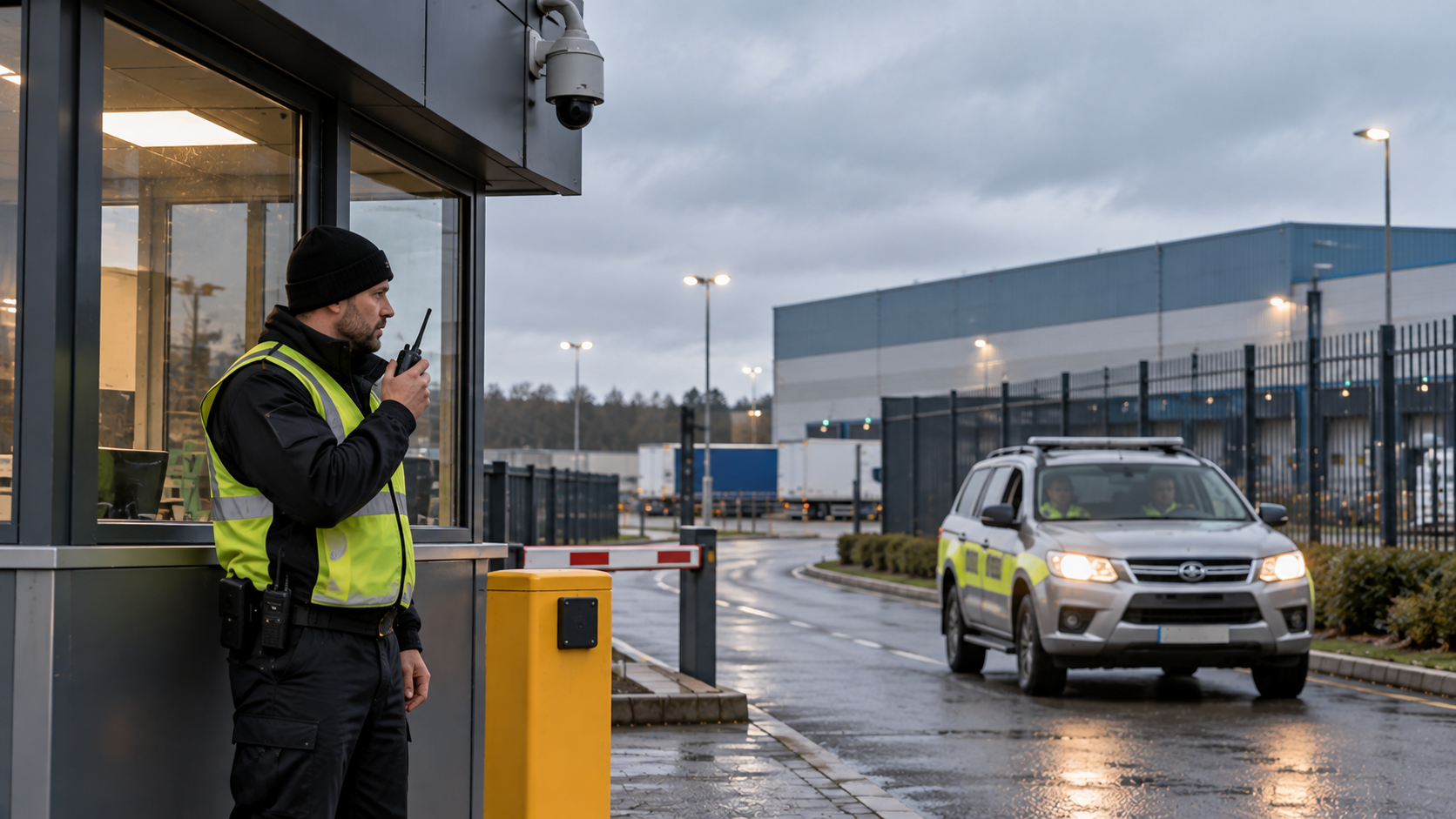
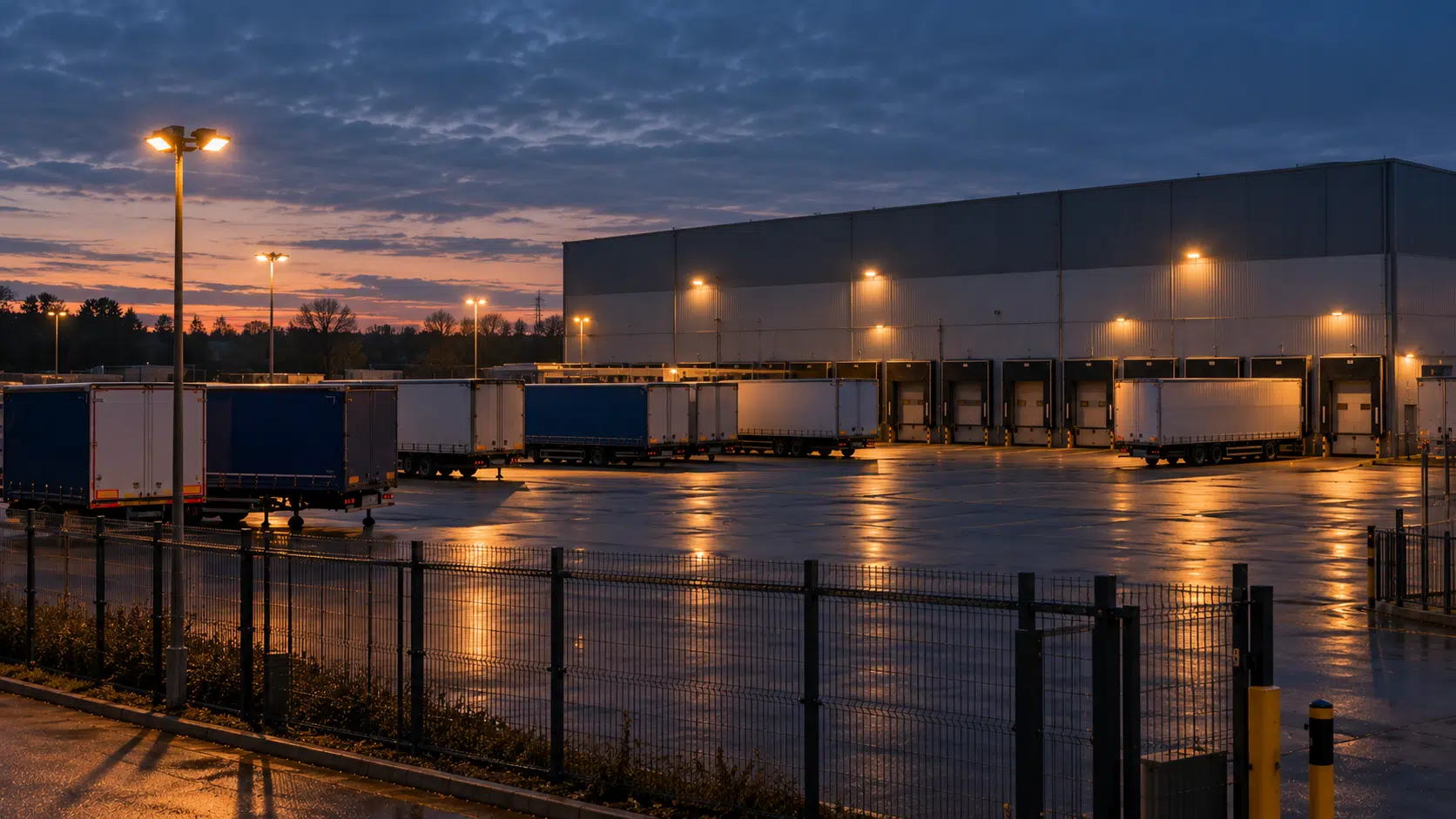
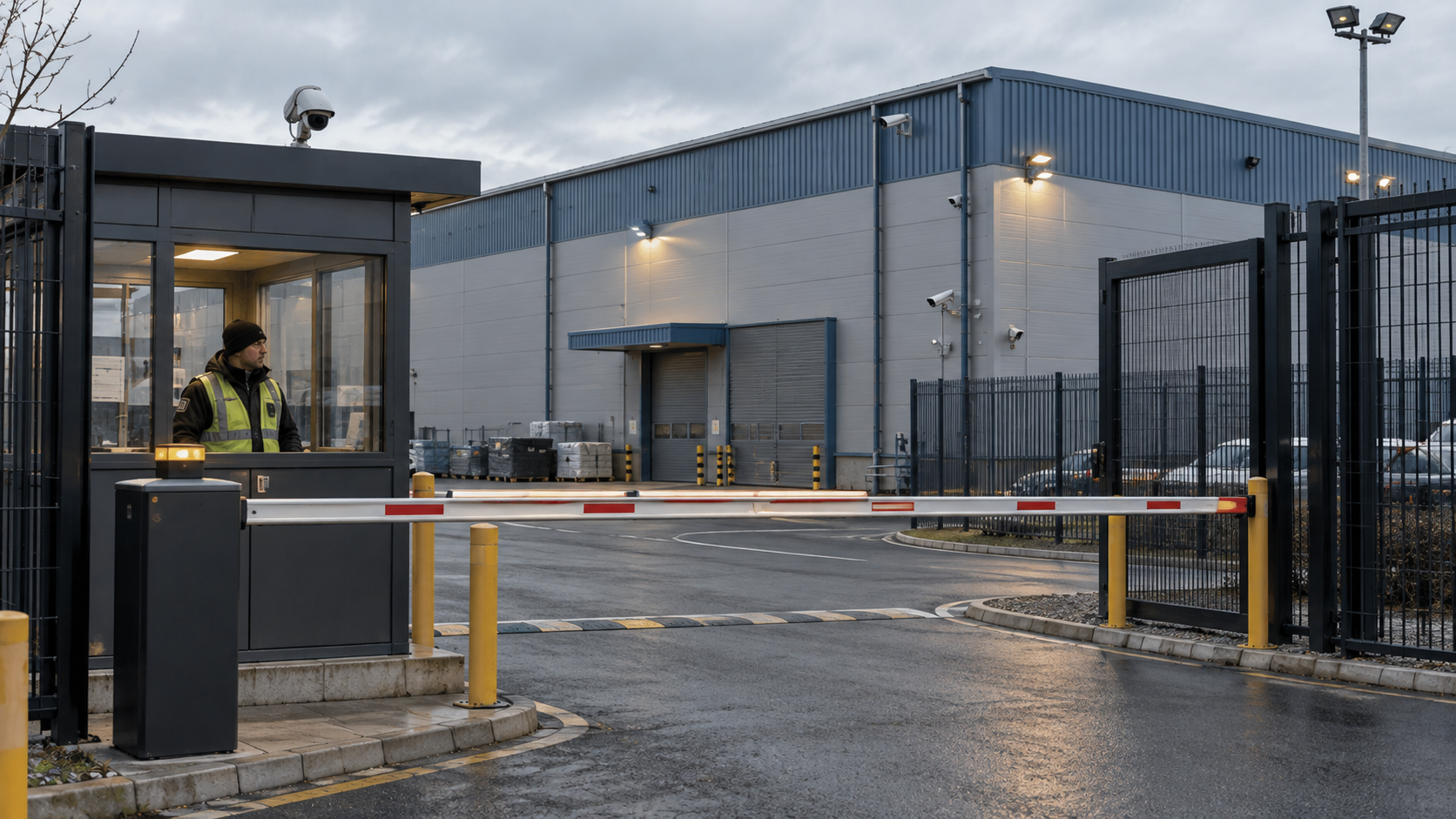
Retail risk in Bedfordshire doesn’t arrive in obvious waves. It builds quietly, shaped by commuter movement, mixed-use town centres, and retail parks that stay busy long after office hours. Many businesses sit between two worlds close enough to London to feel pressure, but without the constant policing density of a major city. That gap is where problems tend to surface.
For decision-makers, Retail Security is less about reacting to headline crime and more about managing exposure in the hours and locations where incidents are most likely to occur. Daytime theft, abuse towards staff, evening loitering, and opportunistic crime around transport links all play a role. Static measures can help, but they don’t always adapt well to shifting footfall patterns or thinning staffing levels.
This guide looks at those realities through a practical lens. It explains how manned Retail Security fits into Bedfordshire’s business mix, how it supports insurance and compliance expectations, and where it genuinely changes outcomes and where it doesn’t. Rather than assuming permanent coverage is the answer, it focuses on timing, site layout, and risk concentration.
That context is why Bedfordshire businesses need Retail Security is ultimately a question of judgement. When human presence is applied proportionately, at the right moments, it can stabilise operations, protect staff, and make retail risk easier to defend internally and externally.
Retail Security Basics in Bedfordshire: Where Pressure Actually Shows Up
Retail problems here are shaped by movement rather than density, particularly when compared with neighbouring commuter counties such as Hertfordshire, where higher daytime footfall and proximity to London influence security demand differently.
Staff calling for support during busy periods. Repeated low-level theft that never quite tips into police response. Tension building around transport-linked retail after work hours. These are the conditions Retail Security is designed for.
Rather than reacting to incidents after they occur, Retail Security introduces human judgement at the point where behaviour, timing, and access intersect.
Why static and remote security often fall short locally
Many Bedfordshire sites rely on static guards or remote systems because they appear efficient on paper. In practice, those models struggle with the county’s layout.
Static cover works well overnight or at fixed access points, but it is limited when:
- Footfall shifts throughout the day
- Issues move between entrances, car parks, and shop floors
- Staff need immediate support rather than delayed escalation
Remote-only security faces a different challenge. It detects incidents, but often after behaviour has already crossed a line, particularly in busy daytime retail.
Retail Security sits in the gap between those two approaches. It is mobile, visible, and able to intervene early, which is where most Bedfordshire retail risk actually lives.
How Bedfordshire’s retail mix creates its own risk profile
Unlike major city centres, Bedfordshire retail is shaped by movement rather than density.
That includes:
- Commuter traffic flowing through town centres
- Retail parks designed for vehicles, not pedestrians
- Warehousing and trade counters operating alongside public access
- Limited night-time economies outside specific pockets
This creates opportunity-based risk. Not constant pressure, but predictable windows where behaviour shifts and oversight thins.
When problems are most likely to occur
Across Bedfordshire, Retail Security is most effective during:
- Late mornings into early evenings
- Post-work hours around transport corridors
- Weekends and paydays
- Periods of staff absence or turnover
This explains why many businesses now prioritise daytime manned presence rather than focusing solely on overnight protection.
Retail parks, warehouses, and edge-of-town exposure
Some of Bedfordshire’s most persistent issues occur away from traditional high streets.
Common vulnerabilities include:
- Loitering and anti-social behaviour in retail parks after peak trading
- Theft and trespass at trade counters during shift changes
- Poor lighting and visibility around car parks and service areas
Retail Security addresses these risks by moving with the problem, rather than remaining fixed to a single point.
Day risk and night risk are different problems
In Bedfordshire, Retail Security is not primarily about night-time confrontation.
- Daytime risk is about prevention: theft, abuse, and escalation
- Evening risk centres on behaviour, visibility, and staff reassurance
- Night-time risk (where relevant) focuses on deterrence and site integrity
Retail Security is most valuable when applied before incidents harden, not after.
Why is business growth quietly increasing demand?
Expansion in logistics, construction supply, and mixed-use developments has blurred the line between retail and industrial space. Sites that were never designed for public interaction are now open environments.
That shift has increased demand for industrial-adjacent Retail Security guards who understand retail behaviour, not just perimeter control.
Legal and Compliance Requirements for Retail Security in Bedfordshire
In Bedfordshire, legal compliance around Retail Security rarely becomes visible during day-to-day trading. It usually surfaces later after an incident, during an insurance query, or when a licensing condition is reviewed. That delay is what catches many businesses out.
Rather than listing regulations in isolation, this section looks at when compliance actually matters and why it becomes a business issue, not just a security one.
When licensing questions start to matter
Most retailers only scrutinise guard licensing after something has gone wrong. A member of staff is injured. A customer complains. Footage is requested. At that point, the first question is rarely about what happened; it’s about who was responsible.
Any guard performing licensable duties must hold a valid licence issued by the Security Industry Authority. That requirement applies in Bedfordshire as it does elsewhere in England. What differs locally is exposure: guards are often deployed during busy daytime periods, around transport links, and in retail parks where public interaction is constant.
If a guard is unlicensed, the issue is treated as a criminal offence. Responsibility does not stop at the provider. Businesses are expected to show that reasonable checks were made before deployment. Where that can’t be demonstrated, fines, prosecution, and insurance complications can follow.
Vetting expectations rarely come from one source
Retailers often ask whether DBS checks are “required”. The more accurate question is who expects reassurance.
Most Retail Security providers vet staff to BS 7858, the British Standards Institution‘s screening standard. This confirms identity, work history, and right-to-work status.
DBS checks are not legally mandatory for every retail role. However, they are frequently expected where:
- Guards work in close contact with the public
- Sites are near schools, transport hubs, or mixed-use developments
- Insurers or landlords request enhanced assurance
In Bedfordshire, expectations often come from insurers and property managers rather than regulators.
Insurance is where compliance failures become expensive
From a business perspective, insurance is often the real enforcement mechanism.
Guidance reflected by organisations such as the Association of British Insurers assumes that any guarding in place is lawful, vetted, and insured. If it isn’t, claims linked to theft, injury, or confrontation may be delayed, reduced, or disputed.
Retailers should expect providers to carry:
- Public liability insurance
- Employer’s liability insurance
- Clear contractual responsibility for incidents
If a guard operates outside the agreed scope, insurers may argue that risk controls were misrepresented.
CCTV, guarding, and data handling overlap more than expected
Retail Security and CCTV are often deployed together, which raises data protection concerns. Oversight in the UK is the responsibility of the Information Commissioner’s Office.
From a retail operator’s standpoint, problems arise when:
- Footage is accessed without a clear purpose
- Retention periods are undefined
- Requests for footage cannot be evidenced
Poor data handling can trigger regulatory scrutiny even if the original incident was minor.
VAT, overtime, and workforce legality
Manned Retail Security services are typically VAT-rated, which affects procurement and budgeting. Less visible, but equally important, are employment law considerations.
Contracts should clearly reflect:
- Working time and rest period compliance
- Overtime treatment during extended trading hours
- Right-to-work checks, including post-Brexit requirements
While retailers don’t manage guards directly, failures at provider level can still disrupt coverage and create reputational risk.
Events, construction, and temporary retail
In Bedfordshire, Retail Security often intersects with:
- Construction sites that remain open to the public
- Pop-up retail and seasonal trading
- Local events using retail-adjacent spaces
In these situations, guarding is frequently referenced in licensing or planning conditions. Retail Security becomes part of the permission-to-operate, not just a loss-prevention measure.
Policing and escalation in practice
Retail Security operates alongside Bedfordshire Police, not instead of it. Coordination typically focuses on:
- Incident escalation thresholds
- Evidence handling standards
- Awareness of repeat offending patterns
Deployment decisions are shaped more by historic incidents and site behaviour than by headline crime statistics.
Costs, Contracts, and Deployment for Retail Security in Bedfordshire
In Bedfordshire, Retail Security costs are rarely driven by prestige locations or late-night economies. They’re driven by logistics, timing, and resilience. Businesses operate across commuter towns, retail parks, and edge-of-town sites where consistency matters more than constant presence. Understanding how cost and deployment really work helps avoid overpaying in quiet periods and under-protecting during pressure points.
Why Retail Security costs vary across Bedfordshire
Unlike major city centres, Bedfordshire does not have a single pricing profile. Costs are shaped by how easy it is to sustain cover, not by brand or postcode.
Key drivers include:
- Site accessibility (town centre vs retail park vs edge-of-town)
- Hours of cover (daytime presence vs extended evenings)
- Risk concentration (repeat theft, staff abuse, lone-worker exposure)
- Travel and backup availability for short-notice cover
Retail parks and dispersed sites often cost more to service than compact town centres, even when risk levels appear similar.
Town-centre versus retail-park deployment
Businesses often expect town-centre locations to be more expensive. In practice, the opposite can be true.
- Town centres
- Easier access to cover
- More predictable footfall
- Faster relief or replacement if needed
- Retail parks and suburban sites
- Longer travel times
- Fewer nearby standby resources
- Greater disruption if a shift fails
Operational resilience often matters more than postcode, especially when contrasted with higher-density counties such as Essex, where scale and proximity can simplify short-notice deployment.
How quickly can Retail Security be deployed?
Deployment timelines depend on whether the cover is reactive or planned.
Typical scenarios include:
- Short-notice cover: possible within days for urgent needs, limited by availability
- Planned mobilisation: allows site induction, risk alignment, and consistency
- Seasonal or event-led cover: requires earlier planning to avoid gaps
From an insurance perspective, delays in putting cover in place after an incident can leave businesses exposed during already high-risk periods.
Contract length and notice periods: what’s normal
Retail Security contracts in Bedfordshire are usually designed to stay flexible.
Common arrangements include:
- Short-term or seasonal contracts for peak trading periods
- 6–12 month agreements for steady operations
- Rolling extensions to maintain continuity without long lock-ins
Notice periods typically sit around:
- 30 days for short-term cover
- 60–90 days for longer agreements
Clear notice terms protect both operational stability and commercial clarity.
Wage pressure, inflation, and 2025 pricing reality
Retail Security pricing is closely tied to labour costs.
Recent pressures include:
- Increases in statutory wages
- Higher fuel and travel costs
- Compliance, training, and supervision overheads
Inflation affects more than hourly rates. It influences whether a contract can be delivered reliably. Under-priced agreements often struggle to maintain consistent cover, which can increase risk rather than reduce it.
For many Bedfordshire businesses, predictability is more valuable than marginal savings.
How Retail Security supports insurance discussions
Retail Security does not automatically reduce insurance premiums, but it can strengthen underwriting confidence.
Insurers typically look for:
- Visible deterrence during risk periods
- Reduced frequency and severity of incidents
- Clear reporting and escalation processes
Well-structured guarding arrangements help demonstrate that risk is being managed, not ignored, which can support more constructive insurance conversations.
Public sector procurement and regulatory influence
For publicly funded or council-linked retail and mixed-use sites, the Procurement Act 2023, introduced by the UK Government, has changed how security services are tendered.
In practice, this places greater emphasis on:
- Compliance and auditability
- Service continuity, not just price
- Clear mobilisation and performance plans
Even private-sector businesses increasingly align with these standards to satisfy landlords, insurers, and other stakeholders.
The commercial reality in Bedfordshire
Retail Security costs in Bedfordshire are not about finding the cheapest hourly rate. They’re about:
- Paying for cover when risk actually peaks
- Structuring contracts that reflect site layout and movement
- Ensuring deployment speed aligns with insurance expectations
When cost, contract terms, and risk exposure are aligned, Retail Security becomes a controlled operating cost rather than a reactive emergency measure.
Training, Daily Operations, and Guard Duties in Bedfordshire Retail Environments
In Bedfordshire, Retail Security rarely fails because guards don’t know their duties. It fails when routines don’t flex with movement, timing, and pressure. Retail sites here sit between commuter towns, retail parks, and logistics corridors, which means the rhythm of a security shift matters more than the checklist itself.
Rather than thinking in terms of tasks, effective Retail Security in Bedfordshire is organised around how risk evolves over a trading day.
Before pressure builds: preparing the site, not just the guard
Training for retail environments prioritises situational awareness and judgement, not physical presence. Guards are expected to understand retail behaviour patterns, staff dynamics, and how small issues escalate when footfall increases.
Before trading intensity rises, guards typically focus on:
- Understanding what changed since the last shift
- Reviewing incidents, exclusions, or unresolved concerns
- Reconfirming emergency procedures and escalation routes
- Checking that systems and visibility support the day’s trading pattern
This early preparation is about context, not routine.
As footfall increases, visibility and movement matter most
Once customers arrive, Retail Security shifts from preparation to presence.
During peak daytime periods, guards concentrate on:
- Remaining visible in high-traffic areas
- Adjusting movement to follow footfall rather than fixed routes
- Supporting staff when behaviour begins to drift
- Monitoring access points that attract repeat issues
This is where Retail Security differs most from static cover. Guards are expected to move with the retail environment, not observe it from the edges.
Managing transition periods: where most incidents begin
In Bedfordshire, many retail incidents don’t start suddenly. They develop during transition points:
- Lunchtime surges
- After-work commuter traffic
- Early evening trading at retail parks
Training emphasises recognising these moments early. Guards are taught to increase patrol frequency, tighten visibility around entrances and car parks, and intervene verbally before behaviour escalates.
This is also where patrol patterns change, not because of time, but because of pressure.
Industrial edges and retail parks: perimeter awareness without isolation
Retail sites near warehouses, trade counters, or logistics routes present a different challenge. Guards need to balance customer-facing presence with perimeter awareness, especially during deliveries and shift changes.
Rather than continuous perimeter walks, guards typically:
- Prioritise initial checks of vulnerable access points
- Revisit high-risk areas during quiet trading windows
- Monitor lighting and visibility rather than covering distance
This approach reduces blind spots without pulling guards away from public-facing areas. Similar pressures are evident in parts of Cambridgeshire, where retail, research, and light industrial sites often share access routes and public-facing space.
Documentation as risk memory, not paperwork
Reporting in Bedfordshire Retail Security is not about volume. It’s about continuity.
Guards record:
- What changed during the shift
- Where behaviour began to drift
- Which areas drew repeated attention
- How weather, staffing, or layout influenced activity
These records allow future shifts to anticipate pressure rather than react to it, particularly important at sites with rotating staff or variable footfall.
When alarms, alerts, or incidents occur
During quieter periods or early hours, guards follow verification-first protocols:
- Assessing alarms safely
- Confirming whether escalation is required
- Coordinating with supervisors or monitoring support
In a county where external response may not be immediate, measured judgement is prioritised over speed alone.
Closing the loop: why end-of-shift discipline matters
Retail Security does not end when doors close.
Before leaving site, guards ensure:
- Outstanding issues are clearly logged
- Any vulnerabilities are flagged for the next shift
- The site is left in a known, controlled state
This final step often determines whether the next trading period begins smoothly or under pressure.
How 24/7 coverage is sustained without fatigue
Where round-the-clock Retail Security is required, shift patterns are designed to protect alertness and continuity rather than maximise hours. Night coverage includes clearer escalation routes and more frequent supervisory contact, recognising the increased isolation at off-peak times.
Performance, Risks, and Staffing Challenges in Scotland Retail Environment
For most retailers, the question isn’t “are guards working?” It’s “Will they still be working when risk peaks?” In Bedfordshire, that risk is driven by commuter surges, airport-linked transient footfall around Luton, busy retail parks, and logistics sites where a problem can escalate before help arrives. Performance, therefore, becomes a question of continuity, not activity.
Below are the signals that reliably tell a site manager whether cover is doing its job and the local factors that quietly undermine it.
The handful of KPIs that matter (and why)
Don’t chase activity stats. Track the outcomes that matter to insurers, finance teams and operations:
- Incident frequency & repeat-offender rate: Shows whether deterrence is working.
- Mean time to verify & mean time to escalate (from alert to confirmed response) shows procedural speed.
- Coverage adherence (the percentage of agreed patrols actually completed) indicates reliability.
- Report quality score (completeness and evidence value of logs) shows defensibility for claims.
- Reduction in loss per comparable period in the commercial bottom line.
These KPIs are useful because they translate guard activity into business risk. They are what underwriters, procurement and finance ask for, not how many foot patrols happened.
Weather, access and how they erode performance
Bedfordshire’s issues are rarely dramatic weather events. They’re the mundane ones: heavy rain that floods a carpark entrance, icy patches that reduce patrol routes, or sudden wind that disrupts outdoor lighting. Those small changes reduce visibility, shorten effective patrol ranges, and shift where people gather, which is when gaps show.
Businesses should expect guards to record weather as operational context, not as an excuse. Notable practice to demand:
- A short weather note in every patrol log when conditions deviate (visibility, surface hazard, flooded area).
- A quick risk flag if weather changes make an area or access route unsafe to patrol.
Such records explain why incidents clustered at certain times and support later insurance discussions.
Health, fatigue and judgement under long shifts
Long or fragmented shifts reduce alertness. For guards, that means:
- Narrowed attention, so subtle signs of theft or coordinated fraud are missed.
- Slower decision-making during confrontations.
- Increased physical discomfort reduces patrol effectiveness.
From a client viewpoint, this translates into continuity risk: the same hours of cover, but declining quality as a shift drags on. Contracts that ignore shift design create this hidden failure mode. This continuity challenge is not unique to Bedfordshire and is also seen in neighbouring counties such as Suffolk, where retail risk is intermittent, sites are more dispersed, and consistency matters more than constant coverage
Night work, isolation and mental-health safeguards
Night shifts in semi-rural retail parks or logistics edges carry specific strains: isolation, low stimulation, and delayed supervisor contact. Retailers shouldn’t be prescribing mental-health programs, but they should insist that providers can demonstrate:
- Regular supervisory check-ins (frequency and format)
- Clear escalation protocols and welfare checks for lone workers
- Evidence that fatigue management is considered in rostering
These measures protect the client by preventing lapses that would otherwise result in missed detections or poor reports.
Environmental compliance and outdoor patrol constraints
Outdoor patrols must comply with safety and environmental rules, including safe working at heights, lighting standards, and local council restrictions on patrol vehicles or drone use. For Bedfordshire sites, this often means being explicit about:
- Lighting levels in car parks and underpasses
- Safe routes for patrols during deliveries or surface repairs
- Approved vehicle parking and idling rules that affect rapid relief
Non-compliance here isn’t just a fine risk it creates patrol blind spots.
The market effect: continuity behaviours clients see
You asked about retention: from a buyer’s perspective, the key question is how providers maintain continuity amid labour pressure. Typical commercial responses that clients notice are:
- Use of small relief pools (costly but stabilising)
- Increased reliance on hybrid cover (on-site during peaks, remote monitoring off-peak)
- Variable pricing for guaranteed standby resources
These aren’t prescriptive retention tips. They’re market behaviours that affect cost and continuity, and they’re what clients must evaluate when choosing a supplier.
What to demand as a Bedfordshire business
Practical checks you can require before signing:
- KPI reporting dashboards (monthly) with the five core metrics above
- Weather-context fields in patrol logs and incident reports
- Rostering summaries showing maximum continuous duty hours and supervisor checks
- Evidence of environmental/lighting checks and any local council constraints documented
Performance is not a mystery. It’s the sum of predictable signals. In Bedfordshire, where risk is intermittent and response time matters, measuring continuity, not counting actions, is how businesses turn security from an expense into a risk control.
Technology and Future Trends in Bedfordshire Retail Security
Technology has changed Retail Security in Bedfordshire in quieter, more practical ways than many people expect. It hasn’t turned guarding into a control-room exercise, nor has it removed the need for people on the ground. Instead, it has changed how risk is spotted earlier, how coverage is scaled, and how decisions are evidenced, which matters in a county shaped by commuter movement, retail parks, and logistics corridors rather than dense late-night city centres.
From reactive cover to informed presence
Across urban areas, technology has shifted Retail Security away from waiting for incidents to occur. In Bedfordshire, this shift shows up as:
- Guards working with live CCTV rather than reacting to recorded footage later
- Faster identification of repeat behaviour across entrances, car parks, and shop floors
- Clearer audit trails when incidents are reviewed internally or by insurers
The result is not more surveillance, but better-timed human intervention.
Post-COVID changes that still shape security planning
Retail patterns changed after COVID and never fully reset. Many Bedfordshire sites now see:
- Shorter, sharper footfall peaks
- Leaner in-store staffing
- Higher tolerance challenges around verbal abuse and refusal to comply
Retail Security protocols have adapted by prioritising early, visible reassurance over delayed response. Technology supports that by flagging issues sooner, not by replacing guards.
AI surveillance as a decision-support tool
AI-enabled CCTV is increasingly used alongside manned guards, particularly at:
- Retail parks
- Transport-adjacent shopping areas
- Larger mixed-use sites
Its value lies in:
- Highlighting unusual movement or loitering
- Reducing monitoring fatigue during long shifts
- Prompting guards to focus attention where it matters
AI does not assess intent or manage confrontation. In Bedfordshire’s retail environments, human judgement remains the controlling factor.
Remote monitoring and hybrid security models
Remote monitoring has become a cost-control tool rather than a security shortcut.
Common Bedfordshire use cases include:
- Early mornings and late evenings
- Smaller sites with variable footfall
- Multi-site retail operations seeking consistency
Hybrid models typically combine:
- On-site guards during high-risk trading windows
- Remote oversight during quieter periods
- Clear escalation routes when alerts trigger
This allows businesses to align spend with actual risk timing rather than fixed hours. This hybrid approach is also common in more geographically spread areas like Norfolk, where distance and response times make selective on-site presence more practical than constant coverage.
Drones: limited, situational, and tightly regulated
Drone patrols are not a default retail solution. Where they appear, it is usually for:
- Large retail parks
- Sites bordering industrial or logistics land
- Temporary perimeter awareness during specific risks
In Bedfordshire, weather, airspace restrictions, and public perception all limit routine use. Drones remain supplementary tools, not replacements for ground-level presence.
Predictive analytics and planning ahead
More retailers are using data to plan security rather than justify it after losses occur.
Predictive tools help assess:
- Seasonal theft patterns
- Time-of-day vulnerabilities
- Correlation between staffing levels and incidents
For Bedfordshire businesses, this supports decisions about when guarding is necessary, rather than assuming constant cover is the safest option.
Upskilling expectations for modern guards
As technology becomes embedded, guard roles have evolved.
Common expectations now include:
- CCTV system awareness
- Digital incident reporting
- Data protection familiarity
- Coordination with remote monitoring teams
These skills improve reporting quality and reduce friction between people and systems.
Green and sustainable security practices
Environmental considerations are increasingly shaping Retail Security choices.
Emerging practices include:
- Energy-efficient lighting to support patrol visibility
- Reduced vehicle use through smarter patrol planning
- Shared monitoring infrastructure across sites
In Bedfordshire’s outdoor retail environments, sustainability often aligns with practicality rather than policy.
Martyn’s Law and future preparedness
The forthcoming Protect Duty (Martyn’s Law), introduced by the UK Government, will apply across England, including Bedfordshire.
While details continue to evolve, the direction is clear:
- Documented risk awareness
- Proportionate mitigation measures
- Clear coordination between people, procedures, and systems
Retail Security is likely to support compliance as part of a broader safety framework, particularly for venues that manage public access.
Technology is not changing the fact that Retail Security matters in Bedfordshire. It is changing how precisely it can be applied, supporting human judgement, improving timing, and making retail risk easier to explain, evidence, and manage.
Conclusion
Deciding on security in Bedfordshire isn’t a box-ticking exercise. It’s about spotting the moments when movement, access and staffing line up to create loss or harm — and then choosing the lightest-touch intervention that actually changes the outcome. That’s why “Why Bedfordshire businesses need Retail Security” is not a single answer: it’s a local judgement call.
Pick the right moments for human presence (commuter peaks, delivery windows, event days), back that presence with clear reporting and insurance-aligned documentation, and use tech to point people where judgement matters. Do that, and security stops being an expense that’s “nice to have” and becomes a measurable control you can defend to the board, the landlord, and the insurer.
Frequently Asked Questions
1. Do small Bedfordshire shops really need manned Retail Security?
Not always. Start by mapping when and where losses or abuse occur. Short-term or event-led cover often works better than permanent guarding for many small shops.
2. Will guards reduce my insurance premium automatically?
No guarantee. Insurers look for documented, proportionate risk management and good reporting. Properly evidenced guarding can make renewal conversations more constructive.
3. How flexible are security contracts for seasonal demand?
Very flexible. Many providers offer seasonal or short-term contracts for peaks. The trick is planning: late bookings cost more and reduce choice.
4. Can CCTV replace a human guard?
CCTV is vital for evidence. It rarely deters or de-escalates behaviour in the moment the way a trained guard can. Best practice: combine the two.
5. What basic checks should I ask a provider to prove compliance?
Ask for SIA licence checks, BS 7858 vetting confirmation, insurance certificates, sample incident reports, and a named supervisor contact for escalation.
6. How should weather or local events change my security plan?
Require patrol logs to note weather/footfall changes and a simple escalation trigger (e.g., extra patrols if footfall rises by X%). Events need a short, documented plan ahead of time.
7. Are guards allowed to physically stop shoplifters?
Only within strict legal and proportionate limits. Most strategies focus on observation, documentation and safe, non-confrontational intervention.
8. Where’s the best place to start if I’m unsure?
Run a short risk brief: one page showing times, places and past incidents. It’s quick, cheap, and it tells you whether temporary guarding, remote support, or nothing is the right first step.