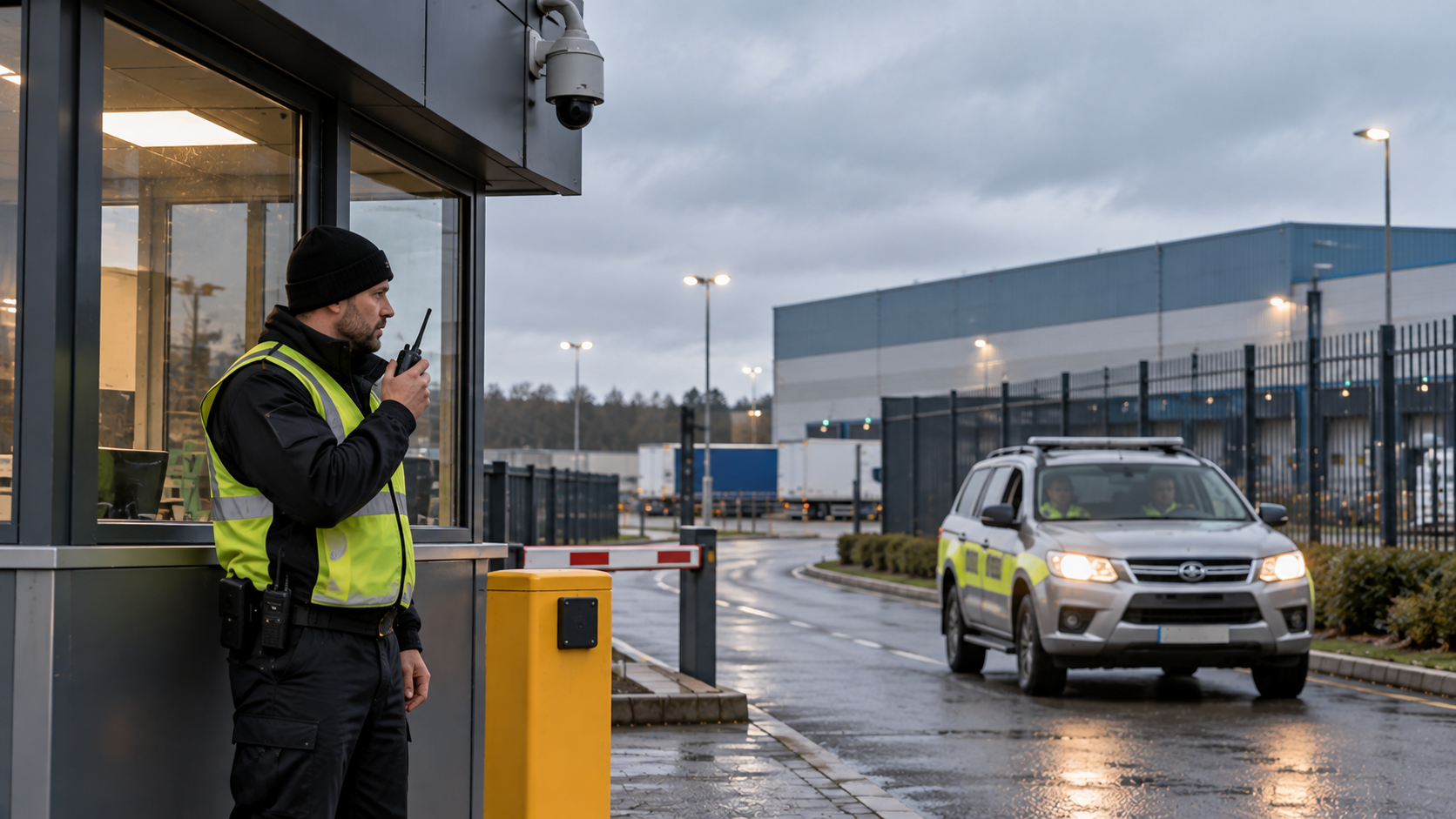
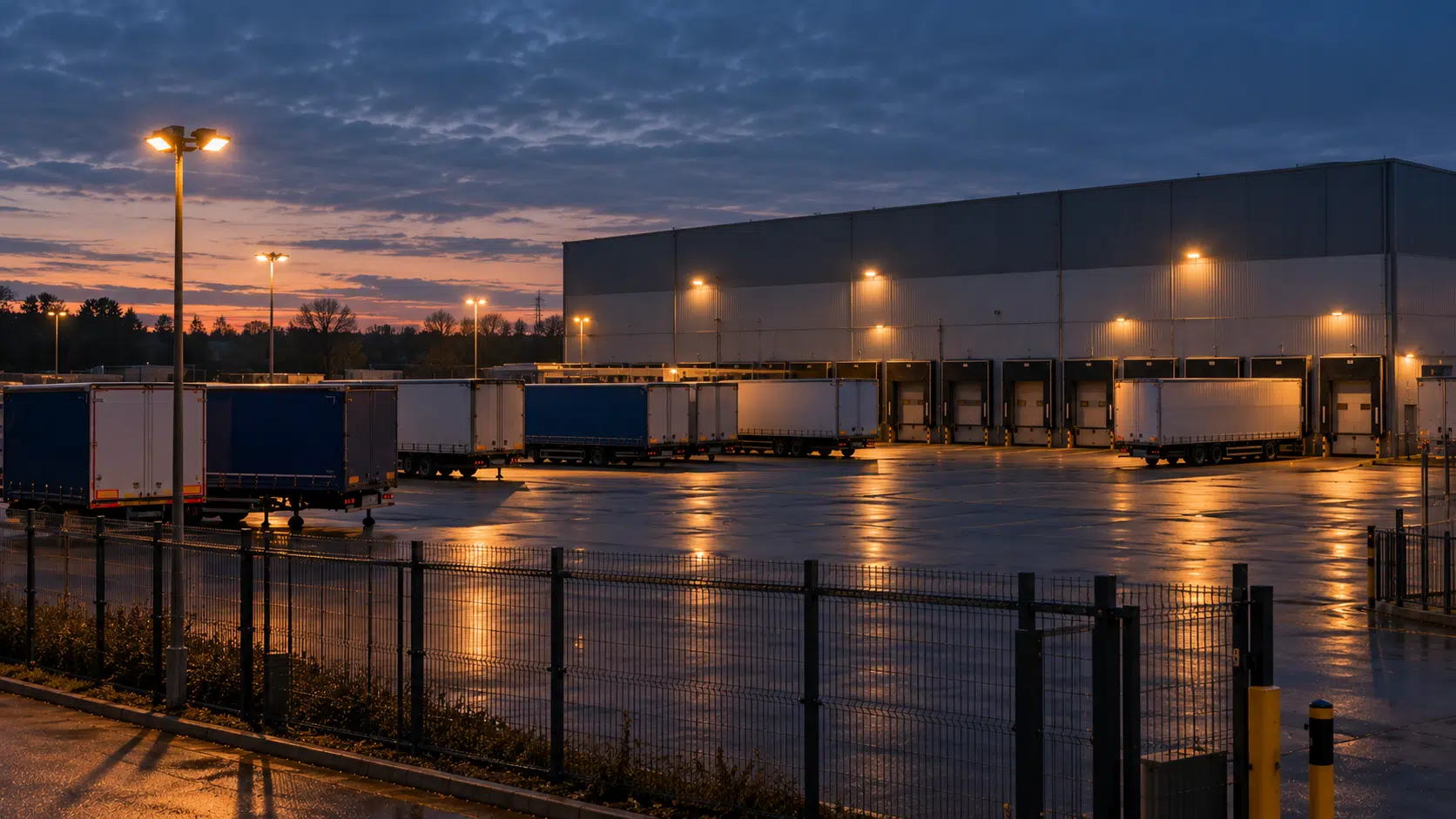
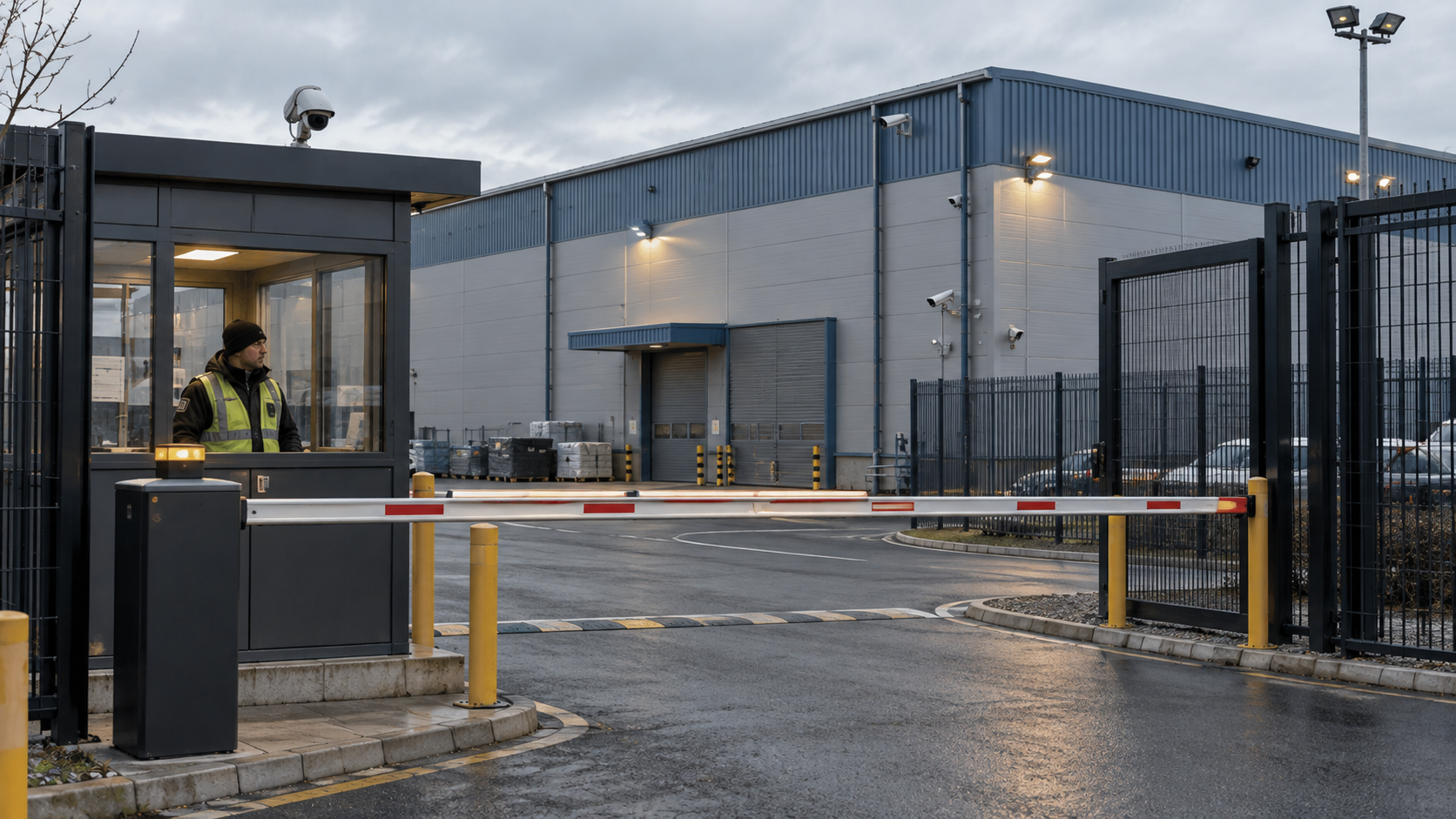
Solihull sits in an awkward position. Close enough to Birmingham to share its transport corridors, but industrial enough to carry its own weight in manufacturing and logistics. Automotive suppliers along the airport route.
Engineering firms behind secure gates in Monkspath and Chelmsley Wood. Warehouses feeding retail and construction across the West Midlands. It is productive ground, but it is also exposed ground.
Most losses here do not arrive with warning sirens. They arrive slowly. Components disappear during a shift change. A yard gate stays open after a late collection. A trespasser cuts across an estate and finds an unlocked side door. Small failures, but ones that interrupt production, contaminate stock, or trigger uncomfortable questions from insurers and auditors.
That is why factory security in Solihull rarely starts as a “guarding” decision. It starts as governance. Insurers expect visible controls. Lenders want continuity plans that survive theft, fire, and disruption. Compliance teams need evidence that access, data, and safety risks are being managed, not guessed at.
When boards ask Why Solihull Businesses Need Factory Security?, they are usually weighing something broader: resilience.
This article looks at how local risk patterns shape exposure, what the law and insurers actually require, how costs and contracts behave over time, and how new technology is changing industrial protection. The aim is not promotion, but clarity. Enough detail to support a proper risk decision before the next incident forces one.
Factory Security Basics In Solihull
Definition And Scope Of Factory Security In Solihull
Factory security in Solihull is not simply a guard standing at a gate. It is a layered control system designed around production flow, access points, and the reality of industrial life. Unlike static office security, factories deal with raw materials, finished stock, high-value tooling, hazardous substances, and a steady stream of vehicles and contractors.
In practice, factory security blends visible deterrence with operational control. Guards monitor loading bays, manage vehicle movements, check visitor credentials, and patrol areas that cameras cannot cover properly. The aim is continuity. Keeping production moving, preventing disruption, and ensuring that insurers, auditors, and regulators can see that risk is being managed, not ignored.
Across the West Midlands, from Birmingham and Coventry to Wolverhampton, Walsall, Dudley, Sandwell, and Solihull, this model has become standard for larger industrial estates. Not because crime is dramatic, but because downtime is expensive.
Solihull Crime Patterns And Their Impact On Factory Risk Exposure
Solihull’s overall crime rate sits below Birmingham’s, but industrial areas face a different pattern of risk. Theft from vehicles, trespass, and organised metal and component theft tend to cluster around estates near motorway junctions and logistics routes.
Factories close to mixed-use zones carry added exposure. Evening foot traffic, informal parking, and shared service roads make boundary control harder. The risk is not constant, but it is predictable enough that insurers now ask about patrol coverage, lighting, and access controls before agreeing to favourable terms.
This is where local intelligence matters. Security planning in Solihull often draws on data shared across the wider West Midlands business crime partnerships, not just borough-level figures.
Time-Based Risk Patterns Across Day And Night Factory Operations
Most incidents occur outside normal office hours. Late evening, early morning, and the thin hours between shift changes are when access is loosest and supervision lightest.
Daytime risk looks different. Theft is often internal or opportunistic. Unauthorised access happens through tailgating, borrowed passes, or contractors moving between units. At night, the threat shifts to perimeter breaches, yard theft, and vehicle interference.
Factories running 24-hour lines tend to split cover:
- Day patrols focused on access control and shrinkage
- Night patrols prioritising perimeter checks and alarm response
The pattern holds across Birmingham, Coventry, and Solihull alike. Timing, more than volume, shapes deployment.
Site-Specific Vulnerabilities In Solihull Warehouses And Manufacturing Estates
Solihull’s estates were not all built with modern security in mind. Older units around Shirley and Chelmsley Wood still rely on outdated fencing, blind-spot lighting, and loading bays that double as emergency exits.
Growth adds pressure. As new logistics hubs appear near the airport and the NEC corridor, traffic increases. More drivers. More temporary staff. More chances for access to drift out of control.
Common vulnerabilities include:
- Shared yards between multiple tenants
- Poor segregation between office and production areas
- Incomplete coverage at rear perimeters
Security planning here is less about technology and more about understanding how the site actually works.
Managing Anti-Social Behaviour And Trespass In Industrial And Mixed-Use Estates
Mixed estates bring a quiet problem. Public footpaths cutting through yards. Teenagers are using loading ramps as shortcuts. Delivery drivers are waiting overnight in unsecured bays.
Factory security in Solihull now spends time managing behaviour rather than chasing criminals. Moving people on. Locking down unused entrances. Recording repeated trespass patterns. It sounds minor, but insurers treat repeated trespass as an early warning sign. Left unmanaged, it becomes a gateway risk.
Daytime Patrol Demand Driven By Rising Theft And Shrinkage
Daytime patrols are no longer optional on many sites. Shrinkage, pallet theft, and component loss during operating hours have risen across the West Midlands, particularly in automotive supply chains stretching from Coventry to Wolverhampton.
Guards now focus on:
- Monitoring high-value storage zones
- Controlling contractor access
- Spot-checking vehicle movements
The goal is not confrontation. It is accountability. Visible presence changes behaviour long before loss occurs.
Seasonal Production Cycles And Economic Pressures On Guarding Demand
Security demand in Solihull follows the factory calendar. Pre-Christmas output spikes. Summer shutdowns leave sites half-empty. End-of-quarter targets stretch shifts late into the night.
Economic pressure plays a role, too. During downturns, theft rises. During rapid growth, controls loosen. Both increase exposure. Many manufacturers now adjust guarding levels seasonally rather than fixing them for the year. It costs more to manage, but far less than a shutdown after a serious incident.
Transport Infrastructure And Logistics-Linked Security Exposure
Few places sit closer to transport risk. The M42, Birmingham Airport, and rail links feed Dudley and Sandwell. Constant movement brings opportunity. Vehicle crime and load interference cluster near junctions and freight yards.
Modern factory security planning now follows the goods. Patrol routes run through yards. Gates stay staffed during late collections. Lighting shifts with traffic, not just fences. Connectivity keeps Solihull productive. It also keeps security planners alert.
Legal And Compliance Requirements For Factory Security In Solihull
Licensing Obligations For Factory Security Officers And Providers
Factory security starts with paperwork long before it starts with patrols. In Solihull, as in the rest of the West Midlands, any officer carrying out guarding, access control or mobile patrol work must hold a valid SIA licence.
The company supplying them must also be licensed. There is no local variation here. Birmingham, Coventry, Wolverhampton, Walsall, Dudley and Sandwell all operate under the same national rules.
For manufacturers, this matters more than many realise. If an unlicensed officer is working on site, responsibility does not stop with the contractor. The business that hired them carries liability, too.
Insurers often check licence records after a claim. Auditors may flag the breach as a governance failure. What looks like an administrative detail can quietly become a financial risk.
Legal Penalties And Enforcement Risks For Non-Compliant Factory Security
Using unlicensed guards is a criminal offence. Fines are common. Prosecutions are not rare. Enforcement activity tends to focus on industrial estates during shutdowns, refurbishments, and short-term projects, when informal arrangements appear.
The bigger danger comes later. If a theft, injury or fire happens while an unlicensed officer is on duty, insurers may argue that the business failed to take reasonable precautions. Claims stall, and premiums rise. In serious cases, cover can be withdrawn altogether.
Vetting, DBS Screening, And Compliance Documentation
Not every role requires an enhanced DBS check, but basic screening is now standard across most Solihull factories. Sites handling export-controlled goods, pharmaceuticals, or high-value components usually insist on stronger vetting.
What matters is evidence. A credible security provider should be able to show, without hesitation:
- Current SIA licences
- BS 7858 vetting records
- Right-to-work checks
- Training and refresher logs
When documentation arrives late or incomplete, it raises questions. Insurer and auditor notice. And once confidence drops, contracts become harder to defend.
Insurance And Liability Obligations When Deploying Factory Security
Insurance shapes factory security more than crime statistics ever do. Guarding firms carry public liability and employer’s liability cover as a minimum. Manufacturers need to make sure that the cover aligns with their own policies.
Many insurers now ask specific questions at renewal. Is guarding continuous or intermittent? Are patrols logged? Are access controls supervised? In Birmingham and Coventry, brokers increasingly prefer sites that use SIA Approved Contractors. It is not compulsory. It is simply easier to justify when premiums are under review after a loss.
Data Protection, CCTV Governance, And Access-Control Compliance
Once cameras and access systems are involved, data law becomes part of security. Guards handle personal data every day.
Under UK GDPR, the factory remains the data controller even if a contractor runs the system. That brings obligations. Clear signage at entrances. Limits on how long footage is kept. Rules on who can view or copy images.
Mistakes here are rarely dramatic, but they linger. A casual disclosure to a manager. Footage kept longer than allowed. Complaints follow. Regulators ask questions. Reputational damage often lasts longer than the original incident.
VAT Treatment And Taxation Of Factory Security Contracts
Security services attract standard-rate VAT. There are a few exceptions. Confusion usually appears when guarding is bundled into facilities or redevelopment contracts. Misclassification can trigger retrospective VAT bills that arrive years later.
Larger manufacturers across Solihull and Wolverhampton increasingly separate guarding from other services. It simplifies audits. It also avoids unpleasant surprises when HMRC reviews long-running projects.
Local Authority And Redevelopment-Linked Security Requirements
Solihull council does not issue special guarding licences, but planning conditions often include security clauses. Temporary factories, change-of-use units and redevelopment sites may be required to submit formal security plans.
Construction-linked operations near mixed estates face extra controls on fencing, lighting and access routes. These conditions are enforceable. Breaching them can halt work or invalidate insurance at exactly the wrong moment.
Regulatory Change And Its Influence On Factory Security Hiring
SIA rules change quietly. Renewal cycles shift. Training modules expand. Identity checks tighten. Over the past few years, this has slowed mobilisation across the West Midlands.
For manufacturers, the effect is practical. Short-notice cover is harder to arrange. Emergency deployments take longer. Many Solihull firms now build licence checks into procurement rather than leaving them until the first shift starts.
Labour Law, Overtime Rules, And Post-Brexit Workforce Regulation
Security contracts sit firmly inside employment law. Working Time limits still apply. Overtime must be paid correctly. Fatigue matters, not only for welfare but for liability. An accident involving an exhausted guard invites scrutiny.
Post-Brexit rules added complexity. EU nationals now require settled status or visas. Manufacturers remain responsible for checking that contractors meet right-to-work standards. If they do not, enforcement action follows the site operator as well as the supplier.
Factory Security In Licensing And Regulated Site Environments
Some factories operate under additional licences. Alcohol production. Chemical processing. Public events hosted on industrial land. In these settings, security becomes part of the licence conditions.
Guards control access, verify permits, and keep formal incident records. Licensing officers in Dudley, Walsall and Sandwell now expect written security procedures during inspections. Informal arrangements rarely survive review.
Police Collaboration And Intelligence-Led Factory Security Deployment
Modern factory security works best when it listens. Local police units share intelligence on metal theft gangs, yard intrusions and vehicle crime patterns. In Solihull and Coventry, many estates now hold regular liaison meetings.
This information shapes patrol routes and shift timing. It also improves response when something goes wrong. A familiar site receives faster help than an unknown one.
Business Crime Partnerships And Coordinated Industrial Protection
Business crime partnerships link manufacturers, logistics firms and police across the West Midlands. They circulate alerts, share vehicle descriptions, and track emerging trends.
For factories, the benefit is quiet but real. Early warning of risks moving across estates. And evidence, when insurers review a claim, that reasonable steps were taken. Coordination rarely stops crime entirely. It often stops it from spreading.
Costs, Contracts, And Deployment Of Factory Security In Solihull
Regional Pricing Patterns For Factory Security Services In Solihull
There is no single price for factory guarding in Solihull, and anyone who quotes one is guessing. Town-edge units with one gate and steady shifts sit at the lower end. Large estates near the M42, the airport, or the NEC corridor cost more. Night cover, vehicle patrols, lone-worker supervision, and high-value stock all push rates upward.
Across Birmingham, Coventry, Wolverhampton, Walsall, Dudley, Sandwell and Solihull, most buyers see a narrow range rather than a fixed tariff. What changes the bill is complexity. More entrances. More contractors. More traffic at odd hours. Cheap quotes usually reflect thin cover. They look fine on paper, then unravel when an incident lands on the insurer’s desk.
Mobilisation Timelines And Deployment Planning For Factory Guarding
Guarding does not appear overnight, even when a site is under pressure. Licences must be checked. Inductions arranged. Risk assessments approved.
In Solihull, a single static post can sometimes be filled within a few days. A full team for a live production site usually takes one to two weeks. Faster deployments happen only when a security company for manufacturing businesses in Solihull already know the site or has cleared staff waiting.
The difference is planning. Sites that share layouts, shift patterns, and access rules early move more quickly. Those who wait until the last moment often accept whoever is available, not whoever understands the operation.
Contract Structures And Standard Agreement Lengths
Most factory guarding contracts run for twelve or twenty-four months. Shorter terms appear during shutdowns, refurbishments, or trial phases. Long-term deals dominate where production never really stops.
Fixed-hour contracts feel safe. Flexible models, where hours rise and fall with output, usually age better. They take more management, but they prevent paying full cover during quiet periods and scrambling for staff during peaks.
Notice Periods, Termination Clauses, And Continuity Planning
Notice periods usually sit between thirty and ninety days. Longer agreements often carry exit fees. The clause that matters more is continuity.
Well-written contracts cover handovers, data ownership, and temporary cover if a provider fails. Without that, changing suppliers risks patrol gaps, missing logs, and awkward calls with insurers after the first incident under new cover.
Wage Inflation And Long-Term Pricing Pressures In Factory Guarding
Guarding costs follow wages. Over the past few years, pay rises across the West Midlands have lifted rates steadily. Inflation adds another layer. Most multi-year contracts now include annual reviews.
The risk for manufacturers is not slow increases. It is sudden corrections at renewal when rates jump to catch up with the market. Sites that ignore movement in Birmingham or Coventry often face sharp hikes later, usually when budgets are already tight.
Insurance Alignment And Premium Reduction Strategies
Guards alone do not reduce premiums. Structure does. Logged patrols. Controlled access. Incident reports that show patterns, not just events.
Across Solihull and Walsall, some factories have secured lower excesses or improved terms by aligning guarding plans with insurer surveys. The saving is rarely dramatic, but over several years, it offsets much of the contract cost.
Public Sector Procurement And Regulated Contract Compliance
The Procurement Act 2023 reshaped how public bodies and regulated manufacturers buy security. Framework use, transparency rules, and social value scoring now influence many tenders across Birmingham and Sandwell.
For factories supplying public contracts, compliance matters. A non-conforming guarding agreement can delay audits or weaken bids. In this space, factory security is no longer just an operating expense. It has become part of the qualification.
Training, Daily Operations, And Guard Duties In Solihull Factory Environments
Training Standards And Competency Frameworks For Factory Security Officers
Factory guarding in Solihull is built on competence, not choreography. Beyond holding an SIA licence, most officers complete site-specific inductions that cover machinery hazards, fire systems, chemical handling rules, and traffic management inside yards.
Automotive suppliers linked to Coventry and Birmingham often add asset-protection training. Distribution hubs closer to Wolverhampton or Walsall focus more on vehicle control and pedestrian safety.
What matters is practical awareness. A guard who knows how a line shuts down, which doors should never be propped open, and where solvents are stored will spot trouble long before an alarm ever sounds.
Start-Of-Shift Procedures And Initial Site Security Checks
The first ten minutes set the tone for the next twelve hours. On arrival, guards confirm the site they inherit matches the record left behind.
Typical opening checks include:
- Gates, shutters, and loading bays locked as logged
- Alarm panels are live and showing no faults
- Radios, torches, and body-worn devices are working
On estates near mixed housing in Solihull and Sandwell, early checks often include clearing unauthorised parking and closing pedestrian cut-throughs. A single open gate at dawn can undo a quiet night in minutes.
Shift Handovers And Incident Continuity Management
Handovers are short, factual, and rarely dramatic. Guards review the log, highlight unresolved alarms, equipment faults, visitor issues, or repeat trespass points.
Larger factories across Birmingham and Dudley now rely on digital systems. That change matters. When incidents stretch across shifts, a clean handover stops the same door being missed twice or the same vehicle being questioned three times. Continuity reduces repetition. Repetition invites loss.
Patrol Frequency And Perimeter-First Inspection Priorities
There is no fixed number of patrols that suits every factory. Most sites run a full perimeter walk every one to two hours, with lighter internal checks in between.
Perimeter comes first for a reason. Fences fail, and hinges loosen. Rear bays are forgotten. Guards working estates near the M42 corridor usually prioritise:
- Vehicle gates and barrier arms
- Rear fire exits and roller shutters
- Fuel tanks and external plant rooms
Internal patrols focus on access discipline. Tailgating, open cupboards, propped doors. Small breaches become habits if no one challenges them.
Documentation Standards And Audit-Ready Reporting Systems
Logs exist for a reason. Every patrol time, door check, visitor entry, alarm test, and unusual sighting is recorded. Many Solihull sites now require electronic time stamps that link directly to insurer audit trails.
When claims arrive, these records become evidence. A clean log shows control. Gaps invite questions that usually spread well beyond security.
System Verification Of CCTV, Alarms, And Access Controls
Before relying on systems, guards test them. Cameras display clearly. Motion sensors trigger. Badge readers respond. Faults are reported early.
Across larger Birmingham and Coventry plants, this simple routine has cut false call-outs sharply. Engineers are not dragged out at 02:00. Police are not called to doors that were never open. Prevention begins with checking what already exists.
Alarm Response Protocols And Controlled Visitor Access
Early-shift alarms usually mean cleaners, power resets, or delivery doors. Guards confirm visually before escalating. Calling the police without checks now counts as poor practice on many West Midlands estates.
Visitor control remains strict and dull by design. No badge, no entry. Names, vehicles, destinations, and exit times are logged. On busy Solihull sites, this single process prevents contractors wandering into live production or restricted stores by accident.
Fire Safety, Lighting Inspection, And Utility Tampering Prevention
Fire risk hides in routine. Guards check exit routes, extinguishers, panel covers, and emergency lighting during patrols. Failed bulbs and blocked doors are logged quickly.
Utility tampering is less common but more damaging. Gas valves, water mains, and electrical cabinets are inspected because disruption often costs more than theft. One closed valve can halt a line faster than any intruder.
Supervisor Reporting And Emergency Readiness On Night Shifts
Night work runs on communication. Some factories require hourly radio check-ins. Others use automated welfare calls. Before patrols begin, guards review emergency maps, spill kits, muster points, and contact lists.
It sounds repetitive. It saves time later. At three in the morning, memory fades. A written plan does not.
Secure-Down Routines And 24-Hour Shift Pattern Coordination
End-of-shift checks mirror the start. Doors locked. Bays cleared. Alarms set. Logs signed and handed over.
Factories operating round-the-clock across Wolverhampton, Walsall, and Solihull rotate teams to manage fatigue. Handover discipline keeps coverage continuous rather than patchy, which insurers quietly prefer.
Emergency Response Standards Across Solihull Industrial Districts
Internal response on most Solihull estates sits within minutes. External response depends on the district, traffic, and time of night. What matters more is containment.
Guards isolate doors, secure stock, guide fire crews, and protect access routes while help travels. The real measure is not how fast blue lights arrive, but how little damage remains when they do.
Performance, Operational Risks, And Challenges In Factory Security
Performance Measurement And KPI Frameworks For Factory Security
Measuring guarding performance in Solihull factories is less about counting footsteps and more about spotting patterns early. The most useful indicators are practical ones. Incident response times. Number of access breaches. Frequency of false alarms. Missed patrols.
Across Birmingham, Coventry, and Wolverhampton, many manufacturers now track a short list rather than long dashboards:
- Patrol completion rates and time stamps
- Door and gate breach reports
- Alarm response times
- Repeat incident locations
Good KPIs do not chase perfection. They highlight drift. When the same bay appears in three reports, or response times stretch quietly over months, managers see trouble forming before insurers do.
Weather-Driven Risk And Environmental Patrol Adjustments
Weather changes behaviour. Heavy rain floods yards and forces doors open for drainage. Snow hides fence breaks. Heat waves keep shutters lifted for air.
Guards adjust patrols accordingly. On estates around Walsall and Dudley, winter checks focus on rear gates and lighting failures. Summer patrols spend more time around open bays and temporary fans.
Weather risks are usually logged in simple notes. “Fence down after storm.” “Gate jammed by ice.” Those lines matter. When claims follow a flood or power cut, insurers often ask what checks were in place that night.
Fatigue, Long-Shift Exposure, And Night-Time Performance Risk
Fatigue remains the quiet risk no one budgets for. Long shifts dull attention. Reaction slows. Decision-making suffers.
Across Sandwell and Solihull, many factories now cap night shifts and rotate patrol routes to avoid monotony. Some add welfare check calls or supervisor visits after midnight.
Mental health matters too. Lone night work carries stress. Good providers build in breaks, phone support, and clear escalation routes. It is not charity. A tired guard misses doors. A distracted one misses people.
Environmental Regulation And Outdoor Patrol Compliance
Outdoor patrols now sit under more regulation than most managers realise. Noise limits apply near housing. Light pollution rules affect floodlighting. Waste handling and spill reporting fall under environmental law.
Guards in mixed estates near Birmingham and Coventry are trained to avoid engine idling, record chemical leaks, and report damaged drains. These tasks look minor. They are not. A missed spill or unauthorised light rig can trigger inspections that spread well beyond security.
Service Continuity Risk And Operational Failure Exposure
The greatest risk in factory security is not a single theft. It is a loss of continuity. Missed patrols. Gaps between shifts. Faults left unreported.
When performance slips, the effects spread quickly:
- Insurers tighten terms after repeat incidents
- Auditors flag weak controls
- Production halts after preventable breaches
Across Wolverhampton and Walsall, several manufacturers now run quarterly resilience reviews. They test handovers. Check alarm backups. Walk the perimeter with supervisors.
The lesson is simple. Factory security rarely fails in one dramatic moment. It fails slowly, through small lapses that nobody owns. The sites that perform best are not the ones with the most guards. They are the ones who notice drift early and correct it before the next incident makes the decision for them.
Technology And Future Trends In Solihull Factory Security
Technology Adoption In Modern Industrial Site Protection
Factory guarding in Solihull no longer runs on radios and notebooks alone. Over the past decade, estates across Birmingham, Coventry and Wolverhampton have layered technology into daily protection. Smart cameras cover blind yards. Number-plate systems track deliveries. Access cards replace shared keys.
What changed most is speed. Incidents that once took hours to confirm are now visible in minutes. But technology has not removed guards from the picture. It has changed what they watch and how fast they act. On large West Midlands sites, the best results come when digital tools support patrols rather than replace them.
Post-COVID Operational Controls And Revised Factory Guarding Protocols
COVID quietly reshaped factory security. Visitor flows became stricter. Contact tracing logs stayed. Temperature checks disappeared, but access discipline remained.
Many Solihull manufacturers kept tighter zoning between offices, production floors and yards. Cleaning schedules increased. Shared passes vanished. Across Dudley and Sandwell, guards now spend more time managing movement than checking doors.
The lasting change is procedural. Security teams document more. They control more. And they intervene earlier when patterns look wrong.
AI-Assisted Surveillance And Human-Led Response Integration
AI now watches many factory yards before humans do. Motion detection filters out rain. Behaviour analytics flags loitering near bays. Face recognition is rare, but object tracking is not.
What AI does not do is decide. In Birmingham and Coventry plants, alerts still go to guards, not machines. Humans judge intent. Humans respond. AI shortens the gap between event and awareness. It does not replace the person who walks the fence at three in the morning.
Remote Monitoring And Hybrid Guarding Deployment Models
Remote monitoring has changed night cover. Some Solihull sites now run hybrid models. Cameras feed a control room. Mobile patrols cover multiple estates. Static guards appear only where risk justifies the cost.
This works when layouts are simple. It fails when yards are complex, or traffic never stops. Across Walsall and Wolverhampton, insurers now ask whether remote systems have physical backup. Screens watch well. They do not lock doors.
Drone-Supported Perimeter Patrols And Large-Site Monitoring
Drones remain rare, but trials are growing on wide industrial land. They scan fences after storms. They follow alarm triggers across empty yards.
Regulation limits routine use, especially near housing and airports. Around Solihull, proximity to Birmingham Airport keeps drones tightly controlled. For now, they remain an inspection tool, not a replacement for patrol boots.
Predictive Analytics For Risk-Based Factory Guarding Planning
Predictive tools are the quiet change few notice. Software now studies incident logs, access records and alarm history to map risk by hour and location.
Across Coventry and Dudley, some factories adjust patrol timing based on these patterns. More coverage near late deliveries. Extra checks after payroll days. Fewer rounds where nothing ever happens.
It is not forecasting crime. It is managing probability.
Professional Upskilling And Certification Trends In Factory Security
Training is shifting with technology. Guards now learn data handling, system diagnostics, and cyber awareness alongside fire safety and access control.
Common additions include:
- Advanced CCTV operation certificates
- Counter-terror awareness modules
- First responder and trauma care training
Sites near Birmingham and Sandwell increasingly ask for multi-skilled officers who can fix faults, write audit-ready reports, and still manage gates calmly at rush hour.
Sustainable And Green Security Practices In Industrial Environments
Sustainability has reached security quietly. Electric patrol vehicles replace diesel. LED floodlights cut power use. Motion-activated lighting reduces glare into housing estates.
Some Solihull manufacturers now track guarding emissions as part of ESG reporting. It rarely changes patrol routes, but it changes equipment choices and shift planning. Small gains, repeated daily, matter more than headlines.
Martyn’s Law And Its Future Impact On Factory And Warehouse Security
Martyn’s Law will not turn factories into airports, but it will change expectations. Larger warehouses hosting visitors, events, or training days will face formal risk assessments, documented response plans, and clearer access zoning.
Across Birmingham and Wolverhampton, early adopters are already testing hostile-vehicle barriers and emergency lockdown drills.
The shift is cultural. Factory security is moving from theft prevention toward resilience planning. Not just stopping loss, but preparing for disruption few sites were once considered.
Conclusion
Factory security in Solihull rarely begins with alarms or uniforms. It begins with governance. With insurers asking sharper questions. With auditors looking for evidence, not reassurance. With boards trying to protect production, contracts, and reputation in a region where manufacturing never really pauses.
Across the West Midlands, Birmingham, Coventry, Wolverhampton, Walsall, Dudley, Sandwell and Solihull, expectations are rising quietly. Insurers now expect visible controls. Lenders look for continuity plans that survive theft, fire, and disruption. Regulators expect records that stand up months after an incident, not stories told the morning after.
This is why factory security works best when treated as a system rather than a service. Risk assessments that reflect how the site actually moves. Contracts that flex with production cycles. Training that prepares guards for emergencies, not just patrols. Technology that supports decisions instead of replacing them.
The strongest operations take a long view. They review layouts as estates grow. They test handovers before failures appear. They plan for disruption that may never come, because that planning itself protects resilience.
In Solihull, factory security is no longer a reaction to loss. It is part of how modern manufacturers protect continuity, credibility, and the confidence of everyone who relies on their lines still running tomorrow.
Frequently Asked Questions
Do factories need security guards in Solihull if they already have CCTV?
Usually, yes. Cameras record what happened. Guards stop it from happening. Most insurers across the West Midlands still expect a human presence on higher-risk sites.
What is the typical cost of factory security in Solihull for 24-hour operations?
Costs vary by layout and risk. Continuous cover on busy estates near the M42 or airport usually sits higher than small town-edge units with limited access.
What are the legal requirements for factory security in the UK?
Any guard must hold a valid SIA licence. Employers must also meet data protection, health and safety, and right-to-work rules. These apply in Birmingham, Coventry, and Solihull alike.
How can I protect a manufacturing site from theft and internal access risks?
Start with access control, patrol routines, and visitor logging. Then tighten layouts. Most losses come from gaps in movement, not forced entry.
How quickly can factory security be deployed in Solihull industrial estates?
A simple cover can begin within days. Full teams usually take one to two weeks, depending on licensing checks and inductions.
Will factory guarding reduce my business insurance premiums?
Sometimes. More often, it reduces excess levels and improves terms after a claim. Insurers value structure more than presence alone.
What vetting checks are required for factory security officers?
At a minimum, SIA licensing and BS 7858 screening. High-value or regulated sites often require DBS checks and enhanced identity verification.
How will Martyn’s Law affect factory and warehouse security in Solihull?
Larger sites hosting visitors or events will need formal risk plans, clearer access zones, and documented response procedures. It raises planning, not panic.