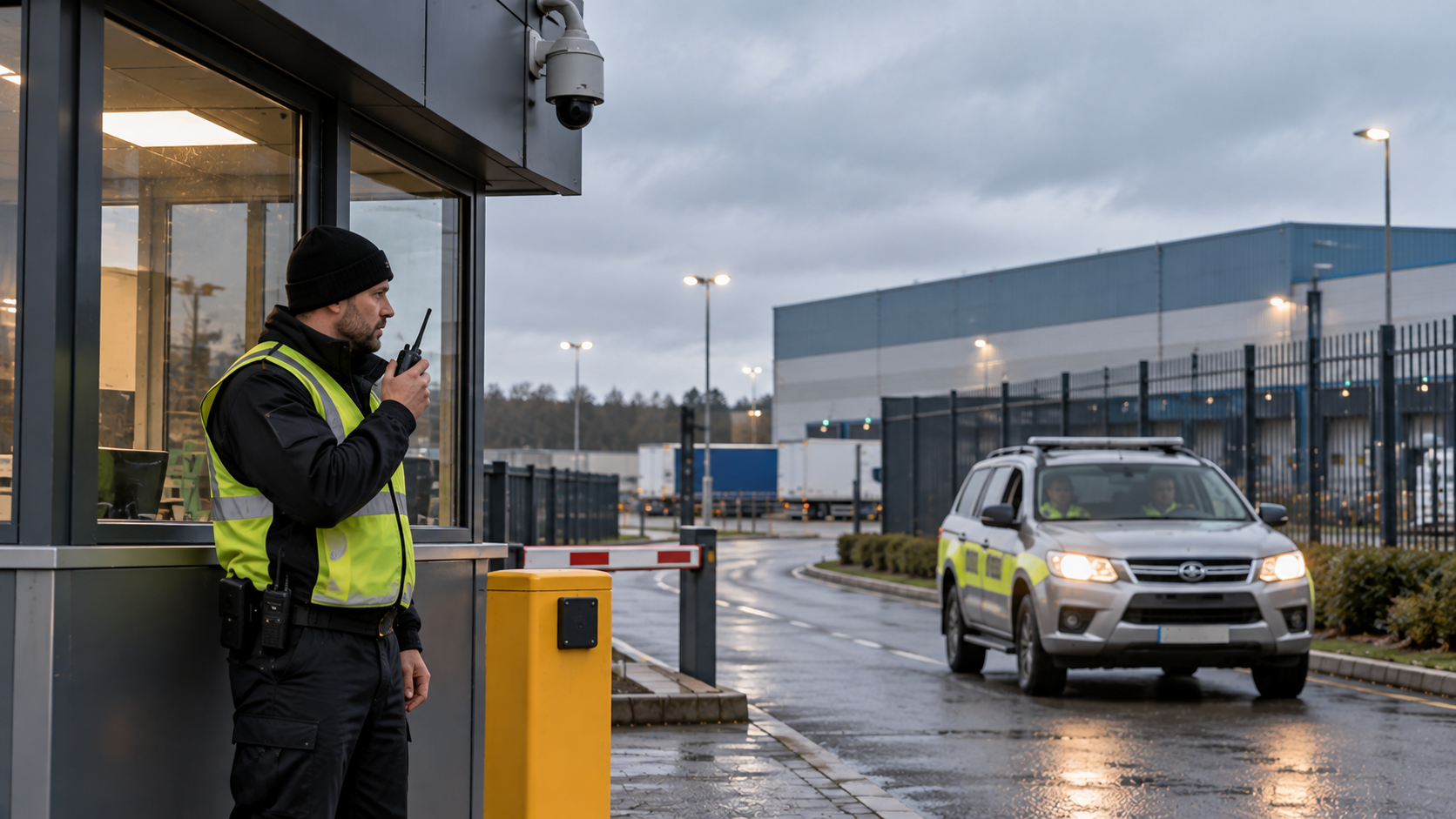
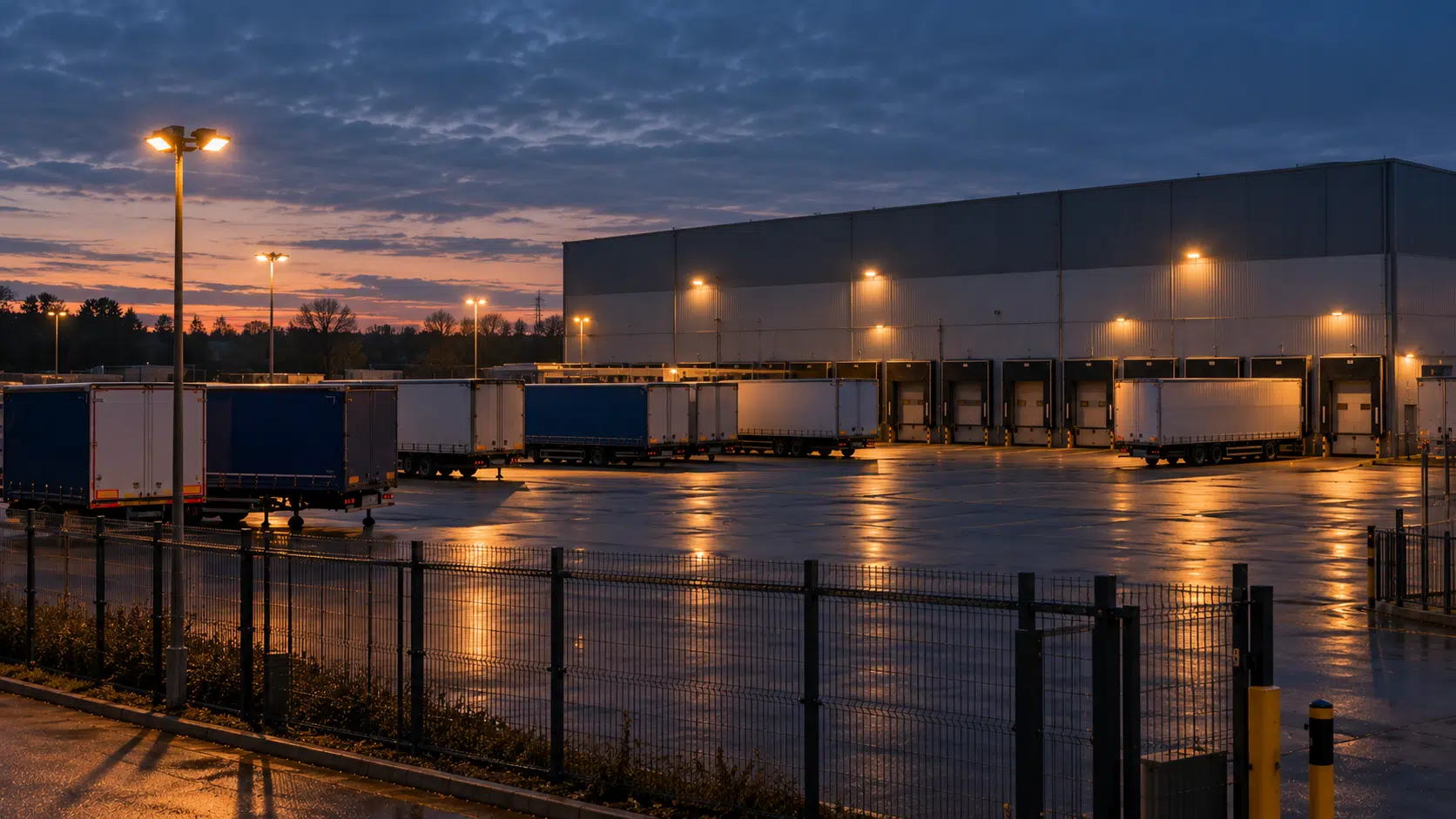
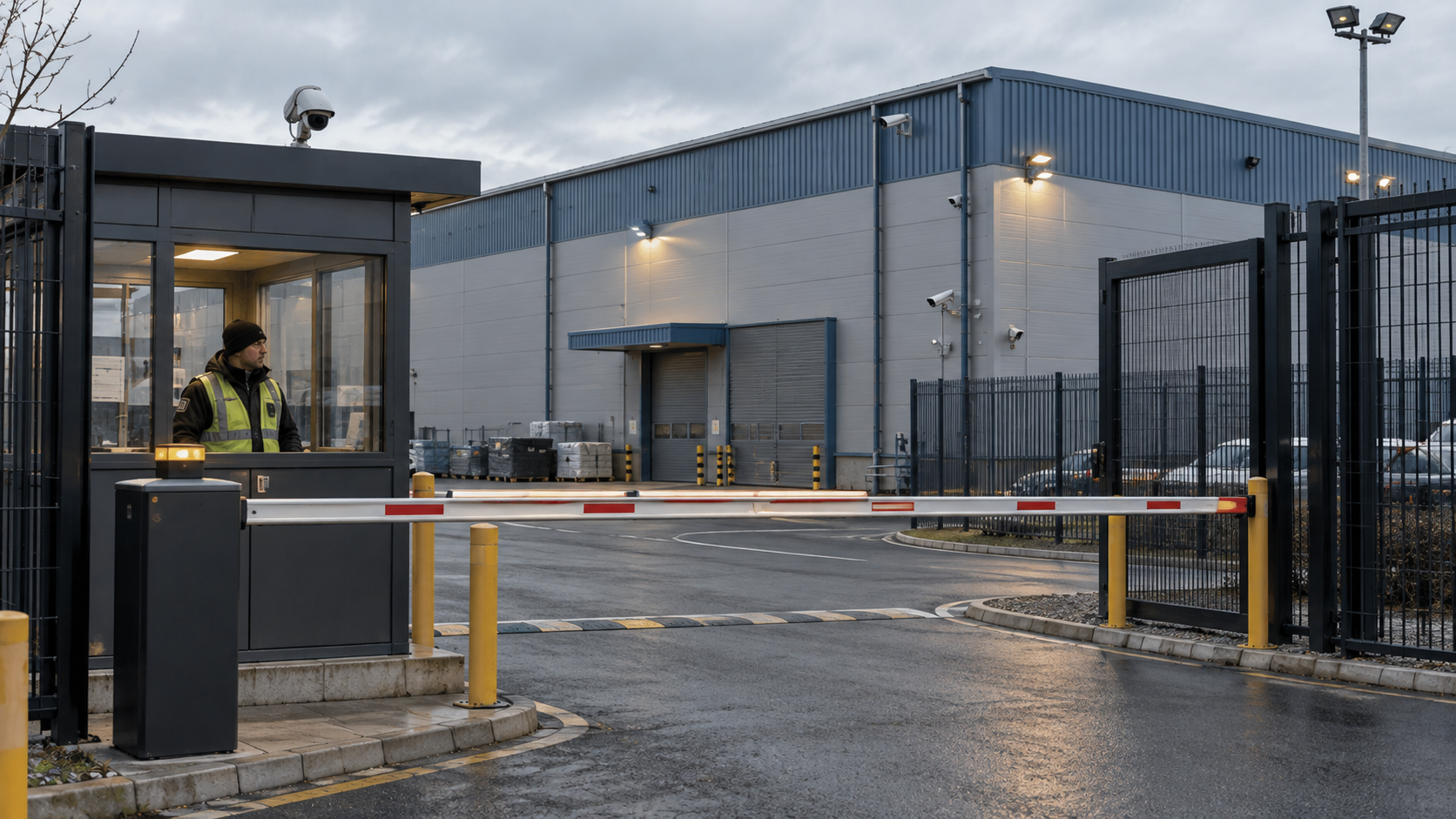
Factories in and around Walsall operate in a very different risk environment compared with offices or retail premises. Industrial estates in areas such as Bloxwich, Darlaston, Brownhills, and the wider Black Country often include high-value machinery, stored materials, vehicle fleets, and goods in transit frequently with long periods of low occupancy outside production hours.
As per the report, Walsall’s overall crime rate sits at around 99.9 crimes per 1,000 people, with property crime notably above the national average, highlighting ongoing risks to commercial assets in the area. Factory security Walsall businesses rely on is less about visibility alone and more about protecting operational continuity, meeting insurance expectations, and reducing exposure to disruption that can affect contracts, staff safety, and supply chains.
This guide explains when manned guarding becomes a practical necessity, how legal and insurance obligations influence security decisions, what typical cost structures look like, and how factories can deploy guards effectively without overspending.
Table of Contents
Factory Security Basics in Walsall
Factory security covers the full range of measures used to protect industrial sites, production facilities, yards, plant, stock, and staff from theft, damage, disruption, and unauthorised access. In Walsall, and across nearby industrial centres such as Coventry and Birmingham, many factories operate on estates with mixed occupancy, shared access roads, and varying levels of natural surveillance. That environment shapes how security needs to be planned.
Factory security is therefore not just about gates or cameras in isolation. It is about controlling who enters the site, protecting valuable assets, and reducing the likelihood of incidents that could interrupt production or lead to legal and insurance complications.
How Factory Security Differs from Office or Retail Security
Factories face a very different risk profile from town-centre shops or office buildings.
Larger, more open spaces
Industrial sites often include yards, storage compounds, loading bays, and multiple buildings. These areas create more access points and blind spots compared with a single-entrance office.
Higher-value fixed assets
Specialist machinery, tooling, and production lines are expensive and difficult to replace quickly. Damage or theft can halt operations for weeks.
Outdoor storage
Materials, pallets, containers, and vehicles are often stored outside, where they are more visible and accessible.
Operational safety risks
Unauthorised people entering production areas may be exposed to hazardous equipment or substances, increasing liability for the business.
Because of this, factory security must focus on perimeter control, access management, and consistent site oversight, rather than just front-door reception-style security.
Crime Patterns Affecting Factories in Walsall
Industrial crime tends to follow patterns linked to timing, visibility, and ease of access rather than random targeting.
Out-of-Hours Intrusion
Evenings, nights, and weekends are higher-risk periods. Industrial estates can become quiet, reducing the chance of suspicious activity being noticed by passers-by or neighbouring businesses.
Theft of Materials and Equipment
Factories may store:
- Metals and components
- Cables and electrical materials
- Fuel and generators
- Tools and portable machinery
These items can often be removed quickly and sold on, especially if yards are poorly secured or rarely checked.
Vehicle and Plant Crime
Company vehicles, forklifts, trailers, and plant equipment are common targets. Theft may involve whole vehicles or parts such as batteries and fuel.
Trespass and Vandalism
Vacant-looking areas of industrial sites can attract trespassers. Even where theft is not the intention, damage, fire risk, and safety incidents can follow.
When Factory Risk Is Highest
Risk levels change depending on how the site operates.
Nights and weekends
Lower staffing and reduced activity make it easier for intruders to access sites unnoticed.
Holiday shutdowns
Extended closures can make factories appear unoccupied, especially if lighting and vehicle movement drop significantly.
Shift changes
Busy entry and exit times can create confusion, making it harder to distinguish authorised personnel from unauthorised individuals without structured access control.
Early-morning or late-night deliveries
Logistics activity outside normal hours increases movement at the perimeter, which can be exploited if checks are inconsistent.
Understanding these timing patterns helps factories decide when stronger security measures are most necessary.
Factory-Specific Vulnerabilities
Some weaknesses are particularly common in industrial environments:
Uncontrolled secondary access points
Side gates, rear service doors, or gaps in fencing are often overlooked.
Poor yard lighting
Dark areas make it harder to spot suspicious movement and increase accident risk.
Inconsistent visitor and contractor control
Maintenance teams, drivers, and temporary workers may enter regularly. Without proper sign-in procedures, accountability is reduced.
Lack of perimeter checks
Fencing damage, forced gates, or broken locks can go unnoticed if not routinely inspected.
Why a Structured Approach Matters
Effective factory security in Walsall is about reducing opportunity. Sites that appear well managed, monitored, and controlled are less attractive to opportunistic offenders. It also supports:
- Compliance with health and safety responsibilities
- Meeting insurer expectations
- Protecting production schedules from disruption
- Demonstrating due diligence if incidents occur
Factory security, when properly planned, becomes part of operational resilience rather than an afterthought.
Legal and Compliance Requirements for Factory Security in Walsall
Factories are not automatically required by law to employ security staff, but they are legally responsible for protecting their premises, assets, staff, and visitors from foreseeable risks. Security measures form part of a wider compliance framework covering safety, liability, insurance, and data protection.
For factory operators in Walsall, as well as neighbouring areas such as Sandwell and Solihull, security decisions often sit at the intersection of health and safety law, property protection, and insurer expectations rather than a single “security law.”
Health and Safety Responsibilities
Under the Health and Safety at Work etc. Act 1974, employers must ensure, so far as reasonably practicable, the health and safety of employees and others who may be affected by their operations.
In a factory setting, this extends to:
- Preventing unauthorised access to hazardous areas
- Controlling entry to zones with machinery, vehicles, or chemicals
- Managing visitor and contractor movement safely
- Securing dangerous equipment when not in use
If trespassers gain access to unsafe areas because perimeter controls or access procedures were inadequate, this can become a serious legal and liability issue.
Occupiers’ Liability
Factories owe a duty of care under the Occupiers’ Liability Acts to people on their premises including visitors, contractors, and, in some circumstances, even trespassers.
Poor perimeter security, damaged fencing, or unrestricted access points can increase the risk of injury claims if someone enters the site and is harmed. Demonstrating that reasonable security measures were in place helps show that the business took appropriate steps to reduce foreseeable risks.
Insurance Conditions and Duty of Care
While not legislation, insurance requirements are often one of the strongest drivers of factory security standards.
Insurers may impose conditions such as:
- Minimum perimeter protections
- Locking and alarm requirements
- CCTV coverage of key areas
- Supervision or monitoring outside working hours
Failure to meet these conditions can result in reduced payouts or rejected claims following theft, fire, or vandalism. From a compliance perspective, security becomes part of demonstrating due diligence and risk management.
Control of Contractors and Visitors
Factories frequently host:
- Maintenance contractors
- Delivery drivers
- Inspectors and auditors
- Temporary technical specialists
Under both health and safety law and general duty of care, businesses must manage these visitors safely. This includes knowing who is on site, where they are working, and ensuring they do not access restricted or dangerous areas without authorisation.
Structured access control and visitor logging are therefore compliance tools as much as security measures.
CCTV and Data Protection Law
Where CCTV is used as part of factory security, it must comply with UK GDPR and the Data Protection Act 2018.
Key obligations include:
- Having a clear, legitimate purpose for recording (e.g., crime prevention, site safety)
- Informing people that CCTV is in operation through appropriate signage
- Limiting camera coverage to relevant areas (avoiding unnecessary intrusion into neighbouring property or public space)
- Storing footage securely and only for as long as necessary
- Controlling who can access recordings
If CCTV is poorly managed, data protection breaches can lead to regulatory scrutiny and reputational damage.
Fire Safety and Site Security
Under the Regulatory Reform (Fire Safety) Order 2005, responsible persons must manage fire risks in non-domestic premises. Security ties into this where:
- Arson is a known risk, especially in yards or waste storage areas
- Unauthorised access could lead to deliberate or accidental fire
- Perimeter control reduces the likelihood of trespassers starting fires or interfering with fire safety systems
Security measures that restrict access and monitor vulnerable areas support wider fire risk management.
Environmental and Hazardous Material Controls
Factories handling fuels, chemicals, or controlled substances must prevent unauthorised access that could lead to environmental damage or misuse. Secure storage areas, controlled access, and monitored perimeters help demonstrate compliance with environmental and hazardous materials regulations.
Future Legislative Direction: Protective Security
Proposed legislation such as Martyn’s Law (the Terrorism Protection of Premises legislation) signals a broader shift toward clearer expectations on how premises assess and manage risks from serious violence. While most factories are unlikely to fall into the highest categories, the direction of regulation reinforces the need for documented risk assessments and proportionate security measures.
Demonstrating Compliance Through Security
For factory operators in Walsall, security is not just a protective measure, it is evidence of responsible site management. Well-documented procedures for access control, perimeter checks, incident reporting, and CCTV governance help demonstrate that the business:
- Identifies foreseeable risks
- Takes proportionate steps to reduce them
- Monitors and reviews site safety and security
- Meets insurer and legal expectations
In this way, factory security supports compliance, reduces liability exposure, and strengthens the business’s position if incidents lead to claims, investigations, or regulatory scrutiny.
Costs, Contracts, and Deployment for Factory Security in Walsall
For factories, security spending is usually assessed in the same way as maintenance, insurance, and health and safety controls as a predictable operating cost that protects production continuity and reduces the risk of larger, less predictable losses.
Security costs vary significantly depending on the size of the site, risk exposure, operating hours, and the level of supervision required, rather than location alone.
What Typically Drives Factory Security Costs
Hours of coverage
Out-of-hours protection (nights and weekends) costs less overall than full 24/7 coverage but may not address daytime risks such as delivery control or contractor access.
Site scale and layout
Large, multi-building sites with open yards, multiple gates, or poor natural surveillance require more oversight than compact, single-building factories.
Access control complexity
Frequent vehicle movements, HGV traffic, or high volumes of contractors increase the level of monitoring and record-keeping required.
Asset value and insurer expectations
Sites storing high-value machinery, metals, or fuel may face higher insurance conditions, which in turn influence the level of security deemed appropriate.
Integration with technology
Security that works alongside CCTV, alarms, and access control systems can be more efficient, but it requires coordination and clear procedures.
Deployment Models for Factories
Factory security is rarely one-size-fits-all. Common approaches include:
Out-of-hours coverage
Focused on evenings, nights, and weekends when factories are least occupied and most vulnerable.
24-hour site security
Used where valuable assets, sensitive materials, or continuous production make constant supervision necessary.
Gatehouse-based control
Suitable for sites with defined entry points and high vehicle or visitor traffic.
Shutdown or temporary coverage
Short-term security during holiday closures, maintenance periods, or construction works on site.
Choosing the right model depends on aligning security presence with when risk is highest, not simply mirroring working hours.
Contract Structures and Terms
Security for factories is typically arranged under service contracts rather than ad-hoc callouts.
Contract length
Many agreements run for 12–36 months. Longer terms can provide cost stability, while shorter terms offer flexibility where site risk is changing.
Notice periods
Standard notice periods often range from one to three months, allowing time for orderly transition and maintaining site protection.
Service level clarity
Well-defined contracts specify:
- Hours of coverage
- Responsibilities (access control, patrols, reporting)
- Use of technology and reporting systems
- Escalation and incident procedures
Clear scope prevents gaps in coverage and avoids paying for services that do not address actual site risks.
Economic Factors Affecting Security Costs
Security pricing, like other operational services, is influenced by broader economic conditions.
Wage and employment cost increases
Rises in minimum wage, pension contributions, and statutory employment costs affect service pricing over time. Stable, compliant providers factor these into transparent pricing rather than cutting service quality.
Inflation and long-term agreements
Multi-year contracts may include annual review mechanisms linked to inflation or employment cost indices. This helps both parties plan budgets without sudden cost shocks.
From a factory perspective, predictable and sustainable pricing is often preferable to short-term savings that risk inconsistent service.
Insurance and Financial Considerations
Well-structured factory security can support risk reduction in ways that matter to insurers and finance teams.
- Demonstrating controlled access and monitored premises may support more favourable underwriting decisions
- Clear incident records and site oversight strengthen claim defensibility
- Reduced theft, damage, and disruption protects production schedules and revenue
Security does not automatically lower premiums, but it contributes to the overall risk profile insurers assess.
Public Sector and Compliance Context
Where factories operate under public sector contracts or within regulated supply chains, procurement rules and compliance expectations may influence how security services are sourced and documented. Clear contractual terms, audit trails, and performance records help demonstrate that appropriate safeguards are in place to protect assets and continuity of supply.
Training, Operations, and Daily Factory Security Duties in Walsall
Factory security is most effective when it follows structured routines rather than relying on ad-hoc observation. Industrial sites contain valuable assets, hazardous areas, and complex layouts, so daily security operations must support safety, accountability, and early risk detection.
This section focuses on what effective factory security operations look like on the ground and why those routines matter to the business.
Training Standards Relevant to Factory Environments
Personnel responsible for factory security must be appropriately trained for industrial settings, not just general front-of-house duties. Key areas of competence include:
- Access control procedures for vehicles, contractors, and staff
- Health and safety awareness, including hazards linked to machinery, loading bays, and restricted zones
- Emergency response, including fire procedures and evacuation support
- Incident recording and reporting, ensuring events are documented accurately
- Conflict management, particularly when challenging unauthorised individuals
Industrial environments demand a higher awareness of site safety risks, not just security threats.
Start-of-Shift Procedures
The beginning of a shift is a critical risk-control point. Structured checks help identify issues that may have developed during quieter hours.
Typical priorities include:
Handover review
Outgoing staff pass on information about incidents, maintenance issues, suspicious activity, or access concerns. This prevents gaps between shifts.
Perimeter condition check
Early checks of fencing, gates, locks, and barriers help identify signs of tampering, forced entry, or damage.
Access point readiness
Entry points used for staff, visitors, and deliveries are checked to ensure they are secure, functioning correctly, and properly monitored.
Security system status
Alarms, access control panels, and monitoring equipment are checked for faults or alerts that may require follow-up.
These steps ensure the site starts each shift with a clear understanding of current risks.
Patrol Routines and Site Oversight
Regular patrols form a core part of factory security operations. Their purpose is not simply to “walk the site,” but to:
- Deter unauthorised activity through visible presence
- Identify unlocked doors or unsecured storage areas
- Check that vehicles, plant, and materials remain where expected
- Spot hazards such as poor lighting, obstructions, or unsafe conditions
- Confirm that restricted zones remain secure
The timing and routes of patrols are often varied to reduce predictability, especially during nights and weekends.
Access Control and Visitor Management
Factories regularly receive:
- Delivery drivers
- Contractors and engineers
- Inspectors and auditors
Security procedures support compliance and safety by ensuring:
- Visitors are logged on arrival and departure
- Identification and authorisation are checked
- Access is limited to approved areas
- Contractors understand site rules and hazards
Accurate visitor records are important for both security investigations and emergency roll-calls.
Monitoring and Equipment Checks
Daily operations also include verifying that supporting systems are working as intended.
CCTV oversight
Cameras covering gates, yards, and key internal areas are checked to confirm visibility and recording status.
Lighting inspections
Poor lighting increases both security and safety risks. Regular checks help identify failed units in yards, car parks, and access routes.
Alarm response readiness
Procedures for responding to alarms are reviewed, and any overnight activations are investigated and recorded.
Incident Awareness and Communication
Security effectiveness depends on consistent communication.
Shift briefings
Incoming personnel are made aware of recent incidents, suspicious activity, or operational changes that affect security.
Supervisor reporting
Regular updates and incident reports provide management with visibility of site conditions and emerging risks.
Emergency familiarity
Security staff must remain familiar with evacuation routes, assembly points, and emergency contacts so they can support a coordinated response.
Fire and Safety-Related Security Checks
Security routines often support broader safety compliance by:
- Checking that fire exits are secure but unobstructed
- Monitoring for signs of arson risk in waste or storage areas
- Reporting unsafe storage of flammable materials
- Noting hazards that could cause injury during unauthorised access
These actions reduce both security and legal risk.
End-of-Shift Secure-Down
At the close of a shift, procedures help ensure the site is left in a controlled condition.
Typical actions include:
- Confirming that gates, doors, and restricted areas are secured
- Recording any incidents or maintenance issues for the next shift
- Verifying that alarms and monitoring systems are correctly set
- Logging outstanding concerns requiring follow-up
Clear end-of-shift documentation maintains continuity and provides an auditable security record.
Why Daily Security Routines Matter
Consistent operational routines:
- Reduce opportunities for theft and intrusion
- Support health and safety compliance
- Provide evidence of due diligence for insurers and investigators
- Help management spot patterns before they become serious incidents
For factories in Walsall, structured daily security activity is not just a presence on site, it is a risk management process that protects production, people, and property every day.
Performance, Risks, and Operational Challenges in Factory Security
Putting security measures in place is only part of the picture. For factories, the real question is whether those measures are working consistently over time, especially during higher-risk periods such as nights, weekends, and shutdowns.
Performance in factory security is less about visible presence and more about reliability, coverage, and the ability to identify and address risks early.
Measuring Factory Security Performance
Businesses benefit from tracking practical indicators that show whether security is delivering real protection.
Useful performance measures include:
Access control accuracy
Are all visitors, contractors, and vehicles properly logged and authorised? Gaps here increase both theft risk and safety liability.
Incident detection and reporting
Are suspicious activities, attempted intrusions, or safety hazards identified and recorded promptly? Early reporting often prevents larger losses.
Perimeter integrity checks
Are fencing, gates, and access points regularly inspected and faults reported quickly? Delays can leave sites exposed.
Response to alarms or alerts
Are alarm activations investigated and documented, rather than routinely dismissed as false alerts?
Record quality and consistency
Clear, legible, and complete logs help demonstrate due diligence to insurers and investigators after an incident.
These indicators show whether security is functioning as an active risk-control system rather than a passive presence.
Environmental and Site Conditions
Factory security performance can be influenced by physical conditions around the site.
Weather exposure
Heavy rain, fog, frost, or high winds can reduce visibility, affect lighting effectiveness, and make certain areas less frequently used by staff increasing isolation and potential vulnerability.
Seasonal darkness
Longer hours of darkness in winter extend the period during which sites rely on artificial lighting and monitoring, increasing the importance of perimeter checks and lighting maintenance.
Large outdoor areas
Expansive yards, storage compounds, and vehicle parks are harder to monitor consistently than enclosed buildings, particularly in poor weather.
Recording environmental conditions alongside incidents can help explain patterns and support future risk planning.
Operational Risks and Common Challenges
Even well-planned factory security can face operational challenges if not regularly reviewed.
Complacency during quiet periods
Long stretches without incidents can lead to reduced vigilance. Structured routines and periodic reviews help maintain standards.
Over-reliance on assumptions
Believing “nothing ever happens here” can result in weak controls around secondary gates, side entrances, or storage areas.
Inconsistent procedures across shifts
Security effectiveness depends on continuity. Differences in how access, patrols, or reporting are handled can create gaps.
Poor integration with site operations
If production, maintenance, and logistics teams do not communicate changes (new contractors, altered hours, temporary works), security measures may not reflect real activity on site.
Health, Safety, and Working Conditions Impacting Performance
Factory environments can be physically demanding, particularly where security involves outdoor patrols and exposure to industrial conditions.
Factors that can affect performance include:
- Fatigue during long or overnight coverage periods
- Reduced alertness in monotonous environments without structured activity
- Cold, heat, or wet weather affecting concentration and comfort
- Noise and vehicle movement in active yards creating distractions
From a business perspective, structured rotations, clear procedures, and well-defined patrol patterns help maintain consistent oversight despite these conditions.
Regulatory and Environmental Considerations
Some environmental and safety regulations also influence how factory security is carried out.
Safe access and movement
Security activities must align with site traffic management plans, pedestrian routes, and restricted zones.
Lighting and energy use
Balancing adequate illumination for safety and security with energy efficiency is an increasing operational consideration.
Hazard awareness
Security personnel must operate safely around machinery, loading operations, and hazardous material storage, reinforcing the link between security and overall site safety management.
Why Ongoing Review Matters
Factory security is not static. Site layouts change, stock levels rise and fall, production schedules shift, and surrounding areas develop.
Regular performance reviews help businesses:
- Identify patterns in incidents or near misses
- Adjust coverage during higher-risk periods
- Address weaknesses in access control or perimeter protection
- Demonstrate active risk management to insurers and auditors
For factories in Walsall, effective security depends not just on having measures in place, but on monitoring how well they perform and adapting as site risks evolve.
Technology and Future Trends in Factory Security
Factory security is increasingly shaped by technology, but not in a way that removes the need for physical oversight. Instead, modern systems help businesses cover larger areas, detect issues earlier, and make better-informed security decisions, particularly on complex industrial sites.
For factories in Walsall, technology is best viewed as a force multiplier improving visibility and response rather than replacing on-site control measures.
Smarter CCTV and Integrated Monitoring
CCTV remains a core part of factory security, but systems are becoming more intelligent and better integrated.
Modern industrial setups often include:
- High-definition cameras covering gates, yards, and loading bays
- Infrared or low-light cameras for night-time monitoring
- Centralised recording with secure remote access for management review
The key trend is integration. Cameras are linked with access control, alarms, and incident reporting, allowing faster verification of suspicious activity and clearer evidence when incidents occur.
Remote Monitoring as a Support Layer
Remote monitoring centres can now oversee multiple sites outside working hours, reviewing alarm activations and camera alerts in real time.
For factories, this means:
- Faster identification of unusual movement after hours
- Audio warnings issued through site speakers where appropriate
- Escalation to on-site response or management when needed
Remote systems extend coverage, particularly during quiet periods, but they work best when aligned with clear on-site procedures.
AI-Assisted Video Analytics
Artificial intelligence is increasingly used to analyse CCTV footage automatically. In factory environments, this can help detect:
- Movement in restricted areas during closed periods
- Vehicles entering at unusual times
- Loitering near perimeter fencing or storage areas
AI reduces the chance that suspicious activity is missed in large camera networks. However, it still relies on human decision-making to interpret and respond appropriately.
Perimeter Detection Technology
Factories with large boundaries are adopting advanced perimeter tools such as:
- Motion sensors along fencing
- Beam or radar-based intrusion detection
- Smart lighting that activates when movement is detected
These systems provide early warning of intrusion attempts, particularly in poorly lit or rarely visited areas of the site.
Drones for Large Industrial Sites
Drone technology is beginning to support security on expansive industrial sites. Drones can:
- Survey large yards and roof areas quickly
- Check remote perimeter sections after an alert
- Support inspections during shutdown periods
They are particularly useful where physical access is slow or difficult, though they are typically used as a supplementary tool rather than a primary control.
Predictive and Data-Led Security Planning
Factories are increasingly using historical data to guide security decisions. This includes analysing:
- Past incident patterns
- Seasonal changes in risk
- Delivery schedules and peak activity times
- Changes in stock levels or asset storage
This data-led approach helps businesses adjust security coverage to match real risk rather than relying on static assumptions.
Sustainability in Industrial Security
Environmental considerations are influencing how factory security systems are designed.
Emerging practices include:
- LED and motion-activated lighting to reduce energy use
- Solar-powered cameras in remote yard locations
- Smarter patrol routing to minimise unnecessary vehicle movement
These changes support both security effectiveness and broader sustainability goals.
Legislative Change and Protective Security
Forthcoming legislation such as Martyn’s Law reflects a broader shift toward clearer expectations around how premises assess and manage risks from serious violence. While factories are generally lower-profile targets than public venues, the wider regulatory trend is toward:
- Documented risk assessments
- Clear emergency procedures
- Defined responsibilities for site safety and security
Security planning is therefore becoming more structured and accountable, even in industrial settings.
The Direction of Travel
The future of security company Walsall is not about replacing people with technology. It is about combining human oversight with smarter tools, improving detection, speeding up response, and maintaining clearer records.
Factories that treat technology as part of an integrated security strategy rather than a standalone fix are better placed to protect assets, maintain compliance, and adapt as risks evolve.
Conclusion
Factory security is ultimately about protecting operational continuity as much as physical assets. For industrial sites in and around Walsall, risks tend to arise from a mix of large, open layouts, valuable equipment and materials, and extended periods of low occupancy outside production hours. These conditions mean that security cannot be treated as an afterthought or a purely technical add-on.
A structured approach combining strong perimeter control, disciplined access management, reliable monitoring, and regular review of performance helps reduce the likelihood of theft, trespass, and disruption. It also supports wider legal duties around health and safety, strengthens the business’s position with insurers, and demonstrates responsible site management.
When factory security is aligned with how the site actually operates including shift patterns, deliveries, shutdowns, and expansion, it becomes a practical risk management tool rather than just a cost line. Taking time to assess vulnerabilities properly allows businesses to invest proportionately, protect production, and plan with greater confidence.
FAQ: Factory Security in Walsall
1. Do all factories need the same level of security?
No. Security should reflect the site’s size, layout, asset value, and how exposed it is outside working hours. A small, low-traffic unit has different needs from a large multi-building facility with outdoor storage.
2. Is factory security mainly about preventing theft?
Theft is a major concern, but security also helps manage safety risks, control access to hazardous areas, reduce vandalism, and support fire prevention and liability protection.
3. When are factories most at risk?
Risk is typically higher at night, over weekends, and during holiday shutdowns when sites are quieter and unusual activity is less likely to be noticed quickly.
4. How does factory security support health and safety compliance?
By restricting unauthorised access to dangerous areas, monitoring site conditions, and maintaining visitor records, security measures help demonstrate that the business is managing foreseeable risks.
5. Do insurers expect specific security measures at factories?
Often yes. Insurers may set conditions relating to perimeter protection, alarms, monitoring, or supervision outside business hours. Meeting these conditions is important for claim validity.
6. Can technology replace physical site security?
Technology such as CCTV and alarms is valuable, but it works best as part of a wider system. Detection tools are more effective when combined with clear procedures and active oversight.
7. How often should factory security arrangements be reviewed?
At least annually, and also after major changes such as site expansion, new high-value equipment, changes in operating hours, or increased stock levels.
8. What are common weak points in factory security?
Secondary gates, damaged fencing, poorly lit yards, and inconsistent visitor control are frequent vulnerabilities if not regularly checked.
9. Does factory location within Walsall affect security needs?
Yes. Sites on quieter industrial estates or near major transport routes may face different exposure levels compared with those in busier, more visible areas.
10. How does good security planning benefit the business long term?
It reduces the likelihood of costly incidents, supports smoother insurance processes, protects staff and visitors, and helps maintain uninterrupted production and delivery commitments.