Leicester remains a city built around work. Manufacturing units still operate alongside expanding warehouses. Retail parks are moving back onto industrial estates. Mixed-use sites bring factories, logistics yards, and service businesses together in close quarters. That layout keeps commerce moving, but it also increases exposure.
This is where Why Leicester businesses need Factory Security becomes a practical question rather than a marketing phrase.
Factory environments behave differently from offices or warehouses. Access points stay open, equipment stays accessible, and vehicles move in and out at all hours. As shift patterns change and routines soften, risk begins to build in the background.
Leicester’s growth has added pressure to sites that were never designed for modern operating demands. As deliveries increase and access is shared, temporary staff become more common. Slowly, a manageable setup can start to feel fragile.
Factory security, done properly, is not about visible deterrence. It is about managing timing, layout, and access so that problems are spotted early rather than discovered late. This article explains how that works in Leicester. It covers legal requirements, real cost drivers, daily operations, and the changes shaping factory security going forward.
Table of Contents

Factory Security Basics in Leicester
What factory security means in real Leicester sites
Factory security is not a single action or a fixed setup. It is a working system shaped by how a site operates.
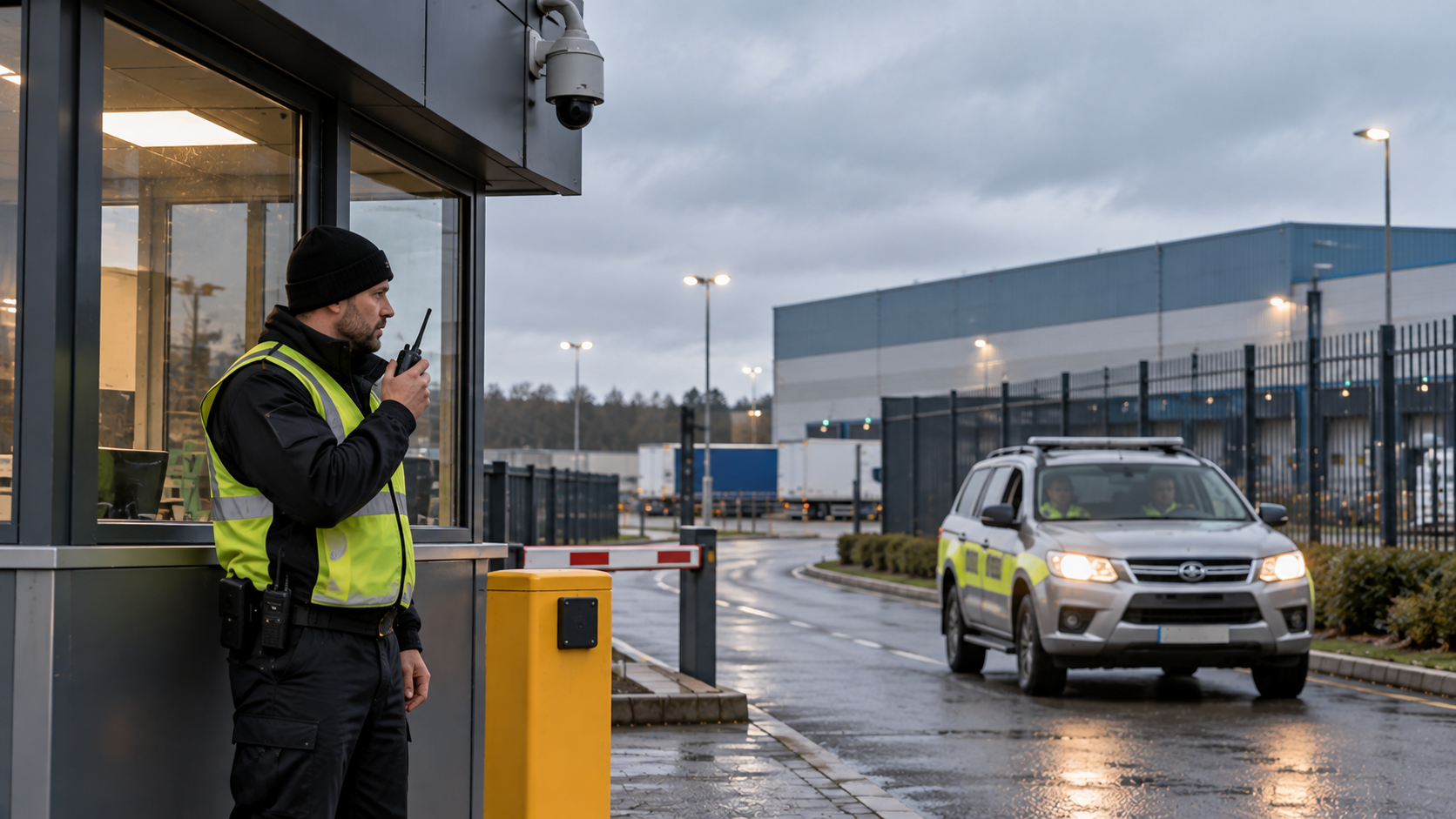
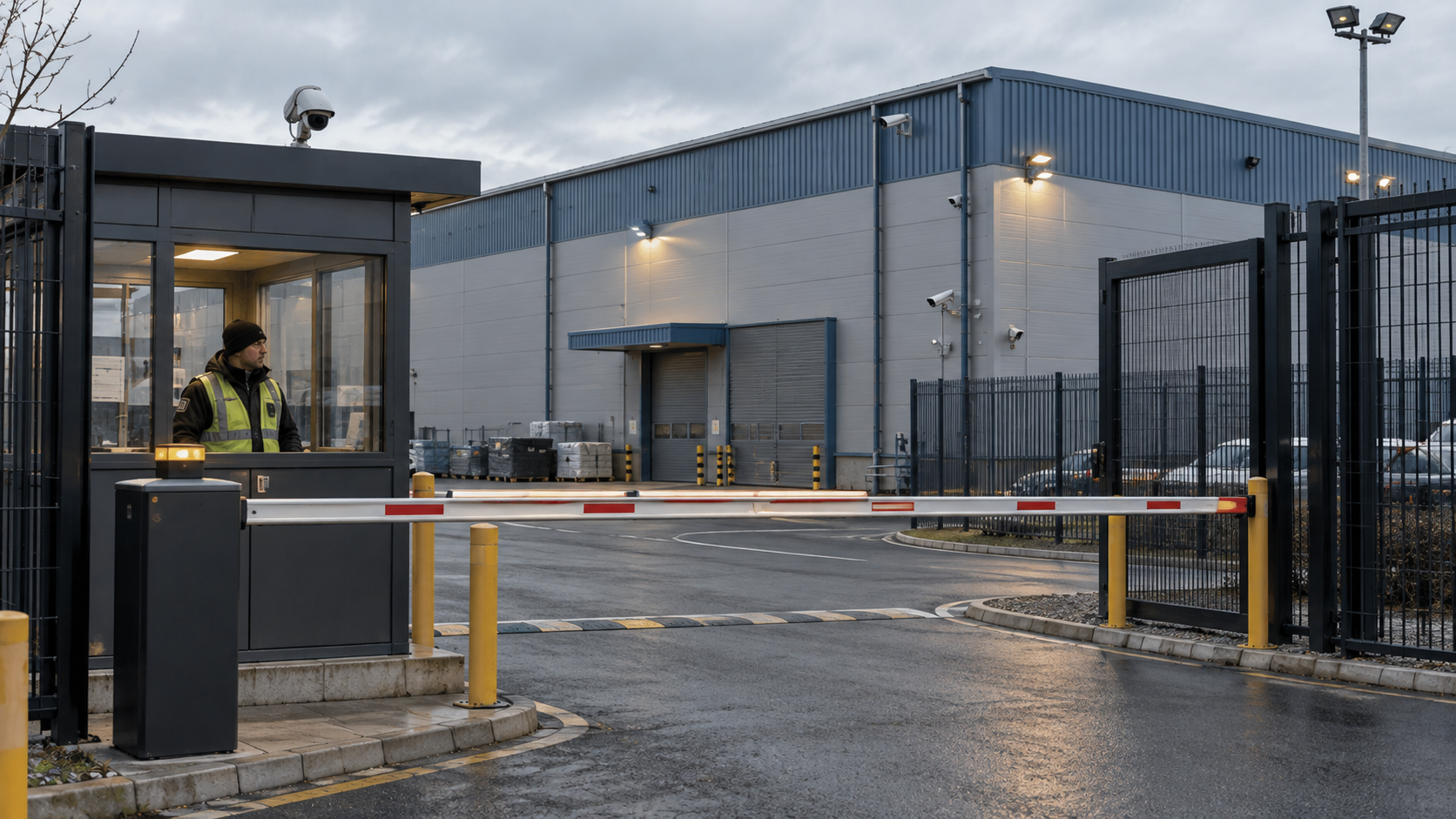
Security on many Leicester factory sites centres on access that must stay open and yards that remain active beyond production hours. Machinery often stays exposed, even when fewer staff are on site. Static-only or remote security struggles here because it reacts after something happens. Factory environments need judgement in real time.
Human presence fills the gaps that technology cannot predict. Cameras record movement. Alarms flag entry. Guards decide what matters. That distinction is critical during shift changes, delivery windows, and low-activity periods.
Control is the core aim. Not control over people, but control of space. Knowing who is on site, why they are there, and whether they still should be when conditions change. When that control fades, loss rarely announces itself. It accumulates.
This is often where the discussion around Why Leicester businesses need Factory Security becomes grounded in reality. The issue is not dramatic crime, but gradual exposure that builds when routine replaces oversight.
How Leicester’s Crime Profile Affects Factory Risk
Factory-related crime in Leicester is rarely dramatic. It is usually opportunistic.
On open sites, tools disappear, and fuel is drained from parked vehicles. Scrap metal is taken from yards without signs of forced entry. Familiarity replaces challenge, allowing losses to go unnoticed until routine checks uncover them.
- Industrial estates amplify this risk.
- Boundaries are unclear.
- Access routes overlap.
- One business closing early can leave neighbouring space unobserved.
Non-violent theft and trespass thrive in these conditions because they attract little attention at the time.
Anti-social behaviour also plays a role. Retail parks close to industrial areas draw evening activity that spills into quieter zones. Movement that looks normal on first glance becomes a pattern when left unchecked.
This is why factory security services in Leicester are shaped less by headline crime figures and more by timing, routine, and familiarity.
High-risk sectors for factory security in Leicester
Exposure varies by sector. Warehousing and logistics sites see constant vehicle movement and waiting drivers. Doors stay open longer than planned. Light manufacturing sites often hold portable equipment that can be removed quickly. Construction-linked factories attract attention because materials hold resale value. Retail distribution hubs face pressure during seasonal peaks when staffing changes and routines stretch.
Similar pressures are seen on warehousing and distribution sites. This is especially true between Leicester and Nottingham, where shared supply routes increase access complexity.
Manufacturing site security in Leicester has to reflect what sits on the site and how often it moves. Treating all factories the same wastes effort and leaves gaps.
Peak risk hours for Leicester factory sites
Factories are rarely most vulnerable during busy shifts.
Risk rises early in the morning before production begins. It rises late in the evening after the supervisors leave. Weekends and bank holidays bring quieter estates and reduced oversight. These windows repeat, which makes them attractive.
Daytime risk often involves blending in. Night-time risk relies on silence and low visibility. The two demand different responses. Treating them as one creates predictable gaps.
Seasonal pressure and local events
- Seasonal change matters.
- Retail peaks increase delivery volume.
- Temporary staff rotate through sites.
- Oversight weakens when speed becomes the priority.
City events and football fixtures shift traffic patterns and draw attention away from quieter areas. Factories near retail corridors or transport routes feel this pressure first. Factory security planning has to respond to the calendar, not just the clock.
Factories with supply links extending into Lincolnshire often feel these pressures earlier. Seasonal delivery spikes driven by agriculture and retail are usually the cause.
Transport and infrastructure exposure
Leicester’s road and rail links support growth, but they also widen access.
Freight routes bring unfamiliar vehicles. Shared yards increase movement. Drivers follow navigation apps rather than site rules. Each new route reduces natural challenge.
Infrastructure improves efficiency, but it also increases uncertainty. Factory security works best when that reality is built into planning. This wider movement pattern is not unique to Leicester and reflects the broader industrial flow across the East Midlands.
Legal and Compliance Requirements for Factory Security in Leicester
SIA licensing requirements for factory security
Anyone carrying out factory security duties must hold a valid SIA licence. This applies to access control, patrols, and monitoring activity, regardless of shift length or contract type.
Liability does not end with the guard. Businesses using unlicensed personnel share responsibility. This is why compliance cannot be treated as a supplier issue alone.
SIA licensing exists to set a baseline for training and accountability. Without it, security presence introduces risk instead of reducing it.
Penalties for non-compliance
Using unlicensed security staff exposes factories to more than fines.
- Insurance cover can be invalidated.
- Claims may be delayed or refused.
- Audits can fail without warning.
These consequences usually appear after an incident, when documentation is requested, and gaps become visible. By then, control is already lost.
Factory security legal requirements in the UK are not optional safeguards. They underpin insurance and liability decisions, even when they are not stated explicitly.
Vetting, DBS, and BS 7858 screening
DBS checks are not required for every role. They apply where access creates risk. Guards working unsupervised, entering sensitive areas, or handling controlled goods often require additional checks.
BS 7858 screening focuses on identity, employment history, and background consistency. It provides assurance without unnecessary intrusion. Blanket DBS use can create false confidence while missing real exposure.
Factories benefit most from proportionate vetting tied to site conditions rather than job titles.
Insurance expectations linked to factory security
Insurers rarely dictate exact security models. Instead, they look for evidence of sensible risk control.
Typical expectations include licensed staff, clear assignment instructions, incident reporting, and defined coverage during quiet hours. Shared estates raise further questions around boundary control and responsibility.
A clear factory security risk assessment in Leicester helps answer these questions before a claim is tested.
Data protection and CCTV integration
Factories using CCTV alongside security staff must comply with data protection law.
Signage must be clear. Retention periods defined. Access to footage is controlled. Cameras should protect assets without capturing unnecessary public space, especially near housing or shared roads.
Security staff are often the first to handle footage requests. Training matters. Mistakes here can carry consequences far beyond the original incident.
VAT and tax treatment of factory security services
Factory security services are subject to VAT. This affects budgeting and quote comparison.
Costs that appear similar can diverge once tax is applied. Understanding this early avoids confusion during renewals or expansion.
Local authority and planning considerations in Leicester
While councils do not regulate guards directly, planning conditions influence security.
Lighting levels, fencing, access routes, and camera placement all fall under scrutiny. Sites near residential areas face tighter expectations around noise and visibility.
Ignoring these factors creates friction later.
Martyn’s Law and future factory obligations
Martyn’s Law is still evolving, but its direction is clear. Sites with higher occupancy or public access will face additional duties around risk planning and response.
Not every factory will be affected immediately, but awareness matters. Gradual preparation avoids rushed changes later.
Costs, Contracts, and Deployment of Factory Security in Leicester
Factory security often stalls at the point where numbers appear. Not because businesses doubt the value, but because pricing feels unclear. In Leicester, cost is shaped far more by how a site runs than by a fixed market rate.
What drives factory security costs in Leicester
There is no standard price for factory security. Two sites on the same road can face very different costs.
What usually matters most is the size of the site, the number of access points, and how long those access points stay active. A compact unit with a defined boundary is easier to control than a wide site with open yards. Operating hours matter just as much. Overnight shifts and weekend activity extend exposure, even if staffing levels drop.
Shared industrial estates add another layer. Responsibility is not always clear. Guards may need to monitor movement that affects multiple businesses. Time spent observing shared space increases cost, not effort. That distinction is often missed during early budgeting.
This is where the cost of factory security in Leicester becomes easier to understand when tied to exposure rather than headcount.
For many operators, this is another point where Why Leicester businesses need Factory Security stops being theoretical and starts influencing day-to-day planning decisions.
City-centre vs suburban industrial costs
Location shapes deployment. City-adjacent sites deal with traffic congestion, delivery overlap, and public footfall. Access control takes longer. Response routes are less predictable.
Suburban industrial areas may seem quieter, but longer perimeters and limited lighting introduce different risks. Travel time between zones matters. These factors influence coverage planning, not just hourly rates.
Pricing differences usually reflect logistics, not quality. Comparable industrial layouts in areas such as Derby show how location influences deployment time as much as headline pricing.
Wage pressure, inflation, and pricing
Labour remains the largest cost driver. Wage increases affect security quietly but consistently. Inflation compounds that pressure over time.
Sudden contract changes create risk. Factories that plan reviews into agreements tend to manage this better. Those who delay often face sharper increases later, sometimes at short notice.
Security planning works best when it anticipates gradual change rather than reacting to cost shocks.
Contract lengths and stability
Factory security contracts exist in different lengths for a reason.
- Short-term agreements suit temporary risk.
- Long-term contracts support steady operations.
Neither approach is automatically better. Fit matters more than format. When changes happen often, routines break down, and guards lose familiarity. Handovers create gaps, while stable coverage tends to reduce exposure even when costs stay the same.
Notice periods and risk exposure
Notice periods are more than a legal detail. They are part of risk control.
Sudden termination creates immediate gaps. Planned notice allows handover, adjustment, and coverage alignment. Factories that treat notice as part of security planning avoid last-minute exposure.
Mobilisation and deployment timelines
Once the scope is clear, factory security can often be deployed within days. Delays usually come from missing site details, unclear hours, or late decisions.
Factories typically seek coverage during openings, shutdowns, or equipment deliveries. Clear instructions reduce mobilisation time and prevent rushed deployment.
Insurance support and risk reduction
Security does not always reduce premiums. What it does is support claims.
Insurers ask how access is controlled, what happens during quiet hours, and how incidents are recorded. A clear factory security risk assessment in Leicester helps answer those questions calmly.
Documentation matters more than presence when scrutiny follows an incident.
Procurement Act 2023 and compliance
For factories linked to public supply chains, the Procurement Act 2023 increases emphasis on transparency and value. Security contracts may face closer review.
Clear scope, fair pricing, and documented compliance become standard expectations. This is less about complexity and more about defensibility.
Training, Daily Operations, and Factory Guard Duties in Leicester
Security only works when routine supports it. In Leicester, many factories operate long hours, rely on heavy equipment, and sit within shared estates. Training and daily operations must support production, not interrupt it.
Training standards for factory environments
Factory security training focuses on awareness, not authority.
Guards are trained to understand site layout, vehicle movement, machinery zones, and basic health and safety rules. Yard awareness matters. So does recognising behaviour that feels out of place without jumping to conclusions.
Site-specific training reduces mistakes and keeps production areas safe.
What happens at shift start
The first minutes of a shift matter. Guards review site activity and check for any changes to access. They confirm equipment is working and note unresolved issues from the previous shift. This routine helps spot small changes.
- A door left open.
- A vehicle is parked where it should not be.
- Early awareness prevents later disruption.
Shift handovers and 24/7 coverage
Factories running around the clock rely on clean handovers. Poor communication creates blind spots.
Effective handovers combine short verbal updates with clear written logs. Unresolved concerns are flagged. Nothing is assumed. On manufacturing sites, this is often where problems are avoided or missed.
Patrol routines and priority checks
Patrols are about presence, not interference.
Priority areas usually include machinery zones after hours, external yards, fuel points, and loading bays. Guards observe movement and condition. They do not interrupt work unless there is a clear risk.
Routine familiarity helps guards notice when something changes.
Reporting and documentation
Reports create continuity. They are not paperwork for its own sake.
Daily logs record access issues, unusual activity, and patrol confirmation. Over time, patterns appear, with repeated issues at the same gate and deliveries arriving outside the schedule. This information supports planning and insurance confidence.
Alarm response and early-hour incidents
Not every alarm requires escalation. Most issues are resolved quietly.
Good practice focuses on early intervention, clear communication, and avoiding unnecessary disruption. Calm responses protect both assets and workflow.
Secure-down procedures
Shutdowns create false confidence. Production stops, but assets remain.
Secure-down routines involve locking non-essential access and confirming alarm coverage. Visibility is increased during quiet periods, and all checks are recorded clearly. To support secure-down routines, many factories coordinate with a security company in Leicester. The aim is to match coverage to lower activity levels, not eliminate it.
Performance, Risks, and Staffing Challenges in Leicester Factory Security
Factory security rarely proves its value in moments of drama. It proves itself over time. Often, in what does not happen.
- No unexplained losses.
- No production delays caused by missing equipment.
- No uncomfortable conversations with insurers after access failures.
That quiet consistency is what effective factory security looks like in practice.
KPIs That Matter on Leicester Factory Sites
Factory managers track outcomes, not activity. A guard walking a route means little if the same gate keeps showing up in reports.
The indicators that matter most are simple.
- Incident frequency.
- Repeat access issues at the same points.
- Response times during early mornings or late nights.
- Downtime is linked directly to security gaps.
- Patterns carry more weight than isolated events.
- A single incident can be bad luck.
- Repetition suggests exposure that has not been addressed.
Over time, these signals shape better planning. They show where routines slip and where oversight needs adjusting, without adding unnecessary presence.
Weather and Environmental Exposure
Weather changes behaviour. It always has.
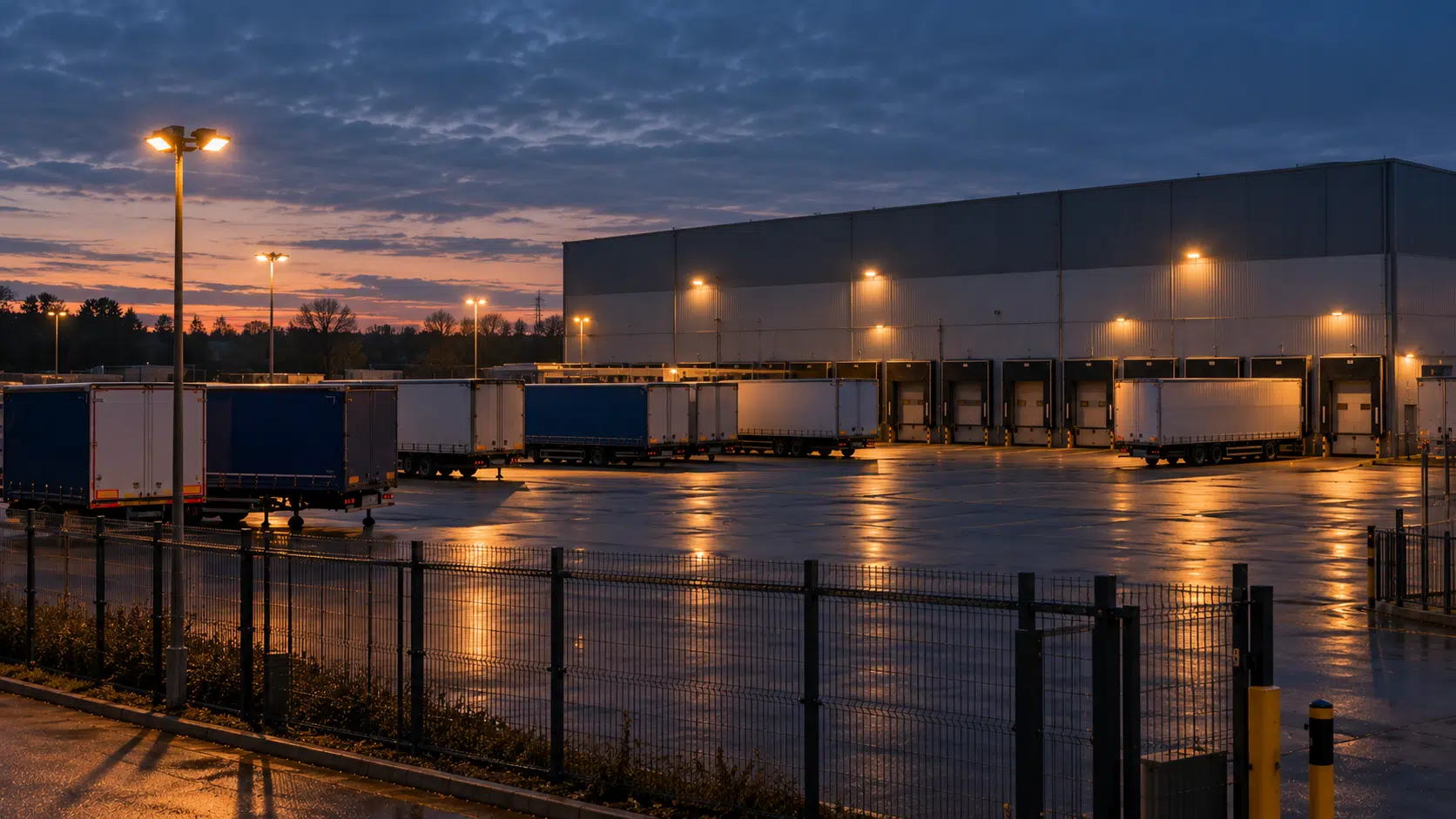
In Leicester, long winter nights stretch dark hours across factory yards. Rain dulls sound and movement. Fog hides access points that are usually obvious. These conditions reduce natural visibility and increase reliance on routine.
Older fencing and open yards make these issues worse. Surfaces become uneven, and lighting struggles to carry across the site. Good factory security adapts rather than assuming every shift looks the same. Patrol routes change, checks slow where needed, and reports reflect conditions honestly.
That awareness reduces missed detail when visibility drops.
Fatigue and Night Coverage
Night shifts are quiet, but they are not easy. Fatigue builds slowly, attention dips in familiar spaces, and the challenge is rarely obvious at the time.
It shows up later.
- A door left unsecured.
- Movement was dismissed too quickly.
- Balanced shift patterns help limit this.
So does recognising that alertness cannot be forced indefinitely. Planning coverage that accounts for fatigue reduces risk without increasing intensity or disruption.
Health, Safety, and Liability Overlap
Security and safety intersect more often than most factories expect.
Guards move across the entire site. They notice hazards others walk past. Risk increases when lighting is poor, walkways are obstructed, and vehicles are parked incorrectly.
- When reporting lines are clear, these observations support safer operations.
- When they are not, issues linger, and liability grows quietly.
This overlap is where factory security adds value beyond theft prevention.
Retention and Labour Pressure
Staffing pressure affects continuity. High turnover breaks familiarity. New guards need time to learn layouts, routines, and what “normal” looks like on that site.
During that learning gap, deterrence weakens. Not because effort drops, but because understanding does. Factories that prioritise stable routines and consistent coverage see fewer gaps over time. Consistency builds awareness, and awareness reduces opportunity.
In Leicester, that steady reliability is what makes factory security effective under real-world pressure.
Technology and Future Trends in Leicester Factory Security
Technology has changed factory security, but not in the way many expect. It has not replaced people. It has made them more effective, especially during the hours when factories feel calm but remain exposed. In Leicester, where many sites operate from older estates alongside modern logistics routes, technology works best when it supports judgment rather than trying to automate it.
Technology’s Role in Modern Factory Security
The real value of technology lies in extending awareness.
Cameras widen sightlines. Access systems create records. Monitoring tools fill gaps when staff numbers drop. Used well, these tools reduce guesswork without getting in the way of work. Used poorly, they create noise.
Factories benefit most when technology mirrors how the site already operates. Quiet tools work in the background. Clear data is available when questions arise, without constant alerts that train people to ignore them.
AI and Analytics in Factory Environments
AI does not make decisions. It flags patterns.
In factory settings, that usually means unusual movement, access outside routine hours, or activity that breaks established rhythms. On large or complex Leicester sites, this matters. No one person can see everything at once.
Judgement still sits with people on the ground. AI highlights where attention might be needed. It does not tell anyone what to do. That balance prevents overreaction and reduces missed detail.
Remote Monitoring and Layered Security
Remote monitoring works best as support, not replacement.
During low-staff periods, it provides an extra set of eyes. During incidents, it creates records that help with later review. It also supports lone guards working wide sites where constant movement is impractical.
Layering is the key. Physical presence plus monitoring reduces blind spots. Removing one layer increases them. Factories that rely on substitution rather than support often discover gaps only after something goes wrong.
Drones and Perimeter Checks
Drones attract attention, but their use is specific.
They are most useful on large sites, wide perimeters, or during temporary risk periods such as shutdowns or after incidents. They offer rapid visibility where patrols would take time.
Daily use is limited, and weather, noise, and regulation all matter. Drones provide snapshots rather than continuity, making them tools, not routines.
Predictive Tools and Risk Planning
Predictive tools focus on history, not guesses.
They analyse incident timing, repeat pressure points, and access patterns. Over time, this helps factories adjust coverage without adding hours. Focus shifts to when and where risk actually appears.
That kind of planning supports efficiency without weakening protection.
Sustainability and Green Security Practices
- Sustainability is entering security planning quietly.
- Better lighting placement reduces energy use.
- Fewer unnecessary patrols lower disruption.
- Focused coverage avoids waste.
These changes support protection while reducing impact. Security is no longer planned in isolation from environmental responsibility.
Preparing for Martyn’s Law
Future obligations will place more weight on planning and response readiness.
Factories with public-facing areas or higher occupancy should prepare gradually. Clear procedures, training alignment, and documented planning reduce pressure later.
Early preparation avoids rushed compliance. Calm planning always works better than reactive change.
Conclusion
Factory security in Leicester is shaped by space, timing, and routine. Assets stay in place. Access opens and closes through the day and night. Risk builds quietly where familiarity replaces attention.
This is why Leicester businesses need Factory Security is ultimately a planning question. When security reflects how a site actually operates, it reduces disruption rather than adding to it. Calm routines, clear documentation, and proportionate coverage matter more than visible presence.
Good factory security supports production, protects assets, and strengthens insurance confidence without becoming a distraction. Over time, that steadiness proves its value.
If you are reviewing factory security or considering changes, a brief conversation can help. It can clarify risk, compliance, and practical options without disrupting operations.
Contact us for more information.
Frequently Asked Questions
1. How much factory security do Leicester businesses usually need?
It depends on layout, hours, and access. Smaller sites with fixed hours need less coverage than large sites operating overnight.
2. Is on-site factory security always required?
Not always. Some sites combine monitoring with limited presence. Others need continuous coverage.
3. How quickly can factory security be deployed in Leicester?
Once the scope is clear, deployment can often begin within days. Delays usually come from unclear requirements.
4. Do factories need security during shutdowns?
Yes. Many incidents occur when sites are quiet, and routines relax.
5. What legal checks should factory security providers meet?
Valid licensing, appropriate vetting, site instructions, and incident records should all be available.
6. Does factory security support insurance claims?
Yes. Clear records and controlled access often strengthen claims and reduce disputes.
7. How is factory security different from warehouse security?
Factories protect production and machinery, not just stored goods. The risks and impact differ.
8. When should Leicester factories review their security plans?
After expansion, new shifts, layout changes, or incidents. Waiting for loss is usually too late.