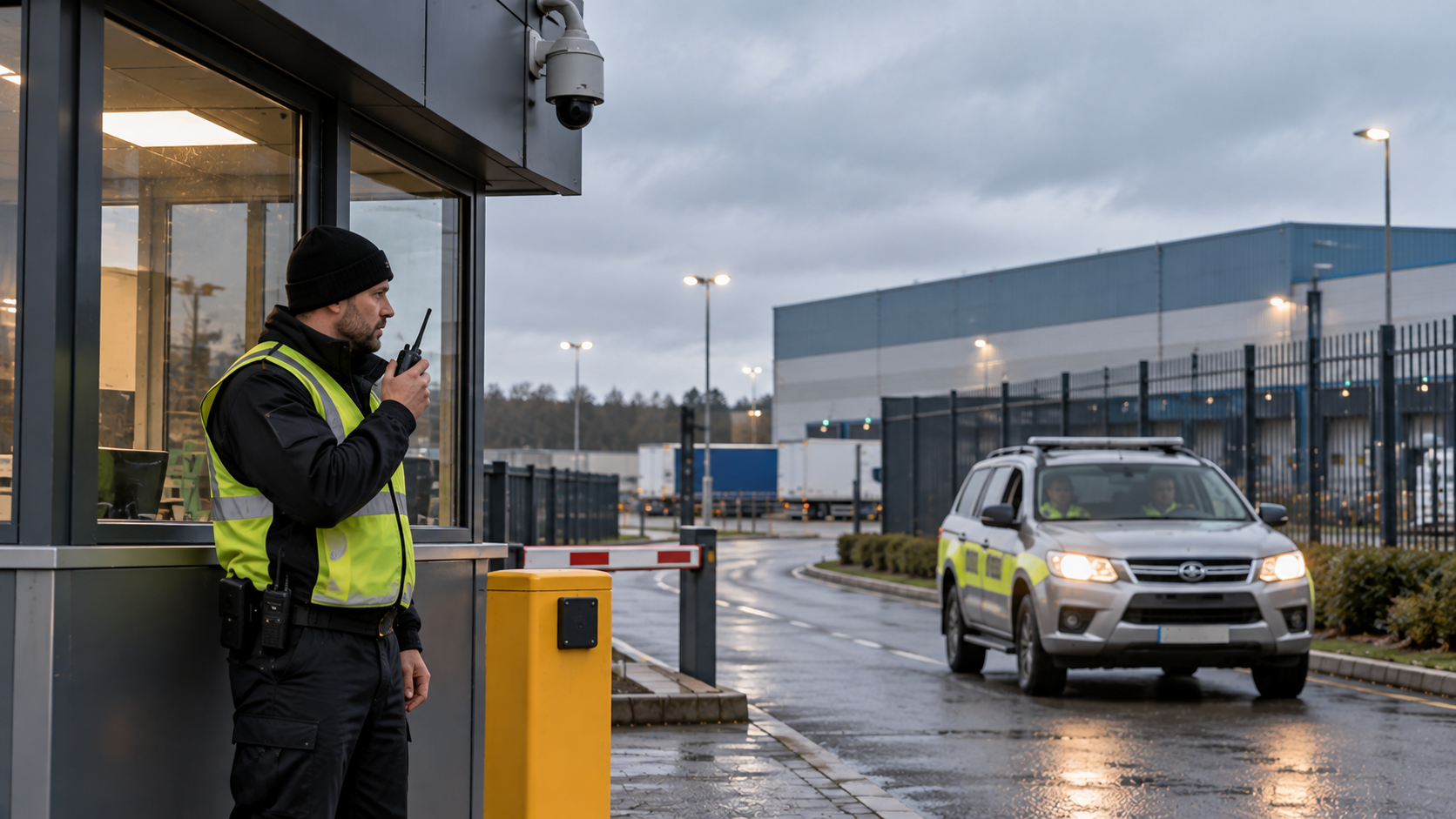
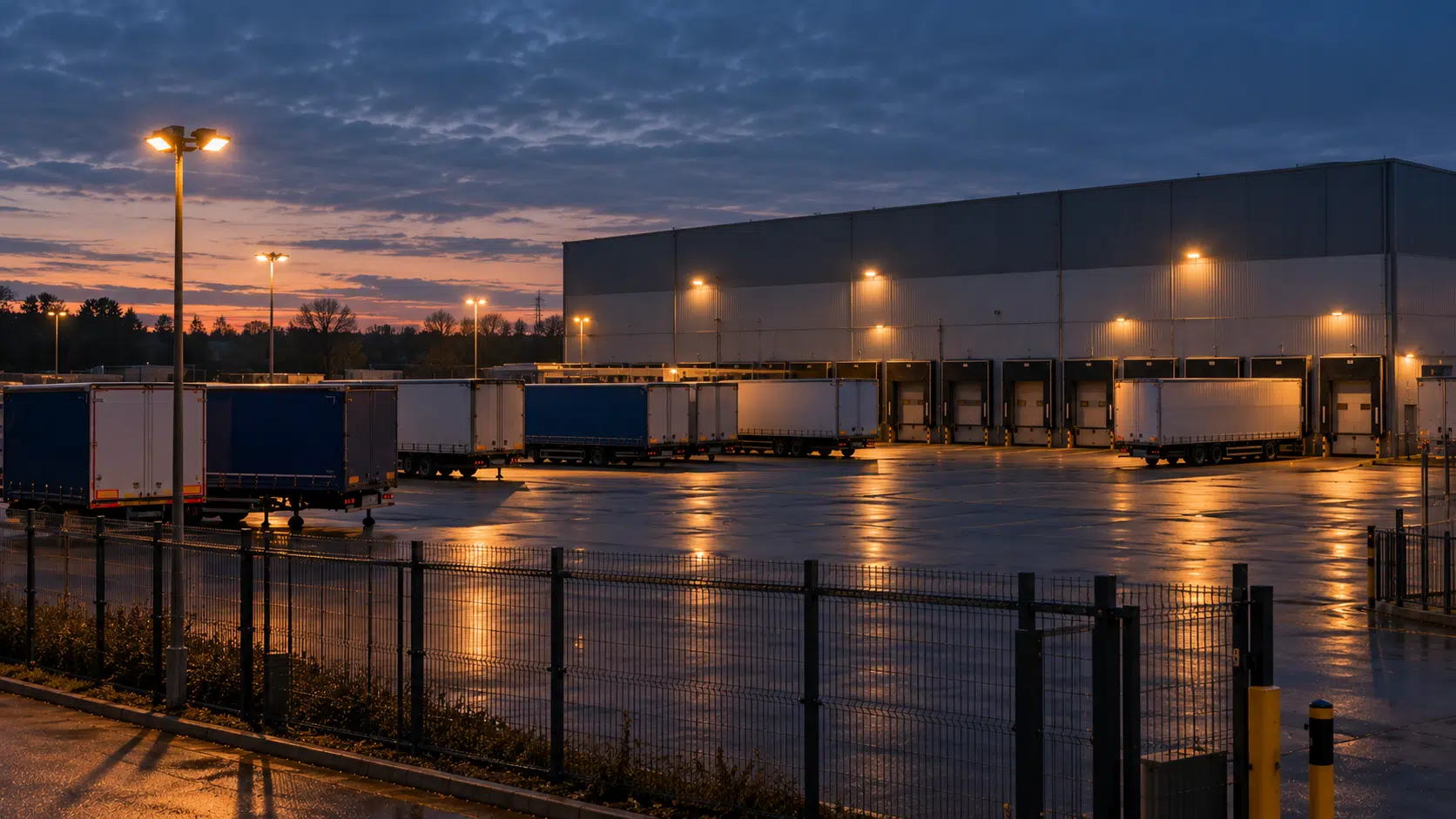
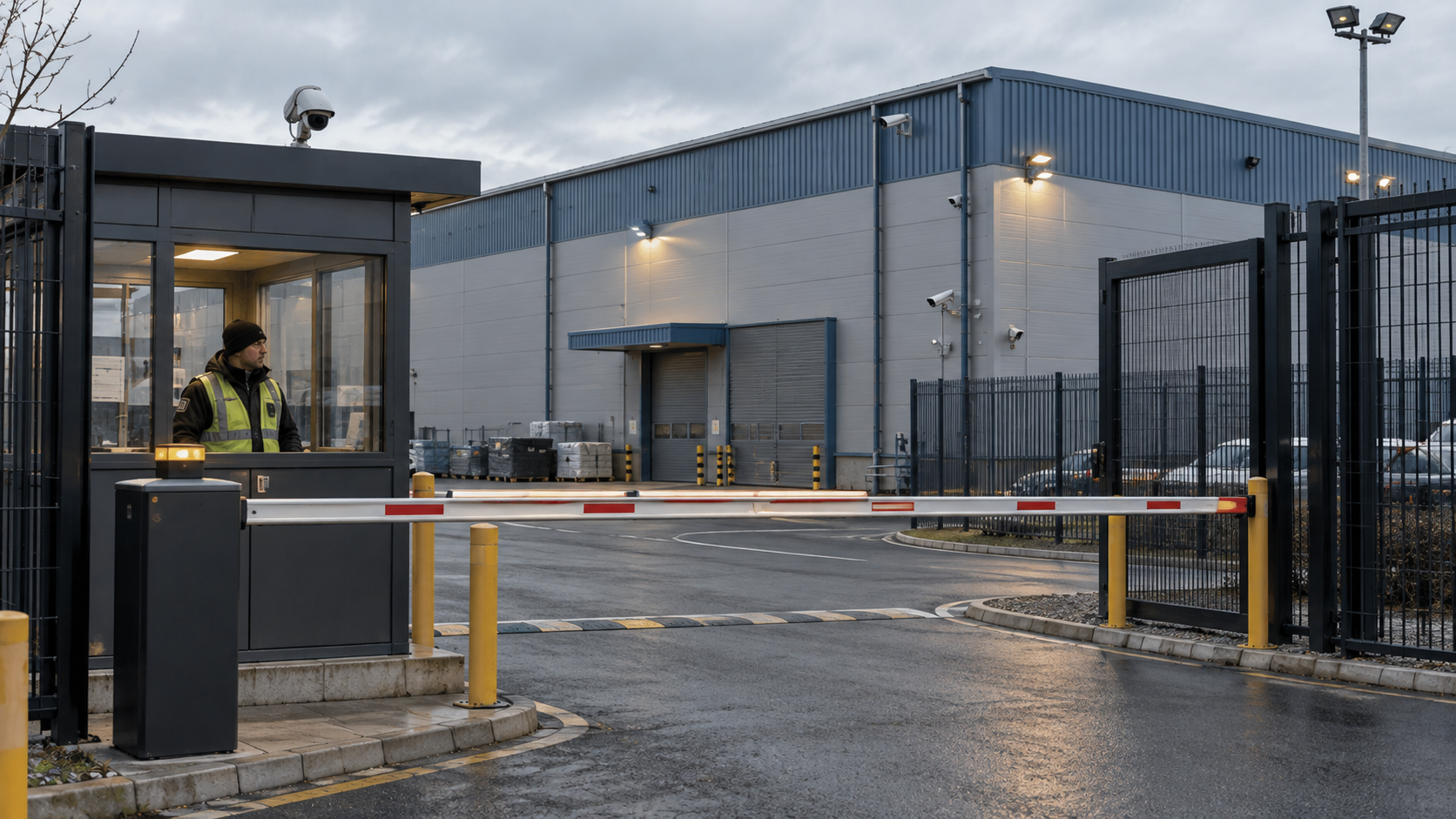
Nottingham has always been a place where things are made. Older factories still run beside newer production units, storage buildings, and industrial estates that stay busy from early morning into the night. Lorries come and go. Shifts overlap. Materials move across yards and loading bays without much pause. This steady movement keeps work going, but it also creates gaps that are easy to overlook.
Factories do not face the same risks as offices or shops. They hold machines, fuel, tools, and finished goods, often spread across large sites with more than one entrance. Problems often start small. A door left open. A fence worn down over time. A quiet loss during a busy handover. These issues appear across the wider East Midlands, where many sites share the same routes and supply chains. This is why Nottingham businesses need Factory Security that matches real working life, stays visible on site, and supports how industrial spaces are used each day.
Table of Contents

Factory Security Basics for Nottingham Industrial Sites
What Factory Security Means in Nottingham
In Nottingham, factory security is shaped by what happens once the gates open and work begins. Production starts early. Deliveries arrive in bursts. Access points change use as shifts move on. Many sites are spread across large plots with yards, loading bays, side doors, and shared routes. When security is treated as a checklist, control slips. When it follows real activity, it holds.
This is why factory security works best when it is led by people. Guards learn how a site moves through the day. They notice when traffic feels wrong or when behaviour does not match the moment. A static guard may watch a gate, but factory security asks for more. Guards move, question, and decide. Alarms and cameras help, but they cannot judge intent.
Across the East Midlands, factories face risks that change with time and pressure. A loading bay that feels safe at midday may sit open later on. A delivery route used every day can become a weak point if it is not watched. Factory security means staying alert to these shifts and protecting the site as it really operates, not as it looks on paper.
Factory Crime Patterns Affecting Nottingham Businesses
Factory crime in Nottingham is rarely random. Materials, tools, fuel, and finished goods are targeted because they are easy to move and difficult to trace once they leave the site. Losses often sit in the gaps between shifts, when responsibility changes hands, or during overnight periods when activity slows, and perimeters receive less attention. Individually, these incidents can seem minor, but over time,e they disrupt production, damage morale, and introduce safety risks that outweigh the value of what was taken.
These patterns extend beyond city limits. Similar activity appears across the East Midlands, where industrial estates are linked by transport routes and shared suppliers. Businesses with satellite operations near Leicester often describe the same methods being used again and again, which shows how organised theft follows routine rather than postcode. Predictability is what attracts attention, especially where supervision drops at known points in the working day.
High-Risk Factory Types in Nottingham
Risk is not the same for every factory. Food processing sites often rely on short deadlines and extra staff during busy periods. New faces arrive, shifts overlap, and access checks can slip if the pace is too fast. This makes it harder to know who should be on site at any given moment. Engineering and fabrication sites face a different problem. Metals, tools, and specialist equipment are easy to target and quick to move, which draws planned theft rather than random entry.
Factories linked to warehousing bring added pressure. Vehicles move in and out all day, yards stay active, and shared spaces blur control. It becomes harder to spot what does not belong. Sites close to housing face another set of issues. Foot traffic after hours, worn fencing, and unclear borders raise the chance of trespass or damage. Similar problems appear on older estates near Derby, where layouts no longer match how sites are used today. In all cases, factory security works best when it fits the site, not a template.
Day vs Night Factory Security Risks
During the day, factory risks in Nottingham tend to centre on access rather than force. Contractors, agency staff, and delivery drivers arrive under time pressure, and checks can slip if security routines are not firmly embedded. Busy sites create distractions, and internal theft or unauthorised access becomes more likely when guards are covering wide areas,s and production takes priority.
At night, the picture changes. Perimeter breaches, yard theft, and damage to doors or fencing are more common, particularly on sites with long boundaries or uneven lighting. Internal theft can still occur during quieter shifts, when fewer staff are present to notice irregular behaviour. Effective factory security adjusts its focus as conditions change, shaping patrols and checks around the time of day rather than assuming one routine fits all.
Seasonal and Economic Pressures on Factory Security
Seasonal demand changes how factories run. In Nottingham, busy periods bring longer hours, more deliveries, and extra people on site. Temporary workers arrive to keep lines moving. Stock builds up. Yards stay active later than usual. All of this increases risk. New staff may not know site rules well, and managers focused on output have less time to watch access closely.
Economic pressure adds quiet strain. Supply delays, rising costs, and tighter margins can weaken oversight when attention is pulled elsewhere. Across the East Midlands, manufacturers see the same pattern. What felt safe during calm periods starts to show cracks when pressure rises. Factory security works best when it adjusts to these shifts, staying flexible and alert so sites remain protected during both steady work and harder times.
Legal and Compliance Requirements for Factory Security in Nottingham
SIA Licensing and Legal Obligations for Factory Guards
Factory security in Nottingham starts with one clear rule. Guards must be licensed. Any person carrying out guarding duties needs a valid licence from the Security Industry Authority. This applies to patrol work, gate control, and monitoring activity on site. The licence shows that the guard has basic training and is legally allowed to work in that role.
The duty does not stop with the guard. The business hiring them also holds responsibility. If a factory uses an unlicensed guard, even by mistake, the risk sits with the site owner or manager. Penalties can include fines, investigation, and loss of trust from insurers. In Nottingham, checks are more common on industrial estates that sit near busy roads or housing, where poor security can affect more than one business. If an incident happens while an unlicensed guard is on duty, insurance coverage may no longer apply.
Vetting, DBS, and Workforce Checks for Factory Security
Licensing on its own does not cover every risk inside a factory. Guards often work alone, cross large sites, and spend time near stock, tools, and restricted areas. Because of this, factories need stronger checks before anyone starts work. In Nottingham, BS 7858 screening is widely used to confirm identity, past work, and gaps in employment. These checks matter most where supervision is light, and trust must be clear from day one.
DBS checks add another layer of safety. They are common in factory security, even when the law does not demand them. Industrial sites carry a higher risk. One mistake can stop production or create harm. Insurers and auditors often ask for proof that guards have been screened properly. Compared with many workplaces, factories face closer attention because problems spread fast and are harder to control once they start.
Insurance, Liability, and Factory Risk Management
Insurance is shaped by how a factory manages risk day to day. In Nottingham, insurers expect more than basic cover on paper. Public liability and employer’s liability are required, but how a site is run matters just as much. Factories with licensed guards, regular patrols, and clear routines are often seen as safer than sites that depend only on alarms or cameras.
Problems appear when security is weak or poorly recorded. Claims can be slowed down or refused if insurers believe risks were not managed properly. Over time, this can push premiums higher. Consistent factory security helps prevent incidents and shows that risks are taken seriously. Many businesses only notice this link after a claim is challenged, when fixing gaps becomes harder and more costly.
Data Protection and CCTV in Factory Environments
Most factory security setups now include CCTV. This brings data protection duties under UK GDPR. Footage must have a clear purpose, be stored safely, and only be viewed by authorised people. Guards who use CCTV systems need simple rules that explain what they can watch, record, and report.
Privacy matters inside working areas where staff spend long hours. Cameras should support safety and security without watching people more than needed. Clear signs, set retention periods, and basic written guidance help factories stay compliant and avoid complaints. When these steps are missed, even a well-run site can face avoidable legal trouble.
Local Authority and Regulatory Considerations
Local councils expect factories to take clear steps to manage security. In Nottinghamshire, this usually means showing that risks have been thought through and that poor site control is not causing problems nearby. A loose gate, poor lighting, or repeated noise after hours can quickly draw attention. When issues arise, records are the first thing checked. Patrol notes, incident logs, and training proof show whether security is active or only assumed.
Rules can shift slightly across borders. In Leicester, planning conditions or enforcement priorities may differ, even for similar industrial sites. Businesses running more than one factory often feel this difference first. Keeping paperwork consistent across sites helps show a strong compliance history. In factory security, these records are not just admin tasks. They are practical proof that legal duties are being taken seriously when it counts.
Factory Security Costs, Contracts, and Deployment in Nottingham
Typical Factory Security Costs in Nottingham
Factory security costs vary because factories rarely operate in the same way. In Nottingham, a small unit with one controlled entrance and limited hours is simpler to protect than a large site with yards, loading bays, and steady vehicle movement across the day and night. Size affects how many guards are needed, how often patrols take place, and how much time is spent managing access.
Risk level also plays a role. Sites that store fuel, metals, components, or finished goods usually need closer supervision, more visible patrols, and stronger access control. Location adds another layer. Inner industrial estates often face more foot traffic and shared access routes, while outer sites deal with longer boundaries and poor lighting. Wages influence cost too, as staffing pressure continues to shape rates year on year.
Contract Structures for Factory Security
Factory security contracts tend to follow how stable production is over time. Short-term cover is often used during refits, shutdowns, audits, or short production runs where risk rises for a defined period. This approach suits factories that only need extra protection during disruption, without committing to long agreements once normal work resumes.
For sites with steady output, longer contracts usually work better. Guards gain familiarity with routines, staff movement, and weak points that are not obvious at first glance. Flexibility matters more than many expect. Manufacturing schedules change, and contracts that allow coverage to scale up or down help control costs without leaving gaps. This approach is common across the region, including factories operating near Derby, where seasonal demand often shapes staffing needs.
Deployment Timelines for Nottingham Factories
Security company in Nottingham deployment works best when it is planned rather than rushed. In Nottingham, smooth deployments usually start with a site review that looks at access points, shift patterns, delivery flow, and areas where issues have appeared before. This helps guards understand how the factory moves during a normal day and where their presence matters most.
Emergency cover can be arranged quickly after a break-in, staff shortage, or sudden risk, but it works better when basic site details are already known. Without preparation, early shifts often involve learning layouts instead of preventing problems. Factories that prepare ahead tend to avoid rushed decisions and keep security steady when conditions change.
Insurance and Cost Offsetting Through Factory Security
Factory security supports more than loss prevention. Visible guarding reduces downtime caused by theft, damage, or unauthorised access that can stop production. Fewer incidents mean smoother operations and more reliable delivery schedules.
Insurers also pay attention to how security is managed. Licensed guards, clear procedures, and patrol records show that risks are controlled rather than ignored. Over time, this can support better insurance terms and fewer challenges when claims arise. While security is a cost, many manufacturers find that it offsets losses that would be far harder to recover after an incident.
Factory Guard Training, Operations, and Daily Duties
Training Standards for Factory Security Officers
Factory security officers work in settings where risk is part of the daily routine. In Nottingham, factories use heavy machinery, store raw materials, and move goods across active sites from early morning to late shifts. Training focuses on understanding danger zones, restricted areas, and safe movement around live production. Guards learn how to stay alert without slowing work, making security part of normal operations rather than an added obstacle.
Start-of-Shift Procedures at Nottingham Factories
Each shift starts with understanding how the site looks that day. Conditions change often, with different delivery times, altered access points, and shifting production plans. Guards walk the site before patrols begin, checking for anything out of place. Equipment checks follow, covering radios, torches, and access systems. Clear handovers from the previous shift help guards know what to watch and prevent small issues from repeating.
Patrol Routines and Perimeter Checks
Patrol routines follow activity, not the clock. Guards spend more time in busy areas during peak movement and focus on quiet zones when activity drops. Delivery bays, staff entrances, yards, and waste areas receive regular checks. Lighting and fencing inspections form part of patrols, as poor lighting or damaged boundaries create easy access points. Similar risks appear on factory estates near Derby, where shared boundaries can cause repeat issues.
Access Control and Visitor Management
Factories see constant movement from contractors, drivers, and visitors. Guards manage access by checking identity, confirming permission, and logging arrivals without slowing work. Delivery records track goods entering and leaving the site, while internal movement control keeps visitors within approved areas. This balance matters. Too much delay affects output, but weak checks allow risks to grow quietly and go unnoticed until loss or disruption occurs.
Incident Reporting and Documentation
Strong factory security depends on clear records. Guards keep daily logs that note unusual activity, access concerns, or safety issues. Hourly patrol records show how conditions change across a shift and help spot patterns over time. When incidents occur, guards follow simple steps to report them, record facts, and escalate when needed. These records protect the site and the guard by showing correct actions were taken.
End-of-Shift Secure-Down Processes
The end of a shift is as important as the start. Guards secure doors, gates, and sensitive areas before closing down the site. Alarm systems are checked and set according to site rules rather than assumed to be working. Before leaving, guards brief supervisors on issues that need attention next shift. This handover keeps factory security steady even as people, schedules, and conditions change.
Performance, Risks, and Staffing Challenges in Factory Security
Measuring Factory Security Performance
Knowing if factory security is working takes more than counting incidents. On active sites, performance shows in everyday results, such as fewer missing items, less damage near entrances, and no repeat issues in the same areas. When problems stop returning, it usually means risks are being noticed early. Clear routines matter too. Guards who follow site rules, complete patrol logs, and report concerns properly help managers see what works and where attention is needed.
Physical and Mental Demands on Factory Guards
Factory guarding places steady pressure on people over long periods. Many sites operate day and night, which makes long shifts common and limits recovery time. Guards often repeat the same patrols while staying alert for small changes, which can wear them down. Night work adds strain through low light, quiet surroundings, and broken sleep. Without proper rest, clear routines, and support, fatigue builds slowly and affects safety and security alike.
Environmental Challenges Across Nottingham Sites
Factory sites face daily environmental challenges that affect security work. In Nottingham, outdoor patrols are shaped by rain, cold, wind, and poor weather, which reduce visibility and slow movement. Noise from machinery can hide alarms or footsteps, while uneven lighting creates blind spots around yards and boundaries. Patrols need planning so guards can work safely without missing risks on large, open sites.
Technology and the Future of Factory Security in Nottingham
Technology-Supported Factory Guarding
Technology now sits beside factory guards rather than standing in their place. Cameras are common, but their value comes from how they are used during real shifts. Guards rely on CCTV to check corners that are hard to reach, to confirm movement late at night, and to look back at areas where something does not feel right. This support helps guards act with confidence instead of reacting after a loss has already happened.
Remote monitoring adds quiet support in the background. When alerts reach an off-site team, guards are not left working alone during slow hours or tense moments. Alarm response becomes clearer, too. Linked systems remove guesswork and give guards time to act with purpose. In factory settings, clear information often matters more than complex systems.
AI and Predictive Security for Factories
AI is changing how factories read risk. Instead of waiting for an incident, systems can point out patterns that suggest trouble ahead. Movement near fences, access at odd times, or repeated activity during shift changes can all signal rising risk before damage occurs.
This insight helps with planning. Guards can focus on places that show early warning signs rather than walking the same routes out of habit. Over time, this approach eases pressure on staff and improves coverage. On busy sites, especially those tied into wider supply networks, careful deployment protects both people and production.
Drones and Perimeter Innovation
Large factory sites often struggle to watch long boundaries. Drones offer a simple way to check wide areas without delay. They work well where fencing runs across open land or where yards sit far from main buildings. These tools support guards by giving quick views, not by replacing boots on the ground.
Common uses include roof checks, yard scans after alarms, and spotting damage early. Rules still apply. Flights must respect privacy and stay within the law. When used with care, drones reduce blind spots without adding strain to security teams.
Sustainability and Green Security Practices
Sustainability is now part of everyday security planning. Factories are looking at patrol routes to cut wasted movement and reduce fuel use. Many sites now rely more on foot patrols supported by cameras and sensors instead of constant vehicle use.
Lighting has also changed. Smart systems switch on only when movement is detected, which saves energy while making activity easier to spot. These steps support security goals while helping factories meet wider environmental aims.
Legislative Changes Shaping Factory Security
Law and policy continue to shape factory security. Martyn’s Law is expected to affect large industrial sites, especially those with visitors or shared spaces. Even where it does not apply directly, it signals a wider shift toward stronger planning and clearer risk control.
Manufacturers are already feeling this pressure in areas beyond Nottingham, including parts of Northamptonshire, where authorities expect proof that risks are understood and managed. Technology will help meet these demands, but people, routine, and preparation will remain at the centre of effective factory security in the years ahead.
Conclusion
Factories deal with risks that most workplaces never have to manage. In Nottingham, manufacturing sites handle valuable stock, heavy machines, and constant movement across large spaces from early shifts through to late hours. Gates open and close throughout the day, vehicles pass through yards, and staff change over without much pause. In this setting, gaps appear naturally, and alarms or cameras on their own often struggle to keep up, especially during busy production periods or quieter handovers.
What consistently reduces those gaps is people-led security. Trained factory guards work in step with the site rather than around it. They become familiar faces on site. Over time, they learn how the factory moves, when it is busy, and when it should be quiet. That familiarity makes a real difference. They tend to spot things that others walk past. Over time, they get used to how the site normally feels and sounds. When that changes, it stands out. Small details tend to stand out to someone who knows a site well. A door that is usually locked but is left open, a vehicle parked in the wrong place, or movement at a time when the factory is normally quiet all feel wrong straight away. When these signs are noticed early, they can be dealt with calmly before they grow into theft, damage, or disruption. That early response keeps people safe, helps the site stay within the rules, and allows work to continue without avoidable delays.
This everyday awareness explains why Nottingham businesses need Factory Security that reflects how factories really operate. The same pressures exist across the wider East Midlands, where sites rely on shared routes, staff, and supply chains. Factory security is not added for appearance or box-ticking. It is a practical safeguard that protects people, keeps production moving, and supports long-term stability.
Frequently Asked Questions
Why do factories in Nottingham need security instead of alarms alone?
Alarms only sound after a problem starts. Factories stay busy for long hours, with people and vehicles moving in and out. Small issues can be missed if no one is watching. In Nottingham, guards stay on site and notice changes. They see open doors, odd movement, or people who should not be there. Alarms help, but they cannot think or judge risk.
How much does factory security usually cost in Nottingham?
There is no fixed price. A small factory with one gate costs less to protect than a large site with yards and many entrances. Hours matter too. Longer shifts need more cover. Pay rates also affect cost. Most factories treat security as a normal expense that protects valuable stock and equipment.
Do factory security guards need an SIA licence?
Yes. Anyone doing security work must have a valid SIA licence. This includes patrols and access checks. Using unlicensed guards can lead to fines, legal trouble, and insurance problems.
What factory security risks are common in the East Midlands?
Common risks include theft, fence damage, nighttime trespass, and losses during shift changes. Many factories use the same routes and suppliers, so the same problems often appear again and again.
Can factory security reduce insurance premiums?
It can help over time. Insurers look at how well risks are controlled. Licensed guards, clear patrol notes, and set routines lower the chance of claims. This can support better insurance terms.
How quickly can factory guards be deployed in Nottingham?
Planned cover often starts within days after a site check. Emergency cover can be quicker, but it works best when plans already exist.
What training should factory security guards have?
Guards need training in factory risks, health and safety, access control, and reporting. Knowing how a site works helps them protect it better.
How is technology changing factory security in Nottingham?
Technology supports guards on site. Cameras and monitoring tools help spot risk early. Guards still make the key decisions each day.