Stockport still builds things for a living. Not in the postcard way, but in the quiet industrial strips behind Bredbury, along the Goyt valley, and out by the M60 where factories, packaging lines, cold stores and warehouses run long after offices have gone dark. These sites keep tight schedules and tighter margins. When something stops, everything stops.
Security used to sit low on the priority list. A night watchman. A few cameras. Lock the gates and hope for the best. That thinking no longer survives contact with insurers, auditors, or modern production risk.
Today, factory security is discussed in board packs and renewal meetings because the consequences are no longer small. One break-in can halt a shift. One access failure can void the cover. One unreported incident can complicate a claim months later.
That shift explains why conversations about why Stockport businesses need Factory Security now reach beyond estates teams and into finance, compliance, and operations.
This article treats factory security as a business planning issue rather than a procurement exercise. It looks at how local risk actually shows up, how regulation and insurance shape decisions, and how downtime, liability, and compliance pressure now frame almost every serious discussion about protecting manufacturing sites in Stockport.

Factory Security Basics
Defining Factory Security In The Context Of Modern Stockport Manufacturing Sites
In Stockport, factory security rarely means someone sitting in a hut watching a gate. Most modern sites operate extended shifts, handle mixed traffic, and rely on just-in-time deliveries.
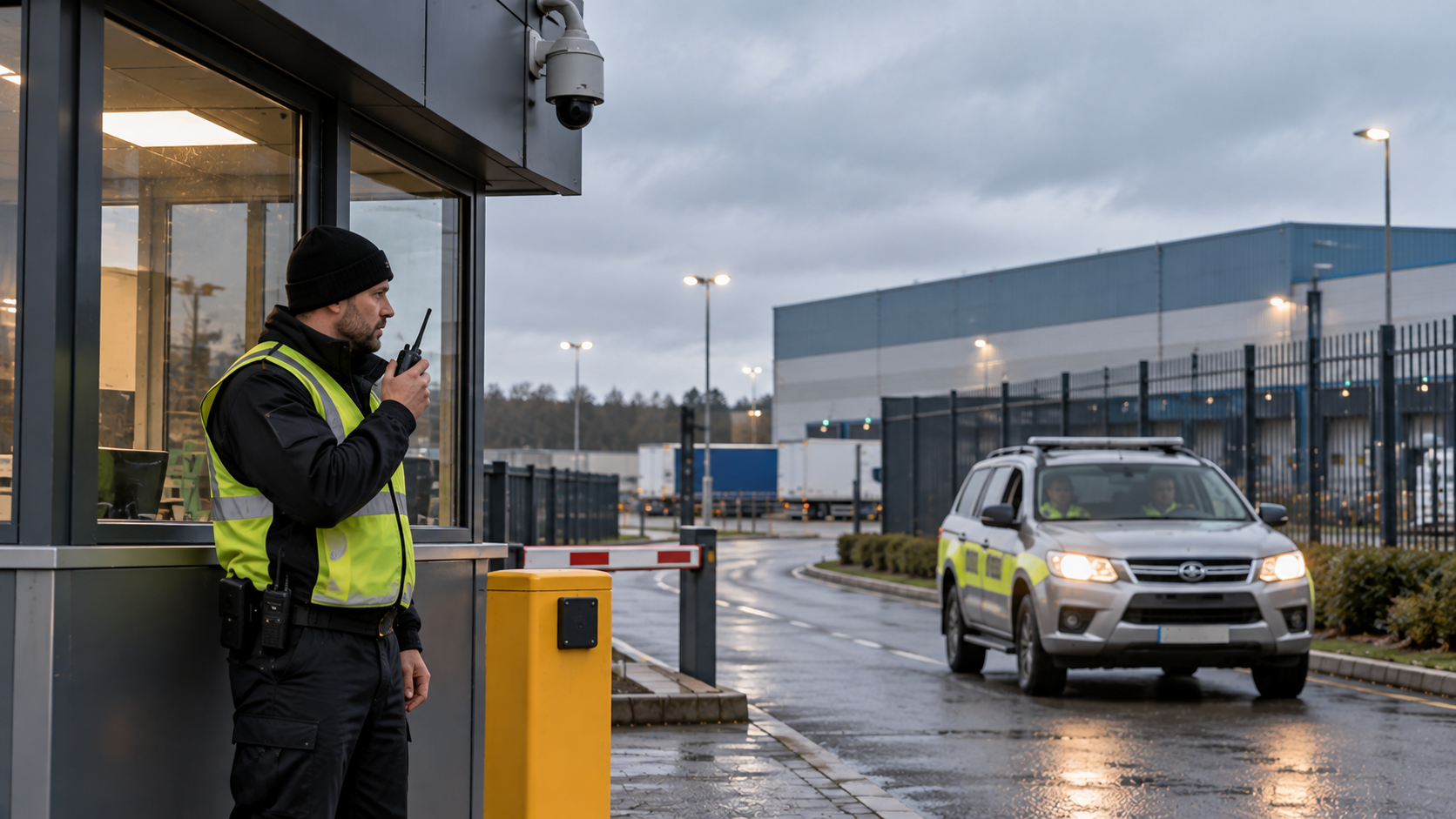
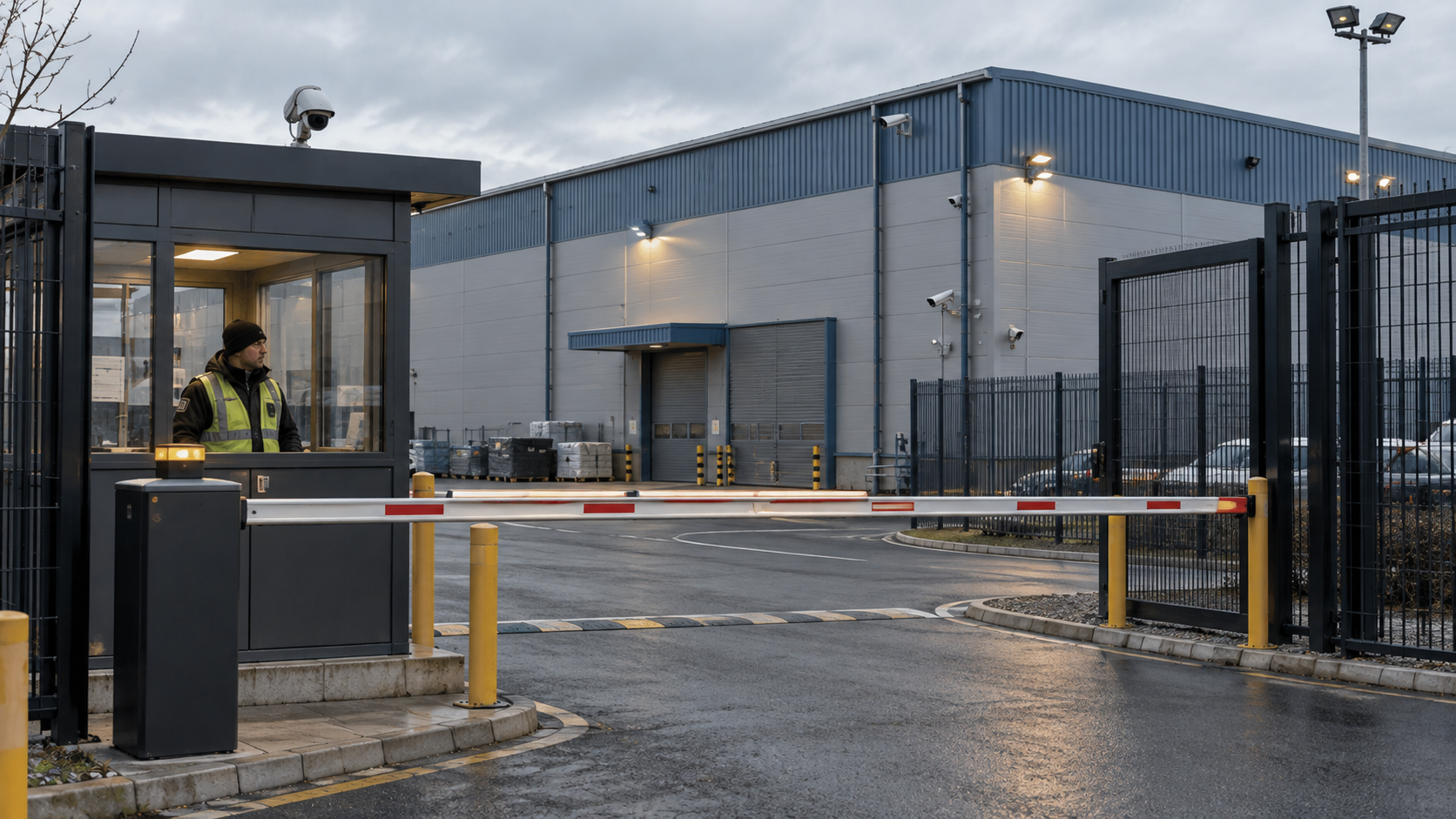
Manned guarding, in this context, is about controlled presence. A trained guard on site can challenge unknown vehicles, manage access during shift changes, and deal with small incidents before they turn into stoppages.
That is the practical difference from static security or remote-only monitoring, often used across parts of Manchester city centre. Cameras record. Guards intervene. On a factory floor or a loading yard, that distinction matters.
A live person can notice patterns, a van that keeps circling, a door that never quite shuts, a contractor who shouldn’t be there, and act before loss prevention in manufacturing facilities becomes an insurance claim.
How Stockport’s Industrial Growth Is Shaping Demand For Factory Security
Stockport has not stood still. Advanced manufacturing units near Bredbury and Woodley, logistics operators close to the M60, and food production sites feeding Manchester, Trafford, and Tameside have all expanded in the last decade. Growth brings throughput. Throughput brings exposure.
Two pressures are driving demand for manned guarding for industrial sites:
- Higher asset density on smaller footprints
- Longer operating hours, often 24/7
Economic volatility has added another layer. Rising component costs and fragile supply chains mean losses hurt more than they used to. Sites that might once have absorbed a theft or disruption now face missed contracts and penalty clauses.
That shift explains why similar patterns are being seen across Bury, Merseyside, Liverpool, and even as far as Bootle and St Helens.
The Influence Of Stockport’s Industrial Geography On Factory Security Planning
Stockport sits at a junction point. The M60, A6, and rail freight routes tie it into Trafford Park, Manchester Airport logistics zones, and the wider North West. That connectivity is good for business. It is also good for opportunistic crime.
Factories near arterial routes face different risks from tucked-away industrial estates. Fast road access makes quick in-and-out theft easier. Shared yards increase perimeter protection for factory problems. Delivery windows overlap. Accountability blurs. These are not theoretical issues. They show up in incident logs and insurance renewals.
Managing Anti-Social Behaviour And Perimeter Intrusion Around Industrial Estates
Industrial estates are not sealed environments. After hours, they become shortcuts, meeting points, and sometimes dumping grounds. Anti-social behaviour is rarely dramatic, but it is persistent. It includes broken fencing, graffiti, and small fires in skips. Doors forced “just to see what’s inside.”
A visible manned presence changes behaviour. Not perfectly. But enough to reduce repeat intrusion and improve industrial site risk management. The same logic is now being applied across Southport and parts of Liverpool’s dock fringe.
Sometimes, the guard’s real value is not stopping a crime. It is being there when something starts to go wrong. That alone shifts the risk profile of a factory site.
Crime / Risk Patterns & Timing
Local Crime Patterns Affecting Factories And Warehouses In Stockport
Industrial crime in Stockport rarely mirrors what happens on the high street. It is quieter. Targeted. Often repeat-led. Sites close to the M60, the A6, and the rail spurs linking Trafford and Tameside see more vehicle-based theft and fence breaches than inner Manchester estates. Similar patterns show up across Bury and Bootle, where yards back onto mixed residential land.
What drives guarding demand is not headline crime rates, but predictability. Once a site is marked as lightly watched, losses tend to follow in batches rather than single incidents.
Time-Of-Day Risk Cycles In Manufacturing And Distribution Environments
Factories do not face one risk profile. They face three.
- Early morning (04:00–07:00): shift change confusion, doors left open, contractors arriving early
- Mid-day: vehicle theft from shared yards, tailgating through access points
- Late night: perimeter breaches, fuel siphoning, component theft
Daytime risk is about access control. Night risk is about absence. Sites in Merseyside and St Helens report more perimeter incidents after midnight, while Trafford Park estates see higher losses during lunch and dispatch peaks.
Night Shifts, Weekend Shutdowns, And Unattended Production Risks
Weekend shutdowns remain the highest-loss window for manufacturing. Production pauses. Lighting drops. Supervisors go home.
Seasonal pressure matters too. During summer event periods in Manchester or Liverpool, mobile crime shifts outward. Empty industrial estates become soft targets. The risk is rarely dramatic. It is slow leakage, copper taken, pallets moved, and stock “tested” to see how fast anyone responds.
Theft Trends And Patrol Demand Across Stockport Industrial Estates
Retail theft has pushed organised groups toward industrial sites. Higher values. Lower confrontation.
Recent trends across Stockport and Southport show:
- Component stripping from parked HGVs
- Internal yard theft during live operations
- Repeated testing of the same fence lines
Patrol demand rises not because theft is constant, but because once it starts, it tends to cluster.
Transport Access, Delivery Windows, And Loading-Bay Exposure
Every logistics corridor creates risk. Fast access routes linking Stockport to Trafford, Liverpool docks, and the M62 corridor shorten escape time.
Loading bays are the weak point. Mixed drivers. Temporary passes. Open shutters at awkward hours. Most serious losses begin here, not at the main gate.
Sector-Specific Vulnerabilities
Engineering And Advanced Manufacturing Security Exposure
Precision manufacturing sites around Stockport and Tameside carry a quiet kind of risk. Tooling rooms, calibration labs, prototype bays, these spaces hold value that rarely shows up on a stock sheet. Loss here is not about volume. It is about disruption. One missing jig can stall a line for days.
Across Trafford and Bury, insurers now flag engineering sites with poor access control as higher interruption risks. The threat is not always external. Visitors wander. Contractors overstay. Doors prop open during heat waves. Small habits, large consequences.
Food Production, Cold Storage, And Contamination-Linked Security Risks
Food sites work under a different pressure. Theft matters, but contamination matters more. A broken seal, an unauthorised entry into chilled storage, or a tampered pallet can trigger recalls that stretch from Stockport to Liverpool and Bootle within hours.
Cold stores on Merseyside and in St Helens report a steady rise in perimeter breaches after midnight, often by people looking for shelter rather than stock. Intent does not matter to insurers. Once hygiene control is compromised, the product is lost. Guards here act less as deterrents and more as compliance safeguards.
Warehousing And Distribution Vulnerabilities Near Motorway And Rail Corridors
Warehouses along the M60, M62, and rail-fed estates face a predictable pattern. Speed attracts crime. Fast access routes linking Stockport to Trafford Park, Liverpool docks, and Southport shorten escape times and widen the pool of opportunistic groups.
Common weak points include:
- Shared yards between tenants
- Unmonitored cross-dock doors
- Trailer parks left live between shifts
Loss prevention in manufacturing facilities often fails at the handover stage. A load leaves. No one quite owns the bay. That is when stock walks.
Insider Risk And High-Value Component Theft In Precision Manufacturing
Not all losses come through the fence. High-value components, chips, bearings, and specialist alloys move easily in pockets and toolboxes. Across advanced sites in Tameside and Trafford, insurers now treat insider risk as a pricing factor.
The difficulty is not distrust. It is visibility. Temporary staff rotate. Teams change. A guard who knows the site notices when someone lingers too long or signs out twice. Cameras rarely catch intent. People do.
Contractor Access, Loading Bays, And Temporary Workforce Security Gaps
Contractors keep factories running. They also widen the attack surface. During shutdowns in Stockport, Bury, and across Merseyside, dozens of short-term passes are issued in days. Not all come back.
Loading bays remain the most common failure point. Mixed drivers. Rushed checks. Open shutters at 5 a.m.
The risk is cumulative:
- Badges shared between crews
- Escorts skipped to save time
- Unfamiliar faces blending into busy yards
This is where factory security stops being theoretical. It becomes crowd control, access discipline, and quiet observation, the kind that prevents a loss rather than reports one.
Legal & Compliance Requirements
Regulatory Framework Governing Factory Security In Stockport
Factory security in Stockport sits inside a tightly defined national framework. The starting point is the Security Industry Authority. Any guard carrying out licensable activity, access control, patrols, keyholding, or CCTV monitoring must hold a valid SIA licence. That rule applies across Greater Manchester, from Trafford Park to Tameside and Bury, and it applies regardless of whether the site is public-facing or locked behind gates.
There is a second layer that many buyers miss. The security company itself must be licensed as an Approved Contractor if it wants to work on regulated contracts, particularly where public funding, utilities, or food supply chains are involved. For manufacturing clients, that status increasingly shows up in audit questions and insurer questionnaires.
What matters is not paperwork for its own sake. Licensing determines liability. If something goes wrong and the guard is not properly authorised, the responsibility falls with the site operator.
Licensing Failures And Enforcement Penalties In Factory Security Contracts
Using an unlicensed guard is not a technical breach. It is a criminal offence.
Across Merseyside and Liverpool, enforcement action in recent years has included:
- Fixed penalties for site operators
- Contract termination by insurers
- Retrospective invalidation of incident cover
Fines can reach five figures. More damaging is what follows. Claims get delayed. Premiums rise. In some cases, cover is withdrawn until the guarding arrangement is replaced.
For boards, this is where factory security becomes a governance issue. A cheap contract that fails licensing tests can cost more than the loss it was meant to prevent.
Vetting Standards For Industrial And Manufacturing Security Roles
SIA licensing is only the entry point. Most insurers now expect BS 7858 vetting for guards working on manufacturing sites. That means identity verification, five-year employment history, and criminal record screening.
DBS checks are not legally required for every role, but they are common where:
- Food production is involved
- Hazardous materials are present
- Access extends into production zones
Across Stockport, St Helens, and Southport, auditors increasingly ask for proof that guards assigned to sensitive areas have enhanced screening. The logic is simple. Insider risk is now treated as a material exposure, not a theoretical one.
Insurance Obligations And Liability Exposure For Manufacturing Sites
Most UK insurers do not mandate guards by default. They do, however, attach conditions.
Common policy clauses require:
- Licensed guarding where high-value stock is stored
- Documented patrols during shutdowns
- Formal incident reporting within defined time limits
Failure here is not always visible until a claim lands. Across Trafford and Bootle, several manufacturers have discovered too late that non-compliant guarding voided theft or business interruption cover.
Liability also cuts both ways. If a guard detains someone unlawfully, misses a fire risk, or allows unauthorised access, the client may share responsibility. Contracts rarely transfer that risk fully.
Data Protection, CCTV Integration, And Factory Surveillance Compliance
Once guarding links with cameras, data law comes into play. UK GDPR and the Data Protection Act govern how footage is collected, stored, and shared.
Factories face specific complications:
- Cameras covering public highways or shared yards
- Monitoring of staff alongside intruders
- Retention periods tied to audit cycles
Guards are often the first people to handle footage. That means training, access logs, and written procedures matter. In Liverpool and Merseyside, ICO complaints linked to workplace surveillance have risen steadily. Fines are rare. Investigations are not.
Tax And Contract Classification Rules Affecting Factory Security Services
Security services attract standard-rate VAT. There are no industrial exemptions. For sites operating across multiple North West locations, misclassification can create uneven pricing and HMRC queries later.
IR35 does not usually apply, but labour-only guarding arrangements sometimes trigger employment status reviews. That matters where factories use short-term shutdown cover in Bury, Tameside, or St Helens.
The quiet risk here is not tax bills. It is contract enforceability. Poorly structured agreements complicate termination, indemnities, and insurance recovery.
Council, Audit, And Sector-Specific Licensing Requirements
Local authorities add their own overlays. Construction-linked manufacturing sites in Stockport and Trafford often face council conditions tied to planning consent. Food processors face environmental health audits that now include perimeter control and visitor logging.
Some estates require estate-wide protocols on patrol routes and incident reporting. Miss those, and access can be withdrawn.
Police Collaboration And Intelligence-Led Factory Security Planning
Greater Manchester Police do not direct private guarding, but they do shape it. Crime pattern briefings, stolen-goods alerts, and industrial theft tasking all feed into deployment planning.
Across Trafford, Tameside, and Liverpool dock estates, structured collaboration now includes:
- Agreed escalation routes
- Shared incident data
- Coordinated patrol timing during peak risk windows
Business Crime Reduction Partnerships play a similar role. They circulate intelligence on repeat offenders and active theft groups.
For factory operators, this matters more than it sounds. A guarding plan informed by police data attracts better insurer terms and stands up more easily in post-incident reviews.
Costs, Contracts & Deployment
Cost Drivers In Stockport Factory Security Contracts
There is no single price for factory security in Stockport, and anyone who offers one probably has not walked the site. Rates vary first by location. Inner Manchester commands a premium because travel time, congestion, and unsociable hours all push wages up. Out toward Bredbury, Hazel Grove, or the edges of Tameside, hourly costs usually ease, though estates tied into the M60 corridor often sit somewhere in between.
Shift pattern matters more than postcode. A lone night guard costs less than a three-person rotating team with weekends and bank holidays built in. So does risk profile. Sites handling food, hazardous materials, or high-value components attract higher rates because insurers expect enhanced vetting and tighter supervision.
Across Trafford, Bury, and Bootle, most manufacturing clients find that the biggest driver is not headcount but continuity. Once a site needs guaranteed cover, relief staff, and documented supervision, pricing moves from “guarding” to managed service.
Mobilisation Timelines For Manufacturing Site Security Deployment
Deployment is rarely instant. Even in Liverpool and central Manchester, a reputable security company in Stockport will place a guard with proper licence checks, site induction, and client sign-off.
Typical timelines look like this:
- Urgent temporary cover: 48–72 hours, sometimes faster for short shutdowns
- Permanent factory assignments: one to two weeks
- Complex multi-site rollouts: three to four weeks
Delays usually come from access lists, insurance approval, or late risk assessments. The sites that mobilise fastest are the ones that already have floor plans, alarm maps, and contractor protocols in place.
Contract Structures And Service Duration In Factory Security Agreements
Most factory contracts in Greater Manchester run for twelve or twenty-four months. Shorter terms exist, but they carry a premium because providers cannot spread training and mobilisation costs.
Longer agreements, three to five years, appear more often in Trafford Park and Merseyside logistics estates where guarding is tied to framework deals or public-sector funding. These bring stability, but they also lock pricing assumptions into uncertain labour markets.
The quiet issue is scope drift. Extra patrols, added gates, and extended hours. Without tight change control, costs rise long before renewal.
Termination Clauses And Notice Periods In Factory Security Contracts
Notice periods are where many buyers get caught. Standard terms range from thirty to ninety days. Some public contracts stretch to six months.
Early exit usually triggers:
- Payment in lieu of notice
- Recovery of uniform and training costs
- Settlement of accrued supervision fees
Across Stockport and St Helens, several manufacturers have found that “trial” arrangements carried longer termination tails than expected. It pays to read the small print before signing, not after a merger or site closure forces a fast decision.
Wage Inflation And Labour-Cost Pressure On Factory Security Pricing
Guarding prices move with wages. There is no buffer. In 2025, increases in the National Living Wage and pension contributions have fed directly into hourly rates across Manchester, Bury, and Southport.
What clients feel is not a sudden jump but a steady creep. Annual uplifts of five to eight per cent are now common. Night shifts and hazardous environments push higher.
The risk is underpriced contracts. When providers cannot cover costs, service quality drops. Continuity fails. Turnover rises. The site carries the operational risk.
Inflation And Long-Term Contract Pricing Risk
Long-term contracts now include indexation clauses as standard. CPI-linked uplifts. Fuel surcharges. Review windows at eighteen or twenty-four months.
Across Liverpool and Bootle dock estates, several multi-year deals signed before recent inflation spikes are now being renegotiated mid-term. Not because providers want more margin, but because the alternative is service collapse.
For boards, the lesson is simple. Fixed prices in volatile markets usually fail.
Insurance Savings And Risk-Transfer Through Factory Security Deployment
Insurers rarely offer headline discounts for guards. They do offer softer benefits. Lower excesses. Fewer exclusions. Faster claims handling.
Common improvements include:
- Reduced theft deductibles
- Reinstated business interruption cover
- Acceptance of extended shutdown windows
Across Trafford and Tameside, manufacturers with documented patrol regimes and incident logs often secure better renewal terms than similar sites without on-site presence. The saving is not always visible on the first premium. It appears over time, in claims that settle cleanly.
Public Procurement Rules Affecting Factory Security Contracts
For publicly funded manufacturing and utilities, the Procurement Act 2023 has changed the landscape. Framework competition is tighter. Transparency requirements are heavier. Past performance now weighs more than price alone.
Manchester-wide tenders increasingly require:
- Audited supervision structures
- ESG reporting
- Evidence of police collaboration
For private operators supplying public chains, these rules still matter. Contracts upstream now influence what guarding arrangements are acceptable downstream.
Training, Daily Operations & Guard Duties
Training Standards That Protect Production Continuity And Audit Readiness
In factories, training is not about posture or uniform. It is about judgement. Guards working on manufacturing sites in Stockport, Trafford, and Tameside are expected to understand production flow, hygiene zoning, hazardous materials, and visitor control without stopping the line to ask questions.
Insurers and auditors increasingly look for proof that guards have site-specific induction, health and safety awareness, and basic contamination control training. Food sites in Merseyside and St Helens, for example, now face audit queries about whether security staff understand segregation rules and clean-zone access.
Good training shows up quietly. Fewer line stoppages. Cleaner audit trails. Fewer “who let them in?” conversations after an incident.
Start-Of-Shift Risk Assessment And Site Familiarisation On Factory Premises
The first ten minutes of a shift often decide how the next twelve hours go. Guards arriving on industrial estates in Bury or Bootle are not just clocking in. They are reading the site.
They check what changed overnight. A door left on manual. A delivery early. A fence panel bent by a reversing lorry. These small observations feed straight into risk management.
On busy North West estates, familiarity matters more than paperwork. A guard who knows the rhythm of the site notices when something feels wrong, a shutter open at the wrong time, a forklift moving where it should not be.
Shift Handovers And Incident Continuity In 24-Hour Manufacturing Operations
Factories do not pause for briefings. Handover is often the only moment when information moves cleanly between shifts.
Across Trafford Park and Southport logistics zones, insurers now ask how incidents are carried forward. Was the suspicious van logged? Was the alarm fault fixed? Did anyone follow up?
Strong handovers prevent the classic failure: the same breach happening twice because nobody realised it had already started.
Patrol Planning And Perimeter Integrity On Industrial Estates
Patrols are not about clockwork routes. They are about coverage. On larger estates around Liverpool docks or the M60 spine, guards plan movement to protect blind spots, shared yards, and rail-side boundaries first.
Perimeter checks focus on the weak edges: fencing behind skips, fire exits used as smoking doors, and contractor gates left ajar. Frequency matters less than timing. Irregular patrols disrupt testing behaviour. Predictable ones invite it.
Reporting Systems That Protect Insurers, Auditors, And Compliance Officers
Logs are dull until they are not. When a claim lands or an auditor asks questions, reporting becomes the backbone of defence.
Modern sites in Stockport and Tameside expect:
- Incident summaries tied to time and location
- Access challenges recorded, not ignored
- Patrol confirmations linked to CCTV timestamps
Hourly notes are not bureaucracy. They are evidence. Several manufacturers in Merseyside have avoided claim disputes simply because guard logs showed exactly when a breach started and how fast it was contained.
Alarm Response And Early-Shift Production Protection
Early mornings are fragile. Lines start up. Contractors arrive. Deliveries queue. Alarms misfire.
Response speed here protects output, not just property. A fast check prevents unnecessary shutdowns and avoids engineers being called out for faults that turn out to be nothing more than a loose contact.
Across Bury and St Helens, insurers now rate early-shift alarm handling as a business interruption control, not a security task.
Fire Safety And Hazardous-Area Monitoring In Manufacturing Environments
Fire risk rarely announces itself. It builds. Blocked exits. Overheated plant. Pallets are stored too close to heaters.
Guards on hazardous sites in Trafford and Bootle act as a moving compliance layer. They spot changes before inspections do. They escalate leaks, fumes, and unsafe storage long before an alarm sounds.
For insurers, this role is critical. Many factory fire losses start hours before ignition, not at the moment of flame.
Secure-Down Procedures For Unattended Stockport Factories
End-of-shift is where protection is won or lost. Secure-down means more than locking gates. It means confirming isolation of machinery, sealing sensitive zones, checking that temporary badges are collected, and ensuring that visitors have actually left.
Across Stockport estates, repeated losses trace back to one simple failure: something left open because everyone assumed someone else would close it.
Shift Structures And Response Coverage In 24/7 Factory Operations
Coverage design shapes outcomes. Single-guard nights work on quiet sites. High-risk operations in Trafford or Liverpool corridors usually need a layered response, static presence backed by mobile patrol or alarm response.
Emergency response expectations are tightening. In many North West estates, insurers now assume ten to fifteen minutes for on-site intervention and faster escalation for fire or contamination risks.
The right structure is not about numbers. It is about making sure the first person to see a problem can actually stop it.
Performance, Risks & Operational Challenges
Measuring Factory Security Effectiveness Through Operational KPIs
Good factory security is hard to see when it works. There is no headline number for “nothing happened today.” That is why performance measurement matters. Across Stockport, Trafford, and Tameside, insurers and auditors now expect more than attendance records.
The most useful indicators are practical ones:
- Response time to alarms and access challenges
- Number of unresolved incidents carried over between shifts
- Frequency of perimeter breaches or forced entries
- Audit compliance rates during inspections
What matters is trend, not perfection. A slow drift in response times or repeated issues at the same gate often signal deeper exposure. Several manufacturers in Bury and St Helens now review guard logs alongside maintenance and safety data, because security failures rarely arrive alone.
Weather, Environment, And Patrol Reliability On Exposed Industrial Sites
Weather shapes risk more than many managers expect. Heavy rain hides footprints. Wind lifts fence panels. Frost jams fire exits. Heat drives doors open that should stay closed.
On exposed estates around Liverpool docks and the Mersey fringe, patrol reliability drops during storms and heatwaves. So, visibility falls, radios fail, and footing becomes dangerous.
Guards now record weather conditions as part of routine logs in parts of Merseyside and Southport. Not for curiosity, but for defence. When a breach happens during driving rain or dense fog, that context explains delays and protects insurers and clients alike from unfair assumptions.
Fatigue, Long Shifts, And Incident-Detection Reliability
Fatigue is the quiet risk nobody budgets for. Long nights. Repetitive routes. Cold yards at three in the morning.
Across Trafford and Bootle estates, incident reviews show a clear pattern. Missed alarms cluster at the end of shifts. Late-night breaches go unnoticed until dawn. Not because guards are careless, but because human attention has limits.
The operational risk is simple: tired people miss weak signals. A door left on manual. A van is idling too long. Smoke that looks like steam.
Sites that manage this best vary routes, rotate duties, and design shifts to protect alertness. Not as welfare policy, but as loss prevention.
Health And Safety Compliance Risks In Hazardous Factory Environments
Factories layer hazard on hazard. Guards working outdoors in Bury, Trafford, and Tameside must comply with the same health and safety framework as production staff. That includes working time limits, lone-worker rules, and exposure controls under COSHH and environmental regulations.
Failure here carries two risks. First, personal injury. Second, liability. If a guard enters a restricted zone without proper controls and triggers an incident, responsibility does not stop at the security provider. It lands with the site operator.
Common compliance gaps include:
- Patrol routes crossing live vehicle lanes
- Checks inside confined or poorly ventilated spaces
- Monitoring of fuel and waste zones without protective protocols
Auditors increasingly ask whether guarding plans align with site risk assessments, not just security policies.
Technology & Future Trends
Integrated CCTV And On-Site Guarding In Industrial Security Systems
Technology has not replaced guards in Manchester and the wider North West. It has changed what good guarding looks like. On many Stockport and Trafford estates, cameras now act as the first layer and people as the second.
CCTV spots movement. Guards decide what it means. That hand-off is where most value sits. A camera flags a figure near a fence at 02:00. A guard recognises the difference between a contractor cutting through and someone testing the boundary.
Across Bury and Liverpool dock estates, insurers increasingly favour this blended model. Not because it is cheaper, but because it creates an audit trail that shows intent, response, and outcome in one chain.
Post-Pandemic Security Protocols In Manufacturing Environments
COVID changed factory security in ways that never quite rolled back. Access control tightened. Visitor logging became formal. Zoning between production, welfare, and dispatch hardened.
Sites in Merseyside and St Helens still run temperature-controlled access points and segregated flows, first introduced for infection control. The side effect has been better perimeter discipline and clearer accountability.
Guards now play a dual role. Not just keeping people out, but keeping movement organised inside. That matters more in high-throughput plants where congestion now counts as operational risk.
AI-Assisted Surveillance For Factory Perimeter Protection
AI has crept in quietly. Not robots. Pattern recognition. On larger campuses in Trafford and Southport, software now flags loitering, repeated fence approaches, and unusual vehicle movement. The keyword is “flags”. It does not decide. It suggests.
Used well, this reduces fatigue and blind spots. Used badly, it floods control rooms with noise. Most factories that succeed with AI limit it to perimeter protection and night shifts, where behaviour is easier to classify, and response windows are tight.
Remote Monitoring And Hybrid Factory Security Models
Remote monitoring now backs many on-site teams. Control rooms in Manchester and Liverpool watch dozens of estates, ready to verify alarms before anyone rolls a van.
The hybrid model works when roles are clear:
- Remote teams verify and escalate
- On-site guards intervene and document
- Managers review patterns, not just incidents
Across Bootle and Bury, this approach has shortened response times and reduced false call-outs. It has also changed contracts. Buyers now pay for intelligence, not just hours.
Drone Patrol Trials On Large Manufacturing Campuses
Drones remain niche, but trials are growing. Large logistics parks near the M62 corridor and port-linked estates in Liverpool now use scheduled aerial sweeps after shutdown.
They are not chasing intruders. They are checking roofs, fence lines, and yard integrity in minutes instead of hours.
The practical limit is weather and regulation. Wind grounds flights. Privacy rules restrict coverage. For now, drones are inspectors, not guards.
Predictive Analytics For Factory Security Planning
This is where future value probably sits. Predictive tools now combine incident history, delivery schedules, police data, and weather patterns to forecast risk windows.
Sites in Trafford Park and Tameside already adjust patrol timing based on theft clustering and seasonal shutdown patterns. Not intuition, but evidence.
It is not about predicting crime perfectly. It is about putting people in the right place before problems repeat.
Sustainability And Green Practices In Industrial Patrol Operations
Security is being pulled into ESG. Electric patrol vehicles are replacing diesel on Merseyside dock estates. Smart lighting cuts energy while improving visibility. Digital logs reduce paper trails.
Small changes, but insurers and auditors notice. Environmental reporting now sits alongside loss prevention in many manufacturing audits.
Martyn’s Law And Future Compliance Expectations For Manufacturing Sites
Martyn’s Law will not target factories first, but it will shape them. Sites with visitor centres, canteens, or public interfaces in Stockport and Trafford will face new risk assessment and response planning duties.
The likely impact is procedural rather than dramatic: clearer threat planning, documented response drills, tighter liaison with police.
For manufacturing leaders, the lesson is familiar. Regulation arrives slowly, then suddenly becomes compulsory.
Conclusion
Stockport’s factories sit in a complicated place. Close enough to Manchester, Trafford, and the Mersey corridors to benefit from trade, and close enough to the same routes to inherit their risks. Long shifts, shared estates, mixed contractors, and high-value stock create exposure that rarely shows up on a balance sheet until something fails.
This is why the question of Why Stockport businesses need Factory Security is no longer a tactical one. It is part of business continuity, part insurance strategy, part governance.
The real work happens long before a guard walks the yard: in planning patrol routes that match production cycles, in contracts that survive inflation, in training that stands up to audit, and in systems that document what happened when nobody was watching.
Good factory security does not promise zero incidents. It reduces the size of losses, shortens downtime, and keeps claims clean. More importantly, it gives boards, insurers, and compliance teams confidence that when risk appears, and it always does, the site is ready to deal with it without panic, penalty, or unpleasant surprises months later.
Frequently Asked Questions
How Do I Secure A Manufacturing Plant In Stockport Effectively?
Map the risks first. Lock down access, add documented patrols and CCTV with human verification. Fix the small stuff fast (the gatebook).
What Are The Legal Requirements For Factory Security UK That Businesses Must Meet?
Use SIA-licenced personnel for licensable tasks, apply BS 7858-style checks where insurers expect them, and follow GDPR for footage.
What Does Factory Security Cost In Stockport?
Costs hinge on shift patterns, risk and location. Nights, food sites and guaranteed continuity raise the price, expect variation across the North West.
Do Insurers Require On-Site Guards For Manufacturing Facilities?
Not always, but many policies impose conditions that make licensed, recorded guarding effectively necessary for higher-risk sites.
How Quickly Can Factory Security Be Deployed For An Operational Site?
Temporary cover: often 48–72 hours. Full, site-ready teams usually take one to two weeks.
What Risks Are Most Common On Stockport Industrial Estates?
Perimeter breaches, loading-bay theft, contractor-access lapses and component theft from parked HGVs, low violence, high cost.
Can Factory Security Integrate With Existing CCTV And Access-Control Systems?
Yes, best practice links camera alerts to on-site response and remote verification so humans act on meaningful events, not every ping.
What Are The Best Factory Security Practices For UK Manufacturers?
Plan for continuity, document procedures, use licensed guards, blend tech with people, and keep logs that satisfy insurers and auditors.