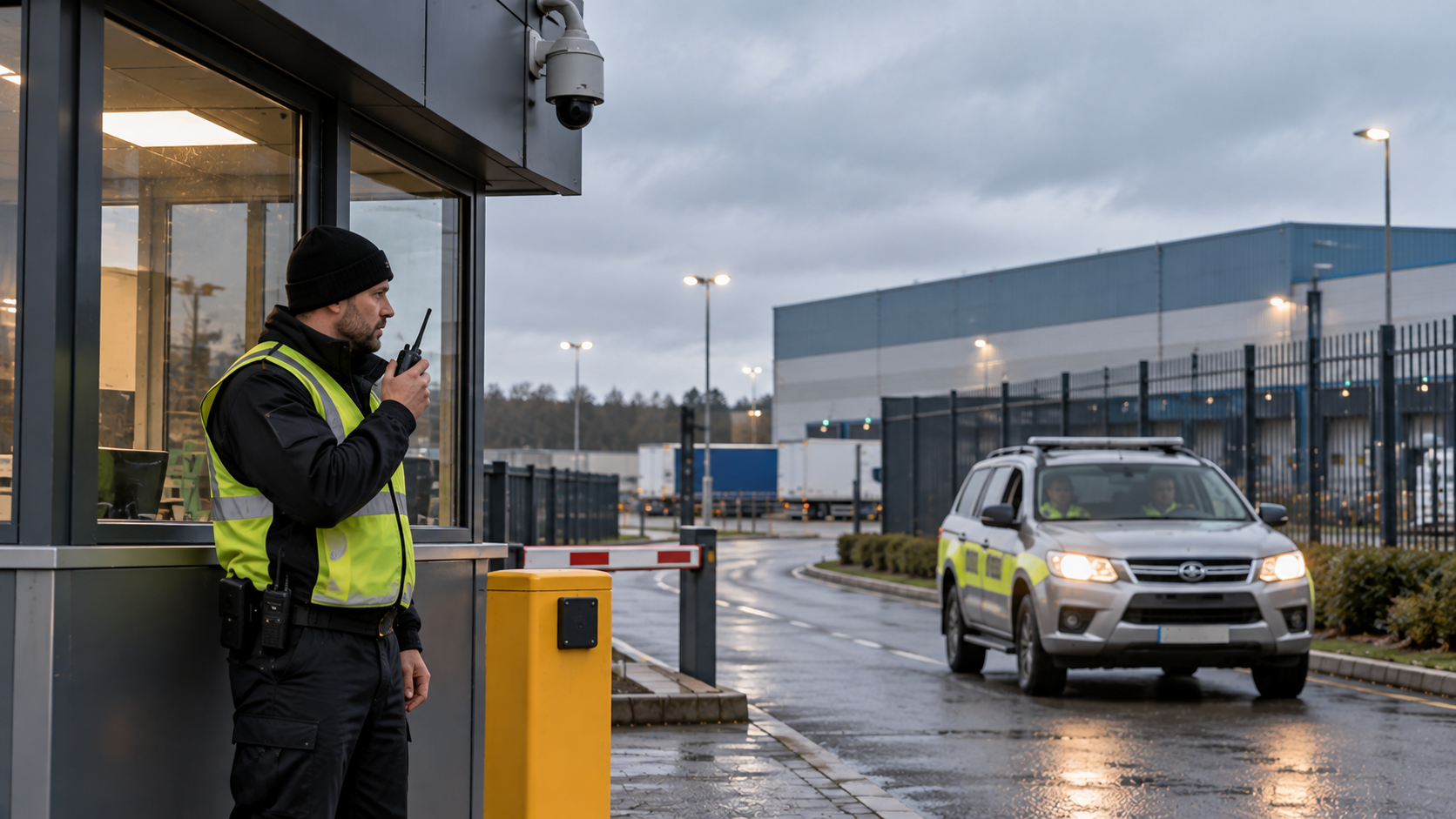
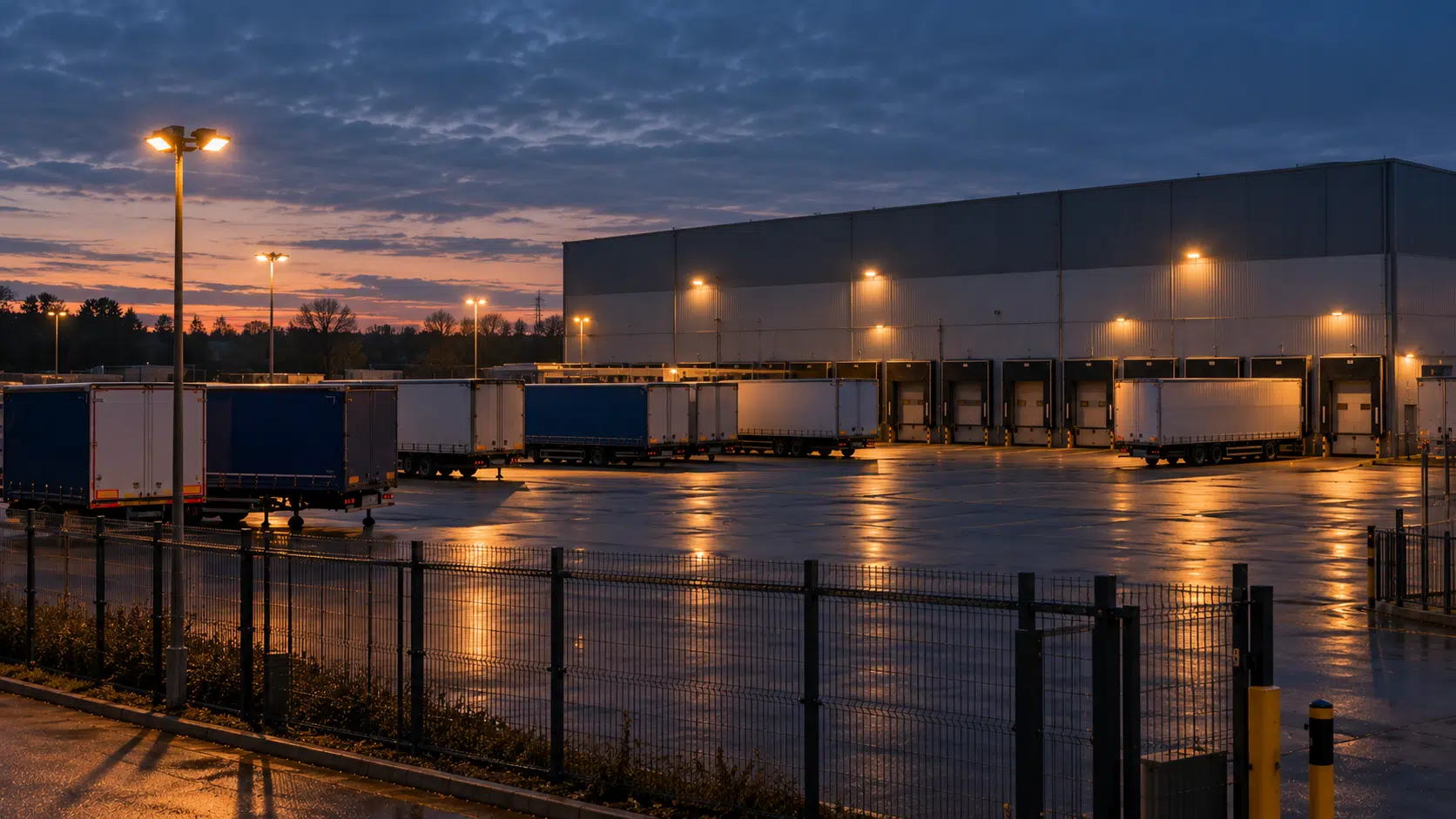
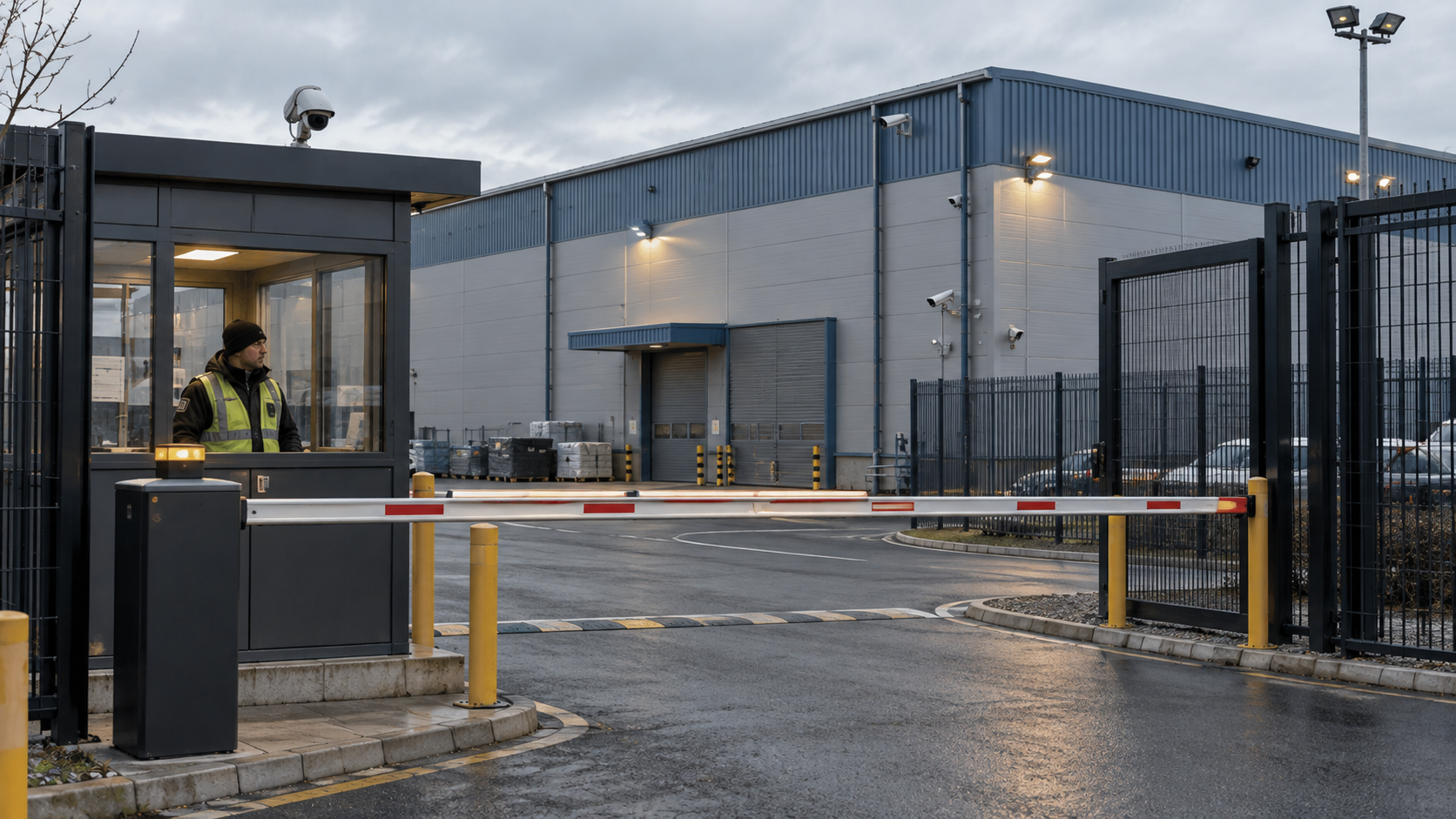
Factories across Trafford are under more pressure than ever. Not just from theft or trespass, but from regulation, insurance scrutiny, and rising expectations around safety. What worked five years ago no longer holds up. Cameras alone don’t deter organised crime. A locked gate doesn’t prove compliance. And relying on reactive responses often comes too late.
This is exactly why Trafford businesses need Factory Security that goes beyond the basics. Security now sits at the centre of legal duty, operational safety, and business continuity. It not only affects how incidents are handled. But also how risks are documented, and how quickly a site can recover after a disruption.
Trafford’s industrial landscape is vast, busy, and exposed. From public-facing factories to high-value production lines, every site carries different risks. The challenge is knowing where those risks sit and how to control them before they escalate.
Understanding Factory Security Basics in Trafford
Factory security in Trafford is shaped by scale, location, and use. A large industrial unit on a busy estate does not face the same risks as a quiet warehouse on the edge of town. Yet many businesses still rely on generic guarding models that don’t reflect how Trafford actually works.
What Is Factory Security and How It Differ from Other Security in Trafford
Factory security is active, not passive. Static security usually means a guard at a gate or reception point. Useful, but limited.
Factory security is wider in scope. It covers movement, behaviour, and risk across the whole site.
That includes:
- Perimeter patrols and internal checks
- Vehicle and delivery control
- Monitoring production areas and loading bays
- Managing visitors, contractors, and staff flow
In Trafford, where sites are large and often shared, static-only security leaves gaps.
How Trafford’s Crime Profile Shapes Factory Security Needs
Trafford sits next to major transport routes and dense commercial zones. That brings opportunity and attention.
Local patterns show higher exposure to:
- Tool and plant theft
- Fuel siphoning
- Opportunistic daytime theft
- Trespass linked to nearby retail and leisure areas
This directly increases the need for visible and responsive factory security. It does rather than overnight-only coverage.
Peak Crime Hours for Trafford Factories
Crime around Trafford factories does not only happen at night. That’s a common mistake. Peak risk periods often include:
- Early mornings before full staffing
- Shift change windows
- Late afternoons when supervision drops
- Weekends on mixed-use estates
Security that mirrors working patterns performs far better than fixed schedules.
Trafford-Specific Vulnerabilities on Industrial Sites
Many Trafford factories share roads, car parks, or access points. That creates blind spots, which can impact safety. These common local vulnerabilities include:
- Uncontrolled side entrances
- Shared service yards
- Poor lighting between units
- High vehicle turnover
Factory security in Trafford must account for these layout realities, not just internal assets.
Managing Anti-Social Behaviour on Factory and Industrial Sites
Anti-social behaviour is a growing issue, especially near mixed retail–industrial zones. Factory security helps by:
- Challenging unauthorised loitering
- Preventing vandalism and tagging
- De-escalating confrontations
- Protecting lone workers
The presence of trained security often stops issues before they escalate.
Why Daytime Factory Security Is Increasing in Trafford
Rising retail theft nearby has changed the risk profile. Offenders move between shops, car parks, and industrial units.
Daytime patrols now play a key role in:
- Deterring walk-in theft
- Monitoring shared boundaries
- Supporting staff during busy hours
This shift has driven demand for full-day factory security, not just nights.
Day vs Night Factory Security Risks
Day and night risks are different to each other. And these differences have an impact on the factory, not better or worse.
Daytime risks:
- Theft during deliveries
- Tailgating
- Staff safety issues
Night-time risks:
- Break-ins
- Metal theft
- Vehicle crime
And to prevent these threats, having an effective factory security plan works best for both.
How Trafford’s Industrial Growth Drives Security Demand
Trafford continues to attract logistics, manufacturing, and distribution businesses. Growth brings complexity.
As sites expand, factory security becomes essential to keep control, meet compliance expectations, and protect operations.
That reality explains, in practical terms, why Trafford businesses need Factory Security not as an add-on, but as part of day-to-day operations.
Legal and Compliance Requirements in Trafford
Legal compliance is where many Trafford factories quietly fall short. Not through intent, but through assumptions. Security law in the UK has grown layered, technical, and unforgiving. Trafford sits right in the middle of that shift.
If factory security is not compliant, everything else unravels. Insurance weakens, evidence gets challenged, which leads to liability growing.
SIA Licensing Rules for Security Guards in the North West
Every frontline security guard working on a Trafford factory site must hold a valid licence. And this licence should be provided by the Security Industry Authority (SIA).
This applies to:
- Manned guarding
- Mobile patrols
- Gate and access control
- CCTV operators
Licences are role-specific. A guard licensed for static duties cannot legally operate CCTV unless separately licensed. This catches many sites out during audits.
Penalties for Using Unlicensed Guards in Trafford
Using unlicensed security is not a paperwork issue. It is a criminal offence in every region, such as Greater Manchester and Trafford. Also, they face High penalties may include:
- Unlimited fines
- Criminal prosecution
- Immediate termination of insurance cover
- Contract nullification
In Trafford, enforcement checks are increasing, especially on industrial estates.
DBS Checks and Factory Security Personnel
DBS checks are not mandatory for every guard by law. However, most Trafford factories now require them.
Enhanced or standard DBS checks are common where guards:
- Access high-value goods
- Work near sensitive data
- Interact with staff or visitors
Insurers increasingly expect this as baseline due diligence.
Insurance Requirements for Hiring Factory Security
Factories hiring security must ensure that providers must carry:
- Public liability insurance
- Employer’s liability insurance
- Professional indemnity cover
Without this, liability can shift back to the client. That’s rarely understood until something goes wrong.
CCTV, Data Protection, and Factory Security Compliance
CCTV use must comply with UK GDPR and the Data Protection Act. Factory security supports compliance by:
- Managing signage and transparency
- Controlling footage access
- Maintaining audit trails
- Preventing misuse
Poorly handled CCTV evidence can be rejected outright.
VAT Rules on Manned Security Services
Manned guarding is VATable in the UK. There are no general exemptions for factories. Trafford businesses must:
- Budget for VAT on security invoices
- Ensure suppliers are correctly registered
- Avoid “VAT-light” operators
Those shortcuts tend to surface during HMRC checks.
Trafford Council and Site-Specific Security Rules
Trafford Council may impose security conditions on Construction sites and Temporary factory expansions. In addition to that, they also look into High-risk industrial works.
These often include overnight guarding or access controls written into planning consent.
Proving a Security Firm’s Compliance History
Finding a reliable firm is essential for site security. If you choose a bad security provider for safety, it can have a negative impact on your site. It can also damage your reputation. A compliant provider should supply:
- SIA Approved Contractor or BAS evidence
- Licence verification records
- Insurance certificates
- Incident and audit logs
If documentation is delayed or vague, that’s usually a warning sign.
Mandatory Licensing and Its Impact on Trafford Clients
Mandatory company licensing means responsibility doesn’t stop with the provider. Trafford clients are expected to check. Failure to do so can still expose the business. In the region of the North West, many firms provide security service but a reliable one holds a mandatory license with them.
Labour Laws, Overtime, and Post-Brexit Staffing
Factory security must follow UK Working Time Regulations. Excessive overtime without rest breaks creates risk for both sides.
Post-Brexit, EU nationals must hold the correct right-to-work status. This is now routinely checked during inspections.
Police Collaboration and Local Intelligence Sharing
Factory security in Trafford increasingly aligns with Greater Manchester Police.
Deployment decisions are shaped by:
- Local crime pattern data
- Repeat offender behaviour
- Industrial estate intelligence
Many firms also work alongside Trafford Business Crime Reduction Partnership, sharing alerts and prevention strategies.
All of this reinforces why Trafford businesses need Factory Security that is legally sound, locally informed, and properly documented.
Costs, Contracts, and Deployment in Trafford
Money always matters in businesses. But with factory security, cost is rarely just about the hourly rate. In Trafford, pricing is shaped by location, risk level, labour rules, and how fast a site needs coverage. Miss one of those factors and the numbers stop making sense.
This is where many businesses realise why Trafford businesses need Factory Security that is properly scoped, not guessed.
Typical Factory Security Costs: City Centre vs Suburbs
Costs in Trafford vary sharply by location. A factory near Trafford city centre or a busy commercial zone usually pays more than one on the outskirts.
City-centre or high-footfall areas often need:
- Higher guard visibility
- Stronger conflict management skills
- Daytime and evening coverage
Suburban or edge-of-estate sites may face:
- Lower foot traffic
- Higher night-time risk
- Fewer access points
As a result, hourly rates in central Trafford are typically higher due to risk weighting and staffing demand.
How Fast Factory Security Can Be Deployed in Trafford
Deployment speed depends on readiness, not promises. In most Trafford cases:
- Temporary cover can begin within days
- Full teams take longer due to vetting
- Complex sites need site-specific briefings
Fast deployment is possible, but rushed onboarding often creates gaps. Experienced providers slow down just enough to get it right.
Common Contract Lengths Across the North West
Factory security contracts are rarely short-term anymore. Stability is what matters most in security. Typical contract terms include:
- 6 months for interim coverage
- 12 months for standard factory security
- 24 – 36 months for large industrial sites
Longer contracts usually secure better rates and staff consistency.
Standard Notice Periods for Ending Contracts
Notice periods protect both sides. Most factory security contracts in Trafford include:
- 30 days for short-term agreements
- 60–90 days for long-term contracts
Immediate termination usually only applies for serious breach or non-compliance.
Wage Increases and Their Impact on 2026 Security Costs
Security wages have risen steadily, and that trend continues into 2026. Increased costs come from:
- Higher National Living Wage
- Pension contributions
- Training and licensing expenses
These increases directly affect factory security pricing, especially for 24/7 coverage.
Inflation and Long-Term Contract Pricing
Inflation doesn’t just raise costs; it reshapes contracts. Many Trafford businesses now see:
- Index-linked pricing clauses
- Annual rate reviews
- Fuel and travel cost adjustments
Fixed-price contracts without review clauses often fail or get renegotiated early.
Factory Security and Insurance Premium Reductions
This part is often overlooked. Insurers regularly reduce premiums where factory security:
- Lowers theft frequency
- Improves incident reporting
- Protects high-value assets
In some cases, security costs are partially offset by insurance savings over time.
Procurement Act 2023 and Public Sector Factory Sites
The Procurement Act 2023 has changed how public-sector contracts work, including factory and industrial facilities in Trafford.
Key impacts include:
Greater emphasis on compliance history
Transparency in supplier selection
Performance-based contract reviews
Public-sector factories now face tighter scrutiny, making compliant factory security non-negotiable.
The Bigger Picture on Cost and Value
Cheap security often costs more in the long run. Poor deployment leads to claims, disputes, and disruption. When businesses step back and look at risk, compliance, and continuity together, the reason becomes clear.
Training, Operations, and Daily Duties in Trafford
Good factory security in Trafford looks calm on the surface. That calm is built on routine, repetition, and training that fits industrial reality. Not theory. Not generic classroom slides. Real sites. Real risks.
This is the daily engine room of why Trafford businesses need Factory Security that actually works.
Training Standards for Factory and Industrial Environments
Factory security training goes beyond basic manned guarding. Trafford sites demand guards who understand movement, machinery, and people under pressure.
Core training usually includes:
- Industrial access control and vehicle flow
- Conflict management in working environments
- Fire safety and evacuation awareness
- Incident reporting and evidence handling
- Health and safety awareness for live sites
Most factories now expect site-specific induction on top of licensed training. One-size-fits-all no longer cuts it.
What Happens the Moment a Guard Starts a Shift
The shift doesn’t start at the gate; it starts with information. First actions usually include:
- Reading the handover log
- Checking outstanding incidents
- Confirming patrol instructions
- Verifying emergency contacts
This is where mistakes are avoided or repeated.
First Physical Checks on Arrival at a Trafford Factory
Before patrols begin, guards check the basics quickly and methodically. That usually means:
- Perimeter integrity
- Gate locks and barriers
- Alarm panel status
- Lighting near entrances
If something feels “off”, it’s flagged early. Small issues escalate fast on industrial sites.
Shift Handovers Across the North West
Handovers matter more than people realise. A rushed handover causes blind spots. Good factory security handovers include:
- Verbal brief
- Written log review
- Known risks or suspicious behaviour
- Equipment faults
In Trafford, shared estates make this even more important.
Patrol Frequency During a Typical Trafford Shift
There is no fixed number. Patrols follow risk, not the clock. That said, most factories expect:
- Regular perimeter patrols
- Randomised internal checks
- Extra patrols during quiet periods
Predictable patrols invite trouble.
Priority Perimeter and Internal Checks
In factory security, some places hold priority on checks. This allowed them to ensure safety without any threats affecting them. Early patrols usually focus on:
- Loading bays
- Fire exits
- Utility areas
- Vehicle compounds
These are the first places targeted during incidents.
Daily Logbooks and Hourly Reporting
Factory security logs are not diaries; they are legal records. Typical entries include:
- Patrol times
- Visitor movements
- Alarm activations
- Maintenance issues
- Unusual behaviour
Hourly updates are common on higher-risk Trafford sites.
Equipment and CCTV Checks at Shift Start
In the security system, each and every piece of equipment is essential. And utilising them can improve the safety. Before relying on systems, guards test them. That includes:
- Radios
- Body-worn cameras (if used)
- CCTV camera feeds
- Alarm response links
Faults are reported immediately, not later.
Fire Safety, Lighting, and Utility Checks
Fire exits are checked early. Lighting inspections in Trafford car parks are routine, especially in winter. Poor lighting invites both accidents and crime.
Guards also look for:
- Signs of tampering
- Unauthorised access to utilities
- Unusual noises or smells
Reporting, Supervision, and Emergency Readiness
Night shifts usually require scheduled supervisor check-ins, not micromanagement confirmation. Emergency procedures are reviewed at duty start with routes, assembly points and lockdown steps.
Response expectations in nearby areas like Wigan or Salford are typically minutes, not hours. Guards are trained to act first, report fast.
End-of-Shift Secure-Down Procedures
The shift ends the same way it starts. This lets them make sure no issues arise at the end of the shift. That means:
- Final patrol
- System status confirmation
- Clear handover notes
- Secure transfer of responsibility
This discipline is the quiet reason why factory security is essential to sites. And the guards are trained, structured, and consistent every single day.
Performance, Risks, and Challenges in Trafford
Factory security performance in Trafford is shaped less by intention and more by pressure. Pressure from long operating hours. From the weather, labour shortages, to sites that never really switch off. When performance dips, it’s rarely dramatic. It’s gradual, and that’s what makes it dangerous. Understanding performance means understanding friction.
KPIs That Actually Matter for Factory Security Performance
Many Trafford businesses track the wrong things. Patrol counts look neat on paper but say very little about risk.
More meaningful KPIs tend to focus on:
- Response time to alarms, especially outside peak staffing hours
- Incident escalation accuracy, not just incident volume
- Missed or delayed patrols, and the reasons behind them
- Quality of written logs, including clarity and consistency
- Repeat vulnerabilities, such as the same door or zone appearing in reports
When KPIs are reviewed weekly, not quarterly, problems surface early.
How Trafford Weather Quietly Undermines Security Effectiveness
Trafford doesn’t deal in extremes; it deals in persistence. Long wet spells, wind that knocks out the lighting and winter darkness that stretches across most of a shift.
Weather affects factory security by:
- Reducing visibility during patrols
- Masking sound around perimeters
- Increasing slip and trip risk
- Accelerating fatigue
Sites that don’t adjust patrol routes seasonally often see performance drop without realising why.
Recording Weather Conditions During Patrols
Weather logs are not filler; they form part of operational defence. Guards document conditions because:
- CCTV quality may be compromised
- Patrol timings may change
- Lighting faults often follow storms
- Accidents are more likely
A single weather note can explain an entire incident timeline later.
Physical Impact of Long Shifts on Guard Performance
Extended shifts remain common in Trafford’s industrial sector. Especially where 24/7 coverage is required.
Over time, long shifts lead to:
- Reduced concentration
- Slower decision-making
- Missed environmental changes
- Shorter, less detailed reports
This isn’t about effort, it’s about limits. Ignoring those limits increases risk exposure.
Mental Strain of Night Shifts on Industrial Estates
Night shifts on the Trafford industrial estates are isolating. Large sites and long gaps between interactions with minimal stimulation.
Professional factory security operations now recognise the need for:
- Regular supervisor check-ins
- Clear escalation routes
- Shift rotation where possible
- Support for stress and fatigue
Unchecked mental strain doesn’t just affect well-being. It affects vigilance.
Environmental and Regulatory Pressures on Outdoor Patrols
Outdoor patrols must comply with more than site rules. Guards must account for:
Noise restrictions near residential boundaries
Light spill regulations
Environmental exposure risks
Security that creates nuisance complaints creates a different kind of risk.
Labour Shortages and the Trafford Reality
Labour shortages remain one of the biggest operational threats to factory security. The impact is real:
- Fewer experienced guards are available
- Increased overtime reliance
- Faster burnout
- Higher churn
When staffing is thin, even good systems struggle.
The Hard Truth About Performance
The biggest challenge in Trafford factory security is not crime. It’s sustained consistency. Same checks, same standards and same attention on a busy Monday morning.
That’s the reality behind why Trafford businesses need Factory Security that is actively managed, not passively supplied. Because performance is never static. It either holds or it slips.
Technology and Future Trends in Trafford
Technology has changed factory security in Trafford in quiet but decisive ways. Not overnight. Not through gimmicks. But through gradual shifts in how risks are spotted, validated, and acted on. The biggest change is this: security decisions are no longer made blindly.
Urban industrial areas like Trafford demand that change. Sites are larger, estates are shared, and risk doesn’t respect fence lines.
How Technology Has Changed Factory Security in Urban Trafford
In dense areas like Trafford, traditional guarding struggled with scale. One pair of eyes cannot watch multiple access points, delivery routes, and shared boundaries at once.
Technology has reshaped factory security by:
- Reducing reliance on chance patrol encounters
- Highlighting patterns across time, not single incidents
- Allowing security teams to prioritise attention
The result isn’t fewer guards. Its guards are being used where they actually matter.
Post-COVID Shifts in Factory Security Protocols
Post-COVID changes were operational, not cosmetic. Factories in Trafford adjusted security to:
- Control movement during working hours
- Separate visitor, contractor, and staff flows
- Maintain presence throughout the day
This permanently increased the demand for daytime factory security. Especially, it does on sites with mixed-use exposure.
AI Surveillance as a Support Tool, Not a Replacement
AI surveillance is now common across Trafford industrial estates, but its value is often misunderstood.
Used properly, AI systems:
- Flag unusual movement instead of constant motion
- Identify loitering near loading bays
- Reduce false alarms that drain response time
Guards still investigate and decide. AI just stops them from reacting late.
Remote Monitoring and Hybrid Coverage Models
Remote monitoring has become a stabiliser, especially during labour shortages. In Trafford factories, remote systems:
- Support lone guards during quiet periods
- Verify alarms before escalation
- Cover low-risk zones continuously
The strongest setups combine remote oversight with physical presence. One without the other leaves gaps.
Drone Patrols and Perimeter Intelligence
Drone patrols are used selectively in Trafford. They are not routine patrol tools. Most effective uses include:
- Large perimeter sweeps after alarms
- Monitoring hard-to-access boundaries
- Rapid assessment following intrusion alerts
They shorten response time. They don’t replace boots on the ground.
Predictive Analytics and Risk Forecasting
Predictive analytics has quietly become one of the most valuable tools in factory security. By analysing:
- Incident timing
- Repeat access attempts
- Seasonal and weather-linked trends
- Estate-wide activity
Security teams in Trafford can adjust patrol frequency, shift coverage, and staffing levels before incidents increase. This is where technology stops being reactive.
Upskilling Requirements for Modern Security Teams
As systems become more complex, expectations rise. Modern factory security teams now require:
- Digital incident reporting competence
- CCTV and access-control awareness
- Data protection understanding
- Emergency coordination training
Guards without these skills struggle on technology-enabled sites.
Green Security Practices on Trafford Industrial Estates
Sustainability is no longer separate from security. Emerging practices include:
- Energy-efficient perimeter lighting
- Reduced-idle patrol scheduling
- Electric or low-emission patrol vehicles
On large Trafford estates, these changes cut costs and improve compliance.
Martyn’s Law and the Future of Factory Security
Home Office guidance under Martyn’s Law will directly affect Trafford factories with public-facing areas.
Future requirements will increase:
- Access control scrutiny
- Documentation of security procedures
- Emergency response readiness
Technology will help manage this load, but only when paired with trained, accountable people.
Where Trafford Factory Security Is Headed
The future of factory security in Trafford isn’t about automation replacing guards. It’s about precision with better information, which gives faster validation and fewer assumptions.
That direction explains, in practical terms, why Trafford businesses need Factory Security that evolves with risk, regulation, and reality, not one frozen in the past.
Conclusion
Trafford factories don’t fail because security is absent. They fail because it’s treated as a background detail. Something that ticks along until it doesn’t.
In reality, factory security touches everything from compliance, safety, insurance, to staff confidence. When it’s done properly, nothing dramatic happens, and that’s the point. Work continues as problems stay small and risks don’t get the chance to grow legs.
Trafford’s industrial sites are busy, exposed, and constantly changing. That demands security that adapts with them, not something copied from a template.
That, in plain terms, is why Trafford businesses need Factory Security that is active, informed, and built for how these sites actually operate.
Frequently Asked Questions
1. Do I really need factory security if my Trafford site hasn’t had issues yet?
That’s usually when security is cheapest and most effective. Once incidents start, you are already reacting. We have seen sites go years without problems, then lose thousands in a single afternoon because access wasn’t controlled or routines had slipped. Security works best when it’s boring and uneventful.
2. Is CCTV alone enough for a factory or industrial site?
CCTV shows you what already happened. It doesn’t challenge someone walking where they shouldn’t be, and it doesn’t stop poor behaviour escalating. On Trafford sites, cameras work best when they back up a human presence that can act in real time.
3. How quickly can factory security be adjusted if risks change?
If security is properly managed, adjustments can happen within days. Patrol routes change. Coverage shifts. Extra hours get added where pressure builds. If changes take weeks, the setup is too rigid for a working factory.
4. Do guards need to be licensed to work on Trafford factory sites?
Yes. Every frontline guard must hold a valid licence from the Security Industry Authority. Using unlicensed staff isn’t just risky, it’s illegal, and responsibility doesn’t stop with the provider. It lands with the site as well.
5. Will factory security actually help with insurance and compliance?
In practice, yes. Insurers look for evidence: logs, patrol records, and incident handling. When those are solid, claims are smoother, and premiums often stabilise. Poor security documentation does the opposite.
6. Is daytime factory security really necessary in Trafford?
More often than people expect. Many incidents now happen during working hours, deliveries, visitors, and shared estates. Daytime presence reduces theft, confrontations, and safety issues that cameras alone won’t catch.
7. How can I tell if my current factory security is underperforming?
Look for repetition as the same door mentioned in the logs, and the same issue was “noted” but never fixed. Thin reports and reactive responses usually mean guards are stretched or disengaged.
8. Can factory security be scaled without disrupting operations?
It should be. Good security adapts around production, not against it. When done properly, most staff barely notice changes except that things run more smoothly and fewer problems reach management in the first place.