Blackburn still runs on manufacturing. Walk through Shadsworth, Whitebirk, or further out toward industrial clusters on the edge of town, and you’ll see it: food processors, textile units, precision engineering firms, small specialist fabricators. These are working sites. Not storage sheds. Not office blocks.
That distinction matters. Factories carry layered risk. Machinery worth hundreds of thousands sits alongside raw materials that fluctuate in value. Shift patterns stretch early into the morning and late into the night. Contractors come and go. A warehouse can lock up stock. A factory has moving parts, literally.
This is the practical backdrop to Why Blackburn businesses need Factory Security? It is less about visible presence and more about control. Who enters. Who leaves. What happens when production stops?
Manufacturing site security Blackburn conversations usually begin after a disruption, a break-in, missing materials, or damage during a shutdown. But the real impact often shows elsewhere: delayed orders, insurance scrutiny, compliance questions.
Security decisions in a factory do not just protect assets. They protect continuity. And in manufacturing, continuity is everything.

Factory Security Basics In Blackburn
What Factory Security Means In A Manufacturing Environment
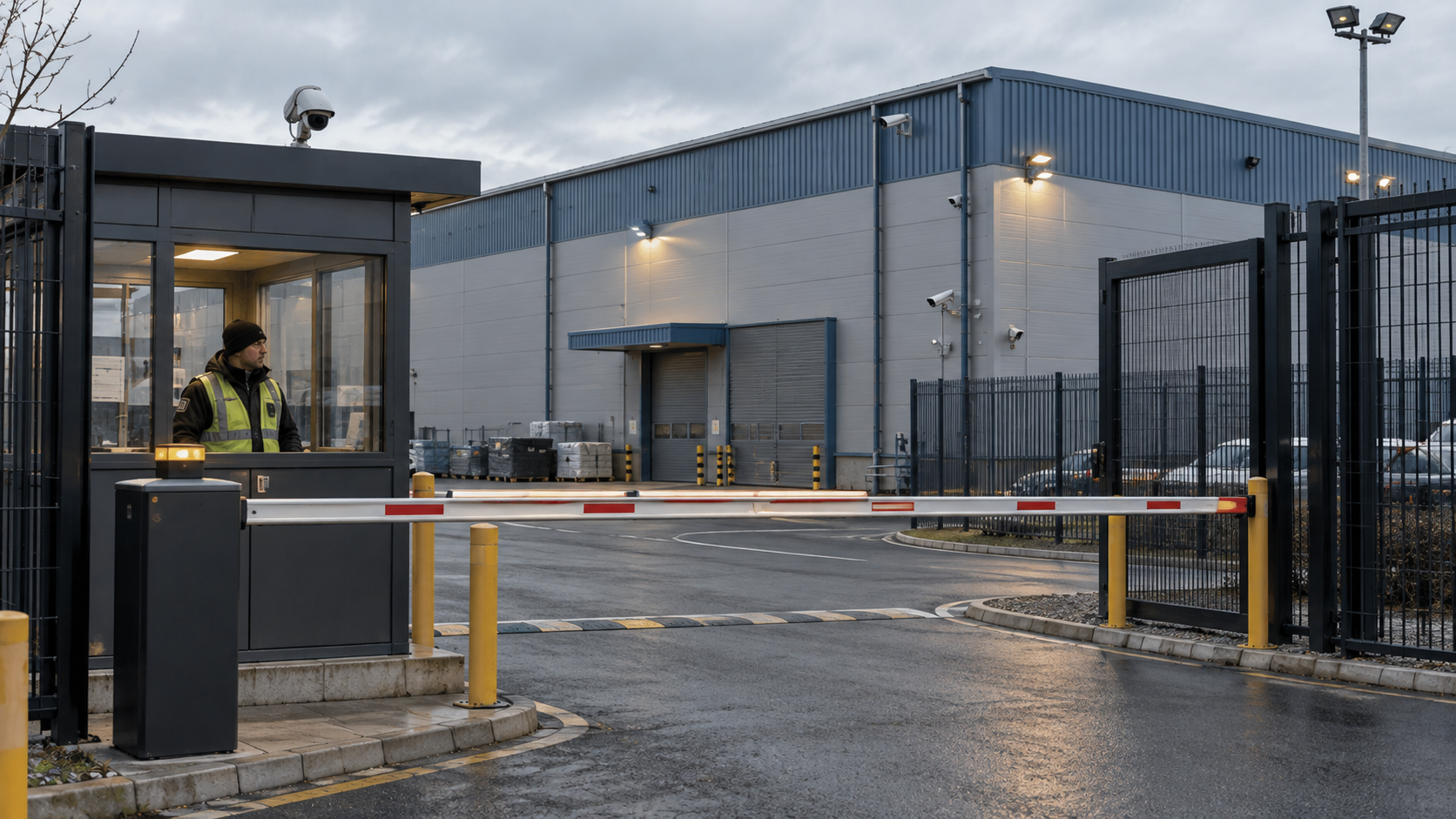
Factory security is not just a guard at a gate. It is a working system. People, processes, and controlled access must line up with how the site actually operates. In a manufacturing setting, security touches:
- Entry points for staff, contractors, and deliveries
- Movement between production areas
- Protection of machinery, tooling, and raw materials
- Clear records of who accessed what and when
That is different from warehouse-only security. A warehouse often protects stored stock. A factory protects production itself. The risk is not only theft. It is a disruption.
It also differs from CCTV-only setups. Cameras record. They do not intervene. They do not question unfamiliar access. They do not challenge unsafe behaviour near high-value equipment. Factories need active oversight. Someone must interpret what is happening in real time.
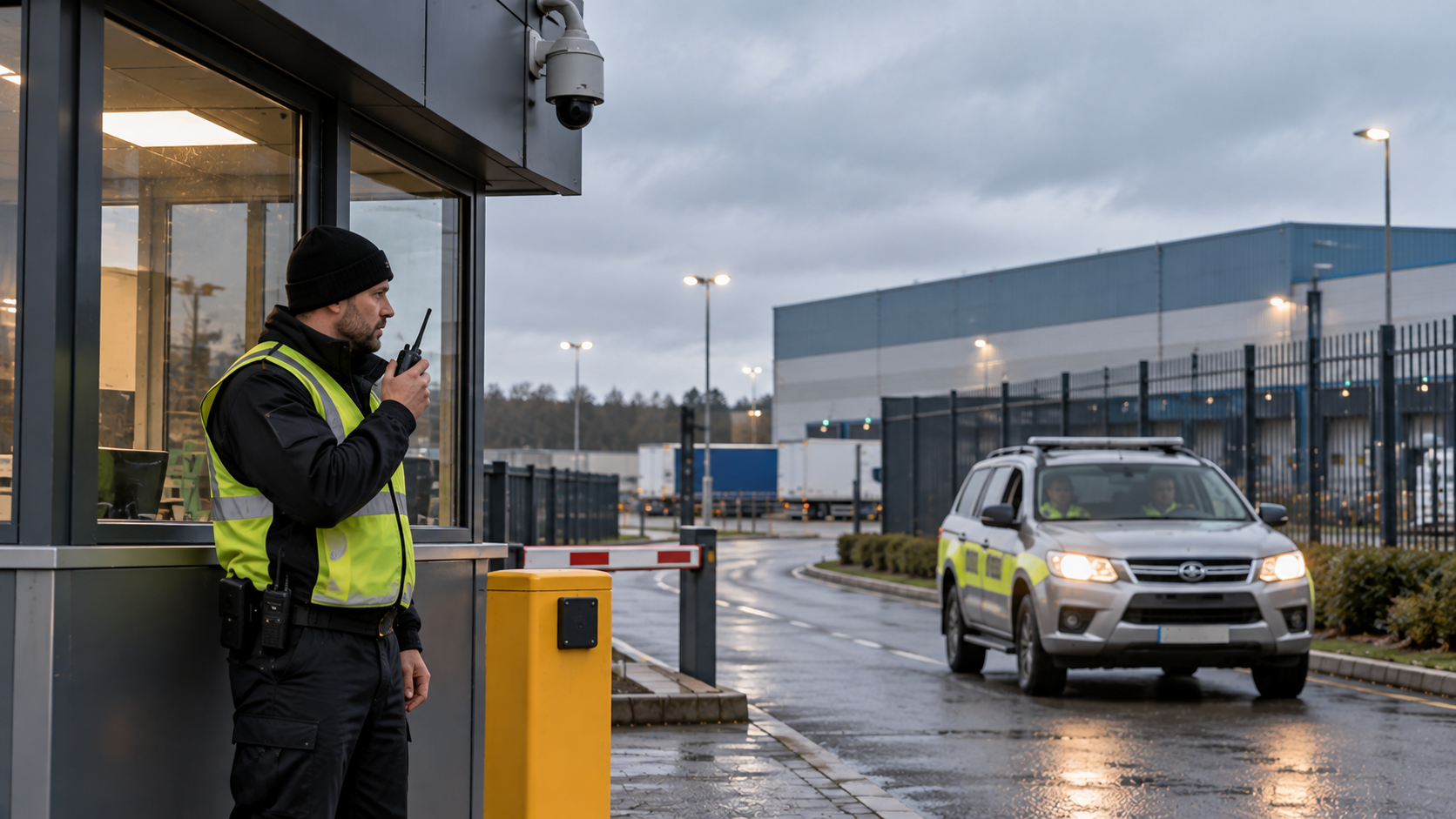
Factory security in Blackburn, therefore, means visible control during live operations, not passive monitoring after hours. Especially in the North West, many manufacturing sites operate on tight margins and fixed delivery schedules. A small interruption can ripple fast.
How Blackburn’s Industrial Layout Shapes Factory Risk
Blackburn’s factories sit in mixed environments. Some are on structured estates like Whitebirk. Others sit closer to residential roads or share access yards with neighbouring units.
That layout matters. Estate-based sites often deal with shared vehicle routes and overlapping pedestrian movement. Standalone factories may feel isolated, particularly outside standard hours. In both cases, perimeter lines are not always clear. Fencing stops at one boundary. A service road connects to another. Responsibility can blur.
Proximity to housing adds another layer. Foot traffic increases. Shortcuts appear. Unclear access routes create opportunity. Not dramatic crime; just small openings that add up over time. When boundaries feel informal, exposure rises.
Typical Factory Crime Patterns In Blackburn
Most incidents follow patterns. Timing matters more than scale. Common issues include:
- Theft of raw materials such as metals or consumables
- Removal of smaller finished goods during busy dispatch periods
- Opportunistic internal access abuse
- Vandalism during planned shutdowns or holiday closures
Factory theft and vandalism risks often increase when activity is high and supervision thins. A busy loading bay. A shift overlap. A maintenance weekend. These are not headline events. They are friction points.
Day Shift Vs Night Shift Factory Security Risks
Risk changes with the clock. During active production, exposure centres on movement. Contractors arrive. Deliveries queue. Visitors wait for sign-in. The challenge is control without slowing operations.
After production stops, the profile shifts. Factory night shift security risks tend to include:
- Reduced supervision across large floor areas
- Concentrated assets are left powered down
- Fewer witnesses if an intrusion occurs
Noise drops. Lighting changes. The site feels different. Factories do not become safer when staff leave. In many cases, they become quieter and therefore more vulnerable.
Crime, Risk Patterns, And Timing For Blackburn Factories
When Blackburn Factories Are Most Exposed To Security Incidents
Security problems tend to surface in the gaps, the in-between moments most sites treat as routine.
Early morning starts are one of those gaps. In Blackburn and across Lancashire towns like Preston and Burnley, shift changes often happen fast. Vehicles arrive together. Staff badge within minutes. A side gate stays open longer than it should. Someone unfamiliar blends into the flow. No drama. Just movement. And movement is where control can thin out.
Late evening shutdown windows carry a different pressure. Supervisors focus on targets. Machines power down. Responsibility shifts from production to closure checks. If that handover is rushed, perimeter checks become tick-box exercises. Alarm systems get set, but without full sweep verification. Small oversights here can stretch into long overnight exposure.
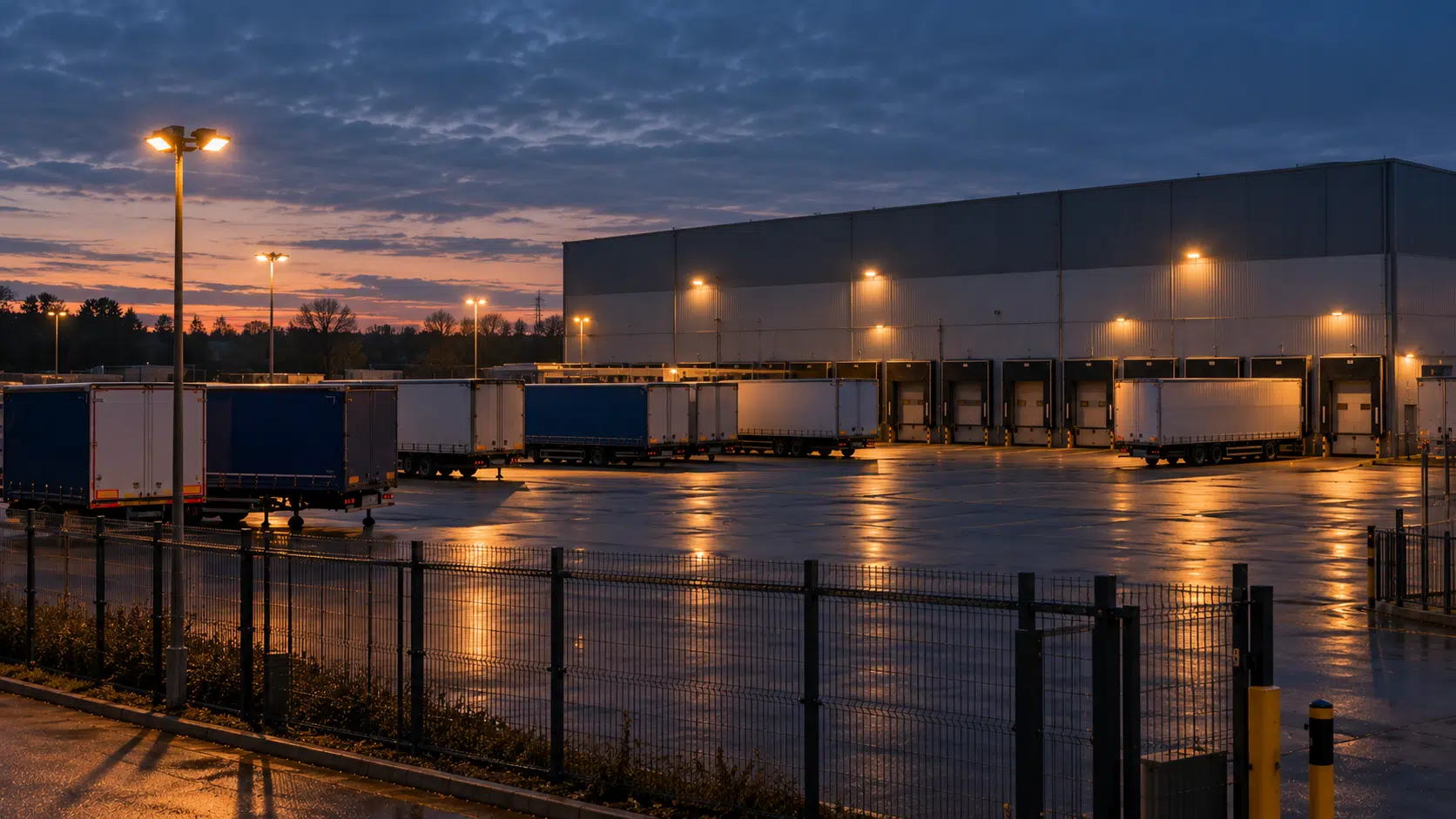
Weekends and bank holidays feel quiet across industrial estates in Blackburn, Blackpool, and Lancaster. That quite changes the atmosphere. Fewer witnesses. Less traffic. If lighting, patrol routines, or access controls are inconsistent, the site can appear unattended even when it is not. Timing shapes opportunity more than intent does.
How Local Economic Activity Influences Factory Security Demand
Security demand in the North West often mirrors the economic pace. When manufacturing output increases, new contracts, export growth, additional shifts, and security structures do not always scale at the same speed. Production expands first. Controls adjust later. That lag creates a window of risk.
Temporary labour plays a part. Extra passes issued. More delivery vehicles. Extended access hours. Each decision is operationally justified. But layered together, they widen the access footprint of the site.
In growth phases, risk rarely comes from organised intrusion. It comes from diluted oversight. Who verified the contractor? Who logged the late dispatch driver? Who confirmed the access badge was deactivated after a short-term project?
Those questions often surface after an incident, not before. Security planning works best when it moves in step with expansion, not behind it.
Seasonal And Operational Peaks Affecting Factory Security
Seasonality adds pressure. Pre-Christmas surges across Blackburn and Preston mean higher stock volumes and tighter dispatch deadlines. Finished goods sit closer to exits. Raw materials are delivered in bulk. Value concentrates on-site for short periods. That concentration shifts the risk profile overnight.
Maintenance shutdowns bring another kind of exposure. Parts of the facility may be inactive. External engineers arrive. Standard routines pause. During these windows, perimeter clarity and access logs matter more, not less.
Contractor-heavy periods are similar. Multiple trades. Shared entry points. Tools and materials left temporarily in communal areas. Without structured control, responsibility becomes vague, and vague responsibility is difficult to defend in an insurance claim.
Most incidents are not random acts. They align with operational peaks. Understanding that rhythm allows Blackburn factories, and those across Lancashire, to plan security around real activity cycles, not just static threat assumptions.
Sector-Specific Vulnerabilities In Blackburn Factories
Manufacturing Facilities Handling High-Value Equipment
Many factories in Blackburn use CNC machines, special tools, and custom production lines. These machines are heavy and hard to move. That can make them seem safe. But heavy does not mean safe.
Expensive machines can still be taken apart. Parts like control panels and rare metals can be sold. Spare parts stored on-site can go missing, especially during busy shifts or when contractors are around. Loss is often slow, not sudden. One tool goes missing. Then another.
If a key machine is damaged or tampered with, production can stop. For many North West manufacturers, lost time costs more than the machine itself.
Industrial factory security plans in Blackburn should focus on who can access sensitive machines, not just on fences around the site.
Food And Process-Based Factories
Food production and process-led facilities add another layer of exposure. Hygiene zones restrict movement. Protective clothing rules apply. Entry points are controlled for safety reasons first, security second.
That overlap can create tension. Security checks must not compromise hygiene standards. At the same time, hygiene systems alone do not prevent unauthorised access. A person in the correct uniform is not automatically authorised to be in every zone.
When security fails in these environments, the impact goes beyond theft. It can trigger compliance breaches, audit failures, or regulatory scrutiny. Contamination risk, even perceived risk, can halt distribution fast.
On-site security for manufacturing facilities handling food must align with both safety protocols and access discipline. One without the other is incomplete.
Multi-Tenant And Shared Industrial Sites
Some Blackburn factories sit within shared estates, close to Blackpool and Lancaster transport routes. In multi-tenant environments, boundaries blur. Shared yards. Common entry gates. Overlapping parking.
Responsibility becomes unclear. Tailgating increases when multiple businesses operate side by side. An employee from one unit may move through another without challenge. Delivery drivers assume open access applies everywhere.
In these settings, security depends on defined control points and clear accountability. Without that clarity, exposure spreads quietly across units, and no one is quite sure where it began.
Legal And Compliance Requirements For Factory Security In Blackburn
SIA Licensing Obligations For Factory Security Personnel
In Blackburn, front-line security guarding is regulated by the Security Industry Authority (SIA). If a person is controlling access, patrolling premises, or protecting property under contract, they will usually require a valid SIA licence.
There are no grey areas here. If the activity is licensable, the licence must be in place. Factories should not rely on verbal assurance. The SIA public register allows clients to verify licence numbers and expiry dates. That check takes minutes. It can prevent months of difficulty later.
Non-compliant deployment carries consequences:
- Criminal liability for the provider
- Potential liability exposure for the client
- Regulatory investigation
- Contract instability
Licensing is the legal baseline. It is not optional, and it is not administrative trivia.
Legal Exposure From Using Unlicensed Security Providers
If a factory in Blackburn appoints an unlicensed provider, the risk shifts quickly from operational to legal.
Providing licensable services without SIA authorisation is a criminal offence. That alone should concern decision-makers. But the secondary effects are often more disruptive.
Contracts may be challenged if the service was unlawfully delivered. Insurers may scrutinise claims more closely. In serious incidents such as theft, injury, or vandalism, documentation will be examined in detail.
Reputational damage also matters. Manufacturing communities across Lancashire are interconnected. Compliance failures affect supplier confidence and procurement relationships.
For larger contracts, especially public or framework-based work in the North West, regulatory breaches can influence eligibility. This is not theoretical exposure. It is practical risk management.
Vetting Standards And Background Screening In Manufacturing Environments
Licensing confirms qualification. Vetting confirms suitability. BS 7858 is the recognised screening standard for security personnel in the UK. It covers identity verification, employment history, and background checks.
Factories handling high-value machinery, proprietary designs, or sensitive production data should expect this level of screening as standard. In some environments, Disclosure and Barring Service (DBS) checks become relevant. For example:
- Sites with vulnerable individuals
- Facilities handling sensitive research
- Areas with restricted intellectual property
The level of screening should reflect the sensitivity of access. A small light manufacturing unit in Burnley may differ from a precision engineering facility in Blackburn, supplying regulated industries.
Clients are entitled to request confirmation of vetting standards. Transparent providers will supply it.
Insurance Requirements And Liability Protection For Blackburn Factories
A security company in Blackburn should hold appropriate insurance, including:
- Public liability cover
- Employer’s liability insurance
Factories must confirm:
- Policy limits
- Expiry dates
- Scope of cover
A large industrial unit near Preston may require higher indemnity limits than a smaller operation in Lancaster. Coverage should reflect exposure.
Annual verification matters: policies renew, limits change, and certificates expire. Reviewing documentation once at contract start is not enough.
Data Protection And CCTV Governance In Factory Settings
Where CCTV operates inside working factories, GDPR applies. Monitoring employees, contractors, and visitors involves personal data.
Factories should ensure:
- Clear signage is displayed
- Footage retention periods are defined
- Access to recordings is restricted
- Access control logs are stored securely
Responsibility is shared. The factory usually acts as a data controller. The security provider may act as a data processor. Contracts should define those roles clearly. A data breach can create regulatory consequences separate from any physical incident.
VAT Treatment And Financial Transparency In Security Contracts
Security services are subject to standard VAT. Budgets should reflect gross cost, not headline hourly rates alone.
Factories should review:
- Overtime structures
- Holiday or bank holiday premiums
- Additional service charges
Clarity prevents dispute. Hidden pricing erodes trust quickly.
Local Authority And Regulatory Considerations In Blackburn
Planning conditions sometimes include security expectations, particularly during site expansion or refurbishment. Lancashire authorities may require documented security measures as part of approval processes.
Larger developments in the North West often involve liaison with local regulators. Early coordination avoids delays.
Compliance Documentation And Audit Readiness
Documentation protects both sides. Factories should expect:
- Structured incident reports
- Licence registers
- Patrol and access logs
- Audit trails
Insurers assess paperwork. Not assurances. Strong documentation improves claim defensibility and demonstrates active risk management.
Police Collaboration And Structured Incident Escalation
A clear working relationship with Lancashire Constabulary strengthens response quality. That includes defined escalation routes and evidence preservation standards.
After an incident:
- Scenes should be secured
- CCTV preserved correctly
- Statements recorded promptly
Repeat-incident reduction depends on structured follow-up, not reactive presence alone. Compliance in factory security is not bureaucracy for its own sake. It underpins legal protection, insurer confidence, and operational continuity across Blackburn and the wider North West.
Costs, Contracts, And Deployment Of Factory Security In Blackburn
Core Cost Drivers For Factory Security In Blackburn
Security pricing should reflect risk, not guesswork. In Blackburn and across Lancashire, costs usually follow four practical factors.
Site Size And Layout
A small unit with one gate is simple to control. A large factory with multiple entrances, yards, and long fencing lines takes more time to supervise. Blind spots increase patrol needs. Distance adds labour hours.
Shift Patterns
A single daytime shift has one risk profile. A 24-hour operation has another. Night shifts, weekend work, and bank holidays increase exposure. More hours mean more coverage.
Access Complexity
Busy sites in Preston or Burnley may see constant deliveries, contractors, and agency staff. Shared estates in Blackburn or Blackpool create overlap in access routes. More movement means tighter control is required.
Risk Exposure Level
High-value machinery, sensitive production, or previous incidents increase security requirements. Insurers will often assess these factors before pricing cover.
Cost follows operational reality. It should not be driven by the lowest quote.
Location-Based Pricing Differences Across Blackburn Industrial Areas
Industrial estates differ. A structured estate with lighting and shared activity may feel lower risk. An isolated unit on the outskirts of Lancaster routes may require stronger perimeter oversight.
Estate-based sites often deal with:
- Shared vehicle access
- Overlapping pedestrian routes
- Tailgating risk
Isolated units may face:
- Reduced natural surveillance
- Longer emergency response times
Pricing reflects supervision needs. Risk-weighted logic means coverage matches exposure. It is not about postcode. It is about control.
Mobilisation Timelines And Deployment Planning
Security cannot be deployed properly in a day without compromise. Standard mobilisation includes:
- Risk assessment
- SIA licence verification
- Vetting confirmation
- Site briefing
This can take weeks. Emergency coverage after an incident is possible, but it should not replace a structured rollout.
Factories expanding in the North West often benefit from phased deployment. Planned mobilisation reduces gaps and ensures insurers are informed correctly.
Contract Structures And Risk Allocation
Short-term contracts offer flexibility. Long-term agreements offer stability and clearer pricing. Before signing, factories should review:
- Defined service scope
- Hours of coverage
- Incident response obligations
- Reporting standards
Responsibility must be clear. Who controls access logs? Who manages alarm escalation? Who liaises with police or insurers? These points should not be vague.
Notice Periods And Exit Planning
Most UK security contracts include notice clauses. These protect both parties. Factories should understand:
- Termination timelines
- Handover procedures
- Documentation transfer requirements
Poor exit planning creates security gaps. A structured transition prevents disruption, especially for 24-hour sites in Blackburn or Preston.
Wage Pressures And Their Impact On Security Pricing In 2025
The National Living Wage continues to rise. This directly affects guarding costs.
Transparent providers will explain:
- Wage adjustments
- Employer contributions
- Overtime premiums
When pricing ignores wage reality, service stability suffers. Underpriced contracts often lead to missed coverage or inconsistent performance. That risk falls on the client.
Inflation Indexing And Multi-Year Pricing Stability
Fixed-rate agreements can look attractive. In unstable economic periods, they carry risk.
Indexed contracts tied to recognised measures offer predictability. They allow better budget planning for manufacturers in Burnley, Blackpool, and across Lancashire.
Stability supports long-term operational planning.
Insurance Premium Considerations And Risk Reduction Value
Insurers assess maturity. They look for documented procedures, layered protection, and incident reporting. Clear records strengthen the defensibility of claims. They may also support premium discussions over time.
Poor documentation weakens the position. Presence alone is not enough. Evidence matters.
Public Sector Procurement Considerations Under The Procurement Act 2023
Factories supplying public contracts must meet higher transparency standards.
The Procurement Act 2023 emphasises:
- Clear evaluation criteria
- Documented compliance
- Transparent pricing structures
Security arrangements may form part of the tender review. Weak documentation can affect scoring.
Across Blackburn and the wider North West, factory security is not simply an operational expense. It connects to compliance, insurance strength, and commercial credibility. Decisions made at the contract stage often shape resilience for years.
Training, Daily Operations, And Factory Security Duties
Why Factory-Specific Training Matters
Not all guarding is the same. A retail environment in Blackpool or a reception desk in Lancaster does not mirror a working factory floor in Blackburn or Preston.
Factory security requires context. Generic guarding focuses on presence and response. Factory security demands awareness of:
- Machinery hazards
- Restricted production zones
- Delivery schedules
- Health and safety protocols
A guard who does not understand lockout rules or confined space risks can disrupt work. Even small mistakes, like standing in the wrong loading lane or directing vehicles at the wrong time, can cause delays.
Training must balance two priorities:
- Keep the site secure.
- Do not disrupt production.
That balance is not automatic. It comes from site-specific briefings and clear communication with operations managers.
Start-Of-Shift Security Priorities In Factories
Shift beginnings set the tone.
Early hours in Lancashire industrial areas, whether in Burnley, Blackburn, or Preston, can feel rushed. Vehicles arrive together. Staff move quickly. Security must anchor that movement without slowing it.
Key priorities at the start of the shift include:
- Verifying access control systems are active
- Confirming authorised personnel lists
- Reviewing any overnight incident reports
- Conducting a visual perimeter check
Incident handovers matter. If something unusual occurred overnight, incoming personnel must understand it. Verbal summaries are not enough. Written confirmation prevents gaps.
Environmental checks also play a role. Lighting, gate integrity, alarm status – these are small details, but they shape exposure.
Access Management During Active Production
Once production begins, security shifts into support mode. Visitors need sign-in procedures that are firm but practical. Contractors require monitored movement, especially near sensitive equipment or hygiene zones. The aim is control without obstruction.
In busy North West facilities, workflow cannot stall every time someone new arrives. Clear passes, defined waiting areas, and structured escort protocols reduce confusion.
Tailgating is a common issue. So is informal access during peak dispatch periods. Security presence at key junctions, not constant roaming, often works better.
Reporting, Logs, And Operational Visibility
Patrol frequency means little without records. Documentation provides:
- Time-stamped access logs
- Incident summaries
- Escalation notes
- Maintenance or perimeter observations
For insurers and auditors, written evidence carries weight. If a theft occurs in a Blackburn factory, the question will not be “Was someone present?” It will be “What was recorded?”
Strong reporting builds operational visibility. It allows management to see patterns, repeated access attempts, recurring delivery timing issues, and weak perimeter points.
In factory environments, quiet consistency matters more than dramatic intervention. Good security work often looks uneventful. The paperwork proves why.
Performance, Operational Risks, And Factory Security Challenges
Measuring Factory Security Performance Properly
Security performance is often misunderstood. Many factories look at visible activity, patrol counts, logged hours, and gate checks. Activity feels reassuring. It is also misleading. What matters more is the outcome.
Useful indicators include:
- Access compliance rates
- Unauthorised entry attempts detected
- Incident response times
- Repeat-incident reduction
In manufacturing sites across Blackburn, Preston, and Burnley, prevention rarely makes headlines. A stopped tailgating attempt. A contractor was redirected to the correct zone. A delivery was refused due to missing documentation. These small interventions prevent larger losses.
Visibility matters more than volume. If management can see patterns, peak-risk times, and recurring weak points, they can adjust. If reports only show movement without analysis, oversight becomes superficial. Good factory security often feels quiet. That quiet should be measurable.
Environmental And Operational Pressures On Factory Security
Factories in Lancashire and the wider North West operate in real conditions. It includes rain, wind, and long winter darkness. These are not minor factors.
Weather affects:
- Perimeter integrity
- Lighting reliability
- External patrol safety
Noise inside production areas creates a different challenge. Machinery hums constantly. Forklifts move. Safety alarms sound. In that environment, security staff must remain alert without interfering with workflow.
There is also coexistence with health and safety rules. Guards must understand exclusion zones, PPE requirements, and traffic segregation systems. Standing in the wrong place can create risk rather than reduce it.
Factory security works best when it respects the operational rhythm of the site. It cannot operate as an isolated layer.
Why Under-Priced Factory Security Fails
Low-cost contracts often appear efficient on paper. In practice, they introduce fragility. When pricing ignores:
- Wage pressures
- Insurance costs
- Compliance requirements
Service continuity weakens. Coverage gaps appear during sickness, holidays, or contract disputes. Documentation standards slip. Accountability blurs.
For factories in Blackburn or Blackpool, these weaknesses surface during incidents, exactly when reliability is most needed.
Under-priced arrangements do not usually fail dramatically. They erode quietly. And quiet erosion is harder to defend in front of insurers or auditors.
Security, like machinery maintenance, requires realistic budgeting. Otherwise, the cost returns later, often at a higher price.
Technology And Future Trends In Blackburn Factory Security
Integrating CCTV With Factory Security Operations
CCTV is common across factories in Blackburn, Preston, and wider Lancashire. Cameras sit above loading bays, inside production halls, along perimeter fencing. But cameras alone do not equal control.
Recording is passive. Oversight is active. When CCTV is integrated properly with on-site security, footage becomes part of a working system. Guards can verify alarms in real time. Suspicious movement can be assessed before escalation. Entry points can be reviewed during shift change, not hours later.
Two factors matter most:
- Evidence quality: Clear positioning, appropriate lighting, and defined retention policies. Poor footage rarely helps insurers or police.
- Response speed: A camera that records an incident after the fact provides evidence. A camera monitored alongside active guarding can prevent loss.
In industrial areas from Burnley to Blackpool, insurers increasingly ask not just whether CCTV exists, but how it is managed. Passive recording is rarely enough.
AI And Predictive Support In Factory Environments
Artificial intelligence tools now support some factory security systems. Pattern recognition software can flag unusual movement. Analytics can highlight repeated access attempts outside normal hours. Used carefully, this adds value.
For example:
- Identifying repeated perimeter triggers during specific time windows
- Detecting loitering in normally low-traffic zones
- Flagging badge misuse patterns
However, AI does not replace judgement. It generates alerts. Humans interpret them. False positives occur. Machinery movement can trigger motion alerts. Weather affects sensors. Over-reliance without review creates noise rather than clarity.
In the North West manufacturing context, predictive tools work best when layered onto structured guarding, not substituted for it.
Remote Monitoring And Hybrid Factory Security Models
Remote monitoring centres can support Blackburn factories during low-activity hours. Alarm verification, camera checks, and escalation coordination often operate efficiently from off-site hubs.
Hybrid models combine:
- On-site presence during peak operational periods
- Remote oversight overnight or during shutdowns
This approach can control cost while maintaining visibility. Yet some risks still require physical presence. Access control during live production. Contractor management. Incident containment. Remote support cannot physically intervene.
The decision depends on site layout, asset concentration, and operational rhythm, not technology trends alone.
Sustainability And Green Security Practices
Environmental expectations are rising across Lancashire industrial estates. Security systems now consider:
- Energy-efficient LED perimeter lighting
- Motion-activated systems rather than constant illumination
- Reduced unnecessary patrol vehicle use
These adjustments lower energy consumption without weakening oversight. In some cases, smarter placement of control points reduces repetitive movement.
Sustainability in security is not marketing. It is operational efficiency aligned with environmental responsibility.
Preparing Blackburn Factories For Regulatory Change
Rules change over time. Martyn’s Law, which focuses on public safety, may affect larger factories or sites that allow visitors. Insurers are also checking risk plans more closely. They want to see clear records and layered security.
Factories in Blackburn that keep simple records, use linked security systems, and follow clear response plans can adjust more easily when rules change.
Being ready for the future is not about buying the latest technology. It is about making sure your current setup is clear, recorded, and fits the real level of risk.
Conclusion
Factories in Blackburn operate in a live environment. Materials move. Machinery runs. People rotate through shifts. Risk is not abstract; it sits inside daily routine.
That is the practical context behind Why Blackburn businesses need Factory Security? It is not about appearances. It is about control, continuity, and proof.
Risk must be understood in timing and layout. Compliance must be documented, not assumed. Costs must reflect real exposure, not optimistic budgeting.
Across Lancashire and the wider North West, manufacturers that treat security as part of operational planning, not an afterthought, tend to face fewer surprises. Insurers respond better to evidence. Audits move faster. Internal reviews become easier.
The real question is not whether security is necessary. It is whether current arrangements are proportionate to the site’s scale, output, and growth plans. That discussion is worth having at the board level, not just at the gate.
Frequently Asked Questions
Do factories in Blackburn need manned guarding at all times?
Not in every case. A small unit with limited access points may not need 24-hour presence. Larger or higher-risk sites often do. The decision should follow a risk assessment, not an assumption.
What types of factories face the highest security risks in Blackburn?
Engineering firms with high-value metals, food manufacturers, and sites storing specialist tooling tend to face greater exposure. Shared estates can also increase access risk.
How much does factory security typically cost for small manufacturers?
The cost of factory security for Blackburn manufacturers depends on shift length, layout, and asset value. A daytime-only setup is very different from full night coverage.
Can CCTV alone meet factory insurance requirements?
Sometimes, but many insurers prefer layered control. Cameras without response capacity may not satisfy higher-risk profiles.
What legal checks must factory security providers meet in Blackburn?
Valid SIA licences, appropriate insurance cover, and recognised vetting standards such as BS 7858 are standard expectations.
How quickly can factory security be deployed after an incident?
Short-term cover can be arranged quickly. Structured deployment usually requires planning and compliance checks.
Does factory security reduce downtime after theft or vandalism?
Yes. Clear reporting and evidence speed up insurance claims and recovery decisions.
What is the best factory security setup for manufacturing sites with night shifts?
Often, a hybrid model, controlled access, monitored CCTV, and a defined on-site response during higher-risk hours.