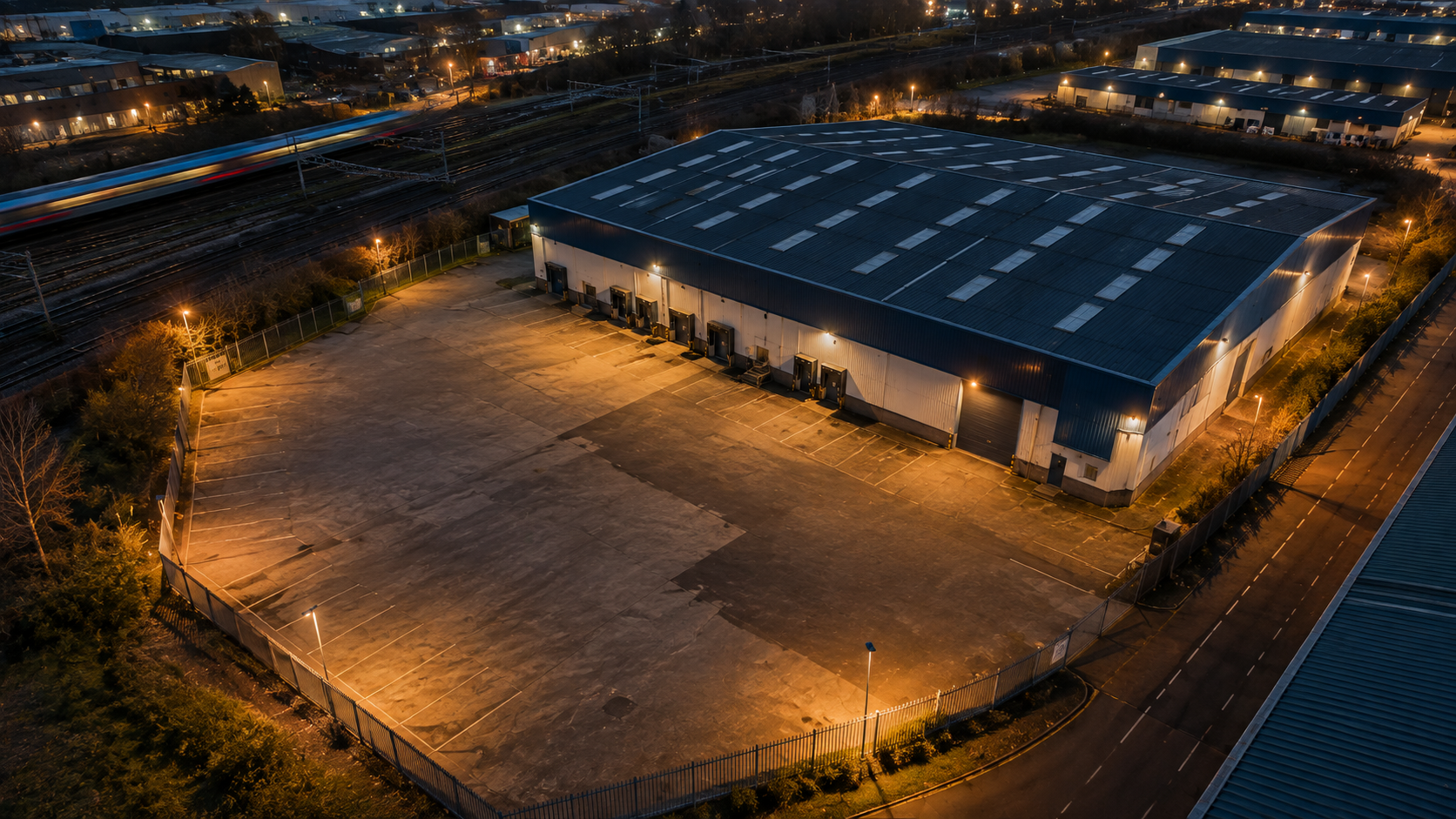
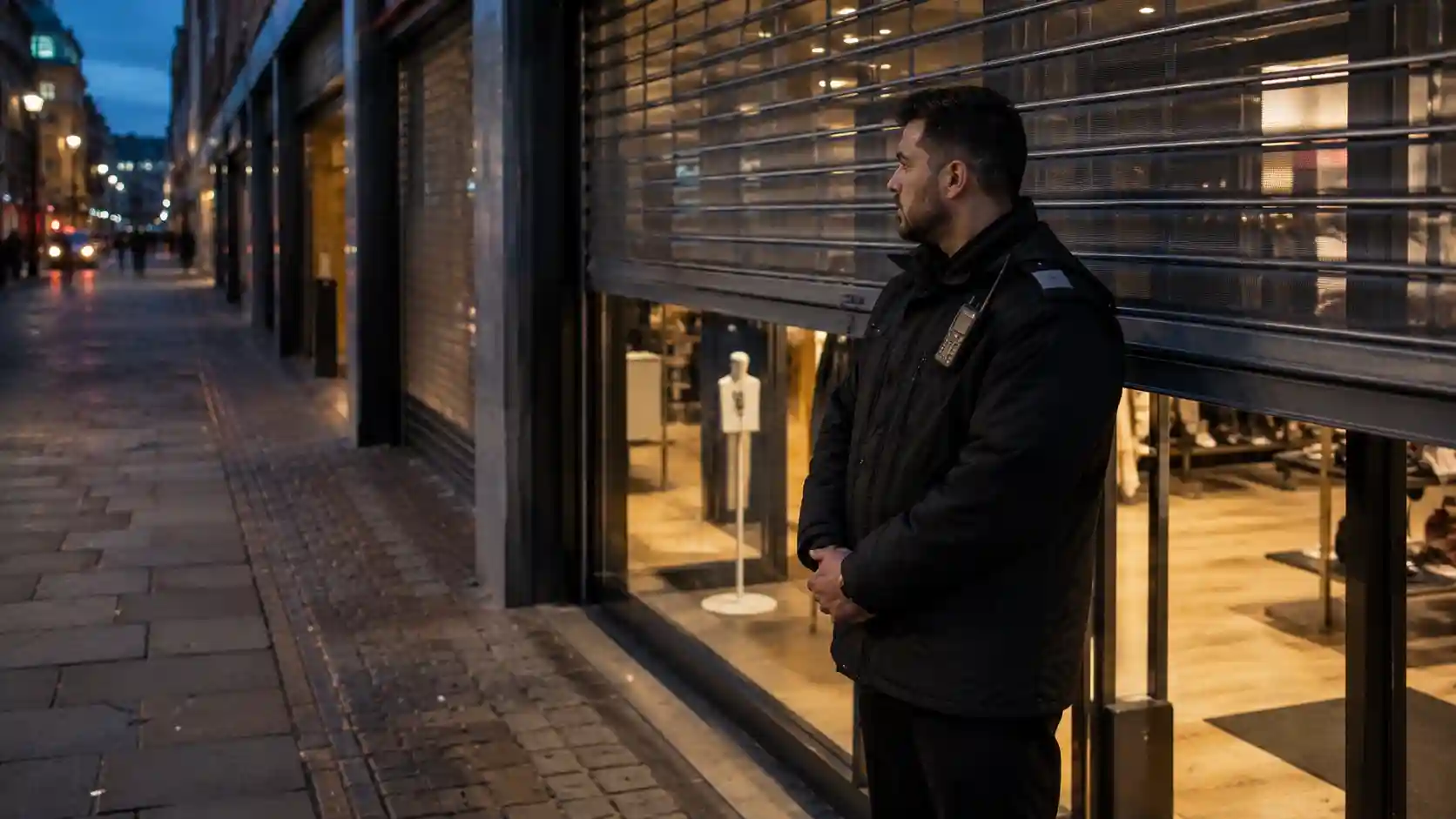
Sheffield’s industrial story is visible in brick yards, modern light-manufacturing parks, and the precision engineering firms that still feed regional supply chains. That mix of old mills standing beside new logistics hubs changes how risk looks. You don’t just protect stock; you protect handovers, high-value tooling, and the continuity of production that pays wages and keeps contracts on time.
This article answers why Sheffield businesses need Factory Security in practical terms: when human presence matters, which windows of vulnerability to prioritise, and how guarding fits with CCTV, insurers and compliance. Think less “a guard for every gate” and more “a guard for the right gate at the right moment.” On many Sheffield sites, the real problems happen during shift changeovers, busy delivery bursts, and contractor-heavy periods, the same operating rhythms that matter in nearby industrial corridors around Leeds and Bradford, and on distribution routes toward Hull or York.
If you manage a factory or an operations budget, the goal here is simple: give you a framework to decide where targeted manned guarding reduces real commercial risk, not to sell a service, but to help you make a defensible, evidence-based choice.
Factory Security basics in Sheffield: Timing, site layout, and the human difference
Factory Security isn’t a uniform product you bolt on. In Sheffield, it’s a response to local rhythms: legacy steel and engineering sites, light-manufacturing units spread across terraced industrial estates, and modern logistics parks with concentrated HGV movement. The right answer combines people, processes, and technology in that order.
Below I will explain what Factory Security looks like in Sheffield, how it differs from static or remote-only models, and which local patterns drive demand.
What Factory Security actually does (and why it’s different)
Think less “guard at a gate” and more “judgement where movement creates exposure”:
- Mobile presence during shift changes and busy deliveries.
- Verification of drivers, manifests and contractor access.
- Rapid, human-led de-escalation when tensions rise.
- Clear, time-stamped reporting (photos, CCTV clips, vehicle logs) that insurers and operations teams can trust.
Static guarding can control an entrance. Remote monitoring can flag an event. But only trained people can read a messy site, a half-open roller shutter, a contractor in the wrong yard, or a cluster of vans that looks like it might turn into an incident and act before it becomes a loss.
How Sheffield’s local patterns shape risk
Sheffield’s industrial geography creates recurring pressure points:
- Legacy sites and complex perimeters. Old mills and repurposed buildings often have multiple informal access points and awkward sightlines.
- High contractor churn. Engineering and fabrication firms regularly bring temporary crews, which raises internal exposure.
- Dense urban overlap. Some factories sit close to residential streets or city commerce, increasing anonymous footfall after hours.
- Transport hubs. Rail-linked and motorway-facing sites see concentrated arrival windows for HGVs and trailers.
Wherever your site sits, exposure, not headline crime, drives need: multiple gates, long yards, external staging of goods, and irregular operating hours are the real risk multipliers.
Peak hours and where to focus patrols
Across Sheffield, the most important windows tend to be operational, not strictly “night vs day”:
- Early morning: first shifts begin, and inbound deliveries create congestion.
- Mid/late afternoon: handovers and outbound dispatch cluster activity.
- Late night/early hours: reduced staffing; external storage left unattended.
Good security plans focus patrols on these windows and on short, intense sweeps through loading bays and entrances, rather than assuming constant guard presence is always the best use of resources.
Warehouses & yards: Sheffield-specific vulnerabilities
Modern distribution and warehousing in areas feeding into Leeds or handling regional freight face common weak points:
- Trailers left unlocked while drivers collect paperwork.
- Staged goods in open yards awaiting collection.
- Multiple dock doors accessed by different crews.
Guards who verify manifests, record vehicle registrations, and supervise handovers help close many of these gaps.
Anti-social behaviour, retail parks and local events
Industrial edges can abut retail parks or mixed-use zones. Anti-social behaviour, such as loitering, vehicle nuisance, and vandalism, often occurs during quiet hours and can spill into adjoining factory space. During city events (everything from local markets to the Tramlines festival), footfall patterns shift: you might see more vehicles passing through industrial routes, or temporary parking in previously quiet yards. Planning for these pulses is practical risk management.
Day vs night: different problems, different tactics
Daytime issues: distraction theft during busy loading, unauthorised access by contractors, and delivery disputes. Night-time issues: trespass, break-ins, utility tampering and vehicle theft.
An effective strategy in Sheffield adapts: interactive, people-facing tasks by day; deterrence, verification and evidence capture at night.
Transport links, student populations and city dynamics
Sheffield’s Supertram and rail hubs concentrate transient flows near certain industrial clusters; nearby student and commuter activity can increase anonymous footfall at particular times. Security plans that align patrols with tram timetables or shift arrivals reduce surprise exposures, the same principle that applies along corridors toward Bradford, Hull and York.
Economic cycles and demand for guarding
When local manufacturing ramps up new contracts, extra shifts, or one-off projects, demand for temporary, focused guarding rises. Conversely, in downturns, opportunistic theft can increase as supervision thins. The smart approach is scalable cover: short trials during peak weeks, measured results, then repeat if outcomes justify continuation.
Legal and compliance requirements in Sheffield: what factory operators actually need to evidence
Legal compliance is where factory security stops being a “nice to have” and becomes a board-level risk issue. Most problems don’t surface until there’s an incident, an insurance claim, or a council inspection, which is why it pays to understand the baseline before you deploy guards. Here’s what Sheffield businesses should expect in practice.
SIA licensing: the non-negotiable starting point
Any guard carrying out licensable duties (patrolling, preventing theft, controlling access, dealing with disorder) must hold a valid licence from the Security Industry Authority.
That applies just as much in Sheffield as in neighbouring industrial hubs such as Leeds and Bradford.
What this means for you as a buyer:
- Ask for individual SIA licence numbers for every operative on your site
- Make sure your provider actively checks expiry dates
- Keep copies on file for insurance and audit purposes
Using unlicensed guards is a criminal offence under UK law. It can lead to the provider’s prosecution and serious insurance issues for you if you can’t demonstrate due diligence.
Vetting: BS 7858 and when DBS comes into play
Most reputable security companies screen staff to BS 7858, the recognised UK vetting standard. This covers:
- Identity verification
- Employment history
- Right-to-work checks
- References
DBS checks are not mandatory for every factory guard. In Sheffield, they are usually requested when:
- Guards work in sensitive production areas
- Sites host visitors or contractors regularly
- Clients or insurers require enhanced screening
The rule of thumb is proportionality: match the level of checking to the risk profile of your site.
Insurance: where paperwork becomes expensive
Before mobilisation, your provider should supply:
- Employer’s Liability Insurance
- Public Liability Insurance
Both should be appropriate to industrial environments (yards, plant areas, vehicle movement).
If a supplier can’t produce live certificates with policy numbers and expiry dates, pause deployment. Insurers take this seriously, and so should procurement teams.
CCTV, GDPR, and evidence handling
Where Factory Security integrates with CCTV, UK data protection rules apply.
From a practical standpoint, Sheffield factories should have:
- Clear signage explaining monitoring
- Defined footage retention periods
- Restricted access to recordings
- A documented process for sharing clips with South Yorkshire Police
Your provider should also understand how to export timestamped footage quickly when incidents occur. Slow or incomplete evidence sharing is one of the most common causes of delayed claims.
VAT, contracts, and labour law basics
Security services are typically VAT-rated, so finance teams should model this correctly in budgets and tenders.
On the staffing side, providers must comply with UK employment law, including:
- Working Time Regulations (rest breaks and night work limits)
- National Living Wage increases
- Overtime rules
- Right-to-work checks for UK and EU nationals post-Brexit
You don’t manage guards directly, but failures here still affect the continuity of cover on your site.
Local authority expectations and construction-linked sites
For factories undergoing redevelopment or operating alongside construction zones, conditions may be set by Sheffield City Council through planning or site safety requirements.
These can include:
- Perimeter guarding
- Out-of-hours patrols
- Visitor access controls
Always ask your security provider how they document compliance for council inspections.
Event licensing and Martyn’s Law (Protect Duty)
If your Sheffield factory hosts open days, training events, or community activities, security becomes part of your licensing and safety planning.
The upcoming Protect Duty (Martyn’s Law) will place more emphasis on:
- Documented risk awareness
- Proportionate mitigation measures
- Clear coordination between people, procedures and systems
For industrial sites with any form of public access, Factory Security will increasingly support this compliance by showing who responds, how incidents escalate, and how risks are actively managed.
Working with the police and local business partnerships
Factory security teams don’t replace the police; they complement them.
In Sheffield, good providers already align with:
- South Yorkshire Police reporting standards
- Local business crime reduction partnerships
- Shared evidence protocols for repeat offending
This collaboration helps shape patrol priorities, especially around vehicle theft, yard access and industrial estate nuisance.
What proves a security firm’s compliance history?
When vetting suppliers, ask for:
- SIA licence records
- BS 7858 vetting summaries
- Insurance certificates
- Sample incident reports
- CCTV/data-handling policies
- Evidence of police or partnership engagement
These documents tell you far more about operational quality than marketing brochures ever will.
The practical takeaway for Sheffield factories
Legal compliance isn’t abstract. It’s what protects your business when something goes wrong.
Strong Factory Security gives you:
- Licensed, vetted people on site
- Insurable processes
- Clear reporting for claims and investigations
- A defensible position with regulators and landlords
And in a manufacturing city that feeds supply chains stretching toward Hull and York, operational credibility matters just as much as preventing theft.
Costs, contracts, and deployment in Sheffield
Practical buying advice: what shapes price, how quickly teams can arrive, and what contracts should protect you
When Sheffield companies inquire, “How much will it be? ” the straightforward answer is: it mainly depends on how your site is operating, more than the name of the city. An efficient factory, located close to the city centre in many cases, can be secured at a lower cost than a 24/7 distribution yard on the outskirts.
Here is the buyer-oriented breakdown of costs you can refer to in purchasing discussions.
What actually drives price
Think in terms of delivery complexity, not headline hourly rates:
- Site complexity: Long perimeters, multiple gates, external trailer parks and blind spots increase patrol time and require more staff or vehicle patrols.
- Operating patterns: Early starts, multiple shifts, late-dispatch windows, or 24/7 production require overlap, relief cover, and standby teams.
- Location & travel: City-edge or rural estates cost more because relief and emergency response take longer; inner-urban sites benefit from shorter travel and deeper relief pools. Compare inner-urban Sheffield with corridors toward Leeds or out toward Hull to see this effect.
- Scope of duties: Simple observation posts are cheaper than roles that verify manifests, manage contractor access, export CCTV, and produce insurer-ready reports.
- Equipment & integrations: If the supplier must provide vehicles or bodycams, or integrate with your CCTV/access control, expect higher mobilisation and monthly running costs.
Buyers often underprice the resilience elements, standby relief, short-notice mobilisation, and supervisor cover, which are the real value behind consistent protection.
Typical mobilisation timelines
Set expectations early in tender documents:
- Emergency short-notice cover: 24–72 hours (possible, but limited vetting and often a mobilisation premium).
- Planned mobilisation: 7–21 days (SIA licence checks, BS7858 vetting, site induction, reporting setup).
- Large or sensitive sites: 3–6 weeks (access permissions, equipment installation, reporting integration and police/client briefings).
If you require a guaranteed rapid response, you are effectively paying for standby capacity: budget for that explicitly rather than assuming “we will get someone tomorrow”.
Common contract lengths & notice periods
Most practical Sheffield contracts fall into three bands:
- Short-term/seasonal: 1–3 months. Typical notice: 7–30 days. Use for surge cover (projects, audits).
- Standard operational: 6–12 months. Typical notice: 30–60 days. Most ongoing retail/production guarding sits here.
- Longer rolling: 12 months+ with scheduled reviews. Typical notice: 60–90 days. These include KPI frameworks and escalation clauses.
Always insist on explicit mobilisation and exit clauses so a last-minute end of contract doesn’t leave you exposed.
Wage increases, 2025 pressures and inflation
Labour is the dominant cost line. Recent and expected pressures include National Living Wage uplifts, mandatory training, fuel and travel costs, plus higher pension/NI burdens.
Practical buyer responses:
- Expect suppliers to include CPI- or wage-indexed escalation clauses for multi-year deals rather than fixed, unrealistic rates.
- Request transparent cost breakdowns showing base pay, employer on-costs, and margin so you understand what’s driving increases.
- Consider short fixed review windows (e.g., annual) rather than open-ended pass-throughs.
This is preferable to low fixed prices that collapse quality mid-contract.
How guarding helps with insurance
Guards don’t magically cut premiums. They create a defensible risk posture that insurers can underwrite more favourably when evidence exists:
- What insurers value: consistent, time-stamped patrol logs; CCTV-linked incident packs; fast alarm verification procedures; demonstrable reductions in repeat incidents.
- Operational ask: require your supplier to deliver a monthly “security evidence pack” (patrol logs, incidents, and CCTV extracts) for insurer reviews.
- Outcome: Clearer evidence often shortens claim investigations and can improve renewal conversations more than an ad hoc “we had guards” statement.
Procurement Act 2023: what public-sector buyers now expect
The Procurement Act switched the focus from the lowest price to service continuity, resilience and social value:
Tenders are checked not only for the hourly rates but also for the mobilisation plans, staff resilience, and KPI frameworks. Nowadays, it is hardly unusual that public sector style scoring is used in sophisticated private tenders: bidders have to explain how their operations will not be disrupted in case of stress and how fast they can bring relief.
If you are a supplier of public bodies or you are handling public sector adjacent sites in Sheffield, be ready for detailed audit rights, KPI dashboards and resilience tests.
Alongside, private buyers even get a benefit: by imitating these standards, they lower their operational risk and avoid a cheap but fragile supplier outcome.
Training, daily operations, and guard duties in Sheffield
What well-run Factory Security looks like on the ground from shift start to secure-down
On Sheffield factory sites, good security isn’t about ticking boxes. It’s about rhythm: early starts, delivery windows, quiet overnight stretches, and handovers that keep continuity when teams rotate. Below is a practical, buyer-friendly view of what trained guards do each day and what you should expect to see in your scope of work.
Guard training standards
For industrial environments around Sheffield, guards should arrive with more than a badge:
- SIA licence (for licensable duties) and ongoing licence validation
- BS 7858 vetting (ID, employment history, right-to-work)
- Conflict management & verbal de-escalation (for contractor disputes and stressed drivers)
- Basic first aid + lone-worker awareness (early/late shifts)
- Fire safety and permit-to-work awareness (production areas)
- Digital reporting + CCTV evidence handling (how to export time-stamped clips)
DBS checks are role-dependent and are commonly requested when guards supervise visitors or enter sensitive zones.
The first 5–10 minutes on site
A productive guard doesn’t launch straight into a long patrol. They orient first:
- Read the handover: Three priority items: incidents, faults, planned deliveries.
- Kit check: Radio/bodycam/torch/keys; log any failures immediately.
- CCTV quick check: Confirm that the main cameras are live and recording.
- Sightline sweep: Entrances, loading bays, and any temporary staging areas.
If something’s wrong, it’s escalated before footfall rises; that small habit prevents bigger problems later.
Handover discipline
Expect a simple, repeatable format:
- Outgoing: what happened, what’s outstanding, who owns it.
- Incoming: repeat back, sign acceptance, and record any actions with deadlines.
This keeps momentum across rotating shifts and seasonal staffing.
Patrol routines: risk-led, not clock-led
Patrol frequency changes with site pressure:
- Peak windows (shift change/lorry arrivals): hotspot checks every 10–20 minutes
- Transition periods: focused checks on yards, gate lines, and staging areas
- Quiet / night: evidence-focused patrols every 45–90 minutes, plus targeted spot checks
Routes should vary to avoid predictability.
Perimeter, yard and industrial checks
On Sheffield’s mixed industrial estates, guards prioritise:
- Gates/roller doors secured; seals intact
- No tampering with utilities or cabinets
- Temporary staging supervised or logged
- Unusual vehicles recorded (registration + time)
Equipment verification & alarm response
Start-of-duty checks must cover the health of radios, bodycams, and CCTV. A sensible alarm flow is:
- Verify on CCTV where possible
- Notify supervisor/monitoring
- Approach with backup (or hold until risk is confirmed)
- Record everything: times, actions, witnesses
Visitor logging & access control
For deliveries and contractors, practical logs include: name, company, vehicle reg, arrival/departure time, escort name, and ID where required. Digital logs with timestamps are most effective on busy sites.
Daily logs, fire & lighting checks
After each patrol (or hourly on quiet shifts), guards should record:
- Patrol time + route
- Anomalies (open doors, displaced stock, loitering)
- Fire doors/escape routes status
- Lighting failures (exact location) photograph where safe
These records are what insurers and auditors rely on later.
CCTV checks, internal access and incident briefings
At shift start, guards confirm key cameras are live. Post-start, they verify internal access points (workshops, stores, plant rooms). Any prior incidents from handover logs are briefed so new staff know where to pay attention.
Tamper detection & end-of-shift secure-down
Before leaving:
- Note and photograph exposed cables, broken seals, or opened utilities
- Lock doors/gates, set alarms, log keys
- Export CCTV clips if an incident occurred
That last step often shortens investigations by days.
Shift patterns for 24/7 Factory Security
For continuous cover, expect:
- Overlap at peak windows for strong handovers
- Shorter continuous night stints to manage fatigue
- Supervisor check-ins for lone posts every 30–60 minutes (logged)
Local relief response typically falls within the 5–20-minute range when providers have nearby resources. Confirm this in your SLA.
How often do guards report to supervisors
During nights or lone posts, brief welfare and status updates are standard (radio/app), with formal check-ins logged. After any alarm or confrontation, supervisors should be notified immediately.
A regional note on operations
Sheffield sits between dense urban industry and wider logistics corridors. Relief availability and travel time can change quickly as you move toward Leeds, Bradford, Hull, or York, which is why patrol design, standby cover, and clear escalation steps matter as much as the headline hourly rate.
Performance, risks, and staffing challenges in Sheffield
How to measure what matters and spot problems before they become losses
On Sheffield factory sites, security rarely “fails” in a dramatic way. More often, it fades quietly: patrols get shorter, reports lose detail, response times stretch, and familiar faces disappear from the rota. That’s why performance needs to be tracked like any other operational function, with clear signals and early warnings.
Here’s what experienced facilities and operations managers in Sheffield tend to monitor.
The KPIs that actually show whether security is working
Forget surface metrics like hours covered. Focus on outcomes:
- Coverage adherence: Were patrols completed during agreed risk windows (shift changes, deliveries, overnight)?
- Mean time to verify or escalate: How quickly alarms or incidents are confirmed and acted on.
- Incident repeat rate: Are the same doors, yards or loading bays showing up again and again?
- Report quality: Do logs include timestamps, photos, CCTV references and actions taken?
- Loss per comparable period: Compare monthly or quarterly losses against a baseline.
Ask your provider for a simple dashboard with these five measures. They tell you far more than a stack of sign-in sheets.
Weather: a quiet but serious performance variable
South Yorkshire weather plays a bigger role than many businesses expect.
Heavy rain can flood yards. Ice changes patrol routes. Fog reduces visibility. High winds affect lighting and camera stability on exposed estates.
Well-run Sheffield contracts require guards to record weather impacts directly in patrol logs, such as:
- reduced visibility
- inaccessible areas due to standing water or ice
- lighting failures after storms
These notes turn “bad weather” from an excuse into a documented context, which matters during insurance reviews or post-incident investigations.
The real impact of long or fragmented shifts
Extended or irregular shifts don’t just affect morale; they change decision quality.
Common signs on factory sites include:
- slower alarm response
- Reduced situational scanning
- Shorter, less detailed reports
- Guards sticking to obvious routes and missing secondary areas
From a buyer’s perspective, this appears as a continuity risk: someone is present, but their protective value is declining. That’s why contract terms around relief cover, supervisor check-ins, and maximum shift lengths matter as much as the hourly rate.
Mental well-being on night and lone posts
Many Sheffield factories rely on overnight or isolated guarding.
While clients don’t manage guards directly, it’s reasonable to expect suppliers to demonstrate basic welfare safeguards:
- scheduled supervisor check-ins
- clear escalation routes after stressful incidents
- fatigue-aware rostering
- rotation of lone duties where possible
You don’t need a provider’s HR handbook, just evidence that guard wellbeing is considered operationally. Unsupported guards make poorer decisions.
Environmental and regulatory constraints on outdoor patrols
Outdoor factory patrols must respect:
- local planning conditions (lighting limits, vehicle access)
- environmental protections near waterways or green corridors
- health and safety rules around plant rooms and utilities
Security plans should reflect these realities by documenting patrol routes and backup coverage (e.g., CCTV cross-monitoring when areas become unsafe). If routes change due to conditions, that change should be logged.
Staffing pressure: what Sheffield businesses actually notice
Labour shortages don’t usually arrive as “we can’t staff your site.”
They appear as:
- increased use of relief guards unfamiliar with your layout
- last-minute rota changes
- higher premiums for guaranteed cover
- hybrid models (on-site during peaks, remote monitoring off-peak)
These are market responses, not automatic failures. The key question is whether your provider still delivers consistent coverage and strong reporting when staffing is tight.
Businesses operating across nearby centres such as Leeds, Bradford, Hull, and York often first experience these pressures on out-of-town industrial estates, where travel time and availability of relief add strain.
Practical early warning signs to act on
Intervene early if you notice:
- patrol logs becoming generic or repetitive
- missed peak windows
- repeat incidents in the same locations
- slower alarm verification
- frequent changes in on-site personnel
These usually appear weeks before serious losses.
A simple rule of thumb
Good Factory Security in Sheffield shows up as:
- fewer repeat incidents
- faster verification
- better documentation
- calmer operations during pressure windows
If reports improve while losses fall, your security model is working. If hours stay the same but outcomes worsen, something underneath is breaking.
Technology and future trends in Sheffield Factory Security
How smart systems now support guards and what actually works on industrial sites
Technology hasn’t replaced Factory Security in Sheffield. What’s done is sharpen it.
Instead of blanket coverage or rigid patrol schedules, modern setups help guards focus on the moments that matter most: shift changes, deliveries, quiet overnight windows, and vulnerable yard areas. The result is less guesswork, faster responses, and clearer evidence when something goes wrong.
Here’s how that’s playing out across Sheffield’s manufacturing and logistics estates.
From passive CCTV to active, connected security
Traditional cameras used to sit quietly in the background, recording incidents after the fact.
Today, CCTV is increasingly integrated with:
- access control systems
- alarm panels
- vehicle recognition at gates
- mobile devices carried by guards
This means on-site teams can see live feeds, verify alerts instantly, and export time-stamped clips for insurers or police without delays.
For factories operating across South Yorkshire and neighbouring hubs like Leeds or Bradford, this connected approach reduces investigation time and makes incident reporting far more defensible.
Buyer tip: ask suppliers to demonstrate how quickly they can package CCTV evidence after an incident; it’s a practical test of operational maturity.
Post-COVID realities: leaner sites, sharper pressure windows
Many Sheffield factories never returned to pre-pandemic staffing levels.
What replaced them is a hybrid model:
- guards on site during predictable peaks (shift handovers, delivery runs)
- remote monitoring during extended quiet periods
- defined escalation routes so remote alerts become directed guard actions
This keeps costs controlled while ensuring human judgement is available when risk is highest. Security planning now follows production rhythms rather than clock time.
AI surveillance: pattern spotting, not decision making
AI-enabled analytics are increasingly used on Sheffield industrial estates to flag:
- Repeated loitering near loading bays
- unusual vehicle movement after hours
- clustering behaviour in yards
The value isn’t automation, it’s attention management.
AI highlights anomalies. Guards decide what they mean.
Important limits to understand:
- False positives are common unless systems are tuned to the site
- AI can’t judge intent or handle confrontation
- outputs still need human verification
Before rolling out widely, sensible businesses run short pilots and review alert quality, not just system capability.
Remote monitoring: effective when escalation works
Remote monitoring has become a cost-management tool, not a shortcut.
On Sheffield factory sites, it works best when paired with:
- clear response scripts
- guaranteed on-site attendance when thresholds are met
- logged verification times
In practice, this looks like:
- cameras monitored centrally overnight
- guards dispatched for verified alarms or suspicious activity
- Supervisors tracking the mean time to respond
Ask providers for their average verify-to-action times. That number indicates whether monitoring genuinely supports Factory Security or simply adds another layer of delay.
Drones: useful in specific situations, not daily operations
Drones are appearing occasionally on large or hard-to-reach Sheffield sites subject to operational rules set by the Civil Aviation Authority, mainly for:
- perimeter checks after repeated incidents
- surveying yards or rooftops
- post-event evidence capture
But routine use is limited by:
- aviation rules
- weather
- privacy considerations
- operator certification requirements
They are tools for exceptional circumstances, not replacements for ground patrols.
Predictive analytics: planning cover instead of guessing
Some manufacturers now combine:
- historic incident data
- delivery schedules
- production peaks
- seasonal patterns
to predict when extra cover is likely to pay back. For example, analytics might highlight:
- higher risk during late-week dispatch runs
- spikes around agency onboarding periods
- increased vehicle theft after extended shutdowns
Used properly, this helps Sheffield businesses add short, targeted guarding where it makes commercial sense rather than defaulting to permanent coverage.
New skills guards are expected to bring
Modern Factory Security roles now require more than visibility.
Sheffield guards increasingly need to:
- Use digital reporting platforms
- validate AI alerts
- export CCTV evidence
- understand basic data-protection rules
- operate access-control systems
SIA licensing remains the baseline, but these practical skills sit on top. Many buyers now ask for a simple training matrix showing who on their site holds which competencies.
Green security practices on industrial estates
Sustainability in Factory Security is becoming practical, not political.
Common Sheffield approaches include:
- route optimisation to reduce patrol mileage
- low-energy LED lighting that supports CCTV visibility
- electric vehicles for on-site patrols where charging exists
- shared monitoring infrastructure across nearby units
These steps often reduce costs and emissions once proven operationally.
Martyn’s Law and what Sheffield factories should prepare for
The forthcoming Protect Duty (Martyn’s Law) will apply across England and affect sites that host public access, including open days, training centres, and community events.
For factories, this typically means:
- documenting public access points
- showing how alerts move from tech to people
- maintaining a simple response plan
It’s less about heavy-handed measures and more about proving you’ve thought through risks and responses.
Sites already working to similar standards in places like Hull or York will recognise the direction of travel.
Conclusion
Sheffield’s factories run on timing: shift handovers, delivery bursts and contractor windows. When you match manned presence to those moments, security stops being an expense and starts being protection that operations and insurers can rely on. Why Sheffield businesses need Factory Security is not a slogan; it’s a procurement question: where will a trained human presence prevent loss, protect staff, and preserve continuity?
Start small and practical: map your three busiest windows in a typical week, identify the top two access points that draw risk, and run a short, measurable trial. Measure coverage adherence, incident repeat rate, and report quality. If those outcomes improve, scale the solution; if not, adjust and test again. This iterative approach keeps cost proportional and decisions defensible, and it’s the clearest route to turning security from a cost centre into a stabiliser for production and reputation.
Regional note: supply-chain links and relief availability matter particularly along corridors toward Leeds, industrial edges near Bradford, freight routes heading to Hull, and storage hubs toward York. Factor travel and standby cover into procurement decisions rather than choosing on headline hourly rates alone.
Frequently Asked Questions
1. Do small Sheffield factories need full-time guards?
Not usually. Many sites benefit more from short, targeted coverage during shift changes, busy dispatch days, or after repeat incidents.
2. Can CCTV alone protect a factory?
No, CCTV records and supports investigations; guards deter, intervene, and manage people in real time. Use both together for the best effect.
3. What checks should I request from a provider?
Ask for SIA licence numbers for deployed staff, BS 7858 vetting summaries, employers’ and public liability insurance certificates, and a clear CCTV/data-handling policy.
4. How quickly can a team be mobilised?
Short-notice cover is sometimes possible in 24–72 hours, but properly vetted and inducted teams typically take 7–21 days.
5. Will guards automatically cut my insurance premium?
Not automatically. Insurers look for documented risk control: regular patrol logs, CCTV-linked evidence, and falling incident frequency. That’s what improves renewal conversations.
6. What KPIs should I track first?
Start with coverage adherence, mean time to verify/escalate, incident repeat rate, report quality, and loss per comparable period.
7. How should weather be recorded in patrols?
Require a brief note in patrol logs when weather affects coverage (visibility, flooding, ice) and photograph any related faults or hazards.
8. How do I avoid supplier quality erosion over time?
Include mobilisation/exit clauses, escalation triggers for pay changes, and a monthly evidence pack requirement (patrol logs + incident clips) in contracts to keep delivery resilient and auditable.