Spend any time around industrial estates in the South West, and a pattern starts to emerge.
Some factories sit along busy commercial corridors. Others operate from quieter edges of town, or semi-rural sites where visibility drops off quickly after working hours. Most handle valuable equipment, stored materials, and time-critical deliveries. Many also experience long periods with no staff on-site.
That combination creates exposure. Not always dramatic, often subtle. A delivery gate was left unsecured. A loading bay with poor lighting. A perimeter that looks fine in daylight but disappears at night.
This is where “Why South West businesses need Factory Security” becomes a practical operational question, not a marketing one.
Manufacturing and logistics facilities across Bristol and Bath face very different pressures from warehouses in Devon or remote production sites in Cornwall. Add the industrial parks and distribution routes running through Gloucestershire, and you’re dealing with a region where security risks vary widely from one site to the next.
Factory security, in this environment, isn’t about placing a guard and hoping for the best. It’s about understanding how your site operates when people arrive, when it’s empty, and how small gaps quietly turn into costly problems. That’s what this guide is here to unpack.
Factory Security Basics in the South West
What Factory Security Is (and How It Differs from Static or Remote-Only Security)
Factory security is built around movement.
Unlike static security, where a guard may remain in one position, or remote-only setups that rely entirely on CCTV and alarms, factory security reflects how production sites actually operate. Vehicles arrive. Contractors move between zones. Materials sit in yards. Buildings empty overnight.
A factory security presence adapts to this flow. Guards patrol, manage access points, check perimeters, and respond in real time when something feels off. Cameras and remote monitoring still matter, but they work best as support, not replacements, for on-site awareness.
Across the South West, this is especially important. Industrial estates near Bristol and Bath face very different pressures from manufacturing sites in Devon or remote facilities in Cornwall. Add the logistics corridors and business parks in Gloucestershire, and it’s clear that one-size-fits-all security simply doesn’t work.
Local Crime Patterns and When Factory Sites Are Most Exposed
Most incidents don’t happen during busy production hours.
They tend to occur:
- Early mornings, before full staffing levels return
- Late evenings, after deliveries finish
- Weekends, when sites sit quiet for longer stretches
These windows create opportunities for:
- Opportunistic theft from yards and loading bays
- Vehicle interference
- Unauthorised access through poorly lit perimeters
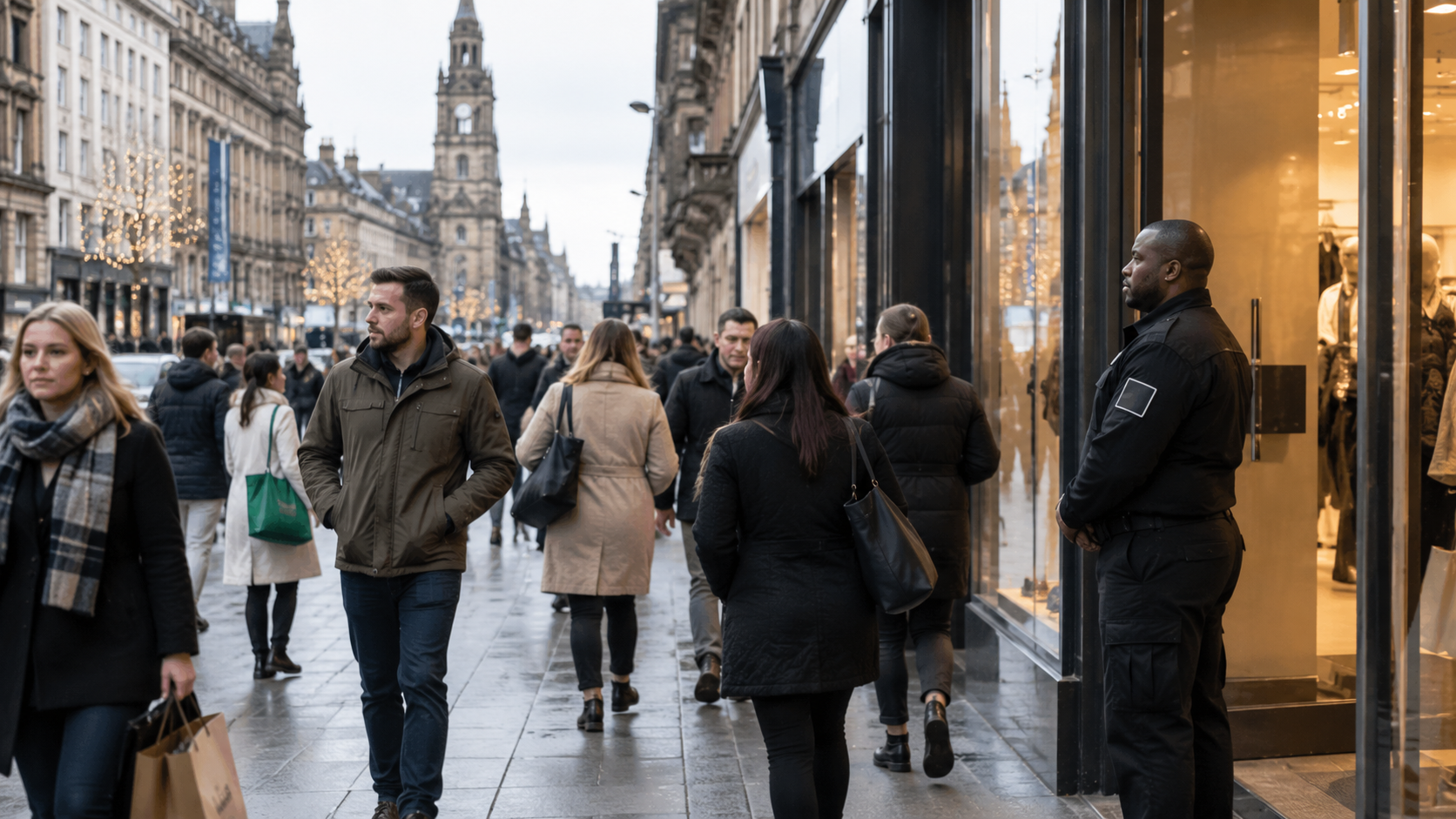
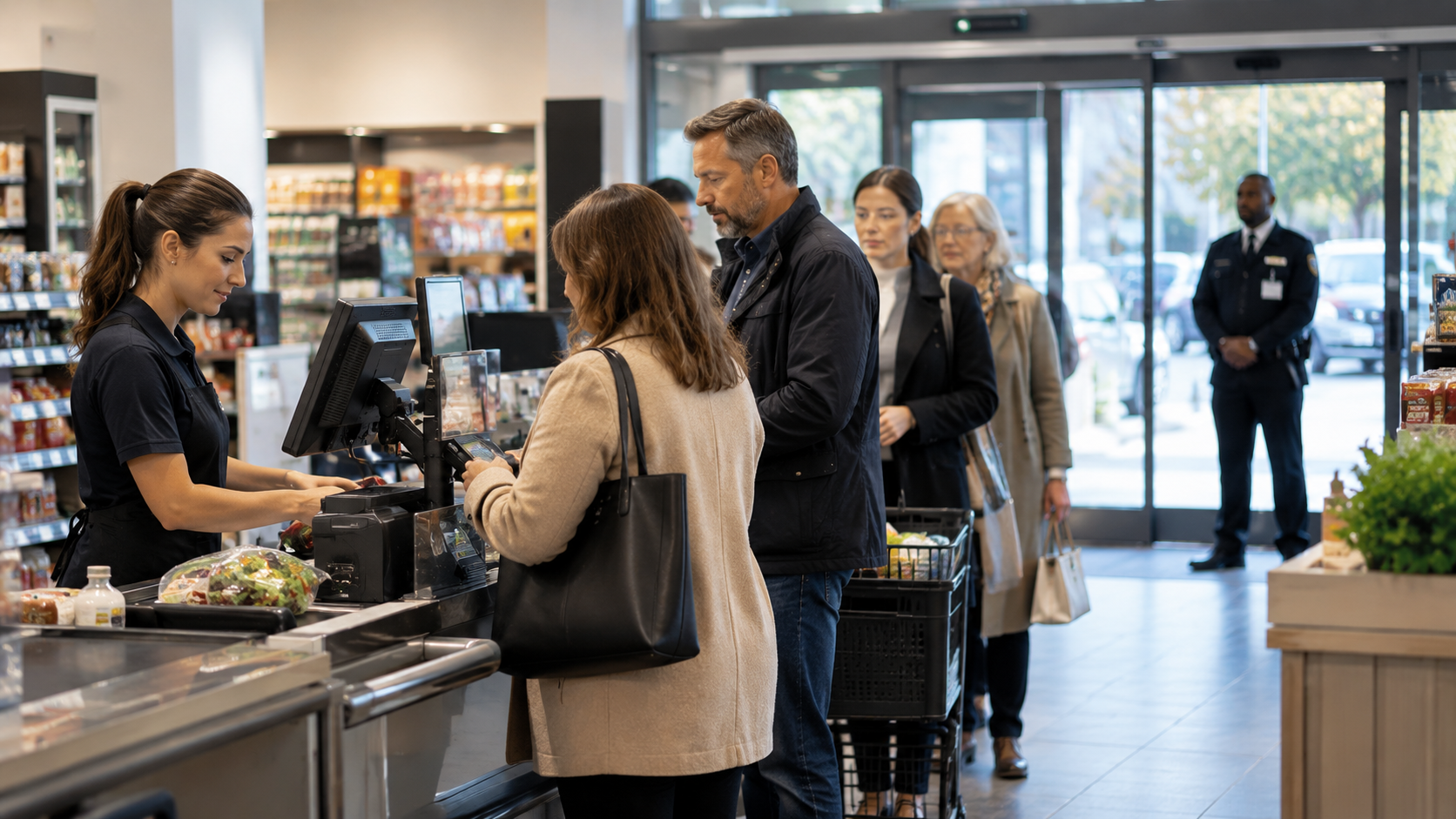
Daytime risks look different. Rising theft across retail and logistics has increased demand for visible patrols during working hours, particularly around shared industrial parks and mixed-use estates. The goal here isn’t just response — it’s deterrence.
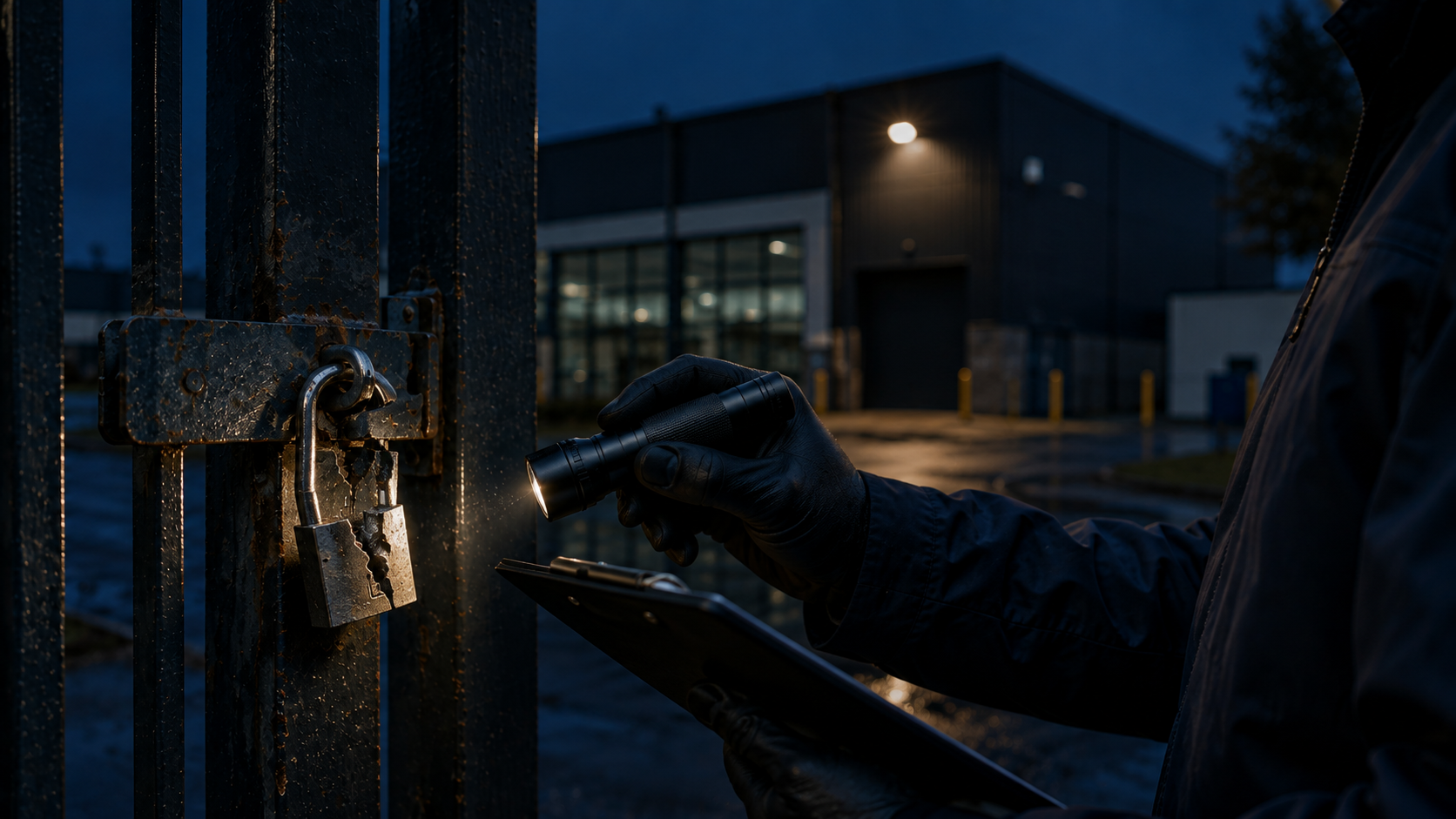
Night-time security, by contrast, focuses on perimeter integrity, alarm response, and ensuring small breaches don’t go unnoticed until morning. Same site. Very different risk profiles.
Warehousing, Construction Links, and High-Risk Industrial Sectors
Warehousing facilities are often the most vulnerable.
Large footprints, multiple access points, and stacked inventory make them harder to monitor remotely. Manufacturing sites near ongoing construction face increased exposure, especially when tools, copper, or machinery are stored outdoors.
Factories located close to retail parks also deal with spillover issues:
- Anti-social behaviour in shared car parks
- Unauthorised foot traffic
- After-hours vehicle access
These aren’t dramatic security failures. They’re everyday pressures that build quietly until something goes missing or operations are disrupted.
Day vs Night Factory Security: Why the Risks Aren’t the Same
During the day, factory security is largely about control:
- Managing deliveries and visitor access
- Maintaining visibility across active areas
- Supporting staff who are focused on production
At night, priorities shift:
- Perimeter checks become critical
- Lighting and access gates matter more
- Response time replaces supervision as the main concern
Many South West sites need both. Especially those operating across extended shifts or storing high-value materials on site.
Business Growth, Transport Routes, and Why Demand Keeps Rising
As the South West continues to grow, so does operational complexity.
More factories mean more goods movement. More warehouses mean higher stock levels. Transport routes create predictable access points. Over time, these patterns become visible not just to logistics teams, but to anyone paying attention.
Economic cycles also play a role. When production ramps up, assets accumulate. When supply chains slow, materials stay on site longer. Either way, exposure increases.
This is why factory security here isn’t driven by crime statistics alone. It’s shaped by how facilities function, how regions develop, and how small gaps left unchecked can quickly become costly problems.
For most site managers, the real challenge isn’t deciding whether security matters.
It’s working out what level of protection actually fits their location, their sector, and the way their factory runs day to day.
Legal and Compliance Requirements for South West Factory Sites
SIA Licensing, Vetting Standards, and What Businesses Are Actually Responsible For
At the most basic level, any security guard working on your factory site must hold a valid licence from the Security Industry Authority (SIA). That isn’t just a box for security companies to tick; it’s a legal requirement that ultimately sits with the client as well.
If an unlicensed guard is found working on your premises, responsibility doesn’t stop with the provider. Businesses can face fines, contract disputes, and insurance complications. In serious cases, enforcement action can follow.
Beyond SIA licensing, reputable factory security providers also apply:
- BS 7858 vetting (employment and background screening)
- DBS checks where guards may interact with staff, visitors, or sensitive areas
- Right-to-work verification for all personnel
Not every role legally requires DBS clearance, but many insurers and facilities teams now expect it as standard for operational sites.
One important shift in recent years: tighter SIA rules and post-Brexit labour changes have reduced the number of eligible guards in the market. That’s influencing hiring timelines and pricing across the South West, especially for 24/7 factory coverage.
Insurance, VAT, and the Financial Side of Compliance
Security isn’t just an operational decision; it’s a financial one.
Most businesses hiring manned guarding will need to ensure:
- Public liability insurance is in place
- Employer’s liability is covered by the provider
- Security services are correctly accounted for with VAT
VAT typically applies to manned guarding in the UK, which catches some finance teams off guard during procurement. It’s also worth noting that insurers increasingly expect visible, professional security at higher-risk manufacturing and warehousing sites. In some cases, guarding directly affects policy terms or excess levels.
Overtime rules also matter. UK labour law governs how guards are paid for extended shifts, nights, and weekends, and those costs are directly reflected in contract pricing. These aren’t abstract HR issues; they shape your monthly security spend.
CCTV, GDPR, and Handling Data the Right Way
Many South West factories use CCTV alongside on-site guards. That’s common and sensible, but it also brings data protection responsibilities.
If your security setup involves cameras, you’re expected to comply with UK GDPR rules, including:
- Clear signage
- Secure storage of footage
- Defined retention periods
- Controlled access to recordings
Guards may monitor cameras, but your business still owns the data. Any misuse or poor handling can create legal exposure, especially if incidents involve employees or visitors.
Construction Sites, Events, and the Growing Impact of Martyn’s Law
Factories connected to active construction zones often face additional local authority expectations, particularly around perimeter control and public safety. While rules vary by council, the underlying principle is consistent: site owners must demonstrate reasonable steps to prevent unauthorised access.
Events add another layer.
If your factory hosts open days, corporate gatherings, or community-facing activity, security can become part of event licensing requirements. Looking ahead, Martyn’s Law will further formalise this by placing clearer responsibilities on venues to assess and mitigate public safety risks. For operational sites, that means security planning will increasingly extend beyond theft prevention into wider duty-of-care considerations.
Working with Police and Proving Compliance
Private factory security doesn’t operate in isolation.
Similarly, across the South West region, there are regular shared practices and cooperative responses among other forces such as Avon and Somerset Police, Devon and Cornwall Police, and Gloucestershire Constabulary, and they significantly influence the scheduling of the guards.
From the perspective of the buyer, we are entitled to request documentation that proves compliance, such as:
- SIA-approved contractor status (where applicable)
- Insurance certificates
- Vetting records
- Training logs
- Incident reporting procedures
These aren’t administrative extras. They are proof that your factory security setup stands up to scrutiny from insurers, auditors, and regulators alike.
In practice, compliance isn’t about memorising regulations.
It’s about making sure your site is protected in a way that satisfies legal duties, supports insurance requirements, and holds up when something goes wrong because that’s when these details suddenly matter most.
Costs, contracts and deployment for South West factory sites
What actually shapes Factory Security costs
Most procurement conversations start with one question: What’s the hourly price?
In reality, factory security costs across the South West are driven far more by how your site operates than by postcode alone.
A compact production unit near Bristol with predictable shift times can often be covered more efficiently than a 24/7 distribution yard on the outskirts of Devon or a semi-remote plant in Cornwall.
Buyers usually see prices move when any of these change:
- Operating pattern – early starts, late dispatch, or overlapping shifts increase cover requirements
- Site layout – long perimeters, multiple gates, or external storage need more patrol time
- Access control – vehicle checks and contractor verification add labour, not just minutes
- Location realities – rural estates cost more to support at night because relief and supervision travel further
- Scope of duties – simple observation posts are cheaper than roles involving reporting, CCTV exports, or yard management
Industrial parks along the M5 corridor in Gloucestershire often sit somewhere in the middle: reasonable staff availability, but noticeable premiums for nights and weekends.
A practical rule: if your factory has irregular deliveries, exposed yards, or quiet overnight periods, expect security costs to reflect that complexity.
City-edge vs rural sites: why pricing feels inconsistent
Urban-adjacent factories tend to benefit from deeper staffing pools and shorter response times. More remote facilities don’t.
That’s why two South West sites with identical guard numbers can end up priced differently.
Rural or edge-of-town locations usually carry:
- higher mobilisation charges
- longer emergency response windows
- mileage or vehicle patrol add-ons
It’s not inefficiency. It’s geography.
How quickly can guards be deployed?
Timelines depend on scale and risk.
Roughly speaking:
- Urgent single-post cover: sometimes 24–72 hours (often with a premium)
- Planned factory deployments: 7–21 days once vetting and induction are complete
- Larger or sensitive sites: 3–6 weeks if access permissions, reporting systems, or equipment need setting up
Post-Brexit labour checks and tighter vetting standards mean rapid deployment is no longer something to assume. If your operation needs a guaranteed fast response, that standby capacity has to be built into the contract.
Contract lengths, notice periods, and exit planning
Most South West factories sit on one of three models:
- Short-term / project cover: 1–3 months (7–30 days’ notice)
- Standard operational contracts: 6–12 months (30–60 days’ notice)
- Rolling annual agreements: 12 months+ (60–90 days’ notice, usually with review clauses)
Always clarify:
- mobilisation timelines
- price review points
- exit terms
It’s surprisingly common for businesses to focus on entry and forget about leaving until they need to.
Wage pressure, inflation, and 2025 pricing reality
Labour is the biggest cost driver.
National wage increases, pension contributions, fuel, and training all feed into security pricing. In 2025, many factories are seeing higher night-shift premiums and more frequent annual reviews.
A sensible buyer response is transparency:
- Ask for a basic cost breakdown
- agree review windows
- avoid unrealistically fixed multi-year pricing
Low headline rates often collapse into service gaps later.
How Factory Security supports insurance outcomes
Guards don’t automatically reduce premiums. What they do provide is evidence.
Insurers respond to:
- time-stamped patrol logs
- incident reports linked to CCTV
- documented response times
- falling repeat incidents
Many South West factories now ask for a simple monthly “security evidence pack” for renewals. It shortens claims investigations and gives underwriters something concrete to assess.
Public-sector rules and the Procurement Act 2023
If your factory supplies public bodies or operates on public land, procurement standards are stricter.
Under the Procurement Act 2023, buyers increasingly score on:
- mobilisation resilience
- continuity planning
- measurable performance
Hourly rates matter less than whether a provider can keep your site covered under pressure.
Private businesses are quietly adopting the same approach because it avoids cheap contracts that unravel mid-year.
Training, daily operations, and guard duties on the South West factory sites
What training standards matter in real factory environments
For manufacturing and warehousing sites, guard training goes well beyond holding an SIA badge.
On South West factory estates, whether near Bristol, Bath, or across more remote areas of Devon and Cornwall, buyers should expect guards to arrive with:
- Valid SIA licensing (for licensable duties)
- BS 7858 vetting (identity, work history, right-to-work)
- Conflict management and de-escalation (for drivers, contractors, stressed shift teams)
- Basic first aid and lone-worker awareness
- Fire safety familiarity and permit-to-work awareness
- Digital reporting skills (incident logs, photos, CCTV exports)
DBS checks aren’t mandatory for every factory role, but many sites request them where guards interact with visitors or access sensitive production areas.
The key point for operators: training should match site risk, not follow a generic checklist.
What actually happens at the start of a shift (and why it matters)
Good security doesn’t begin with a long patrol. It begins with orientation.
When a guard arrives on a South West factory site, the first few minutes usually focus on:
- Reading the handover log (overnight issues, equipment faults, planned deliveries)
- Checking radios, bodycams, keys, and torches
- Confirming critical CCTV cameras are live
- A quick visual sweep of entrances, loading bays, and staging areas
If something looks wrong, a door left ajar, lighting out in a yard, it’s escalated immediately, before footfall increases.
That early reset prevents small problems from becoming operational disruptions later in the day.
Patrol routines, perimeter checks, and access control
Patrol frequency isn’t fixed. It changes with pressure.
During peak windows (shift changes, delivery runs), guards tend to carry out short, focused checks every 10–20 minutes around:
- Gates and roller shutters
- Loading bays
- External storage areas
During quieter periods, patrols stretch out, but still target high-risk zones like yards and plant rooms.
Typical perimeter priorities include:
- Verifying gates and fire exits are secure
- Checking for utility tampering or damaged cabinets
- Recording unfamiliar vehicles (registration + time)
- Supervising staged goods awaiting collection
Visitor and contractor access is logged with arrival/departure times, vehicle details, and escort names where required, simple records that later become vital if incidents occur.
Reporting, alarms, and night-shift supervision
After each patrol (or hourly on quieter shifts), guards complete brief digital entries covering:
- Time and route
- Anything unusual
- Fire door and lighting status
- Photos where appropriate
When alarms trigger, especially in early morning hours, the process is usually:
- Verify on CCTV if possible
- Notify monitoring or supervisors
- Attend in person once risk is confirmed
- Record actions with timestamps
On lone or night shifts, guards typically check in with supervisors every 30–60 minutes. These welfare and status updates are logged, not informal.
Shift handovers, secure-down, and 24/7 coverage
Factories running continuous operations rely on disciplined handovers.
Outgoing guards brief incoming staff on incidents, outstanding issues, and priority areas. Incoming guards confirm understanding and sign acceptance. That’s what keeps continuity across rotating teams.
At the end of the shift, secure-down usually includes:
- Locking gates and doors
- Setting alarms
- Noting any tampering
- Exporting CCTV clips if something occurred
For 24/7 sites common across industrial parks in Gloucestershire, contracts often include overlap during busy windows and supervisor visits to prevent fatigue and blind spots.
Emergency response times vary by location. Urban-adjacent estates see faster relief; rural plants wait longer. That’s geography, not performance, and it’s why response expectations must be written into service agreements.
The practical takeaway for South West operators
From a buyer’s perspective, daily guard duties aren’t about ticking procedural boxes.
They’re about consistency:
- Clear handovers
- Visible patrols at the right moments
- Accurate reporting
- Calm alarm response
- Reliable secure-down
When those basics are done well, factory security supports production rather than interrupting it, and provides insurers, auditors, and operations teams with the evidence they need when something goes wrong.
Performance, risks, and operational challenges on South West factory sites
The KPIs that actually tell you whether security is working
Hours covered don’t tell you much. What experienced facilities teams across the South West track instead are outcome-based signals:
- Coverage adherence: Were patrols completed during agreed risk windows (shift changes, deliveries, overnight)?
- Mean time to verify or escalate: How quickly alarms or incidents are confirmed and acted on.
- Incident repeat rate: Are the same doors, yards, or loading bays showing up again and again?
- Report quality: Do the logs include timestamps, photos, CCTV references, and actions taken?
- Loss per comparable period: Month-on-month or quarter-on-quarter comparisons.
A simple dashboard with those five measures tells you far more than a stack of sign-in sheets.
If reports improve while losses fall, your model is working. If hours stay the same but outcomes drift, something underneath is breaking.
Weather: the quiet performance variable most sites underestimate
On South West industrial estates, weather changes how security performs.
Heavy rain can flood yards. Fog cuts visibility. High winds knock out lighting or shift temporary fencing. Frost alters patrol routes and slows response.
Good guarding teams don’t treat this as background noise. They document it.
You should expect patrol logs to note conditions like:
- reduced visibility in open yards
- standing water near loading bays
- lighting failures after storms
- icy access routes affecting perimeter checks
Those short notes matter later, especially during insurance reviews or post-incident investigations, because they explain why coverage changed and what was done about it.
Sites near Bristol or Bath tend to feel this during coastal weather systems. More exposed facilities in Devon and Cornwall see it in open yards and long perimeters. Industrial parks across Gloucestershire often feel it most in night lighting and access roads. Same region. Different impacts.
Long shifts, decision quality, and why continuity matters
Extended or irregular shifts don’t usually cause dramatic failures. They cause slow ones.
From a buyer’s perspective, this shows up as:
- slower alarm verification
- shorter patrol notes
- guards sticking to obvious routes
- less proactive engagement around busy loading windows
It’s not about blaming individuals. It’s about recognising that fatigue changes judgement.
That’s why contracts should define:
- maximum continuous shift lengths
- overlap at peak periods
- supervisor check-ins for lone posts
Those clauses protect your operation, not just the guard rota.
Night and lone posts also need clear welfare processes, regular supervisor contact, escalation routes after stressful incidents, and fatigue-aware scheduling. You don’t manage guards directly, but it’s reasonable to ask suppliers how these safeguards work on your site, because unsupported guards make poorer decisions.
Environmental constraints on outdoor patrols
Outdoor factory patrols must also respect:
- local planning conditions (lighting levels, vehicle access)
- environmental protections near waterways or green corridors
- health and safety rules around plant rooms and utilities
When conditions make an area unsafe or inaccessible, the expectation isn’t heroics, it’s documentation and fallback coverage (for example, CCTV cross-monitoring until patrol routes reopen). Changes like this should always appear in patrol reports.
Labour pressure: what South West businesses actually notice
Staffing challenges don’t usually arrive as a headline problem.
They surface quietly as:
- More relief guards unfamiliar with your layout
- last-minute rota changes
- longer response times for rural sites
- Higher premiums for guaranteed night cover
These are market realities, especially outside major centres.
From a buyer’s point of view, the question isn’t how providers “retain staff.” It’s whether your supplier maintains service continuity when pressure hits. The practical checks are simple:
- Are patrols still happening at agreed-upon times?
- Are reports detailed or generic?
- Are the same vulnerabilities repeating?
- Is response slowing?
If any of those drift, intervene early.
Practical early warning signs to act on
Across South West factory estates, experienced operators step in when they see:
- patrol logs becoming repetitive
- missed peak windows
- repeat incidents in the same locations
- slower alarm verification
- frequent changes in on-site personnel
These usually appear weeks before serious losses.
The takeaway for factory managers
Good factory security doesn’t fail loudly. It fades quietly.
That’s why performance needs to be treated like any other operational function: measured, reviewed, and adjusted. Track outcomes. Record weather impacts. Protect continuity with clear shift rules. And respond early when reporting quality slips.
Do that, and guarding becomes a stabiliser for production, not just a presence at the gate.
Technology and future trends in South West Factory Security
From passive cameras to connected, on-site decision making
Factory security across the South West has shifted quietly over the last few years.
CCTV used to sit in the background, recording incidents after they happened. Today, it’s increasingly integrated with access control, alarms, and the mobile devices guards carry on-site. That means suspicious movement can be verified in seconds, not hours and responses happen while something is still unfolding.
Urban-adjacent facilities around Bristol and Bath are leading this change, largely because higher foot traffic and shared industrial estates demand faster visibility. More remote production sites in Devon or Cornwall tend to adopt the same tools, but use them differently, often to compensate for longer response times and wider perimeters.
The key point for operators: technology now supports guards in real time. It doesn’t replace them.
Post-COVID security: leaner sites, sharper risk windows
Many factories never returned to pre-pandemic staffing levels.
What replaced them is a hybrid model:
- guards on site during predictable peaks (shift handovers, deliveries)
- remote monitoring during extended quiet periods
- defined escalation routes so alerts become directed human action
Security planning now follows production rhythms rather than clock time. Instead of blanket 24/7 coverage, South West manufacturers increasingly deploy targeted guarding where it makes commercial sense, busy yards in the morning, loading bays in the afternoon, perimeter checks overnight.
It’s less about constant presence. More about being present at the moments that matter.
AI analytics: attention management, not automation
AI-assisted surveillance is starting to appear on larger factory estates, especially along logistics corridors in Gloucestershire.
These systems help flag:
- Repeated loitering near loading bays
- unusual vehicle movement after hours
- clustering behaviour in external yards
But AI doesn’t make decisions.
It highlights anomalies. Guards interpret them.
False positives are common unless systems are carefully tuned to each site. That’s why sensible businesses run short pilots first and measure alert quality not just system capability. Used properly, AI helps guards focus attention. Used badly, it simply creates noise.
Remote monitoring and drones: useful tools, limited roles
Remote monitoring has become a cost-management tool rather than a shortcut. It works best when paired with:
- clear response thresholds
- guaranteed on-site attendance once alerts are verified
- logged verification times
At South West factory sites, this often involves overnight camera monitoring combined with mobile response or on-site guards during higher-risk periods.
Drones appear occasionally on large or hard-to-reach estates, typically for perimeter inspections after repeated incidents or surveying roofs and yards. Routine use is still limited by aviation rules, weather, privacy considerations, and operator certification. They’re best seen as situational tools, not daily patrol replacements.
Predictive analytics and new guard skillsets
Some manufacturers now combine historic incident data with delivery schedules and production peaks to predict when extra cover is likely to pay back. This can highlight:
- late-week dispatch risks
- spikes during contractor onboarding
- increased exposure after shutdowns
The result is short, targeted security deployments instead of permanent expansion.
As systems evolve, guards are also expected to bring new practical skills:
- digital reporting
- CCTV evidence export
- basic data-protection awareness
- access-control operation
- validation of AI alerts
SIA licensing remains the baseline, but buyers increasingly ask for simple training matrices showing who on their site holds which competencies.
Green security practices and Martyn’s Law planning
Sustainability is becoming operational rather than symbolic.
Across South West industrial estates, common steps include:
- Route optimisation to reduce patrol mileage
- low-energy LED lighting that supports CCTV visibility
- electric patrol vehicles where charging exists
- shared monitoring infrastructure between neighbouring units
These changes often cut both emissions and operating costs once proven.
Looking ahead, Martyn’s Law (the Protect Duty) will place clearer responsibilities on sites that host public access, including factories with training centres, open days, or community-facing facilities. For operators, this usually means:
- documenting access points
- showing how alerts move from technology to people
- maintaining simple response plans
It’s not about heavy-handed security. It’s about being able to demonstrate awareness, proportionate mitigation, and coordinated response.
The practical takeaway for South West factories
Technology hasn’t replaced Factory Security here. It’s sharpened it.
The most effective sites combine:
- connected CCTV
- selective remote monitoring
- AI for anomaly detection
- trained guards for judgement and response
Used together, these tools help factories stay resilient not by covering everything all the time, but by focusing protection where operational risk actually lives.
Conclusion
Factory security in the South West isn’t about copying a standard model and hoping it fits.
Sites here operate across very different environments from dense industrial edges near Bristol and Bath, to quieter manufacturing estates in Devon and Cornwall, with logistics corridors and business parks running through Gloucestershire.
What those sites share is rhythm: shift changes, delivery windows, overnight quiet periods, and contractor-heavy days. That’s where most exposure lives.
The practical approach is rarely “more guards everywhere.” It’s targeted presence at the moments that matter most, supported by CCTV, clear reporting, and contracts that prioritise continuity over headline hourly rates.
This is why “Why South West businesses need Factory Security” is ultimately a planning question. Where does a trained human presence reduce real operational risk? Which access points deserve attention? And how do you balance cost with resilience, insurance expectations, and day-to-day production pressures?
Start small. Map your busiest windows. Identify the two or three areas that create repeat issues. Run a short, measurable trial. Track coverage, incident repeat rates, and report quality. If outcomes improve, scale what works. If they don’t, adjust and test again.
That iterative approach keeps decisions defensible and turns security from a background expense into something that actively supports continuity.
Frequently Asked Questions
1. Do all South West factories need full-time guards?
Not usually. Many sites benefit more from targeted coverage during shift handovers, busy delivery periods, or after repeat incidents. Continuous guarding tends to make sense only for high-value or 24/7 operations.
2. Can CCTV alone protect a factory site?
CCTV records and supports investigations. Guards deter, intervene, and manage people in real time. Most effective setups use both together — cameras for visibility, people for judgement.
3. How quickly can factory security be deployed?
Urgent single-post cover can sometimes be arranged within 24–72 hours. Properly vetted, inducted teams typically take 7–21 days. Larger or sensitive sites may need several weeks for mobilisation.
4. What documents should I ask a provider for before starting?
At minimum:
- SIA licence details for deployed guards
- BS 7858 vetting confirmation
- Employer’s and public liability insurance certificates
- Sample incident reports
- CCTV and data-handling policies
These tell you far more about operational quality than brochures.
5. Will having guards reduce my insurance premium?
Not automatically. Insurers respond to evidence: consistent patrol logs, CCTV-linked incident reports, fast alarm verification, and falling repeat incidents. That’s what improves renewal conversations.
6. What KPIs should we track first?
Start with:
- Coverage during agreed risk windows
- Time to verify or escalate incidents
- Repeat incident locations
- Report quality (timestamps, photos, actions)
- Loss per comparable period
Five measures. Clear picture.
7. How should weather impacts be handled on patrols?
Guards should record conditions that affect coverage, such as poor visibility, flooding, ice, and lighting failures, directly in patrol logs. These notes matter during claims and audits.
8. Is remote monitoring a replacement for on-site security?
No. It works best as support: cameras monitored during quiet periods, with guards deployed when alerts are verified or during known risk windows.
9. What should we expect from contracts to protect continuity?
Look for clear mobilisation timelines, notice periods, review clauses for wage inflation, and defined response expectations — especially for nights and rural sites.
10. How can we tell early if security performance is slipping?
Watch for generic patrol logs, missed peak windows, slower alarm responses, repeat incidents in the same spots, or frequent changes in on-site personnel. These usually appear weeks before serious losses.