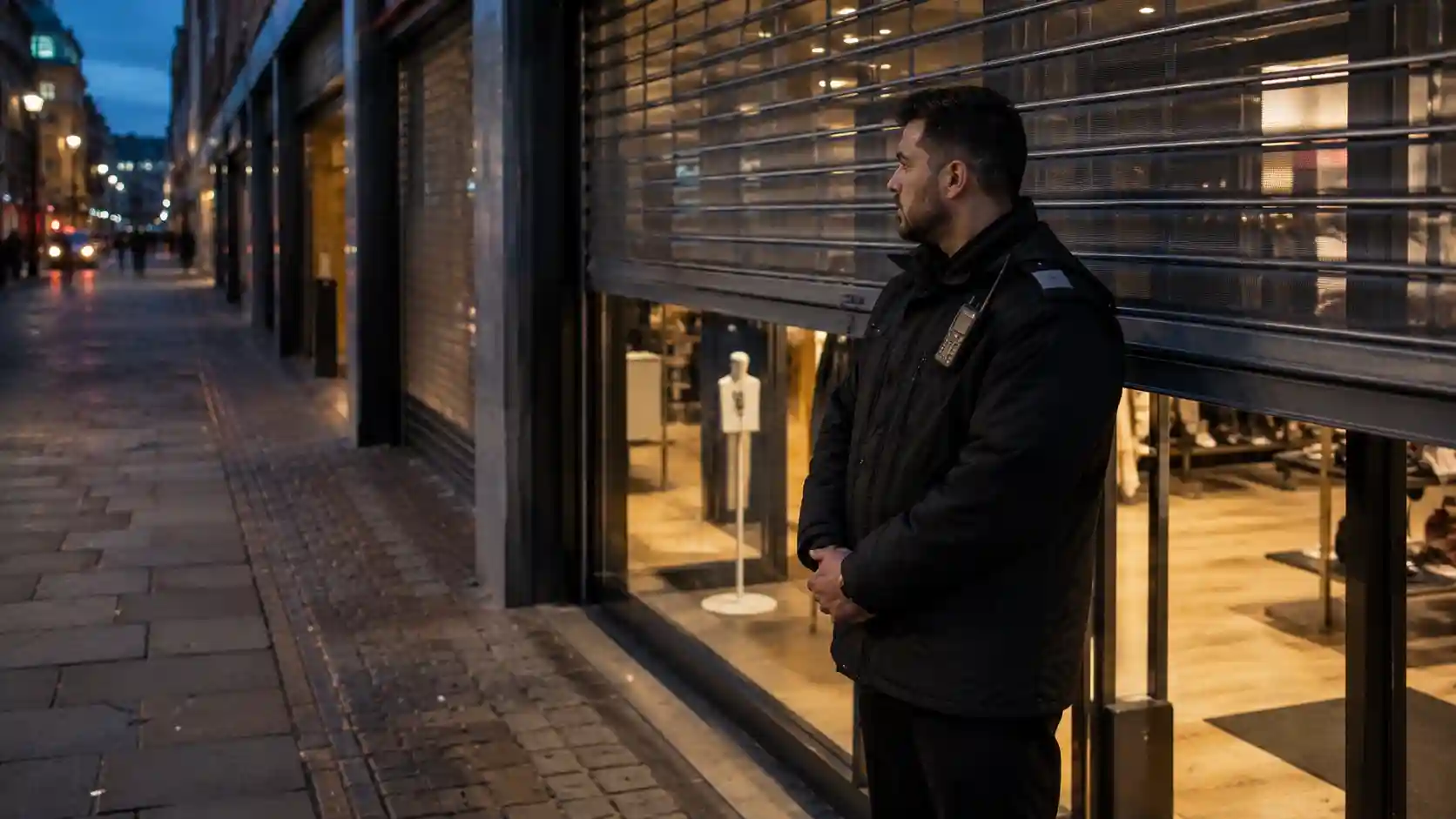
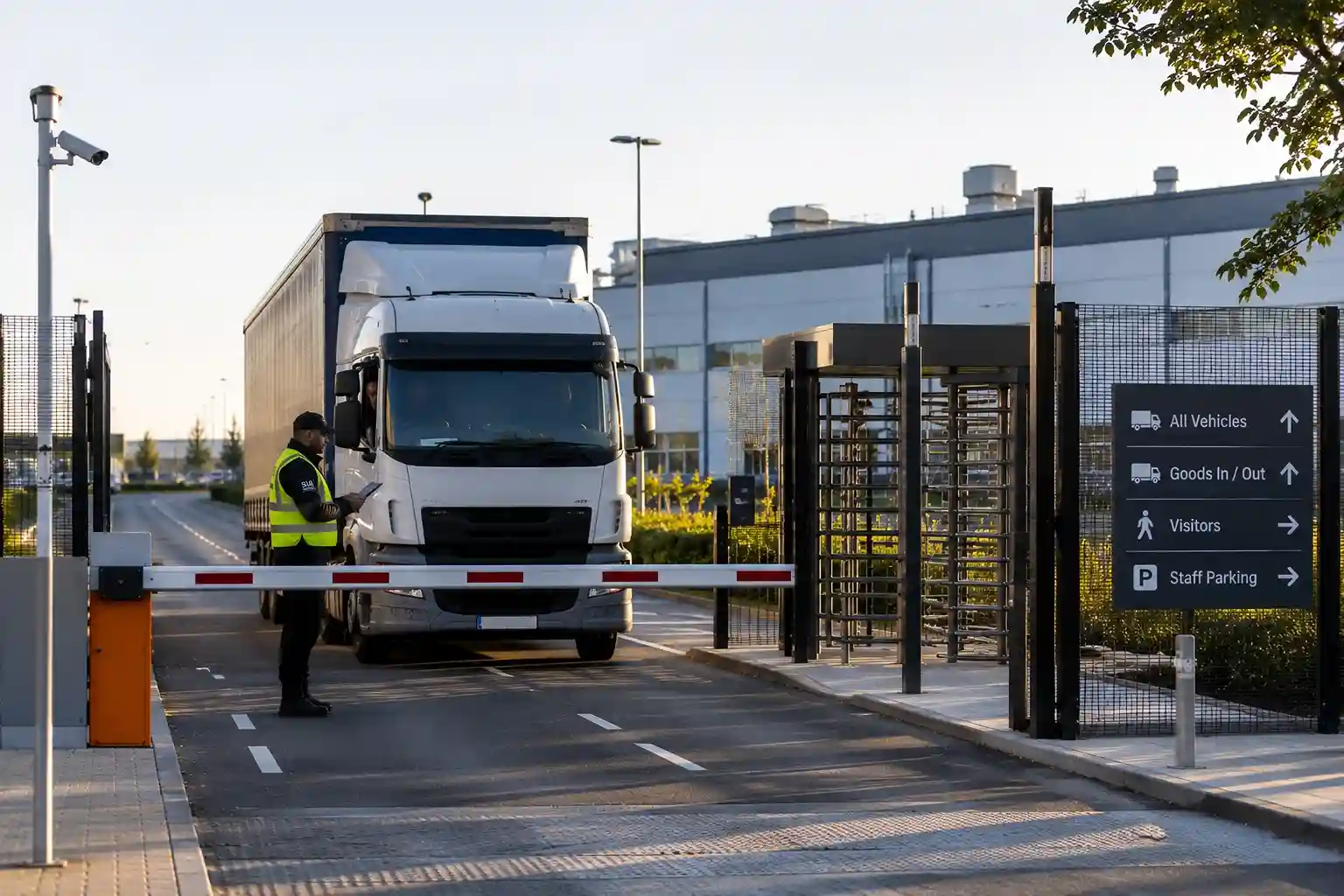
Bristol is not a quiet industrial town. From Avonmouth’s docks to busy estates in St Philips and Filton, factories sit close to homes, roads, and freight routes. Goods move in and out all day. Machines stay on site at night. Materials wait in yards. That mix brings risk.
This is where the question begins: Why Bristol businesses need factory security is not about fear. It is about control. Bristol industrial crime trends show patterns, metal theft, fuel loss, and yard trespass, often timed around shift changes or weekends. Industrial estate security risks rise when sites share access roads or have poor lighting.
Factory theft prevention strategies are not complex, but they must fit the site. SIA licensed security guards, clear access rules, and visible oversight reduce loss and disruption. For many manufacturers, security is less about alarms and more about keeping operations steady.
Table of Contents

Factory Security Basics in Bristol
Definition of Factory Security and Its Difference from Static or Remote-Only Protection
Factory security in Bristol is built around movement. Goods move. Staff move. Vehicles move. Risk moves with them.
A guard standing at one gate is not the same as a structured protection plan. Static cover focuses on a single point. It controls entry, but it cannot see the yard, loading bays, or plant rooms unless it leaves that post. That gap matters.
Remote monitoring is different again. Cameras record. An operator watches screens, sometimes from another town. It works well for alerting. It does not stop a van already reversing into a compound.
On-site protection combines presence and action. It includes:
- Regular perimeter checks
- Access control at staff and visitor points
- Yard patrols during loading windows
- Alarm response within minutes, not after a phone call chain
This approach is common across the South West, not just in Bristol. Sites in Bath and Gloucestershire face similar layout risks. Large plots. Wide vehicle access. Open storage zones.
A practical question many managers ask is simple: Is remote monitoring enough for a busy Avonmouth factory? Often, it supports the plan. It rarely replaces it.
Impact of Bristol’s Crime Rate and Industrial Growth on Security Demand
Bristol has grown fast. Manufacturing, logistics, and advanced engineering have expanded around Avonmouth, St Philip’s, and Filton. With growth comes exposure. Industrial crime does not always look dramatic. It can be small, repeated losses. Pallet theft. Fuel siphoning. Tool removal.
Planning must reflect patterns, not headlines. For example:
- Theft linked to supply chain delays
- Opportunistic entry during shift overlap
- Increased contractor traffic on expansion sites
As industrial estates fill, shared access roads become weaker points. A yard that once felt isolated now sits next to new units. That changes visibility and escape routes.
Business owners in Devon or Cornwall often ask how Bristol compares. The answer lies in density. Bristol’s scale and transport links create faster movement. That mobility affects response planning.
Another local question: Does manufacturing growth in Bristol increase risk, or just activity? Both. More activity means more value on site. More value draws attention.
Peak Risk Hours and the Difference Between Day and Night Security Exposure
Risk does not follow a neat timetable. Daytime threats often hide in routine. Busy gates. Delivery queues. Visitors blending into staff flow. Night risk feels different. Fewer people. Less natural oversight. Longer response times if systems are weak.
Typical pressure points include:
- Early morning shift changes
- Late Friday loading runs
- Bank holiday shutdown periods
Managers across Gloucestershire and Bath report similar patterns, but Bristol’s port and freight activity stretches these windows further.
A common concern: Do factories in Bristol need 24-hour coverage? If the site stores high-value stock or runs night shifts, the answer is often yes. If operations stop fully and the perimeter is strong, layered monitoring may suffice. Context decides.
Transport Infrastructure and Its Influence on Industrial Security Risk
Bristol sits near the M5 corridor and major port routes. That connectivity supports trade. It also shortens escape time for organised theft.
Quick motorway access means stolen goods can cross county lines fast. From Bristol to Gloucestershire or deeper into the South West in under an hour.
Industrial security planning must account for:
- Open yard layouts near main roads
- Uncontrolled pedestrian cut-through routes
- Delivery bays are visible from public highways
Transport links are an asset. They are also vulnerable. Understanding that balance is the starting point for building resilient manufacturing site protection in Bristol.
Crime / Risk Patterns & Timing in Bristol
Rising Industrial Theft and the Increase in Daytime Security Patrols
The idea that most factory crime happens at night is outdated. In Bristol, many incidents now occur in daylight. Busy periods create cover. Noise hides movement.
Industrial estates in Avonmouth and St Philip’s see steady traffic from early morning. Delivery vans line up. Contractors arrive. Forklifts move in and out. In that flow, small losses can go unnoticed.
Recent patterns across the South West show:
- Tool and pallet theft during loading
- Fuel removal from parked fleet vehicles
- Unauthorised yard access through open service gates
Day patrols matter because visibility deters. A uniformed presence walking the yard changes behaviour. It slows down decision-making for anyone testing the boundary.
A question often raised by Bristol site managers: Is daytime guarding really necessary if CCTV is active? Cameras record. They do not challenge. In high-traffic areas, direct presence reduces risk faster than remote review.
Industrial security services in Bristol increasingly schedule staggered patrol times. Not predictable. Not routine. That unpredictability makes opportunistic theft harder.
Seasonal Demand Cycles and Temporary Workforce Risk Exposure
Manufacturing output in Bristol shifts with contracts. Aerospace projects. Food production peaks. Export deadlines through the port.
During peak cycles, sites often rely on short-term labour. Extra hands help meet demand. They also widen internal exposure.
Common pressure points include:
- Increased contractor access without long-term familiarity
- Shared access cards during busy shifts
- Less supervision in storage areas
Factories in Devon and Cornwall report similar seasonal strain, though Bristol’s scale magnifies it. More people on site means more blind spots if access control is loose.
A practical question: How should a Bristol factory adjust security during peak production months? The answer lies in tightening entry logs and increasing internal patrol frequency. Not permanently. Just when footfall rises. Internal shrinkage rarely looks dramatic. It builds slowly. Good planning prevents that drift.
Anti-Social Behaviour and Perimeter Breach Risks in Industrial Estates
Not all threats are organised. Some are casual. Industrial parks near mixed retail zones can attract evening gatherings. Trespass. Vandalism. Graffiti. Small fires in waste areas.
Perimeter weaknesses often include:
- Low fencing near shared roads
- Damaged sections left unrepaired
- Poor lighting between units
In parts of Gloucestershire and Bath, estates with shared parking layouts face similar risks. Bristol’s larger sites, however, create longer fence lines to monitor.
A common local concern: Are perimeter breaches in Bristol linked to organised crime or random access? Both occur. Random entry often exposes deeper weaknesses. Organised groups test sites quietly before acting. Regular boundary checks, especially after weekends, reduce that vulnerability.
Event-Driven and City-Wide Disruption Impacting Industrial Areas
Bristol hosts large events. Festivals. Sporting fixtures. Seasonal markets. Traffic patterns shift. Policing focus shifts, too. When city centre demand rises, response times in outer zones can stretch. Avonmouth and Filton feel that strain.
Other factors include:
- Road closures affecting patrol routes
- Increased public transport use near estates
- Temporary staffing tied to event supply chains
Across the wider South West, including Devon and Cornwall, event-driven demand affects the coastal industry. In Bristol, port activity adds another layer. A key question from factory operators: Should security levels change during major Bristol events?
If the site stores high-value goods or relies on just-in-time deliveries, the answer is often yes. Short-term adjustments protect long-term contracts. Risk in Bristol is not static. It shifts with time, season, and movement. Planning must do the same.
Sector-Specific Vulnerabilities in Bristol Manufacturing
Warehouse and Distribution Hub Vulnerabilities in Avonmouth and Severnside
Avonmouth and Severnside are built for movement. Wide roads. Large yards. Fast links to the M5. That scale helps trade. It also creates open edges.
Warehouses in these zones often share access routes. One entrance may serve several units. During peak delivery hours, barriers stay open longer than planned. That is where risk grows.
Common weak points include:
- Unchecked driver access beyond loading bays
- Trailers left parked overnight in outer yards
- Poor separation between public and restricted zones
In parts of Gloucestershire and the wider South West, distribution parks face similar layout issues. Bristol’s volume, however, makes oversight harder. A frequent local question is simple: Are shared estate roads in Avonmouth a security risk?
They can be. Especially when footfall rises, and access control is relaxed for speed. Manufacturing site protection in Bristol must match the pace of freight. Static cover alone rarely keeps up.
Aerospace and Advanced Manufacturing Asset Protection Risks
Filton and nearby zones support advanced engineering. Components are small. Value is high. Some parts fit in a backpack yet carry five-figure price tags. The risk is not always forced entry. It can be a controlled access failure.
Sensitive facilities often face:
- Unauthorised photography
- Tailgating through restricted doors
- Removal of prototype parts during testing phases
Intellectual property loss carries a long-term impact. Insurance may cover equipment. It does not restore design time. Businesses in Bath and Devon with specialist production lines ask similar questions. Yet Bristol’s aerospace cluster raises the stakes.
A common concern: How should high-tech plants in Bristol manage layered access?
Clear zoning helps. Separate visitor paths. Badge-controlled internal areas. Logged movement between departments. Industrial security services in Bristol must understand that asset value is not always visible. Sometimes the smallest item is the most critical.
Construction-Linked Manufacturing and Temporary Site Exposure
Some Bristol factories operate beside live construction. Expansion projects. New storage builds. Infrastructure upgrades. That overlap weakens routine controls. Fencing shifts. Temporary gates appear. Extra contractors move through the site.
Risks often include:
- Shared welfare units between builders and factory staff
- Materials stored in open compounds
- Confusion over who holds access authority
Across Cornwall and Devon, mixed-use industrial builds show the same pattern. In Bristol, city growth increases this overlap. A practical question arises: Does a factory need separate security when construction is active on site?
Often yes. Construction hours differ. Site layouts change weekly. Standard patrol routes no longer fit. Short-term adjustments prevent long-term loss.
Internal Shrinkage and Contractor Access Control Challenges
Not all exposure comes from outside. Large manufacturing facilities rely on engineers, cleaners, IT teams, and visiting auditors. Movement is constant. Without firm logging, gaps appear.
Typical weaknesses include:
- Shared entry cards
- Poor visitor sign-out checks
- Contractors left unescorted in storage zones
Factories in Gloucestershire and the South West report similar issues. Bristol’s larger estates simply multiply the scale. A key question for local operators: How can a Bristol factory reduce internal shrinkage without slowing production?
Simple controls work best. Clear ID checks. Random bag inspections. Digital entry logs are reviewed weekly. Good factory security in Bristol is not only about fences and patrols. It is about knowing who is on site, why they are there, and when they leave.
Legal and Compliance Requirements
Legal compliance around factory security in Bristol is rarely the exciting part of operations. It tends to sit quietly in contracts and audit folders. Yet when something goes wrong, it becomes the first place insurers, investigators, and regulators look.
Bristol’s manufacturing base, from Avonmouth to Filton, often links into national supply chains. A single compliance gap can affect not just one site, but customers in Bath, Gloucestershire, and across the wider South West. That wider exposure is why the detail matters.
SIA Licensing Obligations and Penalties for Non-Compliance
If someone is guarding a factory in Bristol, checking access, preventing theft, or patrolling a yard, they must hold the correct Security Industry Authority licence. There is no grey area here.
What sometimes creates risk is an assumption. A contractor says their staff are licensed. A copy of a badge is shown once. No one checks expiry dates again. If unlicensed personnel are used, consequences move quickly:
- Criminal liability
- Fines
- Insurance complications
- Contract termination in regulated sectors
For aerospace-linked facilities near Filton, licensing failures can surface during routine audits. Once identified, they are difficult to explain away. Proper verification should be routine, not reactive.
DBS Checks and Vetting Standards for Factory Security Personnel
Licensing confirms that someone is allowed to work in the role. It does not confirm their history.
Factories in Bristol often store high-value goods, specialised components, or restricted materials. That makes vetting important. Screening aligned with recognised standards such as BS 7858 is common practice. Employment history checks. Identity verification. Character references.
In environments connected to defence or advanced engineering, enhanced background checks may also be expected. This is less about suspicion and more about safeguarding supply chains.
Sites in Gloucestershire and Bath with similar manufacturing profiles apply comparable controls. Bristol is not unusual in this respect, but the scale of operations can amplify the impact of any lapse.
Insurance Requirements and VAT Implications for Industrial Security Services Bristol
Insurance discussions tend to happen at renewal time, yet security arrangements influence them year-round.
Underwriters look at physical controls, access procedures, incident history, and documented patrol structures. A loosely managed site presents differently to a structured one. That difference can affect premiums.
Minimum expectations usually include:
- Public liability cover
- Employer’s liability insurance
- Clear indemnity clauses in contracts
Finance teams also need clarity on VAT treatment. Most commercial guarding services attract VAT, which changes the total contract value over time. Multi-year agreements require careful budgeting, especially for operators with connected sites in Devon or Cornwall. The financial structure should never be an afterthought.
Data Protection Compliance When Integrating CCTV with On-Site Security
Many Bristol factories combine guarding with surveillance systems. This layered approach improves oversight. It also creates responsibility under the data protection law. Clear signage is required. Footage must be stored securely. Access must be limited. Retention periods must be justified.
Where a third party monitors cameras, written agreements should define who controls the data. Confusion over responsibility creates risk. Industrial estates in Severnside often include shared access routes, which makes clarity even more important. Data breaches carry regulatory consequences. They also damage trust with clients.
Labour Laws, Overtime Regulations, and Workforce Controls
Manufacturing often runs around the clock. Security follows that rhythm. Working time regulations still apply.
Excessive overtime can reduce alertness. Reduced alertness increases risk. Compliance with rest requirements is therefore not simply an employment issue; it has an operational impact.
Right-to-work checks must also be documented correctly. Post-Brexit documentation standards remain strict. Failure in this area exposes both the employer and the client.
Across the South West, including Cornwall and Gloucestershire, the legal framework is consistent. Bristol factories are not treated differently. Expectations are clear.
Police Collaboration and Crime Data in Deployment Planning
Avon and Somerset Police publish crime data relevant to industrial areas. That information is useful when planning coverage. Patterns around vehicle crime or tool theft can guide patrol timing. Data-informed planning avoids guesswork.
Open communication with local officers also improves reporting quality and response coordination. On large estates, one incident can affect multiple businesses. Shared awareness strengthens resilience.
Licensing, Event Obligations, and Martyn’s Law
Some Bristol manufacturing sites host supplier days or open events. When public access increases, so does responsibility.
Local authority licensing rules may apply depending on scale. Looking ahead, proposed counter-terror legislation known as Martyn’s Law is expected to formalise preparedness duties for certain premises.
For factories that occasionally host large gatherings, reviewing emergency plans early is sensible. Documentation, risk assessment processes, and communication protocols may need strengthening.
Costs, Contracts, and Deployment in Bristol
Cost of Factory Security in Bristol City Zones Versus Outer Industrial Estates
Security pricing in Bristol shifts with geography. A manufacturing unit near the city centre faces different pressures than a warehouse in Avonmouth or Severnside. That difference shows up in planning, staffing patterns, and overall contract value.
City-edge sites often deal with heavier foot traffic and tighter boundaries. Mixed-use surroundings increase the need for structured access control. Guards may spend more time managing deliveries, monitoring entry points, and coordinating with facilities teams. All of that affects labour allocation.
Outer estates tend to have wider spaces and longer fence lines. The risk is less about congestion and more about scale. Larger yards require extended patrol routes. Lighting gaps or remote corners may increase the number of coverage hours needed overnight.
Location-based pricing in Bristol usually reflects:
- Total perimeter length
- Number of operational gates
- Shift coverage requirements
- Previous incident history
- Proximity to motorway routes such as the M5
Factories operating across the South West, including Bath and Gloucestershire, sometimes compare rates directly. That approach can be misleading. Bristol’s freight activity and port access create a different risk profile, which influences guard deployment levels.
The cost of factory security in Bristol is therefore shaped by exposure rather than postcode alone.
Key Cost Drivers Including Wage Pressures and Inflation in 2025
Labour remains the largest part of any on-site protection agreement. Wage increases affect contracts across the board. Bristol’s employment market is competitive, particularly around logistics hubs. That competition pushes hourly rates upward.
Inflation compounds the issue. It touches more than payroll. Operational expenses that influence pricing include:
- Fuel for patrol vehicles
- Uniform replacement
- Training and certification costs
- Insurance premiums
- Technology upgrades
Long-term agreements signed several years ago may not reflect present economic conditions. Transparent contracts usually contain review clauses that adjust pricing annually in line with national indices.
Manufacturing operators in Devon and Cornwall have faced similar adjustments, though Bristol’s scale tends to amplify labour pressure. Sustainable budgeting avoids sudden shocks and supports service continuity.
Low pricing may appear attractive in procurement reviews. Over time, unrealistic rates often lead to instability. Stability matters more than headline savings.
Contract Lengths, Notice Periods, and Termination Structures
Contract structure influences both cost control and operational resilience. In Bristol, most industrial agreements run between twelve and thirty-six months. Shorter terms provide flexibility. Longer terms often secure steadier pricing.
Key structural elements to review include:
- Notice period duration
- Break clause availability
- Performance metrics
- Handover requirements
A thirty-day notice period offers agility but can increase risk if transition planning is weak. A longer notice period may protect continuity yet reduce immediate exit options.
Clear termination wording reduces dispute risk. When a provider changes, structured handover documentation protects patrol records, access logs, and site knowledge.
Factories with linked sites in Gloucestershire or Bath sometimes align contract cycles to simplify management oversight. Clarity prevents operational gaps.
Deployment Timelines and Mobilisation Planning for Bristol Factories
Mobilising factory security in Bristol requires preparation. Even where personnel are available, structured deployment takes time.
Mobilisation commonly involves:
- Site risk assessment review
- Roster design aligned with shift patterns
- Licence verification
- Equipment allocation
- On-site induction
A small manufacturing unit with a single entrance may deploy faster than a large multi-gate facility in Avonmouth. Sites connected to advanced engineering or export logistics often require deeper familiarisation due to restricted zones and complex yard layouts.
Coordination with facilities management is essential. Alarm codes, access permissions, and reporting channels must be clear before coverage begins. Rushed mobilisation can create avoidable gaps during the early stages.
Factories across the wider South West sometimes assume deployment speed mirrors smaller towns. Bristol’s industrial demand can extend lead times, particularly during periods of growth. Planning reduces disruption.
Insurance Premium Impact and Procurement Act 2023 Considerations
Structured security can influence insurance discussions. Insurers evaluate exposure based on documented patrol activity, access procedures, and incident reporting standards. Strong evidence of control may support favourable renewal terms.
Premium reduction is never guaranteed. However, clear documentation improves negotiation position. Facilities that demonstrate layered protection and consistent monitoring often present lower risk profiles to underwriters.
Public sector-linked manufacturers must also consider compliance under the Procurement Act 2023. Transparent tender processes, fair evaluation criteria, and documented due diligence are essential when awarding contracts. This applies to sites in Bristol supplying government projects as well as facilities across Devon or Cornwall involved in public infrastructure work.
Procurement alignment protects both legal standing and reputation. Security cost in Bristol is shaped by risk exposure, labour conditions, contract design, and regulatory expectations. Evaluating the full operational picture ensures that budgeting decisions support long-term resilience rather than short-term savings.
Training, Daily Operations, and Guard Duties
Training Standards Required for Industrial and Manufacturing Environments
Factory environments in Bristol are not the same as retail or office spaces. Heavy machinery, loading yards, hazardous materials, and restricted engineering zones require tailored preparation. A basic licence is only the starting point.
Effective industrial security services Bristol operators expect personnel to understand:
- Health and safety rules on live production floors
- Safe movement around forklifts and HGV routes
- Site-specific emergency plans
- Access control technology
In advanced manufacturing areas near Filton, additional awareness may be required where sensitive components or regulated materials are present. Upskilling can include first aid at work, fire marshal training, and conflict management refreshers.
Factories across the South West, including Bath and Gloucestershire, often request evidence of ongoing professional development. That reduces operational risk and supports audit compliance.
Shift Commencement Procedures and Equipment Verification
The start of a shift sets the tone for the next several hours. A structured handover briefing helps identify overnight incidents, maintenance issues, or planned deliveries.
Standard commencement checks usually cover:
- Radio and communication testing
- Body-worn or static camera confirmation
- Access control system status
- Perimeter alarm review
In Bristol estates such as Avonmouth, where freight movement begins early, confirming gate functionality is critical. Delays or faults at the start of a shift can quickly create congestion. Routine equipment verification prevents avoidable gaps.
Patrol Frequency, Perimeter Checks, and Utility Tamper Inspections
Patrol structure should match the site layout rather than follow a fixed template. A compact plant near central Bristol requires different coverage from a large distribution yard in Severnside.
Patrol routines often include:
- Perimeter fence inspection
- Yard and loading bay checks
- Utility cabinet verification
- Storage area walkthroughs
Utility tampering, including fuel or electrical access points, has been reported across parts of Devon and Cornwall. While not unique to Bristol, industrial sites with exposed external infrastructure face similar exposure. Randomised patrol timing increases deterrence. Predictable patterns reduce effectiveness.
Visitor Logging, Access Control, and Contractor Verification
Manufacturing facilities depend on contractors, delivery drivers, and visiting engineers. Without structured logging, oversight weakens. Effective procedures normally involve:
- Photo identification checks
- Digital sign-in systems
- Badge allocation and return monitoring
- Restricted area escort protocols
Factories in Gloucestershire and Bath often align these controls with wider compliance frameworks. In Bristol, where industrial estates handle high daily footfall, disciplined logging reduces internal shrinkage risk. Access control is not about slowing productivity. It is about accountability.
Emergency Response, Fire Safety, and Alarm Handling Protocols
Emergency readiness must reflect local risk. Bristol factories handling chemicals or heavy machinery require clear evacuation plans. Guards should know assembly points, fire panel locations, and escalation routes.
Alarm activation requires a calm response. False alarms occur, but every signal demands verification. Clear documentation supports both insurance review and regulatory inspection.
Coordination with Avon and Somerset emergency services improves response time and clarity.
Shift Patterns, 24/7 Coverage, and Handover Continuity
Many manufacturing sites run day and night. Shift patterns need to match production times. When loading happens late at night or goods leave before sunrise, gaps in cover increase risk. Continuous presence helps reduce that exposure.
A professional security company in Bristol will plan staffing around these production cycles. Coverage should reflect real movement on site, not just fixed hours on a rota.
Clear handovers are just as important as physical presence. Teams must share updates before each shift ends. Written logs, incident notes, and key updates prevent confusion. If a delivery issue or alarm fault happens overnight, the next team must know straight away.
Factories across the wider South West, including Bath and Gloucestershire, often follow similar patterns. In Bristol, however, freight activity and port access increase pressure during early and late hours. Careful transition planning helps maintain steady protection without disrupting operations.
Performance, Risks, and Operational Challenges
KPIs and Performance Metrics for Factory Security Effectiveness
Factory security in Bristol should be measured, not assumed. A visible presence alone does not confirm effectiveness. Clear metrics help site managers understand whether protection supports operational goals.
Common performance indicators include:
- Incident response time
- Number of verified patrols completed
- Access control accuracy
- Reporting quality and timeliness
- Audit compliance scores
Well-documented activity logs matter during insurance reviews and internal audits. Aerospace-linked facilities near Filton often require detailed reporting trails. The same applies to manufacturing plants supplying partners across Bath or Gloucestershire.
Consistent review meetings help refine deployment. If yard checks repeatedly identify perimeter issues, that pattern signals a maintenance gap rather than a guarding failure.
Weather Impact and Environmental Regulations Affecting Outdoor Patrols
Bristol’s coastal influence brings wind and heavy rain at times. Outdoor patrol coverage must adapt. Slippery yards and reduced visibility affect movement and timing.
Environmental responsibilities also apply. Factories handling chemicals or fuels must monitor storage areas carefully during severe weather. Flooding risk in parts of the South West, including Devon and Cornwall, increases the need for vigilant inspection of drainage points and utility access.
Protective planning should consider:
- Safe patrol routes during adverse weather
- Proper protective equipment
- Compliance with environmental storage regulations
Outdoor oversight cannot be static. Conditions change quickly.
Health Impacts of Long Shifts and Alertness Risk Factors
Manufacturing often runs overnight. Extended coverage can reduce alertness if not managed properly. Fatigue increases the chance of missed detail.
Clear scheduling and lawful rest periods support operational effectiveness. Mental focus is critical when monitoring access points or responding to alarms. A tired response delays action.
Factories in Bristol and wider Gloucestershire operate under the same working time framework. Safe scheduling protects both site safety and liability exposure.
Risks of Underpriced Contracts and Staffing Instability
Low-cost contracts may appear efficient on paper. In practice, they can create service gaps. Unrealistic pricing often leads to inconsistent coverage or rushed mobilisation.
Operational risk increases when:
- Shift coverage is reduced without planning
- Training investment is limited
- Handover processes are weak
Stable factory security Bristol arrangements depend on sustainable budgeting. Short-term savings rarely offset long-term disruption.
Technology and Future Trends in Bristol Factory Security
Integration of CCTV, AI Analytics, and On-Site Factory Security
Technology inside Bristol factories has moved beyond simple recording. Cameras no longer just capture events for later review. Many systems now flag unusual movement, out-of-hours activity, or unexpected vehicle presence.
That does not remove the need for people on site. It changes how they work. Instead of watching blank screens, attention is drawn to specific alerts. A guard still walks the yard. Still checks the gate. Still speaks to drivers. The system simply narrows the focus.
In larger estates such as Avonmouth, this layered model helps cover a wide space without losing human judgement. Similar approaches are appearing across the South West, including Bath and Gloucestershire, where manufacturing layouts demand both oversight and quick response.
Remote Monitoring Systems and Hybrid Industrial Security Models
Remote monitoring expanded when many facilities adjusted staffing levels during recent operational shifts. Some Bristol factories reduced on-site footfall at certain times and relied more heavily on control room support.
Now, many operators use a blended approach. A local presence handles access and patrol. A remote team verifies alarms and escalates concerns. That structure works well for organisations with multiple facilities across Devon or Cornwall, where oversight can be centralised but response remains local.
Hybrid protection is not about replacing coverage. It is about using resources more carefully.
Drone Patrols, Sustainability, and Legislative Change
Large industrial sites near Severnside are starting to test drones to check fences and outer areas. Use is still limited and must follow strict rules. It shows how big estates in Bristol are trying new tools.
Some sites now use software to study past incidents. This helps plan patrol times. If problems often happen at certain hours, coverage can change to match that risk.
Environmental care also matters. Brighter, energy-saving lights improve visibility and lower power costs. Low-emission patrol vehicles help reduce pollution across Bristol and the wider South West, including Bath and Gloucestershire.
New laws, such as Martyn’s Law, may require stronger risk plans for sites that host public events or large visits. Factories in Bristol, Devon, or Cornwall that welcome suppliers or guests may need clearer emergency plans.
Technology can support factory security. It helps spot issues early. But it does not replace clear thinking and trained staff on site.
Conclusion
Bristol has a strong industrial sector. Areas like Avonmouth and Filton are busy with freight, engineering, and manufacturing. Goods move in and out every day. Staff work shifts. Lorries use nearby motorways. This creates opportunity, but it also creates risk across the South West.
Understanding why Bristol businesses need Factory Security is not about fear. It is about staying in control. Control of who enters the site. Control of stock and equipment. Control of legal responsibility. Good protection helps with insurance, supports legal compliance, and keeps supply chains stable in places.
Security is not just a cost at the front gate. It helps keep production running. It reduces delays during busy periods. It protects valuable parts, tools, and materials. It also supports audit checks and client trust.
Crime patterns change. Laws change. Technology changes. What does not change is the need to manage risk properly.
For Bristol manufacturers, risk is part of doing business. The real issue is how well that risk is controlled.
Frequently Asked Questions
Do factories in Bristol need 24-hour security guards?
Not every site does. It depends on stock value, shift patterns, and yard exposure. Facilities in Avonmouth with overnight loading often require continuous coverage. Smaller plants with limited access points may rely on a blended model. Risk profile decides, not habit.
What is the average cost of factory security in Bristol?
Costs vary by size, layout, and hours required. A multi-gate industrial unit near the port will differ from a compact site in St Philip’s. Wage pressure and inflation also affect pricing across the South West.
What are the legal requirements for factory security in Bristol?
Licensed personnel, proper vetting, insurance cover, and compliance with data protection laws are standard. Documentation must stand up to audit and insurer review.
How quickly can factory security be deployed in Bristol?
Small deployments may begin within weeks. Larger manufacturing estates require structured mobilisation and site familiarisation.
Can factory security reduce insurance premiums?
Structured protection can strengthen negotiations, especially where incident reporting and access control are well documented.
What training do factory security personnel receive?
Training covers site safety, emergency response, access management, and compliance awareness relevant to industrial environments.
Is CCTV alone enough for manufacturing site security Bristol?
Surveillance helps detection. It does not replace physical response or visible deterrence.
What are the best security solutions for manufacturing plants in Bristol?
Layered protection works best: controlled entry, routine patrols, monitored systems, and clear reporting standards aligned with operational risk.