For years, factory security in Cornwall was treated as a background concern. Gates locked, cameras on, and think job is done. But in 2026, local manufacturers are operating in a very different landscape. They face slower rural response times, rising asset values, seasonal disruption, and tighter expectations around duty of care.
What feels like a quiet industrial site can now be a soft target. Especially when it sits miles from immediate support. This is why Cornwall businesses need Factory Security today for robust security.
Having security is not a box-ticking exercise. It’s a practical layer of protection that keeps sites running, assets protected, and risks contained when things go wrong.
Factory security needed to be done properly, because it is not just generic. In Cornwall, it has to work with geography, workforce patterns, and a very specific crime profile. Miss those details, and the security plan looks fine on paper. But it fails the moment something actually happens.
Table of Contents

What Factory Security Really Means and Why It’s Different Here
Factory security is about controlling process-driven environments. Unlike offices or warehouses, factories have moving machinery, open production zones and shift changes. In Cornwall, that complexity is amplified by both isolation and distance.
Office security focuses on people. Warehouse security focuses on stock flow. Factory security has to protect people, processes, materials, and continuity at the same time.
That’s the first reason why Cornwall businesses need Factory Security that is purpose-built, not copied from urban models.
How Cornwall’s Industrial Crime Profile Shapes Security Planning
South West sure faces lots of crimes in daily life. And Cornwall does not see constant high-volume crime. But when incidents happen, they tend to be targeted and time-aware. Opportunistic theft blends with planned intrusion, especially at quieter sites.
Local patterns matter. Industrial crime here is influenced by:
- Long response gaps in rural zones
- Seasonal population spikes
- Limited passive surveillance around industrial estates
Security planning has to assume delay, not immediacy. That means stronger early detection, physical deterrence, and clear evidence capture from the first minute onward.
Highest-Risk Times for Factory Theft or Intrusion
Most factory incidents do not happen at random hours. They cluster, and high-risk windows usually include:
- Late-night production lulls
- Shift changeovers
- Early mornings before full staffing
- Weekends with reduced supervision
In Cornwall, darkness plus distance equals opportunity. Security coverage has to flex around when the site is quiet, not just when it is officially closed.
Which Factory Types Face the Greatest Exposure
Not all factories carry the same risk. In Cornwall, exposure rises sharply for sites that are either valuable, isolated, or both. Higher-risk factory types include:
- Mineral processing and refinement facilities
- Marine and renewable component manufacturers
- Remote agri-processing plants
- Multi-tenant industrial units
These sites often sit away from town centres, making perimeter breaches harder to spot and easier to escape from.
Shift-Based Manufacturing and Coverage Gaps
Shift work creates rhythm, and rhythm creates predictability. If security coverage does not adapt, gaps appear. Factories running rotating shifts face risks such as:
- Unsupervised handovers
- Reduced management presence overnight
- Compressed staffing during early hours
Security planning needs to mirror the production clock, not fight against it. This allowed them to maintain the rhythm without breaking it.
Delivery Schedules: The Hidden Access Risk
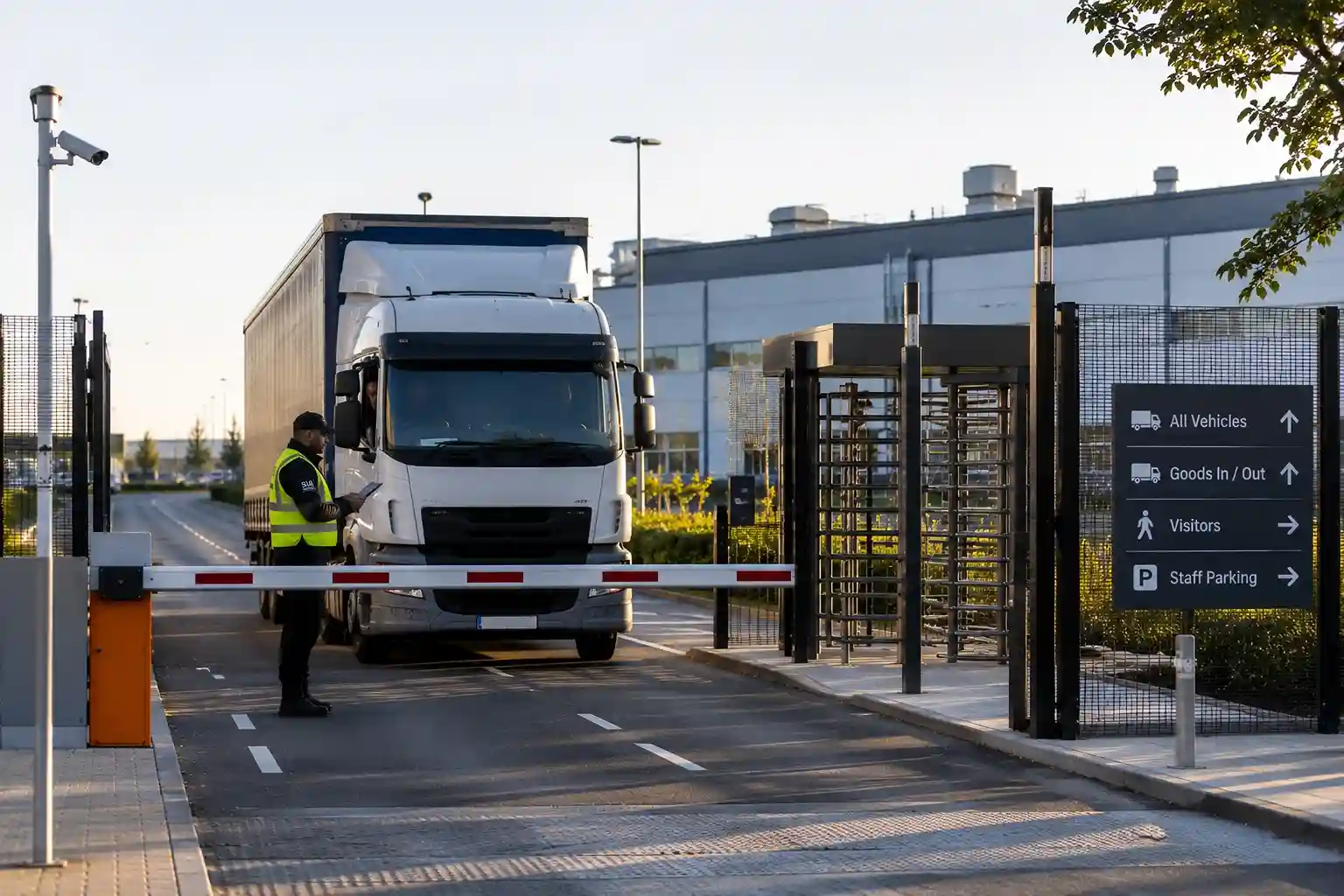
Deliveries are one of the most common entry points for incidents. Lorries arrive early. Drivers change. Doors stay open longer than planned.
Each delivery window temporarily lowers the site’s defensive posture. Without oversight, it becomes the softest moment of the day.
Shutdowns, Holidays, and the Illusion of “Low Risk”
When factories slow down or close for holidays, risk does not disappear; it concentrates. Fewer people. Predictable inactivity. Clear signals to anyone watching.
Security during shutdowns must shift from operational support to asset preservation and intrusion prevention. This is the reality behind factory security in Cornwall. Quiet is good, but it does not mean safe. So, the need for protection is essential for factory security.
Legal and Compliance Requirements for Factory Security in Cornwall
Legal compliance is a part of factory security that most businesses only think about when something goes wrong. In Cornwall, that’s a risky habit. Insurers, regulators, and clients increasingly expect factory security to be provable, not just present. This is a core reason why Cornwall businesses need Factory Security that is properly structured, licensed, and documented.
What SIA Requirements Apply to Factory Security Staff
Any guard performing manned guarding, patrols, access control, or CCTV monitoring must hold a valid SIA licence. There’s no grey area here. If the role involves deterring, observing, or responding to security incidents, licensing is mandatory.
Factories often fall foul when:
- Supervisors “double up” as guards
- Maintenance staff are used as night watch
- CCTV is monitored by unlicensed personnel
That might feel practical. Legally, it’s not.
Penalties for Using Unlicensed Security at Industrial Sites
It is a crime to assign a guard to your site without any proper procedure. Using unlicensed security staff can lead to:
- Criminal prosecution
- Unlimited fines
- Invalidated insurance claims
- Personal liability for directors or site owners
Insurers are particularly unforgiving. If a loss occurs and licensing is non-compliant, cover can collapse instantly.
DBS Checks: When Do Factories Actually Need Them
DBS checks are not automatic for every factory guard, but they are expected in specific scenarios. They are commonly required where security staff:
- Access staff welfare or locker areas
- Work near controlled goods or sensitive materials
- Hold keys or alarm codes
- Operate unsupervised on night shifts
Insurers often expect BS 7858 vetting as standard in industrial environments, with DBS layered in where risk justifies it.
Insurance Conditions Factories Commonly Face
Most factory insurance policies quietly include security-related conditions. Miss them, and claims become fragile.
Common requirements include:
- Licensed guards only
- Documented patrol routines
- Incident logs retained
- CCTV is operational and maintained
- Clear handover records during shift changes
This is where Remote Site ‘DEMS’ evidence sharing and proper logging stop being “nice to have” and start protecting payouts.
Health & Safety Duties That Affect Security Operations
Factory security operates inside active risk zones. That creates shared H&S responsibility between the employer, site owner, and security provider.
Key risk areas include:
- Lone working during nights or shutdowns
- Vehicle movements in yards and loading bays
- Plant and machinery proximity during patrols
Security procedures must actively reduce risk, not add to it.
GDPR Compliance: Cameras, Logs, and Data
Factories using CCTV, ANPR, or digital access logs must comply with GDPR. This applies whether systems are internal or contractor-managed. Compliance typically requires:
- Clear signage
- Defined retention periods
- Restricted access to footage
- Lawful purpose documentation
Poor data handling can create regulatory exposure even when security itself works perfectly.
VAT, Councils, and Planning Considerations
Factory security services are VATable. That matters for budgeting and contracts. In some parts of Cornwall and Bristol, planning or council conditions may also require:
- Approved lighting layouts
- Noise control for alarms
- Traffic management around gates
These are site-specific but increasingly enforced.
Documents That Demonstrate Factory Security Compliance
Well-run factories can evidence security instantly. Typical documents include SIA licence records, BS 7858 vetting files and Assignment instructions. It is vital, but also having the following document makes it more reliable for you.
Ensure you hold these documents of Incident reports, Risk assessments and Insurance certificates. Holding these lets you have no issue with insurers and trouble on the legal side.
Martyn’s Law and the Road Ahead
Martyn’s Law is not fully live yet, but its direction is clear. Large manufacturing sites, logistics hubs, and high-occupancy factories are likely to fall under Martyn’s Law ‘Standard Tier’ procedures, particularly where public access or large workforces are involved. Security will need to show planning, not just presence. And that shift is already underway.
The Cost of Security in Cornwall: 24/7 Industrial Cover
Talking about cost without context is where factory security conversations usually go wrong. In Cornwall, pricing is shaped less by headline hourly rates and more by how the site actually operates. That nuance is exactly why Cornwall businesses need Factory Security plans that are built around risk, not guesswork.
What Are Typical Factory Security Costs in Cornwall
There is no flat figure that fits every factory. Costs move up or down based on exposure, not square footage alone.
Key cost drivers include:
- Site size and perimeter complexity: Long, broken perimeters cost more to secure than compact sites
- Number of access points: Every gate, door, or loading bay adds supervision pressure
- Shift patterns and operating hours: Quiet nights are not “low effort” hours
As a rule of thumb, 24/7 manufacturing sites cost more than daytime-only operations. While multi-tenant industrial estates often sit somewhere in between, due to shared boundaries.
24/7 Sites vs Daytime Production: Where Costs Diverge
Factories running around the clock pay for continuity. Day-only sites pay for risk spikes. Cost differences typically come from:
- Night-time lone coverage requirements
- Weekend and shutdown patrols
- Increased supervision during low-occupancy periods
Shutdowns are a sleeper cost. When production stops, security demand doesn’t intensify.
How Quickly Can Factory Security Be Deployed
There is no fixed time for the deployment of guards. Mobilisation depends on why security is needed. And the typical timelines look like this:
- New factory openings: 2–4 weeks for full deployment
- Expansion or refits: 7–14 days if infrastructure already exists
- Temporary risk periods (shutdowns, incidents): often deployable within days
Faster deployments rely on a clear scope and existing compliance documentation.
Contract Lengths and Notice Periods
Most factory security contracts in Cornwall and Devon fall into predictable ranges. Common contract lengths:
- 12 months for stable sites
- 24–36 months for high-value or complex facilities
Notice periods usually sit between 30 and 90 days, depending on risk level and operational dependency. Longer contracts often provide better cost stability, especially during volatile periods.
Inflation and Cost Stability
Inflation affects factory security even when the service itself doesn’t change. Wage pressure, fuel, insurance, and compliance costs all feed into long-term pricing.
This is why fixed-rate contracts without review mechanisms can become unstable. Sensible planning builds in transparent review points rather than sudden renegotiations.
How Factory Security Supports Insurance Terms
Insurers don’t just price risk; they judge preparedness. Strong factory security helps by:
- Reducing excesses
- Supporting favourable policy terms
- Strengthening claims defensibility through logs and evidence
- Protecting business interruption planning assumptions
When an incident happens, documented security performance often decides whether claims move smoothly or stall.
Procurement Act 2023: What It Changes
The Procurement Act 2023 doesn’t rewrite factory security. But it does change how contracts are awarded and reviewed. Particularly, it’s for publicly linked or regulated industrial sites.
The focus shifts toward:
- Transparency
- Measurable outcomes
- Value over lowest cost
Factories tied to public supply chains or infrastructure projects are already feeling this shift.
Essential Training and Daily Operational Protocols for Cornwall Factory Security
Good factory security isn’t loud. It’s steady, visible, and predictable. In Cornwall, that matters even more because factories often sit away from town centres, operate odd hours, and rely on routines staying intact.
This is exactly why Cornwall businesses need Factory Security that understands daily operations, not just incident response.
What Training Standards Apply in Factory Environments
Factory security training goes beyond basic guarding. Officers must understand industrial risk, not just people risk.
Training typically covers:
- SIA role competence
- Site-specific induction (machinery, traffic flow, hazards)
- Health & Safety awareness in live production areas
- Emergency escalation and evidence handling
Factories are unforgiving places. A guard who doesn’t understand plant proximity or vehicle movements can create risk instead of reducing it.
What Happens at the Start of a Factory Security Shift
Every shift starts with information, not with the theory. In reality, Officers do need to check everything to understand the site well:
- Outstanding issues from the previous shift
- Planned deliveries, shutdown zones, or contractor access
- Any changes to production or yard movements
This is also where visibility begins. A guard seen early, walking the site, sets the tone. It signals control before anything else happens.
How Shift Handovers Work on 24/7 Sites
Handover is where risk either tightens or leaks. In 24/7 factories, handovers are structured, not rushed. Verbal briefings are backed by written or digital logs. Anything unresolved stays live until closed.
Consistency matters here. Predictable handovers reduce missed details, and missed details are how small issues grow legs.
What Factory Security Actually Covers During the Day
This is the real work; there is no dramatic situation to arise. They hold constant and daily coverage includes:
- Perimeter control and access management
- Vehicle and delivery oversight
- Contractor and visitor verification
- Routine patrols inside and outside production zones
Security teams interact constantly with supervisors, logistics staff, and drivers. Done right, that interaction supports flow instead of slowing it down.
Checks Around Machinery, Yards, and Loading Bays
These areas are prioritised because they mix people, movement, and opportunity. Guards focus on:
- Unauthorised access near the plant
- Obstructions or unsafe yard behaviour
- Doors or shutters left unsecured during loading
This is also where Health & Safety overlaps with security and where calm intervention matters most.
Daily Reporting and Incident Documentation
Factories expect proof, not memory. So they hold the daily reporting, which usually includes:
- Patrol confirmations
- Access issues
- Near-miss H&S observations
- Incident logs, even when resolved quietly
Clear documentation protects the site, the client, and production continuity.
Handling Incidents Without Stopping Production
Most incidents don’t require alarms or lockdowns. Trespass, minor theft attempts, or safety breaches are handled using clear escalation thresholds.
Security acts proportionately:
- Contain first
- Escalate if required
- Keep production moving unless safety demands otherwise
Reactive drama causes more disruption than the incident itself.
Secure-Down Procedures During Shutdowns
Shutdowns change the rules in factory security. Fewer people mean more predictability in their actions. And this could raise a higher temptation to trespass on the factory. Secure-down procedures typically involve:
- Reduced access points
- Increased perimeter checks
- Enhanced monitoring
- Clear escalation lines
Consistency here is everything. Predictable routines deter far more effectively than reactions. That quiet, methodical presence is what factory security is really about and why it works.
Performance, Risks, and Challenges in Cornwall
Factory security doesn’t fail loudly; it drifts. Small gaps, missed checks, and tired judgement calls, that’s usually how problems start. In Cornwall, those gaps are magnified by weather, distance, and long overnight hours.
This is another practical reason why Cornwall businesses need Factory Security. And that security should be measured, resourced, and reviewed properly.
What KPIs Should Factory Managers Actually Track
Good factory security performance is not measured by how many incidents happen but by how few escalate. The KPIs that matter most to factory operators are simple and operational:
- Incident frequency (including near-misses, not just losses)
- Access breaches or attempted breaches
- Downtime linked to security failures, even short stoppages
- Response time to alarms or suspicious activity
These indicators can be tracked quietly, without disrupting production. No drama. No interference. Just consistent measurement over time.
Weather Exposure and Perimeter Security in Cornwall
Cornwall’s weather is not a footnote; it’s a factor. Wind, rain, salt air, and winter darkness all affect perimeter security. Fences loosen. Gates fail to latch properly. Cameras lose clarity. Lighting becomes uneven.
During storms or heavy rain:
- Perimeter patrols take longer
- Natural surveillance drops
- Opportunistic intrusion becomes easier
Security planning has to assume reduced visibility and increased vulnerability during bad weather, not hope it passes without consequence.
Fatigue and Overnight Coverage Risks
Overnight factory security is quiet until it isn’t. Fatigue is a real risk, even with experienced officers. Long, low-stimulation shifts increase the chance of:
- Missed movement
- Slower reaction times
- Over-reliance on routine
This is not about blaming individuals. It’s about designing coverage that recognises human limits. Predictable patrol patterns, clear check-ins, and sensible shift lengths all reduce fatigue-related risk.
Health and Safety Risks That Intersect with Security
Factory security operates inside live risk environments. That overlap cannot be ignored. Common intersecting risks include:
- Moving vehicles in yards at night
- Poor visibility around the plant and machinery
- Lone working during shutdowns or weekends
When security is under-resourced, officers are pushed to cover more ground, faster, which raises accident potential and liability exposure.
Why Poorly Planned Factory Security Increases Liability
Liability doesn’t only follow incidents. It follows foreseeable risk. When your factory faces an issue, a great plan can handle it well and also prevent further damage. But poor planning leads to:
- Incomplete coverage during critical hours
- Missed documentation
- Inconsistent patrol routines
- Gaps during weather events or shutdowns
If an incident occurs and it’s clear the risk was predictable, liability expands quickly. Insurers look hard at this, so do investigators.
Insurance, Continuity, and the Cost of Getting It Wrong
Under-resourced factory security doesn’t just increase crime risk. It increases insurance risk, weakens claims defensibility, and threatens service continuity.
When coverage is poorly specified:
- Insurers question compliance
- Claims take longer or fail
- Production disruption lasts longer than it should
Factory security works best when it is boring, consistent, and properly measured. That steadiness is what keeps operations running. Especially when conditions are working against you.
Technology and Future Trends in Cornwall
Factory security in Cornwall and Gloucestershire has shifted quietly but decisively. What used to rely on static cameras and periodic patrols is now layered, data-driven, and far more anticipatory. That matters in a region where large sites, exposed perimeters, and long response times are the norm. This evolution is a big part of why Cornwall businesses need Factory Security that keeps pace with both risk and regulation.
How Technology Has Changed Factory Security in Cornwall
Cornwall’s industrial sites are rarely compact. They stretch, curve and sit next to open land, coastlines, or mixed-use estates. Technology has stepped in to close the visibility gaps that geography creates.
Modern factory security now integrates:
- CCTV coverage across large, broken perimeters
- Access control tied directly to shift schedules
- ANPR systems monitor vehicle flow in yards and loading zones
The goal isn’t surveillance for its own sake. It’s continuity, knowing what’s happening without interrupting production.
The Role of AI in Modern Factory Security
AI is no longer experimental in industrial security. Used properly, it reduces noise rather than adding complexity. In factory environments, AI analytics are commonly used to flag:
- Perimeter breaches where fencing or gates are tested
- Unusual movement patterns in normally quiet zones
- After-hours activity that falls outside expected routines
This matters on large sites where human attention alone can’t cover everything, all the time.
Remote Monitoring: Support, Not Substitution
Remote monitoring has become a valuable support layer. But it is not a replacement for on-site guards; that distinction is important.
Remote teams:
- Verify alarms before escalation
- Track activity across multiple camera zones
- Provide incident oversight during night shifts
On-site guards still intervene, assess, and manage reality. Remote monitoring sharpens their focus instead of stretching them thinner.
ANPR, Access Control, and Joined-Up Systems
Standalone systems create blind spots. Integrated systems close them. ANPR linked to access control allows factories to:
- Identify unauthorised vehicles early
- Match vehicle movement to delivery schedules
- Flag anomalies during shutdowns or holidays
This integration is particularly useful on multi-tenant industrial estates where traffic is constant, but accountability is fragmented.
Are Drone Patrols Relevant for Factories
Drone patrols sound futuristic, but their use is narrow and controlled. They can be useful on very large estates for:
- Perimeter inspection after storms
- Temporary risk periods
- Hard-to-reach boundary checks
They are not a replacement for patrols and come with regulatory and safety limits. Used sparingly, they add visibility, nothing more.
Predictive Tools and Risk Planning
Predictive analytics are increasingly used to plan for when risk is likely to rise, not just respond when it does. Factories use predictive tools to:
- Adjust coverage during shutdown periods
- Increase presence during seasonal risk spikes
- Anticipate weak points before incidents occur
It’s quiet, unglamorous planning, and it works.
Green Security Practices in Industrial Settings
Sustainability has reached factory security, not as a trend but as a cost and compliance issue. Emerging practices include:
- Energy-efficient CCTV and lighting systems
- Reduced vehicle patrol dependency through smarter monitoring
- Lower idle time and fuel usage
Green security isn’t softer security. It’s leaner.
Martyn’s Law and What Comes Next
Martyn’s Law will not turn factories into public venues overnight, but large industrial and logistics facilities will feel its pull. Sites with high occupancy, public interfaces, or critical supply roles will need clearer risk assessments, response planning, and documented readiness.
Technology will be central to that readiness, but only when paired with visible, trained, on-site factory security.
Conclusion
Factory security in Cornwall isn’t about reacting when something breaks. It’s about preventing the quiet failures that never make the incident log but still cost time, money, and trust. Long sites. Exposed perimeters, odd hours, real weather, and all of it matter.
This is why Cornwall businesses need Factory Security that is consistent, visible, and grounded in how factories actually run. Not flashy systems, not tick-box compliance. Just steady protection that holds when the site is quiet, the lights are low, and help is a long drive away.
Frequently Asked Questions
1. Do I really need dedicated factory security if my site has CCTV?
Yes, and we say that without hesitation. Cameras show you what already happened; factory security stops things from happening in the first place. On a Cornwall site, especially a remote one, visible presence and routine control make the real difference.
2. Is factory security in Cornwall only a concern for large manufacturers?
No, we have seen smaller factories hit harder because they’re quieter and easier to watch. Size doesn’t matter as much as isolation, operating hours, and what you store or process on site.
3. When are factories most at risk of break-ins or intrusion?
From experience, it’s rarely random. Late nights, early mornings, shift changeovers, and shutdown periods are where problems creep in. That’s why predictable coverage matters more than reactive call-outs.
4. Will security officers disrupt production or slow staff down?
They shouldn’t, and if they do, something’s wrong. Proper factory security blends into operations. I focus on keeping access controlled without getting in the way of people doing their jobs.
5. How do I know if my current factory security is under-resourced?
If coverage feels thin during nights, weekends, bad weather, or holidays, that’s usually the sign. I also look at whether incidents are logged, gaps in records, and whether they often point to gaps on site.
6. Does factory security really affect insurance, or is that overstated?
It affects it more than most people realise. I’ve seen claims questioned purely because patrols weren’t documented or licensing wasn’t clear. Security isn’t just protection; it’s evidence when insurers come asking.
7. How quickly can factory security be adjusted if my operations change?
Faster than most people expect, if it’s planned properly. When shifts extend, refits happen, or shutdowns start, security should flex with it, not lag behind and catch up later.
8. Why is factory security in Cornwall treated differently from urban areas?
Because reality is different here. Distance, weather, response times, and seasonal pressures all change the risk picture. That’s why factory security in Cornwall has to be grounded in how sites actually operate, not how they look on a map.