The mood inside a retail store changes the second you turn the key in the front door at 6 PM. For eight hours, your floor is built around footfall, sales, and customer service. Once trading stops, that bright, welcoming space becomes a quiet, isolated target.
Keeping retail staff safe during store closing and lockdown takes a complete shift in mindset. You’re working with reduced headcount, open till drawers, full safes, and staff who are flat-out exhausted after a 10-hour shift. When people are tired and eager to get home, they skip steps. They leave a back door unlocked to take out rubbish faster. They count cash right near a window. They walk out to dark car parks alone.
By setting up strict, unyielding retail closing safety procedures, retail managers can protect their teams, lock down their revenue, and make sure everyone gets home safely at night.
Table of Contents
Why Closing Time Increases Retail Risk
Closing time is the exact moment physical risk and human fatigue crash into each other. Peak daylight hours give you natural security through crowds. Once the doors lock and the streets quiet down, that safety net vanishes.
The physical environment outside changes fast as dark falls. Loading bays, alleyways, and staff car parks turn into unmonitored blind spots. Criminals who track retail routines know the math: cash floats are moving, safes are open, and staff will be walking out the door soon carrying personal bags.
Fatigue makes everything worse. After standing on a shop floor all day dealing with queries, your team’s situational awareness drops through the floor. That’s when simple, fatal mistakes happen like leaving a fire exit on the latch, counting cash in plain view of a street window, or skipping perimeter checks to leave five minutes early. If your retail closing risk assessment doesn’t account for tired human beings taking shortcuts, it’s just paper in a binder.
Threats to Retail Staff Safety During Store Closing
To protect your team, you have to break down what actually happens on the floor at the end of the night. Security isn’t one big task; it’s managing a dozen small, high-risk interactions.
Managing Aggressive Customers at Closing Time
The last 15 minutes of trade are notorious for conflict. Handling aggressive customers at closing time takes firm verbal boundaries and calm, zero-ego de-escalation. You get late shoppers pushing past doors, people under the influence, or opportunistic shoplifters trying to use closing confusion to snatch high-value stock.
Run PA announcements at 15, 10, and 5 minutes before lock-up. When it’s time to lock the doors, put an employee on the entrance to let exiting shoppers out while firmly turning new arrivals away. If someone gets hostile or refuses to leave, staff should never physically block them or trade insults. Step back, keep your voice steady, state store policy clearly, and call for security or police support if they refuse to back down.
Managing Lone Worker Safety Retail Hazards
Boutiques, express supermarkets, and high-street convenience stores often operate on threadbare rotas that leave one or two workers to handle the entire close. Managing lone worker safety retail threats requires hard operational limits.
When an employee is isolated behind closed shutters, a single incident a medical fall, an intruder coming through a rear door, or an aggressive confrontation during cash reconciliation turns critical instantly. Single-person lock-ups should be banned from company policy outright. Where low staffing can’t be avoided, you need active safety nets: timed check-in calls with off-site managers, wearable panic alarms linked to central monitoring, and automated alarm systems that alert response teams if the store isn’t armed by a set time.
Because of these frontline risks, forward-thinking retailers deploy dedicated personnel from a professional retail security guarding company to manage floor safety, challenge loitering, and oversee the entire lockdown process.
Improving Retail Cash Handling Safety
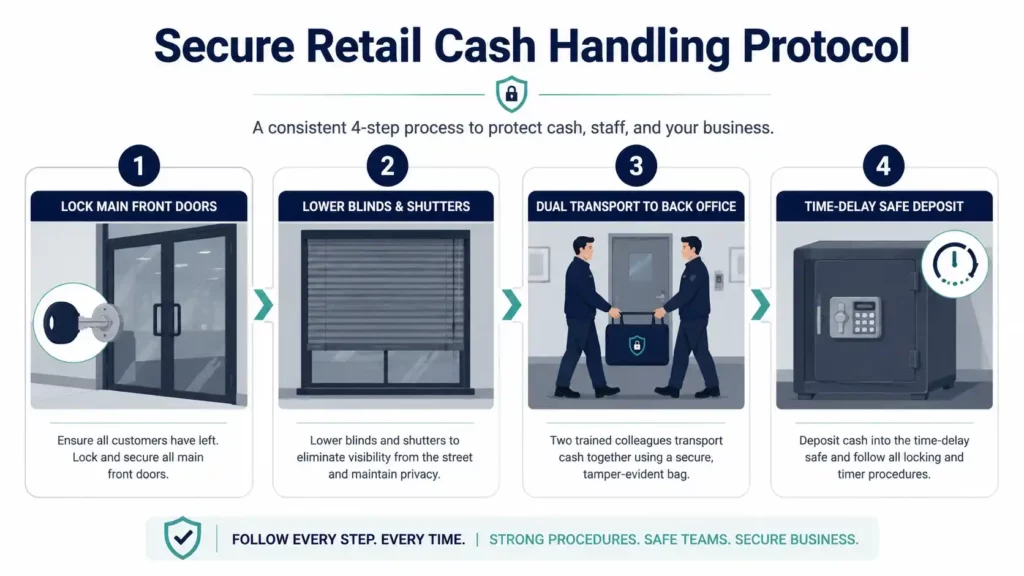
Visible cash pulls in crime like a magnet. The main rule of retail cash handling safety is simple: hide the money from anyone looking in from the street.
Never pop till drawers or count money on the sales floor. Before a single till drawer comes out of a register, pull down street-facing blinds, drop the front shutters, or wait until every last customer has left the building.
Next, switch up your timing. Moving cash between the floor and the back office on a predictable, clockwork schedule gives outside observers an easy target. Carry cash drawers in plain, opaque, zipped bags, never open metal till trays and move in pairs whenever cash crosses the floor.
Inside the cash office, stick to basic security protocols:
- Keep the cash office door deadbolted at all times using heavy-duty hardware or keypads.
- Restrict cash room access strictly to authorised keyholders no exceptions.
- Use time-delay safes for all large cash drops so money can’t be handed over instantly under duress.
- Mix up safe-drop times so nobody outside can predict your routine.
Sticking to these strict retail cash handling safety routines protects your bottom line and keeps your cashiers safe behind locked doors.
Implementing Safe Store Lock Up Procedures
A written, step-by-step physical checklist stops staff from missing basic checks when they’re rushing home. Proper safe store lock up procedures rely entirely on the “two-person rule”: no worker ever locks up a store alone.
| Area / Component | Verification Task | Operational Standard |
| Sales Floor & Fitting Rooms | Physical Sweep | Check every cubicle, staff room, and blind corner for hidden persons before locking up. |
| Perimeter Fire Exits | Latch & Sensor Audit | Push panic bars to verify they’re engaged and check that doors sit flush in their frames. |
| Delivery Loading Docks | Roller Shutter Lock | Drop mechanical pin locks into roller doors and secure heavy-duty padlocks. |
| Refuse & Waste Exits | Single-Pass Egress | Do all rubbish runs before counting cash or dropping the main shutters for the night. |
| Alarm Control Panel | Status Verification | Clear all zone sensors before setting the system to full perimeter arming mode. |
Before setting the alarm, staff need to sweep the entire store: stockrooms, offices, toilets, and fitting rooms. Make sure no one is hiding inside. Once the sweep is done, systematically check every secondary fire door, window latch, and loading bay shutter.
Pay close attention to waste runs. Stepping out into a dark, empty alleyway or loading bay with rubbish bags late at night leaves staff wide open to an ambush. Get all waste and recycling out during daylight or while the store is fully open. Once cash counting starts, those rear doors stay locked. Updating these habits is vital for keeping your retail closing safety procedures consistent across your business.
Protecting Retail Staff Leaving Work at Night
Your duty of care as a manager doesn’t stop when the alarm panel beeps and the front door locks. Ensuring retail staff leaving work at night get to their cars or bus stops safely is a core part of store operations.
Leaving the store requires sharp situational awareness. Before unlocking the main door, check the street through glass panels or monitor your external CCTV. If you spot loitering groups, unfamiliar idling cars, or suspicious activity directly outside, stay inside and call your security provider or off-site manager.
When stepping out as a team:
- Walk out as a single group rather than straggling out one by one.
- Turn on all exterior floodlights and car park lighting before opening the door.
- Have car keys in hand before stepping outside; don’t stand in a dark car park digging through a bag.
- Walk purposefully along bright, main pathways toward vehicles or transport links.
High-street stores in busy city centres like the dense shopping areas across Merseyside and the North West face constant exposure to late-night drinking crowds and anti-social behaviour. Outlets in these zones often partner with an established security company in Liverpool to provide physical escorts at closing time, maintaining retail staff safety during store closing from the cash register to the car park.
Having clear rules for staff safety after closing shows your team that their personal safety matters far more than a fast lock-up.
Building a Retail Closing Risk Assessment
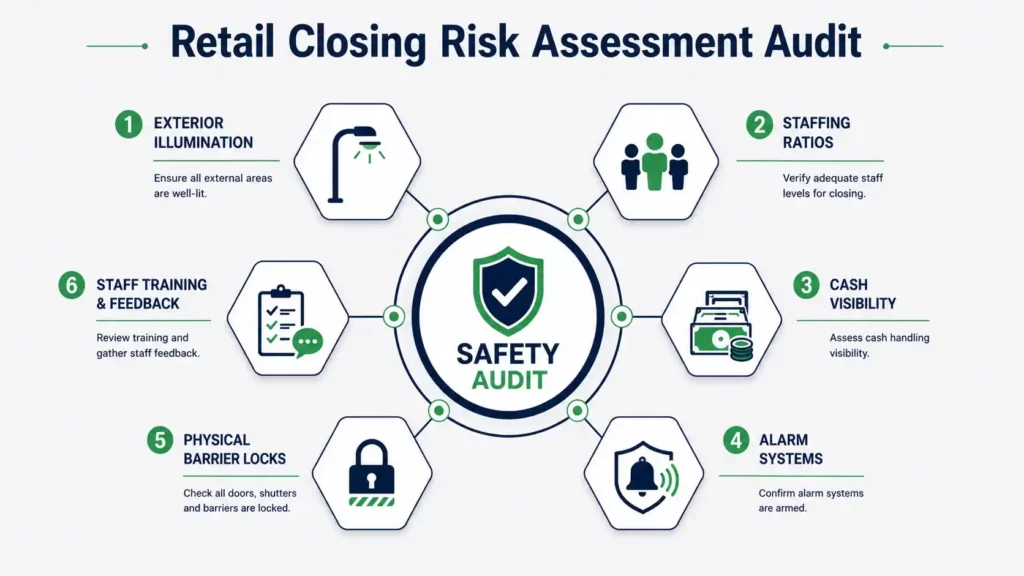
Security policies can’t sit on a shelf gathering dust. A practical retail closing risk assessment needs a full review at least once a year, plus an immediate update if crime spikes locally, staff report an incident, or store hours change. Incorporating Usdaw Freedom From Fear campaign guidance into your internal reviews ensures your operational policies actively protect shopworkers from violence, threats, and late-night closing risks.
When auditing your evening close, run through these six operational checks:
- Lighting Coverage: Are rear exits, dark alleyways, loading docks, and staff parking bright enough to eliminate shadows?
- Staff Ratios: Does your rota guarantee at least two employees stay on site until the final lock-up is done?
- Cash Visibility: Can anyone outside see money being handled or counted through windows or door gaps?
- Emergency Systems: Are panic buttons, duress alarm codes, and emergency contact lists fully functional and tested?
- Physical Hardware: Are shutters, deadbolts, panic bars, and padlocks regularly inspected for wear or tampering?
- Staff Feedback: Have employees been trained on handling aggressive customers at closing time, and do they have a clear way to report safety concerns without judgment?
Taking time to audit these points helps managers spot and fix security gaps before they lead to stolen cash or injured staff.
Ensuring Staff Safety After Closing
Checklists and store policies are vital, but physical presence is what stops crime in its tracks. Professional security guards protect your premises, take the pressure off your floor staff, and guarantee staff safety after closing.
Trained security personnel support store closings in three core ways:
- Front Door Presence: Stationing a guard at the entrance during the last 30 minutes of trade to control entry, support staff, and manage footfall.
- Staff Escorts: Guarding staff during cash moves to back-office safes and walking employees safely out to their cars in dark parking lots.
- Mobile Patrols & Rapid Response: Running visible vehicle checks around store perimeters during lock-up, and responding instantly if an alarm triggers overnight.
Combining solid daily routines with professional security support gives your staff the safe, confident workspace they deserve.
Frequently Asked Questions
1. What is the two-person rule for retail store closing?
The two-person rule is a safety policy mandating that a minimum of two employees must remain on site together throughout the entire closing process, cash reconciliation, and physical lock-up. Banning single-employee closes eliminates lone-worker vulnerability, deters internal theft, and ensures immediate help is available if an emergency occurs.
2. How should retail staff handle customers who refuse to leave at closing time?
Staff should use clear, polite, but firm communication. Make PA announcements before closing. When trading ends, place a staff member at the door to manage exits. If a customer becomes hostile or refuses to exit, do not engage in an argument or attempt physical force. Maintain a safe distance, restate store policy, and involve store security or call emergency services if the situation escalates.
3. Should cash tills be cleared before or after store shutters are lowered?
Cash tills should always be cleared after store shutters are lowered or window blinds are drawn. Counting cash or moving till drawers while visible to people on the street invites targeted robbery. Always obscure street sightlines before opening registers or transporting floats to the cash office.
4. What are the main hazards for retail staff leaving work at night?
The primary risks include unlit car parks, loitering groups, anti-social behaviour, ambush in rear service yards during waste disposal, and walking alone to public transport links. Retailers should mandate group departures, install high-grade exterior floodlighting, and provide security escorts for late shifts.
Conclusion
Securing your store at the end of the night isn’t about luck; it’s about discipline, clear rules, and looking out for your team. When staff are tired and eager to head home, clear safety routines stop shortcuts from turning into dangerous situations.
Protecting your people starts with the basics: enforce the two-person rule, keep cash counting hidden from the street, clear out waste early, and make sure no one walks out into a dark car park alone. Combine these practical steps with trained, professional security support, and you build a store environment where your team stays safe every single night.