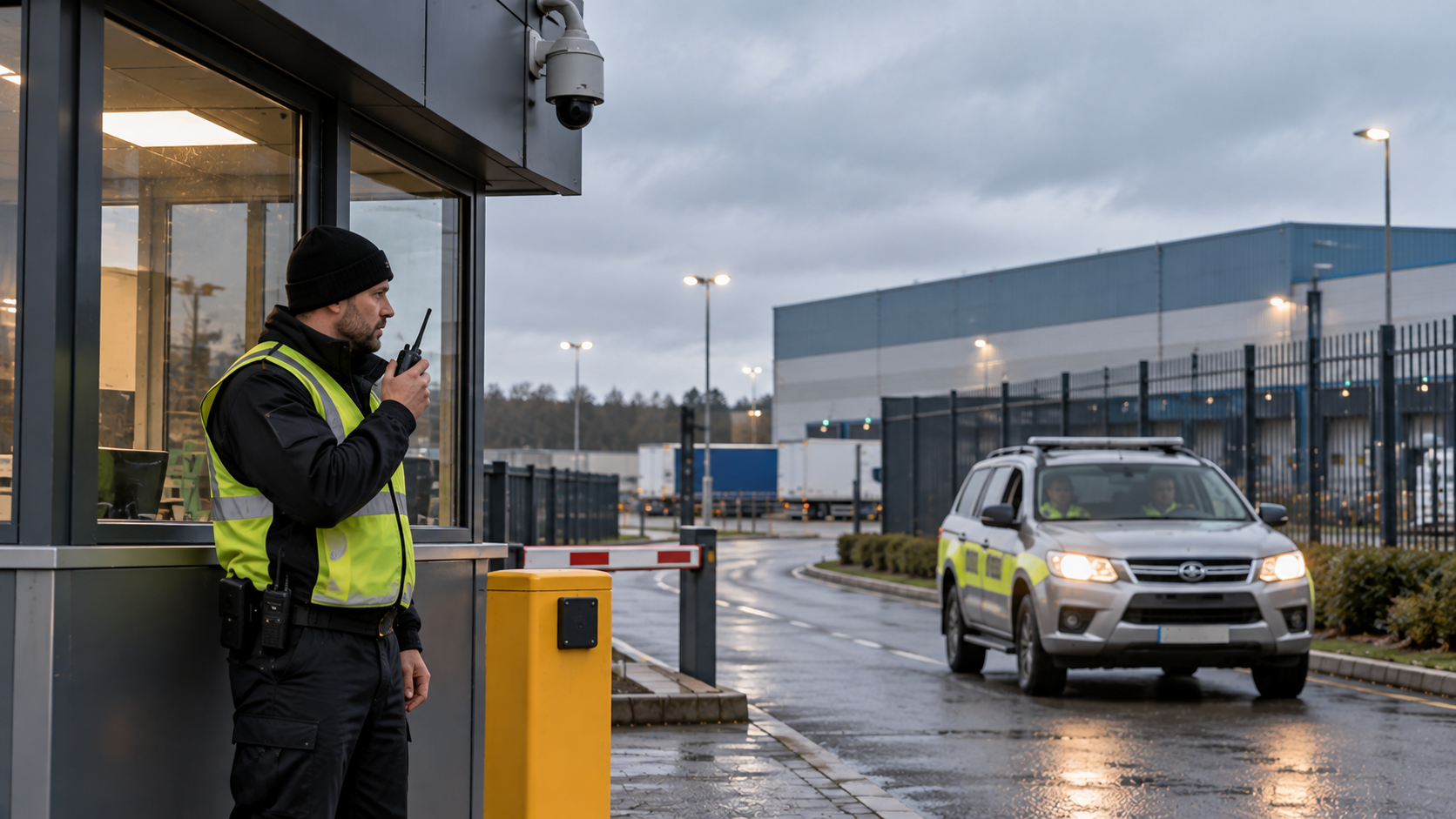
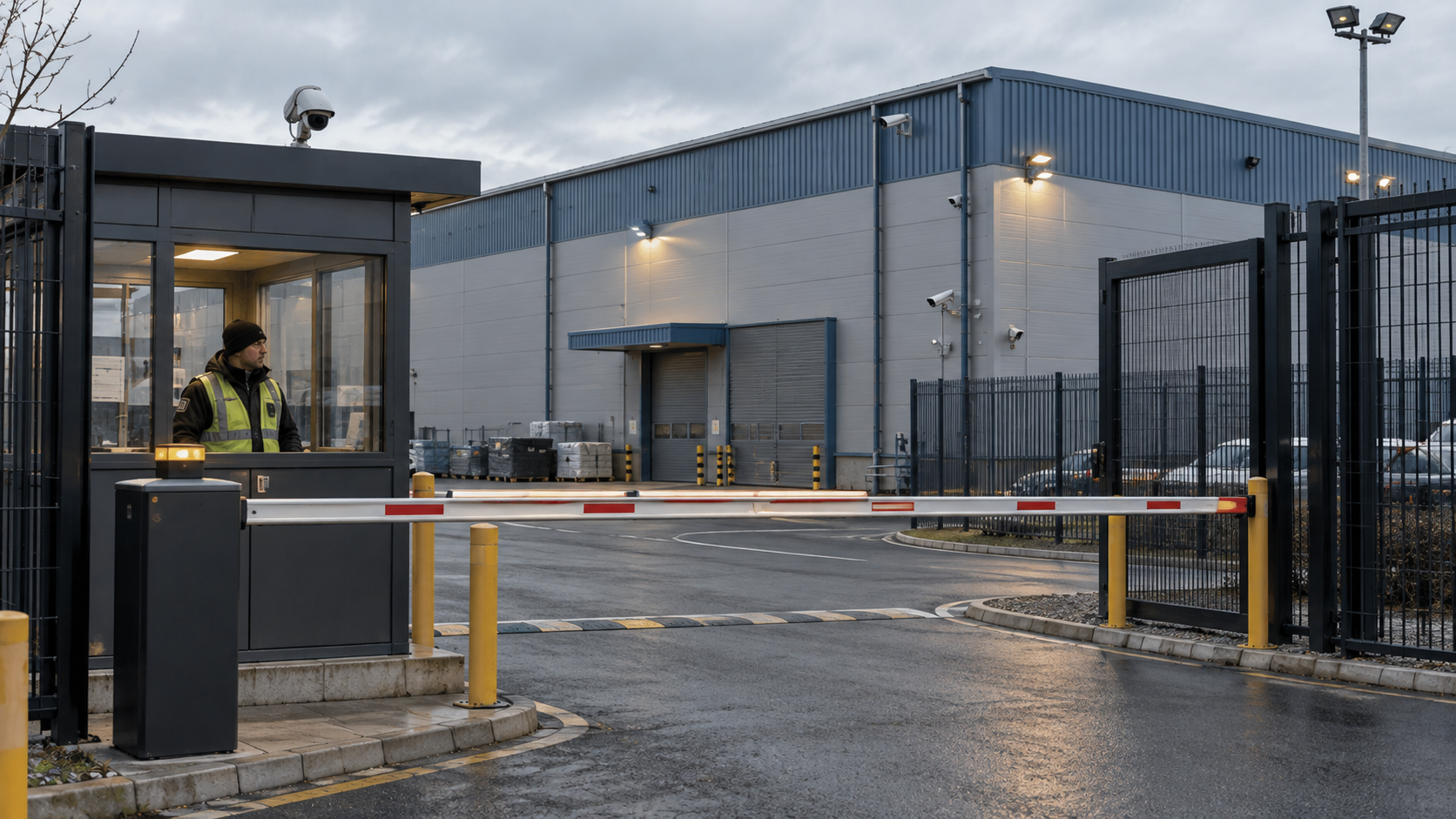
That change matters. Vacant commercial property break-in prevention isn’t just about stopping someone from forcing their way inside. Once a building becomes unoccupied, theft is only one part of the problem. Vandalism, arson, water damage, trespassing and deterioration can all become harder to spot when there are no employees, tenants or customers around.
RICS guidance notes that unoccupied commercial properties can carry higher risks, including vandalism, arson, squatting and damage from problems such as previously unnoticed water leaks. Regular inspection is therefore part of the wider management picture, not an optional extra. So what tends to get missed? Quite often, it’s the ordinary stuff.
Why Vacant Property Break-In Risks Change Once a Building Is Empty
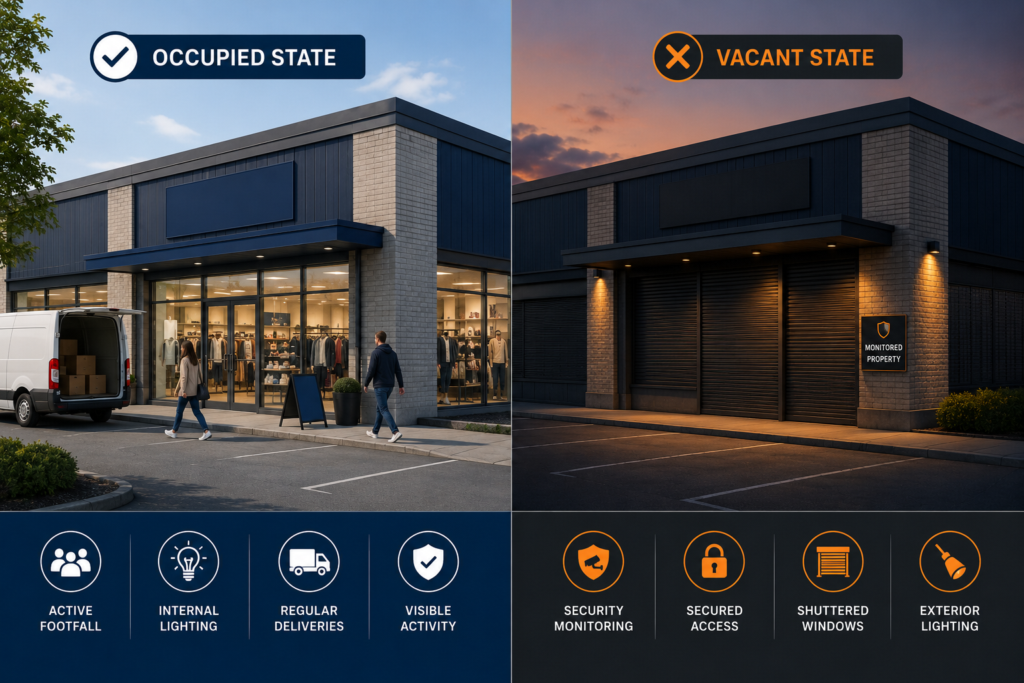
An occupied building has a certain amount of natural surveillance. People arrive, deliveries turn up, lights switch on and off, and doors are open. Somebody notices when a window has been broken or when a stranger is standing somewhere they shouldn’t be.
Vacancy removes much of that activity. The result is not automatically a dangerous property. It does, however, change the risk profile.
The most obvious vacant property break-in risks include unauthorised entry, theft, vandalism and damage to doors or windows. But there are quieter risks too:
- A small roof leak goes unnoticed.
- A heating problem develops during cold weather.
- Lighting fails around a rear entrance.
- A fence is damaged, and nobody reports it.
- Old access credentials remain active.
- Waste accumulates outside the building.
- A broken window creates an easy route inside.
None of these necessarily creates an emergency on day one. That is exactly why they can be missed.
RICS has highlighted the importance of regular inspections for vacant commercial properties, particularly because insurers may apply specific conditions during periods of vacancy.
The important point is that vacancy turns time itself into a risk factor. A problem that would be discovered within hours in an occupied building may sit unnoticed for days or weeks.
The 8 Weak Points Owners Should Check First
A useful way to approach an empty property is to stop looking at it as a single asset and start looking at the small points where its normal routine has disappeared.
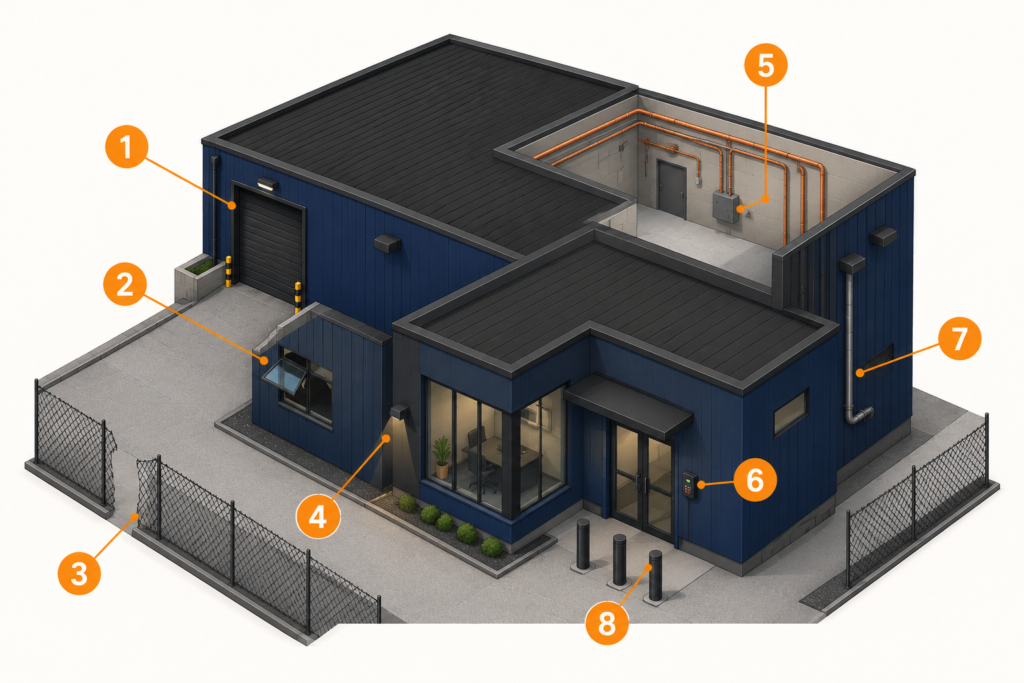
1. Secondary Doors, Shutters and Forgotten Access Points
Most people check the main entrance first. That’s sensible, but it isn’t enough.
Empty buildings often have several ways in: rear fire exits, loading-bay doors, roller shutters, staff entrances, plant-room doors and service corridors. Some are rarely used even when the building is occupied, so they can receive less attention once the property becomes vacant.
A proper review should ask:
- Does every external door close and lock correctly?
- Are damaged locks repaired promptly?
- Are redundant doors actually secured?
- Who controls keys for service entrances?
- Are roller shutters and gates still functioning correctly?
- Are fire exits secure without compromising legitimate emergency requirements?
This is where empty building intrusion prevention becomes a practical property-management exercise rather than a vague security concept. You don’t need to assume an intruder is looking for a clever way inside. You need to make sure the building isn’t quietly offering an easier one.
That means checking doors physically rather than assuming they are secure because they were secure last month.
2. Windows, Roof Access and Other Less Obvious Routes
Windows often receive less attention than doors, particularly in large commercial buildings.
Check locks, check glazing, and look for damage. Think about whether nearby structures, temporary works, ladders or scaffolding have altered the property’s exposure since the last inspection.
Roof access deserves consideration too. So do skylights, service hatches and areas where neighbouring structures meet the property.
This doesn’t mean turning an inspection into a blueprint for bypassing security. Quite the opposite. The purpose is to identify anything that needs repair, restricting or monitoring before someone else notices it.
A vacant building changes over time. Temporary fencing moves, contractors finish work, landscaping grows, and adjacent properties are redeveloped. A route that wasn’t accessible six months ago might be accessible now.
That’s why vacant property break-in risks need to be reviewed periodically rather than assessed once at the beginning of the vacancy.
3. Perimeter Fencing Can Create a False Sense of Security
A fence is useful. But it is not magic. Walk around the entire boundary rather than inspecting it from the front entrance. Look for damaged panels, gaps, unsecured gates, overgrown vegetation and objects that have accumulated against the boundary.
Also consider how the property connects to its surroundings.
- Does a service road lead directly behind the building?
- Is there a shared access route?
- Are neighbouring sites occupied while yours is empty?
- Is there lighting along the boundary after dark?
These details matter because empty building intrusion prevention is rarely achieved by one barrier alone.
The same applies to gates. A gate that looks substantial but doesn’t close properly is still a weak point. A vehicle entrance that remains open for convenience may undermine other controls around the site. Owners don’t need to turn every vacant unit into a fortress. They do need to remove obvious inconsistencies between the building’s perceived security and its actual condition.
4. Poor Lighting and the Forgotten Exterior
Darkness isn’t automatically a security failure. A poorly maintained exterior, however, deserves attention.
Check the areas where somebody would naturally approach or inspect the building:
- car parks
- rear service areas
- loading bays
- pedestrian entrances
- side passages
- perimeter gates
- waste storage areas
Lighting has two jobs here. It can support deterrence, and it makes it easier for legitimate inspections to identify changes in the environment.
London Fire Brigade’s business guidance on reducing arson risk recommends attention to security lighting, perimeter measures, CCTV and intruder alarms, alongside good end-of-day checks and fire-risk management.
For an empty building, the basic principle remains useful: don’t let the exterior become a dark, neglected space that nobody regularly examines.
5. Empty Commercial Buildings Still Have Valuable Assets Inside
“There’s nothing worth stealing. The building is empty.”
That assumption can be costly. A vacant office, retail unit, warehouse or factory can still contain valuable materials and fixtures:
- copper and other metals;
- cabling;
- air-conditioning components;
- plant and machinery;
- kitchen equipment;
- IT hardware;
- specialist fixtures;
- fuel or stored materials.
Some properties also contain information, records or equipment that shouldn’t simply be left accessible because the tenant has moved out.
This is one reason commercial property vacancy risks extend beyond the building envelope itself. Owners need to think about what remains on the site and whether it still has a legitimate purpose.
RICS has highlighted that unoccupied commercial buildings can attract thieves because valuable materials may remain within the building fabric.
A sensible first step is an inventory. What’s still there? Who owns it? Does it need to remain? Should it be removed, secured or documented? Knowing the answer makes later decisions much easier.
6. Old Keys, Access Cards and Forgotten Permissions
One of the quieter problems in a vacant property is the access that nobody remembers still exists.
Former employees may have keys. Former contractors may still hold cards. A previous tenant’s access permissions might not have been fully removed. There could be duplicate keys sitting in an office somewhere, or a temporary credential that was intended to expire after a project finished.
None of these automatically means the property is compromised. They do, however, create questions that should have clear answers. A vacancy review should establish:
- Who currently has physical keys?
- Which cards or credentials remain active?
- Which former users should be removed?
- Who approves future access?
- Where are spare keys held?
- How are contractor visits recorded?
This isn’t glamorous work. It’s also exactly the kind of thing that gets forgotten when everyone is focused on the next tenant.
Good access records reduce ambiguity and make commercial property vacancy risks easier to manage because the owner knows who should and shouldn’t be able to enter.
7. Inspection Gaps Turn Small Problems Into Major Losses
At a minimum, consider checking:
- doors, locks and shutters;
- accessible windows;
- perimeter fencing and gates;
- external lighting;
- signs of water ingress;
- heating or plumbing issues where relevant;
- alarm and monitoring status;
- signs of trespass;
- graffiti or vandalism;
- waste accumulation;
- roof and drainage problems;
- evidence that somebody has been inside.
RICS specifically points to regular inspection as important in protecting vacant properties and responding promptly when trespass occurs. It also warns that external inspection alone may not reveal what is happening inside a building.
8. The Building Looks Empty, And That's the Problem
Some signs of vacancy are unavoidable. Others are manageable.
An empty property with an overgrown frontage, accumulated post, broken external lighting, unchanged signage and a car park that has clearly stopped being used can begin to look forgotten.
It doesn’t mean an intruder will automatically notice. But it does mean the property may appear less actively managed. That matters because one of the less obvious commercial property vacancy risks is the impression that nobody is paying attention.
Small things can help:
- keep external areas maintained;
- remove unnecessary signage;
- manage post and deliveries;
- repair visible damage quickly;
- keep lighting operational;
- make legitimate inspections consistent;
- avoid leaving equipment or waste outside.
Empty Commercial Building Risks Go Beyond Break-Ins
Empty commercial building risks can include several different categories of loss:
- Intrusion and trespass: Unauthorised people may enter, causing theft, damage or occupation problems.
- Vandalism: Broken glazing, graffiti, damaged doors and deliberate destruction can quickly turn a manageable vacancy into a costly repair project.
- Fire and arson: Empty or derelict premises can present particular fire risks. Fire and rescue services warn that vacant buildings can attract anti-social behaviour and may become targets for deliberate fires.
- Water damage: A small leak can continue for a long time before anyone notices it. RICS has specifically highlighted this as a reason unoccupied properties can present increased insurance risk.
- Deterioration: Condensation, damp, roof problems, damaged drainage and poor ventilation can worsen when routine occupation and maintenance decline.
That’s why empty commercial building risks need to be considered as a whole. A prevention plan that focuses only on burglars may miss the problem that actually causes the largest financial loss.
Vacant Premises Insurance Requirements: Check the Policy, Not Assumptions
Insurance is where generic internet advice becomes particularly dangerous.
There is no single set of vacant premises insurance requirements that applies identically to every commercial property. Conditions vary according to the policy, insurer, building, location, length of vacancy and circumstances.
RICS guidance on vacant properties notes that the risk profile changes significantly when a commercial property becomes unoccupied. Insurers may apply specific conditions during the vacancy, including regular inspections and other risk controls. Owners should therefore notify their insurer and confirm exactly what their policy requires.
So, before the property becomes empty, check:
- Does the insurer need to be notified?
- How does the policy define an unoccupied property?
- How frequently are inspections required?
- Are particular security measures stipulated?
- Are water, heating or other services subject to conditions?
- What records must be retained?
These are vacant premises insurance requirements, not a generic checklist to copy from another building.
The actual policy wording takes precedence.
If an owner is unsure, speak to the insurer or broker rather than assuming that a security arrangement used elsewhere will satisfy the policy.
Building an Inspection Routine That Actually Works
A vacant property should have a plan for what happens before, during and after vacancy.
- When the property first becomes empty: Complete a baseline inspection. Record the condition of the building, confirm access arrangements, remove obsolete credentials and identify anything that needs repair.
- During the vacancy: Carry out inspections at a frequency appropriate to the building, risk and insurance conditions. Look for change rather than simply ticking boxes.
- After severe weather: Check roofs, drainage, windows, external areas and evidence of water ingress.
- After an incident: Inspect promptly, preserve relevant evidence and record what has changed.
- Before reoccupation: Review access arrangements again. Old keys, damaged doors and temporary measures from the previous vacancy shouldn’t simply be carried over into a new tenancy.
A useful vacant property inspection checklist should evolve with the property. Changes to the surrounding environment, access arrangements or the condition of the site can all alter the level of risk. For example, a vacant unit on a busy Manchester commercial estate may need a different inspection approach from an isolated rural property because of its surroundings, traffic and shared access arrangements. Property owners managing sites across Greater Manchester can therefore benefit from working with a security company in Manchester that understands the local environment and can tailor support accordingly.
When Routine Inspections Aren't Enough
There are properties that can be managed with a straightforward inspection regime. There are others where the risk is plainly higher.
Consider a building that has already been broken into twice. Or a large industrial property that will remain empty for a year. Or a site containing valuable equipment, with an isolated boundary and limited local oversight.
That is a different proposition. For properties where routine inspections aren’t enough, vacant property security support can provide a more structured response based on the site’s individual risk profile. Additional measures may be appropriate depending on the circumstances, such as:
- scheduled site visits;
- live guard-tracking records;
- keyholding arrangements;
- alarm response;
- mobile patrols;
- monitored CCTV;
- physical security measures;
- professional on-site presence where the risk assessment supports it.
This is where a broader vacant commercial property break-in prevention strategy becomes useful. The owner doesn’t necessarily need every measure on the list. They need the combination that addresses the building’s actual weaknesses.
The right question isn’t: “What is the most security I can buy?”
It’s: “Where would an incident leave us most exposed, and what control addresses that gap?”
That keeps the approach proportionate.
Vacant Commercial Property Break-In Prevention Checklist

Before the property becomes vacant:
- Notify the insurer where required.
- Review all external doors, windows and shutters.
- Record who holds keys and access credentials.
- Remove obsolete access permissions.
- Check perimeter gates and fencing.
- Test relevant alarms and systems.
- Record the property’s condition.
During the vacancy:
- Carry out inspections at the required frequency.
- Check for signs of intrusion, vandalism or water damage.
- Inspect external lighting and boundary condition.
- Keep records of every visit.
- Escalate defects rather than leaving them for the next inspection.
- Review the arrangement if the property’s circumstances change.
After any incident:
- Preserve evidence where appropriate.
- Notify relevant parties.
- Record what happened and when.
- Review how the incident occurred.
- Adjust the risk controls where necessary.
The point of a checklist isn’t to create paperwork for its own sake. It is to make sure that vacancy doesn’t become synonymous with neglect.
Conclusion
An empty commercial building doesn’t stop being an asset because nobody is using it.
It still has doors, windows, plant, cabling, fixtures, services and a physical presence in the surrounding community. It can still suffer a break-in, fire, vandalism, water damage or unauthorised occupation. The difference is that there are fewer people around to notice something has gone wrong.
Effective vacant commercial property break-in prevention therefore starts with the basics: understand the building, identify its weak points, maintain access controls, inspect regularly and make sure the response plan matches the actual risk.
The most overlooked weaknesses are rarely dramatic. They are the side door nobody checked, the failed light nobody reported, the access card nobody cancelled, or the inspection that was quietly missed.
Good property management catches those things early. And when the risk is greater than routine inspection can reasonably manage, additional professional support can close the gap.