Lancaster looks calm on the surface, but running a business here is rarely simple. The city blends old streets, busy student areas, coastal trade routes, and fast-moving retail zones. This mix creates real security pressure. Late-night crowds, heavy foot traffic, and regular theft are common concerns.
That is why business security Lancaster matters more than ever. Many owners now ask, why Lancaster businesses need manned guarding? The answer is practical.
Manned guarding services in Lancaster bring trained people on site, not just alarms on walls. Guards help with safeguarding staff, customers, and assets. More importantly, a visible security presence deterrent stops problems before they grow.
Foundation of Guarding: Lancaster’s Specific Risk Zones
Lancaster may feel compact, yet its risks are spread unevenly. The city blends historic streets, student housing, nightlife areas, retail parks, and key transport routes. Each space attracts different behaviour. That is why on-site security guards in Lancaster are deployed with care, not guesswork.
Local crime data shows Lancaster records over 100 crimes per 1,000 residents each year, a higher rate than several nearby districts. Most incidents cluster around busy zones, not quiet suburbs.
This pattern shapes how security is planned. Guards are placed where people gather, goods move, and pressure builds.
Bridging the Gap: Human Intervention vs. Automated Monitoring
Technology helps, but it has limits. Cameras spot movement. Alarms send alerts. Neither can judge intent or calm tension. This is where manned guarding services in Lancaster stand apart.
A trained guard watches behaviour, not just screens. They speak to people and deliver fast emergency response and incident handling when needed. This human role adds depth to physical security for commercial properties.
In simple terms:
- Guards act in real time.
- Static systems wait for a response.
Lancaster’s mix of licensed venues and student activity raises the risk of disorder and theft. Human presence strengthens crime prevention for local businesses by stopping issues before they spread.
Risk also changes with the clock.
- Daytime guarding focuses on protecting retail and office premises from shoplifting, tailgating, and unwanted access.
- Night-time guarding shifts to patrols, fire watches, door checks, and perimeter control. This is vital for many commercial security services in Lancashire, where buildings sit empty for long hours.
Mitigating Sector-Specific Risks in the Lancaster District
Every sector faces its own pressure points. Security must reflect that.
Logistics Site Integrity:
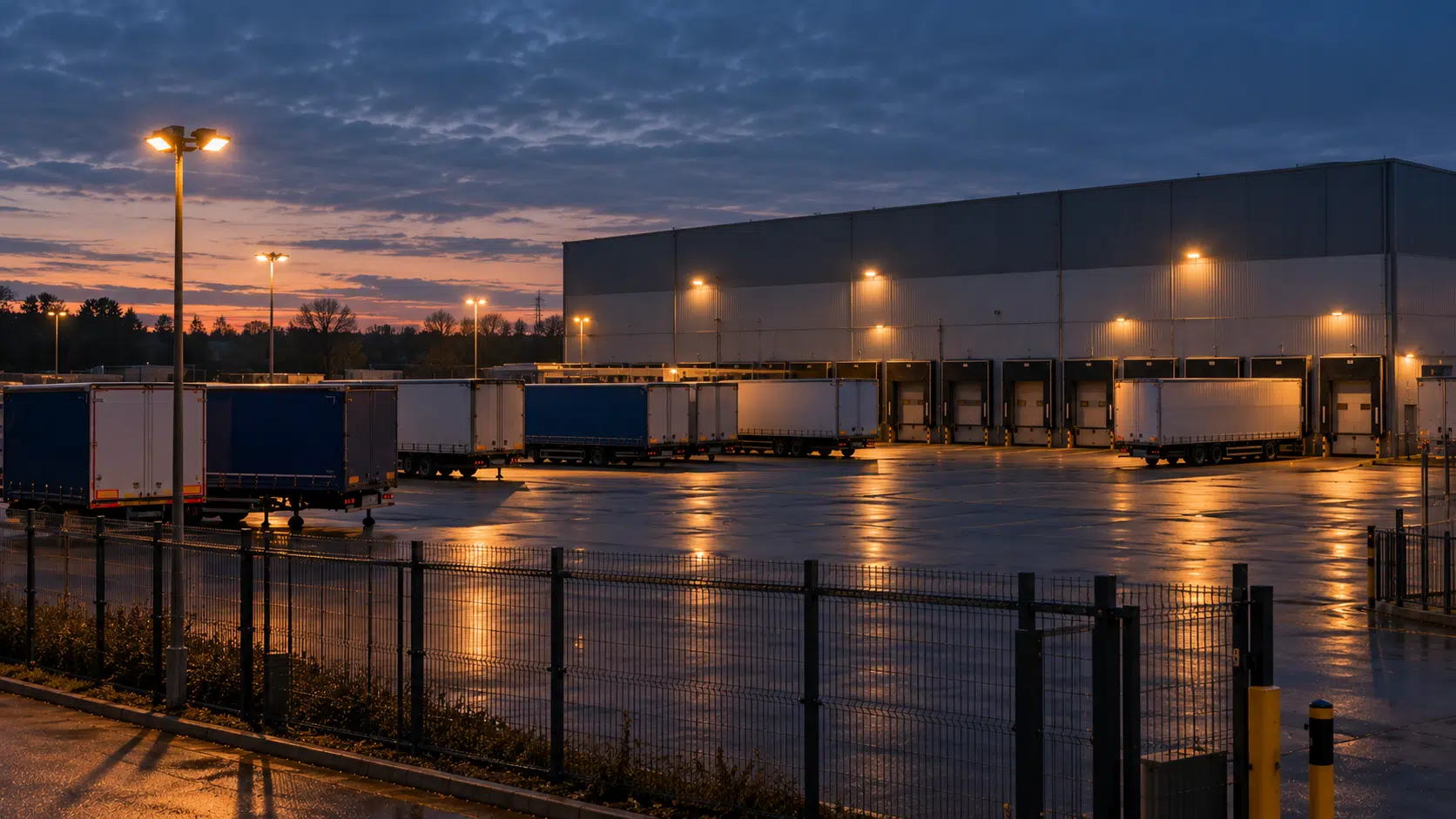
Sites near Heysham, the port, and the M6 routes handle high-value goods. These areas face cargo theft, vehicle interference, and access breaches. Large grounds increase blind spots.
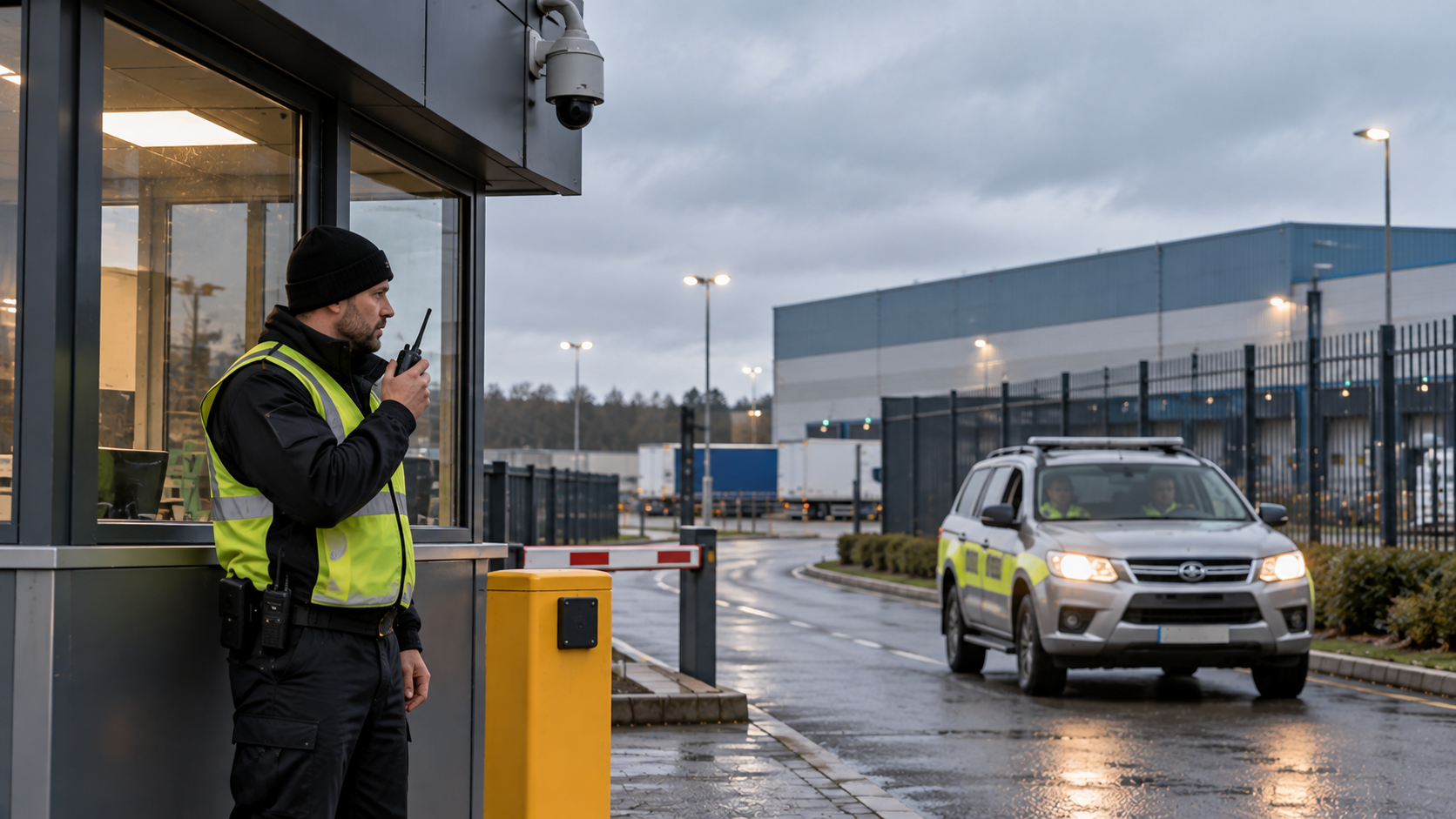
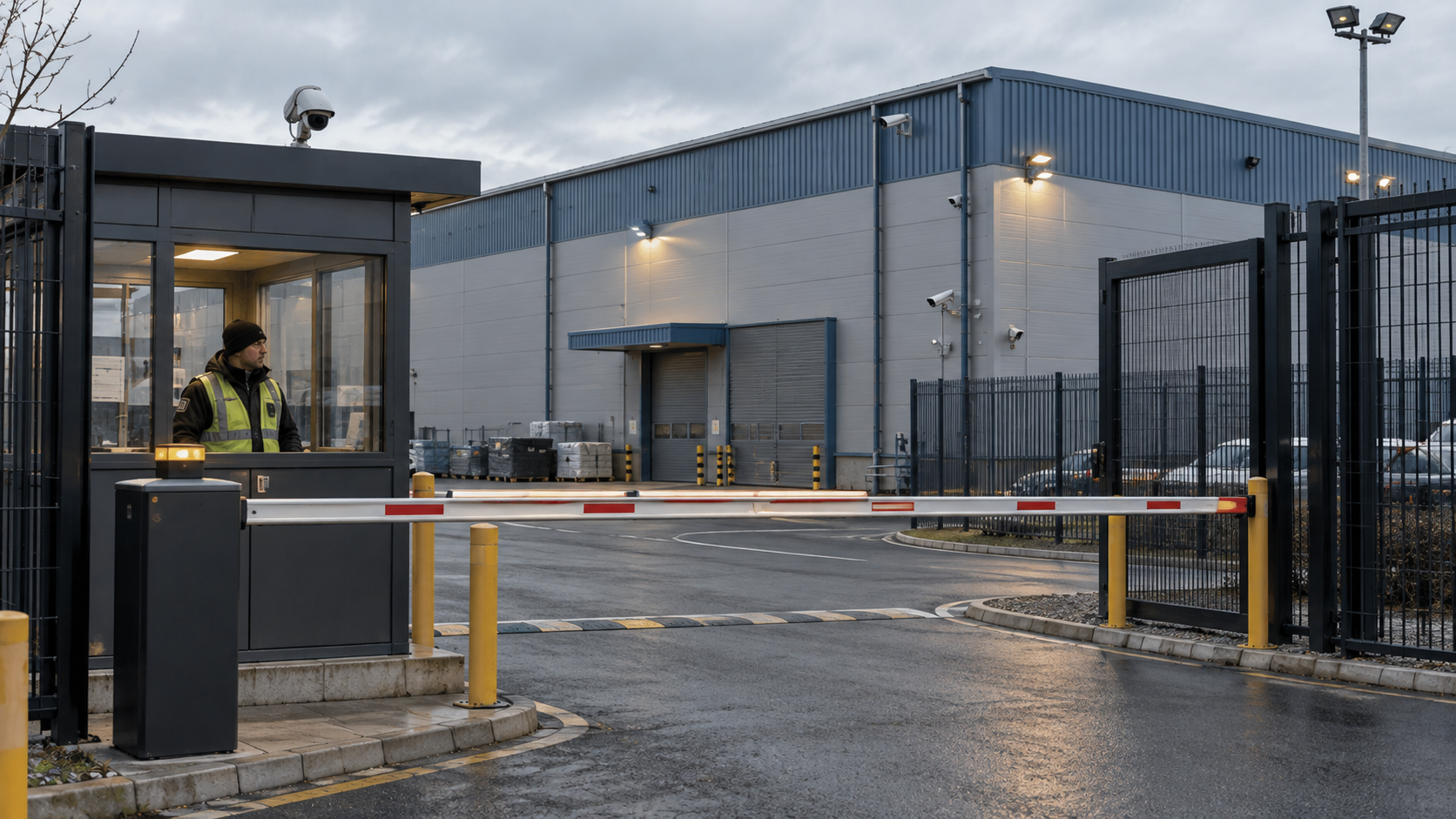
Professional security guards for businesses help control entry points, log arrivals, and oversee visitor management. Strong access control reduces both theft and internal risk.
The Retail Theft Surge:
Retail crime continues to rise nationwide, and Lancaster retailers feel the impact. Busy high streets and retail parks attract opportunistic theft. Daytime patrols play a key role here.
A visible security presence deterrent changes offender behaviour and supports staff. Guards help apply clear loss prevention strategies for businesses without disrupting genuine shoppers.
Student-Related Disorder:
Students bring trade and energy, but large groups can strain retail spaces. Noise, crowding, and damage are common complaints during peak term periods.
Guards manage group flow, enforce store rules, and liaise with authorities when needed. Their presence keeps retail areas open, calm, and safe.
Operational Timing and Economic Drivers
Security needs shift with time, seasons, and growth.
Peak Vulnerability Windows:
Risk rises when routines break. For many Lancaster businesses, the most exposed time starts after 6 PM, when staff numbers drop and sites close.
Friday and Saturday nights raise the risk further due to nightlife. Guarding these hours delivers strong protection with focused cost.
Academic Cycle Impact:
The university calendar reshapes the city. Fresher’s Week and term bring sudden population spikes. Term breaks reduce footfall but leave sites quieter and more exposed.
Private security companies in Lancaster respond by adjusting cover levels and patrol hours. Flexible manned guarding services Lancaster match protection to demand.
Investment Driving Demand:
Lancaster continues to attract investment through transport links, port activity, and new commercial builds. Construction sites and new units need guarding long before opening.
Guards deter theft, manage access, and protect equipment. As development grows, so does the need for reliable on-site security.
Legal Requirements: Upholding SIA and UK Standards in Lancashire
Security fails fast when the law is ignored. One wrong hire, one missing licence, and a business can face fines, closure, or worse. For business security Lancaster, legal compliance is not background work. It is the backbone of safe operations.
The SIA Foundation and Penalties
Before a guard steps on site, the law steps in first.
What the law demands:
- Every guard carrying out licensable duties must hold a valid SIA licence.
- This includes guarding buildings, checking access, patrolling, and dealing with incidents.
- Only SIA licensed security guards can legally perform these roles.
This rule is simple. It proves compliance with UK security regulations and protects both the business and the guard.
What happens if you ignore it:
- Using an unlicensed guard is a criminal offence.
- Guards can be prosecuted.
- Company directors may face heavy fines or prison.
That is why hiring licensed security guards in the UK is not optional. It is a legal duty, not a cost-saving choice.
Vetting beyond the licence:
- SIA vetting includes a criminal record check.
- Enhanced DBS checks may apply where children, vulnerable adults, or sensitive data are involved.
Each site must match vetting to risk, not assumption.
Local Police and Counter-Terrorism Preparation
Security works better when it connects.
Working with the police:
Private guarding firms in Lancashire often work with Lancashire Constabulary through local partnerships such as LANPAC. These links allow:
- Faster information sharing
- Early warning of local threats
- Stronger crime prevention for local businesses
This cooperation helps guards act before problems grow.
Martyn’s Law and licensed venues:
New counter-terrorism rules are reshaping event safety. Under Martyn’s Law, many venues will need trained guards on site. Their role includes:
- Managing access points
- Spotting unusual behaviour
- Leading emergency response and incident handling
For events and nightlife in Lancaster, guards are becoming a legal requirement, not a preference.
CCTV and data rules:
When guards work with CCTV, the law follows closely.
Guards must:
- Use footage only for security reasons
- Store data safely
- Follow GDPR and the Data Protection Act 2018
This is a key part of ongoing compliance with UK security regulations.
Financial and Contractual Compliance
Legal security also means clean contracts and fair pay.
VAT on security services:
- Manned guarding services are charged at 20% VAT.
- This must be built into budgets from the start.
Clear pricing helps businesses plan real manned security costs UK, without surprises.
Pay, overtime, and holidays:
Guards are workers, not placeholders. The law requires:
- At least the National Living Wage
- Correct holiday pay
- Overtime and shift allowances are included where regular
Poor pay leads to high turnover and legal claims. Fair pay supports stable business security Lancaster operations.
Proof that a firm is compliant:
Before signing a contract, businesses should ask for:
- SIA Approved Contractor Scheme (ACS) status
- ISO certifications
- Evidence of BS 7858 staff vetting
These documents show history, not promises.
Legal compliance is not paperwork for the shelf. It keeps businesses open, staff safe, and security strong. In Lancaster, doing it right is the only safe option.
Deployment Strategy: Costs, Contracts, and Strategic Planning
Security choices shape daily operations more than most owners expect. One weak plan can lead to losses, staff stress, and rising insurance claims. A strong one brings order and calm.
In Lancaster, smart planning means understanding manned security costs UK and working with capable private security companies in Lancaster that know the ground.
Cost Benchmarks and Investment Returns
What really drives the cost?
Guarding prices are built on risk, not guesswork. Several factors push costs up or down:
- Public access and foot traffic
- Trading hours, especially nights and weekends
- Level of skill needed on site
- History of theft, disorder, or damage
A city centre store needs a different approach than a quiet office park. Security guard services for local businesses must reflect that difference to be effective.
Why the lowest price often costs more:
Cheap contracts usually mean high staff turnover. Guards come and go. Site knowledge disappears. Small issues turn into incidents. Stable investment allows firms to retain professional security guards for businesses who understand routines, staff, and pressure points.
Where the return shows up:
The value of manned guarding is not limited to theft prevention. A visible presence reduces disputes, limits damage, and reassures staff. Insurers take note.
When a site has trained guards and a clear security risk assessment for companies, the chance of claims drops. Over time, this can influence premiums and liability exposure.
Extra value on the ground:
Guards also handle tasks that protect productivity. They manage access, guide visitors, and deal with low-level issues before managers get involved. This day-to-day support often goes unnoticed until it is missing.
Contractual Terms and Mobilisation
Choosing a contract that works:
Most Lancashire guarding contracts run for one to three years. Each option has a purpose:
- Short-term offer flexibility during change.
- Longer terms support consistency and planning.
Longer agreements allow deeper training and better staff retention. This leads to stronger performance from on-site security guards in Lancaster and fewer service gaps.
What mobilisation includes?
Guards are not deployed overnight. Proper mobilisation takes time and includes:
- Site surveys and risk reviews
- Clear role definitions
- Site-specific training and induction
- Checks for SIA licensing and BS 7858 screening
This process ensures guards arrive ready, not reactive.
Adjusting as the business changes:
Risk is not fixed. Opening hours change. New stock arrives. Events increase footfall. Good contracts allow reviews and updates. This keeps commercial security services Lancashire aligned with real conditions, not outdated plans.
Public sector rules that shape security:
The Procurement Act 2023 has raised expectations. Public bodies now look beyond price. They assess fairness, transparency, and social value. For private security companies in Lancaster, this means proving local impact, fair pay, and ethical practice alongside service quality.
A strong deployment strategy is built, not bought. When costs, contracts, and planning work together, manned guarding becomes steady support, not a reactive expense.
Daily Operations: Guard Duties and Procedural Excellence
Good security is built on routine. Not noise and force. Just clear actions done the same way, every shift. This is what separates professional guarding from basic cover.
In Lancaster, where risks change by hour and location, strong daily practice defines the value of on-site security guards in Lancaster.
Shift Handovers and Initial Site Checks
The first five minutes matter:
When a guard starts a shift, nothing begins blind. An SIA licensed guard starts with information, not movement. The first steps are simple but critical:
- Receive a verbal handover from the outgoing guard
- Review the site logbook for open issues or recent incidents
- Confirm radios, phones, alarms, and control systems work
This creates continuity. No gaps. No assumptions.
Why handovers must be formal:
A proper handover is both spoken and written. Keys, passes, and logbooks are physically passed over. Any unusual activity, failed locks, or known risks are clearly explained.
This documented process protects the site and the guard. It also supports later emergency response and incident handling if questions arise.
Perimeter always comes first:
In Lancaster’s industrial and commercial zones, the first patrol is external.
Guards check:
- Gates and fencing
- Locks and shutters
- Signs of tampering or forced entry
This early sweep confirms the site is intact before internal routines begin. It is a core layer of physical security for commercial properties.
Safety, Patrols, and Documentation
Fire safety is never optional:
Fire checks sit at the top of daily priorities.
Guards ensure:
- Fire exits are clear
- Extinguishers are visible and accessible
- Assembly points are usable
These checks play a direct role in safeguarding staff, customers, and assets, especially during busy trading hours or night shifts.
Patrols that discourage trouble:
Patrols are not random walks. They are planned, logged, and timed to disrupt patterns. Many sites use hourly or staggered patrols to avoid predictability. This approach strengthens the visible security presence deterrent and reassures staff and visitors.
Why does the logbook matter?
Every action leaves a record. A guard’s logbook includes:
- Visitor entries and exits
- Patrol times and routes
- Alarm tests and system checks
- Incidents, even minor ones
This record forms a clear audit trail. It protects the business, supports investigations, and strengthens future response planning.
Access Control and Incident Response
Managing who comes in and out:
Access control is one of the most active guard duties. Upon arrival, guards follow strict access control and visitor management steps:
- Verify identity
- Issue passes where required
- Record arrival and departure times
This reduces unauthorised access and supports accountability across the site.
Responding to alarms calmly:
Early-shift alarms are common, especially in retail and industrial sites. Guards do not rush in blindly. A trained response includes:
- External perimeter checks
- Safe internal inspection if authorised
- Immediate escalation to control rooms or emergency services when risk is confirmed
This structured approach ensures safe and effective emergency response and incident handling.
Closing the shift properly:
Security does not end when the shift does. Before handover, guards complete a full secure-down:
- Doors and windows checked
- Alarms set
- Systems confirmed live
Only then is the site handed over or left secure. This final step protects everything done during the shift.
Daily operations may look routine, but they carry the weight of safety. In Lancaster, disciplined guard procedures keep sites calm, controlled, and protected.
Performance and Challenges: Managing the Human Element in Security
Security systems do not think, but people do. Every alert, patrol, and decision on site depends on a human response.
For security guard services for local businesses, performance rises or falls with the people wearing the uniform. In Lancaster, where conditions, footfall, and risk can change fast, managing the human side of security is a daily challenge.
Measuring Value and Effectiveness
Why is counting hours not enough?
A guard being present does not always mean a site is protected. Real value shows in outcomes. Businesses that rely only on attendance miss the bigger picture.
KPIs that show real performance:
Effective guarding can be measured through clear, practical indicators:
- Fewer incidents of theft, damage, or disorder over time
- Faster response to confirmed alarms or calls for help
- Patrol completion rates, verified through digital tools or checkpoints
- Positive feedback on access control and visitor management, such as smooth sign-ins and fewer access disputes
These measures show whether guards are alert, consistent, and proactive.
Weather as a hidden risk factor:
Lancaster’s weather affects how guards work. Heavy rain, fog, or icy ground reduces visibility and raises slip risks. Skilled guards record these conditions and adapt.
Patrol routes may be shortened. Focus may shift to entrances and high-risk zones. This flexibility helps maintain physical security for commercial properties when the environment works against routine.
Fatigue and decision quality:
Long shifts wear people down. Tired guards miss small details that often lead to bigger problems. Fatigue slows reaction time and weakens judgment. Structured shift patterns, planned breaks, and sensible overtime limits help maintain alertness.
Consistent focus is a defining trait of professional security guards for businesses, not a bonus.
Managing the Strain of Night Work
Night shifts are quiet but demanding. Guards often work alone with limited contact. Over time, isolation can lead to stress and low morale if ignored.
Lancaster firms address this through:
- Regular supervisor check-ins
- Clear escalation procedures
- Access to mental health support
These measures matter most for after-hours business security, where one guard may protect an entire site.
Guard Retention Strategies in the Lancaster Security Market
Across Lancaster and the wider North West, demand for manned guarding continues to rise. Effective strategies include:
- Recognised training: Certified courses in conflict management, first aid, and site safety give guards skills they can build on.
- Clear progression routes: Paths into senior roles, mobile patrols, or specialist assignments help guards see a future in the role.
- Fair and realistic pay: Wages reflect responsibility, risk, and local living costs, not just minimum requirements.
When guards see growth and structure, commitment improves. Stable teams deliver more consistent manned guarding services for local businesses.
Future-Proofing: Technology Integration in Lancaster Security
Security has changed its shape. It is no longer just patrols and paper logs. Today, strong protection comes from timing, data, and human judgment working together.
In Lancaster, this shift is redefining manned guarding services in Lancaster and strengthening modern commercial security services in Lancashire.
Human-Technology Integration
The guard role is no longer static:
A guard’s job now moves with the site. Tools follow every step.
Most guards now rely on:
- Digital reports that update in real time
- Body-worn cameras that record facts, not opinions
- Patrol systems that confirm checks are done properly
These tools remove doubt. They support clear decisions during emergency response and incident handling and protect both the guard and the business when incidents are reviewed.
Why live reporting matters?
Paper reports wait until the shift ends. Digital reports act instantly. Managers can see patterns early. Small issues do not stay hidden.
For private security companies in Lancaster, this means fewer blind spots and stronger control across multiple locations.
AI supports focus, not authority:
AI does not replace guards. It clears the noise. Smart systems ignore routine movement like rain, fog, or passing vehicles. Only real threats reach the guard.
This keeps attention sharp and reduces fatigue. Human judgment remains the final decision point.
Remote monitoring adds balance:
Remote monitoring centres act as support, not command. When an alarm triggers, trained staff check visuals first.
Guards are sent only when a real issue exists. This speeds up response and reduces wasted callouts. It also helps control manned security costs UK without lowering safety.
Forward-Looking Practices
New skills are now essential:
Modern guarding demands more than presence. Training now focuses on:
- Using video systems with confidence
- Writing clear digital reports
- Understanding updated counter-terror duties under Martyn’s Law
These skills allow on-site security guards in Lancaster to operate with clarity in busy and high-risk spaces.
Sustainability shapes patrol choices:
Security is becoming cleaner and smarter. Many sites now use:
- Electric or low-emission patrol vehicles
- Energy-saving lighting in outdoor areas
- Planned patrol routes that cut fuel use
These steps lower costs and support local environmental goals without weakening protection.
Predicting risk instead of chasing it:
Security planning is moving ahead of problems. Data now guides decisions.
Inputs often include:
- Student term dates and intake periods
- Event calendars and nightlife trends
- Past incident patterns
This insight helps businesses increase guard cover during pressure periods and scale back during calm phases. Manned guarding services in Lancaster become targeted, not heavy-handed.
Why Future-Ready Security Works?
When people and tools support each other, security becomes calmer and sharper. Guards stay focused, and costs stay controlled.
In Lancaster, future-proof security is not about replacing people. It is about helping them see clearly, act faster, and plan smarter. That balance is what keeps sites safe as risks continue to change.
Conclusion: The Essential Investment for Lancaster’s Future
Lancaster businesses face real, daily risk. That is why the question still matters: Why Lancaster businesses need manned guarding? The answer is people.
SIA licensed security guards deliver judgment, calm action, and a visible security presence deterrent that systems alone cannot match.
Start with a clear security risk assessment for companies, then commit to hiring licensed security guards in the UK to maintain full compliance with UK security regulations.
For reliable manned guarding services in Lancaster, contact Region Security Guarding.
Frequently Asked Questions
1. Are guarding costs higher in Lancaster than nearby cities?
Lancaster rates are often lower than Blackpool and similar to Preston. Cost depends on site risk, hours, and location, not just the city.
2. How can I confirm guards are SIA licensed?
Request licence numbers and check them on the official SIA public register.
3. What do retail guards focus on to stop theft?
High visibility, active patrols, staff support, early intervention, and clear reporting.
4. Do security guards reduce insurance risk?
Yes. Insurers often view manned sites as lower risk, which can improve policy terms.
5. What does a security risk assessment include?
It reviews access points, local crime trends, site layout, and daily operations.
6. Does Lancaster’s student population affect guard training?
Yes. Guards often need stronger conflict control and communication skills.
7. How do guards manage access at offices?
They check ID, issue passes, log visits, and block unauthorised entry.
8. How do guards prevent crime beyond patrols?
They deter threats, spot early signs, manage incidents, and support police when needed.