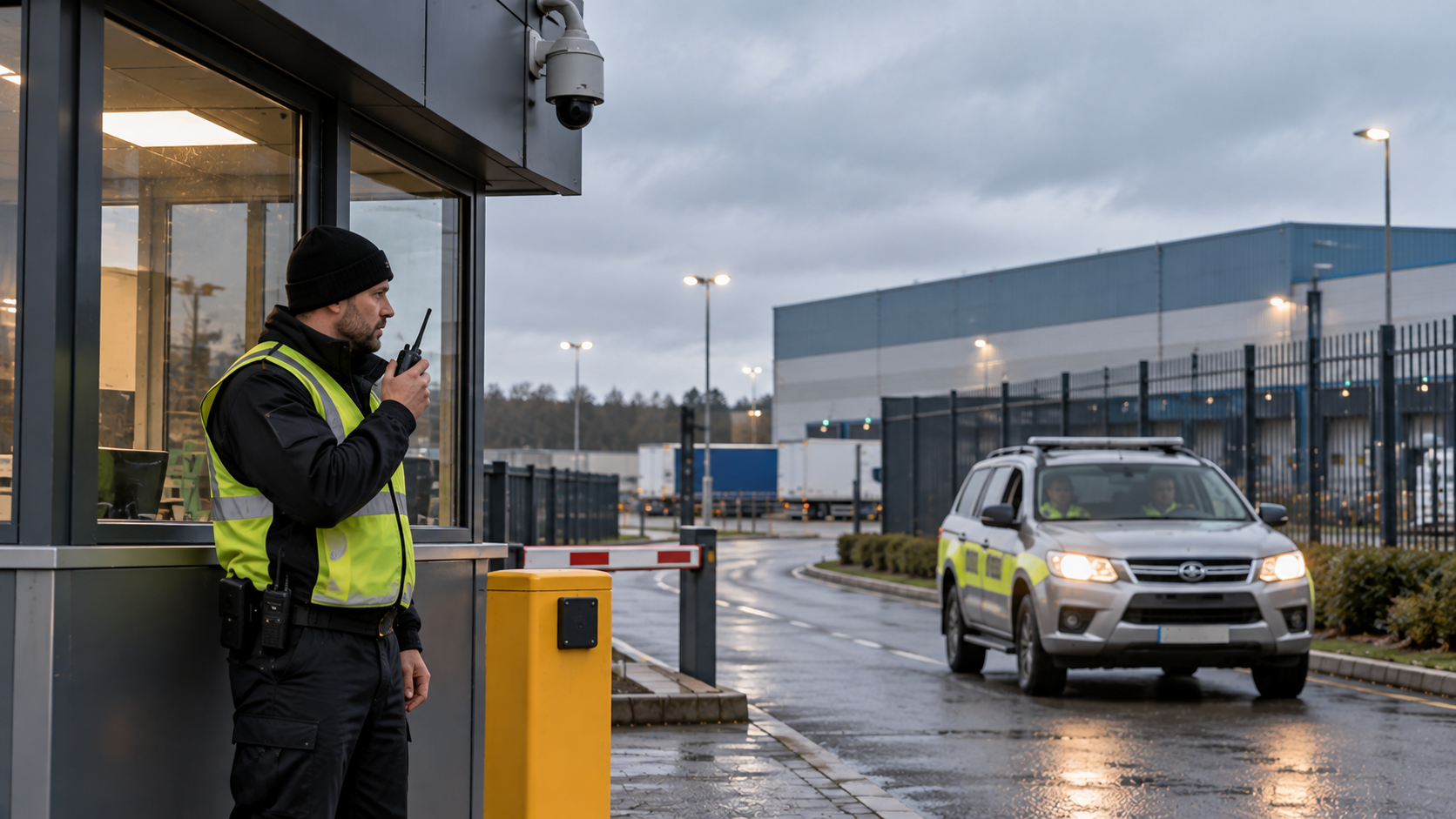
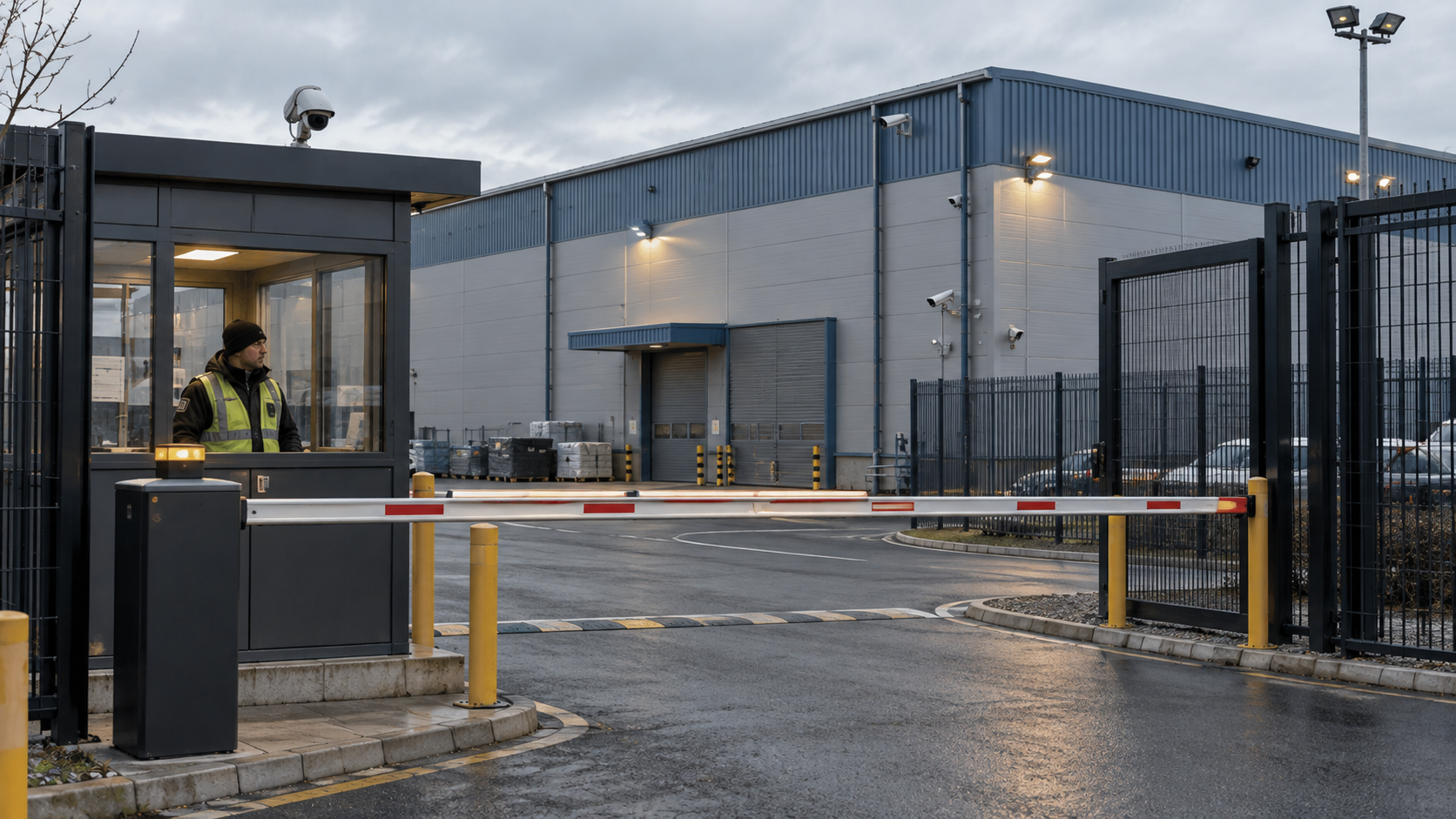
Essex businesses operate across a wide range of environments, from coastal towns and retail centres to logistics parks, commuter hubs, and large industrial estates. That mix brings opportunity, but it also creates uneven risk. Footfall shifts by the hour, sites stay active late into the night, and many locations sit close to transport routes that make access easy and exits quicker still.
This is why Essex businesses need manned guarding in practical, commercial terms. Alarms and CCTV support security, but they do not question behaviour, manage access in real time, or step in when a situation is drifting toward disruption. Remote monitoring can alert, yet it cannot physically intervene or reassure staff on site.
For many organisations, manned guarding is not a visual extra. It is a risk-control and continuity decision that helps keep people safe, protect assets, and prevent small incidents from turning into operational downtime.
Understanding Manned Guarding Basics in Essex
Defining manned guarding in Essex and how it compares to static or remote security
Manned guarding involves trained security personnel being physically present on site, with the authority and awareness to observe what is happening and act when needed. In Essex, that distinction matters because many risks develop gradually rather than arriving as a clear alarm event. A guard can notice behaviour that does not quite fit, question access before it becomes a problem, and step in early when situations start to drift.
This differs from static security, where a guard remains fixed at a single point such as a gatehouse or reception desk, and from CCTV-only or remote monitoring models that rely on alerts after something has already happened. Cameras record and systems notify, but they do not interpret tone, assess intent, or adjust in real time. Manned guarding adds judgment, presence, and controlled escalation, reducing reliance on reactive responses by managing issues while they are still small and containable.
How Essex’s crime profile shapes guarding demand
Essex has a varied crime profile shaped by its geography and economic activity. Retail theft remains a persistent issue, particularly in town centres and retail parks where offenders move quickly between sites. Organised shoplifting groups often target multiple stores in short windows, exploiting gaps between staffing levels and response times.
Industrial estates present a different challenge. Many are spread out, lightly populated after hours, and close to major road links. This makes them attractive for theft of tools, fuel, and high-value stock. Transport-linked crime also plays a role. Proximity to ports, arterial roads, and commuter routes increases the chance of opportunistic access and rapid exit, especially where sites rely only on passive security measures.
Peak risk periods for Essex businesses
Risk in Essex does not sit evenly across the day. Retail environments face their highest exposure during daytime trading hours, when footfall is high and staff attention is split between customers and operations. This is when low-level theft, distraction tactics, and customer disputes are most likely to occur.
Industrial sites and yards see risk rise at night, when activity drops and natural surveillance disappears. Perimeter testing, trespass, and targeted theft are more common during these quieter hours. Early-morning delivery windows introduce another pressure point. Vehicles arrive before full staffing is in place, access points open briefly, and routine checks can be rushed. Guard presence during these transitions helps maintain control when timing, not force, is the main vulnerability.
Essex-specific vulnerabilities by sector
Warehousing and distribution sites in Essex are built for movement. Goods come in and go out all day. Loading bays stay busy. Stock holds value. When night staffing is light, access can slip if no one is watching closely.
Construction sites change shape all the time. Fences move. Entrances shift. What was secure last week may not be secure now. Fixed systems struggle to keep up.
Retail parks and mixed-use estates add another layer. They stay open to the public. Parking is shared. Boundaries are not always clear. This makes low-level trouble easier to drift from one unit to the next if no one steps in early.
Anti-social behaviour and visible deterrence
In open commercial environments, prevention depends on being seen. Patrol-based guarding works because it changes behaviour before an incident forms. People act differently when they know someone is present, observant, and able to intervene.
This is the key difference between response and prevention. A response model waits for a trigger. A visible guard reduces the chance of that trigger ever being pulled. In Essex retail parks and shared estates, this presence helps deter loitering, manage minor disputes, and prevent damage that would otherwise become routine and costly over time.
Seasonal and event-driven risk in Essex
Seasonality plays a clear role in Essex. Coastal towns experience sharp footfall increases during warmer months, stretching local infrastructure and increasing pressure on nearby businesses. Temporary venues, pop-up trading, and extended opening hours introduce unfamiliar risks.
Local festivals and community events create similar effects, concentrating people, alcohol, and temporary structures in small areas. Holiday trading periods add another layer, with higher stock levels, longer hours, and increased delivery activity. During these times, manned guarding provides flexibility. Coverage can be adjusted quickly, risks reassessed daily, and emerging issues handled before they disrupt trading or safety.
Legal and Compliance Requirements for Manned Guarding in Essex
SIA licensing requirements for Essex security guards
Anyone carrying out licensable guarding work in Essex must hold a valid licence from the Security Industry Authority. This is not a local policy or an optional standard. It is a legal requirement that applies across England and Wales.
If a guard is managing access, carrying out patrols, or protecting a site from unauthorised entry, a licence is required. Without it, the activity is unlawful, regardless of who employs the guard or how limited the role may seem.
Licences are issued to individuals, not sites, and must match the role being performed. For example, a guard working access control at a commercial site requires a different licence from someone operating in a door supervision role at an event or venue. From a business perspective, the obligation is simple: anyone on your site performing licensable duties must be licensed for that activity. Failure to verify this exposes the business, not just the supplier, to legal risk.
BS 7858 vetting and workforce screening
A licence on its own does not prove trust. That is where BS 7858 comes in. It sets out how security staff should be checked before they are placed on site. The standard looks at identity, work history, criminal records, and the right to work. Nothing fancy. Just thorough.
For Essex businesses, this matters in real terms. Insurers expect it. Councils look for it. Large landlords often ask for proof. Sites near busy routes or open to the public face more attention. When vetting is weak, the risk does not stop with the provider. After an incident, responsibility can fall on the client.
DBS expectations and suitability checks
Disclosure and Barring Service checks sit within the wider licensing and vetting process. In most guarding roles, a standard DBS check is sufficient and is already embedded in SIA licensing. Enhanced checks are usually expected only where guards work closely with vulnerable people, such as at healthcare facilities, education sites, or certain events.
For businesses, the key point is suitability rather than paperwork. You are entitled to confirmation that appropriate checks have been completed, even though you will not see the certificates themselves. Clear confirmation protects both operational integrity and data protection obligations.
Penalties for non-compliance in Essex
Compliance issues rarely show up with a warning. They surface later. During an audit. An insurance check. After something has already gone wrong, if guards are unlicensed or poorly vetted, the impact can be serious. Fines may follow. Insurance cover can fall away. Enforcement action is possible. These outcomes do not stay contained.
Contracts can also end without notice. A single failure can breach landlord terms, council conditions, or development agreements. In Essex, where many sites sit within shared or regulated spaces, one mistake often spreads further than expected.
Data protection and CCTV integration
When manned guarding is combined with CCTV, UK GDPR obligations apply. Guards often interact directly with surveillance systems, whether monitoring live feeds, reviewing footage, or supporting investigations. This makes them part of the data-handling chain.
Businesses must ensure guards understand access limits, evidence handling, and retention rules. Signage, purpose limitation, and secure storage are not optional. Poor data practice can attract regulatory attention even when the original issue was a security incident.
VAT treatment of manned guarding services
Manned guarding services in Essex are standard-rated for VAT. There are no reduced rates or sector-specific exemptions. From a budgeting standpoint, this means VAT must be factored into forecasts, particularly for long-term or multi-site deployments. Misunderstanding VAT treatment can distort cost comparisons during procurement.
Construction site security obligations in Essex
Construction and redevelopment projects across Essex often come with planning or council-imposed security expectations. These may include access control, perimeter patrols, or out-of-hours guarding. While requirements vary by authority, responsibility usually sits with the developer or principal contractor.
If security arrangements fall short, liability does not stop with the guarding provider. Developers can face delays, enforcement notices, or insurance complications. Clear alignment between site rules, guarding activity, and contractual responsibility is essential.
Event licensing and Martyn’s Law preparedness
For events and public venues, security is often part of the licence. It is not optional. As Martyn’s Law develops, expectations are becoming clearer and more practical. Visible security now matters more. So does planning. Venues are expected to show how risks are spotted and how incidents are handled.
Guards play a direct role. They manage entry points. They watch crowd movement. They step in early when something feels wrong. This helps keep control before problems spread. During licence reviews, presence counts. Clear procedures matter. A visible, trained guard shows that reasonable steps are in place, not just written down.
Police collaboration and information-led deployment
In Essex, effective guarding often relies on cooperation with local policing teams and business crime partnerships. Shared intelligence about repeat offenders, timing patterns, and emerging risks helps shape patrol routes and staffing levels.
This approach moves guarding away from static coverage toward informed presence. It also strengthens post-incident reporting, which benefits insurers and supports any subsequent investigations.
Costs, Contracts, and Deployment of Manned Guarding in Essex
Typical manned guarding costs in Essex
Costs in Essex vary more by location and risk than by headline job title. Town centres and busy retail zones usually attract higher rates due to footfall, interaction demands, and extended trading hours. Business parks and inland industrial estates tend to sit lower on the scale, though night-time risk can narrow the gap.
Coastal locations introduce seasonal variance. During peak periods, extended hours and higher visitor numbers increase coverage requirements, which influences pricing. The underlying structure is consistent, but local operating reality shapes the final figure.
Wage pressure and inflation impacts
Guarding costs reflect labour conditions. Living wage increases feed directly into hourly rates, particularly for services that rely on long shifts and continuous coverage. Inflation from 2024 to 2025 has reinforced this trend rather than reversing it.
Retention also influences pricing. Stable teams reduce handover errors, training gaps, and service disruption. Contracts that support continuity often cost slightly more but deliver better operational outcomes and fewer hidden risks.
Contract lengths and commercial flexibility
In Essex, short-term guarding is often used when a site is opening, trading patterns shift, or something has already gone wrong. It gives businesses breathing space, but it is rarely the cheapest option. Mobilising cover quickly limits efficiency, and that shows up in the hourly rate.
Longer agreements work differently. They give both sides room to plan. Reviews are scheduled rather than reactive. Roles are clearer. Coverage can be adjusted as risk changes instead of being reset each time. This approach suits many coastal and retail-led sites, where demand rises and falls through the year, and flexibility needs to be built in, not bolted on later.
Mobilisation timelines in Essex
Deployment speed depends on the scope. Single-guard coverage at an existing operating site can often be arranged within days. Larger or higher-risk sites require additional time for vetting checks, site induction, and procedure alignment.
Rushing mobilisation without proper familiarisation increases error risk. Businesses benefit when deployment timelines balance urgency with preparation.
Notice periods and exit clauses
Notice periods protect both sides. Very short termination clauses can create instability, while overly long ones reduce flexibility. In Security company Essex, most commercial contracts sit between 30 and 90 days, depending on scale.
Abrupt termination carries operational risk. Coverage gaps, poor handovers, and insurance exposure often follow. Clear exit planning matters as much as entry planning.
Insurance alignment and premium reduction
Insurers value evidence. Manned guarding supports lower perceived risk when it produces consistent logs, access records, and incident reports. For warehouses, construction sites, and retail parks, this documentation can influence premiums and excess levels.
The presence alone is not enough. Alignment between guarding activity and insurer expectations is what delivers financial benefit.
Public-sector procurement considerations
Public-sector buyers in Essex now operate under the Procurement Act 2023. This places greater emphasis on compliance, audit trails, and value over headline price.
Audit-ready guarding contracts, with clear documentation of licensing, vetting, and performance, align more closely with these expectations. Even private-sector businesses are feeling the ripple effect, as higher standards set a new baseline across the market.
Training, Daily Operations, and Guard Duties in Essex
Training standards for Essex manned guards
Training for manned guarding in Essex starts with the site, not the syllabus. What a guard needs to manage depends on where they stand and who passes through. Retail settings in Chelmsford demand alertness without confrontation. The focus is on reading behaviour, spotting early signs of theft, and handling disputes calmly so situations do not tip.
Basildon brings a different pace. Busy layouts and shared spaces mean guards balance observation with clear communication. Southend-on-Sea adds seasonal pressure, where footfall rises fast, and tempers can follow.
Industrial and logistics sites shift the emphasis again. Around Thurrock, perimeter control and vehicle movement matter more than customer interaction. Lone working safety becomes routine, not an exception. On construction and redevelopment sites across Essex, conditions change weekly. Temporary access points, unfinished boundaries, and moving hazards mean guards rely on discipline and awareness rather than fixed routines. Training follows these realities. It adapts as the site changes, because static preparation rarely matches live risk.
Start-of-shift procedures
The start of a shift sets the tone for everything that follows. Guards begin by checking the site as it is handed over, not as it is meant to be. Doors, gates, lighting, and access points are reviewed against the expected status for that time of day.
Incident handovers matter just as much. Guards review logs from the previous shift, noting unresolved issues, repeat visitors, or areas that need closer attention. This continuity is what prevents small problems from being missed simply because a new shift has started.
Patrol routines and frequency
Patrol routines are designed around risk, not habit. Static coverage suits reception areas or single-entry sites, while mobile patrols work better for estates, yards, and large footprints common across Essex business parks.
Frequency changes with time and threat level. Daytime patrols often focus on presence and observation. Night-time patrols prioritise perimeter integrity and early detection. Randomised timing is used to avoid predictability, especially on quieter industrial sites where routine can be exploited.
Access control and visitor management
Access control is one of the most practical ways guards reduce risk. In Essex sites with mixed use, such as retail parks near transport links or shared commercial estates, guards manage who comes in, when, and why.
Visitor logging follows clear standards. Names, times, reasons for access, and vehicle details are recorded consistently. This supports audits, insurance reviews, and incident investigations, and it also discourages casual misuse of access points.
Equipment and system checks
Before patrols begin, guards confirm that their tools work. Radios are tested because they remain the fastest way to call for support. CCTV interfaces are checked to ensure cameras are live and views are clear. Alarm panels are reviewed so faults are identified early rather than during an incident.
These checks are short, but they matter. Equipment failure at the wrong moment turns a manageable situation into a larger problem.
Incident response during early and late shifts
Early mornings and late nights are when many incidents surface. Alarm activations often occur when sites are quiet, and response windows are narrow. Guards attend quickly, assess the cause, and record what they find, even if the alarm proves false.
Suspicious behaviour is handled with caution and judgment. Guards observe, challenge when appropriate, and escalate only when needed. The aim is control, not confrontation, especially in low-light or low-staffed conditions.
Fire safety and environmental checks
Fire safety is part of the daily routine. Exits are kept clear. Emergency lights are checked. Fire doors are left free to close. On industrial and construction sites, other risks are also present. Fuel stores. Temporary power. Water points. Small issues here can turn serious if missed.
The environment matters too. Bad lighting changes what can be seen. Heavy rain brings pooling and blocked routes. Wind can loosen fencing or sheeting. These details are logged because they shift risk, especially on exposed sites in coastal Essex and rural areas nearby.
End-of-shift secure-down procedures
At the end of a shift, guards focus on leaving the site stable for the next team. Final perimeter checks are completed, access points secured, and any unresolved issues documented clearly.
Handover discipline matters here. Information is passed on with context, not just notes. This reduces gaps and ensures continuity across shifts, especially on 24-hour sites.
24/7 coverage models
Many Essex sites never really close, and logistics runs late, Healthcare does not stop. Some manufacturing sites work through the night.
Round-the-clock cover needs structure; rotas are planned so guards stay consistent but not worn down. Long runs of night shifts are avoided. Tasks change to keep focus.
Fatigue is treated as a risk, not a staffing issue. Check-ins are built into longer shifts. Support is easy to reach. When guards stay alert, judgment improves. Most problems are stopped early, long before they turn into incidents.
Performance, Risks, and Staffing Challenges in Essex
How Essex businesses measure manned guarding performance
On active commercial sites across Essex, performance is rarely judged by how busy a guard looks. It is judged by what stops happening. Fewer repeat incidents. Less disruption to staff. Clear decisions made early, without drama. This is as true for retail centres in Chelmsford as it is for logistics hubs near Thurrock or mixed-use estates outside Colchester.
When performance is working, patterns change quietly:
Incident prevention: Reduced repeat theft, fewer confrontations, and early intervention before losses escalate
Response quality: Timely attendance, measured judgement, and proportionate escalation when needed
Reporting accuracy: Clear, consistent logs that explain context, not just outcomes
These indicators matter because they translate operational activity into risk reduction that insurers and internal teams can recognise.
Environmental conditions as a performance variable
Weather and environment shape guarding performance in ways spreadsheets rarely capture. Coastal exposure around Southend-on-Sea brings wind and rain that affect visibility and comfort. Inland business parks stretching toward Suffolk and Cambridgeshire face frost, fog, and early winter darkness.
Outdoor patrol challenges tend to surface as:
- reduced visibility during poor weather
- slower movement across large or exposed sites
- A higher risk of lightning failures and surface hazards
When these conditions are logged properly, performance is judged fairly and adjusted realistically.
Long shifts and how risk accumulates
Extended shifts remain common on 24/7 sites across the East of England, especially in warehousing, manufacturing, and utilities. They support continuity but also introduce subtle risk if left unmanaged.
Two pressures often appear over time:
- Physical strain: Long periods on foot, outdoor exposure, and repetitive movement
- Alertness risk: Slower reactions during quiet hours when stimulation is low
Sites that recognise these limits tend to maintain steadier performance than those that push coverage without adjustment.
Night work, isolation, and decision quality
Night guarding often means working alone, particularly on industrial estates outside town centres or along transport corridors linking Essex to Hertfordshire and Norfolk. Isolation does not cause incidents on its own, but it can affect judgment when situations develop slowly.
Common issues include:
- Isolation: Long periods without interaction, reducing focus and confidence
- Support structures: Unclear escalation routes or infrequent check-ins, increasing hesitation
Clear procedures and regular contact improve decision quality far more than additional surveillance alone.
Staffing stability and operational continuity
Essex sits alongside logistics, transport, and manufacturing sectors that draw from the same workforce. While recruitment challenges are not a client problem, the effects of instability are.
From a risk perspective, stability influences:
- Training investment: Guards who know the site spot anomalies faster and make fewer errors
- Predictable rotas: Consistent schedules reduce fatigue and reporting gaps
When teams change frequently, performance issues tend to appear first in documentation, then in incident patterns. Stable teams, by contrast, deliver quieter sites and fewer surprises over time.
Technology and Future Trends in Essex Manned Guarding
How technology supports manned guarding in Essex
Across Essex, technology has moved from being an add-on to becoming part of everyday guarding decisions. On logistics estates near Thurrock, systems are now designed to support guards rather than operate separately from them. The same shift is visible in retail centres around Chelmsford.
Integration works best when responsibility is clear:
- Human-led escalation: Systems highlight activity, while guards decide when and how to intervene
- Clear division of roles: Technology observes and flags, while people assess context and intent
- Single point of accountability: One on-site decision-maker reduces confusion during incident development
Remote monitoring adds reach, but judgment remains on site. The guard is still the point where information becomes action.
AI analytics and risk prediction
AI tools are increasingly used to analyse patterns instead of watching every screen. This is especially relevant on large sites in Suffolk, where quiet surroundings can mask early warning signs. In Cambridgeshire, similar tools are used to spot repeated access testing and unusual timing.
Smarter patrol planning is shaped by:
- historic incident timing
- location-specific blind spots
- Repeated low-level anomalies
This allows guards to focus their effort where risk is forming, not after it has landed.
Drones alongside manned guards
Drone use is developing slowly and selectively. In Essex, it appears most often on large industrial or construction sites with wide perimeters. Norfolk sites with open land and limited natural surveillance face similar challenges.
Drones support guarding by providing:
- rapid perimeter sweeps
- visibility over obstructed or distant areas
- live feeds shared with guards on the ground
They extend sightlines, but they do not replace judgment.
Post-COVID operational changes
Operational patterns changed during the pandemic and did not fully return. Many buildings in Hertfordshire now experience uneven occupancy across the day. Bedfordshire business parks often see quiet mornings followed by compressed peak periods.
Guarding has adapted through:
- Tighter access control during low-occupancy windows
- Improved crowd awareness when footfall returns suddenly
These adjustments help manage risk created by irregular use, not just volume.
Upskilling and certifications
As systems become more connected, guards are expected to understand how they work. In Essex, training increasingly includes digital reporting tools and CCTV interfaces. Similar expectations are emerging across Cambridgeshire.
Technology-enabled guards add value through:
- Faster identification of issues
- Clearer evidence capture
- Smoother coordination with remote support
This skill mix is becoming standard, not specialist.
Green and sustainable guarding practices
Sustainability now influences how security is planned. New developments in Suffolk increasingly factor environmental impact into patrol design. Norfolk sites with large outdoor areas face similar pressure.
Guarding practices are adapting through:
- Low-emission patrols: Electric or reduced-fuel vehicles where movement is required
- Energy-aware site checks: Monitoring lighting, temporary power, and overnight usage
These changes reduce waste without weakening security.
Martyn’s Law and future venue security
As Martyn’s Law expectations develop, venues in Essex will need clearer protective measures. This includes retail centres, event spaces, and transport-linked locations. Similar preparation is already visible in Hertfordshire.
Future adaptation is likely to focus on:
- visible guarding within risk plans
- clearer escalation and evacuation procedures
- stronger documentation of protective measures
Across the East of England, these points toward more structured and evidence-led guarding, shaped as much by compliance as by safety.
Conclusion
For most organisations, the debate has shifted. It is no longer about whether security is needed, but which approach actually limits risk without getting in the way of daily work. In Essex, that choice is shaped by mixed-use developments, long trading hours, and sites that sit close to transport routes. As operations expand, exposure grows with them. Manned guarding fits into this reality because it brings judgment and continuity to situations where systems alone fall short.
When cost, compliance, and prevention are looked at together, the value becomes clearer. Active guarding supports insurance requirements, strengthens audit records, and reduces the small, repeat incidents that quietly drain time and budgets. This is not unique to Essex. Norfolk sees scale increase risk. Suffolk deals with distance and spread. Cambridgeshire adds complexity through innovation-led sites. Hertfordshire balances dense offices with heavy commuter flow. Bedfordshire continues to grow its logistics footprint.
Across all of these settings, manned guarding acts as operational resilience. It keeps sites steady when conditions shift, not as a visible gesture, but as a practical layer that protects people, assets, and continuity.
Frequently Asked Questions
Why do Essex businesses choose manned guarding instead of relying only on CCTV?
Cameras are good at recording events. They are less effective at stopping them. On many Essex sites, risk builds before an alarm is triggered. That might be a distraction theft, a delivery that does not quite add up, or behaviour that feels wrong but stays just inside the rules. A guard can step in early, ask questions, and slow things down. CCTV supports that process, but it cannot replace judgment on the ground.
How much does manned guarding usually cost in Essex?
There is no single rate. Costs change with location, hours, and exposure. Busy town-centre sites tend to cost more than quieter business parks. Coastal locations can fluctuate during peak seasons. The real question is whether coverage matches the risk. A cheaper cover that leaves gaps often costs more later through disruption or claims.
Are SIA-licensed guards a legal requirement for Essex businesses?
Yes. Any guard carrying out licensable duties must hold a valid licence from the Security Industry Authority. This applies across Essex and is set in law. If an unlicensed guard is used, the business can still face penalties, even when the fault lies with the supplier.
How quickly can manned guarding be put in place in Essex?
For urgent needs, cover can sometimes be arranged within a few days. Larger sites or higher-risk environments take longer because vetting and site familiarisation matter. Some businesses plan deployments ahead of time, especially when operating across parts of Hertfordshire, where long-term schedules are common.
Can manned guarding help reduce insurance costs?
Often, yes. Insurers look for proof that risk is being managed actively. Patrol records, access logs, and clear escalation procedures all help. Sites with documented guarding tend to present lower risk, particularly in warehousing and construction settings found in Suffolk and Bedfordshire.
Which Essex sectors gain the most value from manned guarding?
Sites with changing footfall, valuable stock, or long operating hours see the biggest benefit. Retail parks, logistics centres, construction projects, and mixed-use estates fall into this group. Similar pressures are seen on innovation-led sites in Cambridgeshire.
How does manned guarding support event licensing in Essex?
Guards play a practical role in meeting licence conditions. They manage access, watch crowd movement, and respond quickly when issues arise. Their presence supports risk assessments and shows that reasonable steps are in place, which is important for both temporary events and permanent venues.
Will Martyn’s Law change guarding requirements for Essex venues?
It is expected to raise expectations around visible security, planning, and record-keeping. Venues will need clearer procedures and trained staff who understand how to respond. Early planning is already visible in Norfolk, and similar changes are likely across Essex as guidance develops.