Introduction
Retail security in Nottingham is shaped by the city’s busy centre, strong evening economy, and mix of shopping centres, high streets, and retail parks. From city-centre stores to independent retailers in areas such as Beeston, Arnold, and West Bridgford, businesses operate in environments where opportunity-driven crime is a routine operational risk. Police data consistently shows that shoplifting remains one of the most frequently recorded crimes in Nottingham, particularly in high-footfall retail areas.
City-centre locations face peak-time crowding, transport-linked footfall, and spillover from nightlife. Retail parks and suburban sites experience organised theft, vehicle-assisted crime, and lower visibility after dark. Smaller retailers, often operating with lean staffing, are more exposed to theft, abuse, and lone-worker risks.
For Nottingham businesses, retail security is not about reacting to isolated incidents. It is about aligning security measures with local crime patterns, trading hours, store layout, and insurance expectations. In a city where retail frequently overlaps with transport and evening-economy activity, planned manned guarding helps protect staff, stock, and continuity of trade without unnecessary complexity or disruption.
Understanding Manned Guarding Basics in Nottingham
Manned guarding vs static security in Nottingham retail settings
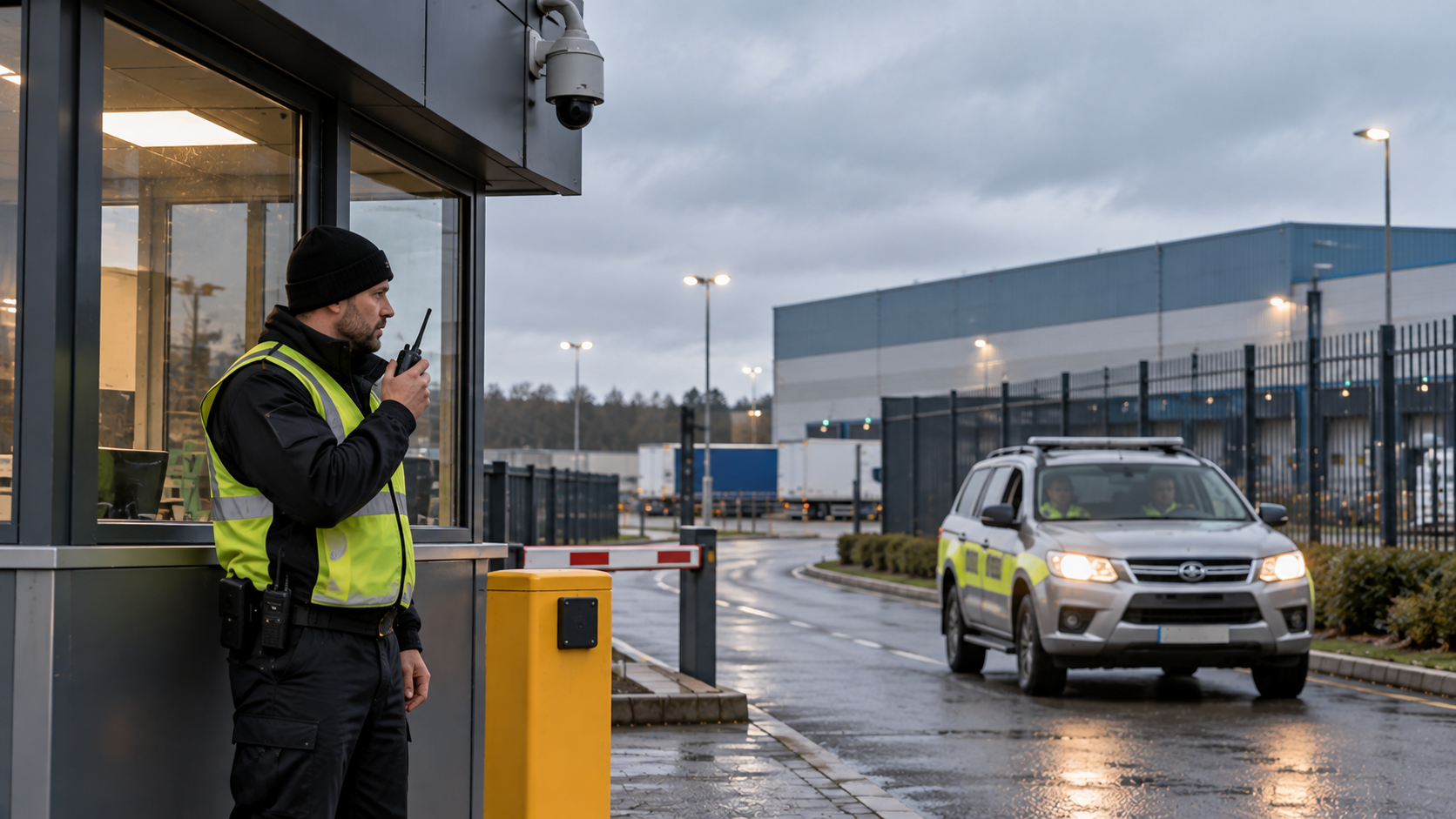
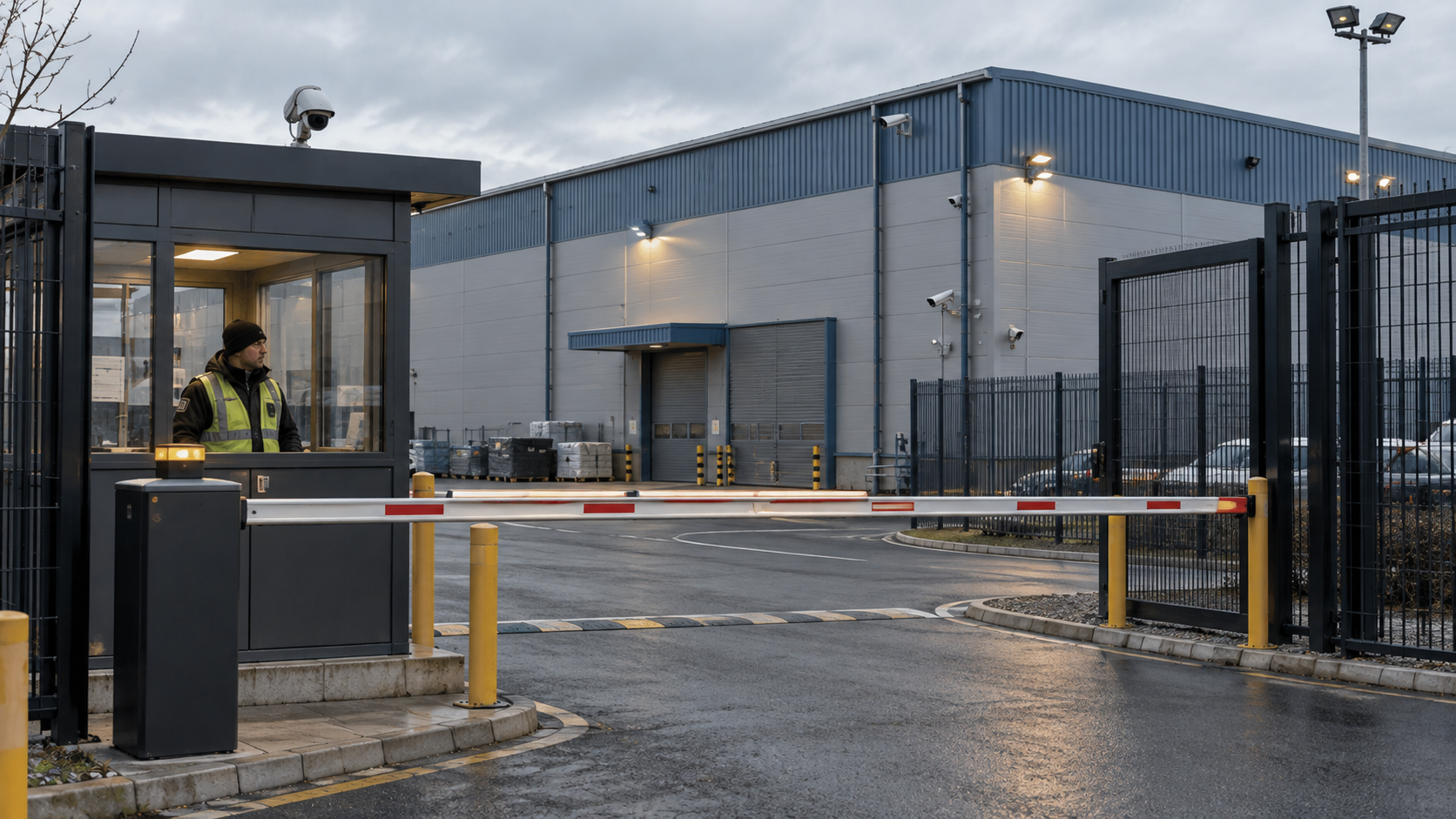
Manned guarding involves SIA-licensed officers being physically present within a retail environment to deter theft, manage behaviour, and respond to incidents as they occur. In Nottingham, this typically means guards positioned at entrances, on shop floors, or conducting visible patrols across retail parks and shared commercial spaces.
Static security such as CCTV, alarms, electronic tagging, and access control plays an important supporting role but is inherently reactive. Cameras record events, alarms alert after breaches, and tagging relies on post-incident intervention. These systems are effective for evidence and loss recovery but limited in preventing incidents in real time.
The key difference lies in human judgement. Guards can read behaviour, intervene proportionately, de-escalate staff confrontations, and adapt to changing footfall conditions. This is particularly important in environments where theft and disorder are driven by opportunity rather than planning.
Nottingham retail crime patterns and guarding demand
Retail crime in Nottingham reflects a mix of city-centre density, a large student population, and strong public transport connectivity. Crime patterns are less about constant threat and more about predictable opportunity, busy trading periods, crowded locations, and sites with multiple access points.
Retailers in central Nottingham are more exposed to distraction theft, grab-and-run incidents, and repeat offenders moving between nearby stores. Suburban retail parks face organised shoplifting, vehicle-based theft, and lower natural surveillance during evenings.
Manned guarding becomes relevant where these patterns intersect with high-value stock, lone working, or limited in-store supervision.
Peak risk periods for Nottingham retail businesses
Risk levels fluctuate throughout the day. Late afternoons and early evenings are consistently higher risk, as commuter traffic overlaps with student movement and leisure activity. Weekends amplify this effect due to sustained footfall and reduced management presence.
Seasonal trading peaks such as Christmas, back-to-school periods, and student intake further increase exposure. These are not periods of constant crime, but windows where opportunity rises and response time matters most.
Targeted guarding during these hours is often more effective than blanket coverage.
Location-specific vulnerabilities affecting Nottingham retail sites
Retail environments in Nottingham often operate within mixed-use developments or shared access spaces. Common vulnerabilities include shared service corridors, unsecured rear entrances, poorly lit delivery areas, and internal stockrooms close to public areas.
Independent and small-format retailers are particularly exposed due to lean staffing and limited separation between customer and stock areas. Larger stores may face risks from complex layouts that reduce staff visibility.
Manned guards help compensate for these design and staffing constraints by maintaining oversight across exposed areas.
Managing anti-social behaviour in Nottingham retail parks
Retail parks around Nottingham frequently experience loitering, low-level disorder, and vehicle-related incidents during late afternoons and evenings. These behaviours can discourage customers, intimidate staff, and escalate if unmanaged.
A visible manned presence helps deter behaviour before it becomes disruptive. Guards provide a controlled response, manage exclusions where appropriate, and act as a buffer between staff and confrontational individuals without relying on police attendance for minor incidents.
Rising daytime retail theft and patrol requirements
Retail theft in Nottingham increasingly occurs during normal trading hours. Offenders exploit busy periods, self-checkout systems, and reduced staff supervision. Many incidents involve small but repeated losses rather than single high-value thefts.
Daytime manned patrols act as both a deterrent and a support function for store teams. Guards can monitor behaviour patterns, support staff decisions, and intervene early, reducing reliance on post-incident recovery or evidence review.
Daytime versus night-time guarding risks
Daytime risks are typically people-focused: shoplifting, distraction theft, abuse of staff, and refund fraud. Guards must balance deterrence with customer experience and act proportionately.
Night-time risks shift toward property and asset protection. These include burglary attempts, vandalism, unauthorised access, and theft from delivery or storage areas. Retail parks and standalone stores are particularly exposed after closing hours.
Effective guarding strategies reflect this shift rather than applying the same approach around the clock.
Seasonal and event-driven pressure on retail security
Nottingham’s calendar influences retail risk. Student intake periods, city events, and extended seasonal trading hours increase footfall and strain normal supervision levels.
Temporary guarding during these periods allows retailers to manage predictable surges without committing to permanent staffing increases. This flexibility is often viewed positively by insurers and landlords when risks are clearly documented and controlled.
Impact of Nottingham’s tram network on retail security
The tram network increases accessibility and footfall for nearby retail sites but also introduces rapid movement in and out of locations. This can facilitate quick-exit theft and transient anti-social behaviour.
Retailers near tram stops benefit from manned guards who can monitor entrances, identify repeat behaviour, and coordinate responses before incidents spread across multiple sites.
Economic conditions and retail guarding demand
Economic pressure influences retail crime patterns. Periods of rising living costs often correlate with increased theft frequency and higher levels of staff confrontation.
Manned guarding becomes a control measure that protects margins, reduces staff turnover driven by stress or abuse, and supports consistent store operation during uncertain trading conditions.
Business growth and mixed-use development pressures
As Nottingham continues to develop mixed-use and regeneration areas, retail spaces increasingly operate alongside residential, office, and logistics functions. This blurs access boundaries and increases the need for clear on-site control.
Manned guarding helps manage shared access, enforce site rules consistently, and maintain a stable retail environment despite changing surrounding activity.
Legal and compliance requirements for retail security in Nottingham
SIA licensing requirements for retail security guards
All security guards performing licensable activities in Nottingham retail environments must hold a valid SIA (Security Industry Authority) licence. This includes guarding store entrances, preventing theft, managing access, and dealing with disorder. Retailers are legally responsible for ensuring any contracted guards are correctly licensed for the role they perform, not just employed by a licensed provider.
Legal consequences of using unlicensed security guards
Using unlicensed security guards is a criminal offence under UK law. Security company Nottingham retailers found using unlicensed personnel may face prosecution, significant fines, invalidated insurance cover, and reputational damage. Liability often rests with the business commissioning the service, not just the security provider.
DBS checks and suitability expectations for retail guarding
While a DBS check is not legally mandatory for all guards, enhanced vetting is widely expected in retail environments where guards interact with staff, customers, and cash-handling areas. Most reputable providers apply DBS checks as part of BS 7858 screening, and insurers increasingly expect this level of assurance.
BS 7858 vetting standards for retail security staff
BS 7858 sets the recognised UK standard for pre-employment screening of security personnel. This matters because it confirms identity verification, employment history, right-to-work checks, and background screening. Guards who are not BS 7858 vetted may create compliance gaps that affect insurance and audit outcomes.
Insurance requirements when hiring retail security guards
Retail businesses hiring manned guards must ensure the provider carries appropriate public liability, employer’s liability, and professional indemnity insurance. From a client perspective, insurers may also expect guarding arrangements to be documented within the store’s risk assessment and loss prevention strategy.
Data protection and CCTV integration compliance
Where manned guards interact with CCTV systems, UK GDPR and Data Protection Act requirements apply. Retailers must ensure guards understand lawful monitoring, incident recording, and data handling. Improper use of CCTV footage such as unauthorised access or retention can expose Nottingham businesses to regulatory penalties.
VAT treatment of manned retail security services
Manned guarding services are subject to VAT at the standard rate. This affects budgeting and procurement comparisons, particularly when weighing guarding against technology-only solutions. VAT treatment should be clearly stated in contracts to avoid cost disputes.
Local authority considerations for Nottingham retail sites
While Nottingham City Council does not impose retail-specific guarding licences, security arrangements may be reviewed as part of planning conditions, licensing applications, or environmental health inspections, particularly for late-opening stores or sites near the night-time economy.
Evidence of a security provider’s compliance history
Retailers should expect documented proof of compliance, including valid SIA licences, BS 7858 screening confirmation, insurance certificates, assignment instructions, and incident reporting processes. These documents support audits, insurer reviews, and internal governance checks.
Security company licensing and client responsibility
The UK’s mandatory licensing regime focuses on individual guards, but responsibility for compliance extends to the client. Nottingham retailers remain accountable for selecting compliant providers and maintaining oversight, especially in multi-site or long-term guarding arrangements.
Impact of SIA licensing changes on retail guarding availability
Changes to SIA qualification requirements and renewal processes influence guard availability and pricing. For retailers, this translates into cost pressure and longer mobilisation times if compliance standards are not planned for early.
Employment law considerations affecting guarding costs
UK labour laws around working hours, rest periods, and overtime directly affect retail guarding costs. Guards covering late trading hours, weekends, or extended seasonal shifts must be deployed in line with working time regulations, influencing pricing structures.
Post-Brexit right-to-work rules for security personnel
Post-Brexit immigration rules require strict right-to-work checks for all guards, including EU nationals. Nottingham retailers should ensure providers apply compliant checks to avoid exposure to civil penalties and service disruption.
Role of manned guarding in retail event and licensing conditions
Retailers hosting promotions, late-night openings, or seasonal events may be required to demonstrate appropriate security coverage as part of licensing or landlord conditions. Manned guarding supports crowd control, staff protection, and incident readiness during these periods.
Collaboration with Nottinghamshire Police
Private retail security does not replace policing but works alongside it. Guards are expected to follow agreed escalation protocols, preserve evidence, and share incident information appropriately. Clear coordination improves response outcomes and reduces unnecessary police callouts.
Use of local crime data to inform guarding deployment
Crime trend data published by Nottinghamshire Police informs decisions around patrol timing, coverage levels, and deployment locations. Retailers who align guarding with known risk periods are better positioned to justify spend and satisfy insurers.
Business Crime Reduction Partnership (BCRP) coordination
Many Nottingham retailers participate in Business Crime Reduction Partnerships, which encourage information sharing between businesses, police, and security teams. Manned guarding plays a practical role by enforcing exclusions, sharing intelligence, and supporting collective crime prevention.
Costs, contracts, and deployment for retail security in Nottingham
Typical retail guarding costs in Nottingham city centre vs suburban areas
Retail guarding costs in Nottingham vary by location, trading hours, and risk profile rather than by store size alone. City-centre stores generally face higher rates due to extended trading hours, higher footfall, proximity to nightlife, and increased incident frequency. Suburban high streets and retail parks tend to have lower base rates but may incur additional costs for late-night coverage, vehicle patrols, or lone-site operation.
For retailers, the key cost driver is not geography alone but exposure stores near transport hubs, student areas, or mixed-use developments typically require higher coverage intensity.
Mobilisation time for retail manned guarding in Nottingham
Deployment timelines depend on guard availability, vetting status, and site complexity. In Nottingham, standard retail deployments usually require advance planning to allow for SIA licence checks, BS 7858 screening confirmation, site induction, and insurer-aligned risk assessments.
Short-notice deployments are possible for urgent cover, but long-term cost efficiency is achieved when guarding is planned around known peak periods rather than reactive incidents.
Common contract lengths for Nottingham retail guarding
Retail guarding contracts in Nottingham typically range from short-term agreements covering seasonal peaks to rolling 12-month contracts for higher-risk locations. Longer contracts often deliver better rate stability and operational consistency, particularly for retailers with predictable trading patterns.
Short-term or ad-hoc contracts offer flexibility but usually come at a higher unit cost due to mobilisation and staffing inefficiencies.
Notice periods and contract flexibility
Notice periods commonly range from 30 to 90 days, depending on contract length and deployment scale. Retailers benefit from notice clauses that allow adjustment of coverage levels rather than full termination, especially where risk fluctuates seasonally.
From a planning perspective, flexible notice terms reduce the risk of paying for unnecessary coverage while maintaining insurer confidence.
Impact of wage increases on retail guarding costs in 2025
Rising minimum wage thresholds and compliance costs directly affect guarding rates. This translates into incremental annual increases rather than sudden price spikes when contracts are structured properly.
Underpriced guarding often signals compliance or continuity risk. Sustainable pricing reflects lawful pay, rest compliance, and consistent staffing factors that directly influence service reliability.
Effect of inflation on long-term retail guarding contracts
Inflation influences fuel costs, uniforms, training, and supervision overheads. Long-term contracts increasingly include inflation-linked review clauses to balance cost predictability for retailers with service continuity.
Retailers who plan for modest, structured uplifts tend to avoid disruptive mid-contract renegotiations or service degradation.
Relationship between manned guarding and retail insurance premiums
Insurers often view visible manned guarding as a mitigating control for theft, vandalism, and staff assault risks. While guarding does not automatically reduce premiums, it can support favourable underwriting decisions, lower excess levels, or prevent premium increases following claims. Documented guarding arrangements tied to risk assessments strengthen insurance discussions.
Procurement Act 2023 considerations for Nottingham retail projects
While primarily affecting public-sector procurement, the Procurement Act 2023 influences retail projects linked to council-owned properties, regeneration schemes, or mixed-use developments. Retailers operating within these frameworks may face stricter transparency, social value, and compliance requirements when appointing security services.
Understanding these obligations early prevents procurement delays and contract disputes.
Matching deployment levels to retail risk exposure
Effective deployment is not about constant coverage but appropriate coverage. Nottingham retailers benefit from aligning guard hours with peak risk periods, late afternoons, evenings, weekends, and seasonal surges rather than applying uniform coverage across all trading hours.
This targeted approach improves cost control while maintaining operational resilience.
Training, daily operations, and guard duties for retail security in Nottingham
Training standards for retail security guards
Retail security guards in Nottingham must hold a valid SIA licence and receive role-specific training aligned to retail environments. This typically includes conflict management, theft prevention, customer interaction, and lawful use of force. For retailers, the importance of training lies in consistency, guards must respond proportionately, protect staff, and avoid actions that could create liability or reputational risk.
Shift commencement procedures in retail environments
At the start of a shift, guards familiarise themselves with the site’s current operating status. This includes reviewing store opening conditions, confirming staffing levels, and understanding any known risks for the day. This ensures guards are aligned with trading patterns, expected footfall, and local events that may affect behaviour.
Initial site condition checks on arrival
The first priority on arrival is confirming that the retail environment is secure and operating as expected. This includes checking entrances, exits, delivery points, and any overnight reports. Early identification of issues such as unsecured doors or damage reduces exposure before customers arrive.
Shift handover practices for continuity
Effective handovers are critical where guarding is continuous or spans long trading hours. Incoming guards review incident logs, exclusion notices, and any unresolved issues from the previous shift. This continuity prevents repeated incidents and ensures consistent application of store policies across shifts.
Patrol frequency during retail trading hours
Patrol routines in Nottingham retail settings are structured around footfall rather than fixed intervals. Guards increase visibility during peak trading periods and adjust coverage during quieter hours. The objective is deterrence through presence, not mechanical patrol schedules.
Perimeter and access control checks
Retail guards prioritise access points that present the highest risk, such as service corridors, staff entrances, loading bays, and fire exits. In mixed-use Nottingham developments, these checks help prevent unauthorised access between retail, residential, and service areas.
Daily incident and activity reporting
Guards maintain written or digital logs recording incidents, observations, and actions taken. For retailers, these records support internal reviews, insurance claims, and legal compliance. Clear reporting also demonstrates that risks are being actively managed rather than passively observed.
Equipment and system verification
At the start of duty, guards confirm that radios, panic alarms, and any authorised CCTV interfaces are operational. Equipment checks are essential to ensure response capability during incidents and to avoid delays caused by technical failures.
Alarm response during early or late trading hours
When alarms activate outside peak hours, guards follow defined escalation protocols. This includes verifying the cause, securing the area, and notifying management or emergency services where necessary. Consistent alarm response reduces false callouts and insurer concerns.
Visitor and contractor access management
Retail guards oversee visitor logging where required, particularly for contractors, suppliers, and out-of-hours access. This control is especially important in Nottingham sites with shared access or ongoing maintenance activity.
CCTV observation and coordination
Where guards interact with CCTV systems, their role is observational and supportive. They monitor live feeds where authorised, identify developing issues, and coordinate on-the-ground responses. This integration improves detection speed without replacing physical presence.
Internal access verification during trading
Guards periodically check internal access points such as stockroom doors and staff-only areas. These checks reduce internal theft risk and ensure customer areas remain clearly separated from restricted zones.
Incident awareness through handover briefings
Reviewing recent incidents helps guards identify repeat offenders, known problem times, and emerging patterns. This intelligence-led approach improves prevention rather than reactive response.
Fire safety and emergency readiness checks
Guards remain familiar with fire exits, evacuation routes, and alarm panels. While they are not fire marshals, their awareness supports safe evacuation and rapid response during incidents, especially during busy trading hours.
Lighting and visibility checks in retail car parks
In retail parks and larger sites, guards monitor lighting conditions, particularly during evenings. Poor lighting increases theft and anti-social behaviour risks, making early reporting critical for site safety.
Supervisor communication during night or extended shifts
During late trading or night coverage, guards maintain scheduled check-ins with supervisors. This ensures welfare oversight, accountability, and rapid support if incidents escalate.
Emergency procedure familiarisation
At the beginning of each shift, guards remain aware of emergency procedures relevant to that site. This includes responses to medical incidents, aggressive behaviour, or evacuation scenarios common in retail environments.
Monitoring for tampering or infrastructure issues
Guards remain alert to signs of tampering with utilities, doors, or security systems. Early detection helps prevent escalation into theft, damage, or service disruption.
Ongoing patrol documentation
Post-patrol updates confirm areas checked, issues identified, and actions taken. For retailers, this documentation provides evidence of active security management and supports compliance reviews.
End-of-shift secure-down procedures
At shift end, guards ensure the site is left in a secure condition, report unresolved issues, and brief incoming staff where applicable. This prevents gaps in coverage that could expose the business overnight.
Shift patterns for extended or 24/7 retail coverage
Where retail operations require long or continuous coverage, shift patterns are structured to maintain alertness and compliance with working time rules. This supports service reliability and reduces fatigue-related risk.
Expected response capability for retail incidents
While response times vary by site and incident type, guards are expected to act immediately to deter, contain, and escalate incidents appropriately. Their role is to stabilise situations until management or emergency services take over.
Performance, risks, and operational challenges in Nottingham retail security
Key performance indicators for retail security effectiveness
Performance measurement should focus on outcomes rather than activity volume. Useful KPIs include incident frequency trends, response times to in-store issues, reduction in repeat theft, staff safety incidents, and escalation accuracy. Reporting quality is as important as numbers, clear, timely reports support insurance reviews, internal audits, and risk reassessment.
Incident reporting quality and audit value
Well-maintained incident logs provide evidence that risks are being actively managed. For retail businesses, consistent reporting supports insurer confidence, informs loss prevention decisions, and helps identify repeat offenders or high-risk time windows. Poor reporting weakens post-incident defence and can undermine claims.
Impact of weather on retail guarding effectiveness
Weather affects retail security in indirect but predictable ways. Poor weather can reduce footfall but increase opportunistic theft, while extreme conditions can concentrate customers indoors, increasing congestion and distraction theft risk. In retail parks, weather also influences visibility, vehicle movement, and lighting effectiveness.
Weather-related patrol adjustments and documentation
Guards document adverse weather conditions where they influence patrol routes, visibility, or access control. This contextual reporting helps explain changes in incident patterns and supports reasonable adjustments to coverage during severe conditions.
Effects of long shifts on guard alertness and performance
Extended shifts can reduce vigilance, particularly during late trading hours or overnight coverage. For retailers, the risk is not staff fatigue itself but inconsistent response quality. Contracts that comply with working time regulations help maintain performance stability and reduce incident escalation risk.
Mental strain during night and late trading coverage
Night-time and late trading shifts expose guards to higher confrontation risk and isolation, particularly at standalone stores and retail parks. From a client perspective, this affects response reliability and decision-making, reinforcing the importance of structured supervision and escalation protocols.
Environmental and local authority considerations
Outdoor patrols in Nottingham retail parks and mixed-use sites must align with environmental and health-and-safety expectations. Poor lighting, uneven surfaces, and adverse weather increase incident and liability risk, making early reporting and mitigation essential.
Managing performance risk during seasonal pressure
Seasonal peaks introduce higher footfall, increased theft attempts, and longer operating hours. Performance risk increases when coverage is stretched without adjustment. Retailers who plan temporary increases or targeted redeployment reduce incident spikes and staff exposure.
Service continuity and pricing-related risk
Underpriced guarding often leads to service instability, inconsistent coverage, or last-minute substitutions. Performance risk is closely linked to realistic pricing that reflects lawful staffing, training compliance, and supervision, not provider margin.
Limits of guarding as a standalone solution
Manned guarding is most effective when integrated with store procedures, CCTV, and staff awareness. Performance declines when guards are expected to compensate for poor layout, inadequate lighting, or unclear store policies. Recognising these limits helps retailers plan security proportionately.
Reviewing and adjusting guarding performance over time
Retail risk profiles change with trading patterns, surrounding development, and local crime trends. Regular performance reviews allow Nottingham retailers to adjust coverage levels, patrol focus, or hours without overcommitting to static arrangements.
Technology and future trends in Nottingham retail manned guarding
Evolution of technology-supported manned guarding in urban retail areas
Technology has reshaped how manned guarding operates in cities like Nottingham by improving visibility, coordination, and response speed. Rather than replacing guards, modern systems help them prioritise risk, respond faster, and document incidents more accurately. For retailers, this means fewer blind spots and better control during peak trading periods.
Post-COVID changes to retail guarding protocols
Post-COVID retail environments place greater emphasis on space management, queue control, and staff protection from confrontation. Guards are now expected to manage customer flow calmly, support staff during disputes, and monitor congestion without heavy intervention. Technology assists by highlighting pressure points rather than enforcing rigid controls.
Role of AI-supported surveillance in retail security
AI-enabled CCTV analytics help identify patterns such as loitering, repeated visits, unusual movement, and crowd build-up. In Nottingham retail settings, AI acts as an early-warning layer, alerting guards to potential issues before incidents occur. Final judgement and intervention remain firmly with the guard on-site.
Remote monitoring as a complement to on-site guarding
Remote monitoring centres support retail guards by observing multiple camera feeds, verifying alarms, and escalating incidents when required. This layered approach allows on-site guards to focus on customer-facing risk while remote teams handle verification and logging.
Use of drone technology in retail-adjacent environments
Drone use remains limited in core retail areas due to airspace, privacy, and safety restrictions. However, drones are increasingly used in large retail parks, mixed-use developments, and logistics-adjacent zones for perimeter checks outside trading hours. They support guards by reducing patrol time and improving coverage, not replacing physical presence.
Predictive analytics for retail risk planning
Predictive analytics tools combine crime data, footfall trends, and historical incidents to forecast risk periods. Nottingham retailers use these insights to align guard hours with peak exposure such as evenings, weekends, or seasonal surges rather than relying on static coverage models.
Upskilling and certification trends in retail guarding
As technology becomes more integrated, guards increasingly require training in CCTV coordination, data protection awareness, and incident reporting systems. For retailers, this matters because poorly trained guards create compliance risk when interacting with surveillance technology.
Green and sustainable security practices
Sustainability is influencing retail security operations. Nottingham retailers are seeing increased use of energy-efficient lighting, electric patrol vehicles in retail parks, and reduced paper reporting through digital systems. These practices support environmental targets while improving operational efficiency.
Balancing technology investment with human presence
Technology improves scale and consistency, but it does not replace deterrence, judgement, or de-escalation. Retail environments rely on human interaction, making visible guarding essential where customer behaviour and staff safety are concerned. The most effective setups balance both elements.
Future impact of Martyn’s Law on retail security planning
Martyn’s Law is expected to introduce clearer expectations around threat preparedness for publicly accessible venues, including some retail spaces. This may increase the need for trained guards capable of managing evacuation, reporting suspicious behaviour, and coordinating with emergency services. Technology will support compliance, but trained on-site personnel will remain central.
Conclusion: Planning retail security in Nottingham with clarity
Retail security in Nottingham is shaped by timing, footfall, and location rather than constant high threat. City-centre stores, high streets, and retail parks each face different pressures, from opportunistic theft during busy trading hours to anti-social behaviour linked to transport and the evening economy. Manned guarding remains relevant where human judgement, visibility, and proportionate intervention are needed to manage these risks effectively.
The value of manned guarding is not measured by presence alone but by how well it aligns with local crime patterns, store layout, operating hours, and insurer expectations. When combined with CCTV, clear procedures, and proper reporting, guarding supports continuity of trade, staff confidence, and compliance without disrupting the customer experience.
The most effective approach is neither reactive nor excessive. Retail businesses benefit from understanding when guarding is justified, what it realistically costs, and how it fits within a broader risk management strategy. In Nottingham’s evolving retail landscape, informed planning allows security decisions to remain practical, defensible, and proportionate.
Frequently asked questions about retail security in Nottingham
When does a retail business in Nottingham typically need manned guarding?
Manned guarding is usually justified when stores experience repeated theft, staff abuse, high footfall peaks, or operate near transport hubs, nightlife areas, or retail parks with limited visibility.
Is CCTV alone enough for retail security?
CCTV is valuable for evidence and monitoring but is reactive by nature. Manned guards add deterrence, real-time intervention, and judgement, especially during busy trading periods.
Do small or independent retailers benefit from manned guarding?
Yes, particularly where staffing levels are low or stores are exposed to lone-worker risk, repeat offenders, or evening trading pressures.
Are retail security guards allowed to detain shoplifters?
Guards may detain individuals only within strict legal limits and must act proportionately. Proper training and clear store procedures are essential to avoid legal exposure.
How does manned guarding affect insurance for Nottingham retailers?
While guarding does not guarantee lower premiums, it can support favourable underwriting decisions, reduce excess levels, and help defend claims following incidents.
Can guarding be used only during high-risk hours?
Yes. Many Nottingham retailers deploy guards during late afternoons, evenings, weekends, or seasonal peaks rather than full-time coverage.
How quickly can retail guarding be deployed?
Deployment timelines depend on vetting, licensing, and site requirements. Planned deployments are more cost-effective than emergency cover.
Does Martyn’s Law affect retail security requirements?
Martyn’s Law is expected to increase focus on preparedness and incident response in publicly accessible spaces. Trained on-site staff, including guards, will likely play a supporting role.
How should retailers review whether guarding is still needed?
Regular reviews based on incident trends, trading changes, and insurer feedback help ensure guarding remains proportionate and cost-effective.