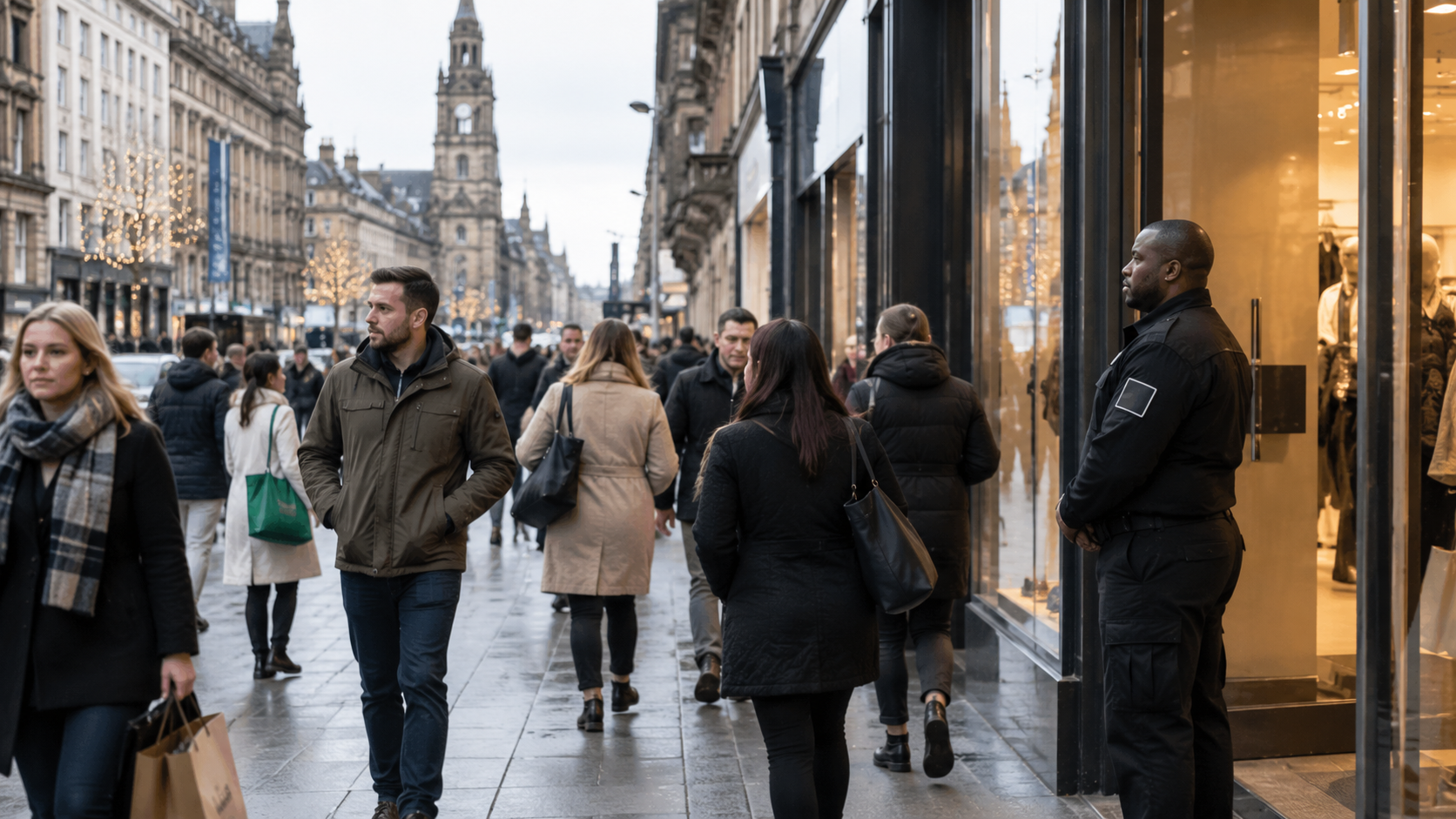
Retail in Tameside doesn’t sit behind closed doors. It trades on busy streets, late evenings, and mixed footfall. That reality shapes risk. In places like Ashton-under-Lyne, crime pressure shifts fast. When larger sites harden their security, smaller shops feel it first. This is why Tameside businesses need Retail Security; it’s no longer a theory, it’s a lived experience.
Manned guarding brings presence, judgment, and calm when situations turn unpredictable. It protects stock, yes. More importantly, it protects people. Staff who feel supported work better. Businesses that look secure are targeted less. Sometimes, that’s the difference between trading confidently and constantly looking over your shoulder.
Understanding Retail Security Basics in Tameside
Retail security in Tameside is shaped by the way the borough actually trades. This isn’t a closed retail ecosystem. Shops sit alongside transport hubs, nightlife routes, fast-food clusters, and residential streets. That mix matters. It changes risk patterns, timings, and how security needs to work on the ground.
What Is Retail Security and How Does It Differ in Tameside
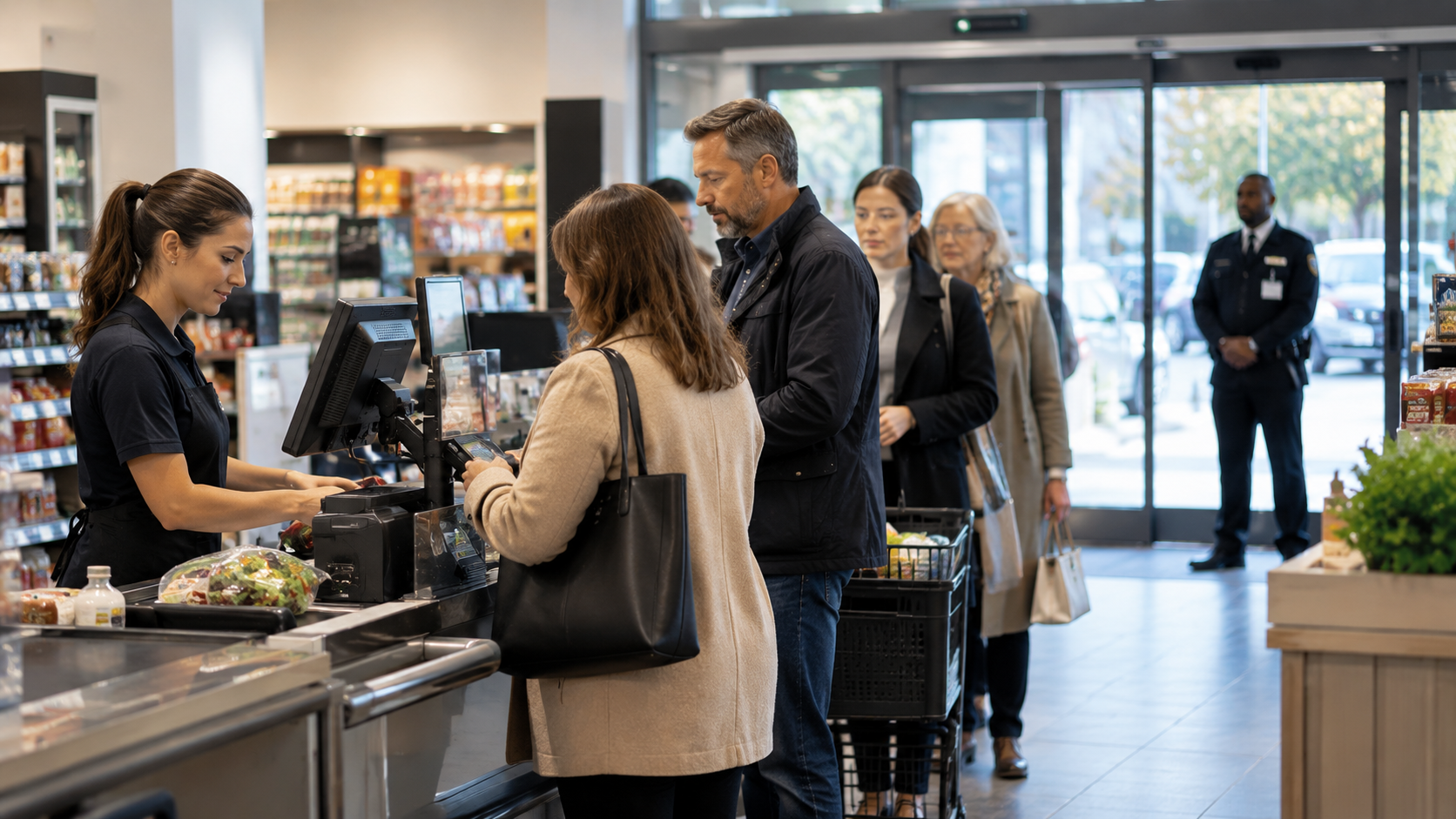
Retail security is not the same as corporate guarding or construction security. In Tameside, it is people-facing and decision-led. Guards are expected to deter theft, manage conflict, support staff, and act lawfully under pressure.
Unlike warehouse or office security, retail guarding here involves:
- Constant public interaction
- Theft prevention without escalation
- Managing abuse, not just crime
- Working alongside shop staff, not behind barriers
This is why manned guarding is central to why Tameside businesses need retail security rather than relying on alarms alone.
How Tameside’s Crime Profile Shapes Retail Risk
Crime in Tameside is uneven. Enforcement around town centres and retail parks often displaces problems rather than removing them. Areas near Ashton-under-Lyne, Hyde, and Denton feel this shift first.
Retail theft has become:
- Faster
- More confident
- Less discreet
That pattern pushes demand for visible guards who interrupt behaviour early, before situations escalate.
Peak Crime Hours for Retail Businesses in Tameside
There is no single danger window, but patterns repeat. Most retailers see pressure during:
- Late afternoons (school dismissal spillover)
- Early evenings (after-work footfall)
- Weekends, especially Saturdays
- Paydays and benefit payment periods
Daytime security has become just as important as evenings. It is especially for convenience and fashion stores.
Tameside-Specific Vulnerabilities Retailers Face
Some risks are local, not generic. These include the crime displacement from sites like Crown Point and one-staff trading during long opening hours.
Following it, shops backing onto car parks or alleyways and proximity to public transport routes. Retailers without visible deterrents are often tested repeatedly.
Managing Anti-Social Behaviour in Retail Parks
Retail parks across Tameside attract more than shoppers. Groups loiter. Arguments spill over. Minor disorder turns disruptive quickly.
Manned guarding helps by:
- Breaking up the congregation early
- Setting behavioural boundaries
- Supporting staff without confrontation
- Coordinating with site management
It’s less about force, more about presence and timing.
Why Daytime Patrol Demand Has Risen
Retail theft in Tameside is no longer a “quiet hours” issue. Organised shoplifters prefer busy periods as noise gives cover.
Day patrols now focus on:
- Observation
- Pattern recognition
- Early intervention
This shift explains why daytime guarding demand has grown sharply.
Day vs Night: Different Risks, Different Responses
Day risks are social, while night risks are personal. They can affect the store and staff if they do not have reliable guards. That’s why Tameside businesses need Retail Security to ensure safety.
During the day:
- Theft
- Abuse
- Group behaviour
At night:
- Staff isolation
- Intimidation
- Closing-time confrontations
Security plans must reflect both, not treat them as the same problem.
Events Like Tameside Pride and Temporary Risk Spikes
Large local events such as Tameside Pride change footfall overnight. Alcohol, crowds, and unfamiliar visitors raise risk levels fast.
Retailers often need:
- Extra visibility
- Short-term patrols
- Staff reassurance
Ignoring event impact is a common mistake.
Economic Pressure and Business Growth Drive Demand
Rising costs squeeze margins, which increases theft pressure. At the same time, new retail developments bring more competition and footfall.
As Tameside grows, security demand grows with it. Not because businesses want guards but because trading safely now requires them.
Legal and Compliance Requirements in Tameside
Legal compliance is no longer a background issue for retailers in Tameside. It now sits front and centre of risk planning. As enforcement tightens and expectations rise, businesses are being judged not just on what happens in-store. But it’s on who they hire, how they operate, and what they can prove on paper.
SIA Licensing: The Non-Negotiable Starting Point
Any guard carrying out licensable activity must hold a valid licence issued by the Security Industry Authority. This applies across Tameside, regardless of store size.
Licensable activities include:
- Manned guarding
- Loss prevention
- Store patrols
- Public-facing security roles
Using an unlicensed guard isn’t a grey area. It’s a criminal offence.
Penalties for Using Unlicensed Security in Tameside
Retailers often assume liability sits with the security company. It doesn’t stop there.
Consequences can include:
- Unlimited fines
- Prosecution of business owners or managers
- Insurance invalidation
- Contract termination by landlords or centres
In short, cutting corners transfers risk straight onto the retailer.
DBS Checks: What’s Required and What Isn’t
Despite common confusion, there is no Bolton-specific rule here. DBS requirements apply UK-wide, including Tameside.
- SIA licensing already includes criminality checks
- Enhanced DBS may be required for sensitive environments
- Retailers can request evidence, but shouldn’t duplicate checks unnecessarily
Good providers explain this clearly. Poor ones avoid the topic.
Insurance Requirements When Hiring Retail Security
UK retailers should expect a security provider to carry important requirements. The following are Public Liability Insurance, Employers’ Liability Insurance and Professional Indemnity.
Policies should be current and specific to retail activity, not generic cover reused across sectors.
CCTV, Guards, and Data Protection Law
Retail security frequently works alongside CCTV systems. That brings UK GDPR into play. Compliance includes:
- Clear signage
- Purpose-limited monitoring
- Secure data handling
- Lawful sharing with police when required
Guards must understand where observation ends and privacy begins. Training matters here.
VAT Rules on Retail Security Services
Retail security services are standard-rated for VAT. There are no Tameside exemptions.
Retailers should:
- Expect VAT on invoices
- Avoid cash-only arrangements
- Ensure providers are VAT-registered where required
Irregular billing is often an early warning sign of wider non-compliance.
Proving a Security Firm’s Compliance History
Serious providers can evidence compliance without hesitation. Look for:
- Active SIA Approved Contractor Scheme status
- Licence checks for each deployed guard
- Training records
- Incident reporting templates
If documentation feels thin, it usually is.
Mandatory Company Licensing: What It Means for Tameside Clients
Security company licensing increases accountability. For Tameside retailers, that means:
- Clear escalation routes
- Auditable standards
- Reduced reputational risk
It also makes replacing poor providers easier, as benchmarks are now visible.
Labour Law, Overtime, and Post-Brexit Staffing
Retail security overtime must comply with UK working time rules. Underpaid guards lead to fatigue. Fatigue leads to mistakes.
Post-Brexit, EU nationals must now hold a valid right-to-work status. Reputable firms check this before deployment, not after a problem arises.
Working With Police and Local Retail Partnerships
Private security doesn’t replace policing. It complements it. Retail security teams often coordinate with Greater Manchester Police using:
- Incident data
- Repeat offender descriptions
- Patrol timing insights
Many retailers also align with schemes such as Tameside BCRP, where shared intelligence shapes guarding strategy.
Compliance isn’t paperwork for its own sake. In Tameside, it’s how retailers protect staff, trade confidently, and avoid becoming the next enforcement example.
Costs, Contracts, and Deployment in Tameside
Money, paperwork, timing. This is where most retail security decisions stall. In Tameside, those three factors are shaped by location, labour pressure, and how quickly risk can change on the ground.
Typical Retail Security Costs: Town Centre vs Suburbs
Costs in Ashton town centre rarely match those in quieter suburban strips. Footfall, late trading, and crime displacement all play a part.
In broad terms:
- Town centres cost more due to visibility demands, longer hours, and higher incident rates
- Suburban locations often need fewer hours but still require peak-time coverage
Retailers paying less than market rate usually make it back elsewhere through higher turnover, weaker deterrence, or unreliable staffing.
How Fast Retail Security Can Be Deployed in Tameside
Speed matters when incidents spike. For most established providers:
- Single-guard cover can be deployed within days
- Multi-site coverage takes longer due to rota planning
- Event or surge cover may be arranged faster, but at a premium
Delays usually come from compliance checks, not staffing shortages. That’s a good sign, not a bad one.
Common Contract Lengths Across the North West
In North West, retail security contracts tend to avoid extremes. Few businesses want daily spot bookings. Fewer still want to be locked in for years.
Most common terms include:
- 3-month rolling agreements
- 6–12 month fixed contracts
- Seasonal or event-based add-ons
Flexibility is often worth more than shaving a few pounds off the hourly rate.
Notice Periods: Ending or Adjusting Cover
Standard notice periods vary, but patterns repeat.
You can expect:
- 30 days for rolling contracts
- Longer notice on discounted long-term deals
- Immediate termination clauses for serious breaches
Retailers should check exit terms carefully. Cheap contracts with restrictive exits rarely stay cheap.
Wage Increases and Retail Security Costs in 2026
Security wages are rising; there’s no way around it. By 2026, cost pressure will come from:
- Higher minimum and living wage expectations
- Increased licensing and training costs
- Competition for experienced guards
Retailers who plan ahead absorb these changes more smoothly than those renewing contracts at the last minute.
Inflation and Long-Term Pricing Reality
Inflation doesn’t just raise hourly rates. It affects uniforms, fuel, supervision, and back-office support.
Long-term contracts now often include:
- Annual uplift clauses
- Wage-linked adjustments
- Review points tied to market conditions
Fixed pricing without review is becoming rare and risky.
Insurance Premiums and the Security Link
Retail security doesn’t guarantee lower premiums, but it helps. Insurers look for:
- Visible deterrents
- Incident records
- Reduced claims history
Well-documented guarding can support negotiations, especially after repeat theft or staff assault claims.
Public Sector Contracts and the Procurement Act 2023
Retail units linked to councils or public estates in Tameside now fall under stricter rules due to the Procurement Act 2023.
This affects:
- Tender transparency
- Supplier accountability
- Evidence-based pricing
For retailers operating in public-sector-managed spaces, this raises the bar on who can be hired and who can’t.
Final Reality Check on Cost vs Control
Retail security in Tameside isn’t cheap, but unmanaged risk costs more. The right contract balances price, flexibility, and response speed. When any one of those is missing, problems usually follow fast.
Training, Operations, and Daily Duties in Tameside
Retail guarding in Tameside is practical work. It’s not theory-heavy, and it’s not static. Guards are expected to arrive switched on, read the room quickly, and make sensible calls that protect staff without inflaming situations.
Training Standards for Retail Security Guards
Before a guard ever steps onto a shop floor, baseline training is non-negotiable. Licensing sits with the Security Industry Authority, but retail work adds layers beyond that.
Typical retail-focused training covers:
- Conflict management and de-escalation
- Lawful detention and evidence handling
- Customer interaction and vulnerability awareness
- Emergency response and evacuation basics
Good guards aren’t just licensed. They’re prepared for people.
What Happens the Moment a Shift Starts
In Tameside, a shift doesn’t begin at the door. It begins with context.
The first actions usually include:
- Reading the previous handover log
- Checking for overnight or earlier incidents
- Confirming staffing levels and lone-worker risks
Only then does a guard move into physical checks.
First Physical Checks on Arrival
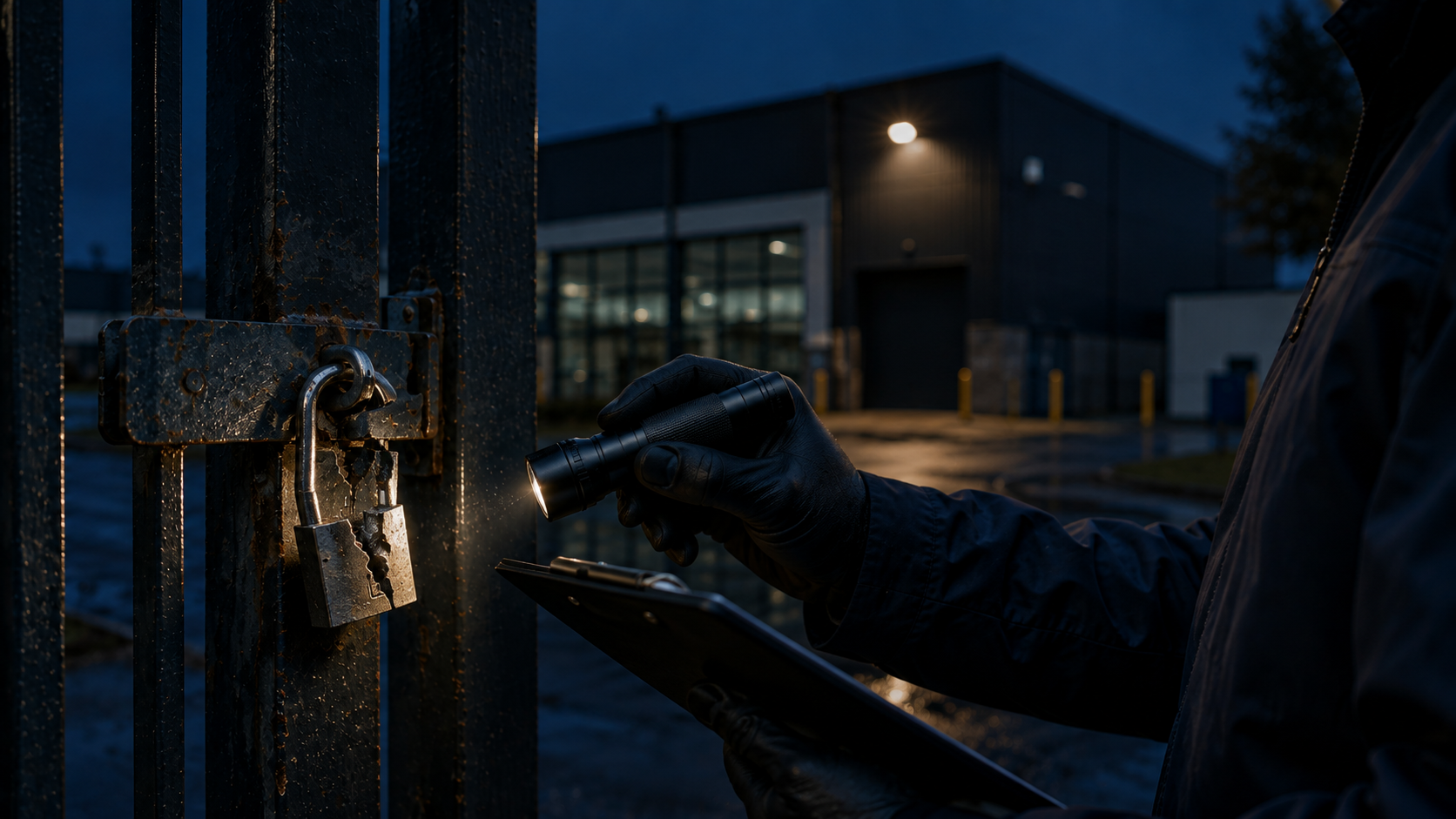
Most guards start at the edges, not the tills. Priority checks often include:
- Entry and exit points
- Rear doors and delivery bays
- Car park sightlines and lighting
If something feels off early, it usually is.
Shift Handovers: Quiet but Critical
Handover is where mistakes are prevented. Guards brief each other on:
- Known offenders
- Staff concerns
- Equipment faults
- Any unresolved incidents
Rushed handovers create blind spots. Experienced teams don’t rush them.
Patrol Frequency During a Typical Shift
There’s no stopwatch approach, but consistency matters. In most Tameside retail environments:
- Internal patrols happen regularly, not predictably
- External checks increase during quiet periods
- High-risk areas get more attention, less visibility
Randomness is part of deterrence.
Logbooks and Reporting Discipline
Daily logs aren’t filler. They protect businesses. Entries usually include:
- Patrol times
- Incidents and near-misses
- Staff interactions
- Equipment status
Clear logs matter when something later gets questioned.
Equipment and Alarm Checks
At shift start, guards confirm radios, body-worn cameras, panic buttons, and access systems are live. Early-morning alarm activations are treated cautiously; false alarms happen, but assumptions don’t.
CCTV and Internal Access Checks
Guards don’t monitor CCTV constantly, but they verify:
- Cameras are active
- Recording indicators are live
- High-risk angles are unobstructed
Internal access points, stockrooms, offices, and fire exits are checked once the store settles.
Fire Safety and Lighting Inspections
Fire doors, alarm panels, and escape routes are quick wins, and so is lighting. In Tameside car parks, guards look for:
- Dark zones
- Failed lamps
- Obstructed walkways
Poor lighting invites problems.
Supervisor Reporting and Night Shifts
During night shifts, guards check in more often. Fatigue and isolation change risk levels. Shift patterns for 24/7 cover rotate to avoid burnout. It’s planned, not improvised.
End-of-Shift Secure-Down
Closing duties are methodical. It is vital to Final patrol, Door and access confirmation. Following it, guards need to do Alarm set verification and Clear handover notes. There is nothing dramatic here, just a reliable task to do.
Emergency Response Expectations
Response times are similar across Greater Manchester. Guards in Tameside operate to the same expectations as those in Trafford or Bury. The difference is familiarity. Local knowledge shortens reaction time when it matters.
That’s what daily retail security really looks like here. Quiet work and constant judgment are done right; it’s barely noticed, which is exactly the point.
Performance, Risks, and Challenges in Tameside
Retail security performance in Tameside isn’t judged by how often something goes wrong. It’s judged by how often it doesn’t. That makes performance harder to measure, risks easier to miss, and challenges more human than technical.
KPIs That Actually Matter for Retail Security
Not every metric is useful. Retailers tracking the wrong KPIs often get false comfort.
The measures that tend to matter most include:
- Incident frequency and repeat patterns
- Response time to staff alerts
- Staff-reported feeling of safety
- Patrol completion versus planned coverage
- Accuracy and timeliness of incident logs
If reports are late or vague, performance usually is too.
Weather: The Quiet Variable in Tameside Guarding
Tameside weather is rarely extreme, but it is persistent. Rain, wind, and early darkness all affect behaviour.
- Poor weather:
- Reduces natural footfall
- Increases loitering under cover
- Pushes activity into car parks and entrances
Guards adapt patrol routes accordingly. Standing still in bad weather doesn’t deter anyone.
Documenting Weather Impact on Patrols
- Weather isn’t just small talk; it goes in the log. Guards typically note:
- Reduced visibility
- Slippery surfaces
- Flooded or poorly lit areas
- Changes to patrol frequency
This protects both the guard and the business if incidents later get reviewed.
Long Shifts and Performance Decline
Fatigue is one of the biggest hidden risks in retail security. Long shifts can lead to:
- Slower reaction times
- Missed cues from customers or staff
- Poor decision-making under pressure
Most performance issues blamed on “bad guards” actually start with exhaustion.
Mental Health Pressures on Night-Shift Guards
Night work is different. Isolation, confrontation, and disrupted sleep stack up. For Tameside night-shift guards, support expectations increasingly include:
- Regular supervisor check-ins
- Clear escalation routes
- Access to mental health support services
- Predictable rotas where possible
Burnout doesn’t announce itself. It shows up as disengagement.
Environmental Rules Affecting Outdoor Patrols
Outdoor patrols aren’t lawless. Environmental and safety expectations apply.
Guards must consider:
- Safe use of lighting
- Noise limitations during night hours
- Responsible use of vehicles on site
- Avoiding obstruction of public access routes
Retail parks feel informal, but rules still apply.
Labour Shortages and Guard Retention Challenges
Finding guards is one problem, but keeping them is another. Tameside firms that retain staff tend to focus on various methods. Retention is also important in a security challenge. Without reliable guards, providers can’t keep your site safe and secure. This could open up a path to many threats that affect your site.
Risk Isn’t Always Criminal
One of the hardest lessons for retailers is this: not all risk comes from offenders.
It also comes from:
- Overworked guards
- Poor communication
- Inconsistent procedures
- Ignored warning signs
Performance slips quietly before it fails loudly.
The Practical Reality in Tameside
Retail security here operates in real conditions. Rainy nights. Busy Saturdays. Quiet Mondays that turn unpredictable. Measuring performance means looking beyond tick-box audits and paying attention to the small signals, tired guards, rushed logs, and skipped patrols.
Technology and Future Trends in Tameside
Retail security in Tameside is no longer built around a single guard and a static camera. Technology has reshaped how risks are spotted, how incidents are managed, and how businesses plan ahead. What hasn’t changed is the need for people on the ground. The difference now is how much support those people have.
How Technology Has Changed Retail Security in Urban Tameside
Urban areas like Tameside generate constant movement. Trains, buses, short-stay shoppers, late trading. Technology helps security teams keep pace.
Modern retail security now blends:
- Live reporting apps instead of paper-only logs
- Body-worn cameras for accountability
- GPS-tagged patrol verification
- Shared incident dashboards for multi-site retailers
These tools don’t replace guards. They make their decisions clearer and defensible.
Post-COVID Shifts in Retail Security Protocols
COVID permanently changed how retail spaces operate. Crowd behaviour, tolerance levels, and staff vulnerability all shifted.
Post-COVID security in Tameside now places more weight on:
- Early intervention before tension escalates
- Staff reassurance rather than enforcement-first responses
- Managing queues, pinch points, and sudden surges
Security became more visible, not more aggressive.
AI Surveillance: Support, Not Substitution
AI-powered surveillance is appearing across Tameside retail parks and town centres. Its role is specific.
AI systems help by:
- Flagging unusual movement patterns
- Identifying repeat behaviours
- Reducing monitoring fatigue
They do not make judgment calls. Guards still do that. AI points. Humans decide.
Remote Monitoring and On-Site Guarding
Remote monitoring has expanded rapidly, especially for multi-store operators. In Tameside, it complements guarding by:
- Watching blind spots overnight
- Supporting lone guards during quiet hours
- Escalating verified alerts faster
When remote teams and on-site guards communicate well, response times drop without increasing headcount.
Drone Patrols: Still Limited, Slowly Growing
Drone patrols are talked about more than they’re used. In Tameside, deployment remains limited due to regulation and practicality.
Where tested, drones support:
- Large retail parks
- Car park oversight
- Event-related monitoring
They are tools, not patrol replacements.
Predictive Analytics and Smarter Planning
Some retailers now use predictive analytics to assess risk before it shows up in loss figures.
These tools analyse:
- Time-of-day incidents
- Seasonal trends
- Local crime data
- Event calendars
Used properly, they inform when and where guards are needed, not just how many.
Upskilling and New Certifications
The modern retail guard needs more than a licence. Increasingly valued skills include:
- Advanced conflict management
- Mental health awareness
- Counter-terror awareness
- Digital reporting competence
Upskilling keeps experienced guards relevant and improves retention.
Green Security Practices in Outdoor Patrols
Sustainability is entering security quietly. In Tameside, emerging practices include:
- Low-energy lighting routes
- Electric patrol vehicles
- Smarter patrol planning to reduce idle time
Green doesn’t mean weaker. It usually means more efficient.
Martyn’s Law and the Next Shift
The biggest future driver is compliance. Martyn’s Law will reshape retail security expectations, especially for busier venues.
Technology will play a role, but the core requirement remains human:
- Risk awareness
- Clear procedures
- Documented action
In Tameside, the future of retail security isn’t about choosing between guards or tech. It’s about making sure they work together, because neither is enough on its own anymore.
Conclusion
Retail trading in Tameside has changed, and security expectations have changed with it. Footfall is uneven. Crime shifts fast. Staff tolerance for risk is lower than it used to be. That’s why Tameside businesses need Retail Security is no longer a debate, it’s a practical decision.
The right guarding approach protects people first, stock second, and reputation all the time. It supports compliance, steadies operations, and gives staff confidence to work late or alone. Done properly, retail security doesn’t dominate a store. It quietly holds the line. And in today’s Tameside, that quiet control is exactly what keeps businesses trading without disruption.
Frequently Asked Questions
Why do Tameside businesses need retail security more than before?
We see risk shifting rather than disappearing. When larger sites tighten security, smaller shops feel it first. Retail security now protects staff confidence as much as stock. Without a visible presence, many Tameside stores become easy targets, especially during busy or late trading hours.
Is manned guarding necessary if I already have CCTV?
Yes, because cameras don’t intervene. We have found CCTV works best when guards are present to act on what’s seen. Guards deter behaviour in real time, support staff during incidents, and provide judgment where technology can only record after the fact.
Does retail security really help with staff retention in Tameside?
Absolutely. We have noticed staff stay longer when they feel protected, particularly on evening shifts. Feeling unsafe drives turnover. Security changes that atmosphere. People work better when they know someone has their back if things turn unpleasant.
Are small independent shops in Tameside expected to meet the same standards as large retailers?
In practice, yes. We understand the scale differs, but legal and safety expectations don’t disappear because a shop is small. “Reasonably practicable” still applies, and visible effort often matters as much as size of spend.
When are retail security guards most needed in Tameside?
From what we see, risk peaks aren’t just late nights. Afternoons, early evenings, weekends, and paydays all matter. Busy periods give cover to theft and abuse. Daytime guarding has become just as important as nights.
Can retail security help reduce insurance issues after repeated incidents?
It can. We rely on proper incident logs and visible deterrence to show insurers that risk is being managed. While premiums aren’t guaranteed to drop, strong security records usually make conversations easier after claims.
How quickly can retail security be deployed in Tameside if problems spike?
Often quicker than people expect. We have seen single-guard cover arranged within days when compliance is in place. Delays usually come from checks and paperwork, not a lack of guards, and that’s usually a good sign.
Is retail security in Tameside more about prevention or response?
Prevention, every time. We see the best results when guards stop issues before they grow. Quiet interventions, early presence, and calm authority reduce incidents far more effectively than reacting after damage is done.