Retail security in Cheshire is no longer just about stopping shoplifting. The county’s business mix is broad. It has historic city centres, busy retail parks, destination shopping, and commuter towns. This blend creates pressure points when footfall rises fast. When the crowd rise, that’s when threats rise along with it. As crime adapts faster, security also needs to be robust.
Why Cheshire businesses need retail security now comes down to control. Control of loss, staff safety, and legal exposure. Opportunistic theft, organised retail crime, and aggressive incidents all show up here, not just in major cities. A visible, well-managed security presence changes behaviour. It steadies staff. It protects margins. Most importantly, it shows that safety is being taken seriously before a problem becomes expensive.
Understanding Retail Security Basics in Cheshire
Retail security in Cheshire has its own shape. It’s influenced by where businesses sit, how people move, and when pressure builds. This section breaks down what retail security really means at a local level, and what actually affects shops, staff, and daily trade.
What retail security is and why it’s different in Cheshire
Retail security focuses on live trading environments, and that’s the key difference from other security. Unlike static guarding or industrial security, retail officers hold different responsibilities. They work around customers, staff, and constant movement. In Cheshire, this often means:
- Managing high footfall without disrupting the customer experience
- Balancing visibility with approachability
- Responding quickly to low-level incidents before they escalate
Why Cheshire businesses need retail security is tied to this balance. Many locations sit between quiet affluence and sudden risk spikes. And a reliable security has to adapt fast to ensure safety.
How Cheshire’s crime profile drives retail security demand
Cheshire doesn’t see constant high crime, and that’s exactly the risk. Theft and aggression appear in bursts. Retail crime often follows commuter patterns, weekend travel, and organised movement between towns. This unpredictability increases reliance on trained retail security guards. They understand local rhythms rather than generic coverage.
Peak crime hours for retail businesses in Cheshire
Retail crime here is time-sensitive. Patterns tend to cluster around:
- Late afternoons (after school hours)
- Early evenings (commuter return windows)
- Weekends, especially Saturdays
- Event days and bank holidays
These windows explain why many retailers now request staggered or extended daytime patrols rather than night-only cover.
Cheshire-specific vulnerabilities retailers face
Some risks are local, not universal. In Cheshire, common vulnerabilities include:
- Retail parks near major roads
- Town centres with mixed night-time economies
- Stores close to rail stations and park-and-ride hubs
- Smaller high-street shops with limited staffing
These locations are often targeted because exit routes are easy and response times vary.
Anti-social behaviour in Cheshire retail parks
Retail parks face a different problem. When groups gather in a surrounding, noise escalates. This can open up a path for several threats. Retail security helps prevent those threats. They set boundaries, early visible patrols, calm interventions, and consistent presence. Most incidents don’t need force. They need authority that feels controlled, not confrontational.
Rising retail theft and the shift to daytime patrols
The rise in retail theft across Cheshire hasn’t happened only at night. Many incidents now occur during trading hours. That shift has driven demand for:
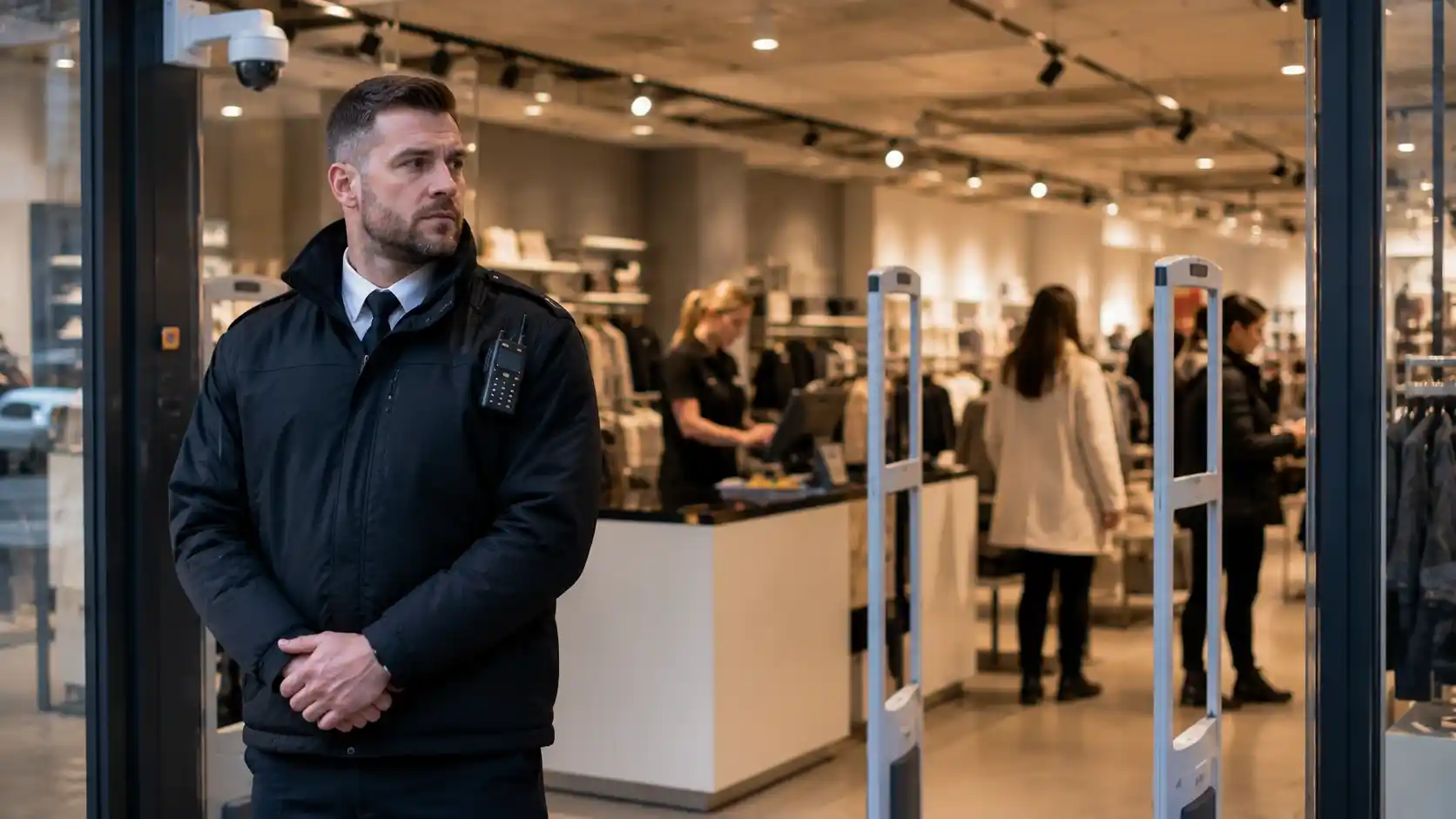
- Floor-walking security
- Entry-point monitoring
- Staff support during busy periods
Daytime presence reduces loss and reassures employees who deal with repeat offenders.
Day vs night retail security risks
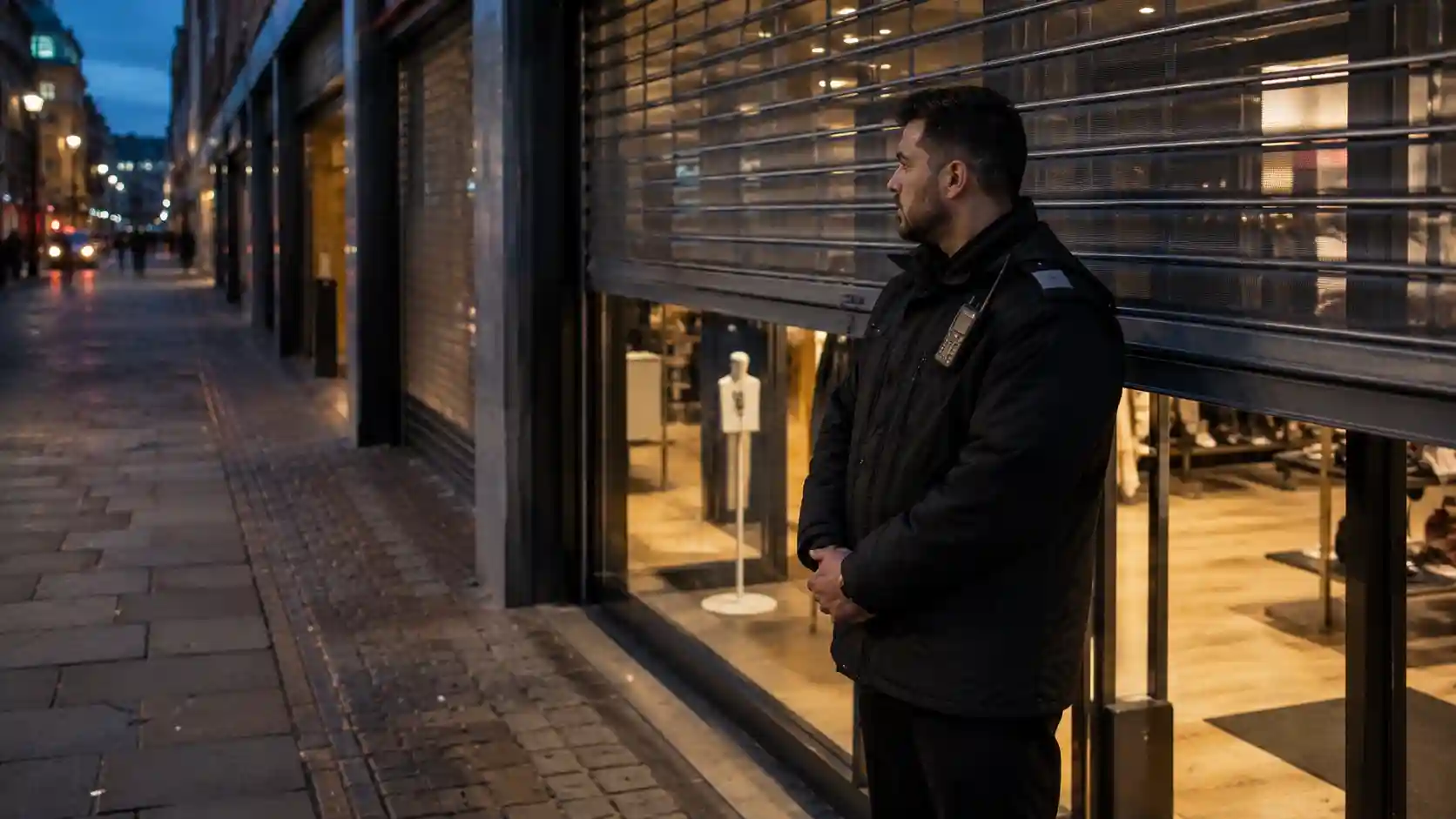
Day risks are people-focused. Night risks are asset-focused. During the day, retail security deals with theft, aggression, and safeguarding. At night, the focus shifts to break-ins, vandalism, and site protection. Cheshire retailers increasingly blend both, rather than choosing one.
Seasonal pressure: events and footfall spikes
Large events, including Cheshire Pride, change the security picture overnight. Footfall jumps. Alcohol consumption rises. Temporary visitors don’t know local norms. Retail security coverage often needs scaling fast to match that shift.
Economic and business growth factors in Cheshire
Cheshire’s steady business growth brings opportunity and exposure. New developments, extended opening hours, and higher staffing levels all increase security demand. As retail expands, so does responsibility. Security becomes part of doing business properly, not a reaction when things go wrong.
Legal and Compliance Requirements in Cheshire
Retail security in Cheshire operates inside a tight legal frame. It’s not optional, and it’s not flexible. Compliance affects who you hire, how they work, and what risk sits with your business if something goes wrong.
SIA licensing requirements for retail security in Cheshire
Any guard carrying out licensable activity must hold a valid licence. And it should be from the official Security Industry Authority. This applies across Cheshire, whether the site is a city-centre store or a retail park unit. Licences cover specific roles, such as manned guarding or CCTV operation. Using the wrong licence type is treated the same as having none at all.
Penalties for using unlicensed security guards
The risk doesn’t sit with the guard alone. Cheshire businesses that deploy unlicensed security face serious consequences:
- Unlimited fines
- Potential criminal prosecution
- Invalidated insurance policies
- Civil liability if an incident occurs
This is one of the key reasons why Cheshire businesses need retail security providers with proven compliance history, not ad-hoc cover.
DBS checks and staff vetting expectations
SIA licensing includes background checks on its guards. And many Cheshire retailers now expect enhanced vetting for guards. Because they are working around vulnerable people or high-value goods. DBS checks aren’t legally mandatory in every case. But they are widely viewed as best practice in this sector. It is especially in town centres and mixed-use locations.
Insurance requirements when hiring retail security
Businesses hiring retail security must ensure the provider carries adequate cover, including:
- Public liability insurance
- Employer’s liability insurance
- Professional indemnity where advisory services are involved
Without this, liability can fall back onto the client, even if the guard is outsourced.
CCTV, data protection, and privacy compliance
Retail security often works alongside CCTV systems to prevent any kind of threats. This brings UK GDPR obligations into it. Guards must understand lawful monitoring, data access limits, and incident recording. Improper handling of footage can expose retailers to regulatory action, not just complaints.
VAT and retail security services
Retail security services in the UK are VAT-rated. That affects budgeting and procurement. Transparent invoicing matters in this line of work. It does especially for multi-site Cheshire retailers managing cost centres across different towns.
Proving a security firm’s compliance record
Reputable providers can evidence compliance through clear documentation, including:
- Valid SIA licences for all deployed staff
- Insurance certificates
- Training records
- Audit histories and incident logs
This paperwork isn’t admin noise, but the protection.
Mandatory licensing and what it means for Cheshire clients
Mandatory licensing has raised standards and costs. For Cheshire businesses, it means fewer shortcuts and less tolerance for informal arrangements. Proper licensing reduces exposure, especially when incidents escalate beyond store level.
SIA licensing changes and hiring pressures
Recent changes to licence conditions have tightened renewal timelines and training requirements. This has influenced guard availability across Cheshire. It is pushing businesses toward planned contracts rather than last-minute cover.
Labour law, overtime, and post-Brexit impacts
Retail security staffing must comply with UK labour laws on rest breaks, overtime, and pay. Post-Brexit rules have also reduced the pool of EU nationals eligible to work without additional checks, adding pressure to compliant providers.
Collaboration with local policing and partnerships
Cheshire retailers benefit when private security works alongside Cheshire Police and local crime reduction schemes. Information sharing, incident reporting, and coordinated responses are often supported through Business Crime Reduction Partnership networks. These partnerships help security move from reaction to prevention. This is where compliance delivers real value.
Costs, Contracts, and Deployment in Cheshire
Retail security in Cheshire is priced and planned differently. Following it, they also deployed very differently depending on location, risk, and trading style. There’s no single rate card that fits every business, and that’s often where confusion starts.
Typical retail security costs across Cheshire
Costs shift based on footfall and exposure. City-centre locations usually sit at the higher end. It does, while suburban sites see more stable pricing.
- Chester city centre: higher rates due to footfall, tourism, and extended trading hours
- Retail parks: moderate pricing, but often require longer patrol hours
- Suburban high streets: lower base rates, fewer peak-time surges
In 2026, most Cheshire retailers budget within a predictable band. But the risk profile matters more than postcode alone. This is a core reason why Cheshire businesses need retail security that’s tailored, not templated.
Hiring timelines and deployment speed
Deployment doesn’t happen overnight, at least not properly. For compliant providers, typical timelines include licence checks, site risk reviews, and briefings. In practice, most Cheshire retailers see guards deployed within days, not weeks, when planning is done early. Emergency cover is possible, but it costs more and carries limits.
Contract lengths used by Cheshire retailers
Short contracts feel flexible, and long contracts feel safer. Most businesses expect to land somewhere in the middle.
Common arrangements include:
- Rolling monthly contracts for seasonal or trial coverage
- Six- or twelve-month terms for stable sites
- Multi-year agreements for retail groups or managed estates
Longer contracts often unlock better rates and stronger guard continuity.
Notice periods and exit terms
Notice periods are where many businesses get caught out. Standard terms usually range from two to eight weeks. Shorter notice often comes with higher hourly rates. A longer notice protects both sides without any issues. But it really does only when service levels are clearly written into the agreement.
Wage growth and 2026 cost pressure
Security wages continue to rise. Living wage increases, training costs, and licence renewals all feed into pricing. In 2026, these pressures are visible in hourly rates, especially for experienced guards who can handle conflict calmly. Cutting corners here tends to cost more later.
Inflation and long-term pricing stability
Inflation doesn’t just affect fuel and utilities. It shapes contract renewals. Many Cheshire retailers now favour indexed pricing clauses rather than sharp annual increases. Predictability matters more than chasing the cheapest quote.
Retail security and insurance premiums
Insurers notice patterns. Businesses with professional retail security often see improved claims outcomes. While premiums don’t drop automatically, insurers do respond to:
- Reduced incident frequency
- Clear incident reporting
- Visible deterrence measures
Over time, this strengthens the case for security as a cost-control tool, not just an expense.
Public sector contracts and the Procurement Act 2023
For publicly owned retail spaces, the Procurement Act 2023 has changed many things. They also turned things around on how contracts are awarded. Transparency, social value, and compliance history now carry more weight than the lowest price alone. Cheshire-based public sector sites increasingly require more than before. They need solid proof of ethical employment, fair pay, and operational resilience.
Cost clarity builds confidence
Retail security works best when costs, contracts, and deployment are understood up front. Clear terms reduce friction. Planned coverage reduces waste. And steady deployment protects staff, stock, and reputation. This is ultimately where the real return sits.
Training, Operations, and Daily Duties in Cheshire
Retail security in Cheshire is practical work. It starts before the doors open and doesn’t really stop until the site is locked down again. Training sets the baseline, but daily routines are what keep problems small.
Training standards for retail security environments
Retail security guards must meet nationally recognised training standards before stepping onto a shop floor. This includes conflict management, incident reporting, and public interaction. In Cheshire and Macclesfield, retailers increasingly expect added training around violence and aggression mitigation, lone working, and customer-facing behaviour. It’s not about force. It’s about judgment.
What happens when a guard starts a shift in Cheshire
The first minutes matter. A guard arriving on duty doesn’t rush in blind. They slow things down and assess.
Typical first actions include:
- Reviewing handover notes
- Checking recent incidents or warnings
- Confirming shift instructions and priorities
This sets the context, as without it, mistakes happen early.
First physical checks on arrival
The first thing a retail security guard checks is the environment. Entrances. Exits. Anything out of place. In Cheshire stores, especially retail parks, that often means looking for overnight tampering or signs of forced access before customers arrive.
Shift handovers and continuity
Handover isn’t a formality. Guards brief each other face-to-face where possible. They flag repeat offenders, vulnerable staff concerns, and unresolved issues. In busy locations like Chester, this prevents the same incident from repeating shift after shift.
Patrol frequency during a typical shift
Patrols aren’t timed by the clock alone. They’re adjusted around footfall and risk. During peak hours, patrols tighten. During quieter periods, guards widen coverage but remain visible. In a reliable security environment, flexibility is key.
Perimeter and access checks
Early patrols usually focus outward first:
- Doors and emergency exits
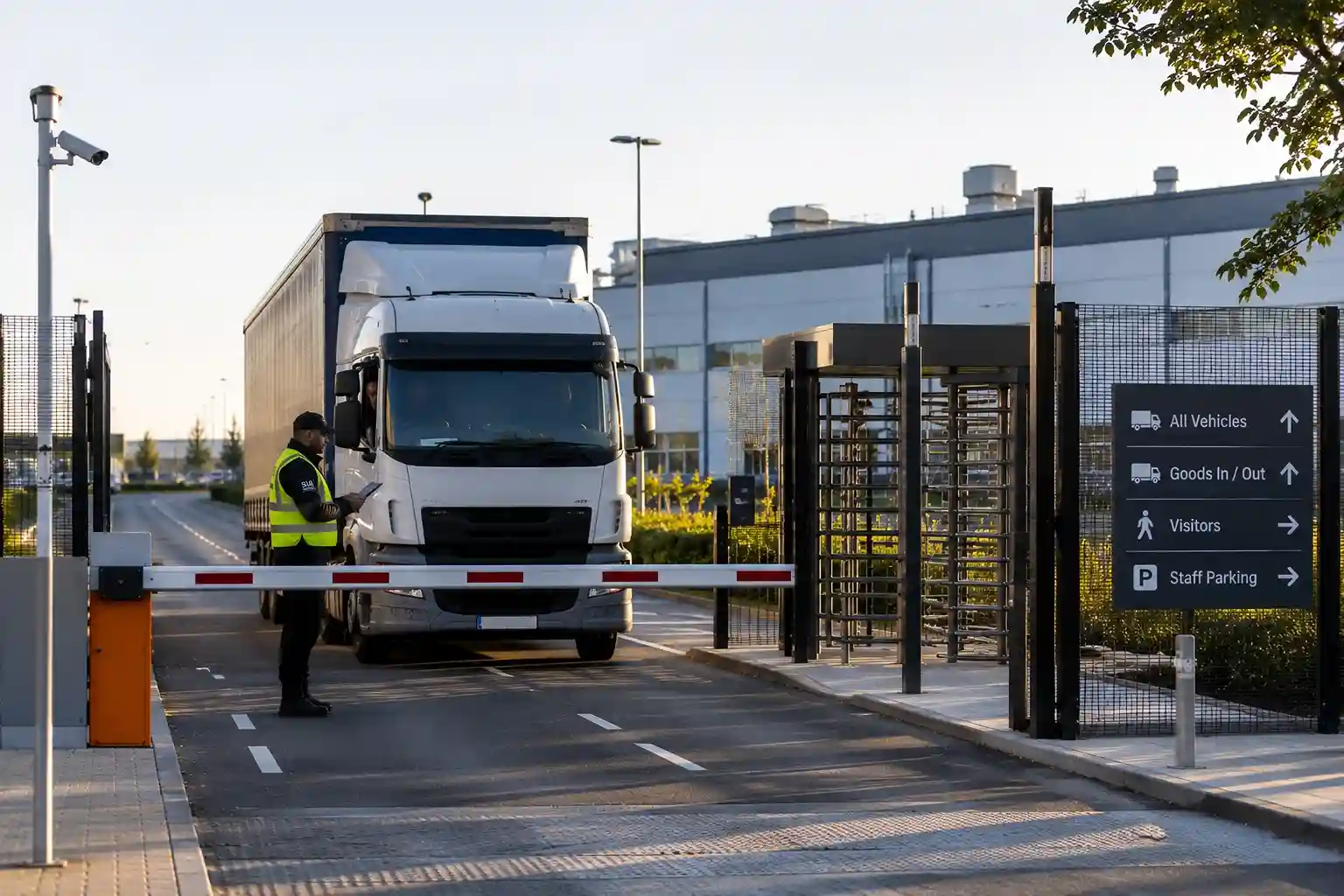
- Loading bays and delivery points
- Car park access routes
Retail parks in Cheshire rely on this routine to deter casual theft before it starts.
Logbooks and daily reporting
Every shift generates records. Cheshire retail security guards maintain logbooks that note patrol times, incidents, maintenance issues, and interactions. These logs protect the business as much as they guide security decisions.
Equipment and system checks
At shift start, guards test radios, body-worn cameras, panic alarms, and access systems. CCTV checks are visual and functional. Cameras don’t need to be perfect; they need to be working.
Alarm response and early hours duties
Early shift alarms are treated cautiously. Guards verify, assess, and escalate if needed. Rushing in alone isn’t a policy, but also a controlled response too.
Fire safety and lighting checks
Fire exits are checked daily. Obstructions are flagged immediately. In car parks, lighting inspections matter more than people think. Poor lighting invites problems. Guards log failures early so fixes happen before incidents.
Supervisor reporting and night operations
During night shifts, guards report in at agreed intervals. This isn’t micromanagement. It’s safety. In wider areas like Warrington, regular check-ins confirm everything is calm or escalate if it’s not.
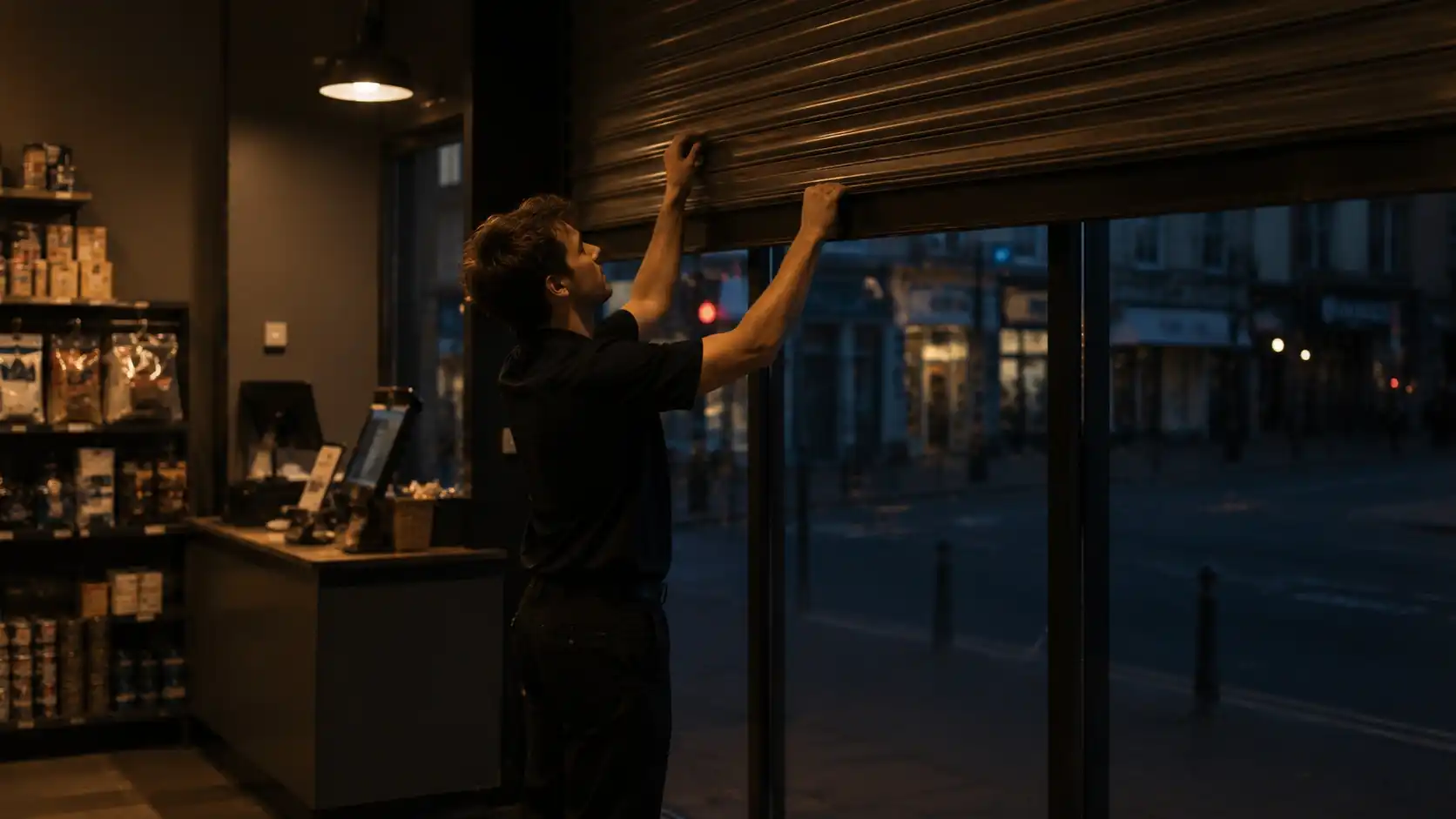
End-of-shift secure-down procedures
End-of-shift isn’t just clocking out. Guards secure access points and update handover notes. Following it, they have to confirm that alarms are set correctly.
Shift patterns and response expectations
Retail security often runs 24/7. Shifts rotate to avoid fatigue. In towns like Chester and Crewe, response times are expected to be immediate on-site, with escalation paths clearly defined. That structure is why trained retail security remains reliable under pressure.
Performance, Risks, and Challenges in Cheshire
Retail security performance in Cheshire isn’t measured by presence alone. It’s measured by what doesn’t happen. Fewer incidents. Calmer staff. Safer trading days. That’s where performance, risk, and real-world pressure meet.
KPIs that matter for retail security performance
The right KPIs are practical, not corporate. Cheshire retailers track what reflects day-to-day reality:
- Incident frequency and repeat patterns
- Response times to alarms or staff calls
- Staff intervention success without escalation
- Accuracy and consistency of daily logs
These indicators show whether security is preventing problems or simply reacting late. This clarity supports why Cheshire businesses need retail security that’s actively managed.
Weather and its impact on guarding effectiveness
Cheshire weather is rarely extreme, but it is persistent. Rain, wind, cold snaps, and early darkness all change behaviour. Poor weather pushes people indoors, increases crowding, and shortens patience. For guards, it affects visibility, patrol speed, and stamina, especially in retail parks and car parks.
Recording weather-related patrol risks
Weather isn’t just a footnote. Guards log conditions that affect patrol safety or coverage. Such as flooding patches, ice risks, or reduced lighting due to fog. These entries protect both guard welfare and the business if incidents are later questioned.
Long shifts and physical performance risks
Long shifts reduce sharpness. That’s not opinion, it’s observable. Fatigue slows reaction times and decision-making. In retail environments, that can mean missed cues or delayed responses. Cheshire firms increasingly manage this through structured breaks and rotation. They do it rather than pushing guards beyond safe limits.
Mental health pressures on night-shift guards
Night work carries its own weight. Isolation. Disrupted sleep. Heightened alertness for long stretches. Best-practice providers now recognise mental health support as operational, not optional. This includes access to welfare check-ins and clear escalation routes when stress builds.
Environmental regulations affecting outdoor patrols
Outdoor retail security must operate within health and safety and environmental guidelines. Prolonged exposure to cold, poor lighting, or unsafe surfaces must be managed. Cheshire retailers are expected to mitigate known risks, not ignore them.
Labour shortages and retention pressure
Guard retention is a growing challenge to many firms. Cheshire firms competing for experienced manned guards are adapting fast. Shortage of guards also affects site security as it may lead to an open path for threats. Unless the firm stays reliable, you face a constant threat to your property or business. Retention improves consistency, and consistency improves security outcomes.
Health impacts and operational balance
Physical strain and mental load don’t show up in incident reports until they do. Retailers who understand this plan coverage realistically. They do like shorter night rotations and paired patrols where risk is higher. Fatigue management isn’t soft thinking; it’s risk control.
Managing performance under pressure
Retail security performance dips when expectations are unclear. Clear KPIs, realistic shift planning, and open reporting keep guards effective. Along with this, it also ensures businesses stay protected. Cheshire retailers who treat security as a working system, not a static service, see better results. They go well with fewer incidents and stronger staff confidence.
Performance isn’t perfection; it’s about consistency under everyday pressure. That’s the real challenge retail security faces in Cheshire, and where good operators quietly stand apart.
Technology and Future Trends in Cheshire
Retail security in Cheshire is changing because the environment has changed. Footfall is less predictable. Staffing levels fluctuate. Incidents happen faster and escalate quickly than they used to. Technology has stepped in to support guards, not replace them. And future trends focus on reducing pressure at ground level rather than adding complexity.
How technology has changed retail security practices in Cheshire
Retail security once relied almost entirely on physical presence. Patrols filled the gaps, but gaps still existed. Technology now reduces those gaps by giving guards clearer visibility and faster information.
In urban Cheshire areas, this means guards spend less time reacting late and more time preventing issues early. Systems highlight risk. Guards decide how to respond.
Post-COVID changes that still affect retail security
Post-COVID retail environments feel different on the ground. Customer behaviour is less patient and abuse of staff is more common. Stores operate with leaner teams.
Retail security is adapted by focusing on early engagement and visibility. Guards are trained to step in sooner, speak earlier, and calm situations before frustration turns into aggression.
The role of AI surveillance in Cheshire retail sites
AI surveillance works quietly in the background. It tracks movement patterns, repeated visits, and unusual dwell time. It does not replace on-site guards, and it does not make decisions.
For Cheshire retailers, AI reduces false alarms and helps guards focus on real issues. It does so instead of monitoring screens for entire shifts.
Remote monitoring and traditional guarding work together
Remote monitoring centres now support many Cheshire retail locations. They monitor CCTV, alarms, and access systems, especially during early mornings and late evenings.
When an alert occurs, guards receive context before moving. That reduces rushed responses and improves decision-making on the ground.
Drone patrols and where they are actually used
Drone patrols are not used around customers. Their use is limited and targeted.
They are mainly deployed for:
- Roof and perimeter checks
- Large retail park car parks
- Out-of-hours inspections
In larger Cheshire retail parks, drones reduce the time it takes to identify access or damage issues.
Predictive analytics and smarter security planning
Retail security planning is becoming more data-led. Incident logs, time-of-day patterns, seasonal trends, and weather conditions are reviewed together.
This allows Cheshire businesses to adjust patrol timing, increase coverage during known risk windows, and reduce unnecessary presence during low-risk periods.
Upskilling now expected of retail security teams
Technology has changed what guards are expected to understand. Licensing alone is no longer enough.
Cheshire retailers increasingly expect training in:
- CCTV awareness and basic system checks
- Clear incident reporting
- Conflict management refreshers
- Counter-terror awareness
These skills protect both the business and the guard when incidents are reviewed later.
Green security practices in outdoor patrols
Environmental awareness is starting to shape patrol methods. Smarter routing reduces unnecessary movement. Electric patrol vehicles are appearing in larger sites. Lighting is planned to improve visibility without increasing energy use.
These changes lower long-term costs and improve working conditions for guards.
The impact of Martyn’s Law on future retail security
Martyn’s Law will increase the importance of planning, documentation, and training. Cheshire venues that fall within Standard or Enhanced thresholds will need written risk assessments and clear response procedures.
Oversight linked to the UK Home Office means informal or undocumented security arrangements will carry a higher risk.
What this means for Cheshire businesses
Technology is not changing why Cheshire businesses need retail security. It is changing how accountable and structured it must be. Guards remain central, but systems now support consistency, visibility, and compliance.
Retailers who plan for this shift will feel steadier during trading hours. Those who ignore it will feel the pressure later, usually when something goes wrong.
Conclusion
Retail security in Cheshire is no longer a background service. It sits at the centre of cost control, staff safety, and legal responsibility. Crime patterns shift. Regulations tighten. Customer behaviour changes without warning. Businesses that plan for this stay steady when pressure builds.
Why Cheshire businesses need retail security comes down to one thing: control. Control over loss, over risk, and over how incidents are handled when they happen, not after. The right approach blends trained guards, clear procedures, and local awareness. Not excess. Not guesswork. Just security that fits the reality of trading in Cheshire today and holds up tomorrow.
Frequently Asked Questions
1. Why do I actually need retail security in Cheshire if my area feels quiet?
We hear this a lot. Cheshire crime is rarely constant, but it spikes without warning. Retail theft, abuse toward staff, and organised visits don’t announce themselves. Retail security gives me control when those moments hit, rather than reacting after stock, money, or confidence has already gone.
2. Is retail security only about stopping shoplifting?
No, and that’s a common misunderstanding. For me, retail security is just as much about staff safety, calming tense situations, managing antisocial behaviour, and keeping the store trading normally. Theft prevention matters, but it’s only one part of the job.
3. How do I know if retail security costs are worth it in Cheshire?
I look at it in terms of loss, disruption, and risk. When security reduces repeat theft, staff absence, and incident fallout, the numbers usually speak for themselves. That’s why Cheshire businesses need retail security that’s planned, not reactive.
4. Do I need full-time retail security, or can I use flexible cover?
It depends on my risk profile, not just opening hours. Many Cheshire businesses use targeted daytime cover, peak-hour patrols, or event-based security. The goal isn’t constant presence. It’s being covered when problems are most likely to show up.
5. Will retail security affect the customer experience?
In our experience, good retail security improves it. Trained guards know how to stay visible without being intrusive. Customers feel safer. Staff feel supported. Poor security feels heavy-handed. Proper retail security feels calm and professional.
6. How quickly can retail security be put in place in Cheshire?
If we plan ahead, deployment can be quick. A compliant provider still needs time for licensing checks, site familiarisation, and briefings. Rushed setups usually cost more and deliver less. We have learned that early planning makes a big difference.
7. Does retail security help with insurance or legal protection?
Yes, indirectly but meaningfully. Insurers and investigators look at whether we took reasonable steps to manage risk. Professional retail security, clear logs, and visible controls strengthen my position if something serious happens.
8. What’s the biggest mistake Cheshire businesses make with retail security?
Waiting too long. Many businesses only act after an incident escalates. By then, staff confidence is damaged, and losses are harder to recover. Retail security works best when it’s in place before pressure builds, not as a last reaction.