Retail crime in Sheffield does not feel rare anymore. For many shops, it is part of a normal day. Theft happens often. Poor behaviour is seen more in stores. Some theft is planned, not random. The biggest worry is not just lost stock. It is the people. Staff face tense moments they were not trained to handle. Customers notice the mood and leave early. Little by little, trust fades.
This is why retail security is no longer a quick fix after trouble starts. It has become part of how shops run. High streets, supermarkets, retail parks, and city-centre stores all face risk, even if the risk looks different. The same pressure can be seen across Yorkshire & The Humber, where busy shops returned faster than control on the ground. This is the reason why Sheffield businesses need Retail Security today. It keeps trade steady, supports staff, and stops small problems from growing into serious ones.
Understanding Retail Security in Sheffield
Retail security in Sheffield has grown from real pressure, not theory. Shops face theft often. It is not rare. It happens in small ways, many times a week. People walk in, take items, and leave. Some come back again and again. Staff notice faces. They feel the pattern. Over time, this changes how a shop feels. Work becomes tense.
Retail security exists because shops are open places. People move freely. There are many exits. Staff cannot watch everything while serving customers. Guards fill that gap. They watch movement. They listen. They notice when something feels wrong.
Security also supports staff. When someone else handles risk, staff can focus on work. They greet customers. They stack shelves. They serve tills. Confidence grows when support is visible.
This need is not unique to Sheffield. Similar pressure exists across Yorkshire & The Humber. Busy areas see more footfall. Less control follows. Retail security becomes part of daily operations, not a response to a single event.
What retail security means for Sheffield businesses
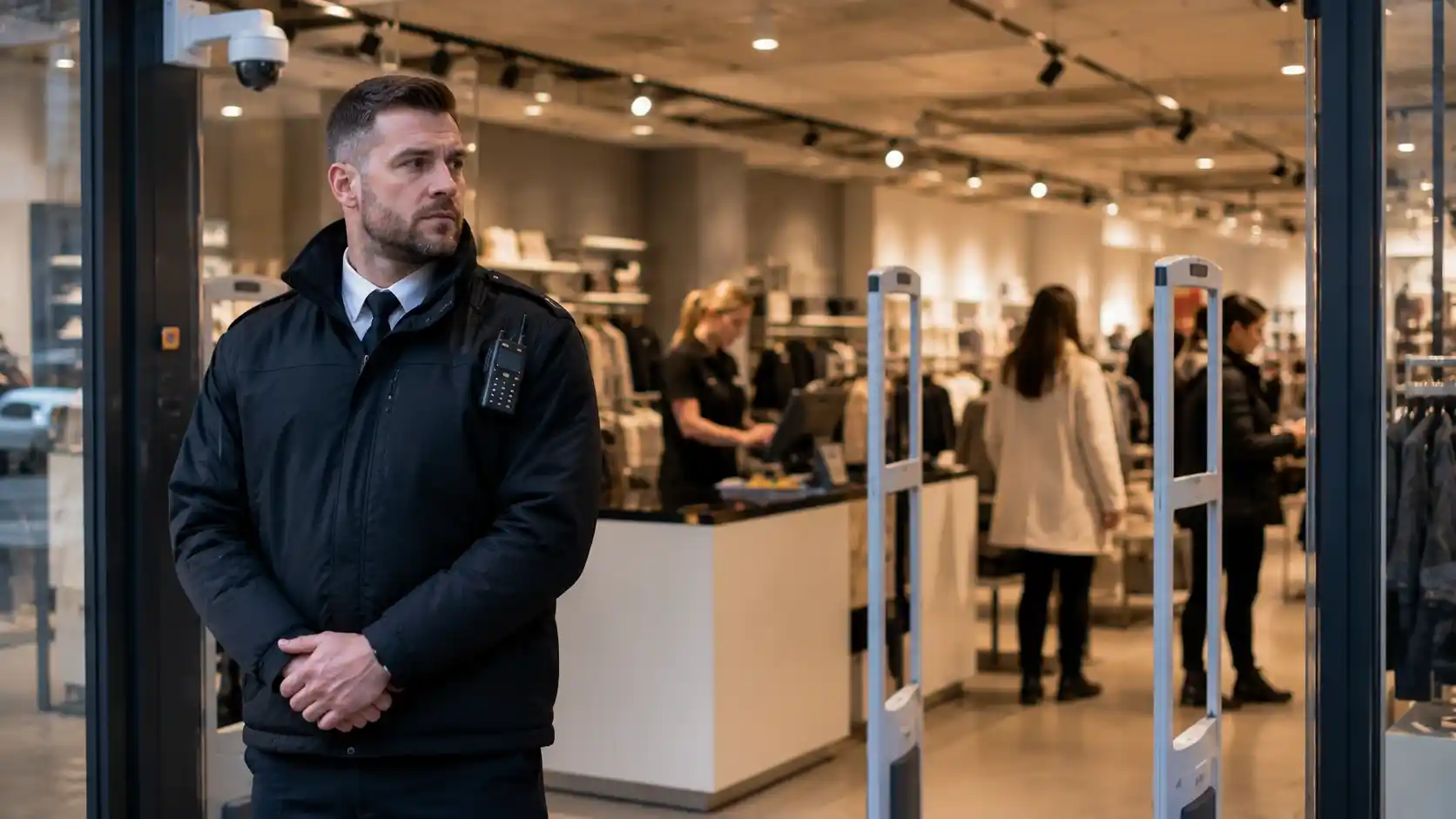
Retail security is more than a guard at the door. For Sheffield shops, it is a working system. It includes deterrence, response, and proof. A guard’s presence alone can stop theft. Many people change their minds when they feel watched.
When theft happens, response matters. Guards step in calmly. They follow the law. They protect staff from harm. They stop situations from getting loud or physical. This matters in shops where staff work long hours and face the public all day.
After incidents, evidence matters. Reports are written. Times are logged. Descriptions are clear. This protects the shop later. Insurance claims rely on detail. Police action needs facts.
Reassurance is the final part. Staff feel safer. Customers feel calmer. The shop feels managed. Across large retail areas like Leeds, businesses see the same result. Security changes the tone of a place. It keeps order without force.
How retail security differs from static or remote-only security
Static security stays in one place, and remote security relies on screens and alerts, but retail security works inside the flow of the shop. Retail spaces are active all day. People browse slowly, rush through aisles, wait near tills, or linger without buying. These small movements matter. A moving guard can watch how behaviour changes, not just where people stand.
A guard on site can react at the right moment. They can step closer when tension rises, speak before voices get loud, or place themselves where trouble may start. Cameras cannot do this, and alarms only respond after something has already happened. Retail security depends on timing and presence, not delay.
Judgement plays a key role. A pause, a glance, or a quiet word can stop a problem early. Remote tools still help, but they support the guard rather than replace them. In busy retail centres, including places like Bradford, shops rely on this human layer because it bridges the gap between watching behaviour and acting on it.
Sheffield’s retail crime profile and why it drives demand
Retail crime in Sheffield is often a repeat crime the same people returning. They take small items; one item means little, many items mean loss over weeks, and it adds up.
Staff feel this pressure first they see faces and hear comments. Some offenders act rudely. Some act boldly; they believe nothing will happen. This creates stress.
City-centre shops feel it more, and footfall is high. Movement is fast, and People move between shops with ease. Offenders know this. This pattern is seen in other cities, too. In parts of Leeds, shops face the same cycle. Repeat behaviour drives demand for steady security, not short cover.
Peak crime hours for retail premises in Sheffield
Retail crime in Sheffield does not only happen at night. Many incidents take place during the day, especially in the late morning and early afternoon when shops are busy, and staff are spread thin. These hours create gaps that are easy to use when attention is pulled in many directions.
Evenings bring a different type of risk. Noise levels rise, patience drops, and alcohol can affect behaviour. Disputes are more likely, and small issues can turn into loud or stressful situations if no one steps in early.
Weekends increase pressure further. Footfall is higher, shops are fuller, and control is harder to keep. Seasonal sales make this worse by adding crowds and distractions.
Effective retail security follows these patterns. Coverage is planned around when risk is highest, not set to fixed hours. By moving with the day, security stays useful instead of reactive.
Retail parks and shopping parades: Sheffield-specific vulnerabilities
Retail parks in Sheffield create easy chances for theft because of how they are built. Car parks are wide, exits are many, and people can move between stores very quickly. This makes it harder to track behaviour. Poor lighting, especially in winter, adds to the problem by reducing visibility and making some areas feel unwatched.
Shopping parades face different risks. Groups often gather outside stores. Noise and poor behaviour can grow even when no theft takes place. Customers may feel uneasy and choose to leave early, which affects trade and staff morale over time.
Visible patrols reduce these risks in both settings. Guards moving through the area show that the space is managed. Calm engagement helps keep order. When people know someone is watching, behaviour improves, and shops feel more secure.
Anti-social behaviour and its impact on retail trade
Anti-social behaviour can harm a shop even when nothing is stolen. Loud voices, loitering, and poor behaviour make customers feel uneasy. Many choose to leave early. Staff may stop challenging behaviour because they feel unsafe or unsure. Over time, this affects sales and morale.
Security guards trained to stay calm can step in early. They speak clearly and keep situations from growing. Often, their presence is enough to change behaviour. People act differently when they know someone is watching and ready to help.
How rising retail theft has increased demand for daytime coverage
Retail theft now happens most during the day in Sheffield, not only after dark. Busy hours around midday bring a higher risk because staff are focused on customers and queues move fast. This makes it easier for small thefts to slip through without notice.
Open shop layouts and self-checkout areas add to the problem. When fewer staff are watching each space, visible security guards help fill the gap. Their presence supports staff and often stops theft before it starts.
This change is not limited to Sheffield. Retailers in other areas, including Hull and York, report the same need for strong daytime cover as shopping patterns continue to shift.
Day vs night retail security risks
Retail security changes as the day moves into the night in Sheffield. During the day, the main risk comes from theft and behaviour. Shops are open, people move freely, and staff focus on service. Guards watch how people act, not just where they go. They help stop small theft, calm tense moments, and support staff when things feel uncomfortable.
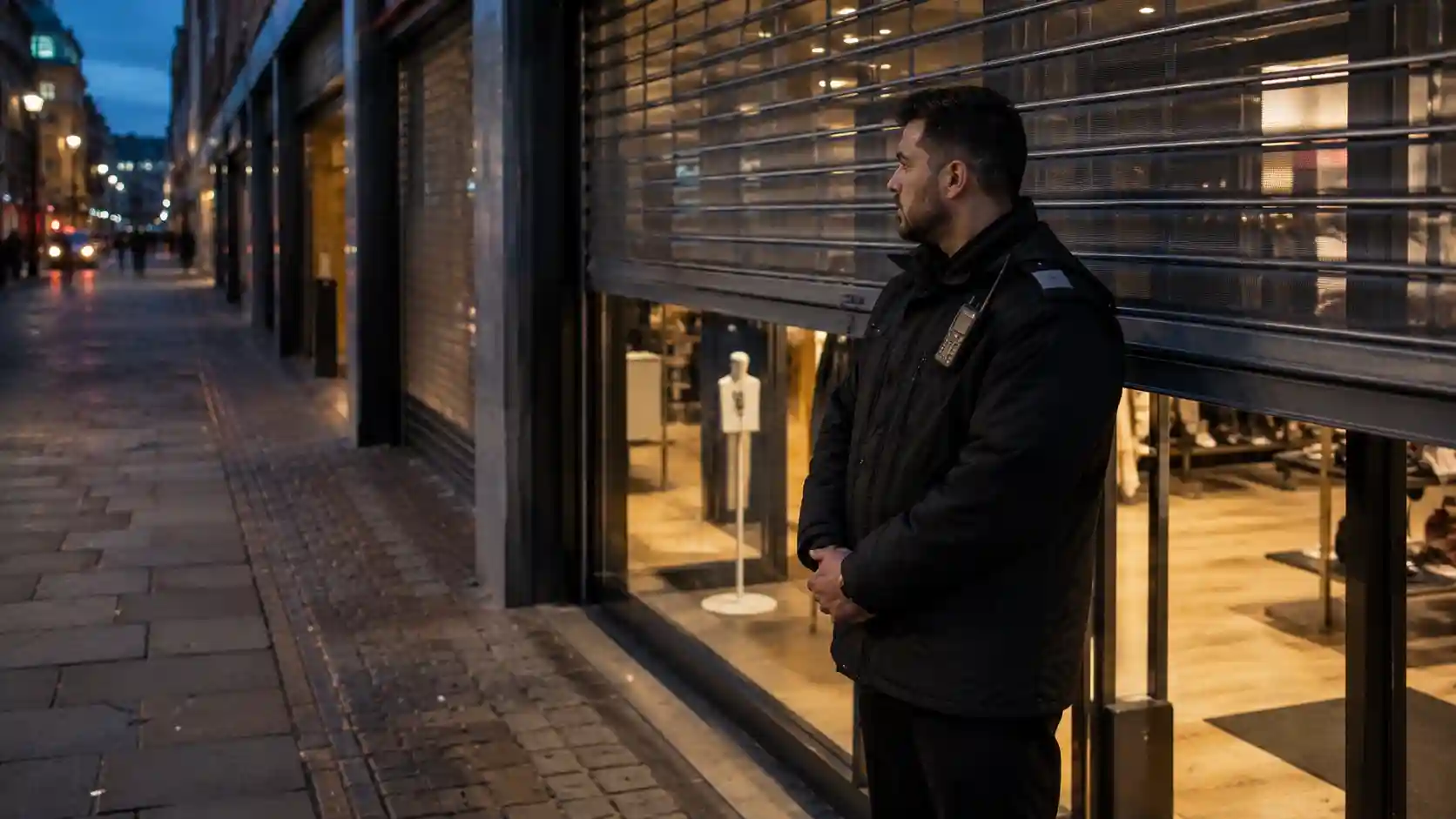
At night, the focus shifts. Fewer people are around, but the risk to buildings and stock rises. Doors, shutters, alarms, and storage areas matter more. Guards check access points and respond to alerts. The aim is to protect assets and spot damage early.
Both periods matter. Information from the day often helps night cover, especially where repeat issues or weak points are known.
Seasonal retail pressures in Sheffield
Seasonal change brings extra pressure for retailers in Sheffield. Sales periods increase footfall and distraction. More people mean more opportunity for theft and disorder. Staff work longer hours and feel tired, which can lower awareness without support.
Football match days add another layer. Crowds move quickly through shopping areas. Noise rises. Emotions run high. Small issues can grow fast if no one steps in early.
Christmas brings the heaviest strain. High-value stock, busy tills, and longer opening hours all raise risk. Guards help manage flow, watch key areas, and support staff through long days.
Retail security works best when it adjusts for these seasons instead of staying fixed. Planning ahead keeps shops stable during their busiest times.
Legal and Compliance Requirements for Retail Security
SIA licensing requirements for retail security guards
Retailers in Sheffield must follow the law when using security guards. Any guard who stops theft, handles trouble, or controls entry must have a valid SIA licence. This applies to all shops. Size does not matter. Opening hours do not matter. A licence is required by law.
Before a guard starts work, the retailer must check the licence. This check must continue over time. Licences can expire. They can also be taken away. A valid licence shows that the guard has trained, proven who they are, and passed background checks. Without it, the guard should not be on site.
Many retailers now include licence checks in their normal setup. This sits with right-to-work checks and site induction. In busy retail areas across Yorkshire, including large shopping districts in Leeds, missed checks have led to action by regulators. Knowing who is allowed to guard a shop is a basic step in staying compliant.
Penalties for using unlicensed guards in Sheffield
Using unlicensed security guards exposes Sheffield retailers to serious consequences. Fines can be significant, but financial penalties are often only part of the problem. If an incident occurs involving an unlicensed guard, liability can shift quickly toward the retailer. Insurance providers may refuse to honour claims, particularly where injury or unlawful detention is involved.
There is also reputational risk. News of enforcement action spreads fast, especially in city-centre retail environments where public trust matters. For multi-site operators, a single breach can trigger wider audits across the business.
Retailers sometimes assume that responsibility sits entirely with the security company in Sheffield. In reality, the law places shared accountability on both parties. Courts and insurers expect retailers to demonstrate due diligence. That means written checks, not assumptions.
Other regional authorities have taken similar stances. Retail cases in areas such as Bradford show that ignorance of licensing status is not accepted as a defence. Compliance failures rarely stay isolated.
DBS expectations in retail environments
DBS checks are not a legal rule for every retail security role, but many shops now expect them. In Sheffield, retailers often ask for a basic DBS check before a guard starts work. This comes from daily experience. Guards work close to staff, step into tense moments, and deal with people who may feel unsafe.
Some shops need a higher level of checks. Late opening hours increase risk. Lone working increases risk. Stores with regular theft or disorder also face a higher risk. The law allows choice, but that choice must be clear. Insurers and auditors often ask why a certain level of DBS was used.
In practice, DBS checks help everyone’s staff feel safer at work. Managers feel more sure about who is on site. If an incident is reviewed later, the shop can show it acted with care. Across Yorkshire & The Humber, including historic shopping areas like York, DBS vetting is now part of normal retail security, not an extra step added later.
Insurance requirements when hiring retail security
Insurance is a core part of retail security compliance. Retailers must ensure that any security provider holds adequate public liability insurance, typically covering injury or damage caused during security operations. Employer’s liability insurance is also essential, protecting guards and, indirectly, the retailer.
Professional indemnity insurance is sometimes overlooked, but can be critical where advice, reporting, or procedural decisions are involved. If a guard’s actions are challenged, this coverage can protect both the provider and the client.
Retailers should request proof of insurance and confirm policy limits align with site risk. High-footfall supermarkets and shopping centres require higher cover than small convenience stores. Insurers may also assess how security is deployed when setting premiums.
Across regional retail hubs, including port-linked commercial areas near Hull, insurers increasingly view compliant security arrangements as part of overall risk management, not a separate consideration.
Retail security and UK data protection law
Retail security frequently operates alongside CCTV systems, body-worn cameras, and incident reporting tools. This brings data protection obligations under UK GDPR. Guards must understand what can be recorded, how long footage can be retained, and who may access it.
Incident reports must remain factual and proportionate. Personal data should only be collected where necessary for security purposes. Over-recording or sharing information informally creates legal risk.
Retailers are responsible for ensuring their security teams follow data protection policies. Clear assignment instructions and regular training reduce the chance of breaches.
Data protection enforcement has increased across retail settings, particularly where footage is misused or stored without justification. Compliance protects customers, staff, and the business itself.
VAT rules for retail security services
Retail security services are subject to VAT, which directly affects cost planning. Sheffield retailers must factor VAT into budgeting, especially for long-term contracts or seasonal scale-ups.
Problems often arise when retailers assume quoted rates are VAT-inclusive without confirmation. Transparent invoicing avoids disputes and ensures accurate forecasting.
For businesses operating across multiple Yorkshire locations, VAT consistency matters. Inconsistent treatment can complicate accounting and trigger audits. While VAT is not unique to security, misunderstanding it can distort comparisons between providers and obscure the true cost of protection.
Local authority expectations for retail premises
Local councils do not license retail security directly, but their expectations influence enforcement outcomes. Poor security arrangements can affect licensing reviews, planning discussions, and responses to incidents.
Councils expect retailers to take reasonable steps to manage disorder, protect staff, and maintain safe public spaces. Visible, compliant security supports this expectation.
In practice, good security planning strengthens relationships with local authorities and reduces scrutiny following complaints or incidents.
What documentation proves a retail security firm’s compliance
Compliance is demonstrated through paperwork as much as presence. Key documents include valid SIA licences, vetting records, training certificates, insurance policies, and clear assignment instructions.
SIA Approved Contractor Scheme (ACS) accreditation provides additional assurance, showing that a provider has passed independent audits. Retailers should also expect regular updates and access to records on request.
Documentation is not bureaucracy for its own sake. It is evidence that standards are being met consistently.
How policing priorities influence retail security deployment
Retail security works best when it follows how local policing works. Guards do not act alone. They rely on crime patterns, known trouble spots, and repeat behaviour seen in the area. This information helps decide where guards should stand and when cover is most needed.
When retailers match security cover to high-risk times, results improve. Guards are present when problems are more likely to happen. Small issues are noticed earlier. This reduces loss and stress for staff. Even simple contact with local officers or shared updates can help stop problems before they grow.
Across Yorkshire & The Humber, many retailers now plan security using local data rather than guesswork. This keeps guards focused on the right places at the right time. It turns security into prevention, not reaction, and makes better use of the people on site.
Costs, Contracts, and Retail Security Deployment in Sheffield
Typical retail security costs in Sheffield
Retail security costs in Sheffield are shaped first by location. City-centre stores usually face higher rates than neighbourhood shopping areas because footfall is heavier, incidents are more frequent, and guards are expected to manage complex situations throughout the day. In these environments, security is not passive. Guards are constantly engaging, observing, and intervening.
Neighbourhood parades and smaller retail clusters tend to see lower headline rates, but this does not always mean lower overall spend. These locations often need longer hours of coverage to manage evening disorder, lone working risks, or repeated low-level theft. Over time, the cost difference can narrow.
Retailers across Yorkshire & The Humber see similar patterns. In large commercial centres such as Leeds, city-centre rates reflect pressure rather than prestige. The same logic applies in Sheffield. The true cost is not the hourly figure alone, but how well that coverage matches real risk on the ground.
What drives retail security pricing
Retail security pricing is built from several moving parts. Wages are the largest factor, particularly as retailers expect guards to be trained, licensed, and capable of handling confrontation calmly. Hours of coverage matter just as much. A single daytime guard costs less than extended split shifts or seven-day coverage.
Risk profile plays a major role. Stores selling alcohol, high-value goods, or operating self-checkout areas typically pay more due to increased incident rates. Supervision also affects pricing. Sites that require mobile supervisors, reporting audits, or rapid response support carry additional costs.
Retailers sometimes focus on the visible rate without considering what is included. Lower prices often mean less supervision, higher guard turnover, or minimal training. Across regional locations, including Bradford, this approach frequently leads to inconsistent performance and higher losses later.
Contract lengths commonly used by retailers
Retail security contracts in Sheffield usually follow two clear paths. Some retailers choose short-term cover. This is common during sales periods, busy seasons, or when testing a new security setup. These contracts give flexibility, but they can create gaps. Repeat offenders notice when guards change often or coverage ends.
Other retailers choose longer contracts. This brings stability. Guards learn the store layout, staff routines, and common problems. Over time, they spot issues earlier and step in before things grow. This helps reduce stress for staff and keeps the shop calm. Supermarkets and shopping centres often see better results this way, even if the commitment feels bigger at the start.
In historic and visitor-led areas such as York, retailers often prefer longer contracts because a steady presence matters more than short savings. In Sheffield, the right choice depends on whether security is treated as a short fix or part of daily business.
Notice periods and flexibility
Retail environments change quickly. Promotions, refurbishments, or shifts in crime patterns can alter security needs with little warning. For this reason, notice periods and flexibility are critical parts of any retail security contract.
Rigid agreements may lock retailers into coverage that no longer fits the risk profile. Agile contracts allow hours to increase during busy periods and reduce when pressure eases. This adaptability helps control costs without compromising safety.
Retailers often underestimate how valuable flexibility becomes over time. A contract that allows adjustment supports better long-term planning and avoids rushed decisions when incidents spike unexpectedly.
Wage pressures and 2025 cost outlook
Wage pressure across the security sector continues to rise into 2025. Higher minimum wages, competition for licensed staff, and increased expectations around professionalism all affect retail security budgets.
Retailers who attempt to suppress costs by accepting lower pay rates often experience higher guard turnover. New guards take time to learn site-specific risks, which reduces effectiveness during transitions. Over time, this churn creates hidden costs through increased incidents and staff dissatisfaction.
Across Yorkshire & The Humber, including port-linked retail areas near Hull, retailers are adjusting budgets to reflect this reality. Paying for stability increasingly proves cheaper than paying for constant replacement.
Inflation and long-term retail security contracts
Inflation adds another layer of complexity to long-term retail security contracts. Fixed-price agreements may appear attractive initially, but they can become problematic if wages and operating costs rise faster than anticipated.
Under-resourced contracts often lead to reduced supervision, stretched staffing, or difficulty retaining experienced guards. Retailers then face a choice between renegotiation and accepting declining service quality.
Balanced contracts include review mechanisms that reflect economic change. This approach protects both retailer and provider, ensuring coverage remains effective rather than merely affordable on paper.
Retail security and insurance premium reductions
Retail security does not automatically reduce insurance premiums, but it influences how insurers assess risk. Visible, consistent guarding demonstrates proactive management. It shows that theft, disorder, and staff safety are taken seriously.
Insurers often look at incident history alongside security measures. Retailers with stable security arrangements can show fewer repeat claims and clearer documentation. This strengthens their position during renewals and disputes.
In Sheffield, as in other Yorkshire retail centres, security supports insurance outcomes indirectly. It reduces frequency, improves evidence quality, and limits escalation. Over time, those factors matter as much as the policy itself.
Training, Operations, and Daily Retail Guard Duties
Retail-specific guard training standards
Retail security training in Sheffield is shaped by constant public interaction. Guards must be trained to manage conflict without escalating it, handle theft lawfully, and speak to customers in a way that protects the store’s reputation. This balance is difficult. Retail guards are not there to intimidate, yet they must be confident enough to intervene when behaviour crosses a line.
Conflict management training focuses on recognising early warning signs. Raised voices, repeated pacing, or deliberate distraction tactics often signal risk before theft or disorder occurs. Guards learn to position themselves calmly, use clear language, and disengage safely when required.
Customer interaction training matters just as much. Retail environments depend on trust. Guards who communicate clearly and respectfully help staff feel supported rather than policed. Across busy shopping areas, including large commercial centres such as Leeds, retailers increasingly value guards who can manage people as well as problems.
What a retail guard checks at shift start
A retail guard’s shift begins before the shop floor becomes busy. Initial checks focus on the condition of the store, access points, and any issues carried over from the previous shift. Guards review briefing notes to understand recent incidents, repeat offenders, or changes in layout that could affect visibility.
Entrances and exits are checked first. Guards confirm that doors, alarms, and barriers are working as expected. High-risk areas, such as alcohol aisles or self-checkout zones, receive early attention. Communication equipment is tested to ensure contact with supervisors or store management if needed.
This routine is not rushed. A calm, methodical start sets the tone for the shift. Retailers in mixed-use areas, including neighbourhood parades seen in parts of Bradford, rely on these early checks to prevent problems developing later in the day.
Incident handovers in retail environments
Continuity is one of the most important elements of effective retail security. Incident handovers ensure that information does not disappear when shifts change. Guards brief incoming colleagues on theft attempts, suspicious behaviour, or unresolved issues from earlier in the day.
Repeat offenders are a particular concern. Many retail crimes involve the same individuals returning regularly. Without proper handovers, guards lose valuable context, making it easier for offenders to exploit gaps in awareness.
Clear handovers also protect staff. When guards understand what has already happened, they can anticipate flashpoints and intervene earlier. Across Yorkshire retail locations, including historic city centres such as York, consistent handovers have become a core expectation rather than a best-practice extra.
Patrol routines inside retail premises
Patrol routines inside retail shops are planned to avoid fixed patterns. When guards move the same way at the same time each day, theft becomes easier to plan. To prevent this, guards change their routes based on how busy the shop is, how the space is laid out, and what time of day it is.
Most patrol time is spent in areas where customers are present. This includes shop floors, tills, and self-checkout zones where theft or conflict is more likely to happen. Guards stay visible but do not block movement or interrupt trade. At the same time, entrances, exits, and shared walkways are checked to manage how people move through the store and to reduce easy escape routes.
Good patrols are calm and steady. They rely on presence rather than force. When guards move with purpose and awareness, behaviour often improves on its own. Retailers who use this approach tend to see fewer problems grow into serious incidents, even during busy trading hours.
Logbooks and incident reports in retail security
Accurate logbooks and incident reports form the backbone of retail security accountability. Guards record events clearly, focusing on facts rather than opinion. Times, locations, actions taken, and outcomes are documented in plain language.
These records protect everyone involved. They support police investigations, strengthen insurance claims, and provide evidence if complaints arise. Poor reporting creates risk, even when actions were justified.
Retailers operating across multiple sites use logs to identify patterns. This insight helps adjust staffing and coverage before losses grow.
CCTV coordination with retail guards
CCTV is most effective when paired with active guard involvement. Guards use live feeds to support patrols, monitor blind spots, and respond quickly to alerts. Passive recording alone rarely prevents incidents.
Coordination requires training. Guards must understand camera coverage, data protection limits, and how to preserve footage correctly. When used properly, CCTV enhances judgment rather than replacing it.
Retail environments near transport hubs and busy shopping areas, including coastal centres like Hull, benefit most from this combined approach due to high footfall and movement.
Fire safety and emergency checks
Fire safety remains a critical responsibility for retail guards. Daily checks include clear exits, unobstructed escape routes, and awareness of alarm points. Guards must know evacuation procedures and assembly points.
In retail settings, blocked exits often result from stock deliveries or temporary displays. Identifying these risks early prevents serious consequences during emergencies. Guards also act as calm guides if evacuations occur, helping customers move safely without panic.
End-of-shift secure-down procedures
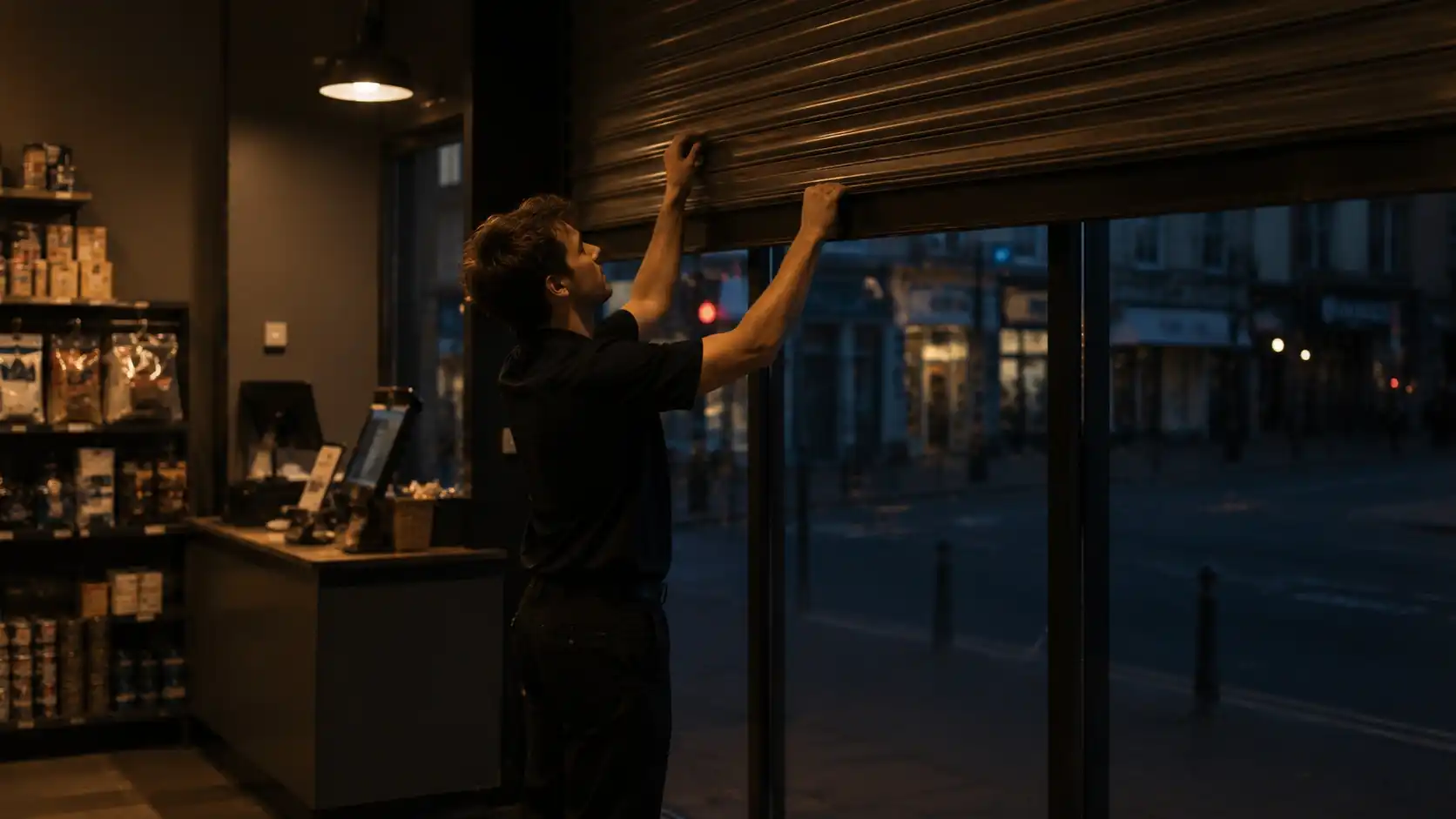
At the end of a shift, guards focus on securing the premises. Stock areas, cash handling zones, and access points are checked carefully. Any irregularities are noted and passed on.
Secure-down procedures protect against overnight theft and reduce uncertainty for incoming staff. Consistency matters. A missed step can undo hours of effective coverage.
24/7 coverage models for retail parks
Retail parks often require blended day and night coverage. Daytime guards focus on theft prevention and public order. Night-time coverage shifts towards perimeter security and alarm response.
Successful models share information across shifts, ensuring risks identified during trading hours inform overnight protection. This joined approach supports continuity and reduces blind spots in large, open retail environments.
Performance, Risks, and Staffing Challenges in Retail Security
Retail security KPIs that actually matter
Retail security results are often judged in the wrong way. In Sheffield, success is not about how many people are stopped or removed from a shop. It is about what does not happen during a normal day. Shops look for fewer thefts, fewer arguments with staff, and fewer events that slow or close trading.
A steady drop in theft over time is one clear sign that security is working. This does not happen overnight. It shows up over weeks and months as problems occur less often. Preventing incidents matters just as much. When a guard notices behaviour early and steps in calmly, the issue may never turn into a report, but the outcome is still positive.
Staff confidence is another strong measure. It appears in lower sickness levels, better staff retention, and a greater willingness to report concerns. Retailers who pay attention to these signs often understand security performance better than those who only count incidents. Large retail centres, including those in Leeds, now use these simple measures to guide how security is planned and improved.
Environmental challenges affecting retail guards
Retail security does not operate in controlled conditions. Many guards work in open retail parks, shared walkways, or semi-covered entrances where weather plays a constant role. Rain, cold, heat, and wind all affect concentration and stamina. Over time, exposure increases fatigue and slows response.
Poor weather also changes customer behaviour. People move faster, cluster indoors, and become more irritable. These shifts raise the risk of confrontation and theft, particularly in busy retail parks. Guards must adapt patrol routes and positioning to stay effective without becoming exhausted.
In coastal and exposed retail areas near Hull, these challenges are well understood. Planning for weather is part of risk management, not an afterthought.
Health and fatigue risks in retail guarding
Retail guarding involves long periods of standing, constant scanning, and sudden moments of stress. Physical fatigue builds quietly. Guards may walk several miles per shift while remaining alert for subtle behavioural cues. Over time, this affects posture, joint health, and reaction speed.
Confrontation stress adds another layer. Even calm interactions carry emotional weight, especially when guards face repeated hostility. Without adequate rest, performance declines. Mistakes become more likely.
Retailers who recognise fatigue as a risk rather than a personal failing see better outcomes. Reasonable shift lengths, planned breaks, and rotation between high-pressure and lower-pressure duties protect both guards and businesses.
Mental wellbeing for retail security staff
Mental strain is a quiet risk in retail security. It builds over time. Night shifts can affect sleep. Long hours can wear people down. Seeing the same offenders return again and again can cause frustration. Guards are still expected to stay calm, even when people shout or act in a rude way.
Support makes a real difference. Guards need clear ways to report issues. They need access to supervisors who listen. When a hard incident is noticed and taken seriously, stress is easier to manage. Guards who feel supported are more likely to stay calm at work and less likely to feel worn out.
These pressures are not limited to one place. Retail areas in historic city centres such as York face similar challenges, especially during busy tourist periods when crowds grow, and tension rises. Looking after mental wellbeing helps guards work safely, stay focused, and support shops in a steady way.
Retention challenges in Yorkshire retail security
Retention is one of the biggest challenges facing retail security across Yorkshire & The Humber. Experienced guards leave for many reasons. Low pay, unpredictable hours, limited progression, and lack of support all contribute. When guards leave, retailers lose site knowledge that cannot be replaced quickly.
High turnover weakens security effectiveness. New guards need time to learn layouts, staff routines, and offender patterns. During this period, risk increases.
Security firms that invest in training, fair scheduling, and consistent supervision retain staff longer. Retailers benefit from this stability through better prevention and calmer trading environments. In competitive retail areas such as Bradford, continuity has become a key differentiator between effective security and constant disruption.
Technology and the Future of Retail Security in Sheffield
How technology has reshaped retail guarding
Retail guarding in Sheffield has changed quietly over the last decade. Guards are no longer expected to stand and watch. Technology now supports them, giving better awareness and faster judgment. The role has shifted towards decision-making rather than observation alone.
Modern retail guards use technology to confirm instincts. A suspicious movement flagged on a screen may guide a patrol. A pattern noticed across shifts can influence where a guard positions themselves during peak hours. This does not remove human judgment. It sharpens it.
Retailers who understand this shift get more value from their security teams. Guards feel trusted rather than monitored. That confidence shows in how they interact with staff and customers. Across busy commercial areas, including large shopping zones in Leeds, this balance between human skill and digital support has become the standard rather than the exception.
AI-supported CCTV in retail settings
AI-supported CCTV is increasingly used in retail environments, but its purpose is often misunderstood. In Sheffield stores, it is not about constant surveillance. It is about detection and prioritisation. AI systems highlight unusual movement, repeated behaviours, or activity around high-risk areas.
This helps guards focus attention where it matters most. Instead of watching multiple screens, they respond to prompts. Behaviour analysis supports early intervention, reducing theft before it escalates. Evidence capture also improves. Clear footage, time-stamped events, and linked incident reports strengthen outcomes with police and insurers.
Importantly, AI does not replace guards. It supports them. Retailers who rely on AI alone often see delayed responses. Those who combine AI with trained guards achieve better prevention. Similar approaches are now common in multi-store retail environments in places like Bradford, where footfall and complexity demand smarter tools.
Remote monitoring and on-site retail guards
Remote monitoring and on-site guards work best when used together. Cameras and sensors watch the site at all times, while guards deal with people and problems on the ground. This setup suits large retail parks and shopping centres where one guard cannot see everything at once.
Remote teams watch screens and spot issues early. They may notice repeated vehicle movement, doors left open, or activity at quiet hours. When something looks wrong, they alert the guard on site. The guard then checks the area and decides what to do. This keeps the response fast and focused.
This shared approach also reduces strain on guards. They do not need to watch screens for long hours and can focus on patrol and safety. Retailers get wider coverage without adding more staff. In places with mixed indoor and outdoor spaces, including retail areas near Hull, this model helps balance cost, control, and day-to-day safety.
Predictive analytics for retail theft prevention
Predictive analytics takes past incident data and turns it into planning insight. Patterns emerge over time. Certain days, times, or layouts attract more theft. Analytics help retailers deploy guards where they are most needed, rather than spreading coverage evenly.
This approach improves efficiency. Guards are positioned based on likelihood, not guesswork. Over time, theft reduces because patterns are disrupted. Offenders adapt, but analytics adapt faster.
Retailers who use this data-led approach gain consistency. They respond before losses rise. In historic retail centres such as York, where seasonal footfall fluctuates, predictive planning has become an essential tool rather than an experiment.
Green security practices in retail environments
Sustainability now influences retail security decisions. Low-impact patrols reduce unnecessary vehicle use. Energy-efficient lighting supports visibility without excessive consumption. Modern equipment draws less power and lasts longer.
Guards also play a role. Planned patrol routes reduce wasted movement. Daytime visibility reduces the need for aggressive lighting after dark. These small changes add up over time.
Retailers increasingly expect security providers to align with broader environmental goals. Green practices are no longer separate from operational effectiveness. They support cost control and public perception together.
Martyn’s Law and its implications for retail spaces
Martyn’s Law will place clearer responsibility on public-facing venues to assess and manage security risks. Retail spaces, especially shopping centres, will need documented plans, trained staff, and coordinated responses.
Preparation matters. Retailers who start early avoid rushed compliance later. Guards will need clearer instructions and better integration with emergency planning.
For Sheffield retailers, this law reinforces an existing truth. Retail security is not only about theft. It is about preparedness, awareness, and public safety. Across Yorkshire & The Humber, early planning will separate resilient retail environments from reactive ones.
Conclusion
Retail security is now part of normal business planning in Sheffield. It is not something added only after a problem. When shops look at real costs, the choice is clear. Theft takes money. Incidents bring legal risk. Unsafe work makes staff leave. Over time, these losses are higher than the cost of steady security.
Knowing why Sheffield businesses need Retail Security means thinking about people first. Staff work better when they feel safe. Shops stay open for longer. Customers feel calm and stay inside. Clear rules, trained guards, and a visible presence help stop issues early, before insurers or regulators become involved.
The same pressure is felt across Yorkshire & The Humber. Busy city centres like Leeds manage heavy footfall every day. Historic shopping areas such as York balance visitors with safety. In every place, the result is similar. Retail security works best when it is planned, steady, and treated as part of daily business, not a reaction to loss.
Frequently Asked Questions
Why Sheffield businesses need Retail Security more now than before?
Retail crime is more frequent, repeat offenders are common, and staff safety concerns are greater than in the past.
How much does retail security cost in Sheffield?
Retail security costs in Sheffield depend on the area, the hours needed, and the level of risk. For most shops, steady security costs less over time than repeated theft, staff stress, and lost trade.
Are retail security guards legally required to be SIA licensed?
Yes. Any guard performing licensable duties must hold a valid SIA licence.
Can retail security reduce insurance premiums?
It can strengthen risk assessments and claims defensibility, even if premiums do not drop immediately.
What’s the difference between daytime and nighttime retail guarding?
Daytime focuses on theft prevention and behaviour management, while nighttime focuses on asset protection.
How does retail security handle repeat shoplifters?
Through observation, consistent reporting, early intervention, and evidence gathering.
Is CCTV alone enough for retail security in Sheffield?
No. CCTV supports security but cannot intervene or de-escalate situations.
How does Martyn’s Law affect shopping centres and retail parks?
It increases expectations around risk assessment, preparedness, and coordinated security planning.