Introduction
Kendal’s position as a gateway between Cumbria’s rural industries and wider UK distribution routes means many local factories handle valuable materials, specialist equipment, and time-sensitive production. Industrial areas on the edges of town and along key transport links often experience long periods of low activity outside working hours, with limited natural surveillance compared to busy retail streets. That combination of valuable assets and quieter surroundings shapes a risk profile very different from offices or high-footfall commercial premises.
According to recent UK crime data, the North West consistently records one of the highest rates of recorded crime per 1,000 population in England, reinforcing the importance of proactive asset protection for industrial and manufacturing sites operating outside peak hours.
Factory security in Kendal is therefore less about formality and more about protecting operational continuity. A single incident involving theft, vandalism, or unauthorised access can disrupt production schedules, delay customer orders, and create safety or insurance complications. As local manufacturing and warehousing continue to support regional supply chains, the need for structured, reliable site security becomes part of everyday business resilience rather than an occasional precaution.
This guide explains when on-site security becomes a practical necessity for Kendal factories, how legal and insurance obligations influence decisions, what typical cost structures look like, and how to put effective measures in place without overspending.

Factory Security Basics in Kendal
Factory security in Kendal and across South Cumbria focuses on protecting industrial premises, production facilities, storage areas, and vehicle yards from theft, damage, disruption, and unauthorised access. Unlike retail or office environments, factories often combine high-value assets with quieter surroundings and long out-of-hours periods, which creates a distinct risk profile.
Security in this context is not just about visible presence or a single control point. It is about managing access, monitoring large or complex spaces, and reducing opportunities for incidents that could interrupt operations or create legal and insurance consequences.
What Factory Security Means in Practice
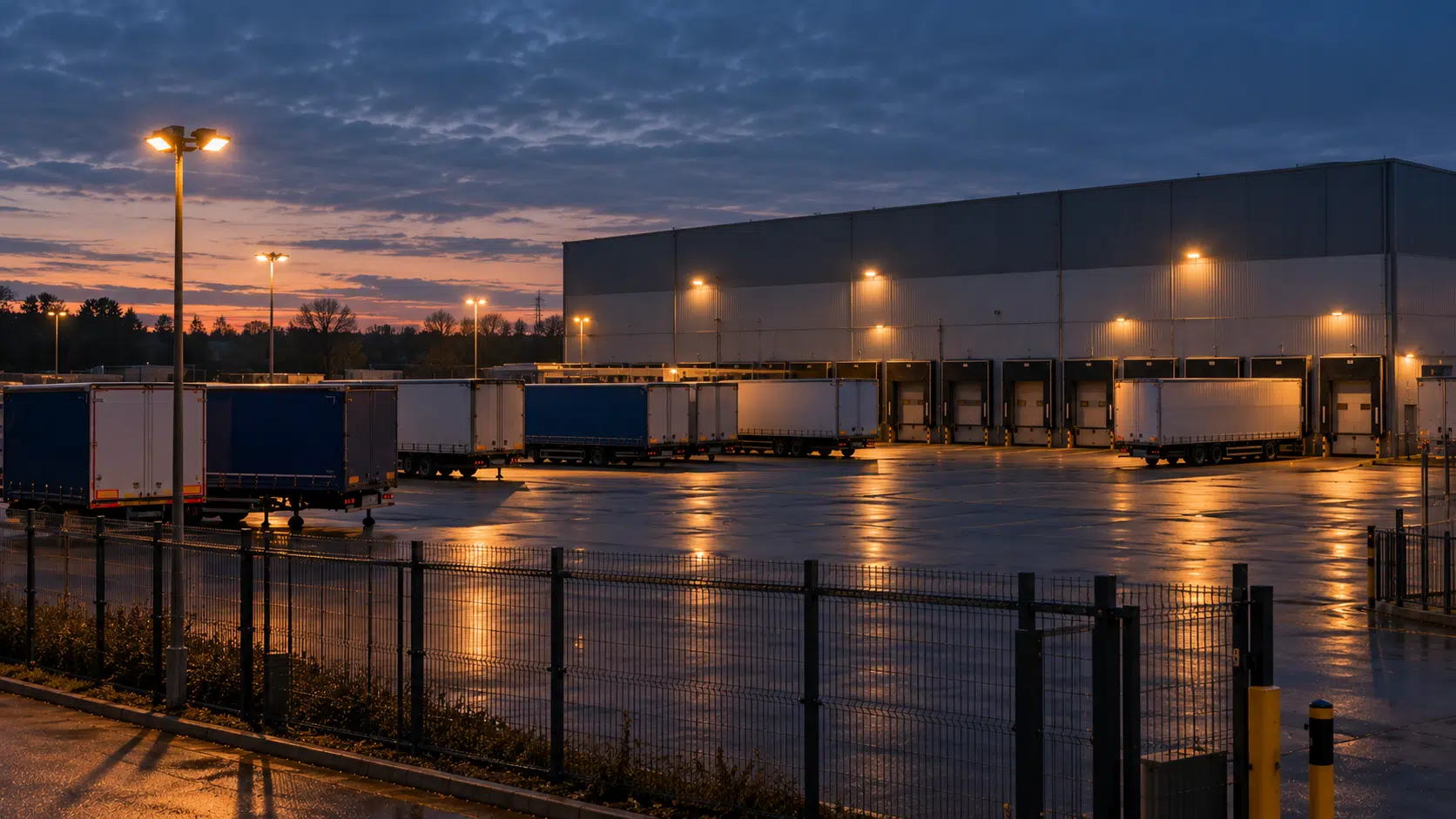
Factories around Kendal — particularly those on business parks or edge-of-town industrial sites — typically include:
- External yards used for storage or vehicle parking
- Loading bays with regular goods-in and goods-out activity
- Multiple buildings or segmented production and storage zones
- Periods of low occupancy overnight and at weekends
Factory security must therefore address both perimeter protection and internal site control, ensuring that only authorised people and vehicles gain access and that vulnerable areas are regularly checked.
How Factory Security Differs from Office or Retail Security
Scale and layout
Factories usually cover larger areas with more access points and blind spots than town-centre premises.
Asset type
Specialist machinery, raw materials, fuel, and stock can have high resale value and may be stored outdoors.
Operational hazards
Industrial equipment, chemicals, and vehicle movements create safety risks if unauthorised individuals gain entry.
Lower natural surveillance
Kendal’s industrial locations may be quieter outside working hours, meaning suspicious activity is less likely to be noticed by passers-by.
Because of this, factory security places greater emphasis on controlled entry points, perimeter integrity, and consistent site oversight.
Crime Patterns Relevant to Factories in Kendal
Industrial crime often follows patterns linked to opportunity and timing rather than random targeting.
Out-of-hours intrusion
Evenings, nights, and weekends are higher-risk periods when sites appear unoccupied.
Theft of materials and equipment
Metals, tools, cables, generators, and fuel can be removed quickly if yards and storage areas are not well secured.
Vehicle-related crime
Vans, trailers, and plant equipment stored on site can be targeted for theft or parts removal.
Trespass and vandalism
Quieter industrial areas may attract unauthorised entry, which can lead to damage, fire risk, or safety incidents.
Understanding these patterns helps businesses focus security measures where they are most effective.
When Factory Risk Is Highest
Risk is not constant throughout the day. It typically increases during:
- Nights and weekends when staffing levels drop
- Holiday shutdowns when sites may appear vacant
- Early-morning or late-night delivery windows
- Shift change periods with higher foot and vehicle traffic
Security planning that reflects these timing factors is more effective than applying the same level of control at all hours.
Industrial-Specific Vulnerabilities in Kendal
Some weaknesses are common across factory sites:
- Secondary gates or rear access points that receive less attention
- Poor lighting in yards or along perimeter fencing
- Inconsistent visitor and contractor sign-in procedures
- Gaps in perimeter checks allowing damage or tampering to go unnoticed
Addressing these vulnerabilities reduces both security incidents and associated safety or liability risks.
Legal and Compliance Requirements for Factory Security in Kendal
Factories are not usually subject to a single law that says they must have security, but they are legally responsible for managing risks on their premises. Security forms part of a broader compliance framework that covers health and safety, liability, fire risk, environmental protection, and data handling.
‘For factory operators in Kendal, Carlisle, the Wirral, and across the wider North West, security is often a practical way of demonstrating that foreseeable risks have been identified and properly controlled.
Health and Safety Duties
Under the Health and Safety at Work etc. Act 1974, employers must ensure, as far as reasonably practicable, the health and safety of employees and others who may be affected by their activities.
In factory environments, this includes:
- Preventing unauthorised access to hazardous areas
- Controlling entry to zones with machinery, vehicles, or chemicals
- Managing contractor and visitor movement safely
- Securing plant and dangerous equipment when not in use
If someone gains access to unsafe areas because site access was poorly controlled, this can become both a safety and legal issue.
Occupiers’ Liability
Under the Occupiers’ Liability Acts, businesses owe a duty of care to people on their premises, including visitors and contractors, and in some cases even trespassers.
Where factory sites have damaged fencing, open gates, or poorly secured areas, the risk of injury claims increases. Demonstrating that reasonable steps were taken to restrict access and maintain site security helps show that the business acted responsibly.
Fire Safety Responsibilities
The Regulatory Reform (Fire Safety) Order 2005 places responsibility on the “responsible person” to manage fire risk in non-domestic premises.
Security supports fire safety by:
- Reducing the risk of unauthorised access and arson
- Monitoring vulnerable areas such as waste storage or fuel compounds
- Helping ensure fire exits and routes remain secure but unobstructed
Security and fire safety planning often overlap in industrial settings.
Control of Contractors and Visitors
Factories in Kendal frequently host delivery drivers, engineers, inspectors, and maintenance teams. Businesses have a duty to manage these visitors safely and know who is on site.
This means having clear procedures for:
- Verifying identity and purpose of visit
- Recording arrivals and departures
- Restricting access to authorised areas only
Accurate visitor records are also important in emergencies and incident investigations.
Insurance Conditions and Risk Management
Although insurance requirements are contractual rather than legal, they strongly influence factory security standards.
Insurers may require:
- Adequate perimeter protection
- Approved locking and alarm systems
- Monitoring or supervision outside working hours
- Evidence of regular site checks
Failure to meet these conditions can affect claim outcomes. From a compliance perspective, security helps demonstrate due diligence and active risk management.
CCTV and Data Protection
Where CCTV forms part of factory security, its use must comply with UK GDPR and the Data Protection Act 2018.
Key requirements include:
- Having a clear purpose for surveillance (such as crime prevention or safety)
- Displaying signage to inform people that recording is taking place
- Avoiding unnecessary coverage of neighbouring property or public areas
- Storing footage securely and limiting access
- Keeping recordings only for as long as necessary
Poorly managed CCTV can lead to data protection complaints and regulatory scrutiny.
Environmental and Hazardous Material Security
Factories that store fuels, chemicals, or other controlled substances must take steps to prevent unauthorised access that could lead to environmental harm or misuse. Secure storage areas and controlled site access help support compliance with environmental and hazardous materials regulations.
Future Direction: Protective Security Expectations
Proposed legislation such as Martyn’s Law indicates a broader move toward clearer expectations on how premises assess and manage risks from serious violence. While most factories in Kendal are unlikely to fall into the highest categories, the direction of travel reinforces the need for:
- Documented risk assessments
- Defined emergency procedures
- Proportionate security planning
Security as Evidence of Responsible Management
For factory operators, security measures provide more than protection — they show that the business:
- Identifies foreseeable risks
- Takes proportionate steps to control them
- Monitors and reviews site safety and security
- Meets insurer and legal expectations
In this way, factory security supports compliance, reduces liability exposure, and strengthens the business’s position if incidents lead to claims, investigations, or regulatory scrutiny.
Costs, Contracts, and Deployment for Factory Security in Kendal
Factory security costs in Kendal depend on site size, risk level, operating hours, and the level of coverage required. Unlike retail or city-centre environments, factory security often focuses on out-of-hours protection, perimeter oversight, and safeguarding high-value assets.
Typical Cost Factors for Factory Security
There is no one-size-fits-all price, but costs are usually influenced by:
Level of coverage required
- Night-only protection is generally less expensive than 24/7 coverage
- Holiday shutdown or temporary cover may be priced at short-term rates
Site layout and complexity
- Large yards, multiple buildings, and several access points increase time and staffing needs
Risk profile
- Sites storing high-value goods, metals, fuel, or plant equipment often require more robust security measures
Location and accessibility
- Edge-of-town or isolated industrial estates may increase response and supervision requirements
Factories often combine physical security measures (lighting, fencing, alarms, CCTV) with on-site oversight to keep costs proportionate.
How Long Deployment Typically Takes
Timeframes depend on urgency and scope:
- Planned security arrangements can usually be organised within a short lead time once site requirements are assessed
- Short-notice or emergency cover may be possible more quickly but may come at a premium
- Larger or higher-risk sites may require site surveys, risk assessments, and agreement on procedures before deployment
Advance planning allows security to be aligned properly with operational needs and insurer expectations.
Common Contract Lengths
Factory security contracts are often structured around operational stability.
Typical arrangements include:
- Rolling monthly agreements for flexibility
- Fixed-term contracts where long-term budgeting and continuity are priorities
- Seasonal or project-based cover for shutdown periods or temporary risk increases
Longer agreements may offer cost stability, while shorter ones offer adaptability.
Notice Periods and Flexibility
Standard notice periods vary by provider and contract type, but businesses should expect:
- Notice requirements for reducing or ending regular coverage
- Agreed terms for scaling services up or down during operational changes
- Clear provisions for urgent adjustments during risk spikes or shutdowns
Transparent terms help avoid disputes and allow security to adapt with the business.
How Wage and Economic Changes Affect Costs
Security services are labour-intensive, so:
- Increases in minimum wage or industry pay rates directly affect pricing
- Inflation influences fuel, supervision, equipment, and administrative costs
- Longer-term contracts may include review clauses to account for economic changes
Understanding these factors helps factories plan realistic long-term budgets.
Insurance and Cost Justification
Effective factory security can support:
- Demonstration of active risk management to insurers
- Reduced likelihood of large claims due to theft, vandalism, or arson
- Better protection of high-value assets and stock
While savings are never guaranteed, insurers often view structured security positively when assessing risk.
Public Sector and Compliance Considerations
Where factories work on public sector contracts or within regulated supply chains, procurement and compliance standards may influence security expectations. Buyers increasingly look for:
- Documented risk assessments
- Clear procedures for site control and incident response
- Evidence that security arrangements are professional and consistent
This makes security part of overall business credibility as well as protection.
Balancing Cost and Coverage
For Kendal factories, the goal is not maximum security at any price, it is proportionate protection that reflects real risks, operational patterns, and financial realities. The most effective arrangements are those that:
- Focus resources on higher-risk times and areas
- Integrate with existing physical security measures
- Remain flexible as production levels and site use change
Done properly, factory security becomes a predictable operating cost that protects far greater financial and operational value.
Training, Operations, and Daily Duties in Factory Security Kendal
Effective factory security depends as much on consistent daily routines and clear procedures as it does on physical measures like fencing or CCTV. For industrial sites in and around Kendal, operations must reflect the realities of large premises, valuable assets, and changing activity levels across shifts.
This section focuses on what security personnel do, why it matters, and how it reduces operational and insurance risk, not on minute-by-minute job detail.
Training Standards Relevant to Factory Environments
Security personnel working at factories are expected to meet nationally recognised licensing and screening standards, but industrial sites often require additional site-specific preparation.
Training and induction typically cover:
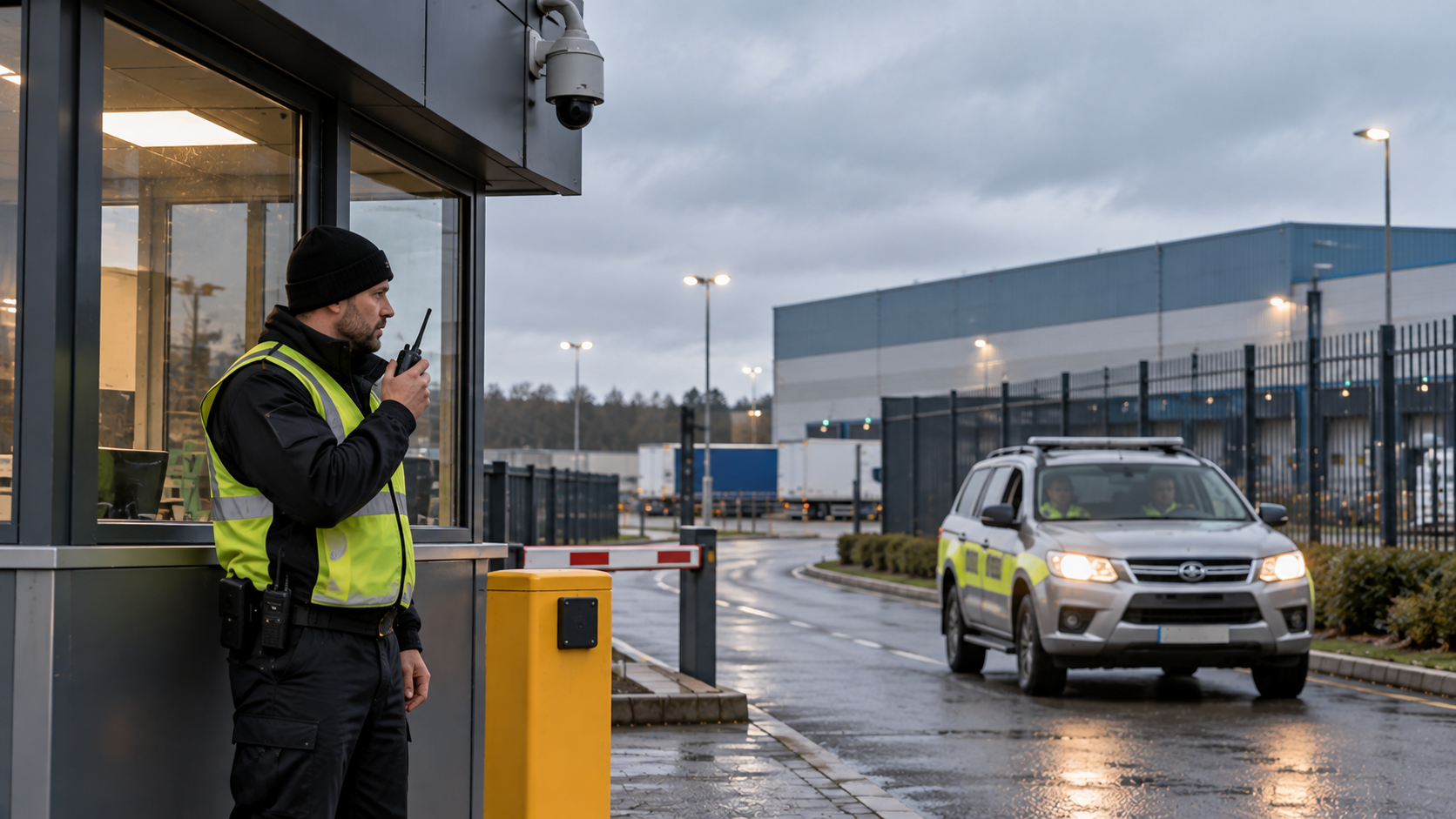
- Access control procedures for staff, contractors, and deliveries
- Health and safety awareness, particularly around moving vehicles, machinery zones, and hazardous areas
- Emergency procedures, including fire, evacuation, and first-response actions
- Conflict management for dealing with unauthorised access or disputes at entry points
- Site-specific instructions reflecting layout, restricted areas, and known vulnerabilities
This ensures security activity supports both protection and safe operations.
Shift Start: Establishing Control
At the beginning of a shift, the priority is to gain a clear understanding of the site’s current status.
This normally involves:
- Reviewing handover notes and incident logs from the previous shift
- Confirming which areas are operational, restricted, or shut down
- Checking that key security systems (access points, alarms, communications) are functioning
A structured start reduces the chance that issues such as a damaged fence panel or faulty gate go unnoticed.
Perimeter and External Checks
Factory security in Kendal often begins with the outer layer of the site.
Early patrols usually focus on:
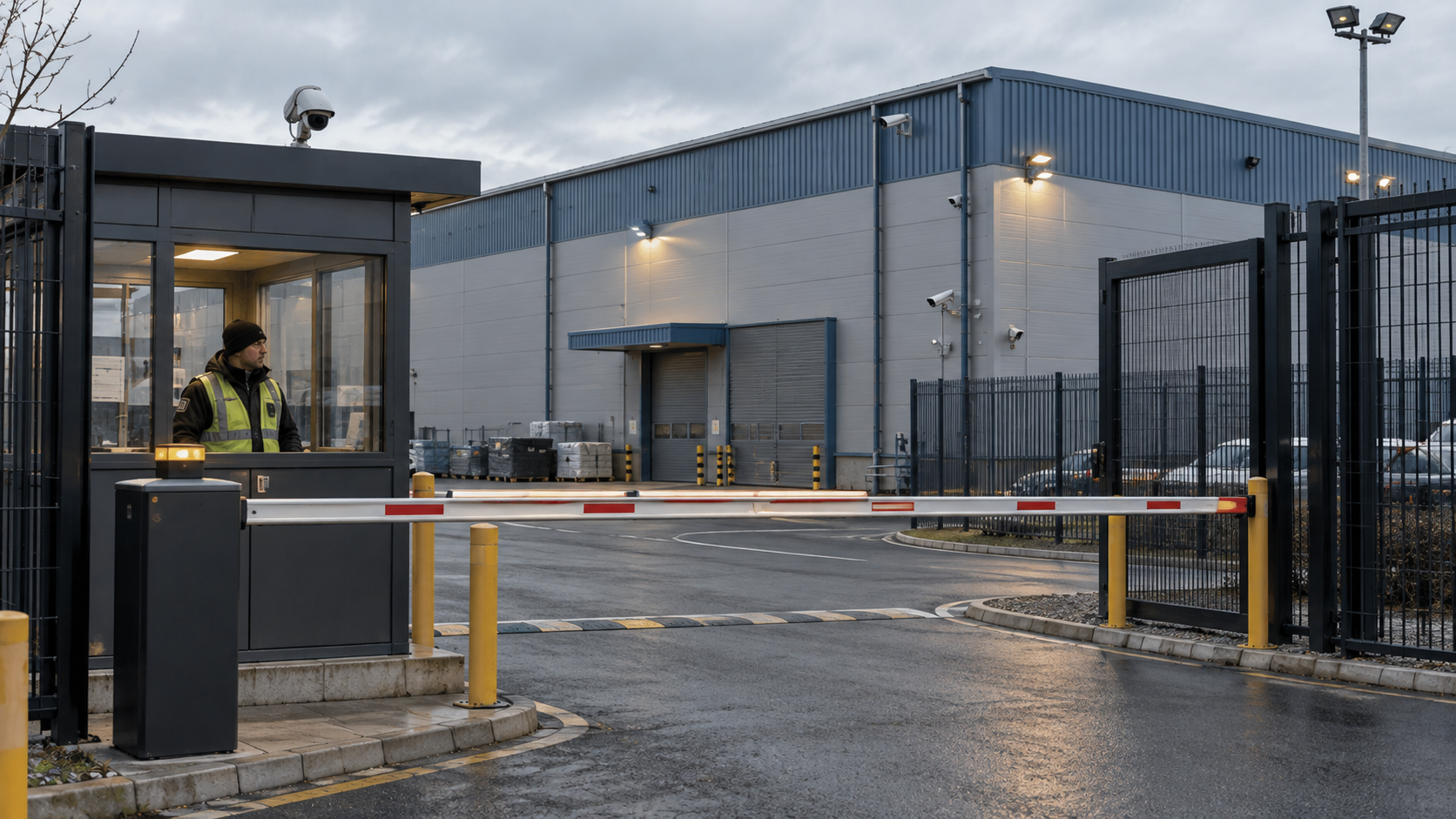
- Perimeter fencing, gates, and barriers
- Yard areas where vehicles, materials, or plant are stored
- Signs of forced entry, tampering, or suspicious activity
External areas are frequently targeted outside production hours, so early detection of problems helps prevent escalation.
Access Control During Operational Hours
When staff, contractors, and deliveries are arriving, the focus shifts to managing who enters and where they can go.
Key operational tasks include:
- Verifying identification and authorisation
- Logging visitor and contractor details where required
- Coordinating with site management for deliveries and collections
- Monitoring restricted or high-risk zones
Controlled access reduces theft risk, prevents unauthorised presence in hazardous areas, and supports traceability if incidents occur.
Patrol Routines and Site Familiarity
Regular patrols are used to maintain awareness across large or segmented sites.
Rather than simply “walking rounds,” effective patrols:
- Check that doors, shutters, and internal access points remain secure
- Confirm that lighting, alarms, and CCTV equipment appear operational
- Identify hazards such as leaks, fire risks, or obstructions
- Provide a visible deterrent in quieter areas of the site
Consistency matters more than frequency alone. Predictable coverage of vulnerable areas reduces opportunity for wrongdoing.
Documentation and Reporting
Accurate records are an important part of factory security, especially for insurance and compliance purposes.
Routine documentation may include:
- Patrol records and times
- Visitor and contractor logs
- Incident and near-miss reports
- Noted defects such as lighting failures or damaged fencing
This paperwork demonstrates that security is active and structured rather than reactive.
Responding to Alarms and Incidents
When alarms activate or suspicious activity is detected, the priority is safe verification and clear communication, not confrontation.
Procedures typically involve:
- Assessing the situation without taking unnecessary personal risk
- Notifying site management and, where appropriate, emergency services
- Preserving the scene and recording details for follow-up
Measured responses help protect staff safety while ensuring incidents are properly handled.
Fire and Safety Awareness
In factory settings, security roles often overlap with basic safety oversight, especially out of hours.
During patrols, attention is commonly given to:
- Obvious fire risks such as blocked exits or combustible materials near ignition sources
- Unusual smells, leaks, or signs of overheating equipment
- Unsafe access or damage that could lead to accidents
Early identification of issues can prevent incidents that would otherwise halt production.
Shift Handover and Secure-Down
At the end of a shift, continuity is key.
Effective handovers include:
- Briefing the incoming team on incidents, risks, or system issues
- Updating logs and reporting outstanding concerns
- Confirming that access points, alarms, and site areas are secured as required
Clear transitions reduce gaps in oversight and ensure emerging risks are tracked.
Aligning Operations with Risk
For factories in Kendal, security operations are most effective when they reflect:
- Busier delivery or dispatch periods
- Night-time and weekend vulnerability
- Planned shutdowns or maintenance periods
Adapting routines to real operational patterns keeps security proportionate while protecting production continuity and site safety.
Performance, Risks, and Operational Challenges in Factory Security (Kendal)
Factory security should be measured by how well it reduces risk, supports safe operations, and protects business continuity not simply by whether incidents occur. For industrial sites in and around Kendal, performance depends on consistency, environmental conditions, and how well security integrates with day-to-day site activity.
Key Performance Indicators (KPIs) That Matter
Useful KPIs focus on risk control and reliability, not box-ticking.
Businesses often track:
- Patrol completion and coverage – whether agreed areas are checked as planned
- Incident detection and reporting quality – how clearly issues are recorded and escalated
- Response times to alarms or suspicious activity
- Access control accuracy – correct logging and authorisation of visitors and contractors
- Reporting of hazards and defects – lighting failures, damaged fencing, unsecured doors
These indicators show whether security is actively reducing exposure rather than passively observing.
Weather and Environmental Conditions
Kendal’s weather can affect both site vulnerability and how security operates.
Heavy rain, frost, and high winds may:
- Reduce visibility across large yards and perimeters
- Increase the risk of slips, trips, and vehicle incidents
- Cause damage to fencing, gates, or temporary structures
- Create darker conditions earlier in the evening during winter months
Security routines may need adjustment during poor weather, with additional attention to lighting, access points, and areas prone to water accumulation or storm damage.
Documenting weather-related observations can also help explain equipment faults or perimeter damage when reviewing incidents.
Health, Fatigue, and Shift Length
Long or poorly structured shifts can reduce alertness, which affects performance in quiet industrial environments where vigilance is critical.
From a client perspective, the key issue is service effectiveness and safety, not internal staffing matters. Fatigue-related risks can include:
- Missed signs of tampering or intrusion
- Slower response to alarms
- Reduced accuracy in logging and reporting
Reasonable shift structures and supervision support consistent performance and reduce the chance of errors that could lead to larger incidents.
Site-Specific Operational Risks
Factory environments present challenges that security activity must account for:
- Large, low-traffic areas where issues can go unnoticed without structured patrols
- Vehicle and plant movement, increasing personal safety risks during checks
- Hazardous materials or processes, where unauthorised access could create serious consequences
- Multiple contractors, making access control more complex
Security performance is stronger when procedures reflect these realities rather than applying generic routines.
Environmental and Regulatory Considerations
Outdoor security activity must also align with broader site responsibilities.
This may include:
- Respecting environmental controls around waste, fuel, or chemical storage areas
- Avoiding interference with monitored zones or compliance-critical areas
- Reporting leaks, spills, or environmental hazards discovered during patrols
While security personnel are not environmental specialists, early reporting can prevent regulatory breaches and costly clean-up or downtime.
Operational Challenges for Kendal Factories
Common challenges in industrial security include:
- Balancing thorough coverage with large site footprints
- Maintaining consistent oversight during long quiet periods
- Ensuring security integrates smoothly with production and logistics schedules
Addressing these challenges requires clear site instructions, realistic coverage expectations, and regular review of how security supports operational priorities.
Measuring Value Beyond Incident Counts
A well-performing factory security arrangement may appear “quiet” and that is often the point. Value is demonstrated through:
- Fewer unexplained losses or damage
- Early detection of maintenance or safety issues
- Clear records supporting insurance and compliance
- Confidence that the site remains controlled outside core working hours
For Kendal factories, performance is ultimately about reducing the likelihood and impact of disruption, not just reacting when something goes wrong.
Technology and Future Trends in Factory Security (Kendal)
Technology is increasingly used to support on-site security, improve visibility across large industrial spaces, and provide better information for decision-making. For factories in and around Kendal, the goal is not to replace physical oversight but to make security more consistent, responsive, and proportionate to risk.
CCTV and On-Site Security Working Together
Modern factory security relies heavily on CCTV, but cameras are most effective when combined with active site oversight.
Integrated systems allow:
- Faster identification of suspicious activity in yards and perimeters
- Verification of alarms before escalating to emergency services
- Recorded evidence for investigations, insurance claims, or disputes
This combination reduces false alarms while ensuring genuine issues are not missed.
Remote Monitoring as a Support Layer
Remote monitoring centres can oversee cameras, alarms, and sensors outside normal operating hours.
For Kendal factories, this can:
- Extend coverage across large or quieter areas of the site
- Provide an additional layer of oversight during nights and weekends
- Support rapid escalation when unusual activity is detected
Remote systems are most effective when paired with clear on-site procedures for response and follow-up.
The Role of AI in Surveillance
AI-enabled analytics are increasingly used to flag unusual patterns, such as movement in restricted areas or activity at unusual times.
In factory environments, AI can help by:
- Highlighting potential intrusions along long perimeters
- Detecting loitering near storage yards or fuel tanks
- Reducing the number of false alerts that require manual checking
However, AI is a support tool. Human judgment remains essential for assessing context and deciding on appropriate action.
Drones and Large-Site Oversight
On large industrial estates or sites with extensive perimeters, drone technology is beginning to play a limited but growing role.
Potential uses include:
- Rapid visual checks of hard-to-reach areas after alarms
- Inspection of roof spaces or long boundary lines
- Post-incident surveys to assess damage or access points
Drone use must follow aviation and privacy regulations and is typically supplementary rather than routine.
Predictive and Data-Led Security Planning
Security planning is becoming more data-informed.
Factories may use:
- Historical incident records
- Alarm activation trends
- Delivery and dispatch patterns
- Seasonal shutdown periods
This helps identify when and where risk is highest, allowing security measures to be focused rather than spread evenly at all times.
Skills and Technology Familiarity
As systems become more advanced, security roles increasingly involve:
- Operating and checking digital access control systems
- Using mobile reporting tools instead of paper-only logs
- Understanding how to verify and respond to automated alerts
This improves accuracy, traceability, and communication with site management.
Environmental and Sustainable Security Practices
Sustainability is becoming part of industrial site planning, and security is included in that shift.
Examples include:
- Use of energy-efficient LED lighting for yards and perimeters
- Solar-powered cameras or sensors in remote areas
- Reducing unnecessary vehicle patrols through smarter monitoring
These measures can lower running costs while maintaining effective coverage.
Preparing for Martyn’s Law
Martyn’s Law, which focuses on protecting public venues from terrorism, is not aimed specifically at factories. However, its emphasis on risk assessment, preparedness, and response planning reflects a broader regulatory trend.
Factories that host visitors, contractors, or events may see increasing expectations around:
- Documented risk assessments
- Clear emergency procedures
- Staff awareness of how to respond to serious incidents
Staying aware of these developments helps ensure industrial sites remain aligned with evolving best practice.
Conclusion
Factory security is ultimately about protecting continuity. For industrial businesses in and around Kendal, the real risk is not just theft or trespass in isolation, but the wider disruption those incidents can cause halted production, missed delivery deadlines, damaged equipment, insurance complications, and safety concerns.
Well-planned factory security creates structure around who can access the site, how vulnerable areas are monitored, and how issues are detected early. It supports insurers, reassures customers and partners, and helps management demonstrate that operational risks are being handled responsibly.
The right approach is rarely the most expensive one. It is the one that reflects the site’s layout, operating hours, asset value, and exposure during quieter periods. When security is aligned with real risks and reviewed as operations change, it becomes a practical part of running a resilient industrial business rather than an afterthought.
Frequently Asked Questions
1. Do all factories in Kendal need 24/7 security?
Not always. Some sites only need coverage during nights, weekends, or shutdown periods. The right level depends on asset value, location, and how exposed the site is outside working hours.
2. Is factory security mainly about preventing theft?
Theft is a key concern, but security also helps prevent vandalism, arson, trespass, and safety incidents that could stop production or lead to liability issues.
3. How does factory security help with insurance?
Insurers often expect businesses to show they are managing risk. Documented security measures, incident reporting, and controlled access can support claims and demonstrate responsible site management.
4. What parts of a factory are usually most at risk?
External yards, storage areas, fuel tanks, vehicle parks, and secondary access points are commonly targeted, especially when they are poorly lit or rarely checked.
5. Does security need to change during factory shutdowns?
Yes. Sites can look vacant during holidays or maintenance periods, which increases risk. Temporary adjustments to security during these times are often sensible.
6. How does visitor and contractor control improve factory security?
Keeping clear records of who is on site reduces unauthorised access, supports health and safety compliance, and provides traceability if something goes wrong.
7. Can technology replace on-site factory security?
Technology such as CCTV and alarms is important, but it works best alongside structured on-site procedures. Systems can detect issues, but people and processes are needed to manage them properly.
8. How often should factory security arrangements be reviewed?
Security should be reviewed whenever there are major operational changes such as new equipment, expanded storage, layout changes, or altered shift patterns and periodically as part of general risk management.
9. What is the biggest mistake factories make with security?
Treating security as a static setup. Risks change with operations, staffing levels, and market conditions, so security needs periodic reassessment to stay effective.
10. Is factory security only important for large industrial sites?
No. Smaller factories can be just as vulnerable, especially if they store valuable materials or are located on quieter industrial estates. Proportionate security is relevant at all scales.