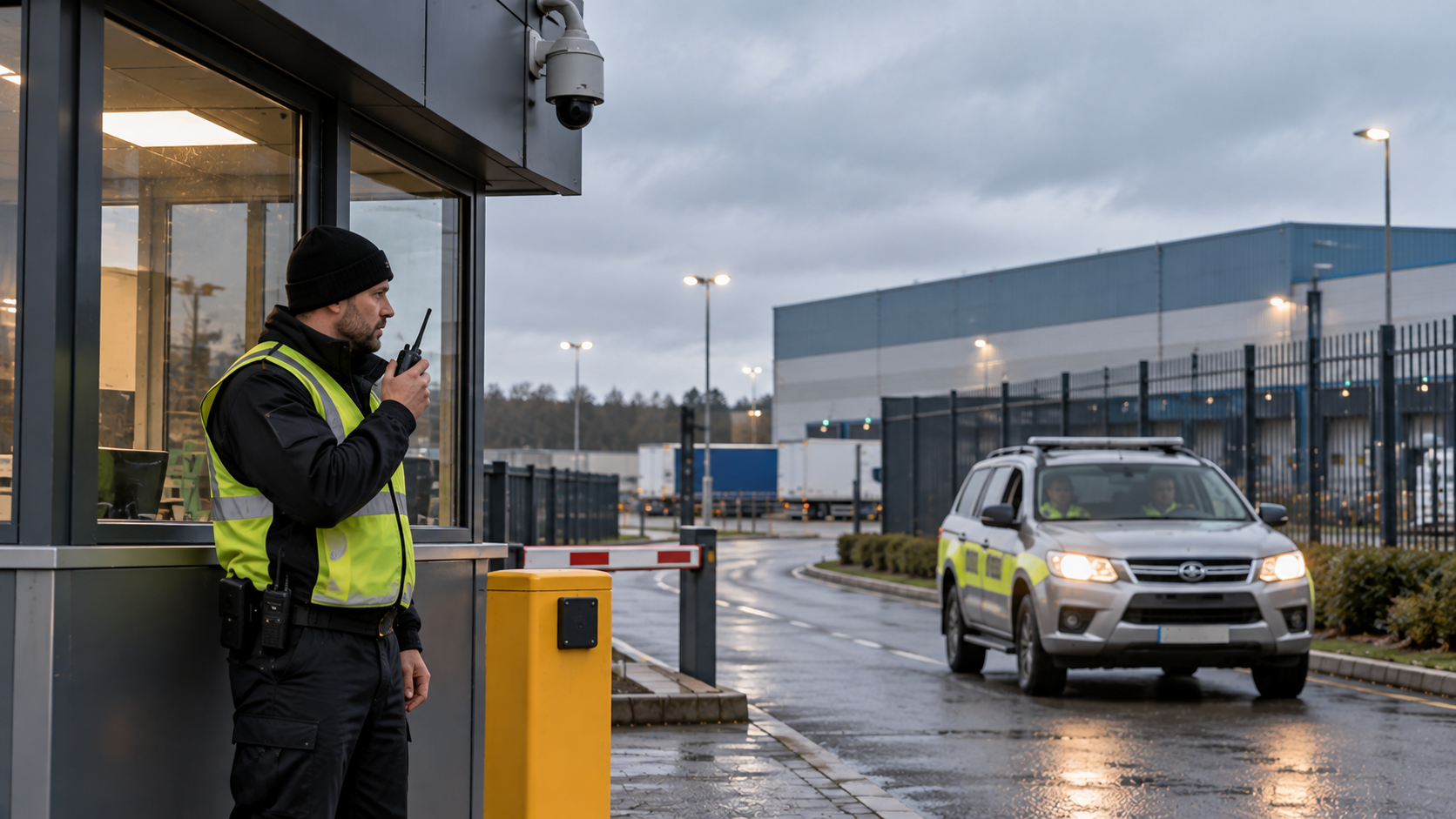
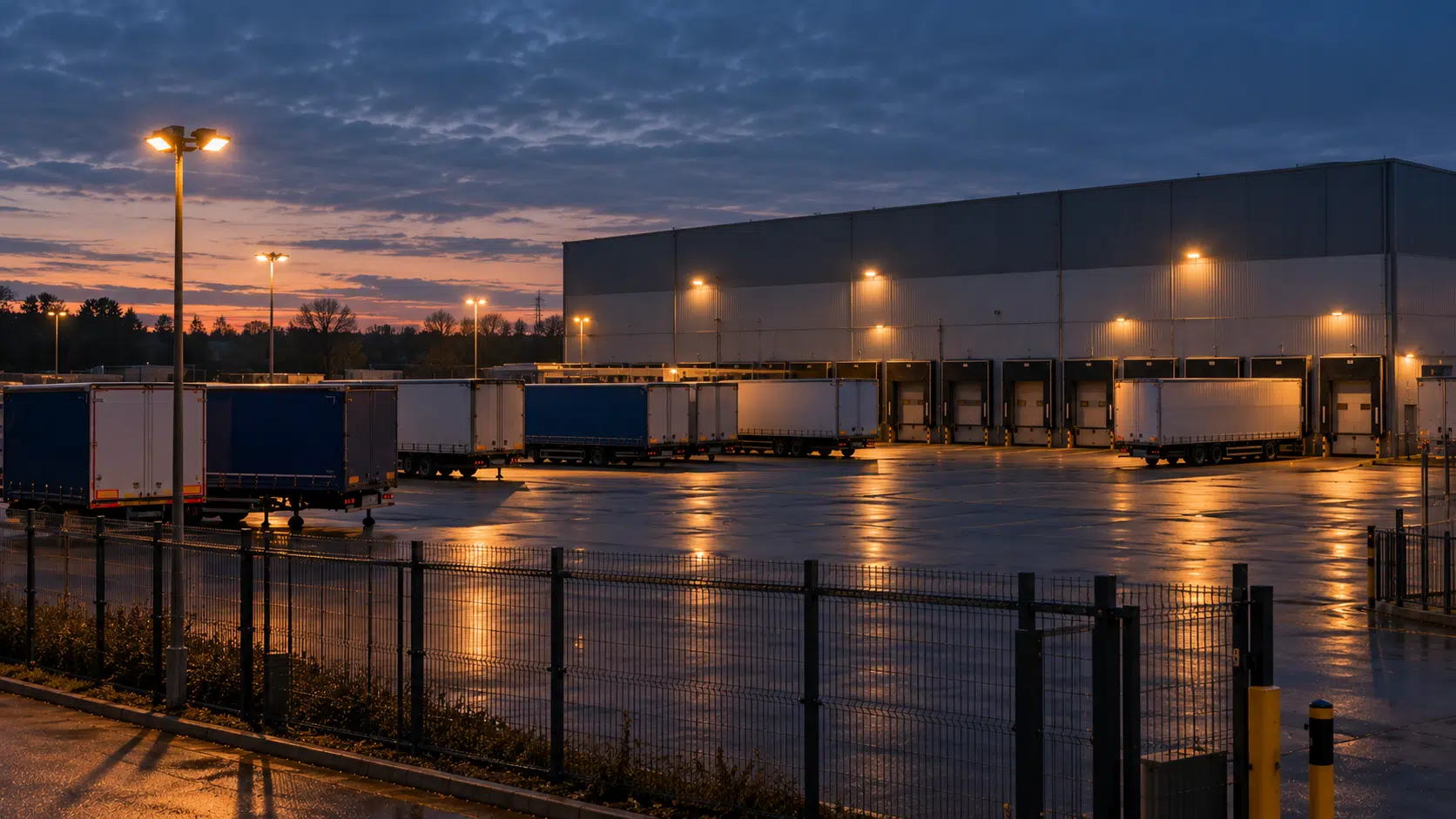
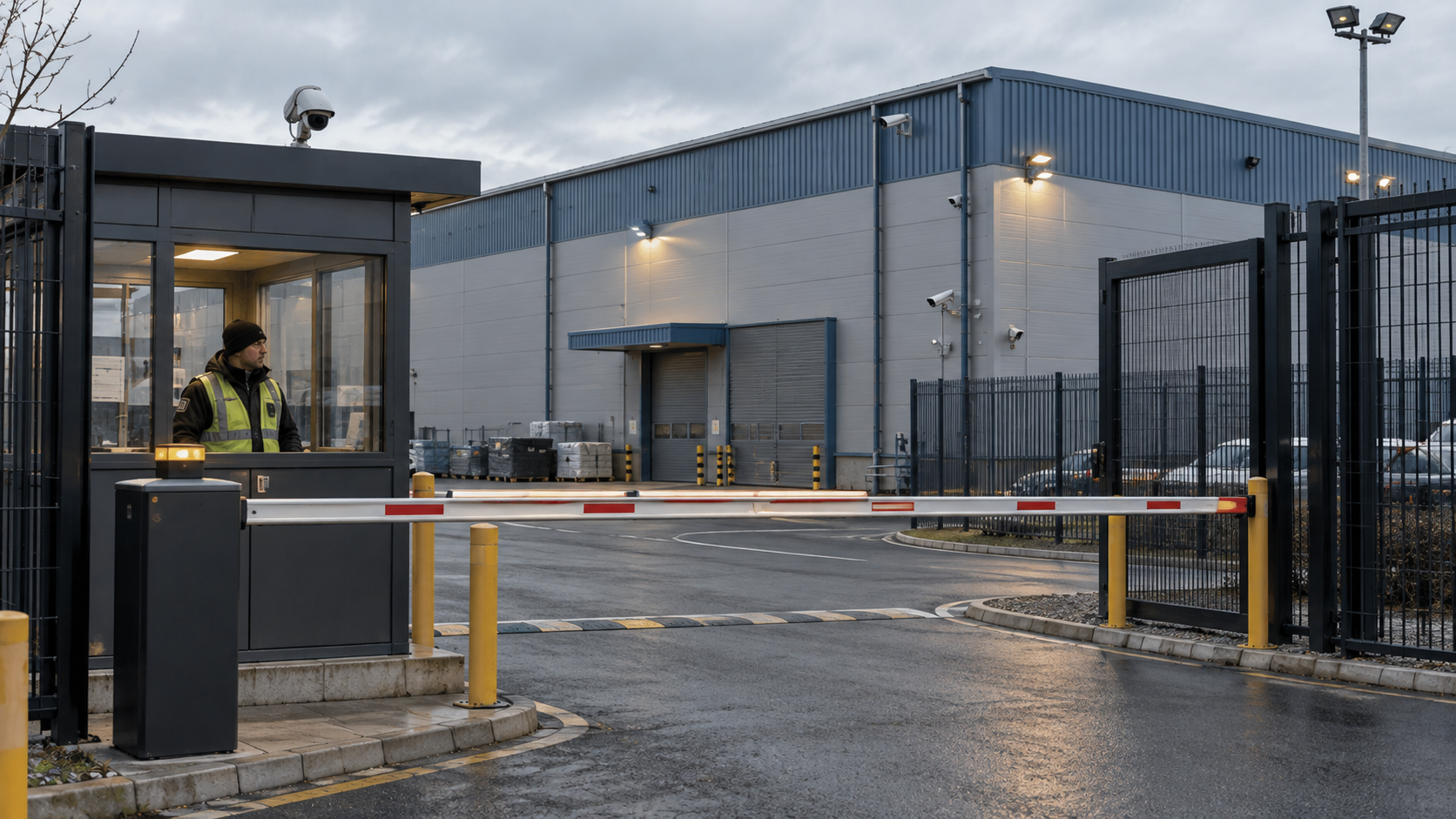
Hertfordshire has a reputation for being tidy, orderly, and low-risk. Many factory owners still lean on that idea. In 2026, that assumption is quietly costing businesses money. Break-ins aren’t dramatic. They are efficient, fast and often planned days in advance.
Rail links and sprawling industrial estates have changed the risk profile, especially around logistics and light manufacturing sites. This is why Hertfordshire businesses need Factory Security is no longer a theoretical question or an insurance box-tick. It’s about continuity. Downtime. Reputation. And knowing that when something goes wrong at night, it doesn’t spiral into a week-long shutdown.
Table of Contents

Understanding Factory Security Basics in Hertfordshire
Factory security in Hertfordshire is shaped less by theory and more by patterns. Real ones. What goes missing, when it happens, and how people get in without being noticed. This is exactly why Hertfordshire businesses need Factory Security to keep coming up in boardrooms that never used to talk about risk at all.
What Factory Security Really Means
Factory security is about controlling movement through complex, active spaces. Offices lock up people and data. Warehouses protect stock in static bays. Factories are different. They mix people, machinery, raw materials, finished goods, and constant motion.
That changes everything. In Hertfordshire, factories deal with:
- High-value metal components and tooling
- Fuel storage and plant machinery parts
- Shared access between production, logistics, and maintenance
Security here isn’t just about stopping entry. It’s about who moves where, and whether that movement makes sense at that moment.
How Hertfordshire’s crime profile shapes factory security planning
Local crime trends in Hertfordshire matter most. Hertfordshire factories don’t see random smash-and-grab theft. Losses are usually targeted and practical.
Common patterns include:
- Metal theft from external storage and skips
- Tool and machinery part removal during low supervision windows
- Fuel siphoning from plant vehicles
- Internal shrinkage linked to weak access controls
Proximity to motorways and freight routes plays a role. Sites near logistics corridors see more organised activity, especially where estates blend light industrial units with distribution yards.
That’s why planning often ties into Criminal Damage & Arson Mitigation rather than just theft prevention.
Highest-risk times for factory theft or intrusion
Timing is rarely accidental. Most incidents cluster around predictable gaps. High-risk periods usually include:
- Night shifts with skeleton staffing
- Weekends and planned shutdowns
- Shift changeovers when responsibility blurs
- Delivery windows when gates stay open longer than intended
Factories that rely on trust alone during these windows tend to discover losses days later, not hours.
Which factory types face the greatest exposure in Hertfordshire
Not all factories carry the same risk weight. The most exposed sites tend to be:
- City-edge industrial zones with fast motorway access
- Mixed-use estates where foot traffic is hard to distinguish
- Sites bordering vacant units or poorly lit boundaries
Standalone manufacturing plants can be safer, but only if perimeter lighting, access zoning, and monitoring keep pace. Isolation cuts both ways.
How shift-based manufacturing changes security needs
Shift work creates gaps humans don’t always notice. Security coverage has to stretch across handovers, not just clock-in times. Problems often appear when:
- Day and night teams assume “someone else is watching”
- Supervisory presence drops between shifts
- Temporary staff use shared credentials
This is where layered security beats reliance on a single guard or system.
Delivery schedules as a hidden access risk
Deliveries are convenient, cover, gates stay open. This could make visitors blend in. Paperwork distracts staff. Risk rises when:
- Multiple suppliers arrive close together
- Drivers access loading areas unescorted
- Temporary passes aren’t reclaimed
Factories near Maylands Business Park Asset Protection zones see this play out often, especially during peak logistics periods.
Shutdowns, holidays, and the false sense of quiet
Empty sites aren’t safer. They are quieter, which makes the location attractive for thieves and intruders. During shutdowns, security needs actually increase:
- Longer response times
- Reduced passive surveillance
- Higher arson and vandalism risk
This is where coordinated planning, often aligned with Hertfordshire Constabulary’s ‘Hotspot’ Coordination, becomes part of best practice rather than overkill.
Legal and Compliance Requirements for Hertfordshire Factories
Factory security in Hertfordshire isn’t just about stopping loss. It’s about staying on the right side of regulation when something goes wrong. And something eventually does. This is where many sites fall into the compliance gap without realising it, especially those reassured by a long incident-free run.
What SIA requirements apply to factory security staff
Any individual carrying out licensable guarding activity must hold a valid licence issued by the Security Industry Authority. That applies whether the guard is static, mobile, or supporting access control on a production site.
Factories typically require:
- SIA Door Supervision or Security Guarding licences, depending on duties
- Ongoing licence checks, not just at onboarding
Oversight under the SIA’s Business Approval Scheme (BAS) Vetting for contractors
Using non-licensed staff is not a grey area. It’s a clear breach.
Penalties for using unlicensed security at industrial sites
This is where directors get caught out. Liability doesn’t stop with the contractor. It sits with the site owner, too.
Penalties can include:
- Criminal prosecution
- Unlimited fines
- Invalidated insurance following an incident
Insurers rarely show sympathy if basic licensing hasn’t been met. They simply walk away.
When DBS checks matter in factory environments
DBS checks aren’t automatic for every factory guard. But they become relevant quickly depending on access. Many of the East of England region sites ensure to check it.
They’re commonly expected where guards:
- Enter staff welfare areas
- Handle controlled goods or sensitive materials
- Work unsupervised during night shifts
- Access internal systems or logs
In practice, most insurers now expect DBS coverage alongside BS 7858 vetting in industrial environments.
Insurance conditions factories are expected to evidence
Insurers don’t just ask if you have security. They ask how it’s governed. Common evidence requests include:
- BS 7858 screening records
- Assignment instructions and site risk assessments
- Incident logs with timestamps
- CCTV and access control audit trails
This is where NICE Investigate Evidence Uplink standards increasingly come into play.
Managing GDPR compliance for factory CCTV and access systems
Factories are busy places, and cameras are everywhere. That creates responsibility. Under the General Data Protection Regulation, sites must:
- Clearly signpost CCTV and ANPR use
- Restrict footage access to authorised staff
- Retain footage only as long as justified
- Log who accesses recordings and why
Casual viewing, unlogged exports and over-retention are the mistakes regulators focus on.
VAT and factory security services
Security services are generally VAT-rated. That includes guarding, monitoring, and mobile patrols. Attempts to reclassify services to avoid VAT rarely stand up to scrutiny, and HMRC audits have become sharper in this area.
Local authority and planning considerations
While there are no unique Cambridgeshire and Hertfordshire style council conditions here, Hertfordshire planning authorities may attach security requirements to:
- New industrial developments
- Mixed-use estates
- High-occupancy manufacturing sites
Lighting, access routing, and CCTV placement are common conditions.
Documents that demonstrate factory security compliance
Well-run factories can produce evidence quickly. Key documents include:
- SIA licence registers
- Vetting and DBS records
- CCTV policies and privacy impact assessments
Health & Safety risk assessments covering lone working and vehicle movements. If it takes days to find them, that’s a warning sign.
How Martyn’s Law will affect large factories and logistics hubs
Martyn’s Law ‘Standard Tier’ Training is not yet mandatory for most factories, but its direction is clear. Large manufacturing sites and logistics hubs with high occupancy will face tighter expectations around preparedness, access control, and incident response planning.
It won’t replace factory security and will expose weak versions of it. Compliance isn’t about paperwork. It’s about being able to prove, calmly and quickly, that you did the right thing before someone else decides you didn’t.
The Cost of Security in Hertfordshire: 24/7 Industrial Cover
Talking about cost makes most factory owners uneasy. Not because security is expensive, but because it’s rarely priced in a simple way.
In Hertfordshire, factory security costs are shaped by how a site actually operates, not by a generic hourly rate. That’s a detail often missed when people ask Why Hertfordshire businesses need Factory Security in the first place.
What drives factory security costs in Hertfordshire
The biggest cost drivers are physical, not theoretical. They usually come down to:
- Site size and perimeter complexity: long fence lines, yards, and blind spots cost more to cover properly
- Number of access points: every gate, shutter, and staff entrance increases monitoring time
- Shift patterns and operating hours: continuous movement means continuous oversight
A compact, daytime-only factory behaves very differently from a multi-acre manufacturing site running through the night.
Cost differences between factory operating models
Not all factories pay the same, even on the same industrial estate. Typical differences appear between:
- 24/7 manufacturing sites, where coverage must remain consistent during nights, weekends, and holidays
- Daytime-only production, where risk concentrates around evenings, shutdowns, and delivery windows
- Multi-tenant industrial estates, where shared boundaries and mixed access raise exposure
Night cover and weekend presence are often the tipping point. That’s when incidents tend to happen, and when insurers look closely at what protection was in place.
Impact of shutdowns and low-activity periods
Quiet periods aren’t cheaper; they are riskier. Planned shutdowns, seasonal closures, or refit phases often require:
Increased patrol frequency
Tighter access control
Clear incident escalation procedures
Security costs rise slightly during these periods, but so does loss prevention value.
Typical factory security costs in Hertfordshire
Most factories budget on an annual basis rather than daily rates. Costs scale with coverage depth rather than just hours. A realistic approach avoids surprise variations later.
What matters more than the number is consistency. Stop-start security almost always costs more in the long run.
How quickly can factory security be deployed
Deployment speed depends on readiness, not urgency. For Hertfordshire factories:
- New site openings can usually be supported within days if layouts and access plans are clear
- Expansions or refits often require phased mobilisation alongside construction schedules
- Temporary risk periods (shutdowns, insurance requirements, incidents) can be covered rapidly with a defined scope
Rushed deployment without planning is where mistakes creep in.
Contract lengths and notice periods
Factory security contracts are rarely short-term. Common arrangements include:
- 12 to 36-month contracts for stable production sites
- Shorter agreements for temporary or transitional periods
Notice periods are typically structured to allow continuity, not disruption. Sudden termination often creates coverage gaps that insurers don’t like.
Inflation and long-term planning
Rising costs affect everything. Factory security is no exception. Inflation and wage pressure influence contract stability, especially for long-term agreements.
Smart factories now:
- Build index-linked review clauses into contracts
- Avoid ultra-low pricing that can’t be sustained
- Prioritise service continuity over marginal savings
This isn’t about staffing numbers. It’s about avoiding mid-contract disruption.
How factory security supports insurance negotiations
Good security reduces friction with insurers. They can ensure no issues arise with them. And also it helps by:
- Supporting favourable terms and renewals
- Strengthening claims defensibility after incidents
- Reducing business interruption exposure
Documented security isn’t a cost. It’s leverage.
Procurement Act 2023 and factory security contracts
For public-facing or publicly funded manufacturing sites, the Procurement Act 2023 adds structure. It places greater emphasis on transparency, value over time, and measurable outcomes.
In practice, that means factory security contracts must:
- Be clearly scoped
- Properly documented
- Justifiable beyond headline price
Factory security spending in Hertfordshire and Bedfordshire isn’t about paying more. It’s about paying once, properly, and not paying again when something breaks through the gaps.
Essential Training and Daily Operational Protocols for Hertfordshire Factory Security
Factory security doesn’t look dramatic when it’s done properly. That’s kind of the point. On a Hertfordshire production site, the real work happens in routines, repetition, and quiet visibility. This is where Why Hertfordshire businesses need Factory Security becomes practical, not theoretical.
What training standards apply in factory environments
Factory security training goes beyond basic guarding. Industrial sites bring hazards, moving plant, and constant vehicle activity into the mix.
At a minimum, security teams are expected to understand:
- SIA role-specific training relevant to guarding activity
- Site-specific induction covering machinery zones and traffic routes
- Health & safety awareness around the plant, yards, and lone working
- Escalation protocols for theft, trespass, and safety incidents
On larger sites, Martyn’s Law ‘Standard Tier’ Training is increasingly referenced as part of preparedness, even before it becomes mandatory.
What happens at the start of a factory security shift
Every shift starts the same way, or it should. Security officers arrive early enough to:
- Receive a verbal and written handover
- Review outstanding issues or alerts
- Check access points, gates, and lighting
- Confirm production schedules and delivery windows
No assumptions. No “it was quiet last night” thinking. Factories change by the hour.
Managing shift handovers on 24/7 factory sites
Handover is where risk sneaks in. A rushed exchange creates blind spots. Effective handovers focus on:
- What moved unexpectedly
- Who was on site late or early
- Any unresolved access issues
- Temporary changes to production or layout
Consistency matters more than detail overload. Missed information costs more than duplicated checks.
Priority checks around machinery, yards, and loading bays
These areas attract attention for different reasons. Security teams don’t interfere with production, but they do observe patterns.
Daily checks usually prioritise:
- Yard perimeters and fence integrity
- Loading bays during delivery peaks
- Parked vehicles and plant after shifts end
- Machinery areas for unauthorised presence
Visibility alone discourages opportunistic behaviour. People behave differently when they know they’re being seen.
What factory security teams actually cover during the working day
Factories always stay open and also have closed times in events. And during this period, intruders try to enter there. This isn’t just the static guarding. The daily coverage includes:
- Perimeter control and access management
- Vehicle and delivery oversight
- Contractor and visitor verification
- Interaction with supervisors and logistics teams
Security becomes part of the site’s rhythm. That familiarity helps spot what doesn’t belong.
Daily reporting and incident documentation
Factories expect records, not stories, in their report. Having clean reports helps them to handle things clearly. Daily reporting typically includes:
- Patrol logs with timestamps
- Access issues or overrides
- Safety observations near machinery or vehicle routes
- Incident reports, even when resolved quickly
This documentation supports audits, insurance, and NICE Investigate Evidence Uplink standards.
Handling incidents without disrupting production
Handling is also one of the vital points for security. The goal is containment of issues and solving, not the chaos. Security teams are trained to:
- Isolate issues away from production lines
- Escalate only when thresholds are crossed
- Coordinate quietly with supervisors
- Avoid unnecessary shutdowns
Most incidents are managed without stopping work. That restraint matters.
Secure-down procedures during shutdowns
Shutdowns change everything in factory security. In those times, they have fewer people. And it raises more temptation for intruders. Secure-down protocols usually involve:
- Reduced access points
- Increased perimeter checks
- Clear escalation thresholds
- Tighter control of keys and passes
Predictability is deliberate. Routine reduces risk better than a sudden reaction. Factory security in Hertfordshire isn’t about heroic intervention.
It’s about being present, being consistent, and knowing the site well enough to notice when something feels off. Most losses are prevented before they become incidents quietly, and without anyone outside noticing at all.
Performance, Risks, and Challenges in Hertfordshire Factory Security
When factory security fails, it rarely does so in a dramatic way. Most of the threats get slips to enter. A gate was left unsecured, and the patrol was delayed. This pattern nobody noticed until it became expensive. This is exactly why Hertfordshire businesses need Factory Security, which isn’t just about presence, but about performance under real conditions.
KPIs that actually matter to factory managers
Not every metric is useful. Factories don’t need dashboards full of noise. They need indicators that connect security directly to operations. The KPIs that tend to matter most include:
- Incident frequency, including near-misses and unauthorised access
- Access breaches, even if no loss occurred
- Downtime is linked to security failures, such as delayed starts or restricted areas
- Response times during out-of-hours periods
Measured properly, these don’t interrupt production. They sit quietly in the background and flag drift before it becomes a problem.
Measuring effectiveness without disrupting production
The best factory security runs almost invisibly. Effectiveness is judged by consistency, not constant intervention. Managers often look for:
- Regular patrol completion without deviation
- Stable access patterns with fewer exceptions
- Declining incident repetition
When reporting starts to spike, something upstream has changed.
Weather exposure and seasonal risks on industrial sites
Weather doesn’t just make guards uncomfortable. It changes site behaviour. Rain, fog, and winter darkness:
- Reduce natural surveillance
- Mask perimeter breaches
- Increase blind spots near yards and fencing
Seasonal pressure also matters. Shorter days mean longer reliance on artificial lighting, and poorly lit perimeters invite testing. Factories near open land or mixed-use estates feel this most.
Fatigue and alertness on overnight coverage
Long nights take their toll. Fatigue isn’t about effort; it’s about attention. On overnight factory security coverage, risk increases when:
- Patrol routes become repetitive
- Alertness drops between scheduled checks
- Environmental cues (noise, light, movement) fade
This isn’t a criticism of individuals. It’s a planning issue. Coverage models need to account for human limits without overcomplicating operations.
Health and safety risks that intersect with factory security
Factory security sits inside the health and safety ecosystem, whether acknowledged or not. Common crossover risks include:
- Vehicle movements in yards during low visibility
- Lone working near active machinery
- Emergency response coordination during incidents
Security teams are often first on scene. That position carries responsibility.
Why poorly planned factory security increases liability exposure
Under-resourced security creates more than gaps, and it creates assumptions. The liability exposure rises when:
- Access controls exist on paper but not in practice
- Incident logs are inconsistent or incomplete
- Patrols are specified without regard to site layout
If something happens, investigators don’t ask whether security was cheap. They ask whether it was adequate.
Insurance and operational consequences of weak coverage
Insurers notice patterns long before claims are made. Poorly planned factory security increases:
- Insurance risk and premium pressure
- Claim disputes due to weak evidence
- Operational disruption following incidents
Service continuity suffers most when coverage is vaguely defined. Ambiguity is expensive.
Managing risk without overengineering security
The answer isn’t more kit or louder alarms, it’s clarity. Clear KPIs, realistic coverage and documented routines.
Factory security in Hertfordshire and Essex works best when it’s designed around how sites actually operate in bad weather, on long nights, during the dull hours when attention slips. That’s where performance is proven.
Technology and Future Trends in Hertfordshire Factory Security
Factory security in Hertfordshire has shifted quietly over the last few years. Not with flashy gadgets, but with systems that sit in the background and nudge humans when something feels off. Urban-industrial areas don’t allow for guesswork anymore. Sites are bigger. Boundaries are shared. Roads are busy at odd hours. That reality has reshaped why Hertfordshire businesses need Factory Security, as answered in practice.
How technology has changed factory security in Hertfordshire
Factories used to rely on eyes, keys, and radios. That still matters, but technology now fills the gaps people can’t cover at scale.
Across large sites, CCTV is no longer a passive recorder. It’s integrated:
- Across yards, perimeters, and internal routes
- Into access control and incident logs
- With remote monitoring centres during low-occupancy hours
The change isn’t about watching more footage. It’s about noticing patterns earlier.
The role of AI in modern factory security
AI analytics don’t replace judgement. They filter noise. In factory environments, AI is commonly used for:
Perimeter breach detection, especially along long fence lines
Unusual movement patterns that don’t match shift activity
After-hours activity where presence should be minimal
This is particularly effective on mixed-use industrial estates, where legitimate movement can easily mask intrusion.
Remote monitoring as a support layer
Remote monitoring works best when it supports, not substitutes, on-site guards. Its real value lies in:
- Escalating issues before patrols arrive
- Confirming whether alarms reflect real activity
- Providing additional eyes during nights, weekends, and shutdowns
On-site presence still matters. Remote teams provide context, not control.
ANPR and access control integration
Vehicle movement tells a story that factories used to miss. ANPR systems now integrate with:
- Gate access logs
- Delivery schedules
- Incident reporting platforms
That integration helps identify:
- Out-of-hours vehicle presence
- Repeated visits without authorisation
- Mismatches between bookings and arrivals
It’s quiet intelligence, not enforcement theatre.
Predictive tools for factory security planning
This is where technology gets genuinely useful. Predictive analytics support:
Risk planning during shutdowns and refits
Seasonal threat modelling
Resource allocation during low staffing periods
Factories that use historical data properly stop reacting and start preparing.
Are drone patrols relevant
Sometimes, but not always. Drone patrols make sense for:
- Very large industrial estates
- Sites with difficult terrain or long perimeters
- Temporary risk periods like construction or expansion
They’re not a daily solution. They’re a situational tool, and overuse quickly becomes inefficient.
Green security practices are emerging in factories
Sustainability is creeping into security decisions, often driven by cost and compliance rather than ethics. Emerging practices include:
- Energy-efficient lighting triggered by movement
- Smarter camera systems that reduce constant illumination
- Reduced vehicle patrol dependency through better fixed coverage
Less fuel. Less noise. Fewer blind spots.
Martyn’s Law and future factory requirements
Martyn’s Law preparedness for large industrial and logistics facilities isn’t about panic planning. It’s about structure.
Larger factories will likely need:
- Clearer access zoning
- Better incident escalation paths
- Improved coordination during high-occupancy periods
Technology will support that shift, but only if it’s tied to real procedures. The future of factory security in Hertfordshire isn’t louder alarms or more screens.
It’s systems that understand how factories actually behave when people are tired, sites are quiet, and the weather’s bad. That’s where technology earns its place.
Conclusion
Factory security in Hertfordshire rarely fails because people don’t care. It fails because the risks changed quietly while the assumptions stayed the same. Sites grew. Shifts stretched. Access became looser. Nothing dramatic until it was.
Understanding why Hertfordshire businesses need Factory Security now means looking past guards and cameras and into how a site actually behaves at 2 am, during a shutdown, or on a wet Sunday evening.
Good security doesn’t shout. It hums in the background, steady and predictable, keeping production moving and problems small. When it’s done right, most people never notice it at all, and that’s exactly the point.
Frequently Asked Questions
Why do factories need different security from warehouses?
We see factories as living sites. People, machines, vehicles, and materials all move at once, so security has to manage behaviour, not just doors.
Is factory security really necessary in Hertfordshire?
Yes, we have seen more organised, quiet theft here than people expect. Especially near transport routes and mixed-use estates.
What times are factories most at risk?
From our experience, nights, weekends, and shift changeovers are when things slip. That’s when patterns break.
Does CCTV alone provide enough protection?
No, we treat CCTV as context, not control. Without people and process, it’s just footage after the fact.
How quickly can factory security be put in place?
If the site is clear on access and operations, we have seen coverage mobilised in days, not weeks.
Will security disrupt production?
It shouldn’t affect your production if it’s done properly. Security blends into the routine and stays out of the way.
Do insurers really care about factory security details?
Absolutely, we have watched claims hinge on logs, patrol records, and access to evidence.
Is factory security mainly about theft?
Not really, we think it’s about continuity of keeping small problems from becoming operational downtime.