Introduction
Factory security in Wales is shaped less by headline crime and more by the way manufacturing and industrial sites operate across the country. From major industrial hubs in Cardiff, Newport, and Swansea to smaller production facilities in North and rural West Wales, factories often sit on mixed-use estates, shared access roads, and sites with varying levels of visibility and emergency response coverage. These environments handle high-value machinery, raw materials, vehicle movements, and time-sensitive production, meaning even small disruptions can have a direct impact on output, delivery commitments, and contractual performance. Recent government figures show that around 26% of all business premises in England and Wales experienced at least one crime in the past year, with theft, burglary, and vandalism among the most common incidents affecting commercial operations.
For many Welsh businesses, factory security is therefore about operational continuity, compliance, and risk control rather than simply deterring theft. Effective security measures support controlled access, protect staff and visitors, safeguard plant and stock, and help businesses meet insurer and regulatory expectations. When properly integrated, factory security becomes part of everyday site management reducing the likelihood of incidents, supporting health and safety responsibilities, and helping ensure production runs without costly interruption.
Understanding Factory Security Basics in Wales
What Factory Security Involves in a Welsh Manufacturing Setting
Factory security in Wales focuses on protecting industrial sites where high-value machinery, raw materials, and ongoing production processes are present. From manufacturing hubs in Newport and Swansea to other key industrial areas, protection strategies must address site-specific risks. Unlike retail or office security, factory protection centres on controlling access, safeguarding assets, and maintaining operational continuity. Measures often include monitored entry points, perimeter oversight, visitor and contractor management, and structured patrol routines aligned with shift patterns.
How Wales’ Industrial Risk Profile Shapes Security Needs
Security planning in Wales is influenced by geography and site location as much as crime levels. Factories located on remote industrial estates, coastal production zones, or rural business parks may face slower emergency response times and reduced natural surveillance. In contrast, sites near major cities like Cardiff or Newport must manage higher traffic volumes and shared access routes. Security strategies therefore adapt to local visibility, accessibility, and operational exposure.
Time-of-Day Risk Patterns on Factory Sites
Risk levels on Welsh factory sites often change with operating hours rather than crime trends alone. Early-morning openings, late-night production runs, and weekend shutdowns can create periods where supervision is reduced but valuable assets remain accessible. Security measures are typically adjusted around these operational windows to maintain oversight when exposure is highest.
Site-Specific Vulnerabilities in Welsh Warehousing and Production Areas
Factories and warehouses in Wales frequently include large yard spaces, loading bays, secondary access doors, and storage zones that are difficult to supervise continuously. These areas can become vulnerable during busy delivery periods or when daylight drops. Security planning focuses on visibility, controlled vehicle movement, and structured patrol routes to manage these risks.
Managing Anti-Social Behaviour Near Industrial Estates
Some industrial areas, particularly those near urban centres, can experience trespass, loitering, or opportunistic intrusion after working hours. Visible security presence, perimeter checks, and controlled access points help deter low-level disruption before it escalates into property damage or safety concerns.
Why Asset Value and Production Scale Increase Security Demand
As Welsh factories invest in automation, specialist equipment, and higher-value stock, the financial exposure tied to a single incident increases. Even minor interference can disrupt production schedules, delay deliveries, and affect insurance claims. Security is therefore scaled in line with asset value and operational dependency, not just local crime headlines.
Day vs Night Security Priorities on Factory Sites
During the day, security typically focuses on access control, contractor management, and vehicle coordination. At night or during shutdown periods, priorities shift to perimeter protection, monitoring of idle plants, and rapid incident detection. Effective factory security adapts to how the site functions at different times.
How Seasonal and Event Activity Can Affect Industrial Areas
Large public events, holiday shutdowns, or seasonal production peaks can change traffic patterns around industrial zones. Reduced staffing during holidays or increased deliveries during peak periods may temporarily increase exposure, requiring short-term adjustments in oversight and monitoring.
Transport Links and Their Impact on Factory Security
Factories located near major motorways, ports, or rail freight routes benefit from logistical advantages but may also experience higher levels of transient movement around industrial estates. Security planning considers how easy access routes can affect both legitimate operations and potential unauthorised entry.
Economic Growth and Industrial Expansion in Wales
Wales has seen continued development in advanced manufacturing, food production, and logistics. As sites expand into additional units or increase output, their physical footprint and workforce size grow. Security arrangements often evolve alongside this expansion to ensure new access points, buildings, and operational zones remain controlled.
Legal and Compliance Requirements for Factory Security in Wales
SIA Licensing Requirements for On-Site Security Personnel
Any security officers working on factory sites in Wales must hold the appropriate Security Industry Authority (SIA) licence when their role includes activities such as manned guarding, access control, or patrol duties. Employers are responsible for verifying licences and ensuring staff are legally authorised to carry out security functions.
Penalties for Using Unlicensed Security Staff
Deploying unlicensed security personnel in licensable roles can lead to significant fines, legal prosecution, and reputational damage. Businesses that knowingly use unlicensed operatives may also face insurance complications if an incident occurs.
DBS Screening and Staff Vetting Standards
While not always a legal requirement, Disclosure and Barring Service (DBS) checks are widely expected for security staff working in sensitive or high-risk industrial environments. Many insurers and compliance frameworks treat background screening as a standard risk-reduction measure.
Employer and Public Liability Insurance Obligations
Security providers operating on Welsh factory sites must hold appropriate public liability, employer’s liability, and professional indemnity insurance. Adequate cover protects both the client and the provider if an incident leads to injury, damage, or financial loss.
Data Protection Responsibilities for CCTV and Monitoring
Factories using CCTV as part of their security arrangements must comply with UK GDPR and the Data Protection Act. This includes clear signage, controlled access to footage, secure data storage, and defined retention periods.
VAT Treatment of Security Services
Most physical security services supplied to factories are subject to VAT at the standard UK rate. Businesses should ensure contracts clearly outline VAT treatment and maintain proper invoicing records for accounting compliance.
Local Authority and Site-Specific Safety Regulations
Factories in Wales must ensure security practices align with local authority safety expectations, particularly where sites interact with public roads, shared estates, or construction activity. Traffic control, gate management, and safe pedestrian movement are common compliance considerations.
Documentation Demonstrating Security Compliance
Reputable security arrangements are supported by risk assessments, assignment instructions, training records, incident logs, and audit trails. This documentation helps demonstrate due diligence during insurer reviews, inspections, or investigations.
Security Provider Accreditation and Industry Standards
Many Welsh factories choose providers accredited to recognised standards such as ACS (Approved Contractor Scheme) or ISO management systems. These certifications indicate structured processes, training standards, and regulatory compliance.
Employment Law and Working Time Regulations
Security staffing on factory sites must comply with UK employment law, including working time limits, rest breaks, and overtime rules. Fatigue management is particularly important where 24/7 site coverage is required.
Right-to-Work and Workforce Compliance
Security providers must verify that all personnel have the legal right to work in the UK. Post-Brexit workforce checks are now a routine compliance requirement across the security industry.
Security’s Role in Health and Safety Compliance
Factory operators remain responsible for site safety even when areas are unattended. Security teams often support emergency access control, hazard reporting, and safe perimeter management, helping businesses meet their broader health and safety duties.
Collaboration with Local Police and Emergency Services
Effective factory security often involves clear communication channels with local police forces and emergency responders. This supports faster response, coordinated incident handling, and better risk awareness for higher-value or higher-risk sites.
Use of Crime Data and Risk Intelligence
Security planning may be informed by regional crime patterns, industrial estate incident reports, and insurer risk assessments. Using verified risk data helps factories deploy proportionate and defensible security measures.
Business Crime Reduction and Estate-Level Cooperation
Factories located on shared industrial estates may participate in local business watch or crime reduction partnerships. Shared intelligence and coordinated reporting can strengthen security across multi-occupancy environments.
Costs, Contracts, and Deployment of Factory Security in Wales
Typical Cost Structures for Factory Security Coverage
Factory security costs in Wales vary depending on site size, number of access points, shift patterns, and risk level. Continuous 24/7 guarding carries a significantly different cost profile compared to targeted night coverage or weekend patrols. Rural locations may also influence pricing due to travel time and staff availability.
Timeframes for Mobilising Factory Security Services
Deploying security at a Welsh factory can take anywhere from a few days to several weeks, depending on the level of vetting, site-specific training, and operational planning required. High-risk or complex facilities often need longer preparation to ensure officers understand site procedures and safety requirements.
Common Contract Lengths for Factory Security Provision
Many factory security contracts in Wales run on 12, 24, or 36-month terms. Longer contracts often allow for more stable staffing, consistent training, and better cost control, while shorter agreements may be used during transitional periods such as refurbishments or temporary production increases.
Notice Periods and Contract Exit Terms
Standard notice periods in factory security agreements typically range from one to three months, depending on the scale of deployment. Clearly defined exit terms help ensure smooth transitions without leaving the site exposed during handover periods.
Impact of Wage Increases on Security Service Costs
Rising wage expectations within the UK security sector directly influence factory security pricing. Increases to minimum wage levels, pension contributions, and holiday pay obligations can raise hourly charge rates, especially for round-the-clock industrial deployments.
Inflation and Long-Term Pricing Considerations
Inflation affects fuel, uniforms, equipment, and administrative overheads, all of which contribute to the overall cost of security services. Many Welsh factory security contracts now include annual review clauses to manage economic fluctuations over longer agreements.
Insurance Benefits Linked to Professional Security
Well-structured factory security arrangements can support insurance compliance and risk reduction, which may help stabilise or lower premiums over time. Insurers often look favourably on documented patrols, controlled access procedures, and incident reporting when assessing industrial site risk.
Public Sector Procurement and Regulatory Influence
Factories operating under public sector frameworks or supplying government contracts may need security providers that comply with formal procurement standards and transparency requirements. These rules influence contract structure, reporting standards, and supplier accreditation expectations.
Training, Operations, and Daily Duties in Factory Security Across Wales
Core Training Standards for Factory Security Officers
Security personnel working at factories in Wales, particularly in industrial areas such as Cardiff, are typically trained in industrial site safety, access control, emergency response, and incident reporting. Many roles also require awareness of health and safety regulations, fire procedures, and safe working practices around machinery and vehicle movements.
Shift Start Procedures and Site Familiarisation
At the beginning of each shift, security officers review handover notes, confirm staffing coverage, and familiarise themselves with current site conditions, planned deliveries, contractor activity, and any operational changes that may affect security routines.
Initial Site Checks on Arrival
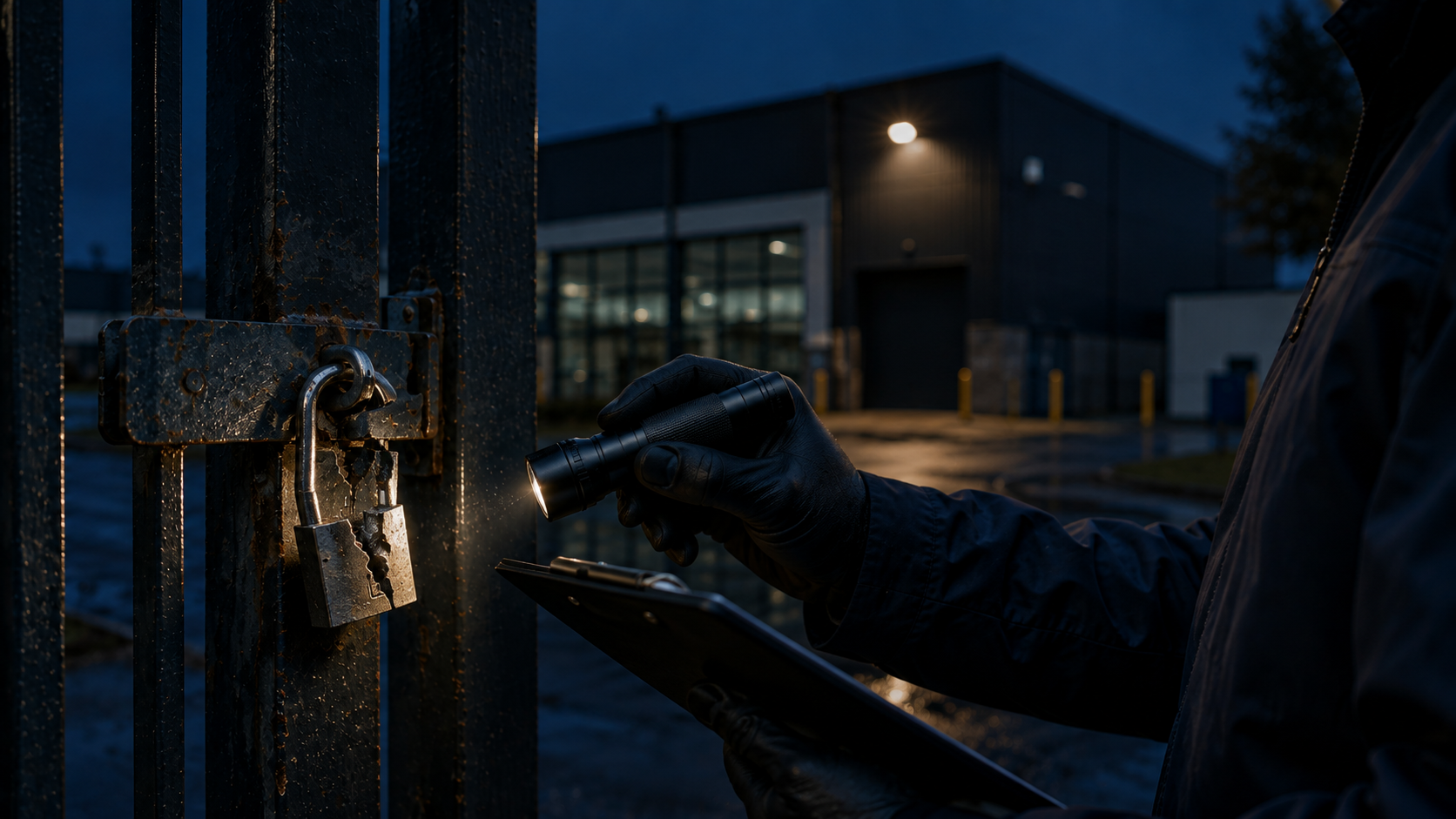
Early checks usually focus on perimeter integrity, gate status, alarm panels, and any overnight incident reports. Officers ensure access points are secure and verify that no unauthorised entry or damage occurred outside operating hours.
Structured Shift Handover Processes
Clear handovers between outgoing and incoming officers ensure continuity. This includes reviewing incident logs, key movements, access issues, and any temporary security measures introduced during the previous shift.
Routine Patrol Frequency and Coverage
Patrol patterns are structured around site size, risk level, and operational hours. Officers may patrol hourly or at varied intervals to check vulnerable areas such as storage zones, yards, plant rooms, and secondary entrances.
Priority Perimeter and Yard Inspections
Perimeter fencing, gates, vehicle barriers, and yard areas are key focus points. Officers look for damage, tampering, or obstructions that could affect visibility or allow unauthorised access, especially during low-light hours.
Daily Logbooks and Reporting Duties
Security staff maintain detailed records including patrol times, access control activity, incidents, equipment checks, and contractor movements. Accurate logs support both operational oversight and insurance documentation.
Equipment and System Functionality Checks
At shift start, officers confirm that radios, body-worn devices (if used), CCTV monitors, alarm systems, and access control panels are functioning correctly and report any faults immediately.
Alarm Response Procedures
If alarms activate, officers follow site-specific escalation protocols. This may include verifying the trigger source, conducting safe investigations, contacting supervisors, or liaising with emergency services when required.
Visitor and Contractor Access Management
All visitors and contractors are logged, issued passes where required, and directed according to site rules. Officers ensure temporary workers follow designated routes and remain within authorised areas.
CCTV Monitoring and Visual Checks
Where CCTV is in place, officers conduct visual reviews of key cameras, ensuring critical coverage areas such as entrances, yards, and loading bays remain visible and unobstructed.
Internal Access Point Verification
Doors linking production, storage, and administrative areas are checked to ensure they remain secure, properly controlled, and not being used as informal shortcuts.
Incident Briefing from Previous Shifts
Officers review earlier incidents to understand recurring issues, vulnerable times, or areas requiring additional monitoring, helping maintain continuity in risk management.
Fire and Safety Awareness During Duty
Security personnel remain alert to blocked fire exits, unsafe storage, or hazards noticed during patrols, reporting concerns to site management as part of wider safety responsibilities.
Lighting and Visibility Inspections
External lighting around car parks, yards, and perimeters is checked regularly, as poor lighting can reduce visibility and increase vulnerability during night operations.
Supervisor Communication and Check-Ins
Officers maintain scheduled communication with supervisors or control rooms, providing status updates, incident reports, and confirmation of patrol completion.
Emergency Procedure Familiarisation
Security teams are expected to understand site evacuation plans, assembly points, and emergency contact structures to support coordinated responses.
Utility and Infrastructure Tamper Checks
Routine patrols may include checks of plant rooms, generators, fuel tanks, and service areas for signs of interference or safety risk.
Post-Patrol Documentation Requirements
After each patrol, officers log observations, unusual activity, maintenance issues, and security concerns, ensuring traceable documentation for review.
End-of-Shift Secure-Down Procedures
Before shift ends, officers verify that access points are locked, alarms set where required, keys accounted for, and reports completed to maintain site protection between shifts.
Shift Patterns in Continuous Factory Operations
Factories operating around the clock often use rotating shifts, night coverage, or hybrid patrol models to ensure consistent security presence aligned with production schedules.
Response Expectations in Industrial Areas
Security officers act as the first point of response on site, assessing situations quickly and escalating to management or emergency services when necessary to minimise disruption and risk.
Performance, Risks, and Challenges in Factory Security Across Wales
Key Performance Indicators for Factory Security Effectiveness
Factories in Wales typically assess security performance using KPIs such as patrol completion rates, incident response times, access control accuracy, reporting quality, and attendance verification. The focus is not just on presence, but on whether security activity actively reduces risk and supports operations.
Impact of Weather on Factory Security Operations
Welsh weather can influence security effectiveness, especially at outdoor-heavy industrial sites. Heavy rain, high winds, or fog can reduce visibility, CCTV clarity, and perimeter patrol effectiveness, while icy conditions may affect response times and safe movement around large yards.
Recording Environmental Conditions During Patrols
Security teams often include weather and site conditions in patrol logs when visibility or access is affected. Documenting these factors helps explain irregularities, supports incident investigations, and demonstrates due diligence in maintaining site oversight.
Effects of Long Shifts on Security Performance
Extended or overnight shifts can affect alertness, concentration, and reaction times. Fatigue may reduce patrol thoroughness or delay response, which is why structured breaks, rotation, and supervision are important in continuous factory environments.
Mental Wellbeing Considerations for Night Security Staff
Night workers often operate in quieter, isolated environments, which can increase stress or fatigue. Employers increasingly support wellbeing through reasonable shift scheduling, access to support channels, and regular supervisory contact to maintain morale and performance.
Environmental and Safety Regulations Affecting Outdoor Patrols
Outdoor patrols must align with workplace safety expectations, including safe access routes, adequate lighting, PPE use, and risk assessments for weather or terrain hazards. Security activity should never compromise site safety compliance.
Operational Fatigue and Its Risk Implications
Fatigue doesn’t just affect individuals, it increases operational risk. Reduced vigilance can lead to missed hazards, slower alarm responses, or incomplete patrol coverage, making workforce management a core part of overall site security effectiveness.
Workforce Retention Challenges in Industrial Security Roles
Across Wales, retaining experienced security staff can be challenging due to shift demands and remote site locations. High turnover can impact consistency, site knowledge, and reporting standards.
Retention Strategies Supporting Stable Security Coverage
To maintain performance continuity, many security providers focus on fair scheduling, ongoing training, supportive supervision, and clear communication. Stable staffing improves familiarity with site operations, leading to better risk awareness and reporting quality.
Technology and Future Trends in Factory Security Across Wales
How Technology Is Reshaping Factory Security Operations
Technology has significantly changed how factories across Wales manage risk. Modern systems now provide real-time visibility, automated alerts, and digital reporting, allowing security teams to focus on response, access control, and operational support rather than purely observational tasks.
Post-Pandemic Shifts in Industrial Site Security Practices
Since COVID-19, factories have adapted security procedures to support controlled access, visitor pre-authorisation, and reduced unnecessary movement around sites. Security teams increasingly help manage contractor scheduling, controlled entry processes, and health-related site protocols alongside traditional security duties.
AI-Assisted Surveillance in Industrial Environments
AI-enabled CCTV analytics now help identify unusual movement patterns, perimeter breaches, or out-of-hours activity more quickly. These tools improve detection speed but still rely on human judgement for verification, escalation, and response.
Remote Monitoring as a Support Layer for On-Site Security
Remote monitoring centres provide after-hours oversight, alarm verification, and escalation support for Welsh factories, especially those in rural areas. This creates a layered approach where technology enhances awareness while on-site teams manage physical control and intervention.
Use of Drones for Large or Remote Industrial Sites
Drone technology is beginning to support perimeter inspections, roof surveys, and wide-area checks on large estates where ground patrols take significant time. While not a replacement for personnel, drones can increase coverage and improve situational awareness in expansive or hard-to-access areas.
Predictive Risk Analysis for Security Planning
Factories are increasingly using data from incident logs, access records, and operational schedules to identify recurring risk periods. This helps align security presence with real exposure windows such as shift changes, shutdown periods, or high-value delivery times.
Evolving Training and Skill Requirements for Security Personnel
As systems become more advanced, security staff require stronger digital literacy, incident reporting skills, and familiarity with integrated monitoring platforms. Understanding health and safety procedures, access control software, and emergency coordination is becoming as important as traditional guarding skills.
Sustainable and Low-Impact Security Practices
Environmental responsibility is influencing security planning across Wales. Examples include energy-efficient lighting, electric patrol vehicles, and smarter patrol routing to reduce fuel use. Security now plays a role in supporting broader ESG (Environmental, Social, Governance) commitments.
Future Regulatory Changes Affecting Factory Security
Evolving protective security legislation may impact factories that include public interfaces, visitor facilities, or shared commercial spaces. Security planning is increasingly expected to demonstrate clear procedures, risk awareness, and coordinated emergency response capabilities.
Conclusion: Factory Security as an Operational Safeguard
Factory security in Wales is shaped less by isolated incidents and more by the realities of how industrial sites function every day. From large manufacturing hubs in South Wales to remote production facilities in rural areas, factories operate in environments where access control, asset protection, and site safety must work alongside production schedules, contractor activity, and logistics demands.
When security is aligned with operational needs, it becomes a support function for continuity rather than a reactive measure. Effective factory security helps reduce disruption, supports compliance with insurance and safety expectations, and strengthens overall site control. The goal is not maximum restriction, but proportionate, reliable protection that allows Welsh manufacturers to operate confidently and consistently.
FAQs: Factory Security in Wales
When do factories in Wales typically introduce professional security measures?
Often during operational changes such as extended shift patterns, installation of new machinery, increased stock levels, or expansion into additional buildings. Transitional periods tend to increase exposure.
Do insurers expect physical security at manufacturing sites in Wales?
In many cases, yes. Insurers may require visible security measures for sites operating overnight, holding high-value plants, or located in areas with limited passive surveillance. Reporting standards also influence claim outcomes.
How do contractors increase factory security risk?
Contractor activity can introduce temporary access routes, unfamiliar personnel, and movement between zones that are not normally linked. Without structured control, this can weaken access procedures.
Can factory security be limited to nights or shutdown periods?
Yes. Many factories use risk-based deployment, focusing security coverage on higher-exposure periods such as nights, weekends, or maintenance shutdowns rather than maintaining full-time guarding.
What kind of reporting should factories expect from security teams?
Factories should receive structured incident logs, patrol records, access reports, and attendance verification. Clear documentation supports compliance, internal reviews, and insurance requirements.
How does factory security support health and safety responsibilities?
Security personnel help monitor safe access routes, identify hazards during patrols, manage emergency response coordination, and ensure only authorised individuals enter controlled areas.
How can multi-entrance factory sites manage access risks effectively?
Through controlled entry points, visitor and vehicle logging, scheduled patrol verification of secondary doors, and consistent enforcement of access procedures.
Does CCTV remove the need for on-site security personnel?
No. CCTV improves visibility but does not provide physical response, decision-making, or deterrence. Human presence remains essential for managing incidents and maintaining control.
How often should factory security arrangements be reviewed?
At least annually, and whenever operational changes occur such as new production lines, building alterations, staffing shifts, or revised insurance requirements.