The UK student housing sector is changing rapidly in 2026. Student halls are no longer just places where young people sleep between university lectures. Instead, they are vibrant living communities where hundreds of young adults interact every day. Because of this, student welfare directly impacts your brand reputation and your property occupancy rates.
Today, accommodation providers face immense pressure to keep sites completely safe while tightly managing operational budgets. A common trap is replacing physical personnel with remote CCTV monitoring. While digital tools seem highly cost-effective on paper, virtual eyes cannot replace real-world protection. Ensuring absolute safety requires a proactive approach. Physical student accommodation security guards remain the absolute cornerstone of a property’s duty of care.
The Passive Trap of Remote CCTV Monitoring
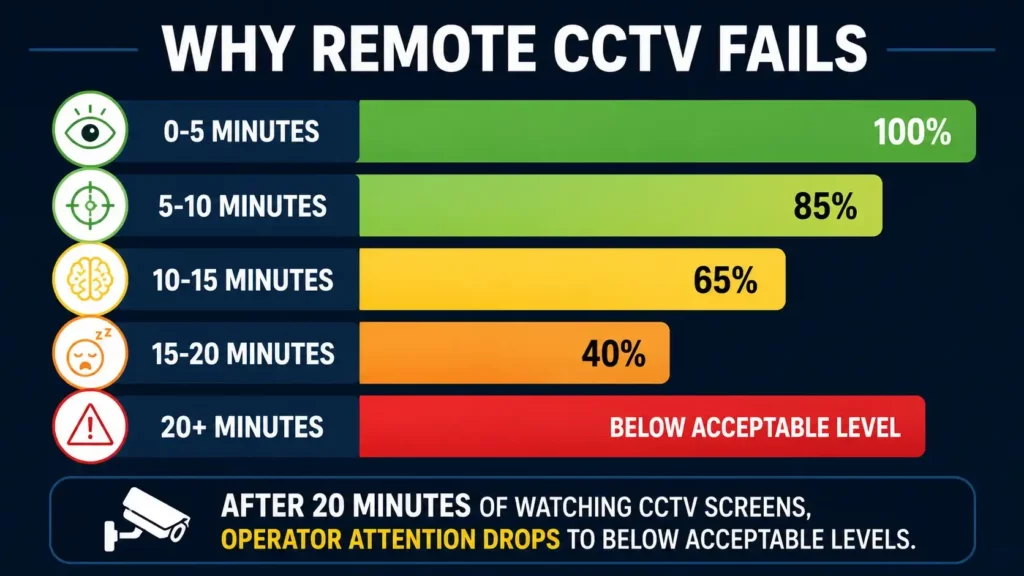
Many property managers view digital cameras as a complete, standalone security solution. This is a dangerous mistake. Cameras are excellent record-keepers, but they are entirely passive by nature. They record crimes as they happen, but they do not stop them.
A remote operator sitting in a control room miles away can easily watch a break-in or a physical fight. However, they cannot step out of the video screen to physically stop the threat or protect a resident.
The time gap during an ongoing incident is highly dangerous for several specific reasons:
- The Detection Delay: The remote CCTV system or an AI motion sensor flags an unusual movement at the perimeter.
- The Verification Stage: A remote operator looks at the live video feed to confirm it is a real crime and not a false alarm caused by animals or wind.
- The Communication Chain: The operator logs the incident and calls the local emergency services or a mobile patrol unit.
- The Dispatch Windows: The local police force logs the call and dispatches a vehicle based on current traffic and their own priority levels.
This entire timeline takes far too long. A simple argument or an opportunistic break-in can escalate into a major crisis within minutes. By the time emergency help arrives, the physical damage is already done.
Furthermore, digital technology always suffers from permanent physical limits.
- Blind Spots: Every building layout has corners, shadows, and architectural pillars that clever criminals easily exploit to avoid camera lenses.
- Lighting Issues: Poor night-time lighting or sudden glare from vehicles can hide a trespasser’s face completely, rendering video evidence useless.
- System Failures: Bad weather, power surges, or Wi-Fi dropouts can disconnect your entire video feed without warning.
- Criminal Adaptation: Sophisticated intruders know these technical flaws well. They easily bypass motion recognition tools by wearing dark clothing, covering their faces, or tracking camera rotation schedules.
Relying only on digital feeds leaves your premises completely exposed to experienced trespassers. These gaps have severe financial consequences. According to the Save the Student Accommodation Survey findings, roughly 5% of UK students experience a break-in or burglary while at university, often during high-risk moving windows like Freshers’ Week. Passive cameras simply cannot react fast enough to protect these high-value tech devices from fast-moving opportunists.
Proactive Protection: The Power of Physical Guards
Physical guards offer instant conflict resolution that technology simply cannot match. Student blocks face a unique set of daily operational challenges.
Here are the primary issues that on-site guards resolve instantly:
- Noise Complaints: Large gatherings can disturb surrounding residents. A physical guard can visit the room immediately to handle the issue.
- Anti-Social Behaviour: Confrontations in communal areas require a firm, authoritative presence to prevent escalation.
- Alcohol-Fueled Disputes: Night-time arguments can turn physical quickly. On-site staff can step in immediately to separate individuals safely.
- Unauthorised Guests: Tailgating through security gates is common. Physical guards catch unauthorised visitors at the door.
A digital camera speaker cannot reason with a rowdy crowd of students. A trained guard, however, can diffuse trouble in seconds. They use professional verbal de-escalation skills to calm situations down before things get out of hand.
An on-site presence also acts as a massive psychological deterrent. Opportunistic thieves target student halls to steal high-value assets.
Criminals actively target sites where they can spot the following items easily:
- High-end laptops and tablets left near communal windows.
- Smartphones and expensive audio equipment.
- Expensive e-bikes and electric scooters parked in courtyards.
These criminals actively search for soft targets that only use cameras. Visible, physical security patrols completely disrupt their plans. When criminals see active, uniformed guards walking the grounds, they choose to move away to easier locations.
Furthermore, on-site teams act as emergency first-responders for non-criminal crises. Student accommodation issues are rarely limited to crime. To mitigate these dynamic hazards effectively, many operators invest in professional manned guarding options to maintain a physical safety anchor overnight. When a burst water pipe strikes at 3 AM or a medical emergency occurs, an on-site guard provides immediate first aid, guides panicked students, and coordinates directly with local emergency rescue services.
Consider how an on-site guard handles non-criminal emergencies:
- Plumbing Failures: A burst water pipe at 3 AM can ruin an entire floor of rooms. Guards can locate the stopcock instantly and isolate the leak.
- Fire Alarms: Alarms require a swift, organised evacuation to prevent panic. Guards manage the assembly points and check fire panels.
- Medical Emergencies: Accidents happen overnight. An on-site guard provides immediate first aid and keeps the patient calm.
- Emergency Services Liaison: When ambulances arrive, guards open access gates and direct emergency services straight to the exact room.
The Human Element: Reassurance and Mental Health
Safety is the number one priority for families. Sending a child away to university for the first time is highly stressful for parents. Parents want to know their children are safe around the clock.
Having residential security guards on-site 24/7 provides massive benefits to your business:
- Boosts Brand Trust: Parents favour accommodation providers who invest in physical safety assets.
- Drives Student Bookings: Higher safety ratings translate directly into higher occupancy rates year after year.
- Justifies Premium Rates: Safety is a core value that parents are entirely willing to pay extra for.
- Reduces Tenant Turnover: Students who feel safe and supported are far more likely to renew their tenancies for the next academic year.
Modern guards handle multiple responsibilities seamlessly by stepping into front-of-house roles. For instance, teams deployed through an accredited security company in Sheffield can operate a multi-functional desk during vulnerable night hours. They manage secure parcel deliveries, monitor access gates, and assist students with late-night key lockouts, blending hospitality with high-level protection.
A front-of-house guard provides several vital administrative benefits:
- Managing main desks during vulnerable evening, night, and weekend hours.
- Handling secure parcel deliveries and organising student mailrooms.
- Monitoring electronic access gates and verifying visitor logbooks.
- Assisting students who suffer from late-night key lockouts and reducing management call-out costs.
This dual-role system makes security look helpful, professional, and deeply welcoming rather than intimidating to young residents.
Student life also brings major mental health challenges. Young residents face intense exam stress, social isolation, and severe anxiety away from home. On-site staff notice small changes in human behaviour that remote cameras completely miss.
A friendly guard can spot a vulnerable student who is visibly distressed in a common area. They provide basic human reassurance, offer a listening ear, and report wellness concerns back to accommodation managers. This human touch protects lives and supports student mental health daily.
Compliance 2026: Meeting Strict Duty of Care Standards
The legal landscape for student accommodation is stricter than ever before in 2026. Under Martyn’s Law legal regulations, large residential blocks face clear, strict mandates for public protection. Property managers must have actionable plans to deal with severe threats and public safety emergencies.
AI software and remote cameras are completely unable to execute a live emergency plan during a crisis.
Here is exactly what remote cameras cannot do during a major safety breach:
- They cannot physically lock down building entry doors to keep an active intruder out.
- They cannot clear communal courtyards or direct panicked crowds away from danger zones.
- They cannot provide instant, life-saving first aid to injured individuals on-site.
- They cannot communicate real-time exit instructions face-to-face to confused students.
On-site personnel are entirely mandatory to run these emergency steps correctly. Physical guards keep your business legally compliant and keep your residents alive.
Creating a Blended Security Ecosystem
This debate does not mean you should throw away your digital technology. The absolute best security strategy blends human assets with advanced tech tools. You must use software to support your physical team rather than replace them.
An effective blended ecosystem works through specific, cooperative actions:
- Extended Vision: Use digital cameras to monitor distant perimeter walls and fence lines across large sites.
- Targeted Dispatch: When a camera spots an issue, the system alerts the on-site 24-hour security guards immediately.
- Rapid Intervention: Your physical team marches directly to the exact problem area to stop the issue before it grows.
- Comprehensive Evidence: The combination of live guard intervention and high-quality camera footage provides bulletproof evidence for any future legal needs.
This hybrid approach maximises your total defensive coverage while keeping your operational costs efficient.
Conclusion
Digital screens can observe a crisis, but they can never solve it. True protection demands fast, decisive human intervention. Do not risk student safety, negative reviews, or massive compliance fines by relying solely on video feeds.
Protect your student community today. Contact our expert team at Region Security Guarding for a professional site risk assessment. Our specialists will audit your current layout, reveal hidden blind spots, and build a tailored safety strategy that safeguards your assets, secures your revenue, and keeps your residents protected around the clock.
Frequently Asked Questions
1. Why is on-site security better than remote CCTV monitoring for student accommodation?
On-site security provides immediate physical intervention and conflict de-escalation, whereas remote monitoring is entirely passive and suffers from dangerous emergency response delays.
2. How do student accommodation security guards assist with legal safety compliance?
Guards physically execute mandatory emergency protocols like Martyn’s Law by initiating building lockdowns, directing crowd evacuations, and coordinating face-to-face with emergency services.
3. What is concierge security in student housing?
It is a dual-role service combining building protection with hospitality, such as managing desks overnight, handling parcel deliveries, and resolving late-night key lockouts.
4. Can remote CCTV monitoring fully protect a student residence from theft?
No, cameras record incidents passively and have permanent blind spots. Physical guards are necessary to actively deter opportunists from targeting student belongings.
5. What is the most effective security strategy for large student halls?
A blended ecosystem where perimeter cameras instantly flag risks and feed live data to on-site guards, allowing rapid physical deployment to neutralise threats.