The truth is, crime isn’t spread evenly, and a single headline number rarely tells the full story. Sometimes figures jump just because police change how they record things, not because the streets suddenly became more dangerous overnight.
This guide cuts through the noise. It looks at where the pressure really sits in our city, and what businesses and residents can actually do about it. It is written for Liverpool, by someone who knows the streets, not just the statistics. No heritage tours, no generalisations. Just the practical steps you can take.
Liverpool's Crime Rate Compared to Other Major UK Cities
Liverpool sits mid-table among England’s major cities on recorded crime, around 100 offences per 1,000 residents, below Manchester and Birmingham, above Leeds. The ranking is the least useful thing about it. Two cities can share the same rate and have nothing else in common, because the offences cluster in particular wards rather than spreading evenly across the map.
|
City |
Crime rate per 1,000 residents |
|
Manchester |
~153 |
|
Birmingham |
~116 |
|
Leeds |
~115 |
|
Liverpool |
~99.8 |
I stick to the official ONS and police.uk data to keep comparisons consistent, but even those numbers only tell you half the story. You’ll read plenty of articles pointing out that violence isn’t the defining risk here, and they’re right. The city’s murder rate sits at 5.3 per 100,000 over the past five years, a fraction of Birmingham’s 86 or Manchester’s 49.
But broad city-wide averages don’t help you if you own a shop on Church Street. While other guides stop at the city-wide stats, I’m looking at the hyper-local commercial reality. In specific town-centre wards, the crime rate spikes well past 200 per 1,000, double the city average. Whether Liverpool is safe for your business depends entirely on which postcode you trade in, not how we rank nationally.
What Does the Latest Crime Data Show for Liverpool Businesses?
Shoplifting has almost doubled since the pandemic, and business robbery figures are distorted by a change in police classification. Those are the two headline facts a Liverpool business owner needs to understand.
Merseyside Police recorded 10,419 shoplifting incidents in 2025/26, up from 5,415 in 2020/21, a 92% increase in five years. The BBC’s analysis put the year-on-year rise at 10.9%, more than 1,000 additional incidents. The Liverpool Business Improvement District estimates that only about 10% of shoplifting cases are reported at all, which means the recorded figure is the visible fraction of a much larger problem.
Business robbery rose 139% in the same period, but Merseyside Police changed how it classifies those offences during the year. Some of the increase is a reporting artefact. The force’s annual accounts say so. Treat the shoplifting figure as the reliable signal, and the business robbery figure as a number that needs context before it is used.
Which Crimes Affect Liverpool Businesses Most?
Shoplifting, burglary, vandalism, vehicle theft, and violence against staff. Those five account for the bulk of business crime in Liverpool, and they are the ones worth planning around. Each has a different pattern, and each needs a different response.
|
Crime type |
What the data shows |
Where it concentrates |
|
Shoplifting |
10,419 incidents in 2025/26, up 92% since 2020/21 |
City Centre North, Church Street, New Mersey Retail Park |
|
Burglary |
Fell 10% across Merseyside in 2025/26 |
Low outcome rate: only 8.25% of cases result in a charge |
|
Vandalism |
Targeted incidents; city-centre office damage exceeded £25,000 in one attack |
City centre, Baltic Triangle |
|
Vehicle theft |
16.8 offences per 1,000 cars, 1.39× the England and Wales rate |
City centre, industrial estates |
|
Violence against staff |
Linked to shoplifting; retail workers face repeat abuse |
City-centre retail, late-night closing |
The human cost is documented. Gary Wakefield, who runs Lili Bizarre fancy dress shop on Tarleton Street, now hires at least two security guards in the run-up to Halloween, a cost he did not used to carry. He described an incident where a man brought his 14-year-old son into the shop as a decoy to steal a costume. Merseyside Police’s Ch Insp Chris Ruane said the force had introduced digital evidence-gathering to free officer time, and urged businesses to flag unsatisfactory responses for review.
How Do Protests and Demonstrations Affect Liverpool Businesses?
Do protests actually affect Liverpool businesses? The evidence from the last two years says yes: lost trading hours, staff safety concerns, and the cost of closing at short notice. This is not hypothetical; it has happened on our streets, with real financial consequences.
The most recent example happened in June 2026 during a far-right march on County Road in Walton. The vast majority of shops, cafes, and pubs shuttered their doors for the day to stay safe. As reported by the Liverpool Echo, one business owner expected to lose around £800 by closing on what should have been one of her busiest days, and feared reopening on the Monday because she didn’t know what damage the area might sustain. Eight people were arrested during the demonstration.
But the impact goes back further. The 2024 riots left a deep scar, culminating in the destruction of the Spellow Hub library. The economic shockwaves were immediate. During that period of unrest, Retail Gazette reported that UK high street footfall fell 4.8% week-on-week, and dropped by 12.9% in Northern England alone.
For a business in a protest-affected area, the practical questions are whether to open, how to secure the premises if you do, and what your insurance covers. It’s a lot easier to answer those in advance than on the morning of a protest.
Where Are Liverpool's Key Commercial Areas, and What Risks Do They Face?
Liverpool’s business risks are not evenly spread. The city centre, the Baltic Triangle, Speke and Garston, and the port and logistics belt each carry a different profile. Treating them as one “Liverpool” problem is how security budgets get wasted.
|
Area |
Dominant risk |
What drives it |
|
City centre |
Shoplifting, violence against staff, vandalism |
High footfall, concentrated retail, late-night economy. City Centre South averaged over 400 crimes a month through late 2025 and early 2026. |
|
Baltic Triangle |
Construction-site theft, vacant property |
The development boom leaves empty sites holding “millions of pounds’ worth of tools, metals, and heavy machinery” overnight. A running shop was ransacked for £71,000 in stock in November 2025. |
|
Speke and Garston |
Industrial-estate crime, anti-social behaviour |
Garston recorded 84 crimes within half a mile of Speke Road in June 2025. A dispersal zone was introduced in October 2026 after gangs set fires and intimidated residents. |
|
Port and logistics |
Organised cargo crime, trailer theft |
Liverpool’s warehouse and port concentration makes it a target. TAPA EMEA recorded 5,865 cargo crime incidents in the UK between October 2023 and September 2025. |
The Baltic Triangle is the one most often misread. It looks quiet, but the construction pipeline means high-value materials sit on site overnight. That is a theft problem, not a footfall problem. Speke and Garston are the opposite: lower footfall, but a steady industrial-estate risk that rewards perimeter control and vehicle checks. The port belt is organised-crime territory, where the loss is a container, not a crate.
THE AD CARD CTA:
Is your business protected against local security risks?
Get tailored security solutions, professional SIA-licensed officers and reliable protection for your premises.
How Can Liverpool Businesses Protect Their Premises and Staff?
A business security plan should start with the risk specific to the site, not with a product. The measures below are grouped by business type.
Retailers: Front-of-house presence and incident reporting come first. A visible officer changes the calculation for a shoplifter before they enter, and staff need a clear procedure for challenging a theft and logging every incident. The risk does not end when the shop empties: one person alone with the cash after the shutters drop is the picture to avoid, because the highest risk hour in most Liverpool shops is the twenty minutes around closing. Where a camera is not enough, manned guarding is the layer that intervenes and de-escalates in real time.
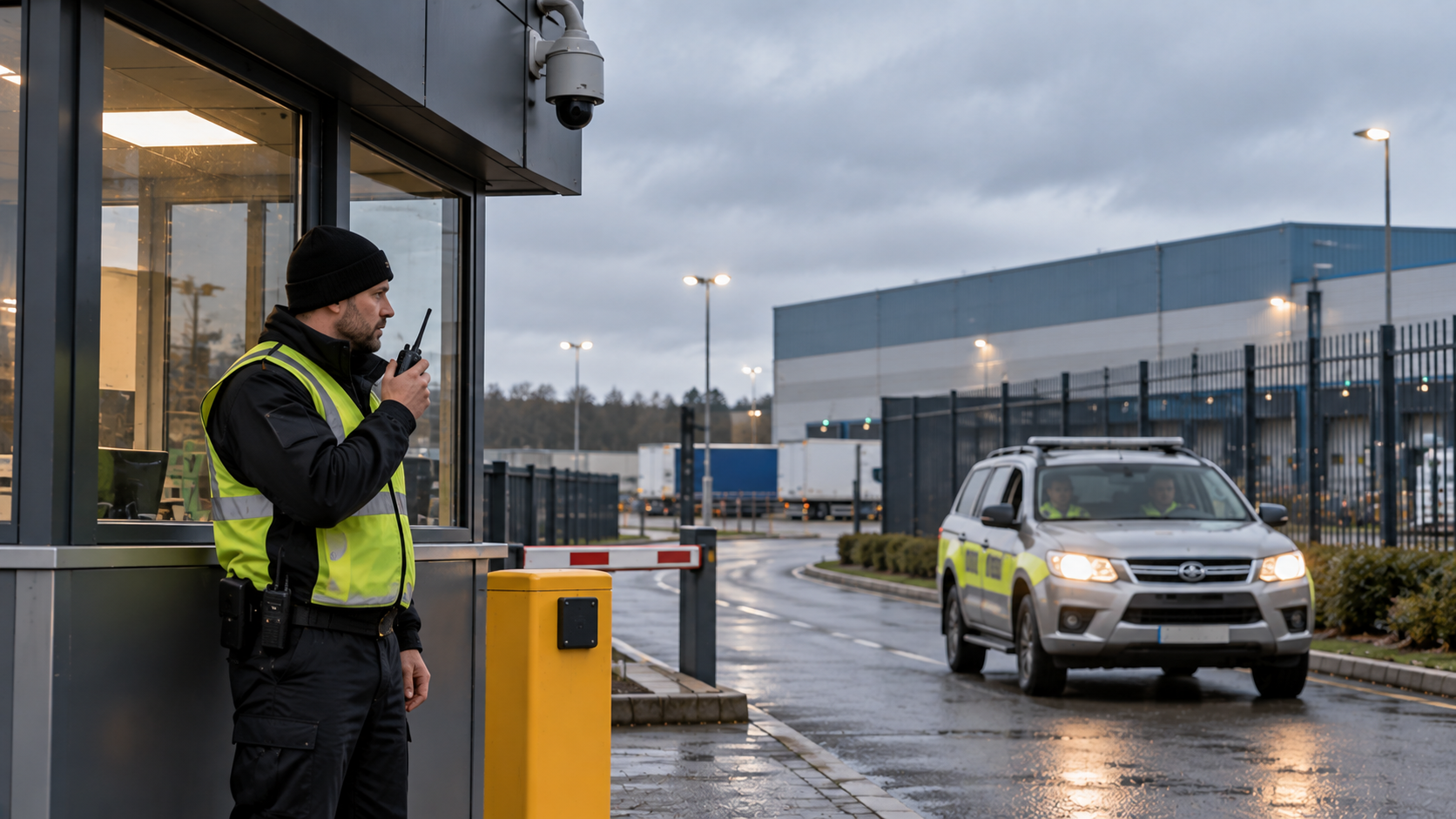
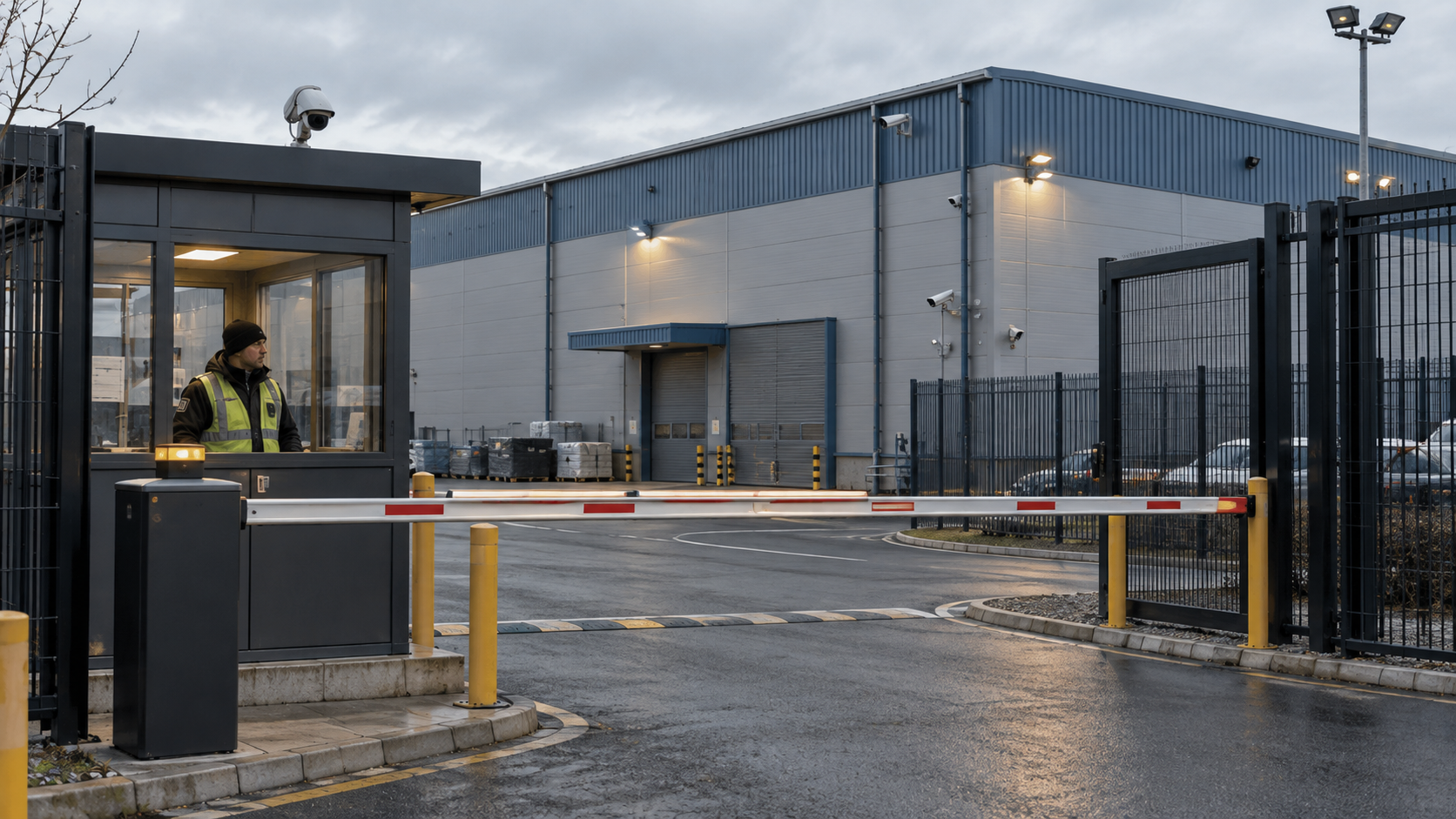
Warehouses and factories: Perimeter and gate control do most of the work. A guard checking every vehicle against the booking beats a camera on the loading bay, and yard patrols, lock audits and controlled keys matter more than internal cameras – warehouse security is largely a perimeter discipline. If the problem is after hours rather than during trading, mobile patrols are cheaper and better suited.
Construction sites: Out-of-hours deterrence is the priority. Empty sites holding plant and tools are the easiest target in the city, so a monitored alarm and a patrol visit are the minimum. On larger sites, a K9 team or a static guard at the compound entrance is what actually intervenes- construction security is about stopping the theft before the plant leaves, not recording it as it goes.
Offices: Visitor management and access control close most of the gap, because office crime is usually opportunistic: a tailgated door, an unattended laptop, a propped fire exit.
Merseyside Police also offers low-cost tools – a QR code reporting system for businesses and SelectaDNA Intruder Spray Kits for city-centre shops worth asking your neighbourhood policing team about before commissioning a paid service.
How Can Liverpool Residents Protect Their Homes and Belongings?
Residential crime in Liverpool is not evenly distributed, and the practical advice differs by property type and location. Home security, vehicle safety and personal belongings each need a different approach.
At home: Merseyside Police has distributed safety kits in south Liverpool that include DNA property-marking liquid, vibration window and door alarms, and an LED TV light simulator to make a property look occupied. These are low-cost and effective. The basics still matter: lock windows and doors, keep valuables out of sight, and do not leave keys near the door.
Vehicles: With vehicle crime at 16.8 offences per 1,000 cars and rising near the city centre, the priorities are a steering lock, a tracker if the car is high-value, and parking in a well-lit, overlooked spot. Do not leave tools or bags visible.
In public: The city-centre risk is concentrated around transport hubs and late-night venues. Keep phones out of sight, stay with friends after dark, and use licensed taxis rather than unmarked cars.
Conclusion
Liverpool’s crime problem is real, but it is not uniform. The citywide figures hide a sharper picture: shoplifting concentrated in the city centre and retail parks, construction theft in the Baltic Triangle, industrial-estate crime in Speke and Garston, and organised cargo risk around the port. For a business, the useful question is not “is Liverpool dangerous” but “where does the risk sit on my site, and which layer actually addresses it”. For a resident, it is “what does my street look like, and what simple measures close the gap”
Region Security Guarding works with businesses across Merseyside on site-specific security planning. If you want to understand the risk profile of your premises, you can get in touch.