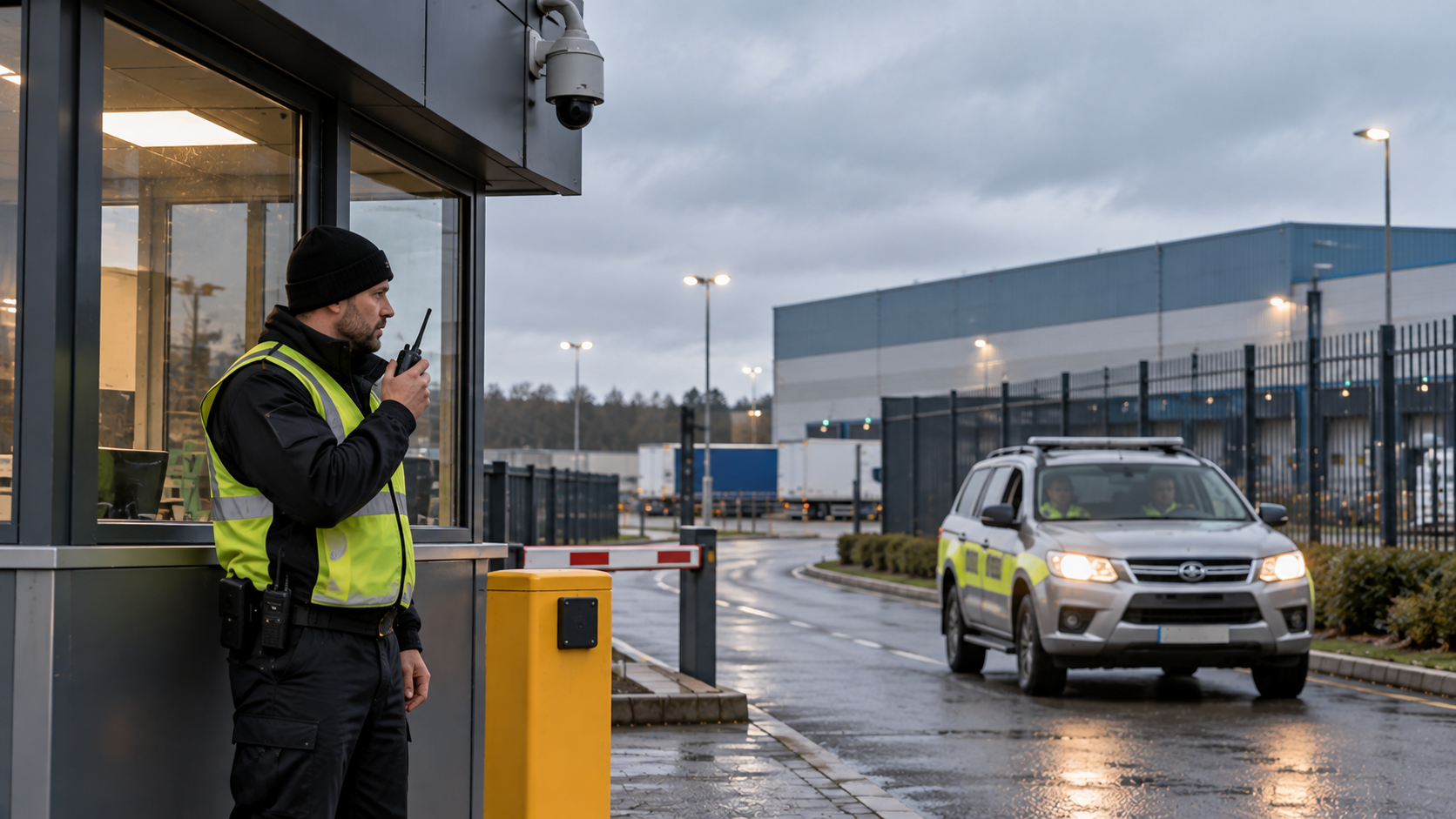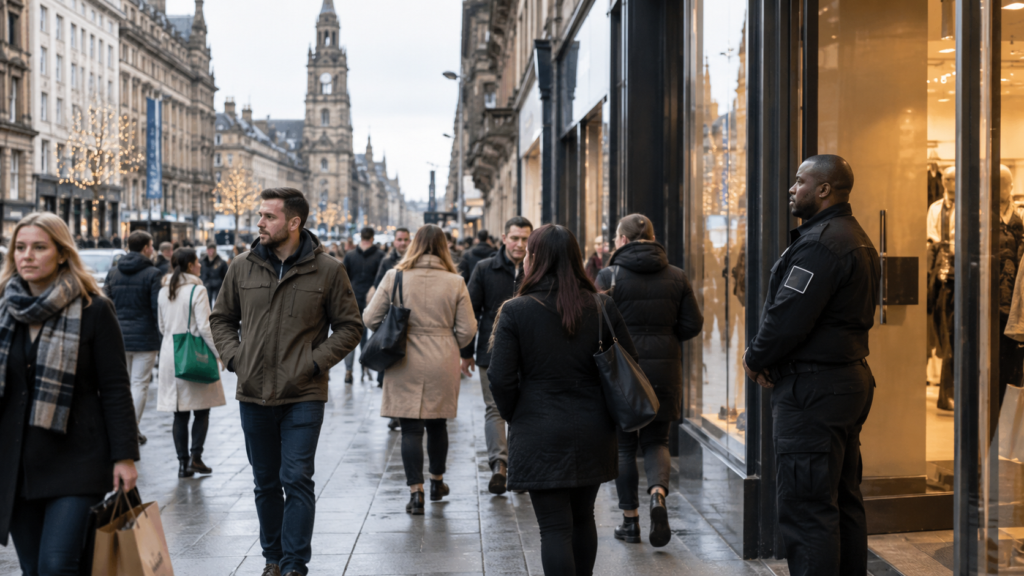
Store managers must transition from passive monitoring to a proactive, visual security presence. This involves deploying SIA-licensed guards who can absorb physical pressure, diffuse aggressive encounters, and support employee wellbeing, ensuring frontline staff are never isolated when the store is at its busiest.
Managing the rush means recognising that expecting sales assistants to act as loss prevention officers is no longer viable, especially with the statutory protections now in place under Scottish law. This guide explores the unique challenges Glasgow retailers face during peak times and how to build a safety-first culture.
The Reality of the Glasgow Evening Retail Rush and Weekend Frenzy
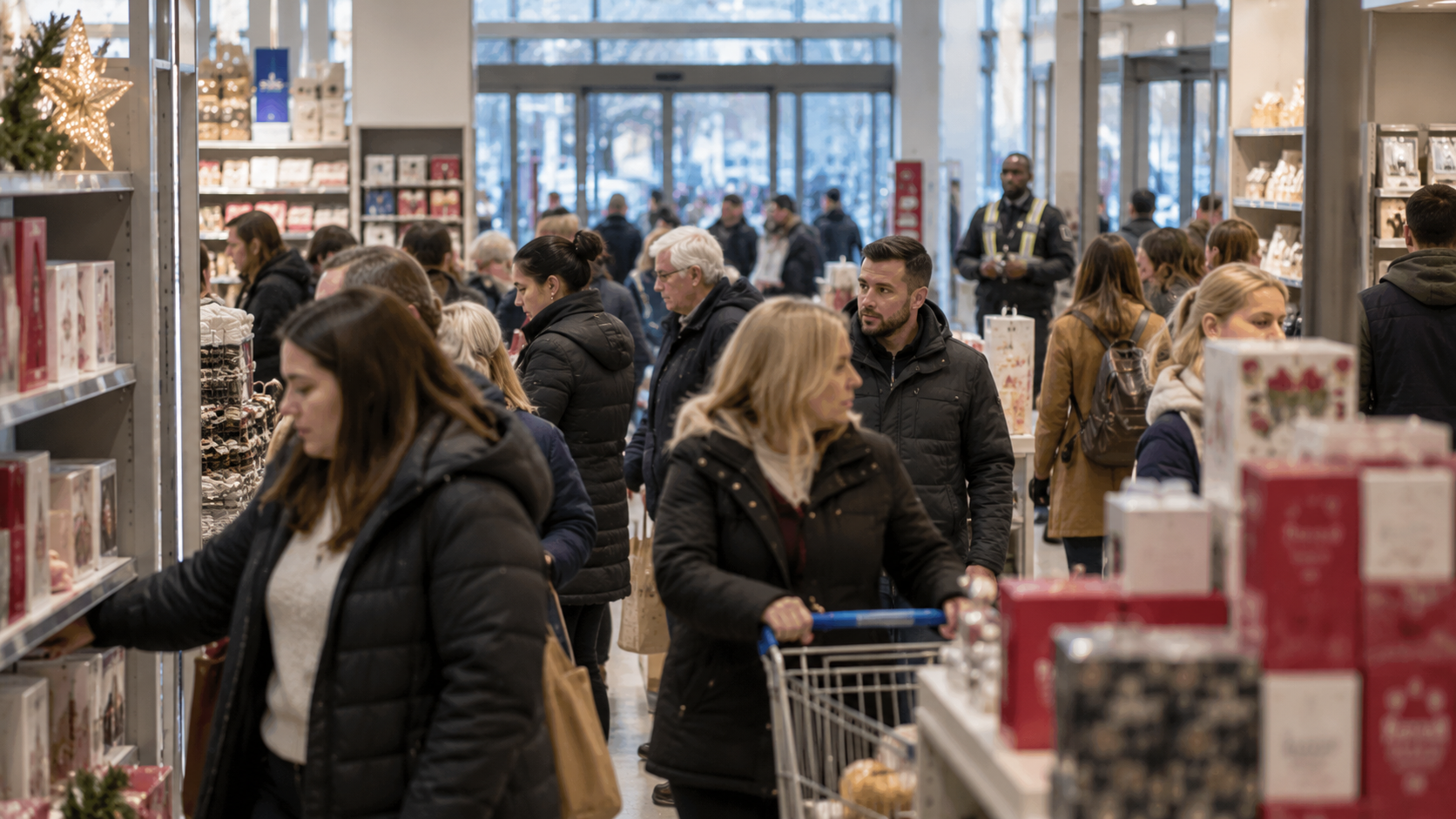
Managing an empty store is straightforward. Managing one at 5:30 PM on a dark Tuesday, or 2:00 PM on a Saturday, is an entirely different operational challenge. Peak footfall compresses space, strains employee bandwidth, and fundamentally changes the risk profile of your premises.
When crowds are deep, natural surveillance the ability of staff to easily see what is happening on the floor all but disappears. Shoplifting teams use the rush as cover, navigating high-value aisles while employees are focused on processing queues at the tills. A crowded store is not necessarily a safe one.
Glasgow Evening Retail Safety: Twilight Vulnerabilities
Crucially, Glasgow evening retail safety is a dynamic risk that requires unique management. As the afternoon peak winds down, staff numbers often decrease just as anti-social behaviour risks increase.
The “twilight shift” can see fewer managers on duty, darker exterior environments, and vulnerable closing procedures. For retailers located on main city-centre thoroughfares, managing the interface between festive evening footfall and public transport egress is critical. Ensuring employees are supported with structured escort protocols to transport hubs during dark winter evenings is a fundamental duty of care.
The Mental and Physical Toll: Glasgow Retail Worker Wellbeing
Perhaps the most significant risk associated with busy periods is the hidden impact on employee mental health. The operational pressure during peak hours isn’t just about selling more; it’s about managing chaos. This strain directly impacts Glasgow retail workers’ wellbeing.
Employees facing intense customer volume are more susceptible to fatigue, reduced situational awareness, and heightened anxiety. They are at their most vulnerable when they are at their busiest. This combination is a significant contributing factor to a drop in consistent Glasgow shop staff safety protocols.
The Problem with Staff Isolation
During the peak, a till operator may be managing a continuous line of 15 customers. They cannot leave their post. If a volatile customer begins demanding a refund for a non-faulty item and shows signs of escalating, that employee feels physically and emotionally isolated. High morale, retention, and productivity are impossible to maintain in a retail environment where employees feel exposed to confrontation without a defined support structure.
Identifying and Deconstructing Peak Trading Risks in Glasgow Environments
Understanding your specific operational environment is key to developing an effective mitigation strategy. Glasgow retail isn’t monolithic; the risks in the city centre often differ from the large-scale retail parks.
A proper risk assessment requires deconstructing exactly where the pressures occur on your site. For high-footfall city-centre stores on pedestrianised streets like Argyle Street or Sauchiehall Street, the interface with anti-social behaviour is a constant challenge. Retail parks like Silverburn or Glasgow Fort may face more organised “grab and run” theft and vehicle-related issues in their parking bays.
Peak Time Vulnerability Table: Standard vs. Peak Hours
To visualise how your risk profile changes, compare your store operations across different hours:
Risk Factor | Standard Hours (e.g., Tues 10 AM) | Peak Hours (e.g., Sat 2 PM) | Managing the Peak Impact |
Footfall & Visibility | Low volume. Clear store floor line of sight. | High volume. Blocked aisles, obscured views. | Deploy high-visibility static guards at strategic high-value junctions. |
Staff Pressure | Staff can proactively engage customers on the floor. | Staff are compressed to fixed locations (tills). | Loss prevention task rests with security professionals, not till assistants. |
Incident Severity | Opportunistic, often quiet theft attempts. | High cover allows organised gangs; higher customer aggression in Glasgow retail risk. | Immediate professional presence to absorb conflict and diffuse encounters. |
Response Time | Management and internal security can respond quickly. | Internal teams must navigate crowds, slowing response. | Station dedicated security personnel in potential conflict areas. |
Actionable Strategies to Maintain Glasgow City Centre Retail Safety
Protecting your team during the pressure requires tangible operational changes. There are actionable steps that store managers must execute.
- Stationary Deterrence at Key Bottlenecks: Don’t have security patrolling aimlessly. Position uniforms where they are needed most. The main entrance, till banks, and high-value designer sections (fragrance, electronics, luxury apparel) require static, physical presence during the peak to deter both opportunistic and organised theft.
- Zero-Tolerance De-escalation Protocol: Establish a clear protocol that sales staff must never engage in verbal debate with an aggressive customer. If friction begins, their sole job is to retreat and alert management or the security professional on site.
- Active Communication Checkpoints: Implement mandatory safety check-ins using two-way radios between security, management, and different departments every 30 minutes during the rush. This ensures any escalating situations are flagged early, and support is verified.
Supporting Your Floor Strategy
Implementing tailored retail security solutions that combine advanced CCTV integration with visible floor presence ensures your store doesn’t operate in a vacuum. A dynamic floor layout and strategic guard positioning must work hand-in-hand to maintain Glasgow city centre retail safety. Specialised retail officers are trained not only in detection but also in protecting the visual brand experience, ensuring your security support doesn’t look like a blockade.
The Critical Role of Static Guarding in Modern Retail Environments
When people look for solutions to enhance safety, they often think about technology or CCTV. But technology is a witness; a human presence is a deterrent. A trained, SIA-licensed security guard standing calmly at your entrance or till point during the rush provides a powerful, non-verbal message of support for your staff and order for your customers.
Expecting sales assistants to absorb verbal hostility or manage volatile individuals during a busy shift is unreasonable and creates immense liability. By deploying professional security, you allow your sales team to do what they do best: manage customer service and sales.
Professional guarding allows you to address the problem of staff isolation. Frontline teams are never left alone to manage complex social friction. They know a dedicated security expert is standing by to take the pressure off them.
Leveraging Regional Expertise
Partnering with an experienced security company in Glasgow is crucial because your premises face regional risks that require regional knowledge. A local Glasgow security provider understands the specific issues impacting city-centre shopping precincts, participates in local business resilience networks (like BCRP initiatives), and works in alignment with Police Scotland’s retail taskforce strategies. Local presence means a faster understanding of emerging local crime trends that could impact your premises next.
Compliance and Legal Protections: The Protection of Workers (Scotland) Act
Crucially, ensuring Glasgow shop staff safety isn’t just about good practice; it’s about compliance with Scottish law. Retail managers must be aware of their legal duty of care.
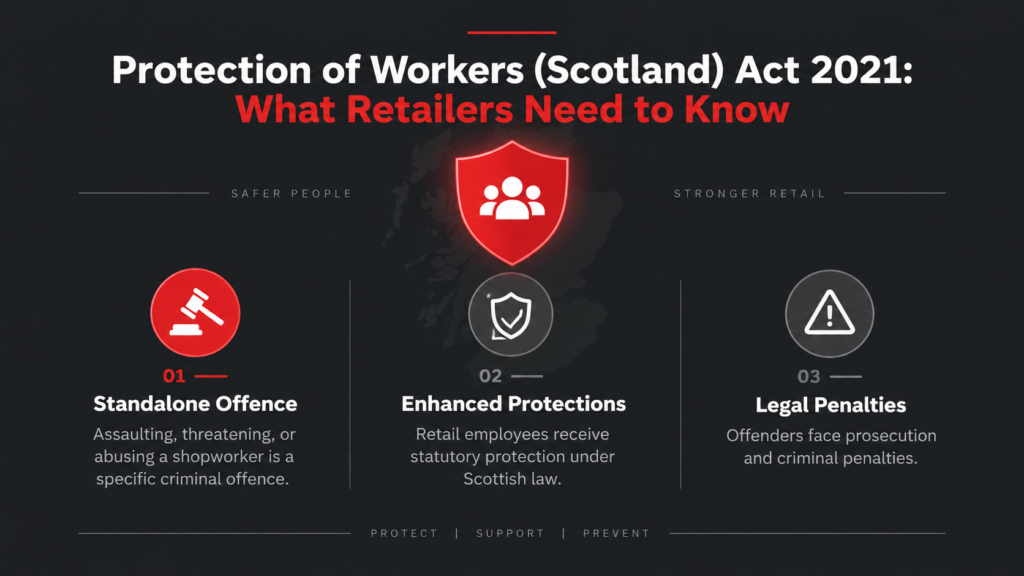
The Protection of Workers (Scotland) Act 2021 was a landmark piece of legislation that created a standalone criminal offence for assaulting, threatening, abusing, or obstructing a shop worker. This Act recognises that retail employees are vulnerable and provides them with enhanced statutory protection.
Store managers must ensure their employees understand their rights under this legislation. A visible security presence helps uphold this Act by providing immediate support to any employee who is targeted. For external data regarding retail crime stats and trade union responses, organisations like Usdaw offer comprehensive resources on protecting workers from violence.
Practical Peak-Hour Retail Staff Safety Checklist for Glasgow Premises
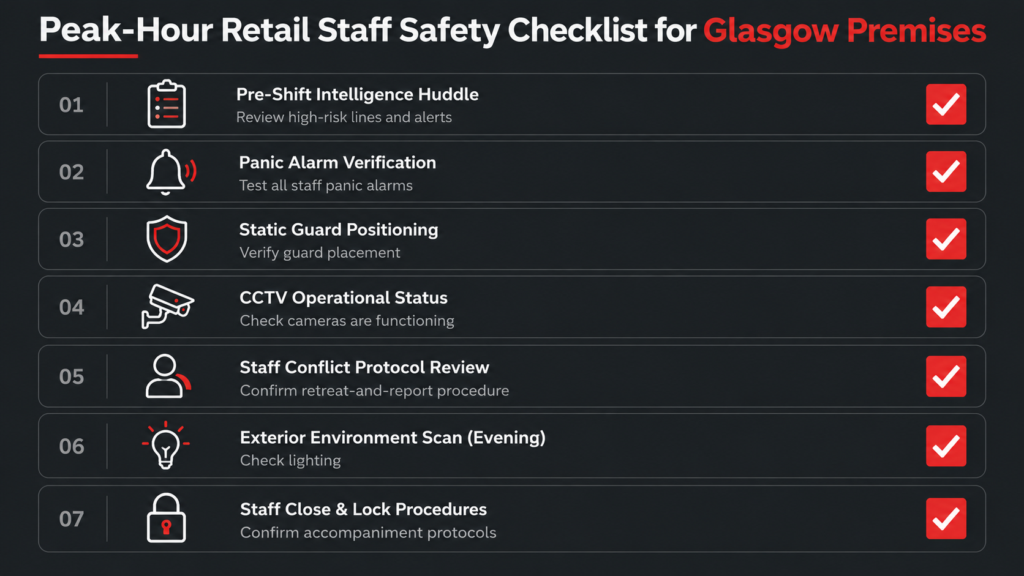
To ensure consistency across every peak shift, store managers should implement a pre-shift readiness check.
- Pre-Shift Intelligence Huddle: Review high-risk lines and discuss any alerts received via local Glasgow Shop Watch networks.
- Panic Alarm Verification: Physically test all staff panic alarms and two-way radio channels to confirm immediate responsiveness.
- Static Guard Positioning Check: Verify that uniformed personnel are stationed at the main high-traffic entrances and till points before the surge begins.
- CCTV Operational Status: Ensure high-definition cameras covering high-value aisles and main entrances are functioning and being monitored where appropriate.
- Staff Conflict Protocol Review: Confirm all frontline sales staff are familiar with the retreat-and-report protocol for aggressive customers.
- Exterior Environment Scan (Evening Shift): Check that all car park lighting and service area illumination are fully functional before dusk.
- Staff Close & Lock Procedures: Confirm that closing procedures, including staff departures, are supported by structured accompaniment protocols, particularly during dark winter evenings.
Balancing Retail Ambition with Operational Care
High targets, busy queues, and ambitious sales figures are the markers of retail success. But they should never be achieved at the expense of employee well-being. Retail managers who prioritise a safety-first culture understand that they are protecting their single greatest asset: their people.
By investing in high-visibility professional security support during peak hours, Glasgow retailers create a resilient operational environment. They shield their teams from confrontation, send a clear message of deterrence to offenders, and build a positive workplace where employees feel supported, safe, and ready to welcome customers, no matter how busy the store becomes. Peak trading risks Glasgow retailers face are manageable if you are prepared for the pressure.