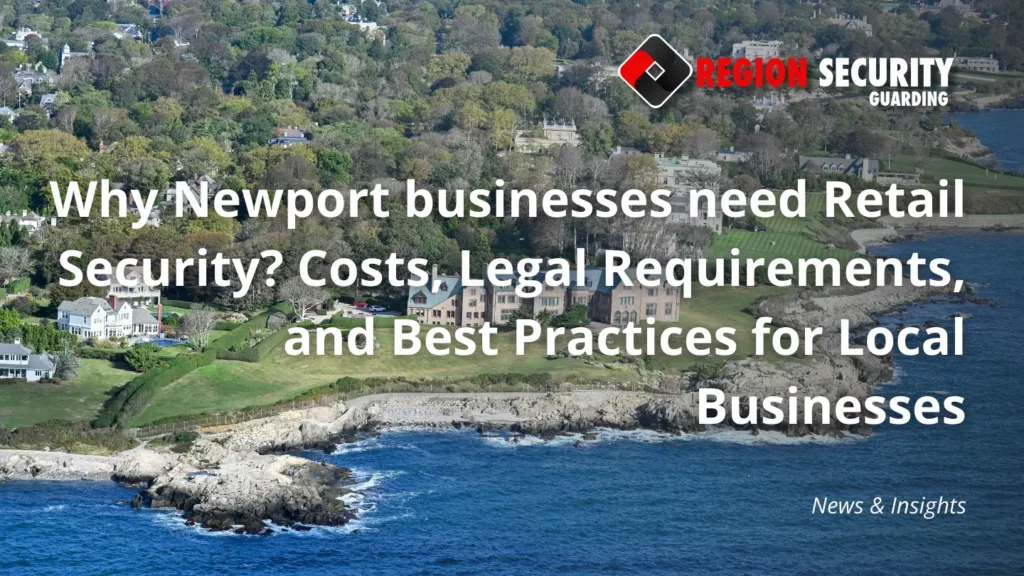
Retail security is now part of normal planning for many businesses in Newport. It is not something added only after a problem happens. Shops deal with small losses, short disruptions, and pressure on staff, and these issues slowly affect how the business runs and how costs grow. As the city centre develops, more people move through stores, opening hours become longer, and shared spaces get busier. Transport routes and nearby retail parks also change how customers move, which can raise risk without being obvious at first.
In this setting, manned retail security works best when it is planned and steady. It helps businesses look ahead, understand where pressure is likely to build, and manage it calmly instead of reacting to one event. Across Wales, retailers are linking security to continuity, insurance confidence, and safe trading. This is why Newport businesses need Retail Security is now a practical question about planning and control, rather than a narrow response to crime.
Retail Security Basics in Newport
What Retail Security Means in a Newport Context
Retail manned guarding refers to trained security staff being present within or around a retail site during trading hours or other vulnerable periods. In Newport, this usually means guards working in open and shared spaces rather than behind fixed barriers. They interact with customers, observe behaviour, and support store staff when situations begin to drift out of routine. Their role is visible but controlled, focused on maintaining order rather than enforcing rules aggressively.
This differs from static guarding, where a guard remains at a single post, such as an entrance or loading bay. Retail environments rarely allow this kind of fixed approach to work well. Risks move around the shop floor. Pressure points change with footfall, staffing levels, and time of day. Retail guards are expected to notice these shifts and respond early.
CCTV-only setups also serve a different purpose. Cameras record activity and support investigations after an incident. Guards influence behaviour before loss or conflict occurs. In open retail environments, that visible presence often reduces issues without intervention. This matters in locations with easy access, high turnover of visitors, and shared public space, all of which describe much of Newport’s retail layout.
Local Retail Risk Patterns and Timing
Retail risk in Newport tends to follow predictable patterns rather than random spikes. Mid-afternoon is a common pressure point. Stores are busy, staff rotate, and supervision can thin out without anyone noticing. During these periods, small incidents are easier to miss and harder to challenge without visible support.
Evenings bring a different set of concerns. Groups gather, behaviour becomes less transactional, and the tone of interactions can shift. Low-level disruption, verbal abuse, or repeated attempts at theft become more likely as trading winds down. These are not always serious incidents, but they affect staff confidence and customer experience.
Early mornings carry quieter but real risks. Deliveries arrive, shutters lift, and not all staff are in place. Access points are open while attention is divided. Compared with Cardiff, Newport generally sees lower overall volume but higher visibility. When something happens, it stands out more and disrupts trade faster. That makes timing and presence more important than scale alone.
Retail Environments Most Exposed in Newport
High street stores face constant public access and limited back-of-house space. Stock, staff areas, and customer zones often sit close together, which increases exposure during busy periods. Retail parks deal with different challenges. Large footprints, shared car parks, and reduced evening activity create gaps where supervision can feel distant.
Convenience stores close to transport links often see a fast flow of customers entering and leaving, which increases turnover and reduces the time staff have to observe behaviour. Visits are short, intent is harder to read, and losses can occur quickly if behaviour goes unchecked. These sites rely heavily on visibility and early intervention rather than after-the-fact review.
Mixed-use developments add another layer of complexity. Retail units sit alongside housing, offices, or parking facilities. Access points multiply, and responsibility can become unclear. In these settings, clear and visible retail security helps businesses maintain order, support staff, and protect trading without affecting the normal flow of customers.
Crime, Risk Patterns & Retail Vulnerabilities
How Retail Crime Manifests in Newport
Retail crime in Newport is usually shaped by routine rather than sudden disorder. Most incidents happen during normal trading, when stores are busy, and staff are focused on service. Opportunistic theft is common in these moments because movement feels ordinary and supervision is spread thin. Organised shoplifting also occurs, but it is often quiet and familiar rather than aggressive. People return to the same sites, learn layouts, and rely on predictable routines instead of force.
The effect is often felt by staff before it shows up in stock figures. Repeated low-level theft, verbal abuse, and tense interactions wear down confidence and disrupt how a store runs. Predictability plays a role here. Fixed opening hours, unchanged layouts, and visible delivery routines make it easier for behaviour to be tested over time. When patterns stay the same, exposure grows even if no single incident seems serious on its own.
Day vs Night Retail Security Risks
Retail risk shifts as the day moves on. During trading hours, losses usually come from small acts that blend into normal activity. Distraction tactics, quick movements, and uneven supervision create gaps that are easy to miss in a busy store. These incidents tend to be frequent rather than severe, but they add up and affect morale and control.
At night, the picture changes. Stores are quieter, shutters are down, and activity drops away. This concentrates risk instead of spreading it out. Poor lighting, empty units, and limited oversight increase the chance of vandalism or forced entry. Seasonal patterns matter here as well. Coastal retail areas such as Swansea often see evening exposure change after busy visitor periods, which shows how quieter hours can carry a higher focused risk even when footfall is low.
Seasonal and Event-Driven Retail Pressure
Retail pressure often follows the calendar. Holiday periods bring longer opening hours, temporary staff, and unfamiliar customers. Local events increase footfall and shorten the time people spend in one place, which makes behaviour harder to read. Controls that work well during steady weeks can struggle under volume if nothing changes around them.
Transport access adds another layer. Stores near bus routes, rail access, or shared car parks see faster movement and less dwell time. Larger cities such as Cardiff show this at scale, where event calendars and travel patterns overlap. The same pressures appear in Newport on a smaller level. Understanding when and why these peaks happen allows retailers to plan security in a way that supports trading, rather than reacting after disruption has already taken place.
Legal & Compliance Requirements for Retail Security in Newport
SIA Licensing and Retail Guard Legality
In the UK, anyone working in frontline retail security must hold a valid SIA licence. This rule applies whether the guard is hired directly or supplied through a third party. In Newport, the responsibility does not stop with the individual wearing the badge. The business that hires the guard also carries legal risk if licensing is not correct.
Using an unlicensed guard can cause serious problems. Insurance cover may be questioned. Incident reports may lose weight. If a situation escalates, the business may be left exposed. For this reason, licensing should be treated as a basic safeguard, not a formality. Working with a reputable security company in Newport helps retailers confirm that licensing is in place before any incident occurs, rather than discovering gaps afterwards.
Vetting, DBS, and Suitability for Retail Environments
Licensing on its own does not cover every risk a retailer faces. Businesses also need to think carefully about who they place in public-facing roles. BS 7858 screening looks at identity, work history, and background so that basic checks are in place before a guard steps onto the shop floor. This matters in retail settings because guards deal with people under stress, handle incidents, and may be asked to support staff during difficult situations.
DBS checks are not legally required in every case, but they are often expected when guards work closely with staff or deal with sensitive issues. In larger retail centres such as Cardiff, insurers now pay closer attention to vetting records when claims are reviewed. If screening is weak or unclear, it can affect more than safety alone. It can influence liability decisions and reduce insurer confidence that reasonable controls were in place.
Data Protection, CCTV, and Retail Surveillance
Retail security often works alongside CCTV, which brings clear data protection duties. Guards may view live footage, review recordings, or assist with evidence after an incident. All of this must follow GDPR rules. Signage must be clear. Access to footage must be limited. Use must match the stated purpose.
Even when security is outsourced, the retailer remains responsible for how data is handled. If footage is shared incorrectly or records are unclear, the risk sits with the business. Stores in areas such as Swansea, where shared entrances and mixed-use spaces are common, face added complexity over who controls and accesses surveillance systems.
Event Licensing, Public Safety, and Martyn’s Law
Retail sites that run promotions or seasonal events often fall under local licensing rules. This is common in shopping centres and larger stores, where footfall can rise fast and change how people move through the space. When crowds grow, calm areas can become busy without warning. Entry points shift. Queues form. Small delays turn into pressure. Planning for this in advance helps retailers stay within licence terms and keep trading steady in Newport.
Public safety rules are also changing. Martyn’s Law places more weight on awareness and readiness in public places. It asks businesses to think about risk before events take place, not after. Retail hubs in Wrexham have started reviewing how visible security and clear procedures support this approach without slowing customer flow. Early planning helps retailers avoid rushed changes later and keeps operations stable as expectations rise.
Costs, Contracts & Deployment for Retail Security in Newport
Typical Retail Guarding Costs in Newport
Retail guarding costs in Newport depend more on exposure than on location alone. Stores in busy areas often face higher costs because footfall is steady and contact with the public is frequent. Out-of-town retail parks usually see lower rates, but longer hours and wider layouts can still raise overall spend. Daytime cover focuses on presence and staff support, while overnight cover deals with quieter hours and higher risk around access and property.
Price is shaped by several factors working together. Coverage hours matter. Layout matters. Past incidents matter. Retailers in Cardiff see this clearly, where dense shopping areas cost more to secure because exposure is constant and patterns repeat over time.
Contract Lengths and Flexibility
Retail security contracts can be short or long, depending on what a business needs at the time. Short contracts are often used during store openings, refurbishments, or busy periods, when risk is higher for a limited time. Longer contracts provide steady cover, but they should allow changes if trading patterns shift or exposure reduces.
Seasonal demand also needs planning. Holiday trading and sales periods bring longer hours and more people into stores. Security should be adjusted before these periods begin, rather than added in a rush. Notice periods play a role here as well. If the terms are not clear, businesses can be left with gaps or forced into quick decisions. Retail areas in Swansea show how flexible but structured contracts help coverage scale with demand without locking retailers into arrangements that no longer fit how they trade.
Insurance, Claims History, and Cost Justification
From an insurance view, retail guarding is about showing control rather than stopping every loss. Insurers look at whether risks were known, whether someone was present, and whether incidents were handled in a clear way. Visible security helps show that reasonable steps were taken and applied in practice.
Guarding also helps limit ongoing disruption. Small incidents can build over time if they are not managed. Clear records and consistent presence support staff and help explain what happened later. Retailers in Wrexham often treat guarding as a form of cost control because it protects trading time, supports insurance reviews, and reduces the need for reactive action after problems arise.
Training, Daily Operations & Retail Guard Duties
Retail-Specific Guard Training Standards
Retail guards operate in close contact with the public, which makes training a risk control rather than a formality. Conflict management is central. Guards must know how to calm situations early, before raised voices become complaints or incidents. This protects staff, customers, and the business itself.
Customer-facing professionalism also matters. Guards represent order, not authority for its own sake. Clear communication and calm presence reduce tension and avoid escalation. Evidence handling is another key area. Knowing how to observe, note, and preserve information supports follow-up and insurer review. Retail centres in Cardiff show how poor handling of minor incidents can quickly become a wider liability issue.
What “Good” Retail Guard Operations Look Like
Effective retail security is consistent rather than complex. Shift handovers ensure no gaps in awareness, especially around known issues or repeat behaviour. Incident awareness allows guards to spot patterns, not just react to single events.
Visibility is often the most valuable control. A guard who is clearly present changes behaviour without confrontation. Deterrence works best when it feels normal and unobtrusive. Retail environments in Swansea demonstrate how a steady presence during busy periods reduces disruption more effectively than reactive responses after loss occurs.
Reporting, Logs, and Retail Risk Intelligence
Reporting plays a practical role in how retail risk is managed over time. Clear and accurate logs help businesses explain what happened, when it happened, and how it was handled. This matters if an incident is reviewed later by insurers, solicitors, or internal teams. Good records support consistency and show that issues were addressed in a measured way rather than ignored or handled informally.
Over a longer period, reports also help reveal patterns that are easy to miss day to day. Repeated low-level problems often create more disruption than a single serious event. When these trends are visible, businesses can adjust coverage, routines, or opening practices before pressure builds further. Retailers in Wrexham increasingly use this kind of insight to support planning and justify security decisions as part of wider risk management, rather than reacting only after incidents occur.
Performance, Risks & Operational Challenges
Measuring Retail Security Performance
Retail security performance is best judged by patterns rather than isolated events. Incident reduction over time shows whether controls are working or simply reacting. Fewer repeat issues in the same time windows often matter more than headline figures.
Staff confidence is another useful indicator. When employees feel supported, reporting improves, and small issues are addressed early. Response consistency also matters. Similar incidents should lead to similar outcomes, regardless of who is on duty. Retailers operating across multiple sites, including those in Cardiff, often use these measures to compare effectiveness without relying on volume-based metrics alone.
Operational Risks Retailers Commonly Overlook
Many retailers rely too heavily on CCTV, assuming coverage equals control. Cameras record events but do not prevent escalation. Without on-site presence, response is delayed ,and staff are left exposed.
Peak periods are another weak point. Sales events, weekends, and seasonal surges increase pressure, yet coverage is often left unchanged. Poor alignment between store operations and security planning can also undermine effectiveness. Retail centres in Wales highlight how mismatched opening hours and security schedules create gaps that are easy to exploit.
Continuity, Pricing Realism, and Service Reliability
Security continuity affects both cost and risk. Underpriced coverage often leads to inconsistent presence, last-minute changes, or reduced visibility during key periods. For retailers, this creates operational uncertainty rather than savings.
Pricing realism supports service reliability. When coverage is planned around actual exposure, continuity improves, and disruption falls. This is particularly relevant for multi-unit retailers, where consistency across sites matters. Businesses with outlets in areas such as Wrexham increasingly view continuity as part of risk control, not a staffing issue, ensuring coverage remains predictable during normal trading and peak demand.
Technology & Future Trends in Retail Security
CCTV and Manned Guard Integration
CCTV works best when it supports people on the ground rather than trying to replace them. Cameras provide coverage, but they do not judge intent or de-escalate behaviour. Guards do. When a trained guard interprets what cameras show, decisions are faster and more proportionate. This reduces false alarms and prevents small issues from turning into formal incidents.
In busy retail environments such as those found in Cardiff, integration matters because shared spaces and high footfall create constant movement. A guard who understands what is normal for a site can act early, while CCTV provides context and evidence when follow-up is required.
AI, Remote Monitoring, and Predictive Support
AI has begun to support retail security in quiet but practical ways. It helps flag unusual movement, repeated behaviour, or activity outside normal patterns. This works as an alerting layer, not a decision-maker. Human judgement remains central, especially in public-facing retail spaces.
Remote monitoring also supports multi-site retailers by providing oversight without duplicating on-site roles. It allows patterns to be reviewed across locations and time periods. Retailers operating near coastal routes, such as those around Swansea, often use this approach to manage seasonal shifts without overextending local teams.
Sustainable and Future-Facing Retail Security
Future-facing retail security is increasingly shaped by sustainability and regulation. Energy-efficient cameras, lower-power lighting, and smarter scheduling reduce cost while maintaining coverage. These changes matter as retailers review both operating spend and environmental impact.
Preparation for new public safety expectations is also part of future planning. Martyn’s Law is expected to influence how retail venues assess risk and demonstrate readiness. Retail hubs in Wrexham are already considering how visible security, clear procedures, and documented planning support compliance without disrupting normal trading.
Conclusion
Retail security in Newport works best when it is thought through before problems start. Shops here deal with open doors, shared spaces, and changing footfall. These factors shape risk over time. They do not create constant danger, but they do create moments when things slip if no one is watching closely.
Good planning looks beyond a single incident. It takes into account legal duties, licensing rules, and how incidents are recorded and explained later. This matters because insurers now look at behaviour, not just loss. They want to see that reasonable steps were in place and followed in practice.
That is why Newport businesses need Retail Security, which is not really about spending more. It is about choosing control over reaction. When security reflects how a shop trades day to day, it supports staff, protects continuity, and reduces disruption. Done this way, security becomes part of normal operations rather than a rushed response after something goes wrong.
Frequently Asked Questions
Do all retail businesses in Newport need manned security?
Not every shop needs a guard on site. Some stores operate with low risk and simple controls. Others deal with heavy footfall, open layouts, or long hours that increase exposure. In Newport, the decision usually comes down to how open the site is and when pressure builds during the day.
Is retail security legally required in Wales?
There is no single rule that says every retailer must use guards. That said, businesses still have legal duties around safety and reasonable prevention. In Wales, ignoring known risks can lead to liability even without a formal requirement to hire security.
How much does retail security typically cost in Newport?
Costs depend on hours, risk, and layout. Daytime cover is often priced differently from overnight cover. City-centre locations usually cost more to secure than quieter sites because exposure is higher.
Can retail guards detain shoplifters legally?
Guards have limited powers. They can act in certain situations, but only within strict rules. Poor judgement or handling can create legal problems, which is why training and restraint matter.
How does retail security affect insurance premiums?
Insurers look at whether reasonable steps were taken to manage risk. Visible security, clear records, and steady coverage can support claims and reduce disputes, even if premiums do not drop straight away.
Is CCTV alone enough for retail crime prevention?
CCTV helps record what happens, but it does not change behaviour on its own. In open stores, cameras work better when combined with a visible presence that can act early.
What licences should retail guards hold in Wales?
Guards must hold the correct SIA licence for their role. Using unlicensed guards can lead to penalties and problems with insurance coverage.
How should retailers plan security for peak seasons?
Planning works best when it starts early. Longer hours, higher footfall, and temporary staff all change risk. Adjusting cover in advance is usually more effective than reacting after issues appear.