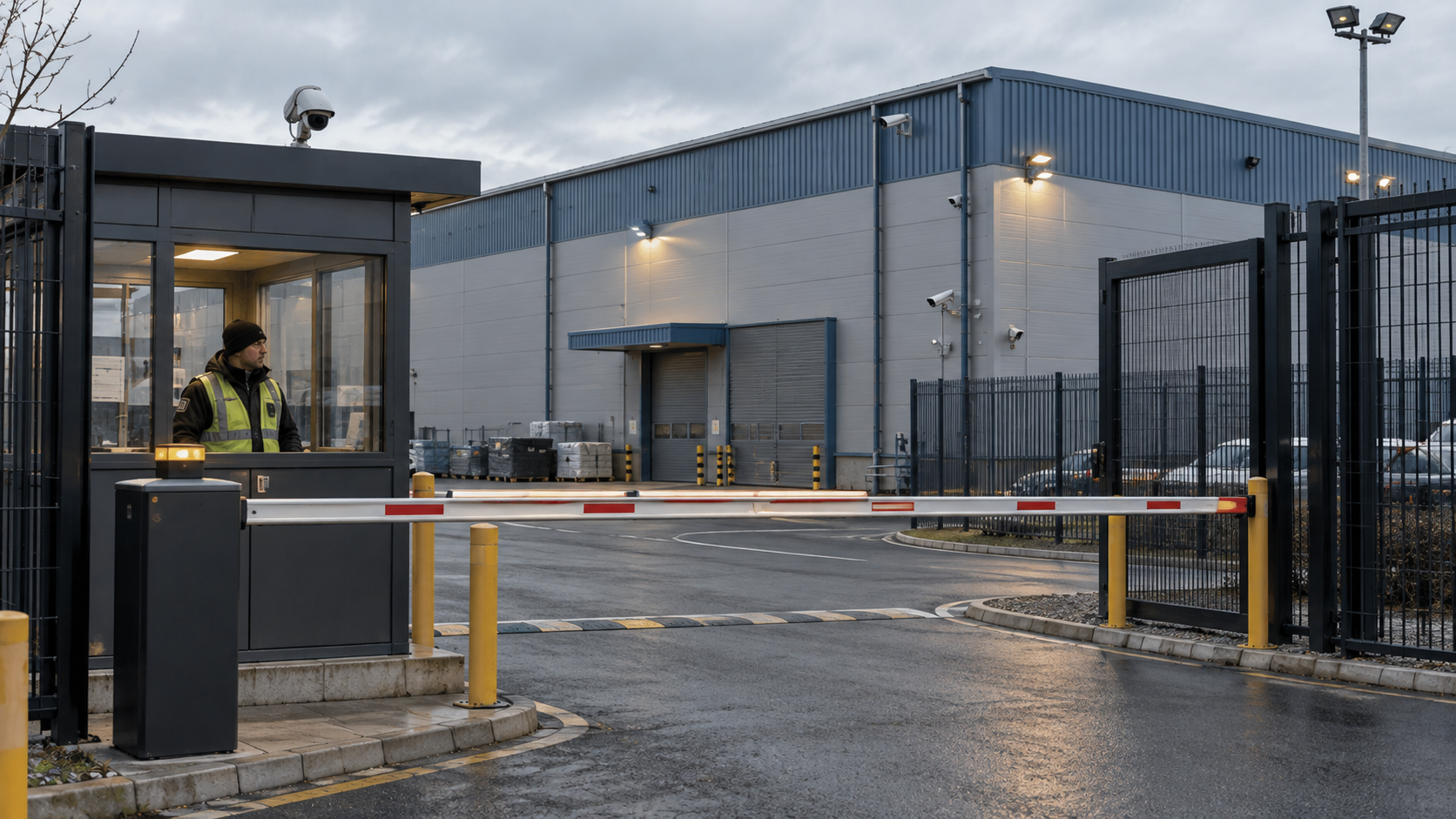
West Midlands Police recorded 307 crimes in Erdington during June 2026, with violence and sexual offences, criminal damage and arson, vehicle crime and shoplifting among the most commonly reported categories.
The figures are area-wide, however, so they should not be treated as a measure of risk for an individual business. That distinction matters.
A shop on a busy road, a warehouse on an industrial estate and an office that closes at 5pm will not have the same exposure. So, what should local businesses actually be looking for?
Common Security Concerns for Erdington Businesses
The most relevant concerns depend on the premises, but theft, shoplifting, criminal damage and vehicle-related crime are among the issues businesses should consider when reviewing their safety arrangements.
Theft and Shoplifting
Retailers and other businesses holding stock, cash or portable equipment can be exposed to theft. Shoplifting is one specific form of theft involving goods taken from a retail premises without payment.
West Midlands Police recorded 23 shoplifting offences in Erdington in June 2026. That figure describes reported crime across the area, rather than incidents specifically affecting every retailer. Even so, it is useful when deciding which risks deserve attention.
Consider a small shop with shelving close to the entrance. If staff cannot see both the doorway and the higher-value products, an obvious opportunity can develop without anyone deliberately creating a security weakness.
Simple questions can reveal a lot:
- Can staff see customers entering and leaving?
- Are expensive or easily carried items positioned in poorly observed areas?
- Are cash-handling procedures consistent?
- Are unusual incidents recorded rather than forgotten after a busy shift?
The aim is not to assume that every customer is a potential offender. It is to reduce opportunities and make suspicious activity easier to notice.
Criminal Damage and Arson
Criminal damage can affect much more than the appearance of a premises. Broken windows, damaged doors, graffiti, damaged signage or interference with external equipment can create repair costs and may leave another weakness behind.
West Midlands Police recorded 28 criminal damage and arson offences in Erdington in June 2026. Again, this is an area-level figure, not a business-specific measure.
A damaged rear gate, for example, might initially look like a maintenance issue. If it is left unrepaired, though, it can become an easier route into a yard or storage area.
This is why businesses should treat repeated damage as something worth investigating rather than simply repairing the visible problem each time.
Vehicle and Parking-Related Crime
Vehicles can create another layer of risk. Company vans, customer vehicles, tools, stock and equipment may all be exposed depending on where vehicles are parked and what is left inside them.
There were 26 vehicle crime offences recorded in Erdington in June 2026, according to West Midlands Police.
Parking areas deserve particular attention when they are poorly lit or separated from the main premises. The same applies to loading bays and rear access points that are rarely visible from occupied parts of a building.
A useful question is: what can someone see from outside the premises that they could potentially take?
Removing valuables from vehicles, improving visibility and checking vulnerable parking areas can reduce unnecessary opportunities.
Security Threats Facing Businesses in Erdington
The common security concerns for Erdington businesses are not limited to specific crime categories. Weak access points, concealed external areas and predictable periods when premises are empty can all increase vulnerability.
Unauthorised Access and Weak Entry Points
An unsecured door is an obvious concern, but access problems are not always that straightforward.
A business might have a secure main entrance while leaving a side door, rear gate or delivery entrance less carefully controlled. Shared buildings can present another challenge where several businesses use the same access points.
Check:
- External doors and windows
- Rear and side entrances
- Gates and perimeter access
- Staff-only areas
- Delivery and loading points
- Access arrangements for former employees or contractors
Imagine a business where staff regularly prop open a side door while receiving deliveries. The practice may save a few minutes, but it also removes a layer of control that was there for a reason.
Poorly Protected External Areas
External areas can be easy to overlook because they are outside the main building. Rear yards, storage compounds, car parks and loading areas can contain equipment or materials while offering limited visibility from inside the premises.
Walls, fencing, parked vehicles and overgrown vegetation can also create concealed areas. West Midlands Police’s Erdington crime map shows incidents recorded around different roads and locations, including parking and shopping areas.
The force warns that the map gives only a loose indication of where crimes happened, and that actual locations are anonymised. It also notes that not all crimes can be shown.
That limitation is important. A map should help a business ask better questions about its surroundings, not be treated as proof that one particular street or car park is unsafe.
Out-of-Hours Vulnerabilities
What happens when everyone goes home? A premises may be well supervised during trading hours but much less visible overnight. Weekend closures, bank holidays and extended periods when staff are absent can create different conditions.
Businesses should review their actual operating pattern and identify what changes when employees leave.
For example, a warehouse may have regular vehicle movements during the day but become almost completely quiet overnight. An office may have several employees on site until early evening and no one present afterwards.
The question is not simply, “Is your building secure?”
It is: “What changes here when nobody is around?”
That can reveal vulnerabilities that are easy to miss during a daytime inspection.
Common Causes of Crime Affecting Erdington Businesses
Security problems often develop because small weaknesses remain unnoticed or normal working practices gradually create opportunities. Identifying those conditions can help businesses address risks before they become incidents.
Weak Physical Security
Doors, windows, locks and gates form the basic physical boundary of a premises. If a lock is damaged, a gate does not close properly or a window cannot be secured reliably, the weakness should be recorded and dealt with rather than left until something happens.
Storage areas deserve attention too. Equipment kept outside or materials stored behind a building may be less protected than items kept inside.
A simple walk around the building can be revealing. Do it during normal working hours, then repeat it after dark. The two views may be surprisingly different.
Limited Visibility and Lighting
Poor visibility can make it harder for staff to notice suspicious activity and can leave certain areas concealed.
Entrances, exits, parking areas, loading zones and pathways should be checked for dark or obstructed areas. Lighting does not guarantee that crime will not occur, but it can form part of a wider approach to making vulnerable areas easier to observe.
Look at the premises from the outside as well. Are there places where someone could stand without being easily seen?
Sometimes the problem is not a lack of lighting at all. It is a wall, storage container, hedge or parked vehicle blocking an otherwise useful sightline.
Inconsistent Staff Procedures
Good physical measures can be undermined by inconsistent routines. A door that should remain closed may be left open during deliveries. A closing check might be rushed when employees are trying to get home.
A suspicious incident might not be recorded because it appeared minor at the time. Written procedures can help remove uncertainty.
Staff should know who is responsible for checking doors and windows, how visitors are handled, what should happen when something appears unusual and how incidents are recorded.
The procedure does not need to be complicated. It needs to be clear enough that different employees follow roughly the same process.
Warning Signs of Security Problems at Business Premises
Warning signs of security problems at business premises can include physical damage, repeated suspicious activity, gaps in staff procedures and areas that employees cannot easily observe.
Physical Signs of Unauthorised Access
Look for evidence that someone has interfered with the property.
This may include:
- Damaged locks
- Forced doors or windows
- Fence or gate damage
- Scratches or other signs of tampering
- Unexplained damage around access points
One small mark may have an innocent explanation. A repeated pattern is harder to dismiss. If a rear gate is regularly found open even though staff are certain it was closed, for example, it is worth finding out why rather than simply shutting it again.
Gaps in Existing Safety Procedures
Ask staff a few basic questions:
- Who checks the premises before closing?
- What happens if a key employee is absent?
- Who should be contacted if a door is found damaged?
If different employees give completely different answers, there may be a procedural gap. Other warning signs include access credentials that have not been reviewed, unclear visitor procedures and incidents that are dealt with informally but never recorded.
Areas Staff Cannot Easily Observe
Walk around the property and identify places employees cannot see from their normal positions.
These might include:
- Rear entrances
- Storage areas
- External compounds
- Loading bays
- Parking areas
- Blind corners around buildings
A business does not necessarily need to eliminate every blind spot. First, it needs to know where they are.
Business Safety Warning-Sign Checklist
Use this quick check during a premises review:
- Are all external doors and windows secure?
- Are gates closing and locking properly?
- Are external areas adequately visible after dark?
- Are valuables unnecessarily visible from outside?
- Do staff know the closing procedure?
- Are unusual incidents being recorded?
- Are there areas employees rarely inspect?
- Have previous security problems been reviewed?
If several boxes remain unchecked, that is a good reason to investigate the underlying weakness.
Ways to Prevent Crime at Business Premises in Erdington
The most useful ways to prevent crime at business premises in Erdington are practical: secure access points, improve visibility, establish consistent procedures, protect valuable items and review incidents rather than treating each one in isolation.
Strengthen Doors, Windows and Access Points
Start with the places through which people can enter. Check that doors, windows and gates are in good condition and that secondary entrances receive the same attention as the main entrance.
Staff-only areas should have appropriate access restrictions. Review physical security after an incident, building alteration or change in how the premises is used. For businesses unsure where their main vulnerabilities lie, a local security company in Erdington can also provide a useful perspective when reviewing the premises.
A new storage area can create a new access issue. A newly installed gate can create another one if it does not close properly. Security needs to follow changes to the building rather than remain based on an old layout.
Improve Lighting and Visibility
Good visibility can make vulnerable areas easier to monitor. Consider entrances, exits, car parks, loading areas and pathways. Remove unnecessary obstructions where possible and check how the premises looks after dark.
This last point is easy to miss. A lighting arrangement can appear perfectly adequate at 2pm and leave a dark corner at 10pm.
Do an evening walk-through if the premises operates beyond daylight hours. It gives a more realistic picture of what employees, visitors and passers-by can actually see.
Use CCTV as Part of a Wider Safety Plan
CCTV can support business safety by helping monitor relevant areas and providing recorded information when an incident occurs. Its usefulness depends on how it is implemented.
Cameras should be positioned to cover relevant entry points and vulnerable areas, and businesses should make sure footage can be accessed when legitimately required. CCTV should not be treated as the entire security plan.
If a camera records an unsecured rear door every night, the useful response is to address the door as well as keep the footage.
Businesses should also consider their responsibilities around the handling and retention of recorded information.
Establish Clear Opening and Closing Procedures
A short written checklist can prevent routine tasks from being forgotten. At closing time, employees can confirm that:
- Doors and windows are secured.
- Gates and restricted areas are checked.
- Cash and valuable items are dealt with appropriately.
- Equipment and tools are secured.
- Any unusual incident is recorded.
- Relevant staff know about unresolved problems.
The exact procedure will depend on the premises. A small office will not need the same closing routine as a warehouse with external storage, vehicles and several access points.
Record and Review Incidents
An incident log can turn isolated events into useful information. Record what happened, when it happened and where the issue occurred. Keep the description factual.
Avoid assumptions about who was responsible unless there is reliable evidence. Over time, the records may reveal patterns. Perhaps damage repeatedly occurs around one entrance.
Perhaps suspicious activity tends to occur shortly before closing. Maybe vehicles are repeatedly affected in one section of a car park. That information can help businesses decide what needs attention. Police-recorded crime data also has limitations.
The ONS explains that police-recorded crime is particularly useful for offences that are well reported and well recorded, while broader crime trends are better assessed using the Crime Survey for England and Wales for certain offence groups.
The same principle applies locally: recorded figures are useful evidence, but they are not a complete picture of every incident or every premises.
Conclusion
The common security concerns for Erdington businesses include theft and shoplifting, criminal damage, vehicle crime, unauthorised access and vulnerabilities that appear when premises are empty.
A better approach is to look closely at the premises itself. Are doors and windows secure? Can staff see vulnerable areas? Are valuable items unnecessarily exposed? Do employees know what to do when something unusual happens? Are previous incidents actually being reviewed?
Small weaknesses can be easy to ignore because nothing has happened yet. That is precisely why regular checks matter.
Effective business safety is less about assuming every risk can be eliminated and more about spotting vulnerabilities early, reducing opportunities for crime and responding sensibly when problems occur.
For businesses that operate across the wider region, the same principles can also help when assessing what to expect from a security company in the West Midlands.