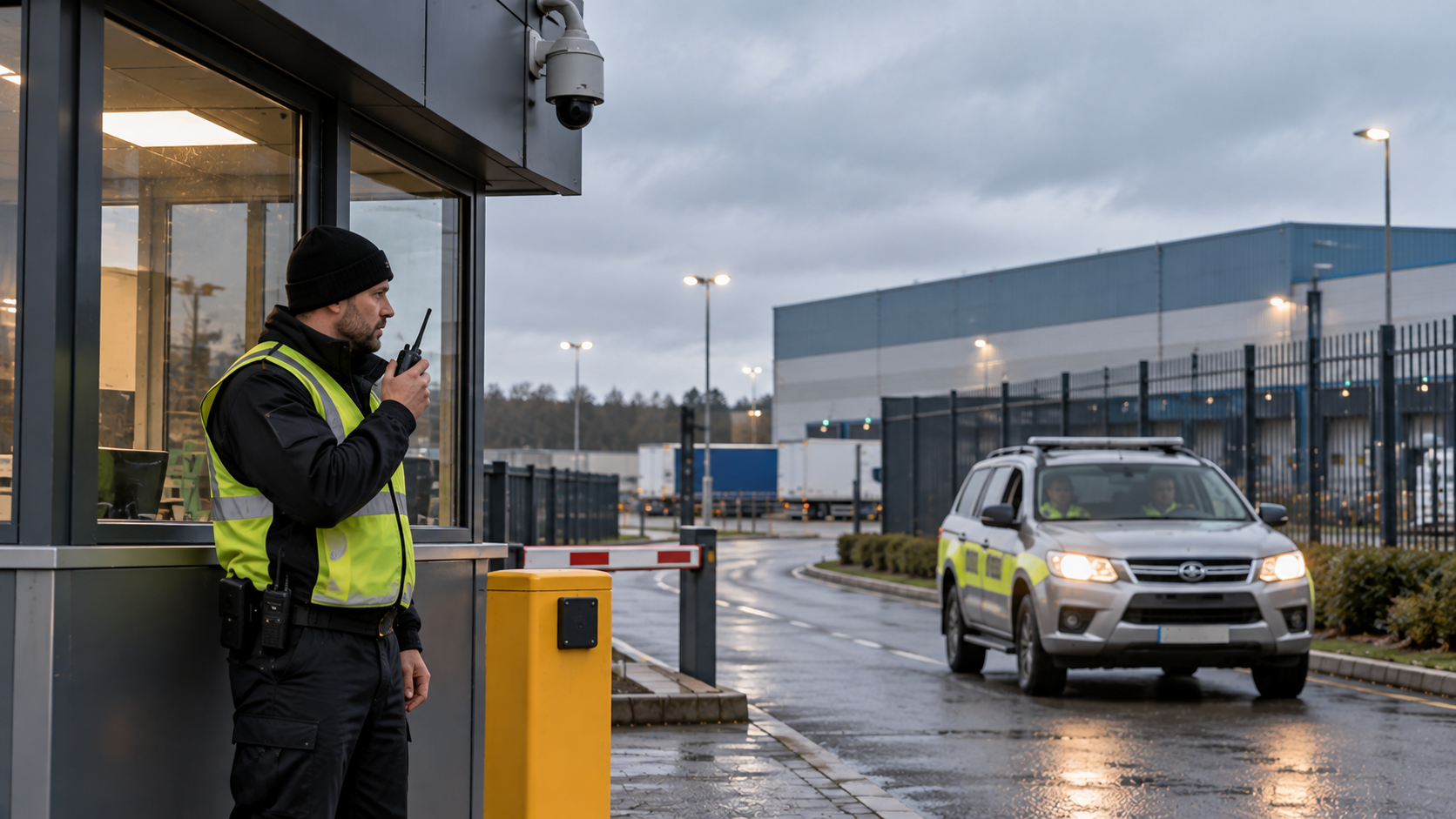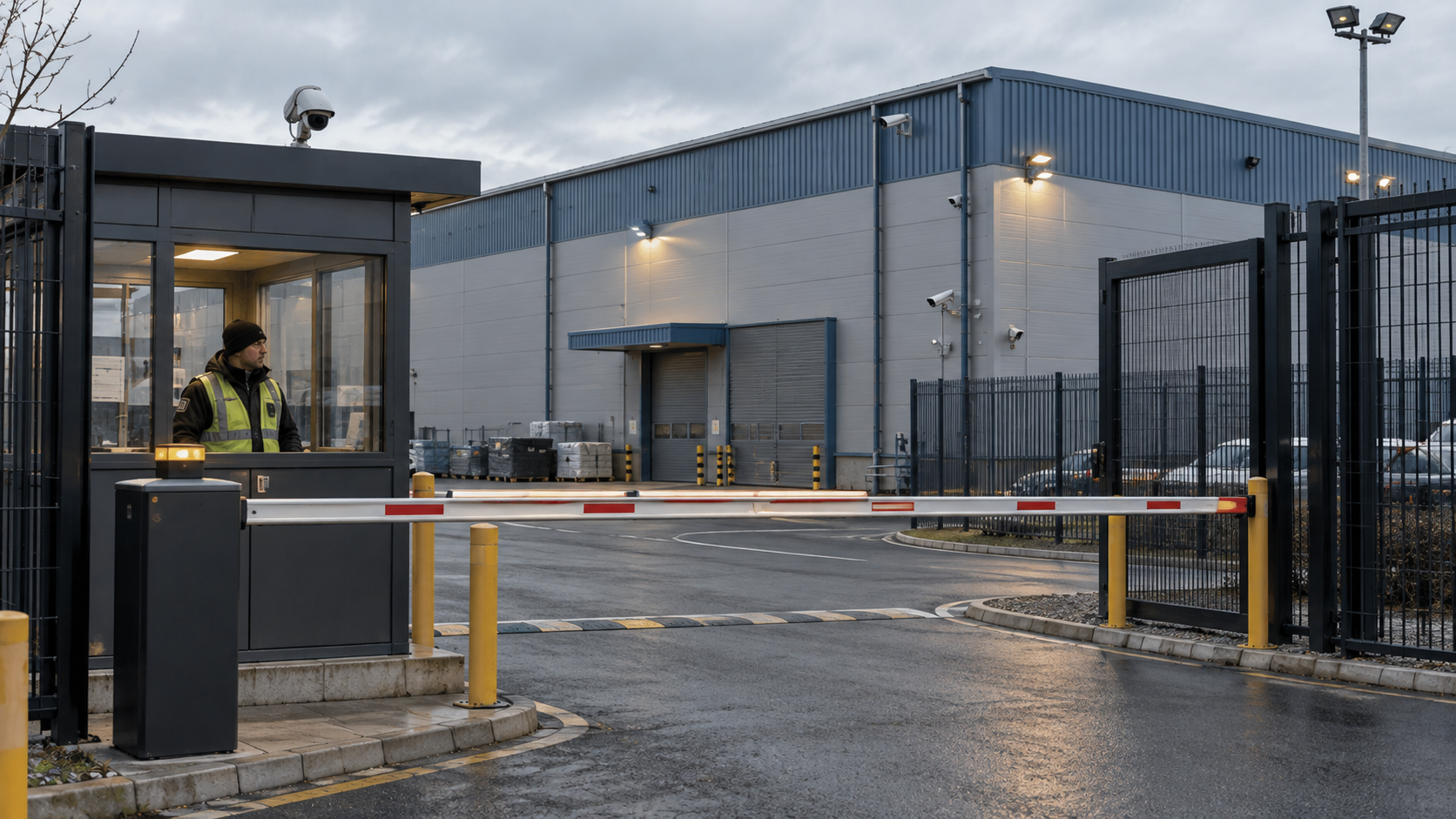
For businesses in Newcastle-under-Lyme, understanding common security mistakes in Newcastle-under-Lyme can be a useful starting point for reviewing existing arrangements.
The latest Staffordshire Police figures for Newcastle Town show that anti-social behaviour and shoplifting remain among the most commonly reported crime categories.
A useful security review should therefore look beyond whether a business has cameras, alarms or locks. It should ask how those measures are used, who is responsible for them and what happens when the premises are quiet or empty.
Newcastle-under-Lyme Crime Data: What Local Businesses Are Up Against
Local crime figures provide a useful reason to review premises security, but they should be interpreted carefully. Staffordshire Police’s current Newcastle Town data records 51 reports of anti-social behaviour, 19 shoplifting offences, 18 cases of criminal damage and arson, and 11 burglaries for June 2026. The same month recorded 246 crimes overall in the area.
These figures do not mean every business faces the same level of risk. They do, however, show why different types of premises need to consider the ways their own layout, opening hours and access arrangements could create opportunities.
Town Centre Retail Crime Trends
Retailers have particular reasons to pay attention to theft and anti-social behaviour. Staffordshire Police reported a series of shoplifting incidents affecting businesses in and around Newcastle-under-Lyme during December 2024, including stores at Wolstanton Retail Park and shops in Chesterton and Bradwell.
There have also been more recent incidents. In February 2025, Staffordshire Police responded to reports of shoplifting at Wolstanton Retail Park, where two teenagers were arrested in connection with suspected offences. Police said they were continuing to work with retailers and small business owners to target theft and burglary.
For retailers, the lesson is not simply to expect more shoplifting. It is to examine how stock is displayed, how entrances are managed and what staff can realistically observe during busy periods.
Industrial Estate & Business Park Break-Ins
Industrial and business premises face a different set of considerations because they may have larger perimeters, loading areas, yards and periods with few people present.
It would be misleading to claim that break-ins are increasing across every industrial estate in Newcastle-under-Lyme without estate-specific data. However, Staffordshire Police has documented serious incidents involving commercial premises locally.
In August 2024, officers investigated a ram-raid at a supermarket on Lower Milehouse Lane, where a van and power tools were used to damage shutters and access cash machines.
The practical point is straightforward: businesses should consider not only the front door but also shutters, service entrances, external storage, vehicle areas and other routes that could provide access.
Common Security Mistakes in Newcastle-under-Lyme Businesses Make
The most common security mistakes in Newcastle-under-Lyme businesses often involve gaps between having security measures and using them consistently. A camera can record an incident, for example, but it cannot replace a clear process for responding to suspicious activity.
Relying Solely on CCTV Without a Human Response Plan
CCTV is useful for visibility and evidence, but footage alone does not physically intervene when something unusual happens.
A common weakness is having cameras covering entrances while nobody has clearly defined responsibility for reviewing an alert or escalating an incident. Other issues can include poorly positioned cameras, obstructed views or equipment that has not been checked recently.
A practical review should establish what each camera covers, what happens when unusual activity is spotted and who needs to be informed. The important question is not simply, “Do we have CCTV?” It is, “What happens when the CCTV shows something that should not be there?”
Inconsistent or Untrained Front-of-House/Access Control
Access control can become ineffective when procedures depend entirely on individual staff habits.
A receptionist may know regular employees by sight, while another member of staff might allow an unfamiliar visitor through without checking. Contractors, delivery drivers and temporary workers can create similar situations.
Simple procedures help. Staff should know which areas are restricted, how visitors are recorded where required, and what to do when somebody cannot provide a clear reason for being on site.
Ignoring Out-of-Hours and Weekend Vulnerabilities
A premises can have sensible daytime procedures but become much easier to approach once employees leave.
Closing routines sometimes become rushed. A side door may not be checked properly, an external light may have failed, or equipment may be left in an exposed location. Weekend arrangements can create similar gaps where fewer people are present.
A useful test is to walk around the property after normal working hours and view it as somebody unfamiliar with the site would. If an access point is difficult for staff to notice, it may deserve closer attention.
Business Security Gaps in Newcastle-under-Lyme: Retail vs Industrial Sites
Business security mistakes in Newcastle-under-Lyme vary considerably according to the type of premises. A shop dealing with customer footfall has different vulnerabilities from a warehouse with a large yard, while an office may have relatively quiet periods when only a handful of people remain inside.
Where Retail Premises Fall Short
Retail sites can struggle with visibility during busy periods. Staff may be concentrating on customers, tills or stock while another part of the shop receives less attention.
Unsecured stock near exits, poorly observed aisles and unclear procedures for suspicious behaviour can all create weaknesses. Closing time also deserves attention, particularly where employees are responsible for securing the premises with limited supervision.
Where Warehouses and Industrial Sites Fall Short
Warehouses and industrial sites can have more access points than staff can reasonably monitor at all times.
Loading bays, vehicle gates, rear doors and external storage areas may receive less attention than the main entrance. Large sites can also contain blind spots created by buildings, fencing, parked vehicles or stored materials.
A sensible review should consider how someone could approach the site, where they could enter and how quickly they could leave.
Where Offices and Business Parks Fall Short
Offices often rely heavily on reception arrangements during working hours, but those controls may become weaker when staff numbers fall. Shared buildings create another consideration.
Employees, visitors, contractors and neighbouring occupiers may use different entrances or shared areas. Clear access rules become particularly important when a building is partially occupied or operating outside normal hours.
How to Spot Security Weaknesses Before They're Exploited
The best time to identify a security weakness is before an incident exposes it. A basic site review can reveal issues that are easy to miss during normal working routines.
Running a Basic Site Risk Assessment
Start outside and work inwards. Walk the perimeter and examine every entrance, window, gate and service area. Look for places where visibility is poor or where somebody could approach without being noticed easily.
Where a business needs a more detailed assessment, a security company West Midlands may also be able to identify weaknesses that are easy to overlook internally.
Common Staff-Training Blind Spots
Staff training should cover ordinary situations rather than only dramatic incidents. Employees need to know what to do when an unfamiliar person asks to enter a restricted area, when a door has been propped open or when somebody behaves unusually.
They should also know who to contact if something does not feel right. One surprisingly common problem is assuming that experienced staff already know the procedure.
They may know the premises well but still have different ideas about what should happen when an unusual situation occurs.
Auditing Your Current Security Technology
Technology should be checked as a working system, not simply listed as an asset. Review CCTV coverage, recording functionality, lighting around cameras and any alarms or access-control equipment.
Check whether equipment still covers the areas that matter after changes to the building or site layout. A camera installed before a new partition, storage area or extension may no longer provide the coverage originally intended. Regular reviews help catch those changes.
Fixing Business Security Gaps in Newcastle-under-Lyme
Protecting business premises in Newcastle-under-Lyme starts with correcting straightforward weaknesses before considering more complex measures. The appropriate response will depend on the premises, their operating pattern and the risks identified during an assessment.
Practical Physical Fixes (Access Points, Lighting, Signage)
Begin with weaknesses that can be addressed directly. Check that doors, gates and windows are properly secured, and that lighting covers important approaches and access areas. Keep visibility around entrances clear where possible.
Signage can also help communicate boundaries, restricted areas and expected visitor behaviour. It should support an existing procedure rather than be treated as a substitute for one.
Procedural Fixes
Clear procedures make it easier for staff to know what needs checking and who is responsible for it. A simple closing checklist can cover doors, windows, external areas and security systems.
Handover notes are useful when different teams work at the same premises. They give the next shift a quick record of anything unusual, such as a faulty door lock or an issue that still needs attention.
Staff should also know what to do when something goes wrong. That means having a clear contact person for suspicious behaviour, equipment problems or concerns about access.
When to Bring in Professional Support
Some weaknesses can be addressed internally, but a professional security company Newcastle-under-Lyme can be appropriate when the site has persistent problems or a more complicated risk profile.
This may be particularly relevant after repeated incidents. It is also worth considering when valuable stock or equipment is involved. The same applies to premises with multiple buildings or access points.
A professional risk assessment can also provide an outside perspective. Someone who has not become accustomed to the site may notice a weakness that employees have stopped seeing.
Avoiding Common Security Mistakes in Newcastle-under-Lyme: Key Takeaways
Avoiding common commercial security mistakes in Newcastle-under-Lyme is largely about consistency. Security measures work better when physical arrangements, staff procedures and regular checks support one another.
Quick Self-Check Checklist
Use these questions as a starting point:
- Can every entrance and exit be accounted for?
- Are less-used doors, gates and windows checked?
- Does CCTV cover the areas that actually matter?
- Does somebody know what to do when suspicious activity is identified?
- Are staff clear about visitor and restricted-area procedures?
- Are closing checks completed consistently?
- Are external lighting and visible security equipment working?
- Have recent changes to the building created new blind spots?
Any “no” or “not sure” answer is worth investigating.
Next Steps for Business Owners
Start with the easiest weaknesses to verify. Walk the site, speak to employees who use different areas and review what happens during opening, closing and quiet periods.
Then prioritise issues according to their potential impact rather than trying to change everything at once.
If the premises have changed, the business has experienced repeated incidents or existing measures no longer seem sufficient, review the risk assessment rather than simply adding another device.
The aim is a security arrangement that reflects how the premises actually operate. A sensible approach to business premises safety in Newcastle-under-Lyme is therefore based on regular review, clear responsibility and practical prevention rather than relying on one measure to solve every problem.
Conclusion
Keeping business premises safe does not always require a complete overhaul. Often, the first step is finding the small weaknesses that have become part of the daily routine and addressing them properly.
Local crime information can provide useful context, but the most relevant risks will always depend on the individual site. If you want an independent view of where your premises may be vulnerable, you can request a free security risk assessment and use the findings to decide what needs attention.