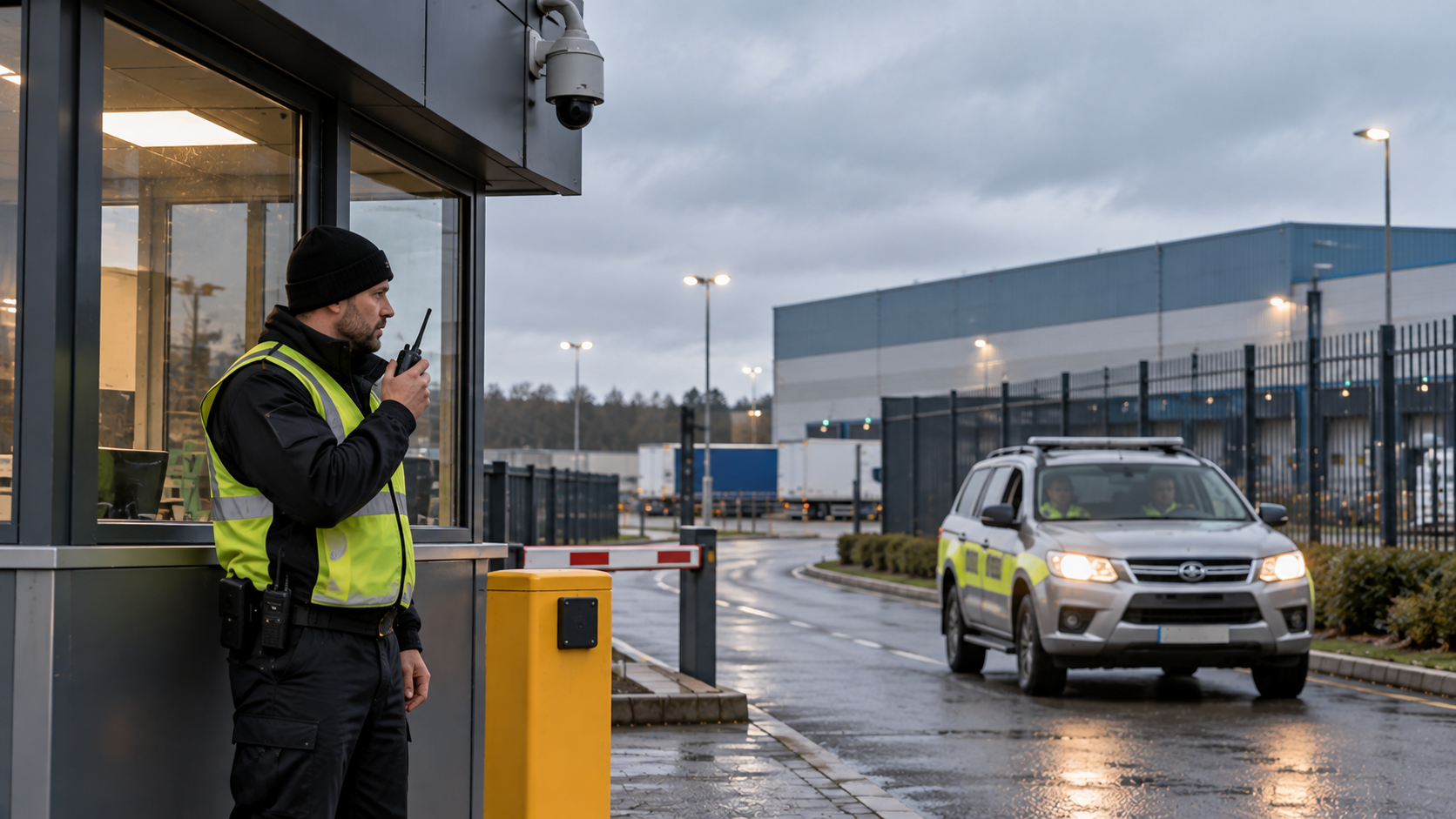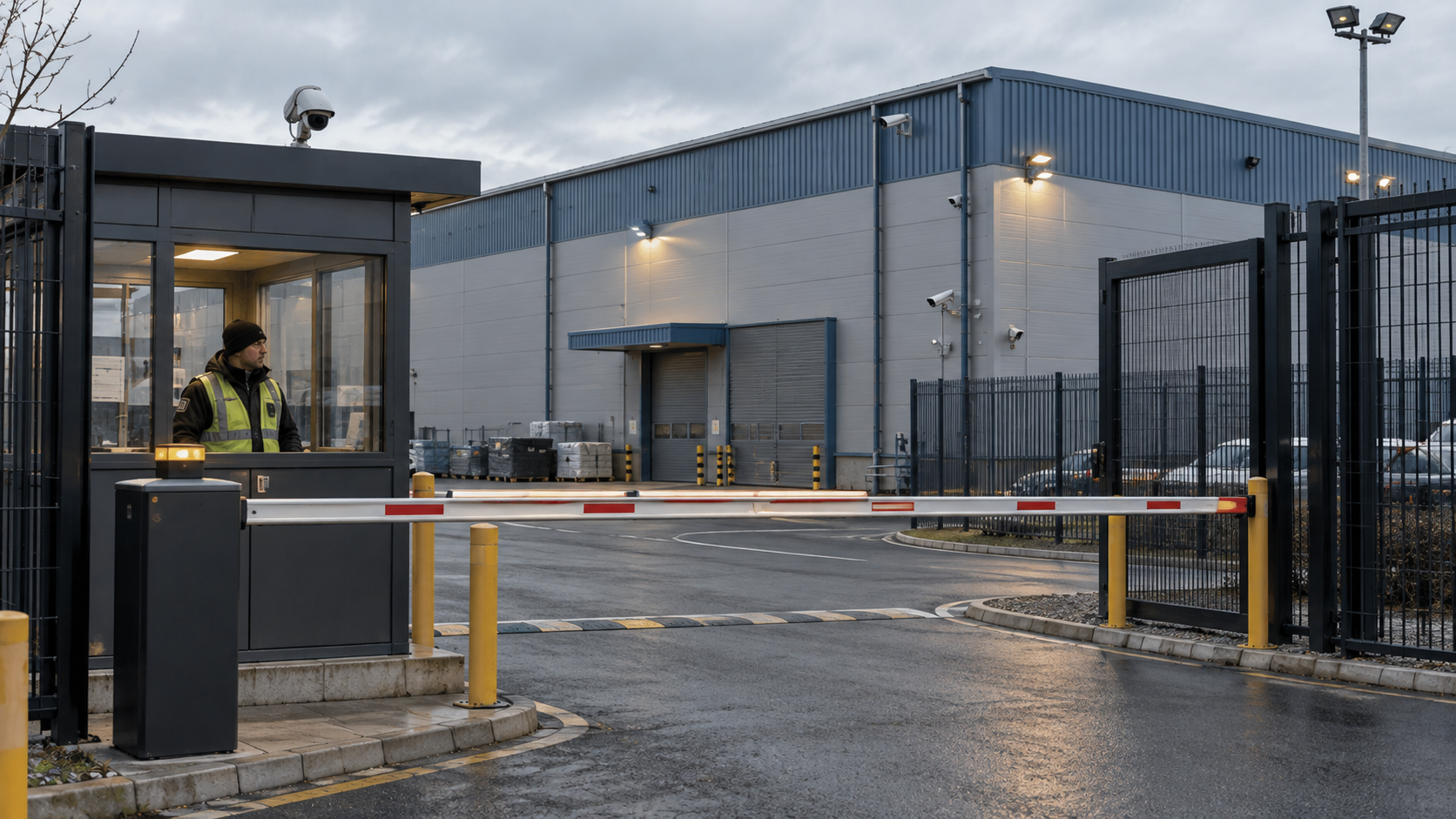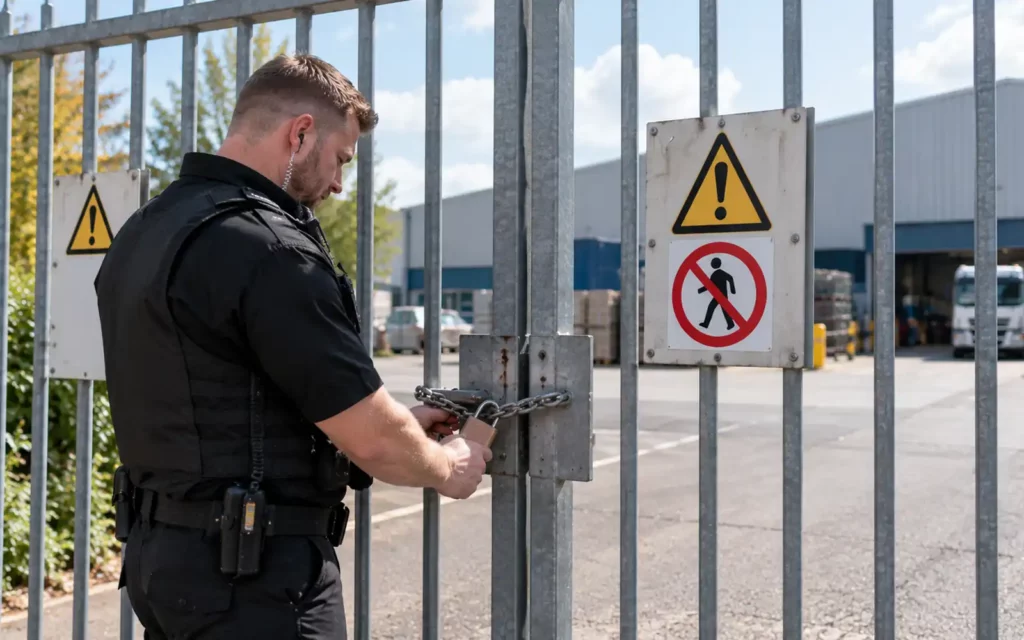
Sites around Walsall, Edgbaston and Smethwick can have very different security considerations depending on their layout, surrounding environment, opening hours, access points and the movement of staff, visitors and deliveries.
A useful plan should also account for what happens when a site is quiet, how incidents are reported and who is responsible for acting on them.
Looking at these factors together gives businesses a more realistic picture of where weaknesses may exist and what needs attention first.
Why Security Planning Matters for Sites in Walsall, Edgbaston and Smethwick
A location can provide useful context, but it cannot determine the security requirements of an individual site. Two premises a few miles apart may have completely different layouts, operating patterns and levels of exposure.
A retail unit with regular customer traffic has different considerations from a warehouse that becomes largely unoccupied overnight. An office may have several access points but limited stock, while an industrial site could have vehicles, machinery and storage areas to consider.
That is why security planning should begin with the actual premises rather than a generic list of threats.
Local crime patterns provide useful context
Local police data can help businesses understand what is being reported in an area, although it should not be treated as a prediction of what will happen at a particular site.
Location | Reported crime | Notable categories |
Edgbaston | 336 | Violence & sexual offences: 149 Public order: 31 Other theft: 29Vehicle crime: 28 |
Smethwick Town | 609 | Violence & sexual offences: 281 Public order: 52 Criminal damage & arson: 46 Other theft: 45 |
Walsall | ↓ 2.34% | Overall crime reduction Shop theft reduced Vehicle theft reduced |
Local crime figures are useful background information when reviewing a site’s circumstances. Businesses in the area may also wish to understand what a security company Smethwick typically considers when assessing the practical requirements of commercial premises.
Security Planning for Businesses: Start With the Site
Security planning for businesses should begin with understanding how a site is laid out and how it operates throughout a normal working day.
A useful starting point is to walk through the premises as though you were seeing it for the first time. Look at how someone approaches the building, where they can enter, what areas they can reach and which parts become less visible when staff leave.
Map entrances, boundaries and vulnerable areas
Start by identifying every way people and vehicles can enter or leave the site. The main entrance may be obvious, but secondary doors, loading areas and emergency exits can be just as important.
A site review should consider:
- Main and secondary entrances
- Vehicle access points
- Loading and delivery areas
- Perimeter boundaries
- Staff-only areas
- Storage locations
- Emergency exits
Pay attention to areas that are rarely used. An infrequently opened side door can easily receive less attention than the main entrance.
Consider how the site changes after hours
Security requirements can change significantly once normal activity stops. When employees leave, deliveries finish, and reception areas close, there may be fewer people available to notice unusual activity.
Areas that were visible during the day may also become much quieter or harder to observe. For that reason, a site should be considered at different times rather than assessed only during normal business hours. The closing routine is often where small gaps become noticeable.
Assess the Main Commercial Security Risks Before Setting Priorities
A useful security review should identify vulnerabilities before deciding which issues deserve the most attention. Not every weakness carries the same significance.
Look beyond obvious threats
The first step is to look for situations that could make an incident easier to occur or harder to detect.
Potential issues can include:
- Uncontrolled access
- Theft opportunities
- Vehicle-related incidents
- Criminal damage
- Unauthorised visitors
- Poor visibility
- Weak closing procedures
The important question is not simply whether a vulnerability exists. Consider where it occurs, when it matters and what could happen if it is overlooked.
For example, an unsecured delivery entrance may present little concern during a busy working period when staff are nearby. The same entrance could deserve greater attention once the site becomes quiet.
Consider people as well as property
Security planning also needs to account for the people who use the premises. Employees may have different access requirements from visitors or contractors.
Lone workers may have different considerations from teams working together. Delivery drivers may need access to parts of a site that ordinary visitors should not enter.
Think about:
- Employees
- Lone workers
- Visitors
- Contractors
- Delivery drivers
- Reception and front-of-house staff
A practical plan should make clear how these groups are expected to move around the site and what happens when something appears unusual.
Build a Practical Premises Security Checklist
A premises security checklist can turn a broad security review into a series of straightforward checks. It should cover physical features as well as everyday procedures.
Check physical access points
Inspect doors, windows and other entry points for weaknesses or inconsistent use.
Consider whether:
- Doors and windows are properly secured
- Restricted areas are clearly controlled
- Delivery entrances are managed appropriately
- Emergency exits are known and kept suitable for their intended use
- Access arrangements match the people who actually need them
It is worth checking whether written procedures match what happens in practice. A policy can look fine on paper while staff follow a different routine every day.
Review visibility around the site
Visibility can affect how easily unusual activity is noticed. Look at lighting around entrances, parking areas and external routes. Check whether stored materials, vehicles or other objects create blind spots.
External areas should be considered as part of the same review as the building itself. A poorly observed side area may matter just as much as an internal room.
Review procedures as well as physical measures
Physical measures are only part of the picture. Day-to-day routines can either support or undermine them.
A review should consider:
- Opening and closing checks
- Visitor procedures
- Key and access management
- Staff handovers
- Incident reporting
- Escalation procedures
A short closing checklist can be particularly useful. It can remind staff to check doors, windows, external areas and relevant security systems before the premises are left unattended.
Use Local Crime Information to Refine Security Priorities
Crime information can help provide direction, but it works best when combined with what is known about the individual site.
Crime statistics should inform, not dictate, planning
The latest police data illustrates why broad assumptions can be misleading. Edgbaston recorded 336 crimes in June 2026, while Smethwick Town recorded 609. The categories reported most frequently also differed in their numbers.
That does not mean a business in Smethwick automatically faces a particular threat, or that a business in Edgbaston is exposed to less risk. Reported crime figures cover wider areas and many different circumstances.
They are better used as one source of information when deciding what deserves a closer look. Businesses reviewing their wider security arrangements can also consider how a security company West Midlands approaches different types of commercial premises across the region.
Consider how business activity affects exposure
The way a site operates can change its security considerations. A retail premises may have frequent customer movement and periods of high footfall.
A warehouse may have fewer people but more deliveries and stored goods. Offices may have controlled access during working hours and a much quieter environment overnight.
Construction sites can change as work progresses, with temporary access arrangements and materials or equipment moving around the site.
The same principle applies to customer-facing premises. The presence of visitors can create a different set of access and monitoring considerations from a site used only by employees.
Business Security Planning Should Include People and Procedures
Good business security planning should make responsibilities clear. People need to know what they are expected to do, particularly when an unusual situation occurs.
Make responsibilities clear
A plan should identify who is responsible for routine checks and who needs to act when an incident is reported. Depending on the organisation, this may include responsibility for:
- Site checks
- Access management
- Incident recording
- Receiving alerts
- Escalating serious incidents
Without clear ownership, a relatively minor issue can sit unresolved because everyone assumes someone else is dealing with it.
A simple handover record can help where several teams or shifts use the same premises. It provides a place to record issues that the next person needs to know about.
Keep security procedures practical
Procedures are more useful when people can actually follow them during a busy working day.
Keep instructions clear and accessible. Staff should understand what needs checking, what should be recorded and who should be contacted if something falls outside the normal routine.
Procedures should also be reviewed when they stop reflecting how the site operates. A document written before a premises expansion, new entrance or change in opening hours may no longer cover the real situation.
Review Security When the Business Changes
Security planning should not be treated as a one-off exercise. A change to the premises or the way it operates can create new vulnerabilities.
Changes that should trigger a review
A review may be appropriate when there is a significant change such as:
- Moving premises
- Expanding a site
- Changing opening hours
- Adding entrances
- Changing delivery arrangements
- Increasing stock or equipment
- Changing staffing levels
- A new neighbouring development
The review does not necessarily need to result in major changes. Sometimes it simply confirms that existing arrangements still make sense.
Don't wait for an incident
An actual incident is not the only reason to reconsider security. Near misses can be revealing. So can repeated problems such as doors being left unsecured, visitors reaching areas they should not access or staff being unclear about who should receive an alert.
These are useful warning signs because they show how the site operates in practice. Fixing a small procedural weakness can be easier than trying to work out why it became a recurring problem later.
Turning Security Findings Into an Action Plan
Once the review is complete, findings can be turned into a straightforward action plan:
- Identify potential weaknesses across the site.
- Assess how relevant each weakness is to the way the premises operate.
- Prioritise the issues that deserve attention first.
- Improve practical weaknesses through appropriate changes to the site or procedures.
- Review the plan when circumstances change.
The process does not need to be complicated. What matters is that the findings lead to clear actions and that those actions are revisited when the business changes.
Security planning for businesses is therefore best viewed as an ongoing review of how people, premises and procedures work together. Local crime information can provide useful background, but the most useful plan is one built around the actual site and the way it is used.