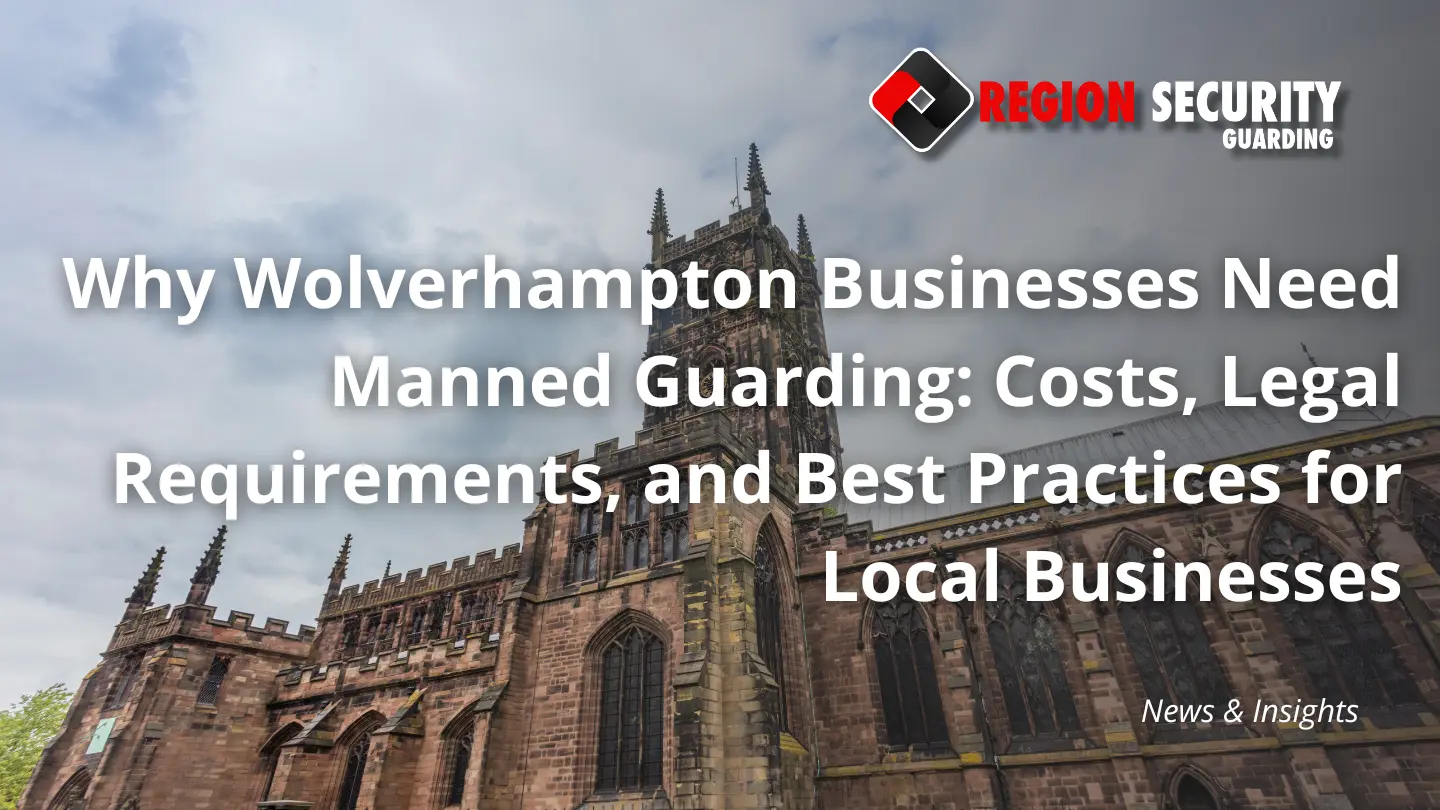
The city of Wolverhampton is located in the West Midlands and has developed into a large and diverse commercial and industrial area. Due to its geographical location, Wolverhampton has become a hub for many businesses that operate in a fast paced, volatile and rapidly changing environment. With growth comes an increased threat level. Increased levels of opportunistic theft, vandalism and organised criminal activity are becoming commonplace in Wolverhampton.
According to recent reports, retail and warehouse theft in the city has increased by approximately 15% over the past two years, highlighting the rising security challenges for local businesses. Modern day threats require proactive solutions that use people in conjunction with technology. Manned guarding creates a true visible, responsive level of protection that technology cannot provide.
There have been increasing reports from local press about incidents of theft in Wolverhampton. Many businesses are losing hundreds of thousands of pounds a year to retail theft, warehouse cargo crime and vandalism, and manned guarding is an absolute necessity, as it is a strategic investment for safety, compliance and business continuity.
Understanding Manned Guarding in Wolverhampton
Security needs in Wolverhampton are diverse. The city hosts a mix of retail centres, industrial estates, transport hubs, and nightlife venues, each presenting unique challenges. Manned guarding is not just about presence; it’s about active protection, vigilance, and rapid response. Unlike static security systems, which rely solely on cameras or access control, manned guards can assess situations in real-time, make judgement calls, and intervene before incidents escalate.
Many organisations operating across the Black Country and nearby Birmingham find that security strategies effective in one area often need adjustment in Wolverhampton due to differences in footfall patterns, transport access, and night-time activity.
What is Manned Guarding and How it Differs from Static Security
Manned guarding involves trained personnel physically present on-site, patrolling, monitoring, and interacting with the environment. Static security, on the other hand, may include CCTV monitoring or remote systems, which primarily observe and report incidents after they occur. In Wolverhampton, manned guards are essential for high-traffic areas such as shopping centres, industrial parks, and office complexes where human intuition and immediate action can prevent theft, vandalism, or anti-social behaviour.
Businesses with sites spanning Walsall and Dudley often note that Wolverhampton locations require more dynamic access control and behavioural management due to higher pedestrian movement and mixed-use surroundings.
Local Crime Patterns and High-Risk Sectors
Wolverhampton has experienced pockets of rising retail theft, anti-social behaviour, and opportunistic criminal activity, particularly in areas with large footfall. Retail parks, warehouses, and nightlife venues are more vulnerable, especially during evenings and weekends. Construction sites and industrial estates are often targeted for equipment theft or unauthorised access. Manned guards provide both deterrence and rapid response, addressing these vulnerabilities in ways technology alone cannot.
Peak Crime Hours and Operational Challenges
Security challenges vary by time of day. Retail areas may see increased theft during busy daytime hours, while nightlife zones and transport hubs face heightened risks at night. Guards in Wolverhampton are trained to adapt their patrol patterns according to these fluctuations, focusing on high-risk periods and responding to incidents immediately. Seasonal events, local festivals, and increased commuter traffic also impact security needs, requiring flexible staffing and vigilant monitoring.
Specific Vulnerabilities for Industrial and Warehouse Sites
Warehouses and industrial estates are critical to Wolverhampton’s economy but present unique security risks. Large storage areas, multiple access points, and valuable inventory make them attractive targets for theft or vandalism. Manned guarding in these environments involves comprehensive patrols, perimeter checks, and internal inspections, ensuring that vulnerabilities are addressed proactively rather than reactively.
Addressing Anti-Social Behaviour in Public and Retail Spaces
Retail parks, town centres, and transport hubs in Wolverhampton sometimes experience anti-social behaviour such as loitering, harassment, or minor vandalism. Manned guards provide a visible deterrent and can intervene appropriately, de-escalating conflicts and reporting incidents promptly. This proactive approach not only protects people and property but also helps maintain a safe and welcoming environment for visitors and employees alike.
Day vs Night Security Risks
Daytime and nighttime security present distinct challenges. During the day, retail theft and visitor safety are primary concerns, while nighttime risks include burglary, vandalism, and incidents in nightlife areas. Guards are trained to modify their patrol routines, response strategies, and engagement approaches depending on the time of day to ensure effective coverage at all hours.
Impact of Economic Growth and Transport Infrastructure
Wolverhampton’s growing economy and expanding business sector increase the demand for manned security. Industrial developments, new commercial premises, and a busy transport network, including train and bus stations, require professional security to maintain safety. Manned guards help mitigate risks associated with increased activity and provide a sense of confidence for employees, clients, and visitors.
Legal and Compliance Requirements for Manned Guarding in Wolverhampton
Manned guarding in Wolverhampton operates within a strict legal and regulatory framework designed to protect businesses, the public, and security personnel themselves. Whether guards are deployed at retail parks, industrial estates, construction sites, or public venues, compliance is not optional. It directly impacts insurance validity, licensing approvals, contract eligibility, and incident liability.
For Wolverhampton businesses, understanding these legal obligations is just as important as selecting the right security provider. A compliant guarding operation reduces risk, supports smooth collaboration with local authorities, and demonstrates responsible site management.
SIA Licensing Requirements for Security Guards in Wolverhampton
All security guards working in Wolverhampton must hold a valid Security Industry Authority (SIA) licence relevant to their role, such as manned guarding, door supervision, or CCTV operation. This licence confirms that the guard has completed approved training, passed background checks, and understands their legal powers and limitations. From a client’s perspective, SIA licensing ensures:
- Guards are legally permitted to operate
- Training standards meet national requirements
- Individuals are vetted and accountable
- Professional conduct is enforced by regulation
Legal Penalties for Using Unlicensed Security Guards
Using unlicensed guards is a criminal offence under the Private Security Industry Act 2001. Both the security provider and the client business may be held responsible. Penalties can include substantial fines and, in serious or repeated cases, criminal prosecution. For Wolverhampton businesses, compliance protects not only legality but long-term operational stability. Beyond legal action, there are wider consequences:
- Insurance claims may be rejected
- Contracts may be terminated
- Reputational damage can affect future licensing or tenders
DBS Checks and Enhanced Vetting Expectations
Although SIA licensing includes criminal record screening, many Wolverhampton businesses require additional vetting. DBS checks are often expected for guards working in environments involving vulnerable individuals, cash handling, high-value assets, or sensitive information. Reputable security providers also follow BS 7858 vetting standards, which include:
- Verification of identity and right to work
- Employment history checks
- Financial background screening
- Character and professional references
Insurance Requirements for Manned Guarding Services
When hiring manned guards in Wolverhampton, businesses must ensure the security provider carries appropriate insurance cover. Without adequate insurance, businesses may be left fully liable if an incident occurs, even if guards were licensed and trained. At a minimum, this includes:
- Public Liability Insurance – protects against injury or property damage claims
- Employer’s Liability Insurance – covers guards while they are on duty
Data Protection and CCTV Compliance
Where manned guarding is integrated with CCTV systems, compliance with UK GDPR and the Data Protection Act 2018 is essential. Guards must be trained to handle surveillance responsibly and lawfully. Failures in data protection can result in regulatory fines and damage to public trust, especially in public-facing locations. Key compliance expectations include:
- Secure storage of recorded footage
- Restricted access to authorised personnel only
- Clear procedures for data retention and review
- Lawful use of footage for security purposes only
VAT Rules for Manned Guarding Services
Manned guarding services in the UK are generally subject to VAT at the standard rate. Wolverhampton businesses should account for this when budgeting for security contracts. Transparent VAT treatment is also important for audit compliance and financial planning, particularly for long-term or multi-site agreements.
Local Authority Expectations for Construction Site Security
Construction projects in Wolverhampton often require visible and effective security arrangements as part of planning and safety conditions. Effective construction site guarding helps prevent theft, vandalism, and project delays while supporting compliance with local authority requirements. These expectations may include:
- Controlled access points
- Perimeter guarding
- Asset protection during non-working hours
- Incident reporting and coordination with authorities
Documentation That Proves a Security Firm’s Compliance
A professional security provider should be able to demonstrate compliance through clear documentation, including:
- Valid SIA licences for all deployed guards
- DBS and BS 7858 vetting records
- Training certificates
- Insurance documentation
- Incident logs and audit reports
Impact of Mandatory Security Company Licensing on Clients
Mandatory licensing and regulatory oversight have raised standards across the guarding sector. For Wolverhampton clients, this means improved service quality and reduced exposure to non-compliant operators. However, it also places responsibility on businesses to thoroughly assess providers before engagement.
How SIA Licensing Changes Affect Guard Recruitment
Changes to SIA training and licensing requirements have increased professionalism across the industry. However, they can also lengthen recruitment timelines. Wolverhampton businesses that rely on manned guarding are advised to plan security coverage well in advance, particularly for high-risk or seasonal periods.
Labour Laws and Overtime Regulations
Security providers must comply with UK labour legislation, including Working Time Regulations, which govern:
- Maximum shift lengths
- Mandatory rest periods
- Overtime payments
Post-Brexit Recruitment Challenges in the Security Sector
Post-Brexit immigration rules have limited access to EU labour within the security industry. As a result, many Wolverhampton security providers now focus on local recruitment, training, and retention strategies to maintain staffing levels and service continuity.
Manned Guarding and Event Licensing in Wolverhampton
For public events and venues, licensed security personnel are often a condition of event approval. Guards play a key role in:
- Crowd management
- Access control
- Emergency response coordination
Collaboration with West Midlands Police
Private manned guarding teams in Wolverhampton regularly coordinate with West Midlands Police, particularly for high-risk locations or recurring incidents. Police intelligence and response protocols help shape deployment strategies and escalation procedures.
Local Crime Reduction Partnerships and Information Sharing
Businesses and security providers in Wolverhampton often participate in local crime-reduction initiatives and information-sharing networks. These collaborations help:
- Identify repeat offenders
- Reduce antisocial behaviour
- Improve overall safety across commercial areas
Costs, Contracts, and Deployment of Manned Guarding in Wolverhampton
For businesses in Wolverhampton, the cost and structure of manned guarding services depend on far more than just hourly rates. Location, risk profile, staffing availability, contract length, and wider economic pressures all influence pricing and deployment timelines. Understanding how these factors interact helps businesses make informed security decisions while maintaining compliance and budget control.
Typical Costs for Manned Guarding in Wolverhampton
Manned guarding costs in Wolverhampton vary depending on whether security is required in busier town-centre locations or quieter suburban and industrial areas. Sites closer to the city centre, transport hubs, and high-footfall retail areas typically command higher rates due to increased risk exposure and operational intensity. Key cost drivers include:
- Level of risk and incident history
- Daytime versus night-time coverage
- Requirement for specialist skills (retail loss prevention, gatehouse control, event security)
- Lone working versus multi-guard deployments
Time Required to Hire and Deploy Guards in Wolverhampton
Deployment timelines depend largely on guard availability, vetting status, and site complexity. For standard guarding requirements, deployment can usually be arranged within a short timeframe if licensed and vetted guards are already available. For high-risk or specialist sites, additional preparation may be required to ensure guards are fully briefed and compliant before deployment. Factors affecting mobilisation time include:
- SIA licensing and DBS status
- Site induction and briefing requirements
- Equipment setup and access permissions
- Client-specific reporting procedures
Common Contract Lengths for Manned Guarding
In Wolverhampton, manned guarding contracts typically range from short-term arrangements to multi-year agreements. Many businesses opt for longer contracts to secure consistent staffing, stable pricing, and improved operational familiarity. Longer contracts often allow for better workforce planning and reduced turnover on-site. Common contract structures include:
- Short-term contracts for events or temporary risk coverage
- Rolling monthly agreements with defined notice periods
- Fixed-term contracts lasting 12 to 36 months
Standard Notice Periods for Ending Guarding Contracts
Notice periods are usually defined within the service agreement and vary depending on contract length and scope. Short-term or rolling contracts often carry shorter notice requirements, while long-term agreements require more advance notice. Clear notice terms protect both the client and the security provider from sudden service disruption. Typical notice considerations include:
- Time needed to demobilise staff safely
- Handover of access credentials and equipment
- Final reporting and incident documentation
Impact of Wage Increases on Guarding Costs in 2025
Rising wages across the UK security sector have had a direct impact on manned guarding costs. Increased minimum wage levels, higher night-shift premiums, and improved retention incentives all contribute to pricing adjustments. While costs may rise, wage improvements also support better service quality and reduced staff turnover. For Wolverhampton businesses, this means:
- Greater emphasis on efficient shift patterns
- Increased value in long-term contracts with fixed pricing
- Higher expectations of guard professionalism and performance
Influence of Inflation on Long-Term Guarding Contracts
Economic inflation affects everything from wages and training costs to uniforms and equipment. Long-term guarding contracts in Wolverhampton increasingly include price review clauses to reflect changing economic conditions. Open communication between client and provider helps manage inflationary pressure without compromising security standards. Businesses should expect:
- Periodic cost reviews linked to inflation
- Clear transparency around pricing adjustments
- Opportunities to renegotiate scope rather than reduce coverage
How Manned Guarding Supports Insurance Premium Reductions
Insurers often view professionally managed manned guarding as a positive risk-reduction measure. A visible, trained security presence can reduce claims related to theft, vandalism, and unauthorised access. Detailed incident logs and patrol records further strengthen a business’s insurance position. Benefits for Wolverhampton businesses may include:
- Lower insurance premiums
- Improved claim acceptance
- Reduced excess requirements
Public Sector Contracts and the Procurement Act 2023
For public sector organisations in Wolverhampton, the Procurement Act 2023 has introduced clearer expectations around transparency, value for money, and supplier accountability. Security providers bidding for public contracts must demonstrate strong compliance records, ethical employment practices, and service reliability. For clients, this ensures higher-quality guarding services and reduced compliance risk. This has led to:
- More rigorous tender evaluations
- Increased focus on social value and workforce standards
- Greater scrutiny of subcontracting arrangements
Linking Costs, Contracts, and Risk Reduction
Ultimately, the cost of manned guarding in Wolverhampton should be viewed in relation to the risks it mitigates. Well-structured contracts, realistic deployment timelines, and transparent pricing help businesses balance security needs with financial planning.
When guarding is correctly deployed and professionally managed, it not only protects assets and people but also supports operational continuity, regulatory compliance, and long-term cost control.
Training, Daily Operations, and Guard Duties in Wolverhampton
Manned guarding in Wolverhampton is about far more than just showing up and standing watch. Effective security relies on a combination of professional training, structured routines, vigilant monitoring, and clear reporting. Guards are trained to anticipate potential risks, respond appropriately, and maintain the safety of people, property, and assets in a variety of environments—from retail outlets and office complexes to industrial estates and public event venues.
Training Standards for Wolverhampton Guards
All guards in Wolverhampton must hold a valid SIA licence, which ensures they meet the minimum legal requirements to work in private security. This blend of skills ensures guards can handle both day-to-day operations and unexpected incidents professionally and safely. Beyond licensing, effective retail and public-facing guards undergo training in:
- Conflict management and verbal de-escalation
- Emergency response procedures, including fire, first aid, and evacuation drills
- Observational skills and identifying suspicious behaviour
- Customer service, especially in high-footfall retail and hospitality environments
- Site-specific induction, including store layouts, high-value stock, and CCTV systems
Immediate Duties and Site Checks
Upon starting a shift, a Wolverhampton guard follows a structured routine to establish situational awareness:
- Sign-in and verification: Guards check in via a digital system to confirm attendance.
- Review handover logs: Previous shift incidents, maintenance issues, and ongoing risks are assessed.
- Equipment check: Radios, body cameras, first aid kits, keys, and alarm systems are inspected for functionality.
- Initial site walkthrough: Perimeter fences, gates, doors, and access points are inspected to detect any immediate vulnerabilities.
- CCTV and alarm verification: All cameras and sensors are checked to ensure operational coverage.
Shift Handover Procedures
Handover logs are critical to continuity. Incoming guards review these notes and confirm understanding with digital signatures or verbal briefings. This ensures seamless transition between shifts and reduces the risk of miscommunication. Guards in Wolverhampton document:
- Previous incidents and any unusual behaviour
- Equipment malfunctions or hazards
- Updates on visitor patterns and site-specific concerns
Patrol Routines and Perimeter Checks
During patrols, guards also monitor visitor activity, check equipment functionality, and respond promptly to alarms or security alerts. Patrol frequency depends on site risk assessments:
- Retail locations may require hourly or more frequent rounds, particularly during busy periods.
- Industrial areas prioritize perimeter checks at gates, loading bays, storage areas, and utility points.
- Patrols cover both internal and external areas to eliminate blind spots.
Daily Logbook Entries and Reporting
Wolverhampton guards maintain detailed, accurate logs throughout their shift, including:
- Visitor logs and access authorisations
- Incident reports, including photographic evidence if applicable
- Hazard observations, such as damaged equipment or environmental risks
- Notes on weather conditions affecting patrols or site safety
- Verification of patrol completion using digital checkpoint systems
Emergency Preparedness and Equipment Checks
Guards are trained to respond immediately to alarms, medical emergencies, or security breaches. Daily procedures include:
- Checking fire safety systems, exits, and emergency lighting
- Verifying all security and communication equipment at the start of the shift
- Regular monitoring of CCTV and restricted areas
- Ensuring no signs of tampering with utilities, gates, or equipment
Shift Patterns and 24/7 Coverage
Many Wolverhampton sites require around-the-clock security. This structured approach allows businesses to maintain constant vigilance and operational continuity across all hours. To maintain effectiveness:
- Guards operate in rotating shifts day, evening, and night often using a 4-on/4-off schedule or 12-hour rotations.
- Night and weekend shifts receive extra supervision and welfare checks to prevent fatigue.
- Emergency response times are coordinated with site layout and local authorities, ensuring prompt intervention if incidents occur.
Performance, Risks, and Challenges in Wolverhampton Manned Guarding
Managing performance and mitigating risks are critical for effective manned guarding in Wolverhampton. Businesses need to track Key Performance Indicators (KPIs) and address environmental, health, and staffing challenges to maintain high security standards.
KPIs and Performance Tracking
Key metrics help ensure guards perform their duties effectively. Common KPIs include:
- Incident response times – measuring how quickly guards respond to alarms or security breaches.
- Patrol completion rates – verifying scheduled rounds are consistently performed.
- Visitor and access log accuracy – ensuring proper recording of all entries and exits.
- Equipment checks – confirming CCTV, alarms, and communication systems are operational.
Weather and Environmental Challenges
Outdoor security in Wolverhampton is influenced by seasonal weather conditions. Rain, fog, or icy surfaces can hinder visibility and mobility during patrols. Guards are trained to document these conditions and adjust routines as needed to ensure safety without compromising security standards. Environmental regulations also require that patrols do not damage public property, local wildlife, or natural spaces while maintaining effective coverage.
Health and Shift Impacts
Long shifts, irregular hours, and night duties can affect guards’ physical and mental health. Fatigue can reduce alertness, increasing the risk of missed incidents. Organisations mitigate these risks by providing mental health support, adequate rest periods, welfare checks, and structured shift patterns. This ensures guards remain alert and capable of performing at a high level.
Risk Mitigation and Operational Reliability
Ensuring consistent security performance in Wolverhampton requires careful management of operational risks. Guards are trained to adapt to changing conditions, document hazards, and respond promptly to incidents. Regular monitoring of KPIs, thorough reporting, and adherence to safety and environmental regulations all contribute to reliable operations. By focusing on proactive risk mitigation, businesses can maintain high security standards, prevent potential losses, and provide a safe environment for employees, customers, and visitors.
Technology and Future Trends in Wolverhampton Manned Guarding
Technology has transformed the way manned guarding operates in Wolverhampton. While human presence remains the core of security, modern tools allow guards to act faster, make informed decisions, and manage larger areas efficiently. This combination of human vigilance and technological support ensures businesses can proactively prevent incidents rather than just react to them.
Integration of AI and CCTV Analytics
AI-enhanced CCTV systems are increasingly used to support security guards in Wolverhampton. These systems help identify unusual movements, potential theft, or suspicious behaviour, giving guards actionable insights in real time. Instead of relying solely on monitoring screens, guards can respond quickly to threats, preventing incidents before they escalate.
- AI alerts focus human attention on high-risk areas.
- Reduces reliance on constant monitoring and improves efficiency.
- Helps comply with insurance and client safety standards.
- Enhances incident reporting accuracy and response times.
Remote Monitoring and Drone Patrols
Remote monitoring complements physical guarding by providing live feeds from multiple sites simultaneously. Drone technology is also being used for expansive or hard-to-access locations, such as industrial estates, warehouses, and large public venues. This allows guards to have a bird’s-eye view, helping them identify risks that are not immediately visible from the ground.
- Live remote feeds improve situational awareness.
- Drones cover areas that are difficult to patrol on foot.
- Supports rapid identification and mitigation of potential security gaps.
- Particularly useful for large events and industrial sites.
Post-COVID Security Protocols
The pandemic reshaped security operations, introducing new protocols for crowd management, health safety, and public interaction. In Wolverhampton, guards are trained to manage high-traffic areas, maintain social distance when necessary, and respond to health-related incidents without compromising core security responsibilities.
- Crowd management training for retail and public spaces.
- Procedures to handle health and safety incidents.
- Maintains security efficiency during public health concerns.
- Ensures a safe environment for staff, customers, and visitors.
Predictive Analytics and Upskilling
Predictive analytics tools allow businesses to anticipate high-risk areas and peak incident times. This proactive approach helps in deploying guards effectively, reducing response times, and preventing incidents. Additionally, guards are encouraged to complete upskilling courses in advanced surveillance, emergency response, and conflict management to stay prepared for evolving security challenges.
- Predictive tools support data-driven guard deployment.
- Upskilling in advanced surveillance and emergency protocols.
- Improves operational effectiveness and readiness.
- Enables anticipatory action instead of reactive measures.
Green Security Practices
Environmental sustainability is becoming an essential part of modern manned guarding. Wolverhampton security teams are adopting eco-friendly patrol methods, energy-efficient vehicles, and low-impact equipment without compromising safety standards.
- Energy-efficient vehicles for patrolling.
- Minimal environmental impact during outdoor rounds.
- Sustainable technology integrated into daily operations.
- Aligns security practices with corporate sustainability goals.
Legislation and Compliance
Legal requirements such as Martyn’s Law impact the way manned guarding is conducted, particularly in public venues and events. Guards are trained to comply with regulations, manage crowds, and execute emergency protocols effectively. Regular updates in training ensure Wolverhampton security teams remain compliant and prepared.
- Compliance with local and national legislation.
- Guards trained in emergency procedures and access control.
- Ensures safety while protecting assets and people.
- Regular review and updates of procedures to match legal standards.
Conclusion
Effective manned guarding in Wolverhampton is built on a foundation of professionalism, training, and integration with modern technology. By combining human vigilance with AI analytics, CCTV, remote monitoring, and even drone surveillance, security teams can respond faster, anticipate risks, and maintain safe environments for staff, customers, and assets.
Legal compliance, thorough training, and adherence to safety standards further reinforce the reliability of these services. In a city with diverse security needs ranging from retail theft and industrial safety to public events and transportation hubs, manned guarding provides a flexible, responsive, and proactive layer of protection that businesses cannot afford to overlook.
Frequently Asked Questions
1. How much does manned guarding typically cost in Wolverhampton?
Costs depend on location, risk level, and shift type. City-centre sites, night shifts, and high-risk premises usually cost more than low-risk daytime coverage.
2. Do security guards in Wolverhampton need an SIA licence?
Yes. All manned guards must hold a valid SIA licence, confirming they are trained, vetted, and legally authorised to work.
3. Can manned guarding help reduce insurance premiums?
In many cases, yes. Insurers often view licensed manned guarding as a risk-reduction measure, especially for theft-prone or high-value sites.
4. How quickly can manned guards be deployed?
Deployment can be arranged quickly if licensed guards are available, but specialist or high-risk sites may require additional planning and induction.
5. Which types of businesses benefit most from manned guarding?
Retail stores, warehouses, construction sites, offices, transport hubs, and event venues benefit most due to higher footfall or asset risk.
6. Is manned guarding more effective than CCTV alone?
Yes. CCTV records incidents, but manned guards can intervene, deter crime, and respond immediately to developing situations.
7. Are guards trained to manage anti-social behaviour?
Yes. Guards receive training in conflict management, de-escalation, and appropriate intervention techniques.
8. Can manned guarding provide 24/7 security coverage?
Yes. Many Wolverhampton sites operate with rotating day and night shifts to maintain continuous protection.
9. What should businesses check before hiring a security provider?
Businesses should check SIA licensing, vetting standards, insurance cover, training records, and local experience.