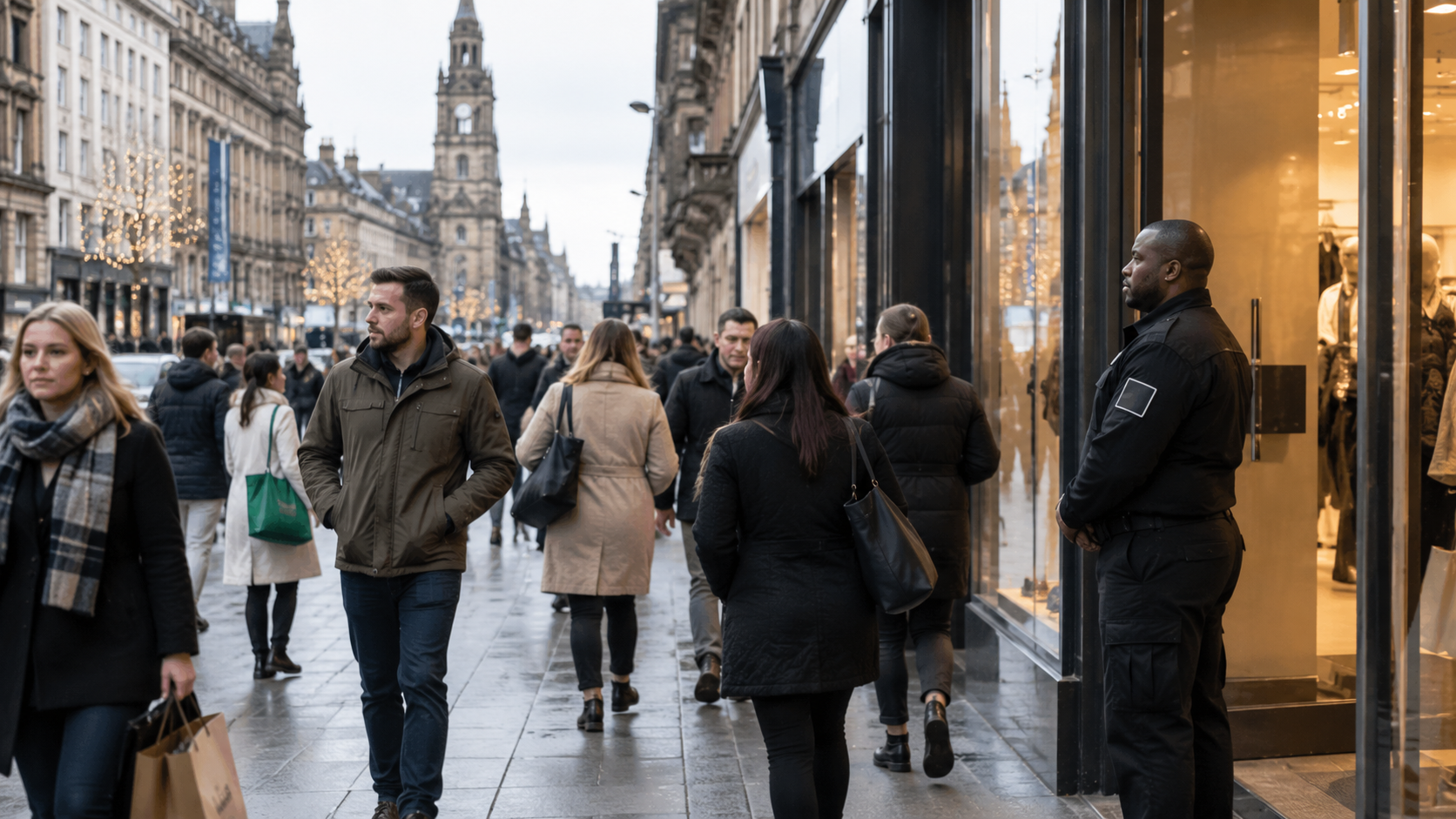
Manned guarding is often treated as a last resort. Something added after an incident, or when insurance starts asking harder questions. In reality, for many organisations, it is a practical business control. One that protects people, limits disruption, and keeps decisions grounded when things do not go to plan.
Berkshire presents a mixed picture. Corporate offices sit close to busy retail centres. Logistics routes cut through quiet business parks. Affluent residential areas border commercial sites with long operating hours. That blend creates uneven risk, and technology on its own does not always bridge the gaps.
This guide looks at why Berkshire businesses need manned guarding from a commercial point of view, not as a product, but as part of a wider risk and compliance strategy. It is written for procurement teams, operations leaders, and finance decision-makers weighing people against systems, cost against exposure, and daytime visibility against night-time control.

Manned Guarding Basics in Berkshire
What manned guarding means for Berkshire businesses
At its simplest, manned guarding means having trained people on site who can see, decide, and act. Not just watch screens, not to mention log alerts. Real people, present on the ground, dealing with situations as they unfold.
That is what separates manned guarding from static or remote-only security. A fixed guard post can control a door. Remote monitoring can flag movement, but neither can read intent, judge tone, or step in early when something feels wrong. Human judgment still matters, especially across Berkshire’s varied sites. Office receptions, retail fronts, logistics yards, and mixed-use developments all behave differently. One rule set does not fit all.
In places like Reading, where offices, shops, and transport links sit close together, that ability to adapt in real time is often what prevents small issues from turning into costly ones.
How Berkshire’s crime and risk patterns shape demand
Risk in Berkshire is not driven by headline crime numbers. It is driven by opportunity. Retail theft tends to rise where footfall is dense and staff are stretched. Business parks become more exposed during evenings when activity drops, but access remains easy. Mixed-use sites create grey areas, spaces that feel public but are privately owned, where responsibility is blurred.
Timing plays a role, too. Short delivery windows, late trading hours, and early-morning access all create moments when controls loosen. That is where on-site guards add value. They close gaps created by routine, not just react to incidents after the fact.
In areas such as Slough, with strong logistics and commercial activity, these patterns are familiar. Risk moves with people, vehicles, and schedules, not just with crime reports.
High-risk sectors across Berkshire
Some sectors consistently see higher exposure, regardless of how quiet a site may appear on paper. Retail parks and town centres deal with constant movement. Shoplifting, vehicle-related incidents, and customer disputes are more common where volume is high and oversight is thin.
Warehousing and logistics sites, often positioned near arterial routes, face different problems. After hours, they can become isolated. Multiple loading bays, large perimeters, and valuable stock make them attractive targets.
Construction and redevelopment zones bring temporary risk. Fencing moves. Access points change. Tools and materials sit unattended. These sites need presence, not just perimeter alarms.
Corporate offices with open-access layouts face a subtler challenge. Visitors, contractors, and hybrid working patterns make it harder to spot who does not belong. Here, guards often act as both security and control, without disrupting the working environment.
Timing matters: day vs night risk in Berkshire
Daytime risk in Berkshire tends to be visible rather than concealed. High footfall, busy receptions, and constant customer interaction create conditions where theft often relies on distraction instead of force. Guards working during these hours focus on presence, access control, and early intervention, because most issues escalate only when they are ignored for too long.
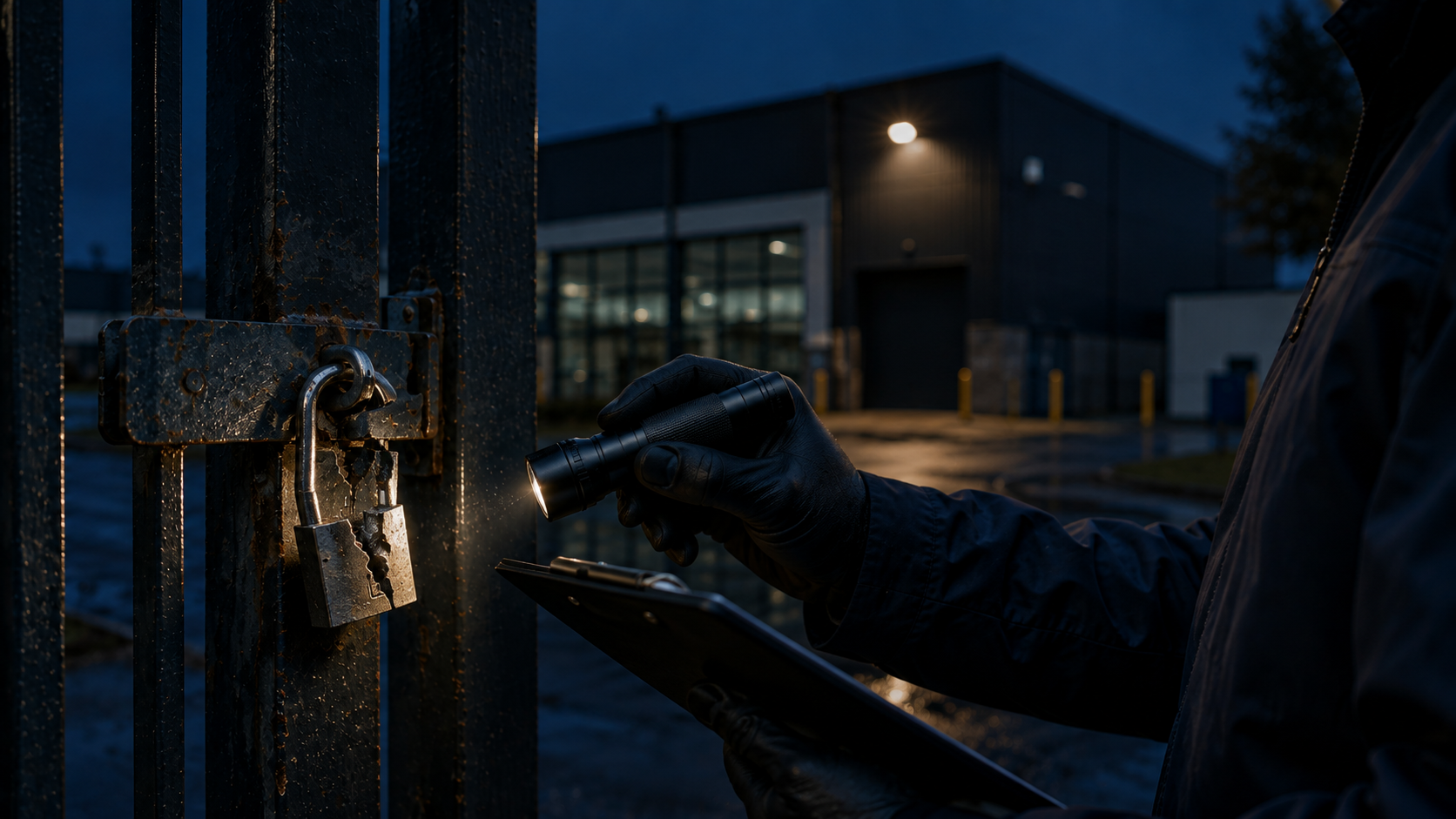
Night-time risk is quieter, but more deliberate. Perimeter testing. Trespass. Organised attempts to access buildings when natural surveillance drops. Patrols become more important. So does response time.
The mistake many businesses make is treating day and night as the same problem. They are not. Effective manned guarding adjusts posture, routines, and staffing based on when risk actually appears.
Seasonal pressure points and local events
Risk in Berkshire also shifts with the calendar; retail peaks bring longer hours and heavier footfall. Temporary staff and extended delivery schedules create new weak points. Regional events draw crowds and traffic, changing how people move around sites that are normally predictable.
During these periods, many businesses increase guard hours for short windows. Not because risk has permanently changed, but because exposure has. A temporary uplift in presence often costs less than dealing with a single serious incident later.
This is where flexible manned guarding proves its value. It scales with reality, not assumptions.
Legal and Compliance Requirements for Manned Guarding in Berkshire
SIA licensing and what Berkshire clients must verify
At the legal level, manned guarding in Berkshire starts with one non-negotiable rule: if a person is carrying out licensable security activity, they must hold a valid SIA licence. Licensable activity covers more than obvious guarding. It includes controlling access, patrolling premises, monitoring people or property, and intervening when incidents occur.
For clients, this matters because the risk does not sit only with the guard or the supplier. Using unlicensed personnel exposes the business itself. Contracts can be voided. Insurance claims can be challenged. In serious cases, clients may face investigation for allowing unlawful security operations on their site.
This is especially relevant in commercial areas such as Bracknell, where offices, retail units, and shared business parks often rely on guards who combine access control with customer-facing duties. If those duties cross into licensable activity, the licence must be in place. Assumptions here are costly.
BS 7858 vetting and DBS expectations
An SIA licence confirms that a guard is legally permitted to work. It does not, on its own, tell the full story about background screening.
A DBS check forms part of the licensing process, but it is only one layer. BS 7858 vetting goes further. It reviews employment history, identity, criminal records, and gaps in work history over several years. For many insurers, councils, and large organisations, this level of screening is no longer optional.
The distinction matters. DBS checks flag criminal history. BS 7858 establishes trust over time. That is why clients operating higher-risk sites, or those handling sensitive access, are often asked to confirm that guards have been screened to BS 7858 standards before a contract is approved.
Business licensing and compliance history
Compliance does not stop with the individual guard. In some cases, the security company itself must hold a business licence from the regulator before supplying staff. This framework exists to prevent unsuitable operators from entering the market and to give clients confidence that suppliers meet baseline standards.
From a procurement point of view, legitimacy is proven through documentation. Clients should expect to see current SIA licences for personnel, evidence of business licensing where required, proof of insurance, and written policies covering training, supervision, and incident reporting.
Reputable providers supply this information without hesitation. Reluctance or vague assurances are usually a warning sign, not an administrative delay.
CCTV, GDPR, and manned guarding overlap
Many Berkshire sites combine manned guarding with CCTV. That combination improves visibility, but it also introduces data protection responsibilities.
When guards interact with CCTV systems, reviewing footage, monitoring live feeds, or supporting investigations, they become part of the data-handling chain. Clients remain responsible for ensuring that footage is collected lawfully, stored securely, accessed only by authorised people, and retained for appropriate periods.
Clear signage, defined purpose, and documented procedures are essential. Poor handling of CCTV data can expose businesses to regulatory action, even if the original incident was minor.
Event licensing and Martyn’s Law implications
Event security expectations are changing. Martyn’s Law, also known as the Protect Duty, is set to raise the baseline for protective security at venues where members of the public gather. While the final scope continues to evolve, the direction is clear.
Venues will be expected to assess risk more formally, train staff appropriately, and demonstrate readiness for a range of scenarios. Manned guards are likely to play a central role in access control, observation, and incident escalation.
For businesses operating venues or hosting regular events in areas like Maidenhead, planning ahead is sensible. Waiting until requirements are enforced leaves little room to adapt contracts, training, or documentation.
Labour law, overtime, and post-Brexit realities
Manned guards are subject to UK employment law like any other workers. The Working Time Regulations govern hours, rest breaks, and overtime. Right-to-work checks are mandatory, and record-keeping must be accurate and current.
Post-Brexit changes have tightened scrutiny in this area. Incomplete records or expired permissions can put a client’s entire security arrangement at risk, particularly if regulators view failures as systemic rather than accidental.
For businesses, the exposure is indirect but real. If a guarding provider cuts corners on labour compliance, continuity suffers, and liability can spread. That is why legal checks are not just a supplier issue. They are part of responsible risk management for any organisation relying on manned guarding.
Costs, Contracts, and Deployment in Berkshire
What drives manned guarding costs locally
There is no single price for manned guarding in Berkshire, and anyone offering one is skipping the hard part. Cost follows context.
Town-centre sites behave differently from business parks. A reception in a busy commercial block needs guards who can manage people, access, and pressure at the same time. A quieter perimeter site leans more on patrols and response. Skill level changes the rate. So do hours. Daytime cover is shaped by footfall and interaction. Night cover is shaped by isolation and intent.
Risk profile matters too. A low-traffic office is priced differently from a mixed-use site with deliveries, visitors, and shared access. When duties widen, so does the cost, not because of padding, but because the job is harder to do well.
City-adjacent vs suburban pricing dynamics
Berkshire pricing also shifts by geography. Sites closer to transport links and dense commercial zones tend to cost more to cover than suburban or edge-of-town locations.
Why? Travel time. Access complexity. Parking limits. Higher expectations around response and reporting. Guards working near busy routes or shared estates often juggle more variables per shift.
This mirrors what businesses see in parts of Surrey, where commercial hubs sit alongside residential areas. Sites look calm on paper, but movement patterns change quickly. Coverage has to flex, and pricing follows that reality rather than postcode alone.
Inflation, wage pressure, and cost forecasting to 2030
Guarding costs are not jumping overnight. They are moving steadily. Wages rise. Compliance requirements grow. Training expectations widen. None of this is dramatic on its own, but together it creates a gradual upward pressure that most businesses can see coming.
The key point is predictability. Costs increase in small steps, not shocks. That is why longer contracts often include review clauses linked to inflation. They make a smooth change instead of letting it pile up at renewal.
For finance teams, this matters. Forecasting becomes easier when increases are planned, not argued over later.
Contract lengths and notice periods
Manned guarding contracts usually fall into three broad shapes. Short-term cover runs from days to a few months. It suits urgent gaps or temporary risk, but it costs more per hour because mobilisation is compressed.
Medium-term contracts, often six or twelve months, are common for retail parks, offices, and logistics sites. They balance flexibility with stability.
Long-term agreements, usually two to three years, bring the most consistency. They allow better planning, smoother handovers, and clearer cost control.
Notice periods protect both sides. They prevent sudden loss of cover and give time to adjust operations without disruption.
Deployment timelines and mobilisation reality
Speed depends on preparation. Urgent cover can sometimes be arranged within days, especially if the provider already operates nearby. Planned deployments take longer. Site inductions, access permissions, uniforming, and briefings all take time if they are done properly.
What slows things down? Complex access rules. Incomplete site information. Late changes to the scope. None of these are faults, but they do affect timelines. The fastest deployments usually happen when expectations are clear from the start.
Insurance impact and risk reduction
Insurers look for evidence, not promises. They want to see patrol records, access logs, incident reports, and clear escalation procedures. Manned guarding supports this by creating a paper trail that shows risk is being managed, not guessed at.
For some sites, that documentation reduces perceived exposure and can influence premiums. Guarding still has a cost, but it often offsets risk elsewhere in the balance sheet.
The real value is not the uniform on-site. It is the ability to demonstrate control when it matters most.
Training, Daily Operations, and Guard Duties in Berkshire
Training standards by sector
Training only works when it matches the environment. A one-size syllabus looks tidy on paper, but it fails on site.
In retail settings, guards are trained to work in public view. The focus is awareness, calm communication, and early intervention. They learn how to spot patterns, not just incidents. Theft rarely starts at the exit. It starts with behaviour. That is why observation and restraint matter more than confrontation.
Warehousing and logistics sites demand a different mindset. Large footprints, vehicle movement, and long quiet periods change how risk shows up. Training here leans into perimeter awareness, access discipline, and lone-working safety. Sites in areas similar to Buckinghamshire often share these traits: wide estates, night operations, and valuable stock that moves fast.
Offices and corporate sites sit somewhere else entirely. Guards are trained to blend security with professionalism. Managing visitors, handling contractors, and supporting hybrid work patterns requires judgment. The goal is control without friction.
The first moments of a guard’s shift
The opening minutes of a shift carry more weight than most people realise. This is when context is set.
Handovers matter because risk has memory. What happened earlier in the day shapes what might happen next. Effective handovers reduce blind spots. When information from earlier shifts is understood and carried forward, emerging risks are spotted sooner, and response decisions are made with context rather than guesswork. That continuity is what prevents minor irregularities from becoming overnight incidents.
This is not box-ticking. It is situational awareness. Are the doors where they should be? Does anything feel out of place? Has routine drifted? Experienced guards trust that instinct and verify it.
In busy regions like Kent, where sites often sit near transport routes or shared access points, that early awareness prevents small oversights from turning into late-night calls.
Patrol logic and perimeter priorities
Good patrols are planned, not paced; frequency depends on risk. A quiet office does not need the same attention as an exposed loading bay. High-risk areas are checked more often, but never on a predictable loop. Predictability weakens deterrence. When patrol routes follow the same rhythm night after night, they are easier to observe and work around. Varying timing and movement keep attention where it belongs: on prevention rather than response.
Perimeter checks usually come first. Gates, fences, doors, and blind spots are assessed before moving inward. Guards are trained to look for change, not perfection. A moved bin, a damaged light, or a door that feels wrong tells a story.
This approach mirrors what businesses face in places like Oxfordshire, where mixed-use developments combine open spaces with restricted zones. Patrols need logic, not habit.
Reporting, logs, and audit value
Reports are not paperwork for their own sake; there is evidence. Clear logs show what was checked, when it was checked, and what was found. They support internal reviews, insurer queries, and, when needed, investigations. Vague notes help no one.
Clients benefit because documentation proves control. It shows that risk is being managed consistently, not reactively. Insurers look for patterns. Auditors look for gaps. Good reporting answers both.
In commercial environments similar to those across Sussex, where sites often operate across long hours and shared boundaries, this audit trail becomes as valuable as the guard’s presence itself.
Alarm response and escalation discipline
Speed matters, but judgment matters more. When an alarm triggers, guards are trained to assess before they act. Rushing without context can create risk. Delaying without reason does the same. The skill lies in knowing the difference.
Response quality depends on training, familiarity with the site, and clear escalation rules. Guards attend, assess, secure, and report. Emergency services are involved when thresholds are met, not by default and not too late.
This disciplined approach is common across professional operations in areas like Surrey, where expectations around response, documentation, and accountability are high.
The impact is simple: fewer false escalations, faster resolution. Clear records. And, most importantly, fewer surprises for the business the next morning.
Performance, Risks, and Operational Challenges
KPIs that actually matter to Berkshire businesses
Performance in manned guarding is not measured by how busy a guard looks or how full a logbook becomes. It is measured by outcomes that reduce risk and stand up to scrutiny. For most Berkshire businesses, response time is the first indicator that matters, because slow attendance turns minor issues into incidents that linger. Patrol proof follows closely behind, not as a box to tick, but as evidence that checks are happening when they should, not when it is convenient.
Reporting clarity often separates effective contracts from weak ones. Clear, factual notes allow managers, insurers, and auditors to understand what happened without reading between the lines. Escalation judgment sits above all of this. Guards must know when to act, when to wait, and when to involve others. In commercial environments similar to those found across Surrey, where expectations around professionalism and accountability are high, poor judgment costs more than slow movement ever will.
Weather and environmental impact on guarding
Weather rarely gets attention until it causes a problem, yet it quietly shapes how guarding works. Heavy rain reduces visibility. Fog shortens sight lines. Ice slows patrols and changes access routes. These factors influence how often areas can be checked and how quickly guards can respond without putting themselves at risk.
That is why experienced guards log weather conditions. Not to fill space, but to provide context. When a patrol takes longer, or a perimeter check is delayed, the reason is recorded. This protects both the client and the guard if questions arise later. Businesses operating sites with open layouts, like those common in parts of Oxfordshire, often rely on these records when reviewing incidents that coincide with poor conditions
Fatigue, health, and shift impact
Fatigue is one of the least visible risks in manned guarding, yet it has a direct impact on performance. Long shifts dull attention. Repeated night work affects decision-making. A tired guard may still complete rounds, but small details are easier to miss, and reaction times slow without warning.
From a client’s point of view, responsible scheduling matters because it protects continuity. Rotated duties, sensible shift lengths, and regular check-ins help maintain alertness over time. This is not about comfort. It is about reliability. In sectors with round-the-clock operations, such as logistics hubs similar to those found across Buckinghamshire, fatigue management often makes the difference between steady coverage and repeated near-misses.
Staffing stability
Staffing stability is not a talking point for its own sake, but it does affect outcomes that clients care about. Consistent teams learn sites faster, understand routines, and make better judgment calls. That stability supports continuity, which in turn supports pricing predictability and service quality.
When stability breaks down, costs rise quietly. When teams change too often, site knowledge takes longer to build, and oversight requirements increase. Those pressures affect continuity and cost long before they appear in performance reports, which is why stability matters from a client perspective rather than an operational one.
These pressures show up in performance long before they appear on an invoice. Businesses with dispersed estates, like those operating across parts of Kent, often see this first because gaps in coverage ripple quickly across multiple locations.
The point is not how staffing is managed internally, but why it matters externally. Stable guarding supports consistent performance, clearer reporting, and fewer surprises. That is the outcome most organisations are paying for.
Technology and Future Trends in Berkshire Manned Guarding
CCTV and manned guarding as a hybrid model
Technology works best when it is paired with people who understand the site. CCTV on its own records what happened. Manned guarding, when integrated properly, changes what happens next. Guards who know camera coverage, blind spots, and typical movement patterns can use live footage to make faster, calmer decisions. They do not watch screens in isolation. They move with purpose, guided by what the system shows and what experience tells them to expect.
This hybrid model is now common across complex estates, including those seen in parts of Buckinghamshire, where large sites rely on visibility without turning security into a remote-only exercise. The value comes from coordination, not from adding more equipment.
AI as support, not replacement
AI-driven tools are changing how attention is directed, not who makes the final call. Pattern detection software can highlight repeated behaviour, unusual movement, or activity at odd hours, but it does not understand context. Guards still decide whether a flagged event is a delivery running late, a contractor off schedule, or something that needs escalation.
Used well, AI reduces noise. It helps guards focus on what matters most instead of scanning endless footage. The human role remains central. Judgment, discretion, and local knowledge cannot be automated, and businesses that treat AI as a replacement rather than support usually discover gaps when pressure rises.
Remote monitoring and lone-worker support
Remote monitoring adds a layer of oversight that benefits both clients and guards. Control rooms can confirm alarms, track patrol progress, and guide on-site teams during incidents. For lone workers, this matters. Knowing someone is watching and able to respond changes how confidently a guard can operate on large or quiet sites.
In regions with dispersed estates, such as those found across Oxfordshire, this model supports coverage without overstaffing. It does not remove the need for people on site, but it strengthens them with backup that is always present.
Drone patrols and large-site visibility
Drones are starting to appear on very specific sites, usually where ground patrols struggle to cover distance quickly. Large industrial plots, rail-adjacent land, or open storage areas can benefit from rapid aerial checks, especially at night.
They are not suitable everywhere. Drones do not manage access, speak to people, or handle incidents. Their role is limited to visibility and early detection. Where they fit, they extend sight lines. Where they do not, they add cost without solving the core problem.
Predictive analytics and smarter resourcing
Predictive tools look backwards to plan forward. By analysing incident history, time-of-day patterns, weather conditions, and site usage, businesses can adjust guard hours and patrol frequency with more confidence. This reduces guesswork and helps align resources with actual exposure.
The benefit here is not sophistication for its own sake. It is efficiency. Guards are placed where and when risk is most likely, rather than spread evenly, because it feels fair.
Green security practices
Sustainability is now part of procurement discussions, even in security. Clients increasingly ask how services reduce environmental impact without weakening protection. Digital reporting replaces paper. Low-energy lighting improves visibility while cutting waste. Electric patrol vehicles reduce noise and emissions on large sites.
These changes are gradual, but they matter. In areas with environmental scrutiny, such as parts of Sussex, greener practices are becoming a baseline expectation rather than a bonus.
Martyn’s Law and future venue expectations
Martyn’s Law is set to reshape expectations for venues that host the public. Training requirements will increase. Planning will become more formal. Documentation will matter more than ever. Manned guarding will sit at the centre of this shift because guards are the ones who observe behaviour, manage access, and act when plans move from paper to reality.
For Berkshire venues, the message is preparation. Technology will support compliance, but people will deliver it. Businesses that begin aligning training, procedures, and records now will find the transition far less disruptive when requirements become mandatory.
Conclusion
Manned guarding works best when it is treated as a considered business control, not a reaction to the last problem that surfaced. In Berkshire, that distinction matters. The county’s mix of offices, retail centres, logistics routes, and residential edges creates uneven exposure, with risk shifting by time of day, season, and use of space. Technology plays a role, but it does not replace judgment, presence, or the ability to act in the moment.
The real takeaway is simpler. Sites differ, risks shift, and decisions only hold up when local exposure, legal duties, and operational reality are considered together rather than in isolation. Compliance expectations around licensing, vetting, and data handling are not abstract rules; they shape how insurers, regulators, and partners view your organisation. Operational routines, reporting quality, and response discipline then determine whether those controls hold up under pressure.
Seen through that lens, why Berkshire businesses need manned guarding becomes less about security as a service and more about confidence. Confidence that risks are understood, responsibilities are met, and when something unexpected happens, there is someone on site who knows what to do and why it matters.
Frequently Asked Questions
Do Berkshire businesses legally need SIA-licensed guards?
Yes. If a guard is carrying out licensable activity, such as controlling access or patrolling a site, an SIA licence is required. Using unlicensed guards puts the business at legal and insurance risk, not just the supplier.
How fast can manned guarding be deployed in Berkshire?
It depends on the site and the level of risk. Urgent cover can often be arranged within days, while planned contracts take longer to allow for induction, briefing, and proper setup.
Does manned guarding reduce insurance risk?
In many cases, yes. Insurers look for visible control, clear reporting, and proof that risks are being managed. Documented guarding routines often support stronger insurance positions.
How does CCTV compliance work with on-site guards?
Guards may view or respond to CCTV, but data protection duties remain with the business. Clear signage, secure storage, and controlled access to footage are essential.
Are short-term guarding contracts viable for Berkshire sites?
They can be. Short-term cover is often used during peak periods, refurbishments, or temporary risk changes. It costs more per hour but offers flexibility.
What documentation should procurement teams ask for?
Valid SIA licences, evidence of vetting, insurance certificates, and clear operating procedures. These documents show that compliance is in place.
How will Martyn’s Law affect Berkshire venues?
It is expected to raise standards for training, planning, and protective measures at public venues. Guards will play a key role in meeting these expectations.
Is manned guarding still relevant alongside AI and remote monitoring?
Yes. Technology supports decision-making, but people provide context and judgment. Together, they offer stronger protection than either alone.