Introduction
Business security in Devon is shaped by very different conditions than in large cities. The county includes busy coastal towns, seasonal tourist areas, rural industrial estates, logistics routes, and traditional town-centre retail. As a result, security risks are not constant and often change based on location, time of day, staffing levels, and season.
Manned guarding in Devon is no longer limited to deterring theft during opening hours. Businesses now rely on on-site guards to manage access at mixed-use sites, protect empty premises overnight, respond when police response times may be longer, and provide visible control in areas with fluctuating footfall. According to the report, Industry estimates show that theft from UK construction and rural commercial sites costs businesses hundreds of millions of pounds each year, with a large proportion of incidents occurring outside normal working hours. Construction sites, hospitality venues, retail parks, warehouses, and public-facing locations all face different risk profiles depending on how and when they operate.
The need for manned guarding is particularly strong in rural and coastal parts of Devon, where natural surveillance is limited and seasonal movement is high. Sites that appear low-risk for much of the year can quickly become vulnerable during off-season closures, overnight shutdowns, or periods of reduced staffing. In these situations, alarms and CCTV may record incidents, but they rarely prevent escalation or provide immediate intervention.

Manned Guarding Basics in Devon
Manned guarding is about having trained and licensed security personnel present onsite to mitigate potential risks through the physical presence of the security personnel, their observations and interactions with others, and their ability to intervene or alert authorities if necessary. Manned guarding is different from traditional security measures (e.g., CCTV, alarm systems, remote monitoring), in that traditional measures rely on technology for monitoring or responding to incidents; while manned guarding provides the ability to assess incidents and respond to them in real-time. Security personnel are able to investigate unauthorized access, manage incidents or disturbances as they arise, and respond to changing environmental conditions in ways that may not be possible with only remote monitoring systems.
For Devon-based companies, the distinction between manned guarding and traditional security options is particularly important because there is often a significant variance in response time, visibility, and methods for controlling access between different types of facilities located in Devon: i.e., rural industrial sites, coastal‐related retail estates, and town‐centred mixed commercial/retail properties, which often experience multiple periods of low activity followed by sudden bursts of activity. As a result, while remote monitoring systems can identify problems, they are unable to control how problems develop or to control the obscene situation.
Local Crime Patterns and Risk Exposure
While Devon does have lesser levels of crime than major urban centres, offenders generally commit crime based on opportunity or timing rather than volume alone. A crime occurrence is at its highest probability during times when buildings are not fully occupied or are located at remote locations or have few natural detectives present. Night-time hours, coastal locations during the “off-season” or late nights/early mornings in logistics, construction, and retail are among those periods with greater potential exposure for criminal behaviour.
Types of criminal activity targeting businesses in Devon include theft of inventory or tools, unauthorised entry, vandalism, and anti-social activities occurring in public view. The greatest risk of these activities occurs during specific windows in time, which allows for effective visible deterrent measures and immediate responses.
High-Risk Sectors Across Devon
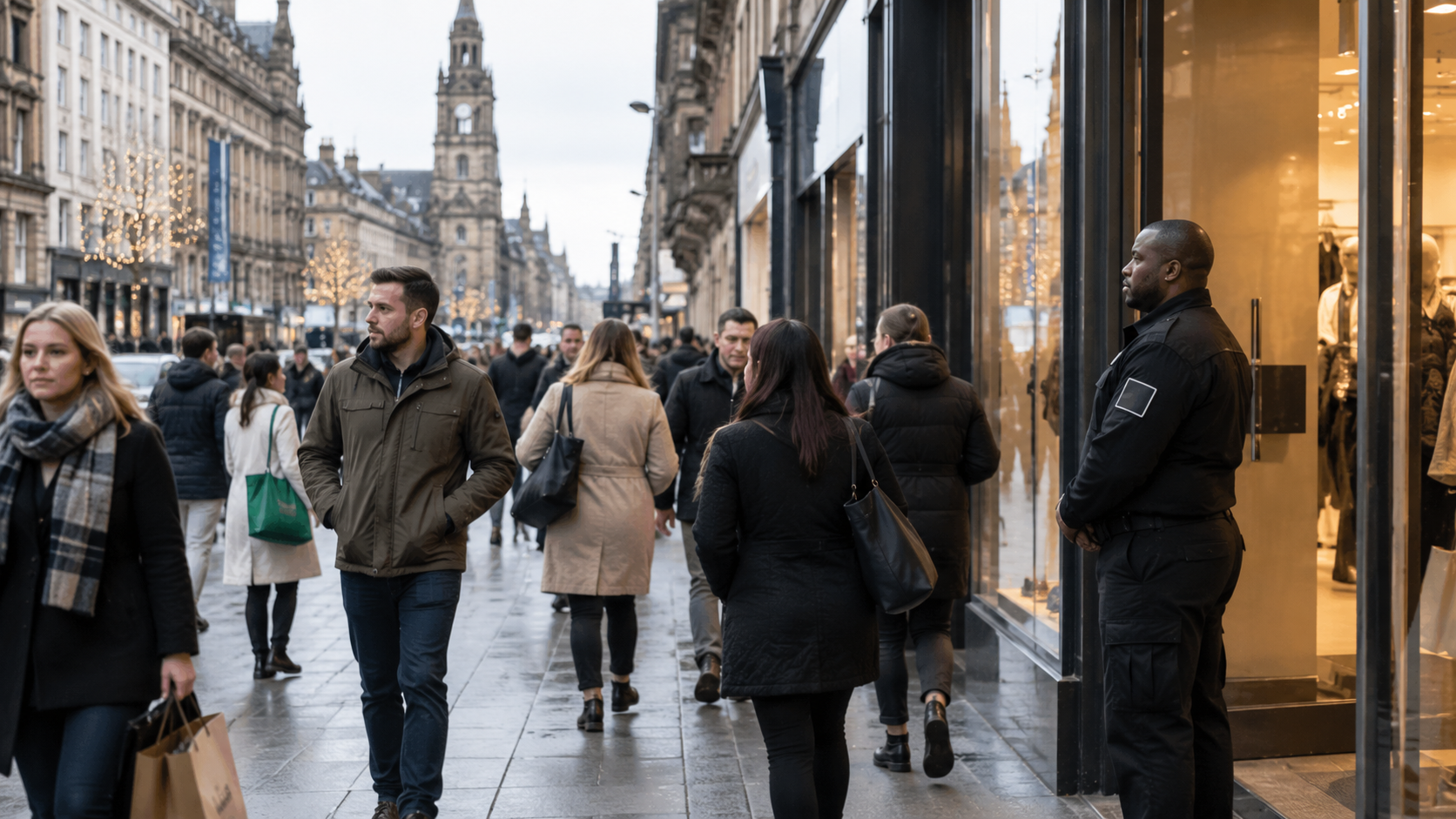
The fluctuating nature of foot traffic and anti-social behaviour challenges retail environments, especially those located in town centres and along the coast. The peak season for tourism increases the number of visitors to these sites, which increases the likelihood of theft or disorder. Conversely, when the number of tourists declines during quieter months, retailers can experience after-hour vulnerability.
Construction sites throughout Devon are often targeted for theft due to their geographic location, having temporary fencing and possessing high-value equipment and materials. Many construction sites are located in semi-rural areas, where alarms will not be able to deter criminal activity very well and where the response time from law enforcement can be significantly longer than in more urban or developed areas.
Warehouses and Logistics facilities deal with many other types of theft pressures. They often function during the evening, have restricted access to vehicles on-site and typically contain items that can easily be stolen during quiet times of day. Oftentimes, manned guarding is used to assist with access control, verifying vehicle occupants, and offering a quick response to any instance of criminal activity.
Nightlife premises, such as hospitality and entertainment venues, face a different risk profile due in large part to their association with the consumption of alcohol, crowd control challenges, and long operating hours. Here, guarding is more focused on maintaining safety, providing a safe working environment for the staff, and managing incidents before they escalate into a legal or public relations issue.
Why Devon Businesses Rely on Physical Presence
The main benefits of manned guards in these sectors are prevention, decision-making, and accountability. The presence of a visible guard will deter most opportunistic incidents, while a trained guard creates written documentation that supports insurance claims, demonstrates regulatory compliance, and provides a reliable internal reporting record.
This layered approach is increasingly common across the South West, particularly in Cornwall and Bristol, where businesses balance public-facing activity with periods of reduced supervision and variable response times.
Most businesses in Devon assess their security needs and recognise that manned guarding is rarely an either/or choice. Instead, it is typically combined with remote monitoring and alarm systems to create a complete security framework. Manned guarding fills the gaps where technology alone cannot provide sufficient context, judgement, or immediate response. A clear understanding of how these elements work together helps businesses decide when a manned guard is necessary and what level of coverage is required for effective implementation.
Legal and Compliance Requirements for Devon Businesses
Manned security companies operating in Devon are subject to legislation across the whole of the UK; however, how these laws apply will depend on the type of site, who has access to it, and how the business uses the site. Understanding these regulations is crucial for Devon businesses to be compliant with the law and protect themselves from issues related to insurance (i.e. due to incorrectly insured employees), enforcement actions, and reputational harm.
SIA Licensing: A Legal Requirement, Not a Best Practice
If you carry out licensable security functions at a sites in Devon, you must obtain a valid Security Industry Authority (SIA) licence. This requirement includes guards performing duties that include monitoring, patrolling and controlling who accesses your site. It is illegal for businesses to use an unlicensed guard. It is important to note that you, as a business owner, will not solely be responsible for hiring an unlicensed guard; you could be liable for hiring an unlicensed employee and be fined, have your insurance voided or be held liable for civil damages in the event of a security-related incident.
As a decision maker, it is important to remember that SIA licensing is not merely compliance for you. Rather, SIA licensing also provides you with the assurance that the guards you hire have received basic training, verification of their identity and a suitability check. This information will impact how incident reporting will occur at your site.
Vetting, DBS, and Workforce Screening Expectations
Although DBS check is not mandatory for every guarding role; however, there are many locations within Devon that would expect them to be carried out for sites where the public has access, where there are vulnerable persons, or where sensitive assets are stored. Most insurers and local authorities expect enhanced vetting as the standard across all sites, but especially in education facilities; healthcare-related sites; and any venue accessible to the public.
Additionally, it is standard practice for any reputable SIA approved security providers to perform vetting in accordance with BS 7858; this covers an individual’s employment history, verification of identity and background screening. For businesses, this helps mitigate against the potential risk of internal theft, misuse of access or lack of compliance that may not come to light until something goes wrong!
Insurance and Liability Considerations
When using manned guarding services, businesses need to have their provider hold adequate public liability, employers liability insurance and have guard activities clearly listed on the policy. In the county of Devon, many sites may be situated in remote areas or are not open during regular business hours; therefore, insurers require the owner of the guards to have proper documentation outlining their guarding procedures to assist with any claims resulting from theft, damage or injury.
From a risk perspective, poor documentation or a lack of clear contractual responsibilities exposes businesses even when guards are present at their sites.
Data Protection and CCTV Integration
Wherever CCTV or body-worn cameras are in use alongside physical security, UK GDPR and Data Protection Act Requirements may apply. This means that companies are responsible for all aspects of an organisation with regards to personal data, including when they monitor personal data for another organisation.
When monitoring an individual’s private space, organisations must have clear signage regarding the collection and retention of that individual’s personal data, defined retention periods for the recording of the footage associated with that monitoring, restrictions on access to that footage, and a procedure for individuals to request access to their recordings, or to report incidents of data breach. In non-residential public facing developments, including developments that are primarily focused on commercial activities, like retail parks and mixed-use developments, failure to properly collect data may lead to regulatory and/or reputational harm.
Event Licensing and Public Safety Duties
Some of the conditions that local authorities set for event venues in Devon are to have manned guards, including seasonal festivals, hospitality venues, and temporary attractions. Part of a venue’s manned guarding requirements will often include demonstration of crowd management skills, incident logging, and coordination with emergency services.
The introduction of Martyn’s Law (Protect Duty) is expected to further develop the process of developing security plans for publicly accessible venues. While it is still in the process of being created, businesses should begin to prepare for greater scrutiny on risk assessments, staff readiness, and visible security at larger or more heavily trafficked venues.
Why Compliance Matters for Devon Businesses
Within manned guarding, compliance with the law is not an abstract concept because it has direct implications on the legitimacy of your insurance, your capacity to respond to incidents, and how your business would be viewed following an Incident both by the Regulators and Insurance companies. In Devon, where businesses operate from many different types of sites or have seasonal variation in operation, having consistent compliant guarding arrangements reduces the uncertainty surrounding business operations as well as supporting the resilience of a business over the longer term.
Business owners and facilities managers want to be able not only to validate the presence of guards, but also to know if their chosen method of deploying those guards will be able to withstand scrutiny by legal, regulatory, and insurance authorities when required most.
Costs, Contracts, and Deployment in Devon
When comparing manned guarding services, the rate of pay for security guard services in Devon does not solely depend on the hourly rate, but also on: the location of the site being protected; the time period during which protection is needed; and how frequently guards will be deployed at that site. By understanding these factors you can compare different manned guarding options realistically, and avoid specifying less than sufficient security requirements resulting in increased security exposure in other areas.
Cost Drivers: Location, Timing, and Site Complexity
Costs for security in Devon can differ across a range of locations; rural sites, urban centre cities, and coastal areas. Security for town centres (or busy public access areas) has increased coverage since they are subject to increased footfall, access management and regular human interaction. Tourist areas and coastal resorts may also experience greater cost fluctuations as a result of fluctuating demand based on seasonally peak tourist times.
The various types of sites that Rural Industrial Estates, Construction Sites, and Logistics Hubs experience create different needs, hiring pressures, and staffing requirements from sites with low footfall. Extended hours of operation, isolation from customers and increased response times to customers can also increase risk; therefore, many companies will have to provide security for such sites continually or overnight. When assessing the costs of guard coverage, these sites will pay for the duration of the coverage rather than the complexity of the coverage provided.
Inflation and increased wages continue to drive costs upward throughout Devon. Increasing requirements for compliance, training, and insurance expectation for guards is causing costs to rise, especially for contracts requiring consistent coverage or enhanced vetting. The biggest considerations for businesses are whether prices reflect continuity of service and compliance rather than simply the lowest high.
Contract Lengths and Commercial Structure
As a general rule, Devon guarding contracts are typically defined as longer-term arrangements. In addition to providing price certainty, they also create ongoing regularity for sites that have a combination of ongoing risk exposure and/or insurers’ requirements for ongoing management of that exposure.
Construction phase projects, seasonal work and/or any instances of temporary spikes in risk are commonly met by Devon through short-term or ad/hoc responses; however, these types of arrangements are at a much higher daily cost because they require mobilization and planning.
Also, notice periods are frequently included in contracts to allow the orderly withdrawal and/or scaling of guard services. Understanding these terms is critical for businesses; failure to give adequate notice of termination without first addressing the potential for future risk can create periods of coverage gaps that an insurer may frown upon.
Mobilisation and Deployment Timelines
In the case of Devon, the amount of time it takes to deploy manned guarding will vary based on the complexity of each site as well as how quickly the compliance checks are performed. Simple sites where there are defined access points and standard levels of coverage can generally be mobilised pretty quickly. Multi-site operations, on the other hand, with multi-layered locations and/or public facing venues will take longer to plan and co-ordinate thus will take longer to deploy.
From a risk standpoint, if there is a rush to deploy without conduct of sufficient site induction or clarity on procedures to be followed, it is likely that the guarding will not be effective. As such, businesses benefit the most from a mobilisation that aligns with documented organisational risk assessments and operational requirements, rather than actioning deployments due to isolated incidents.
Cost Justification and Insurance Impact
The assessment of insurance can be impacted by the presence of people guarding an area. This is particularly true if a business can prove that such individuals reduce the risk of theft, vandalism, or liability exposure. Insurers are typically looking for a consistent approach to guarding and for documented procedures for incident reporting rather than an inconsistent or poorly funded approach to guarding.
For businesses in Devon, especially those that operate in areas that have a higher risk or less visibility, having a system of guarding provides long-term benefits in terms of claims defensibility and risk profiling, as well as what it means to have a system that is well structured to provide continuity of service, compliance, and predictability in their operating costs.
Balancing Cost and Risk in Devon Deployments
For businesses in Devon and Bath, the most important consideration when making decisions about the cost of guarding is to assess the scale of guarding required against the level of risk to be managed. When businesses under-deploy guards, this may result in an incident that incurs costs far greater than any initial short-term savings, and when over-deployed, the guard services create operational costs that are frequently unnecessary. Effective contracts provide businesses in Devon and Bath with the ability to evaluate and manage their risks effectively while complying with all legal and insurer requirements. They also provide flexibility to increase or decrease the level of guarding as the risk profile changes, without violating legal or insurer requirements.
Training, Operations, and Daily Duties in Devon
Manning guards is a function of how well the guards are trained to know the site they work at and follow repetitive procedures as well as how clearly they document the risks associated with that site. The amount of patrols conducted and therefore an apparent level of success, is not as relevant to the success of manned guarding for businesses in Devon. Compliance and evidence of insurance defence intersect at the point of training and daily activity.
Training Standards and Site Readiness
Guards who work in Devon have to be trained to do their job in a way. This is because they have to meet standards that are set for the country under the rules of the Security Industry Authority. But for the guards to do their job well they need to know a lot about the specific place they are working at. For example, guards who work in shops need to know about things more than guards who work on building sites or factories. Each place has its set of problems and rules that the guards need to understand, like who is allowed in and what to do in an emergency.
From a business perspective, training matters because guards must be able to:
- Apply rules consistently
- Recognise early signs of risk
- Respond proportionately without escalating situations unnecessarily
Shift Handovers and Continuity of Coverage
The thing that really matters when it comes to getting things done at Devon is how well the staff handle the shift change. A lot of places are open for long hours or even all night, like warehouses, construction sites and hotels, near the coast. Good handovers make sure that:
We do not overlook the problems that are still happening with the issues. The fact is that these ongoing issues are not missed. We are aware that the ongoing issues are still there and we are dealing with them.
We keep an eye on problems like bad lighting or changes in how we get to places. These things can be a risk so we track them. Temporary risks, like lighting, are things we watch closely.
Incident patterns are found when we look at things that happen over time. We can see incident patterns when we think about what has been going on for a while. Incident patterns are, like signs that show us what is happening with incidents over time.
For businesses, this continuity reduces the chance of repeat incidents caused by information gaps between shifts.
Patrols, Presence, and Proportionate Coverage
Patrol routines in Devon are set up to deal with the risks that’re around. The police want to be seen in areas where people’re out and about. They want people to know they are there so they do not do anything
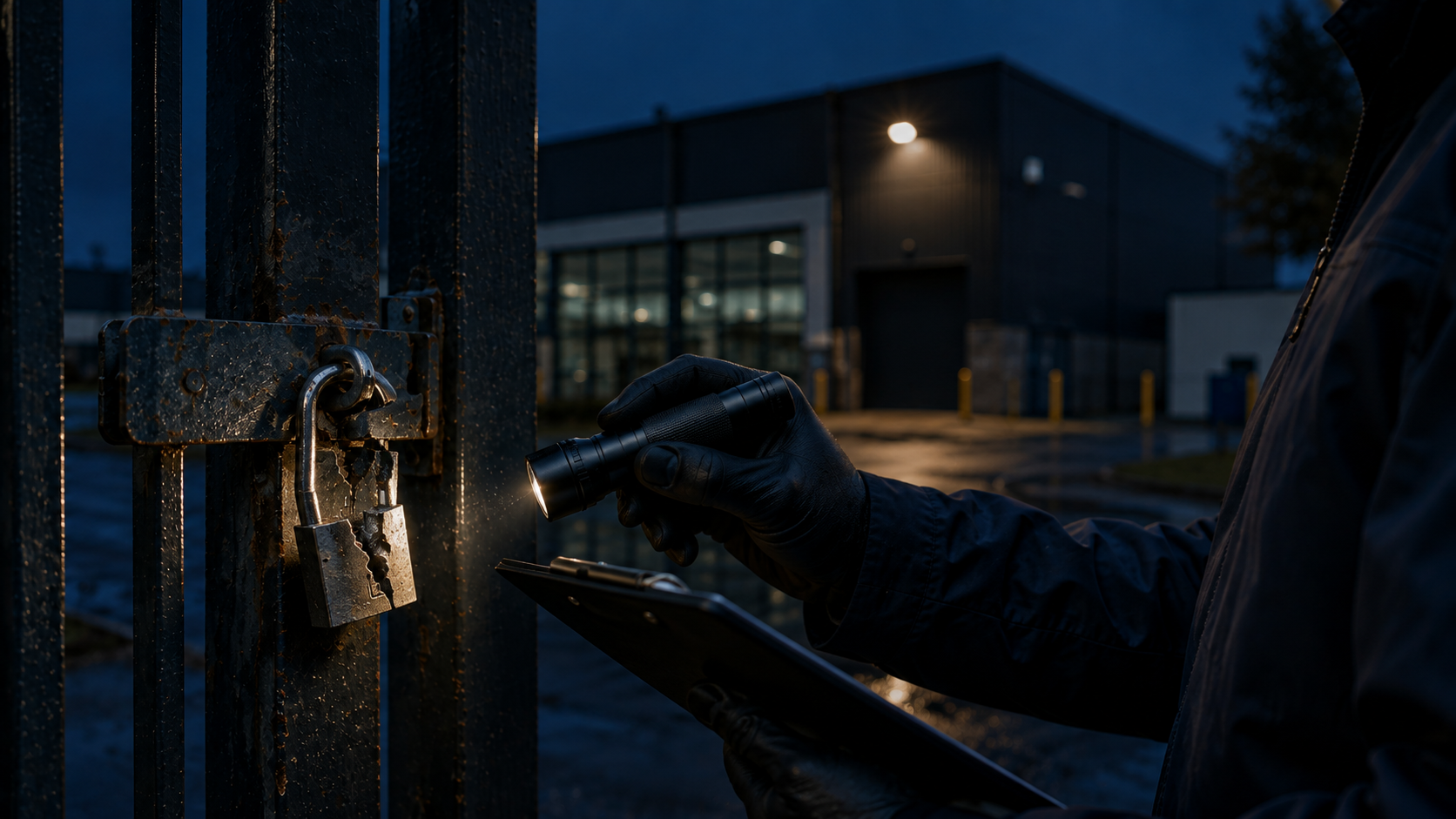
In places like factories or out in the countryside the police patrol the edges of the area. Check the doors and gates. They also look for signs that someone has been messing with things when it is quiet. Patrol routines in Devon are really about dealing with the risks that’re around.
Day and night operations differ significantly. Daytime guarding often involves access management and interaction with staff or visitors, while night-time coverage is more focused on asset protection, intrusion detection, and response readiness. Understanding these differences helps businesses avoid deploying the same model across all hours without adjusting for risk.
Reporting, Logs, and Documentation
Daily reporting is a core operational requirement rather than an administrative exercise. Incident logs, patrol records, and handover notes provide evidence that security measures are functioning as intended.
For Devon businesses, high-quality reporting supports:
- Insurance claims
- Compliance audits
- Internal risk reviews
- Accountability if incidents escalate
Inconsistent or minimal documentation can undermine the perceived value of guarding, even when physical presence is maintained.
Emergency Response and On-Site Decision-Making
Guards are trained to respond to alarms, safety issues, and unexpected incidents based on predefined procedures agreed with the business. In Devon, where emergency service response times may vary by location, on-site decision-making becomes especially important.
The goal is not to replace emergency services, but to contain risk, protect people and assets, and provide accurate information until further support arrives. For businesses, this reduces disruption and limits secondary losses.
Why Operations Matter More Than Activity
The value of manned guarding is not measured by how busy guards appear, but by how consistently they apply procedures and how clearly they document outcomes. Well-structured operations reduce uncertainty, support compliance, and provide decision-makers with confidence that risks are being actively managed rather than passively observed.
Performance, Risks, and Operational Challenges in Devon
For Devon businesses, the effectiveness of manned guarding is not determined by presence alone. Performance needs to be measurable, auditable, and linked to risk outcomes. Without clear performance indicators and an understanding of operational limitations, guarding can exist on paper while delivering limited real-world value.
Measuring Guarding Performance: What Businesses Should Track
Key performance indicators (KPIs) for manned guarding should focus on risk control rather than activity volume. Useful measures include incident frequency and severity, response times to alarms or breaches, quality and consistency of reporting, and adherence to agreed patrol or access-control procedures.
From a business perspective, the goal is not to generate more reports, but to ensure that security activity aligns with identified risks. A decline in incidents, faster containment, or clearer documentation often provides stronger evidence of effectiveness than raw patrol counts.
Environmental and Weather-Related Risks
Devon’s geography introduces environmental challenges that directly affect guarding performance. Coastal exposure, rural sites, and seasonal weather conditions can impact visibility, access, and patrol effectiveness. Heavy rain, high winds, or poor lighting conditions increase vulnerability during overnight hours, particularly at construction sites and open perimeters.
Well-managed guarding operations account for these factors by adjusting patrol focus, documenting environmental conditions, and prioritising high-risk areas during adverse weather. For businesses, this documentation becomes important when reviewing incidents or supporting insurance claims linked to environmental damage or intrusion.
Shift Length, Fatigue, and Operational Reliability
Extended shifts and overnight coverage are common across Devon, especially in warehousing, logistics, and remote sites. While these patterns are sometimes unavoidable, fatigue can affect observation, decision-making, and response speed if not managed carefully.
From a risk standpoint, this is not an employment issue but an operational reliability concern. Businesses should expect guarding arrangements to include appropriate shift structures and supervision to maintain consistent performance across all hours of coverage.
Health, Safety, and Compliance Impacts
Outdoor guarding duties must also align with health and safety expectations, including environmental regulations and safe working practices. Poorly managed conditions increase the likelihood of missed risks, incomplete patrols, or inconsistent reporting.
For Devon businesses, ensuring that guards can operate safely and effectively in their environment supports continuity of service and reduces the chance of avoidable incidents that stem from operational strain rather than external threat.
Reporting Gaps and Information Risk
One of the most common challenges in manned guarding is not incident response, but information loss. Incomplete logs, unclear handovers, or inconsistent documentation can prevent businesses from identifying patterns or demonstrating due diligence.
Over time, these gaps weaken internal decision-making and external confidence from insurers or regulators. Clear, consistent reporting is therefore a performance requirement, not an administrative preference.
Understanding Operational Limits
Manned guarding reduces risk, but it does not eliminate it. Guards cannot be everywhere at once, nor can they replace physical design, lighting, or access control weaknesses. Businesses that treat guarding as a standalone solution often experience frustration when expectations and outcomes diverge.
The most resilient Devon deployments recognise guarding as one layer within a broader risk management approach, with clear understanding of what guards can and cannot reasonably control.
Technology and Future Trends in Devon Manned Guarding
Across Devon, manned guarding is increasingly supported by technology that improves visibility, response quality, and accountability. The shift is not towards replacing guards, but towards augmenting human presence in environments that are geographically spread, seasonally variable, and sometimes isolated.
CCTV Integration as a Force Multiplier
CCTV remains the most common technology integrated with manned guarding across Devon sites. When used alongside on-site guards, cameras provide wider coverage of perimeters, blind spots, and low-activity areas, particularly during overnight periods.
For businesses, the value lies in real-time decision support. Guards can verify alerts, assess situations before intervening, and provide accurate incident reporting. This reduces unnecessary escalation while strengthening evidence for insurers or internal reviews.
AI Analytics and Smarter Monitoring
AI-driven analytics are increasingly used to support guarding operations, particularly on larger or multi-site premises. These systems highlight unusual movement, loitering, or access anomalies, allowing guards to focus attention where risk is highest rather than monitoring static screens.
In Devon, where sites may operate with limited staff during off-peak hours, this targeted support improves efficiency without increasing guard numbers. Importantly, AI functions as an alerting tool, with human judgement remaining central to response decisions.
Remote Monitoring and Central Oversight
Remote monitoring centres are now commonly linked to manned guarding deployments, especially for industrial estates, warehouses, and construction sites. These centres provide out-of-hours oversight, escalation support, and backup response when on-site guards require assistance.
For businesses, this layered approach improves resilience. It reduces reliance on a single point of observation and ensures continuity when incidents occur outside standard operating hours.
Drones and Site-Specific Applications
Drone use remains limited but is gaining relevance for large, open, or difficult-to-access sites such as construction zones or rural facilities. In Devon, drones are most effective when used selectively to assess perimeters or investigate alerts in areas that would otherwise require time-consuming patrols.
They do not replace guards but provide rapid situational awareness, particularly in poor visibility or adverse weather.
Predictive Analytics and Risk Planning
Some businesses are beginning to use predictive tools to assess when and where guarding is most needed. By analysing incident history, operating hours, and environmental factors, these systems help refine deployment schedules and patrol focus.
For decision-makers, this supports cost control and risk prioritisation, ensuring guarding resources are aligned with real exposure rather than fixed assumptions.
Sustainability and Environmental Considerations
Green security practices are becoming more relevant, particularly for outdoor and overnight guarding. Energy-efficient lighting, reduced vehicle patrols through smarter planning, and integration of solar-powered monitoring equipment help lower environmental impact without compromising security outcomes.
These measures align with broader sustainability objectives while maintaining effective risk control.
Martyn’s Law and Future Compliance Expectations
The introduction of Martyn’s Law (Protect Duty) is expected to increase the emphasis on visible security, preparedness, and documented procedures for publicly accessible venues. In Devon, this is likely to affect hospitality, event venues, and sites with fluctuating public access.
Technology will play a supporting role by improving monitoring, record-keeping, and response coordination, while manned guarding remains central to meeting on-the-ground requirements.
What This Means for Devon Businesses
Future-focused manned guarding in Devon is not about adopting the latest technology indiscriminately. It is about selective integration that enhances human capability, improves accountability, and supports compliance.
Businesses that view technology as a partner to guarding, rather than a substitute, are better positioned to manage evolving risks while maintaining operational stability.
Conclusion
For Devon businesses, manned guarding remains a practical tool for managing risk in environments shaped by geography, seasonal activity, and varying levels of public access. From coastal retail areas and hospitality venues to rural industrial sites and construction projects, the need for on-site security is rarely constant but often situational and time-dependent.
What this article highlights is that effective manned guarding is not about maximum coverage or visible presence alone. It is about proportionate deployment, supported by compliant staffing, clear operational routines, and technology that enhances awareness rather than replaces judgement. When guarding is aligned with local risk patterns, legal obligations, and insurance expectations, it becomes part of operational resilience rather than a reactive cost.
For business owners and decision-makers in Devon, the key question is not whether manned guarding is necessary in all circumstances, but when it is justified, how it should be structured, and what risks it is intended to control. Approached this way, manned guarding supports continuity, accountability, and confidence allowing businesses to operate with a clearer understanding of their exposure and responsibilities.
Frequently Asked Questions
1. Do all Devon businesses need manned guarding?
No. Manned guarding is most appropriate where there is regular public access, high-value assets, overnight operations, or limited natural surveillance. Many Devon businesses use guarding selectively, such as overnight, during peak seasons, or for specific risk periods rather than full-time coverage.
2. Is manned guarding necessary if we already have CCTV and alarms?
CCTV and alarms help detect incidents, but they do not prevent escalation or manage people on site. In Devon locations with slower response times or isolated settings, manned guarding fills the gap between detection and control, particularly outside normal working hours.
3. Which types of Devon sites benefit most from manned guarding?
Retail premises, construction sites, warehouses, hospitality venues, and mixed-use developments tend to benefit most. Rural or coastal sites with limited visibility, seasonal footfall changes, or valuable equipment are often higher risk than their appearance suggests.
4. How does manned guarding support insurance requirements?
Insurers look for evidence of proportionate risk management. Consistent guarding, clear procedures, and proper incident reporting can strengthen claims defensibility and reduce disputes following theft, damage, or liability incidents, even if premiums do not immediately change.
5. Is manned guarding only needed at night?
Not always. Night-time guarding is common, but daytime guarding is often justified in retail parks, public venues, and busy sites where access control, anti-social behaviour, or staff protection is a concern. The decision depends on when risk occurs, not the clock alone.
6. How flexible are manned guarding contracts in Devon?
Most contracts allow for adjustments as risk changes, such as increasing coverage during peak tourist seasons or reducing hours during quieter periods. Businesses should ensure flexibility is clearly documented to avoid being locked into inappropriate coverage levels.