Edinburgh often looks calm on paper. Crime figures stay relatively modest. Streets feel orderly. For many businesses, that creates a quiet assumption that serious security problems belong somewhere else. In practice, the risk here is rarely loud. It’s situational.
A city built on tourism, finance, heritage assets, and dense mixed-use developments creates exposure that doesn’t always show up in headline statistics. High footfall during the day. Thin natural surveillance at night. Sites that shift from public-facing to lightly occupied within a few hours. Offices above shops. Retail next to short-stay accommodation. Logistics feeding into compact historic zones.
Technology helps, but it doesn’t interpret context. Cameras record movement, not intent. Alarms signal breaches, not whether a situation can be defused quietly before it becomes a reportable incident. When something feels off rather than outright wrong, judgment matters; that’s where on-site presence still earns its place.
This is why the question keeps coming up in boardrooms and risk reviews across Edinburgh: Why Edinburgh businesses need manned guarding? Not as a default spend or a reaction to a single incident, but as part of deliberate planning.
Done properly, manned guarding isn’t about fear or visibility for its own sake. It’s about maintaining control across changing conditions, protecting continuity, and giving decision-makers something insurers, partners, and internal teams can rely on when the environment doesn’t behave as predictably as the numbers suggest.

Manned Guarding Basics in Edinburgh
What manned guarding means in Edinburgh’s business environment
In Edinburgh, manned guarding isn’t about standing still in a uniform. It’s about judgment. A trained person on site who can read a room, notice what doesn’t fit, and decide, quietly, what to do next.
That matters here because sites are compact and layered. Offices sit above retail. Hotels are back in service yards. Heritage buildings force odd access routes that don’t behave like modern business parks. Cameras help, but they don’t understand tone. They don’t decide whether a late delivery is routine or a pretext. Human-led security versus CCTV-only protection is less a philosophical debate than a practical one: technology alerts; people interpret.
Discretion is especially valuable in public-facing and heritage-sensitive locations. Overreaction creates friction. Under-reaction creates exposure. The right response often lives in between.
How Edinburgh’s crime patterns influence guarding decisions
What drives guarding decisions in Edinburgh isn’t the sheer volume of crime. It’s timing and opportunity.
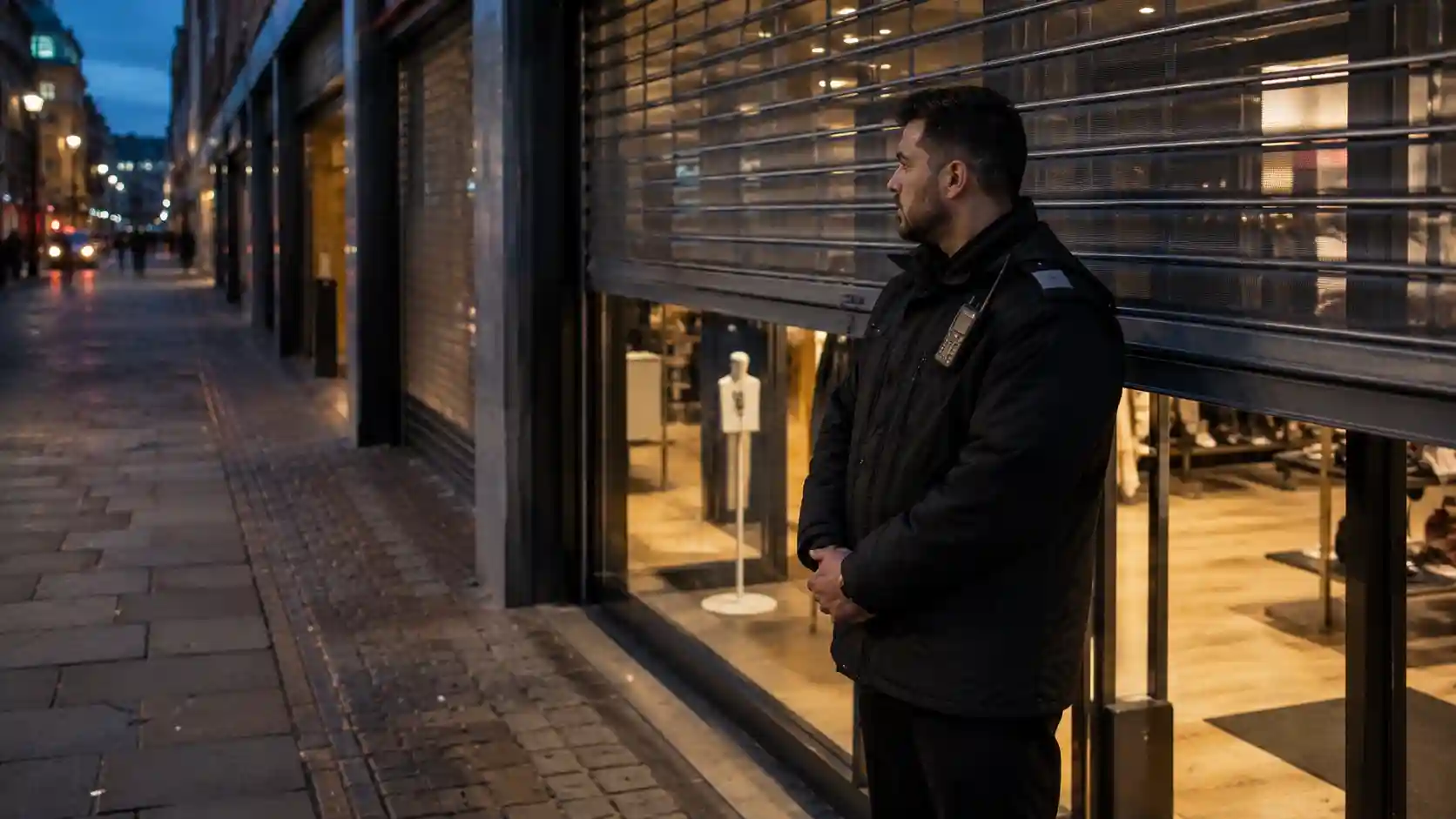
Daytime risk is shaped by movement. Tourist footfall, office turnover, short-stay accommodation, and deliveries squeezed into narrow windows. Small thefts, confrontations, and access drift happen in plain sight. At night, the city thins out quickly. Perimeters that looked busy at 7 pm feel isolated by 10. That’s when testing begins, doors, fences, and loading bays.
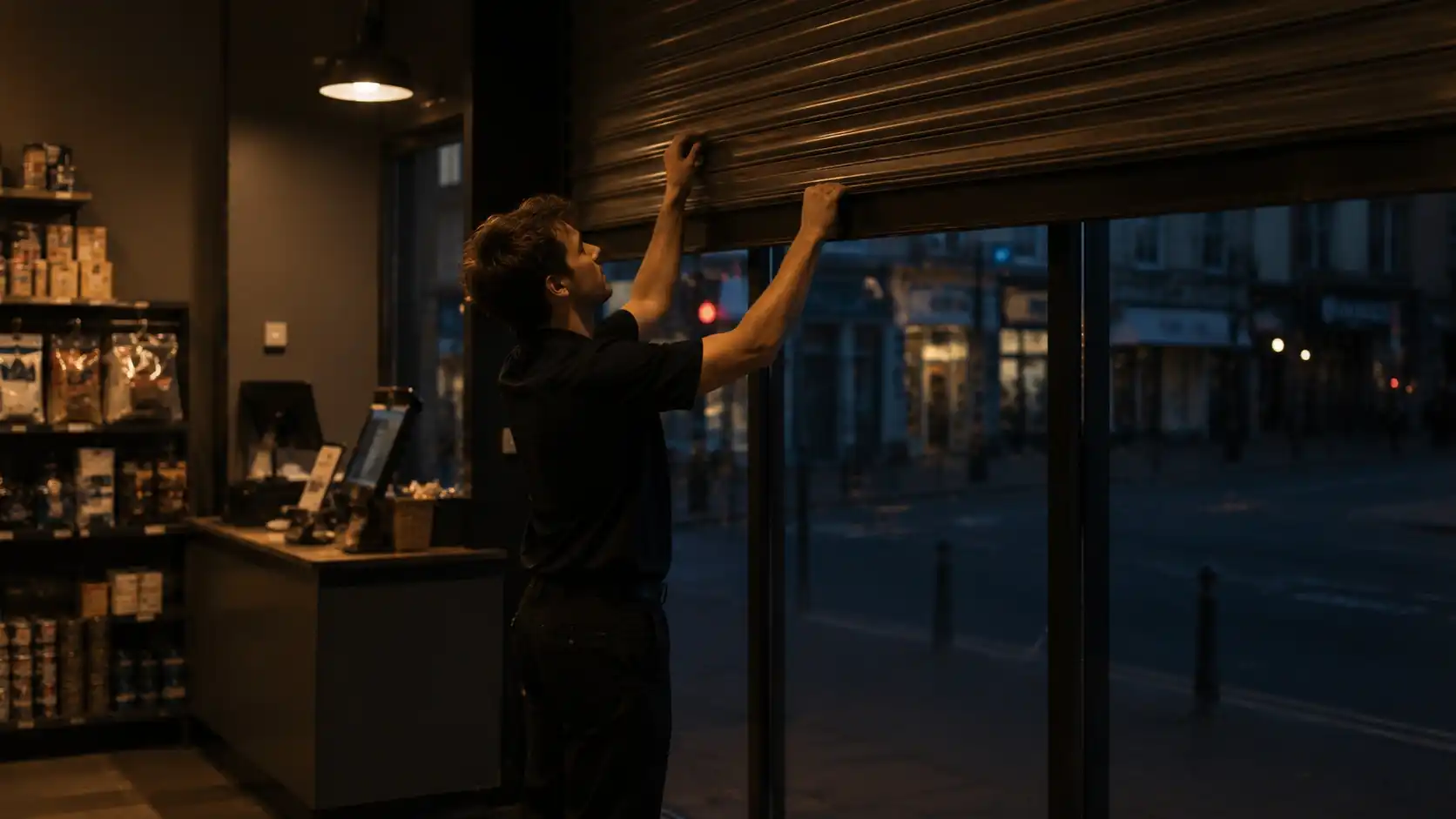
This is where physical security risk management in Edinburgh stops being abstract. Incidents aren’t random. They cluster around moments when sites change state: opening, closing, shift handovers, deliveries, events breaking up. A guard on site reduces the gap between “something looks off” and “someone intervened.”
You see the same logic across Scotland. Businesses in Glasgow manage denser night-time economies. Aberdeen weighs energy-sector assets and quieter after-hours zones. Dundee balances retail and campus environments. Stirling navigates seasonal surges. Different contexts, same lesson: opportunity matters more than headline numbers.
When incidents typically occur in Edinburgh — and why
Most businesses asking when Edinburgh businesses need manned guarding discover the answer is time-specific.
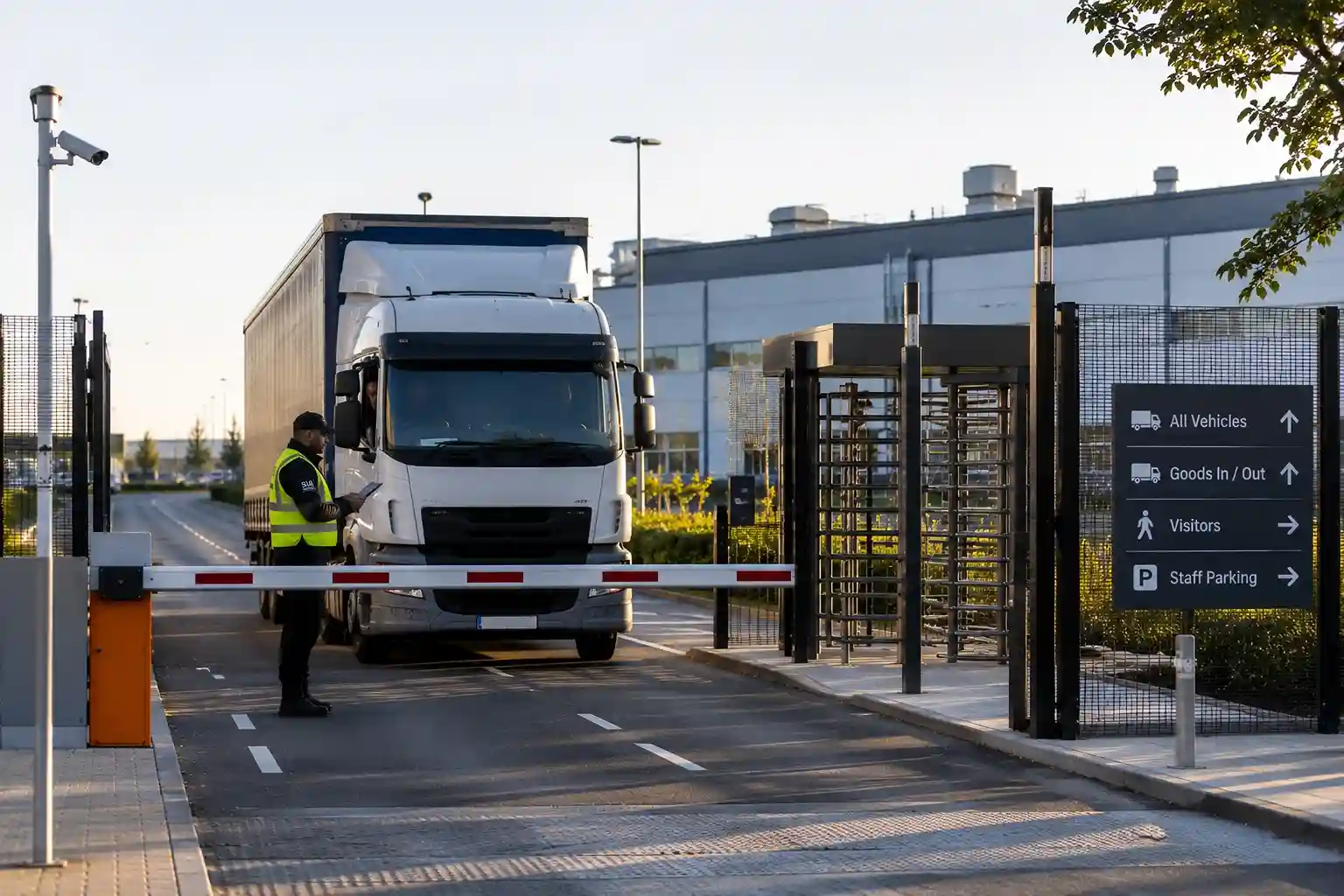
During trading hours, retail and office spaces face opportunistic theft, access creep, and customer disputes. These situations need visibility and calm intervention. Overnight, construction, warehousing, and logistics take the pressure. Low natural surveillance, predictable routines, and valuable portable assets invite attention.
That’s why staffing patterns differ by time, not just site type. Day cover prioritises presence and interaction. Night cover prioritises patrol logic, perimeter checks, and fast escalation. Treating both the same misses the point.
Why Edinburgh warehouses and industrial sites face specific vulnerabilities
Industrial sites tend to sit along arterial routes and city-edge zones. Convenient by day. Quiet by night. Common weak spots are mundane but costly:
- Multiple loading bays with inconsistent use
- Blind spots between buildings or racks
- External lighting that fades into shadow
- Stock that moves easily once accessed
Remote alerts often arrive too late. A camera records movement; a guard challenges it. That time difference is why on-site presence still anchors protection for warehouses and logistics operations around the city.
Retail parks, tourism zones, and anti-social behaviour
Retail parks and tourism-heavy zones carry a different risk profile. Not high-end organised crime, but repeated low-level disorder that erodes control.
A visible security presence for commercial sites works as a behavioural control. Guards de-escalate before incidents harden into reports. They provide a consistent authority when responsibility blurs between tenants, landlords, and public space. It’s also why daytime patrols are increasingly requested; prevention works better in the open than after the fact.
Seasonal pressure points unique to Edinburgh
Festival season, Hogmanay, and tourism surges reshape the city without permanently changing crime rates. Temporary structures appear. Footfall spikes. Late-night movement becomes normal.
Guarding demand rises not because Edinburgh becomes unsafe, but because it becomes unpredictable. Short-term reinforcements, front-of-house roles, roaming patrols, and tighter access control keep operations stable through the surge.
Tram routes, transport corridors, and “grey space” risk
Tram stops and transport corridors create grey space. Not quite private. Not quite public.
Businesses near these routes report loitering, after-hours congregation, and sudden crowd movement. Responsibility overlaps. On-site guards often become the stabilising presence, setting boundaries, managing flow, and keeping small issues from spilling into larger ones.
Legal and Compliance Requirements for Manned Guarding in Edinburgh
SIA licensing — the non-negotiable baseline
Every conversation about manned guarding in Edinburgh eventually lands here. If a guard is carrying out licensable activity, controlling access, patrolling premises, or responding to incidents, they must hold a valid SIA licence. There’s no grey area. No workaround.
For businesses, the liability is indirect but very real. If an unlicensed guard is on your site and something goes wrong, responsibility doesn’t stop with the supplier. Claims can unravel. Insurers may ask uncomfortable questions. In extreme cases, clients have found themselves exposed despite having “outsourced” security.
Non-compliance isn’t theoretical. It carries criminal penalties for individuals and serious reputational and financial consequences for organisations. That’s why SIA licensing sits at the base of the compliance stack, whether you’re running an office near Princes Street or a logistics unit on the city edge.
BS 7858 vetting and trust in sensitive environments
Licensing proves legality. Vetting proves trust. BS 7858 screening goes further than the minimum required to obtain an SIA badge. It examines identity, employment history, and background over several years. For finance-facing sites, heritage buildings, and public venues, that depth matters.
Edinburgh’s commercial landscape leans heavily on trust. Financial services. Cultural institutions. Visitor-facing assets that can’t afford quiet failures. In those environments, BS 7858 isn’t a “nice to have”; it’s often an expectation written into contracts and insurance conditions.
Insurers, in particular, view robust vetting as a risk reducer. It signals that access to sensitive areas is controlled, not assumed. You see similar expectations in other Scottish cities with specialist assets, energy-linked sites in Aberdeen, large venues in Glasgow, and heritage-heavy centres like Stirling.
DBS checks — what Edinburgh businesses should (and shouldn’t) expect
DBS checks are often misunderstood. Clients sometimes assume they should be handed certificates for every guard on site. That isn’t how the system works.
Criminal background checks form part of the SIA licensing and vetting process, but the results are protected by GDPR. Businesses should not expect to see individual DBS disclosures. What they should expect is confirmation that appropriate checks have been completed and remain current.
That confirmation, usually in writing, is the compliance signal. Asking for more can actually create data-protection issues rather than solving them.
Insurance expectations tied to manned guarding
From an insurer’s perspective, manned guarding isn’t about presence. It’s about evidence. Documentation matters: patrol logs, incident reports, access records, and clear escalation procedures. When these are consistent and audit-ready, claims are easier to defend. When they’re patchy, even legitimate claims can stall.
This is where the legal requirements for manned guarding in Edinburgh intersect with operational reality. Guarding becomes part of a defensible risk posture, not just a cost line. Poor records weaken claims. Strong ones often reduce friction with underwriters.
Data protection and CCTV integration
Most Edinburgh sites use CCTV alongside guards. That combination works, but only when roles are clear.
Human-led security versus CCTV-only protection isn’t a slogan here; it’s a compliance issue. Guards may monitor feeds, respond to alerts, or support investigations, but all of this must sit inside a defined data-protection framework.
Clear signage, limited access to footage, secure storage, and sensible retention periods are non-negotiable. When policies align, CCTV strengthens guarding. When they don’t, it creates exposure.
VAT treatment and commercial impact
There’s no special tax treatment for manned guarding. Services are standard-rated for VAT across the UK. For budgeting, that simplicity helps. For procurement, it means comparisons should focus on value and compliance, not headline prices stripped of tax reality.
Council rules and construction-site security in Edinburgh
Local authority conditions can shape guarding requirements, particularly on construction sites. Edinburgh council planning permissions may include obligations around site security, access control, or out-of-hours monitoring.
These aren’t universal rules, but they’re enforceable when attached to approvals. Ignoring them can delay projects or trigger enforcement action. Reviewing planning conditions alongside security specifications avoids that friction.
Proving compliance and supplier credibility
A credible security company in Edinburgh should be able to demonstrate compliance without hesitation. Typically, that includes:
- Valid SIA licences for all deployed guards
- Evidence of BS 7858 vetting where required
- Up-to-date insurance certificates
- Clear operating procedures and reporting standards
Mandatory business licensing adds another layer, confirming that the company itself meets regulatory expectations. For clients, this isn’t bureaucracy. It’s a reassurance that the basics are solid.
Labour law, overtime, and post-Brexit implications
Guards are subject to the same employment laws as any other workforce. Overtime must comply with working-time regulations. Right-to-work checks are essential, particularly post-Brexit, where EU nationals face different documentation requirements.
Poor record-keeping here doesn’t just affect suppliers. It can destabilise services mid-contract, creating continuity risks for clients.
Events, venues, and Martyn’s Law
Edinburgh’s venue density, from theatres to festivals, puts it squarely in scope for Martyn’s Law. When fully implemented, expectations around protective security will rise.
This changes planning, not just staffing. Training, documentation, and coordination become central. Similar shifts are already being discussed for major venues in Dundee and Glasgow. For Edinburgh businesses involved in events or public spaces, early alignment avoids rushed compliance later.
Police collaboration and data-led deployment
Finally, effective guarding doesn’t operate in isolation. Collaboration with Police Scotland and local business groups informs deployment patterns. Shared intelligence, incident timing, repeat behaviours, and emerging risks help guards focus effort where it actually matters.
That data-led approach turns compliance from a checklist into something more useful: informed, proportionate security that reflects how the city really works.
Costs, Contracts, and Deployment in Edinburgh
What actually drives the cost of manned guarding in Edinburgh
The cost conversation usually starts with a number and ends with confusion. In Edinburgh, manned guarding isn’t priced on a flat curve, and that’s deliberate.
City-centre sites behave differently from peripheral ones. A guard covering a compact retail frontage near Princes Street deals with constant footfall, delivery pressure, and public interaction.
A guard on the edge of the bypass might cover more ground, in quieter conditions, but with higher night-time exposure. The hourly rate reflects that difference. Beyond location, three factors quietly shape pricing:
- Risk profile: Public-facing retail, construction sites, and logistics yards all carry different exposures.
- Skill expectation: Conflict management, access control, lone-working awareness, or customer-facing discretion aren’t interchangeable skills.
- Operational demand: Short shifts, irregular cover, or rapid mobilisation cost more per hour than stable, predictable patterns.
This is why the cost of manned guarding for businesses in Edinburgh varies so widely. Cheaper pricing often fails operationally, not immediately, but over time. Corners get cut. Reporting thins out and continuity breaks. What looks economical on paper can become expensive in missed incidents, insurance friction, or disrupted operations.
You see the same pattern elsewhere in Scotland. Central Glasgow commands different rates from its outskirts. Energy-adjacent sites around Aberdeen are priced in specialist risk. Dundee and Stirling, smaller on the surface, still see spikes where site complexity increases. Context always wins.
Inflation, wage pressure, and predictable cost movement
Guarding costs aren’t volatile, but they are directional. Over the past few years, wage pressure has crept upward, driven by statutory pay increases, tighter labour markets, and broader compliance expectations. None of that is reversing. What businesses should expect instead is gradual movement, not shocks.
This is why CPI-linked reviews are now common in longer contracts. They allow pricing to adjust in step with the economy, rather than jumping sharply at renewal. It’s not about protecting margins for their own sake. It’s about keeping services viable without diluting standards.
Looking toward 2030, the practical takeaway is simple: guarding is unlikely to become cheaper, but it should become more predictable. Businesses that plan for incremental change tend to avoid disruption. Those chasing short-term savings often pay later, just not on the same invoice.
Deployment timelines — how fast guards can realistically be mobilised
When a business needs guards, it’s often urgent. But speed has limits.
Emergency deployments, especially single-guard or short-term cover, can sometimes be mobilised within 24–72 hours if vetted staff are already operating nearby. Planned deployments take longer, for good reason. Vetting, site induction, access permissions, and briefing all matter.
Rushing this stage increases risk. A guard who doesn’t understand the site isn’t an asset; they’re a liability. Realistic mobilisation windows balance urgency with competence.
Contract length, notice periods, and continuity
Guarding contracts come in different shapes:
- Short-term: Weeks or a few months, often post-incident or during construction phases.
- Medium-term: Six to twelve months, common for retail parks and industrial estates.
- Long-term: Two to three years, usually with review points built in.
Notice periods protect both sides. They prevent sudden gaps and give time to adjust coverage sensibly. Continuity matters more than flexibility here. Guards who know the site reduce risk simply by being familiar with what “normal” looks like.
Guarding and insurance premium impact
Insurers don’t reduce premiums because a guard is present. They respond to structure.
Documented patrols, clear escalation, proof-of-presence, and consistent reporting. These reduce uncertainty, which insurers price aggressively. When guarding supports those outcomes, it becomes leverage rather than overhead.
That’s the thread running through Edinburgh and beyond. Whether in Glasgow’s dense commercial zones, Aberdeen’s industrial sites, or Stirling’s mixed-use developments, guarding earns its value when it stabilises operations and makes risk legible to the people underwriting it.
Training, Daily Operations, and Guard Duties in Edinburgh
Training standards for retail and public-facing sites
In Edinburgh, retail and public-facing guarding is less about posture and more about judgment. Guards are trained to operate in spaces where reputational risk travels faster than incident reports.
That means understanding crowd flow, recognising pre-incident behaviour, and intervening early, often with nothing more dramatic than a quiet word or a change in presence.
Core expectations typically include conflict management, safeguarding awareness, and clear communication under pressure. But context matters. A boutique on George Street, a museum forecourt, or a mixed-use arcade each demands a different tone.
The training aim is consistency without rigidity. You see similar emphasis in busy city centres like Glasgow, but Edinburgh’s compact layouts and visitor density amplify the need for discretion.
What happens at the start of a guard’s shift
The first few minutes set the rhythm. Guards arrive, check in, and absorb context. What happened last shift? What’s scheduled today? What felt off yesterday?
Then comes a quick orientation sweep. Doors that should be locked. Areas that shouldn’t be occupied. Weather damage. A fence panel nudged out of line. These checks aren’t ceremonial; they’re how guards build a mental map of “normal” before patrols begin.
Equipment follows. Radios tested. Torches checked. Access credentials confirmed. It’s basic, but failures here have a habit of showing up at the worst time.
Shift handovers and continuity
Good handovers are conversational, not transactional. In Edinburgh, where sites change character between day and night, guards pass on nuance as much as facts. A delivery that ran late. A door that sticks in the rain. A regular who lingered longer than usual.
That continuity is a quiet advantage. Guards who know the site don’t need alarms to tell them something’s wrong; they feel it. The same principle applies in smaller Scottish centres like Dundee and heritage-heavy Stirling. Familiarity reduces reaction time.
Patrol frequency and perimeter priorities
There’s no universal patrol clock. Frequency flexes with risk, time of day, and layout. Lower-risk, occupied sites might see hourly patrols. Industrial yards, construction zones, and logistics depots tighten that window, often randomising routes to avoid predictability. Perimeter checks usually come first:
- Gates and fencing
- Loading bays and service doors
- Blind spots created by lighting or layout
- Utilities and temporary structures
The goal isn’t mileage. It’s an opportunity reduction. An unpredictable, visible presence changes behaviour long before an incident forms.
Logging, reporting, and documentation
Logs turn activity into evidence. Daily entries record patrol times, observations, visitor movements, and system faults. Post-patrol notes capture what felt unusual, even if nothing escalated.
This is where a site-specific security assessment Edinburgh stops being a document and starts being a practice. Patterns surface on paper: repeat alarms, the same corner attracting attention, deliveries bunching at awkward hours. Insurers and auditors care about that trail. So do managers try to make sensible adjustments?
Alarms, CCTV checks, and access control
Early hours can be deceptive. Quiet amplifies risk. When alarms trigger overnight, guards attend methodically, safely first, quickly second. They assess cause, document findings, and escalate if needed. False alarms still matter; repetition points to weaknesses.
Regular verification of CCTV and access systems helps identify faults before they become exploitable patterns. Guards confirm feeds are live, access points are secure, and previous faults are resolved. Technology supports the role, but human judgment decides what to do with the information.
24/7 coverage and response expectations
Round-the-clock coverage usually runs on structured rotations, eight or twelve hours, designed to balance alertness with continuity. Response expectations vary by geography, but across Edinburgh and the surrounding areas, plans typically assume rapid attendance from nearby support if escalation is required.
Whether servicing dense urban zones or supporting sites linked to Aberdeen’s industrial corridors, the principle holds: effective guarding isn’t constant motion. Its presence, preparation, and the confidence that someone on site understands the environment well enough to act when it counts.
Performance, Risk, and Operational Challenges
How Edinburgh businesses should measure guarding performance
In Edinburgh, guarding performance isn’t measured by how busy a guard looks. It’s measured by whether risk stays contained, and whether that containment can be proven after the fact.
Insurers and auditors tend to care about a short, unglamorous list of indicators. They look for evidence that routines happen when they should, that incidents are handled proportionately, and that decisions are documented clearly. Typical markers include patrol completion with time-stamped proof, response times from alert to attendance, and the clarity of written reports. Not pages of prose. Clear, factual entries that show judgment.
The real distinction lies between prevention and reaction. Reactive metrics, such as how fast someone responded, matter, but preventive signals matter more. Fewer repeat incidents in the same location. Earlier interventions before escalation. Consistent challenge at access points. These don’t always show up as “events,” but they reduce loss quietly.
You see similar measurement logic applied elsewhere in Scotland. City-centre assets in Glasgow emphasise crowd control and response timing. Industrial sites around Aberdeen focus on perimeter integrity and night-time patrol proof. Different risks, same principle: performance has to stand up to scrutiny when someone external asks, “How do you know this is working?”
Environmental factors and operational pressure
Guarding doesn’t happen in a vacuum. The environment pushes back. Edinburgh’s weather alone changes patrol reality. Wind and rain reduce visibility. Frost alters walking routes. Darkness settles early in winter, stretching night exposure. Add in uneven lighting around heritage buildings or awkward site layouts, and patrol assumptions break quickly.
Lighting gaps creates blind spots. Narrow service lanes funnel movement. Temporary structures, scaffolding, fencing, festival infrastructure, and shift access points without warning. Guards adapt in real time, but the adaptation needs to be recorded.
That’s why documentation matters more than most businesses expect. Notes explaining delayed patrols due to weather, restricted access during high winds, or temporary route changes provide context later. Without that context, gaps look like failures. With it, they look like controlled decisions.
The same pressures appear in smaller cities like Dundee or Stirling, where limited natural surveillance and exposed perimeters magnify environmental effects. The guard’s role isn’t to fight conditions. It’s to manage risk within them, and leave a record that explains how.
Service pricing realism
For Edinburgh businesses, pricing realism matters because continuity underpins performance. Guards who stay on a site learn its rhythms. They know which alarms misfire in heavy rain, which doors swell in cold weather, and which delivery patterns drift. That familiarity reduces risk without adding cost elsewhere.
Chasing the lowest hourly rate often undermines that continuity. It creates churn, which increases exposure even if coverage hours remain the same. Insurers and Auditors will notice. Eventually, so do managers, usually after an avoidable incident.
The lesson isn’t that guarding should be expensive. It should be viable. Across Scotland, whether supporting dense urban sites in Glasgow or remote industrial zones near Aberdeen, stable services outperform cheap ones in the only way that really matters: fewer problems, better evidence, and less time spent explaining what went wrong.
Technology and Future Trends in Edinburgh Manned Guarding
Technology’s role in modern guarding
Technology hasn’t replaced guards in Edinburgh. It has changed what guards notice first, and what they can ignore safely.
A decade ago, guarding leaned on radios, notebooks, and fixed routines. Today, digital patrol verification, live dashboards, and integrated access systems shape daily work. The shift isn’t about doing more. It’s about doing the right things sooner. When technology flags an anomaly, a human decides whether it matters. That handoff, machine to judgment, is where value sits.
This evolution mirrors what’s happening across Scotland. Dense urban sites in Glasgow lean on faster incident triage. Energy-linked assets near Aberdeen prioritise visibility across wide perimeters. Different pressures, same direction of travel.
Post-COVID operational changes
COVID didn’t invent new risks; it rearranged them.
Buildings now sit half-occupied at odd hours. Offices empty early, then fill unpredictably. Retail footfall spikes without warning. Guards adapted by becoming navigators of irregularity, checking spaces that used to be busy, monitoring access points that used to be dormant, and supporting hybrid entry systems.
Protocols changed quietly:
- More frequent access checks
- Flexible patrol routes
- Clearer escalation when occupancy doesn’t match schedules
These adjustments stuck. Edinburgh isn’t unique here; smaller centres like Dundee felt the same shifts, just at a different scale.
AI surveillance as operational support
AI in security works best when it’s unremarkable. Used well, AI-assisted surveillance highlights patterns humans would otherwise miss, such as loitering that repeats at the same hour, perimeter testing that escalates over weeks, and movement that doesn’t match historical norms. It doesn’t replace guards. It points them.
Think of it as triage. AI narrows the field; guards apply judgment. That balance avoids the two extremes Edinburgh businesses worry about: being buried in alerts or missing the quiet warning signs that precede real incidents.
Remote monitoring and hybrid models
Hybrid models, remote monitoring paired with on-site presence, are now common. Not because they’re fashionable, but because they close gaps.
Remote teams verify alarms, track multiple viewpoints, and guide guards to exact locations. On-site guards handle reality: access, confrontation, reassurance, escalation. Alone, each approach has limits. Together, they cover blind spots.
This model has proved especially effective for multi-tenant sites and business parks, from Edinburgh’s outskirts to mixed-use developments near Stirling, where responsibility often blurs.
Drones and large-scale coverage
Drones aren’t everywhere, and they shouldn’t be. But on large or remote sites, they’re starting to earn a place. Used selectively, drones provide rapid sweeps, thermal views at night, and quick confirmation of perimeter breaches.
They don’t replace foot patrols. They extend them. Guards remain central, interpreting feeds and acting on what matters. Expect cautious growth here. Regulation, weather, and site suitability all shape adoption.
Predictive analytics and smarter deployment
Predictive tools take the guesswork out of resourcing. By analysing past incidents, time-of-day trends, weather correlations, and nearby activity, these systems suggest when and where risk concentrates.
For Edinburgh businesses, this means patrol frequency can flex with evidence, not habit. The same tools help sites in Aberdeen’s industrial corridors or Glasgow’s transport hubs allocate coverage proportionately. Smarter deployment reduces fatigue and improves outcomes quietly.
Upskilling and green security practices
As tools evolve, so do expectations of guards. Increasingly valuable skills include:
- Digital reporting and evidence handling
- Counter-terror awareness and crowd safety
- AI/CCTV system literacy
- Enhanced first aid
Alongside skills, sustainability is creeping into procurement. Electric patrol vehicles, LED lighting, digital logs, and lower-impact equipment aren’t marketing extras; they’re becoming baseline expectations, especially for public-facing sites.
Martyn’s Law and future compliance
Martyn’s Law will change guarding in most places where people gather. For Edinburgh’s venues, festivals, theatres, and large hospitality spaces, the impact is structural. Better planning. Stronger documentation.
Clearer roles for guards in vulnerability scanning, evacuation readiness, and incident escalation. This isn’t about adding bodies. It’s about raising standards.
The same conversations are already happening in Glasgow and Dundee. The difference for Edinburgh is density. Preparation done early avoids rushed compliance later.
Conclusion — Making a Proportionate Security Decision in Edinburgh
Security decisions in Edinburgh rarely come down to a single incident or a headline statistic. They come from accumulation. Small pressures are adding up. Sites are changing character by the hour. Public-facing spaces that feel calm until they don’t.
This is why Edinburgh businesses need manned guarding, which becomes a practical question rather than a theoretical one. Not because every site needs a permanent presence, and not because technology has failed, but because judgment still matters when environments shift faster than systems can react. A trained person on site closes gaps that dashboards can’t always see.
The same pattern appears across Scotland, just shaped differently. Dense night-time economies in Glasgow. Asset-heavy industrial zones around Aberdeen. Compact retail and campus areas in Dundee. Heritage-driven footfall in Stirling. Different risks, same need for proportion.
The point isn’t to default to guarding. It’s to assess exposure honestly, understand when human presence adds control, and choose a model that supports continuity without excess. A measured review of timing, layout, and consequence is often enough to reveal whether on-site judgement belongs in the mix.
Frequently Asked Questions
When do Edinburgh businesses need manned guarding rather than alarms alone?
When risk isn’t just about intrusion, but it’s about behaviour, timing, or judgment. Alarms react, but guards decide. Sites with public access, complex layouts, or changing use tend to need that discretion.
Is manned guarding necessary for low-crime areas like Edinburgh?
Sometimes. Low crime doesn’t remove exposure created by footfall, tourism, mixed-use buildings, or quiet overnight conditions. Here, risk is situational, not constant.
Which Edinburgh sectors benefit most from visible guards?
Retail, hospitality, construction, warehousing, logistics, and public venues. Anywhere deterrence, early intervention, or reassurance matters as much as asset protection.
How quickly can compliant guards be deployed in Edinburgh?
Urgent cover can occasionally be arranged within 24–72 hours. Planned deployments usually take longer to allow for vetting, induction, and site familiarisation.
Does manned guarding influence insurance outcomes?
Often, yes. Insurers look for structure: patrol records, escalation procedures, and proof-of-presence. Strong documentation makes risk easier to underwrite and claims easier to defend.
What documentation should Edinburgh businesses request?
Valid SIA licences, confirmation of vetting, insurance certificates, and clear operating procedures. Reluctance to provide these is a warning sign.
How does festival season affect guarding needs?
Footfall spikes, temporary structures appear, and late-night movement increases. Many businesses add short-term cover to maintain control during peak periods.
How will Martyn’s Law change requirements for Edinburgh venues?
Expect higher expectations around planning, training, and documentation. It shifts guarding from visibility to preparedness, especially where people gather.