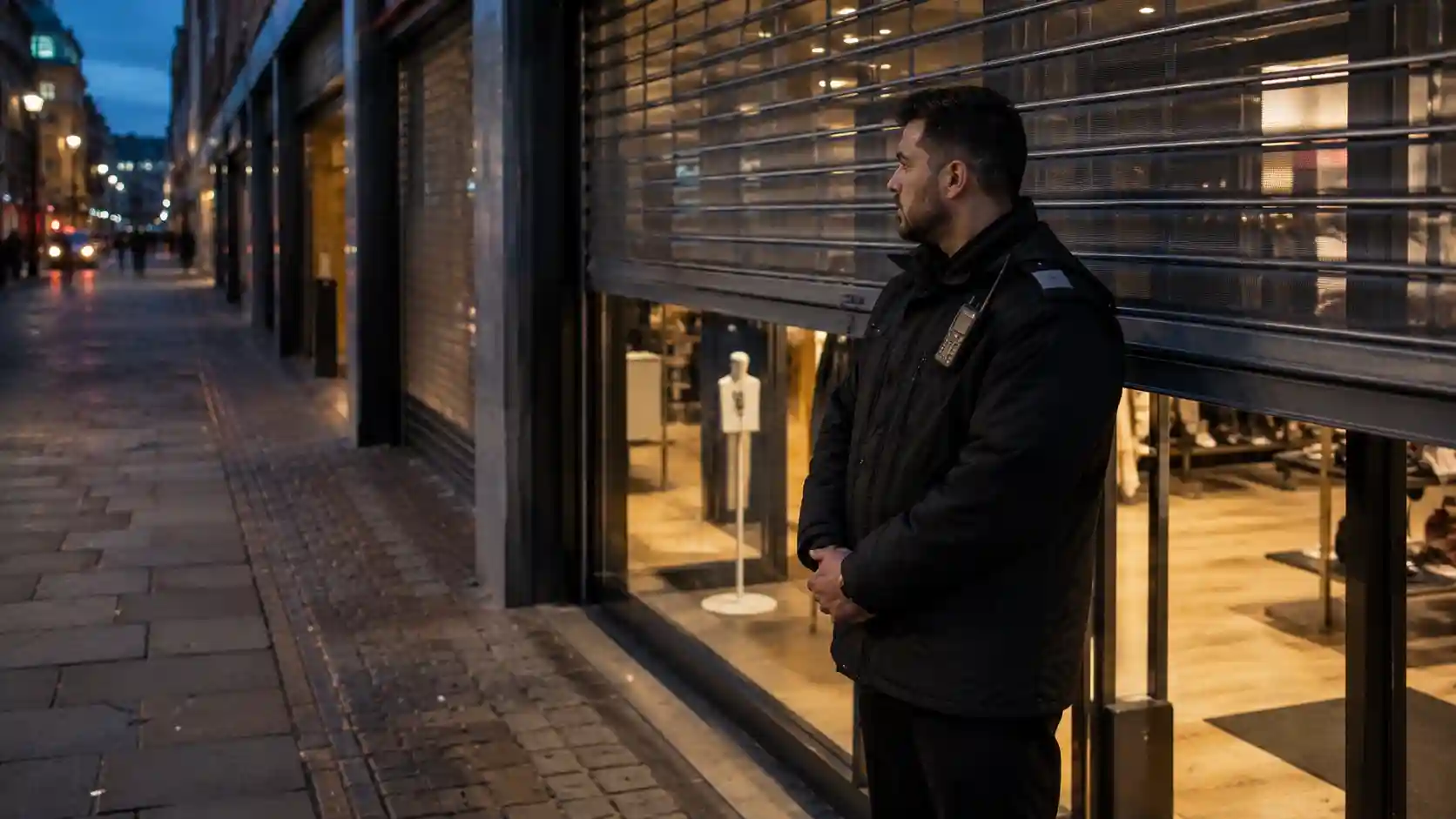
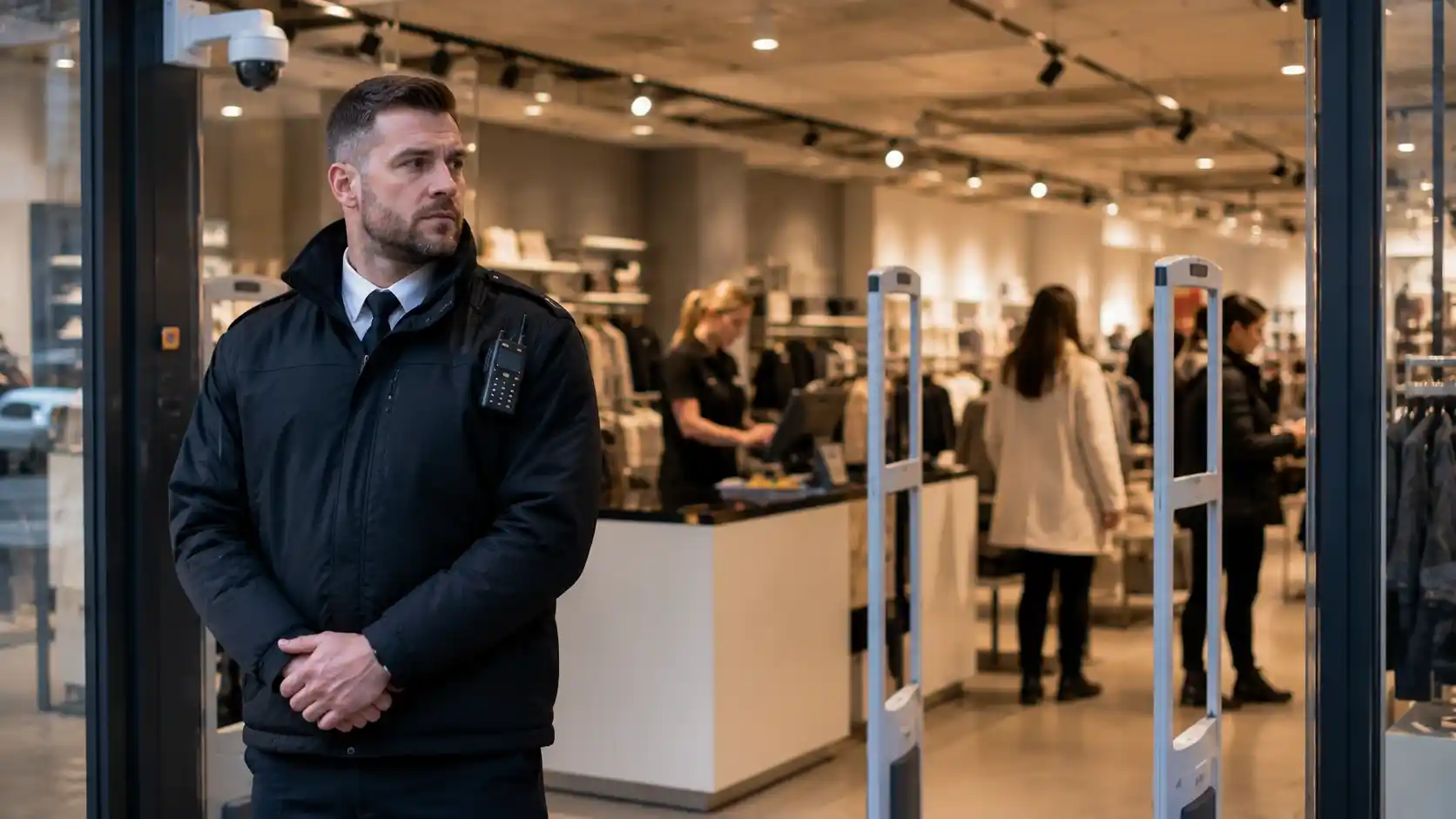
In places like Aberdeen, security decisions tend to be practical rather than theoretical. Sites are spread out. Operations run early, late, or continuously. People come and go with legitimate reasons, until they don’t. In those conditions, manned guarding is less about how a site looks and more about how it holds together over time. A trained presence brings judgement, memory, and continuity that systems alone struggle to replicate.
Local risks shape that need. Port activity and energy-related supply chains create irregular movement patterns. Industrial estates sit exposed to weather that limits visibility and complicates access control. Add long winter evenings and shift-based work, and the gaps between what technology can flag and what someone needs to interpret become clearer. Cameras record. Sensors alert. Neither decides what matters in the moment.
That is why Aberdeen businesses increasingly reassess how they balance tools and people. Understanding why Aberdeen businesses need manned guarding starts with recognising that technology supports security, but human judgement is what ultimately closes the loop.

Manned Guarding Basics in Aberdeen
What manned guarding means for Aberdeen businesses
For many Aberdeen businesses, manned guarding is less about stopping obvious threats and more about managing the spaces in between. Alerts, sensors, and cameras are useful tools, but they work on triggers rather than understanding. A guard on site brings judgment into that gap. They notice when activity feels out of place, when routines shift, or when something that looks minor now may matter later. That awareness builds over time and cannot be programmed into a system.
On-site presence matters more in low-density, spread-out environments. Industrial zones, yards, and peripheral business parks do not benefit from constant footfall or passive oversight. Distances between buildings, irregular delivery schedules, and quiet periods create conditions where issues can develop slowly. A human presence provides continuity across shifts and days, allowing patterns to be recognised rather than treated as isolated alerts.
How Aberdeen’s risk profile differs from other Scottish cities
Aberdeen’s risk profile is shaped by industry rather than volume. Industrial and logistics activity tied to energy supply chains brings high-value assets, specialist equipment, and time-sensitive movements into relatively quiet locations. These environments attract attention precisely because they are predictable and lightly populated outside working hours.
By contrast, cities such as Glasgow deal with higher density, faster movement, and more public-facing disorder. The challenge there is often immediacy and crowd dynamics. In Aberdeen, the risks tend to sit in the margins: early-morning access, late finishes, lone working, and extended periods with little natural surveillance. Manned guarding responds to that slower, more deliberate risk by maintaining oversight when activity drops away.
High-risk sectors in Aberdeen
Ports and offshore supply chains introduce a mix of authorised complexity and potential exposure. Access requirements change daily, contractors rotate frequently, and movements often fall outside standard business hours. Without on-site oversight, it becomes difficult to distinguish routine variation from genuine risk.
Warehousing and industrial estates present a different challenge. Large footprints, multiple access points, and limited nighttime presence create opportunities for interference that may go unnoticed until much later. A guard’s ability to patrol, challenge, and document activity provides early intervention rather than post-incident reconstruction.
Retail parks and mixed-use developments sit somewhere between these extremes. They combine public access with private responsibility, often seeing low-level anti-social behaviour alongside organised theft attempts. Manned guarding in these settings focuses as much on maintaining order and reassurance as it does on responding to incidents.
Day vs night manned guarding risks in Aberdeen
During the day, most issues come from movement. People arrive early. Deliveries overlap. Contractors come and go. Mistakes happen in busy moments. Guards focus on access. They check who should be on site and why. Many problems are handled quietly before they grow.
At night, the risks change. Fewer people are around. Sites stay still for longer. That makes weak spots easier to test. The weather also plays a part. Darkness, wind, and rain slow patrols and limit visibility. Guards have to decide when to step in and when to watch. Good judgment matters more when there is no backup close by.
Seasonal pressure points
Energy cycles influence security demand in Aberdeen more than calendar seasons alone. Maintenance periods, project ramps, and supply fluctuations can increase site activity at unusual hours, stretching normal oversight arrangements. Temporary changes often introduce new access patterns that require close monitoring until they stabilise.
Major events and visitor surges also shift the local risk profile. Increased movement, unfamiliar visitors, and extended operating hours place pressure on sites not designed for sustained footfall. In cities like Edinburgh, these pressures are constant and highly visible. In Aberdeen, they tend to arrive in waves, making adaptability and local awareness more important than fixed security routines.
Legal and Compliance Requirements in Aberdeen
SIA licensing and what it protects Aberdeen businesses from
In Aberdeen, security rules affect real outcomes. They decide who is allowed to work on site and who is not. This starts with the Security Industry Authority. The SIA controls who can carry out manned guarding across the UK. Any guard who checks access, patrols a site, or deals with incidents must hold a valid licence. That licence shows the guard has been trained, checked, and approved to do the job.
This protection matters when something goes wrong. If an unlicensed guard is involved in an incident, the problem does not stop with the provider. The business can face legal trouble and lose insurance coverage. Claims may be refused without warning. For sites around Aberdeen, such as industrial yards, logistics areas, and energy-related locations, this can halt work very quickly. In simple terms, licensing limits damage. It keeps risk contained when pressure is highest.
BS7858 vetting and DBS expectations in Scotland
Licensing sets the baseline, but vetting determines trust. In Scotland, many buyers now expect BS7858 screening as standard, particularly where guards work alone or control critical access points. Lone-post roles demand higher assurance because there is no immediate peer oversight. Gate-controlled sites carry similar expectations, since one decision can open or close the entire operation to risk.
BS7858 goes further than basic criminal record checks. It examines employment history, identity consistency, and unexplained gaps that could signal vulnerability or risk. DBS checks form part of this process, but businesses rarely see the certificates themselves due to data protection rules. What matters is confirmation that screening has been completed correctly and recently. For Aberdeen sites operating outside normal hours, or with rotating contractors, this level of scrutiny is often what separates a compliant operation from a fragile one.
Event licensing and Martyn’s Law implications
Public-facing locations in Aberdeen, from venues to temporary event spaces, sit under a different layer of expectation. Event licensing conditions increasingly require demonstrable security planning, not just staff on the ground. Manned guarding becomes part of a wider compliance picture that includes crowd management, access control, and emergency response readiness.
Martyn’s Law, as it moves toward full implementation, reinforces this shift. The emphasis is not simply on reacting to incidents, but on demonstrating that risks have been considered in advance. For businesses, this means guards must be trained, briefed, and documented in a way that stands up to scrutiny. The forward-looking posture here is important. Compliance is no longer just about today’s licence; it is about being prepared for tomorrow’s expectations without having to rebuild systems under pressure.
Police collaboration and data-led deployment
Manned guarding in Aberdeen does not work in a bubble. Guards see what happens on site, but they also listen to what is happening nearby. That often comes through contact with Police Scotland and local partners. It is not about replacing the police. It is about sharing awareness.
When information moves both ways, patterns appear sooner. A repeat issue at one site may be linked to activity elsewhere. A change in access behaviour may not be random. This helps guards focus on the right areas at the right times, instead of following fixed routines that no longer fit.
Scottish policing frameworks support this kind of local cooperation. For businesses, the benefit is practical. Patrols reflect real conditions on the ground. Guards respond to what is actually happening around the site, not what a generic risk plan predicted months earlier. Over time, this shared picture leads to calmer sites and fewer surprises.
Costs, Contracts, and Deployment in Aberdeen
What drives manned guarding costs in Aberdeen
The cost of manned guarding in Aberdeen depends on the site. Some places are spread out. Others are easier to cover. How a site runs also matters. Long hours and lone work change what is needed from a guard. Sites near ports, industrial estates, or energy facilities often need more time to patrol. Distances are longer. Fewer people are around. City-centre sites are different. They are smaller and share resources. These differences shape the cost more than any single rate.
That distance matters, not just for travel time, but for how isolated a guard may be during quieter hours.
Shift patterns also play a role. Sites that run early mornings and late finishes, or maintain 24-hour coverage, tend to stabilise staffing over time, even if the weekly cost looks higher on paper. Short, irregular shifts can be more expensive per hour because they are harder to staff consistently. Risk level sits alongside both factors. A low-activity office environment is priced differently from a site where access changes daily, deliveries arrive out of sequence, or lone working is routine.
In contrast, logistics hubs in the East of England operate under different pressures. Areas around Cambridge, Peterborough, and Ipswich often see denser clustering of warehouses and shared labour pools. That density can moderate travel and staffing costs, but it also brings its own competition for experienced guards. The comparison matters because it shows that pricing reflects operating conditions, not a simple regional premium.
Wage pressure, inflation, and labour availability
Northern Scotland faces a quieter but persistent staffing challenge. The pool of experienced guards willing to work unsociable hours or travel to dispersed sites is not unlimited. As wages rise across logistics, manufacturing, and infrastructure roles, security providers compete for the same people. Inflation adds another layer, gradually increasing the baseline cost of employment through pay expectations, training, and compliance requirements.
Retention versus churn becomes a cost issue in itself. High turnover leads to repeated onboarding, familiarisation, and short learning curves, all of which reduce effectiveness and increase management overhead. Providers that focus on keeping experienced staff in place often appear more expensive initially, but they deliver steadier coverage and fewer gaps. Over time, that stability tends to cost less than constant replacement.
Deployment timelines and mobilisation
How quickly guards can be deployed in Aberdeen depends on whether the requirement is urgent or planned. Emergency cover, after an incident or sudden vacancy, can often be arranged within days if a provider already operates locally. That speed relies on having vetted staff available and familiar with similar environments.
Planned contracts follow a different rhythm. Mobilisation allows time for site induction, access briefing, and alignment with existing procedures. While this may take longer to start, it usually results in smoother operations once coverage begins. The distinction matters because rushed deployments can solve immediate problems but create longer-term inefficiencies if expectations are unclear from the outset.
Contract lengths, notice periods, and insurance impact
Contract structure influences both cost control and risk exposure. Short-term agreements offer flexibility but tend to carry higher rates due to uncertainty. Longer contracts allow providers to invest in site-specific knowledge and staffing continuity, which often improves performance. Notice periods protect both sides, preventing sudden withdrawal of cover that could leave a site exposed.
From an insurance perspective, documentation is as important as presence. Insurers look for evidence that guarding is structured, monitored, and recorded. Consistent patrol logs, incident reports, and clear escalation procedures demonstrate control. When those systems are in place, underwriters often view the risk profile more favourably. In practical terms, well-documented guarding does not just reduce incidents; it can soften the financial impact when something does go wrong.
Training, Daily Operations, and Guard Duties in Aberdeen
The first 10 minutes of a guard’s shift
The start of a shift sets the tone for everything that follows. In Aberdeen, where sites can be quiet for long stretches and then change quickly, guards use the first few minutes to establish context rather than rush into routine. Arrival checks usually begin with confirming access status and ensuring there are no obvious signs of disturbance from the previous hours. Small details matter here: a door that feels different, a light that should be on but isn’t, or an activity that does not match the normal rhythm of the site.
Handover notes provide the next layer. Guards read more than incident summaries; they look for patterns, repeated names, delayed fixes, or unresolved questions. This information shapes how the site is approached that day or night.
A short visual assessment follows, often a slow walk or scan of key areas, allowing the guard to recalibrate expectations before patrols begin. On sites in Dundee, where layouts are often tighter and activity more concentrated, this same process happens faster. In Aberdeen, distance and isolation mean those early checks carry more weight.
Patrol routines and access control
Patrols are planned to see the whole site, not to move fast. In Aberdeen, sites are often spread out and quiet for long periods. Guards adjust routes to fit the layout and the conditions on the day. Weather, lighting, and recent activity all affect where attention is needed. Timings change, so patterns do not become easy to guess.
Perimeter areas are checked first. Gates, doors, and fence lines are looked at before guards move deeper into the site. Quieter corners are included because problems often start there, not in busy areas.
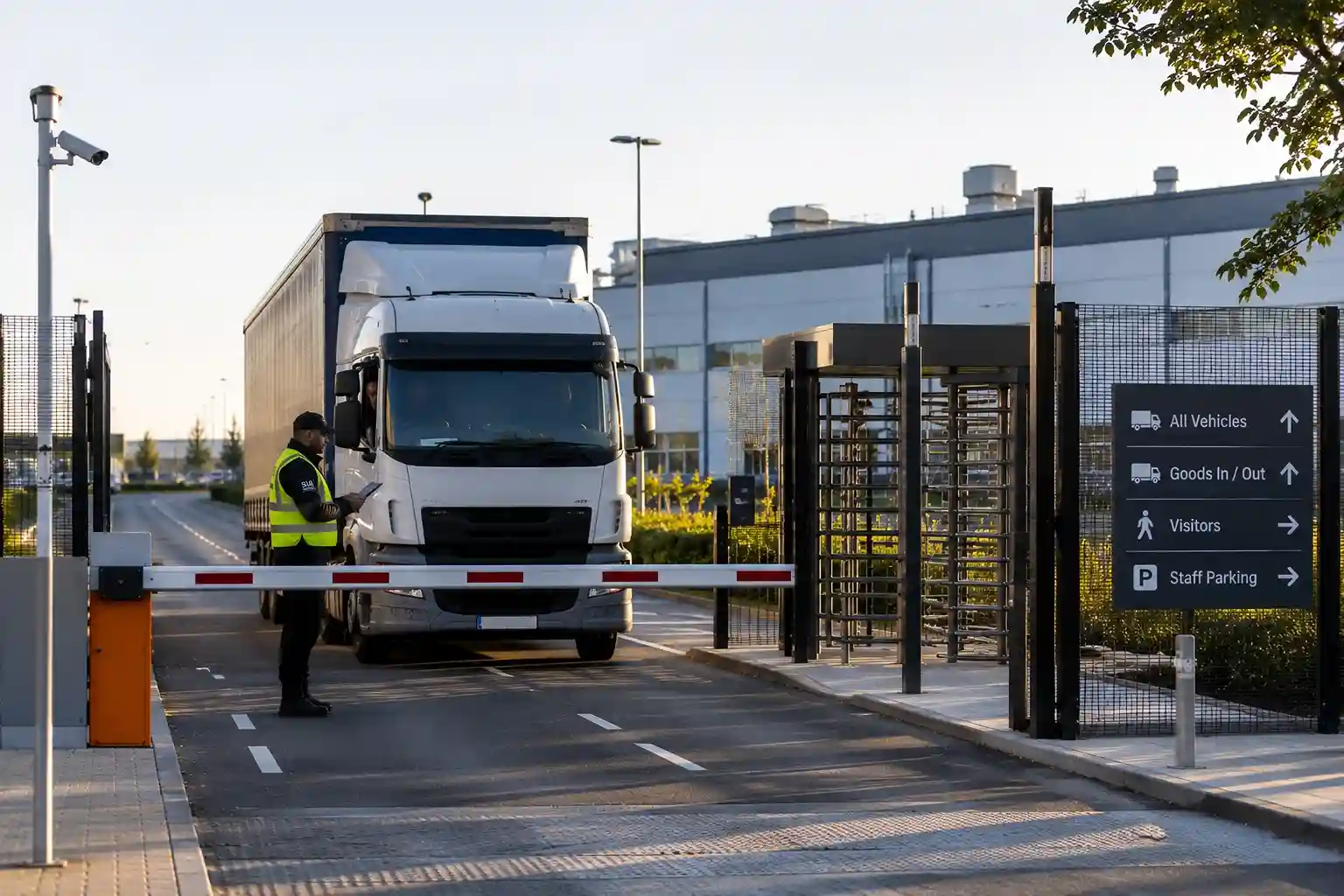
Access control is where judgment matters most. Logging visitors and vehicles is not just about writing things down. Guards check why someone is there and whether the timing makes sense. On sites that use Gatehouse security, this becomes a key role. Officers at entry points question anything that feels out of place, confirm details, and record movement clearly. This keeps order without slowing work or causing disruption.
Fire safety and environmental checks
Fire safety is part of the daily routine. It is not saved for inspections. Guards look at escape routes as they move around the site. They check that doors open as they should and are not blocked. Emergency lights are tested in passing, not ignored until something fails.
Utilities are also part of the picture. On many sites, power cables, fuel stores, or temporary connections are easy to disturb. Guards keep an eye on these areas because small changes can turn into bigger problems if they go unnoticed.
Conditions outside matter too. In Aberdeen, the weather affects how safely a site can be managed. Rain, wind, and darkness change how people move. Wet ground, broken lights, or loose fixtures are logged when they appear. These are not just maintenance issues. They can slow response or create risk during an emergency, especially at night.
Reporting, escalation, and secure-down procedures
Documentation is the thread that ties shifts together. Guards record patrol findings, access activity, and any irregular observations in logbooks that are designed to be read, not just completed. Clear reporting creates an incident trail that supervisors, insurers, and, when necessary, investigators can follow without interpretation.
Escalation procedures rely on this clarity. When something falls outside normal tolerance, guards are expected to know who to contact, how quickly, and what information to pass on. At the end of a shift, secure-down procedures bring the process full circle. Final checks confirm that access points are secured, outstanding issues are logged, and the next guard inherits a site that is understood rather than assumed.
Performance, Risks, and Staffing Challenges
KPIs Aberdeen businesses should track
Measuring guarding performance is not about how busy guards look. It is about whether the site feels more controlled over time. For businesses in Aberdeen, the clearest signs are usually linked to consistency, not speed.
The most useful KPIs include:
- Patrol completion: Patrols should happen when planned and cover the full route. Missed or rushed patrols often point to fatigue, poor planning, or routes that do not fit the site.
- Response times: Speed matters, but context matters more. A good response means the guard attends, checks properly, and escalates when needed, not just arriving fast.
- Report quality: Reports should be clear and easy to follow. They should explain what was seen, when it happened, and what action was taken. Weak reports usually signal low engagement or poor briefing.
When these measures are reviewed together, trends become clear. Gaps in patrols or unclear reports often reflect wider setup issues, not individual mistakes.
Weather, fatigue, and lone-working risks
Environmental conditions play a quiet but persistent role in guarding effectiveness. Outdoor exposure increases physical strain, particularly during long night shifts when the weather affects visibility and movement. In Aberdeen, this is not an occasional issue but a routine consideration.
Key risk factors often overlap:
- Reduced visibility during poor weather, slowing patrols and increasing the chance of missed detail.
- Physical fatigue from extended shifts affects concentration and decision-making.
- Mental strain is linked to lone working, especially on large or isolated sites where peer reference is absent.
Effective operations account for these pressures by adjusting patrol expectations, increasing check-ins, and recognising that performance varies with conditions rather than assuming a fixed baseline.
Technology and Future Trends in Aberdeen Manned Guarding
CCTV integration and hybrid guarding models
CCTV has been part of site security for years, but its role changes when paired with on-site guards rather than treated as a substitute. In Aberdeen, hybrid models work best when cameras extend a guard’s awareness instead of attempting to automate decisions. Live feeds support patrols by highlighting movement at the edges of a site, while guards provide context that systems cannot, recognising routine activity, weather-related interference, or authorised out-of-hours access.
Effective integration usually focuses on a few practical outcomes:
- Supporting patrol prioritisation by drawing attention to unusual activity.
- Providing visual confirmation during alarms before escalation.
- Creating a shared record that aligns what guards observe with what systems capture.
When technology and people are aligned this way, coverage improves without adding complexity.
AI analytics and predictive deployment
AI tools help sort what guards already see. This matters on larger sites with many cameras or access points. Instead of watching everything at once, guards get prompts about activity that repeats or looks out of place. That might be someone lingering too long or making movements at odd hours.
AI does not decide what to do next. It does not judge intent. It simply reduces noise. For sites in Aberdeen, where long, quiet periods are common, this helps guards stay focused. They spend less time chasing false alerts and more time watching areas that need attention. The result is calmer shifts and earlier awareness, not automation replacing people.
Drones and large-scale visibility
Drone use remains selective, but it is gaining relevance on large industrial estates and perimeter-heavy sites. Their strength lies in rapid visibility rather than constant presence. Short flights can confirm alarms, scan hard-to-reach areas, or assess conditions during poor visibility without committing guards to long detours.
Where used effectively, drones:
- Reduce time spent investigating false alarms across wide areas.
- Provide overhead views of perimeters after hours.
- Share live feeds with on-site guards to guide ground response.
They do not replace foot patrols; they shorten the distance between alert and understanding.
Sustainability and green security practices
Sustainability has moved from aspiration to procurement requirement. In guarding, this shows up in practical adjustments rather than grand gestures. Electric patrol vehicles reduce noise and emissions on large sites. Digital reporting replaces paper logs, improving accuracy while cutting waste. Energy-efficient lighting and smart activation limit power use without compromising safety.
These measures tend to be incremental, but together they align security operations with wider environmental goals. For businesses, that alignment increasingly influences supplier selection and long-term contracts.
How Martyn’s Law will raise expectations
The impact of Martyn’s Law is less about introducing new tools and more about formalising expectations. Venues and public-facing sites will be required to show that risks have been considered, staff are trained appropriately, and procedures are documented clearly.
For manned guarding, this means:
- Broader training coverage, including situational awareness and response protocols.
- Clear documentation that demonstrates preparedness rather than reaction.
- Regular reviews to ensure plans remain relevant as sites change.
The direction of travel is clear. Guarding teams will be expected not only to respond well, but to prove that they were ready before anything happened.
Conclusion
For businesses in Aberdeen, security choices affect more than one problem at a time. They influence insurance, legal cover, staff safety, and how smoothly a site runs on a normal day. Many places use cameras and alarms, and those tools help. But they do not think. They do not notice patterns. They do not step in when something feels wrong.
This is why Aberdeen businesses need manned guarding. A guard on site brings awareness that builds over time. They learn what is normal. They notice when it changes. That steady presence helps keep control when routines shift or pressure rises. It also means there is someone accountable when questions follow an incident.
Seen this way, guarding is not just a cost to manage. It is part of how risk is handled day to day. Clear licensing, proper checks, and simple reporting protect businesses when things go wrong. The real risk often comes from not having that structure in place when it is needed most.
Frequently Asked Questions
Why do Aberdeen businesses still rely on manned guarding?
Many sites in Aberdeen are spread out. Some are quiet for long periods. Others run early or late. In these places, technology can miss context. Guards learn what normal looks like. They notice small changes. That helps stop problems before they grow.
Is manned guarding legally required for certain sites in Aberdeen?
Not every site needs guards by law. But many sites do in practice. This includes construction areas, licensed venues, and public-facing locations. Insurance rules or council conditions often expect an on-site presence. Guarding helps businesses meet those rules.
How much does manned guarding typically cost in Aberdeen?
There is no single price. Cost depends on where the site is and how it runs. A remote yard is different from a retail park. Night shifts and 24-hour cover also change costs. Clear needs matter more than finding the cheapest rate.
Do all security guards in Scotland need SIA licences?
Yes. Any guard doing licensable work must hold a licence from the Security Industry Authority. This applies across Scotland, including Aberdeen. It is a legal rule, not a choice.
How does Aberdeen’s weather affect guarding effectiveness?
The weather affects how guards move and see. Wind, rain, and darkness slow patrols. Night shifts are harder in poor conditions. Good planning allows for this. Patrol timing and checks are adjusted to keep guards safe and alert.
Which Aberdeen sectors benefit most from 24/7 guarding?
Sites with high value or constant activity benefit most. This includes energy facilities, ports, warehouses, and large industrial areas. Continuous cover helps during quiet hours, not just busy ones.
How fast can a manned guarding team be deployed locally?
It depends on the situation. Urgent cover can often be arranged quickly if staff are already nearby. Planned cover takes longer. Time is needed for site briefings and access rules. That preparation improves results.
How does compliant guarding reduce insurance risk?
Insurers want proof of control. Licensed guards, clear records, and regular patrols provide that. When incidents happen, good records matter. They reduce disputes and support claims.