Across Wales, business risk does not sit neatly in one box. It shifts by postcode, by trading hour, and by who is on site at any given moment. That is exactly why manned guarding still matters.
From industrial estates on the edge of Wrexham to late-night venues in Cardiff and Swansea, Welsh businesses face a mix of theft, aggression, trespass, and staff safety concerns. Cameras and alarms play their part, but they do not step forward when tension rises. People do, this is the reason why Wales businesses need manned guarding to secure their site.
This is where SIA Licensed Security provides real value. A trained officer brings judgment, presence, and calm when situations feel uncertain. In busy urban areas, that does not just mean defusing conflict. They also support vulnerable staff or respond to medical incidents. In quieter or rural locations, it often means visible patrols that disrupt theft before it starts. Particularly, it is effective where machinery and vehicles are targeted.
Wales also places strong emphasis on the duty of care. Policing priorities supported by South Wales Police and local councils. These encourage early intervention, not after-the-fact reporting.
Understanding Manned Guarding Basics in Wales
Manned guarding in Wales is shaped by geography, behaviour, and timing. It looks different here than it does in many other parts of the UK. Because most risks are uneven and often localised.
What manned guarding means in a Welsh context
Manned guarding is not just someone standing at a door. In Wales, it usually means SIA-licensed security officers who patrol, observe, intervene, and support staff in real time. This differs from static security, which tends to stay fixed to one point and reacts rather than prevents. Welsh businesses often need mobility and judgement, not just presence.
How Wales’s crime patterns affect guarding demand
Crime across Wales is uneven, as city centres see confrontation and disorder. As for industrial and semi-rural zones, they face planned theft.
That split changes how guards are used:
- Urban sites focus on de-escalation and visibility
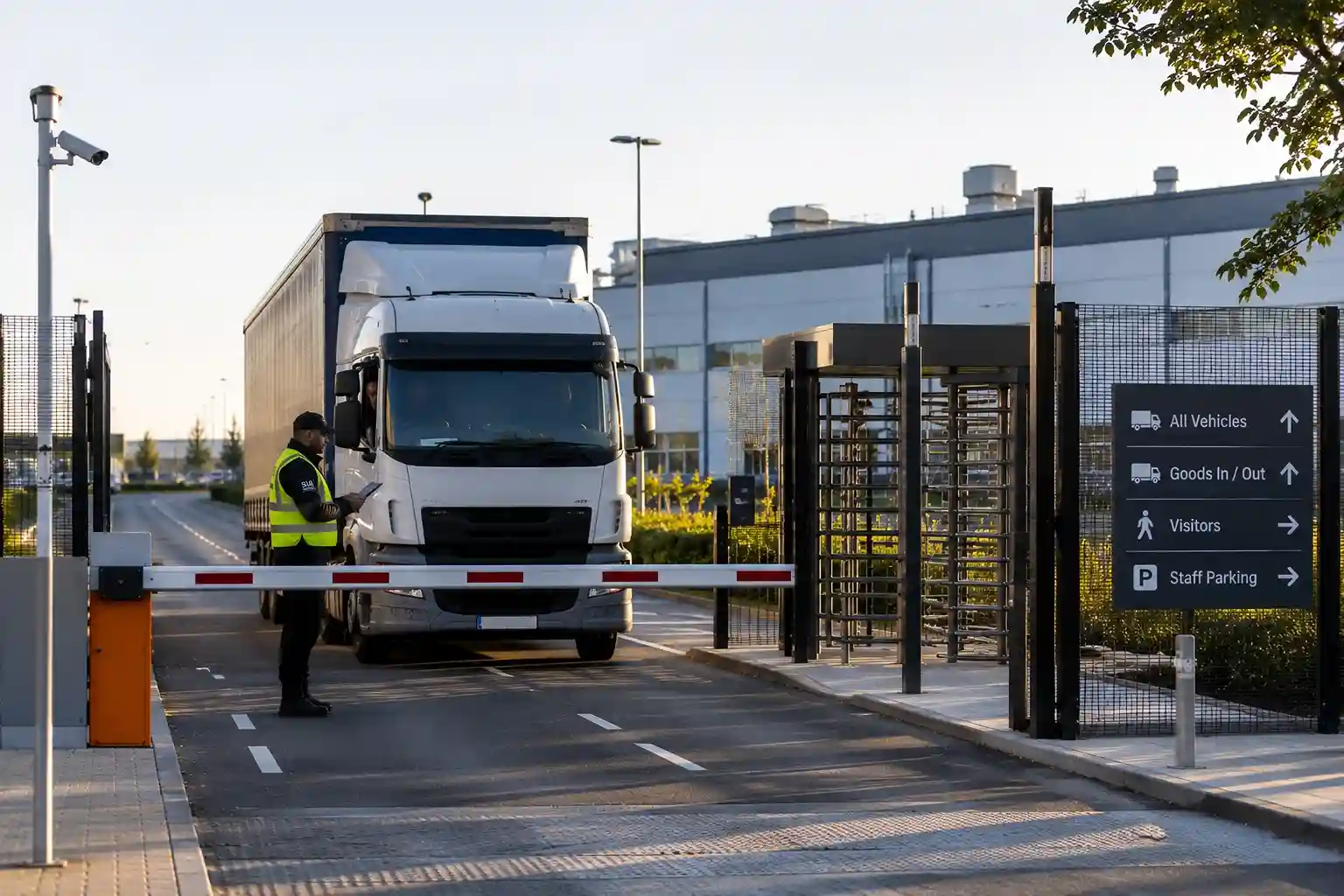
- Industrial sites rely on patrols and access control
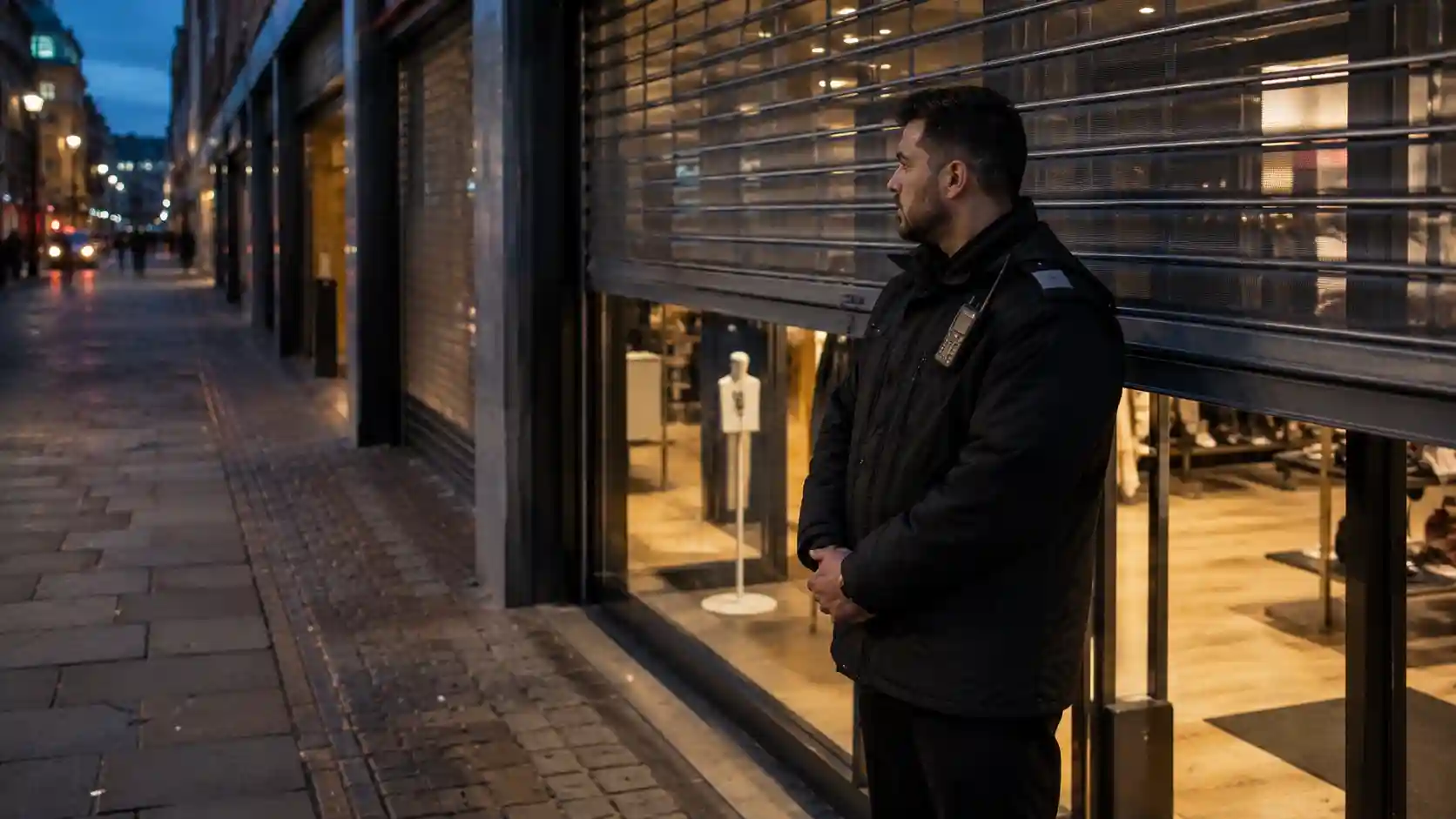
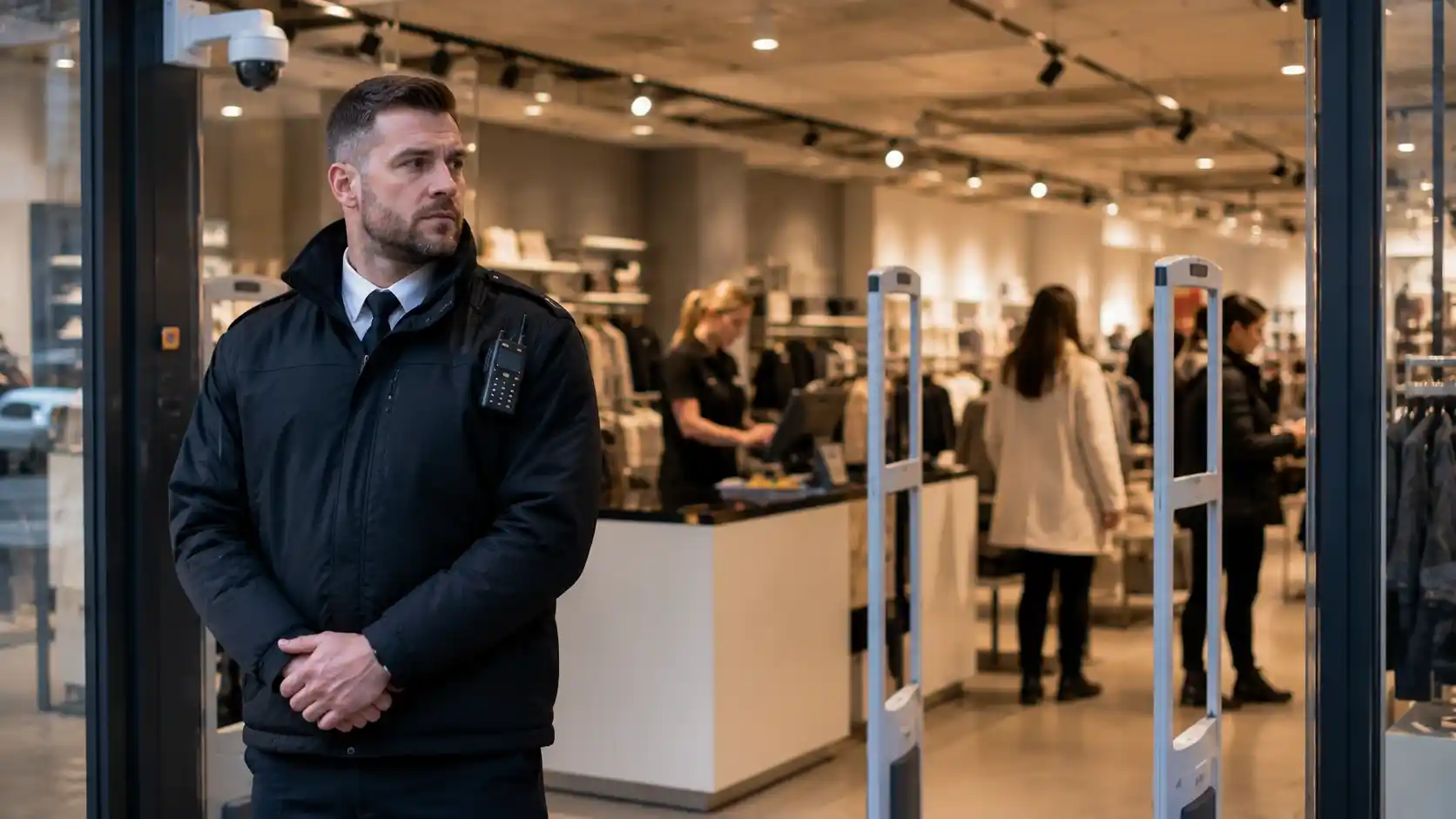
- Retail environments need early intervention during trading hours
Rising retail theft has pushed many businesses to deploy guards during the day, not just overnight.
Peak risk hours for Welsh businesses
Risk does not follow a single timetable. It shifts with the time and opportunity. Business robbery in the UK saw a 50% increase in the last year. This highlights the need for “Physical Presence” over remote monitoring.
Typical pressure points include:
- Early mornings for warehouse and logistics sites
- Late afternoons in retail parks
- Evenings linked to alcohol-led activity
- Overnight hours for isolated premises
This is why many businesses now mix day and night manned guarding, rather than choosing one.
Wales-specific warehouse vulnerabilities
Warehouses in Wales often sit close to main routes but away from public view. That combination attracts organised theft.
Common issues include:
- Vehicle access abuse
- Insider-enabled breaches
- Rural Asset & Machinery Theft Prevention Gaps
- Slow police response due to distance
Manned patrols disrupt these patterns early, before losses escalate. This is the reason why Wales businesses need manned guarding to secure their site.
Anti-social behaviour in retail parks
Retail parks across Wales experience loitering, abuse towards staff, and low-level disorder. This rarely triggers police attendance to monitor. Guards trained to manage behaviour calmly reduce repeat incidents and protect staff morale.
Day vs night manned guarding risks
Daytime risks tend to involve people, and nighttime risks tend to involve assets. These different priorities tend to ensure no risk affects the site.
Day guards manage:
- Theft by confrontation
- Aggressive behaviour
- Crowd flow
Night guards focus on:
- Perimeter breaches
- Vehicle movement
- Suspicious activity
Both require different skills, not just different hours.
Seasonal pressure and public events
Events such as Wales Pride change footfall, crowd density, and risk overnight. Temporary surges often overwhelm normal controls. Short-term manned guarding fills that gap without long-term commitment.
Transport hubs and movement risks
Wales’s growing tram and transport links increase foot traffic around hubs. That brings opportunity, but also theft and disorder. Guards provide reassurance where movement is constant and unpredictable.
Economic growth and guarding demand
As Welsh business parks, logistics hubs, and mixed-use developments expand, so does exposure. Growth brings opportunity, but it also attracts attention. Manned guarding scales with that growth, offering control where infrastructure is still catching up.
In Wales, guarding is less about reacting to crime statistics and more about understanding how risk actually behaves on the ground.
Legal and Compliance Requirements in Wales
Legal compliance is one of the main reasons why Wales businesses need manned guarding. It is not just for protection, but for risk control. Security in Wales sits at the intersection of licensing law, employment law, and local authority oversight. Miss one piece, and the exposure can be serious.
SIA licensing: the foundation of lawful guarding
All frontline security officers must hold a valid SIA Licensed Security accreditation. This applies across Wales and Wrexham, regardless of sector.
Using unlicensed guards can result in:
- Criminal prosecution
- Unlimited fines
- Invalidated insurance
- Civil claims following incidents
There is no grey area here. Liability sits with both the provider and the business using them.
Recent SIA licensing changes have tightened identity checks and training standards. This has influenced hiring timelines and availability across Wales. Businesses planning coverage need to factor this in early.
DBS checks and suitability
SIA licensing covers criminality thresholds. This makes many Welsh businesses also require enhanced DBS checks, especially for:
- Construction sites
- Public-sector contracts
- Education or healthcare-adjacent locations
It is not always a legal requirement, but it is often a contractual or insurer-led expectation.
Insurance obligations when hiring guards
Many sites hold irregular safety measures, but they want to claim assurance. These lead them to lose the claim eligibility and also cause some trouble. Businesses must ensure their provider holds:
Public liability insurance
Employer’s liability insurance
Professional indemnity (where reporting or monitoring is involved)
Without this, responsibility can shift back to the client following an incident.
Data protection and CCTV integration
Manned guarding often works alongside CCTV. Monitoring the site lets them know the risk and act accordingly. That also brings UK GDPR obligations to it, and security services should act accordingly.
Compliance includes:
- Lawful basis for monitoring
- Clear signage
- Restricted access to footage
- Proper incident reporting
Guards must understand data handling, not just security tasks.
VAT and financial compliance
Manned security services in the UK are subject to VAT. Attempts to avoid VAT through misclassification or labour-only arrangements have led to enforcement action. Reputable providers operate transparently.
Council and construction-specific rules
Some Welsh councils impose additional conditions for construction site security, particularly around:
- Out-of-hours guarding
- Noise and lighting
- Community safety impact
Local planning conditions often reference manned guarding as a mitigation measure.
Proving a security firm’s compliance history
A compliant provider should readily supply:
- SIA Approved Contractor status
- Officer licence checks
- Training records
- Incident reporting samples
- Insurance certificates
Hesitation here is usually a warning sign.
Labour law, overtime, and post-Brexit rules
Manned guarding must comply with UK working time regulations, including rest periods and overtime pay. Post-Brexit, EU nationals working as guards must also hold valid right-to-work documentation. Non-compliance exposes businesses to fines and reputational damage.
Policing collaboration in Wales
Welsh policing actively supports lawful private security. Forces such as South Wales Police share crime pattern data with professional guards. This informs and plans out better guard deployment, patrol timing, and visibility strategies.
This often happens through:
- Local licensing consultations
- Event planning meetings
- Business Crime Reduction Partnership schemes
The Business Crime Reduction Partnership model encourages structured information sharing. It is done between the police, councils, and private manned firms. This strengthens prevention rather than reaction.
Event licensing and guarding requirements
For licensed events, manned guarding is often a condition of approval. Guards support crowd control, safeguarding, and emergency response. This helps organisers meet legal thresholds set by local authorities.
In Wales, compliance is not paperwork for its own sake. It is the framework that allows manned guarding to operate effectively and lawfully. Also, need to act with confidence from insurers, councils, and police alike.
Costs, Contracts, and Deployment in Wales
Cost is usually the first question Welsh businesses ask about manned guarding. The second is whether the spend will actually hold up under pressure. In practice, both questions are linked as price without structure rarely delivers protection.
Typical manned guarding costs across Wales
Pricing varies sharply by location and risk profile. A guard in a quiet suburban business park does not face the same pressures as one working a busy city centre frontage.
In general terms:
- City centres cost more due to confrontation risk, footfall, and skill requirements
- Suburban and semi-rural sites are usually lower, but often need longer hours
- Industrial estates sit in between, depending on the patrol scope
Rates also rise where first-aid, conflict management, or lone-working controls are required.
How quickly guards can be deployed
Deployment speed depends on planning, not just availability. For most Welsh sites, mobilisation typically takes between a few days and two weeks.
Delays usually come from:
- Licence checks and right-to-work verification
- Site-specific risk assessments
- Briefing and induction requirements
Emergency cover is possible, but it costs more and carries a higher risk if rushed.
Contract lengths: short-term vs long-term
Welsh businesses use a mix of contract models for their sites. Some sites need just a short period of protection service, while others need long-term.
Common options include:
- Short-term contracts for events, peak trading, or construction phases
- Rolling monthly agreements for flexibility
- 12–36 month contracts for stable sites seeking cost control
Longer contracts usually offer better pricing stability, especially during inflationary periods.
Notice periods and exit terms
Standard notice periods range from 30 to 90 days, depending on contract length and staffing model. Shorter notice often comes with a premium. This protects providers from sudden wage exposure and businesses from abrupt service loss.
Wage pressure and 2025 cost changes
Security wages increased again in 2025. This was driven by minimum wage rises, licensing costs, and labour shortages.
The impact shows up in:
- Higher hourly rates
- Reduced availability of experienced officers
- Greater demand for multi-skilled guards
Businesses locking prices without understanding wage risk often face mid-contract adjustments.
Inflation and long-term pricing
Inflation affects uniforms, fuel, insurance, and training. Long-term contracts now commonly include review clauses tied to wage benchmarks. While this can feel uncomfortable, it is more stable than sudden renegotiation.
Insurance benefits of manned guarding
Insurers increasingly view manned guarding as a risk reducer, not just a deterrent. In some cases, businesses see:
- Lower excesses
- Improved terms
- Fewer claim disputes
Insurers prefer prevention to documentation after loss.
Public sector procurement in Wales
The Procurement Act 2023 has changed how public sector contracts are awarded. In Wales and Newport, this places more emphasis on transparency and value. Following it, they hold compliance history rather than the headline price alone.
For manned guarding, this means:
- Clear audit trails
- Documented training standards
- Social value considerations
Low-cost, low-compliance providers are finding it harder to compete.
Cost is not just the hourly rate
The real cost of manned guarding is measured through various factors. It’s from avoiding incidents, staff confidence, and uninterrupted operations. In Wales, businesses that treat guarding as a long-term control, not a short-term fix, tend to see the strongest return.
Price matters as much as structure does for robust security. With the right cost, guards can provide reliable protection.
Training, Operations, and Daily Duties in Wales
Manned guarding in Wales is practical work. It starts before anything goes wrong and continues long after most people have gone home. The day-to-day detail is what makes the difference.
Training standards for retail and public-facing sites
Guards working in retail environments must be trained beyond basic presence. Alongside SIA Licensed Security requirements, Welsh retail sites expect officers to handle people, not just property.
Training usually covers:
- Conflict management and de-escalation
- Awareness of theft-by-confrontation tactics
- First aid and emergency response
- Clear understanding of the duty of care
This is especially important in busy locations where incidents unfold quickly.
What happens at the start of a shift
A guard’s job begins the moment they arrive, not when an incident occurs. The first minutes of a shift are about control.
On arrival, guards typically:
- Check the perimeter for overnight changes
- Inspect access points and locks
- Review handover notes and incident logs
- Confirm communication equipment is working
That early snapshot often reveals problems before they grow.
Shift handovers and shared awareness
Handover is not a formality. It is a risk control. Guards brief each other on anything out of place, from alarm faults to repeat offenders.
Key handover points include:
- Unresolved incidents
- Suspicious activity patterns
- Equipment issues
- Changes to site operations
Skipping this step is how details get missed.
Patrol frequency and perimeter checks
Patrol timing depends on risk, not habit. In Wales, patrols often increase during known pressure windows.
Industrial areas usually prioritise:
- Fence lines and gates
- Vehicle access points
- Utility boxes and plant
- Lighting coverage
Early detection of tampering prevents loss later.
Daily logs and reporting discipline
Guards in Wales are expected to maintain clear, factual records. These logs matter during investigations, insurance claims, and audits.
Typical entries include:
- Patrol times and findings
- Visitor activity
- Alarm responses
- Maintenance or safety issues
Good logs protect both the business and the guard.
Equipment and system checks
At shift start, guards verify radios, panic alarms, and body-worn equipment. CCTV checks focus on visibility, recording status, and camera positioning. If a camera is down, it is reported immediately. Guesswork has no place here.
Responding to alarms and early incidents
Alarms triggered early in a shift are treated cautiously. Guards assess the cause, secure the area, and escalate if needed. The aim is control, not confrontation.
In urban areas, this often includes coordination with site teams and, where appropriate, South Wales Police.
Fire safety and lighting checks
Fire exits, extinguishers, and alarm panels are checked early. In car parks, lighting inspections matter more than people realise. Poor lighting creates a risk which can open the path to threats. Guards report failures quickly to avoid repeat incidents.
Reporting during night shifts
Night guards usually report to supervisors at agreed intervals. This keeps lone working safe and confirms welfare. It also creates an audit trail.
End-of-shift secure-down
Before leaving, guards should check, lock down access points and confirm alarms are set. Following it, they have to complete the final logs and brief the next officer. This lets each action be understandable, and nothing is assumed.
24/7 coverage and response expectations
Round-the-clock guarding relies on structured shift patterns to avoid fatigue. In cities like Cardiff and Swansea, response times are expected to be immediate on-site. This response was handled with escalation through agreed protocols.
Manned guarding works because of these routines. They are quiet, methodical, and rarely noticed until the day they prevent something serious from happening.
Performance, Risks, and Challenges in Wales
Manned guarding only delivers value when performance is measured honestly, and risks are understood in local terms. In Wales, conditions on the ground create challenges that spreadsheets alone never show.
KPIs that actually matter for manned guarding
Too many businesses track security by hours covered. That tells you very little about your site security. More useful KPIs include:
- Incident prevention, not just incident response
- Time taken to challenge or intervene
- Accuracy and completeness of daily logs
- Repeat incident reduction
- Staff and tenant confidence feedback
Good performance often shows up as nothing happening. That silence is rarely accidental.
Weather: a constant Welsh variable
The weather in Wales is not background noise. It shapes patrol effectiveness every day as heavy rain, high winds, and poor visibility affect:
- Patrol speed and frequency
- Camera clarity
- Vehicle access checks
- Guard fatigue
Experienced guards adapt routes and timing rather than forcing routine patterns. It can affect the task and will no longer make sense.
Documenting weather impact on patrols
Professional guards record weather conditions directly in their logs. This matters more than people think.
Notes often include:
- Reduced visibility areas
- Slippery surfaces
- Flooded access points
- Light reflection or glare
These records protect businesses if an incident is later reviewed by insurers or regulators.
Long shifts and physical performance
Extended shifts remain a risk factor across the industry. Fatigue reduces awareness, reaction time, and decision quality.
Common impacts include:
- Slower patrol completion
- Missed environmental changes
- Increased error rates in logs
Welsh firms increasingly rotate duties during long shifts to keep attention sharp.
Mental health pressures on night-shift guards
Night work brings isolation. In quieter Welsh locations, guards may go hours without interaction.
Best-practice providers now focus on:
- Regular supervisor check-ins
- Clear escalation channels
- Predictable shift patterns
- Access to wellbeing support
Ignoring mental strain eventually shows up as mistakes on site.
Environmental rules affecting outdoor patrols
Outdoor manned guarding must comply with environmental and safety regulations. This includes:
- Cold and wet weather PPE
- Adequate rest breaks
- Safe lone-working controls
Failure here does not just risk guards. It exposes the business.
Labour shortages and retention challenges
Wales has felt security labour shortages more sharply since 2024. Competition for licensed, experienced guards is high. If the provider is short on guards, then it can impact the assignment of guards on duty. This would raise the threats which could affect your business badly.
Having the right providers with professional guards is better for your site and businesses.
Performance under policing expectations
Welsh police forces expect professional private security. Information sharing and incident quality matter. Forces such as South Wales Police rely on accurate guard reporting to spot patterns and allocate resources. Poor performance damages that relationship quickly.
Risk is rarely dramatic, but it is constant
Most failures in manned guarding are quiet, as a missed check or a tired decision, and the guard is left unsupported.
Strong Welsh businesses accept that guarding performance is shaped by various factors. Such as weather, people, fatigue, and morale. It is not just contracts and uniforms.
When these risks are managed properly, manned guarding stays effective. When they are ignored, problems arrive without warning.
Technology and Future Trends in Wales
Manned guarding in Wales is no longer just about boots on the ground. Technology has quietly reshaped how guards work, how risks are spotted, and how businesses plan ahead. Technology has not replaced guards. It has made good guards more effective.
How technology has changed urban manned guarding
In busy Welsh towns and cities, guarding has become more data-based. Officers now arrive on site with clearer intelligence, not just instructions.
Urban changes include:
- Live incident reporting via mobile devices
- GPS-verified patrol tracking
- Faster escalation to supervisors
- Better visibility of repeat problem areas
This matters in places where footfall shifts by the hour and risk is rarely static.
Post-COVID shifts in guarding protocols
COVID changed expectations permanently. Guards in Wales are now expected to manage space, not just security.
Post-COVID guarding often includes:
- Managing queue flow and congestion
- Supporting vulnerable visitors
- Handling confrontations earlier and more calmly
- Increased hygiene and welfare awareness
The tone has softened, but the responsibility has grown.
AI surveillance as a support tool
AI-powered cameras are now common on larger Welsh sites. They flag unusual movement, loitering, or perimeter breaches.
AI helps guards:
- Prioritise where to patrol
- Respond faster to real threats
- Avoid wasting time on false alarms
- Human judgement still sits at the centre.
Remote monitoring and on-site guarding
Remote monitoring works best when paired with manned guarding. In urban Wales, this pairing allows guards to move with purpose instead of routine.
Remote systems:
- Alert guards before incidents escalate
- Provide additional eyes during peak hours
- Support lone workers at night
Without guards, monitoring stays passive. Together, it becomes preventative.
Drones and ground-level integration
Drone patrols are emerging on large industrial and infrastructure sites. In Wales, they are used sparingly and legally, mainly for perimeter checks and hard-to-reach areas.
Drones do not replace guards. They extend visibility, while officers handle response and decision-making.
Predictive analytics and risk planning
Some Welsh businesses now use predictive tools to assess when and where guards are needed most. These systems analyse:
- Incident history
- Time-of-day trends
- Seasonal patterns
- Local event data
It is not about predicting crime perfectly. It is about deploying guards intelligently.
Upskilling the modern Welsh guard
Technology has pushed training expectations higher. Increasingly essential skills include:
- Digital reporting competence
- CCTV and AI alert interpretation
- Enhanced conflict management
- Emergency response awareness
Guards who adapt stay in demand. Those who don’t fall behind.
Green security and sustainable patrols
Sustainability is starting to shape guarding decisions in Wales, especially outdoors.
Emerging practices include:
- Low-energy lighting strategies
- Smarter patrol routing to reduce fuel use
- Battery-efficient equipment
- Reduced reliance on static floodlighting
Security and environmental responsibility are no longer separate conversations.
Martyn’s Law and future venue security
The proposed Martyn’s Law will raise expectations for public venues across Wales. Manned guarding will play a central role, particularly around:
- Visible deterrence
- Crowd awareness
- Early threat recognition
- Clear response protocols
Technology will support compliance, but people will deliver it.
The future is blended, not automated
In Wales, the future of manned guarding is not high-tech or low-tech. It is blended with smart systems and skilled people. This led to clear judgment towards threats.
The businesses that get this balance right will not just meet tomorrow’s risks. They will be ready for the ones no system can predict.
Conclusion
For many organisations, the question is no longer why Wales businesses need manned guarding, but how well it is being done. Risk in Wales is shaped by people, place, and timing. It shifts between many factors. It turns rural and urban sites, daytime trading and night-time quiet, routine operations and sudden pressure.
Manned guarding works because it adapts. Trained officers read situations, step in early, and protect both people and assets when systems alone fall short. It also supports legal compliance, insurance confidence, and staff wellbeing.
When guarding is planned around local realities rather than generic templates, it becomes more than a cost line. It becomes part of how Welsh businesses stay open, safe, and resilient.
Frequently Asked Questions
Why do Wales businesses still rely on manned guarding despite technology?
We see it because of technology watches, but people act. When something feels off, a guard can step in, calm things down, or stop it early. Cameras don’t read tone or body language. Guards do. That difference matters on real sites.
Is manned guarding only necessary for high-crime areas in Wales?
Not at all. We often find quieter areas are targeted precisely because they feel overlooked. Industrial estates, rural sites, and edge-of-town units face planned theft, not random trouble. Manned guarding works there because presence disrupts planning.
Can manned guards really reduce insurance risk?
Yes. We have seen insurers respond better when a site has trained guards in place. Fewer claims, clearer incident reports, and visible prevention all help. It doesn’t always cut premiums overnight, but it often improves terms and reduces disputes.
How do guards fit into a business without disrupting operations?
Good guards blend in. We notice the best ones understand the site, the staff, and the pace of work. They support operations quietly, stepping forward only when needed. Poor integration is usually a planning issue, not a guarding one.
Are day guards as important as night guards in Wales?
Absolutely. We see more confrontation and theft during trading hours now than overnight. Daytime guarding helps manage people, not just property. Night guarding protects assets. Both solve different problems, and most sites need a mix.
What makes Wales different from other UK regions for guarding?
Wales has sharp contrasts. Urban centres, coastal towns, and rural zones all behave differently. We find one-size-fits-all security fails here. Guarding works best when it reflects local patterns and police priorities, often shaped by forces like South Wales Police.
Does manned guarding help with staff confidence?
Yes, and more than people expect. We have seen staff stay calmer, report issues earlier, and feel supported when guards are present. That confidence reduces mistakes and tension. It’s an indirect benefit, but a powerful one.
When should a business review its manned guarding setup?
We review it whenever something changes. New trading hours, layout changes, growth, or repeat incidents are all signals. Waiting until after a serious incident is usually too late. Guarding works best when it evolves with the business.