Introduction
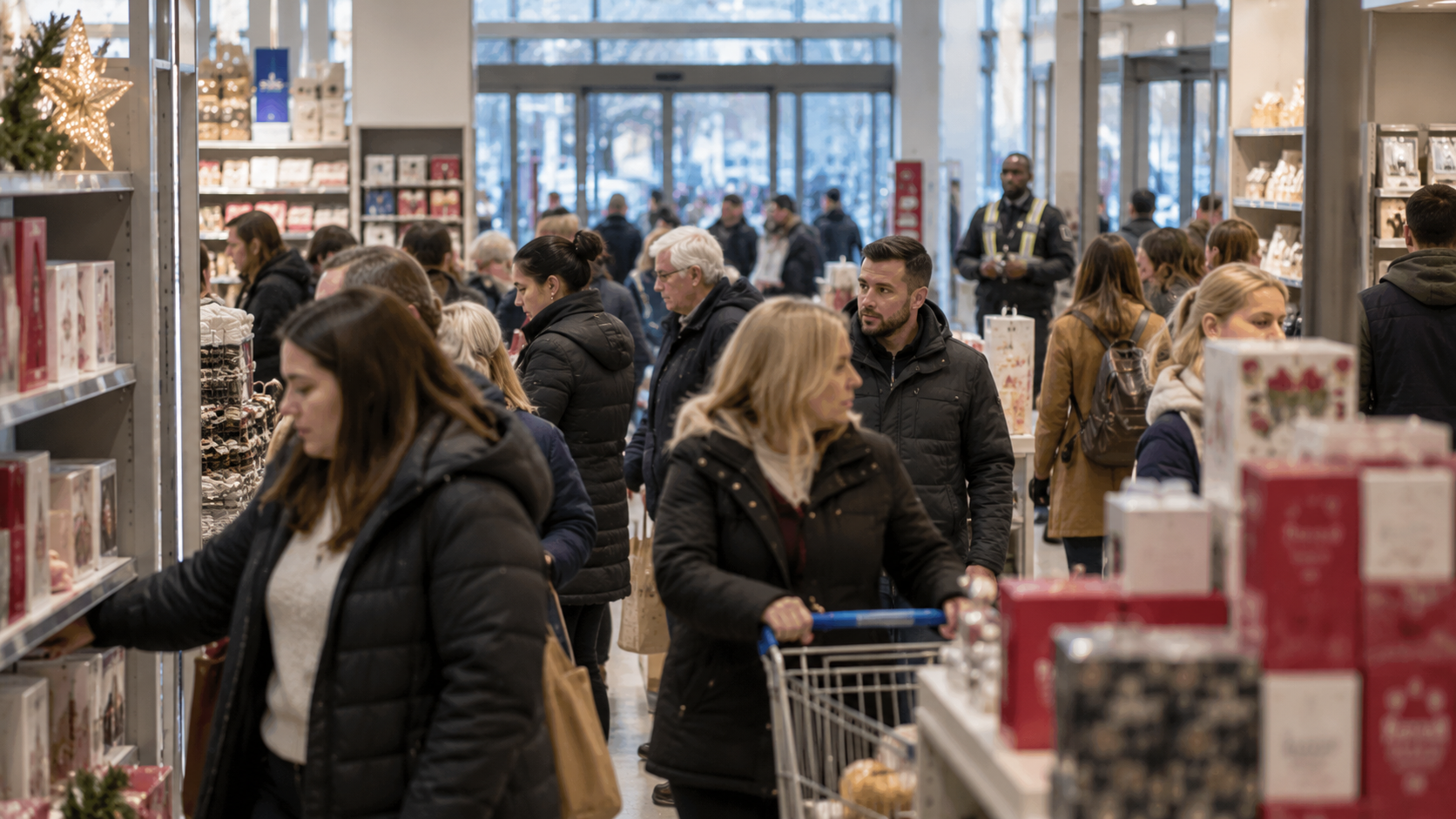
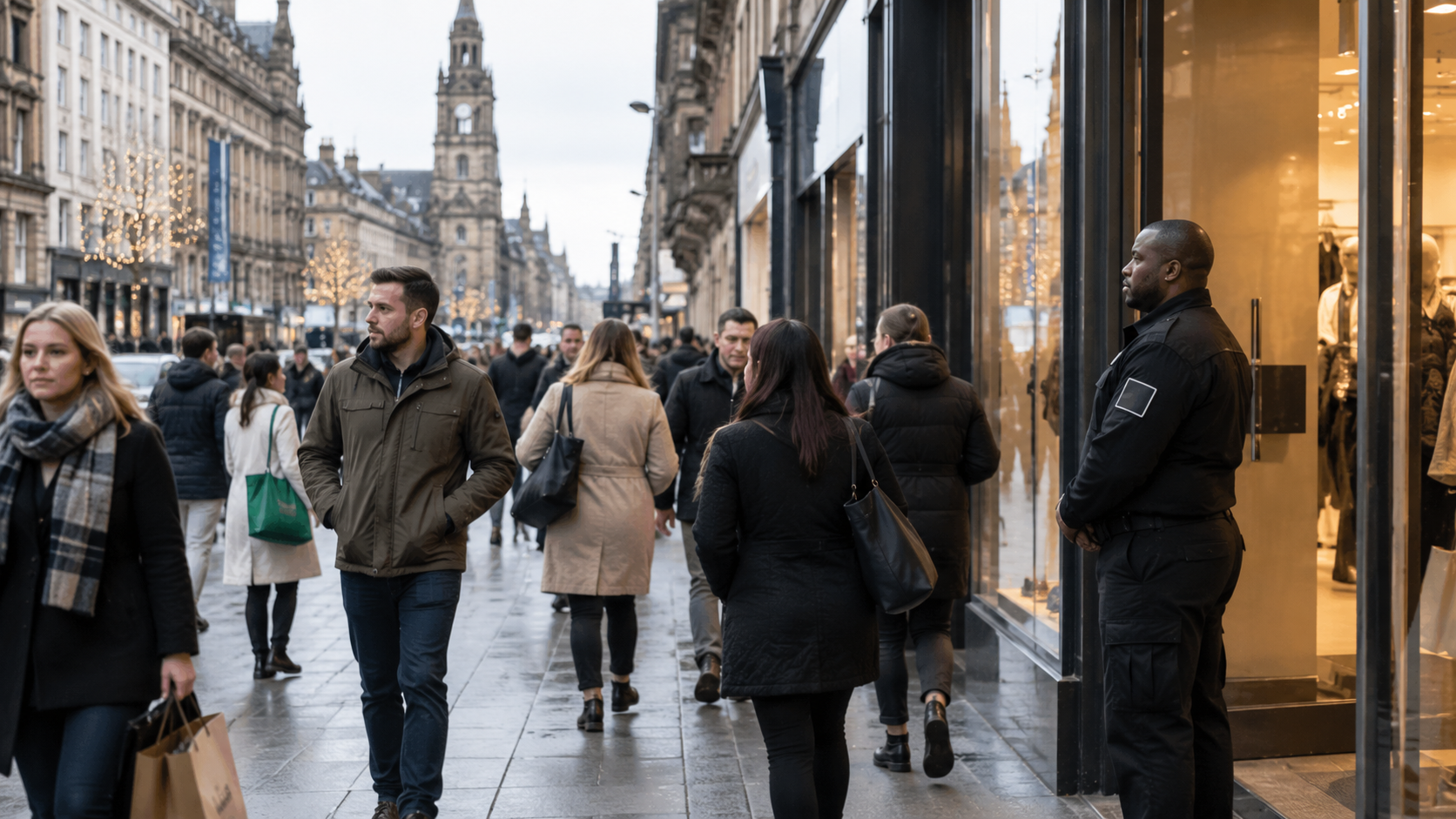
Retail environments across Greater Manchester operate in a uniquely complex risk landscape. Large city-centre shopping districts, high-street clusters, retail parks, and transport-linked locations all experience different pressures shaped by footfall patterns, trading hours, and surrounding activity. In this environment, retail security is not simply about preventing theft; it plays a central role in protecting staff, customers, stock, and day-to-day operations.
Greater Manchester’s diverse business mix brings extended opening hours, evening economies, and high visitor turnover. These conditions increase exposure to opportunistic theft, organised retail crime, anti-social behaviour, and conflict incidents, particularly during peak trading periods and seasonal surges. Office for National Statistics data shows shoplifting is among the fastest-growing recorded offences nationally, a trend that is reflected across Greater Manchester’s retail centres. Static measures such as CCTV and alarms provide valuable oversight, but they cannot adapt in real time to changing conditions on the shop floor or in shared public spaces.
Retail security with a manned guarding presence introduces judgement, visibility, and immediate response into that equation. For business owners and operational leaders, this is less about reacting to crime statistics and more about managing risk, maintaining safe trading environments, and reducing disruption. In Greater Manchester, where retail sites often sit within busy urban ecosystems, effective retail security has become a practical component of operational continuity rather than a discretionary add-on.
Understanding Retail Security Basics in Greater Manchester
What Retail Security Means for Greater Manchester Businesses
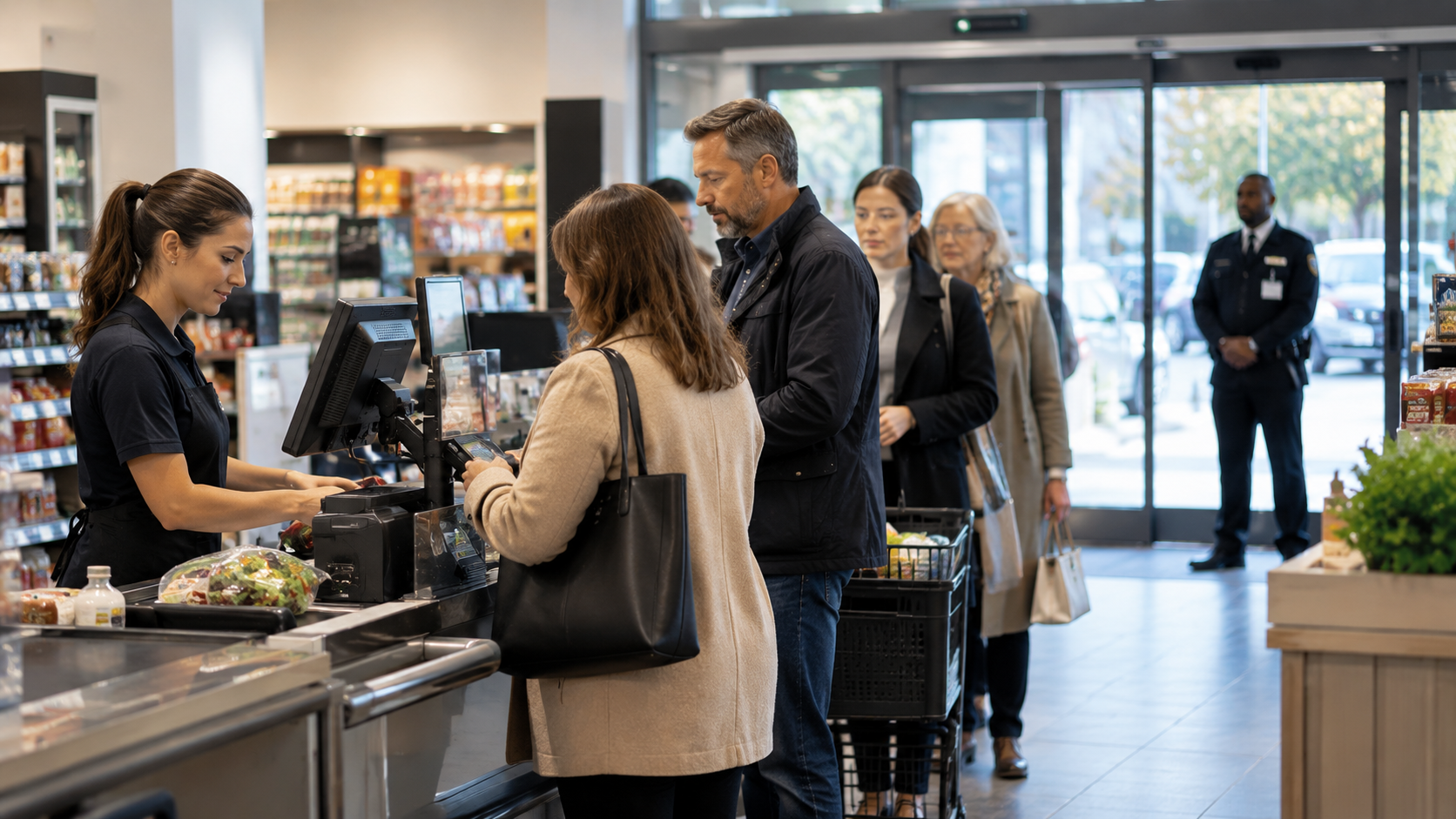
Retail security in Greater Manchester focuses on protecting people, stock, cash, and trading continuity within busy commercial environments. It covers visible in-store security, entrance control, loss-prevention activity, and incident management rather than passive surveillance alone. In city centres such as Manchester, Salford, and Stockport, retail security is as much about managing behaviour and footfall as it is about preventing theft.
How Greater Manchester’s Crime Profile Shapes Retail Risk
Retail crime across Greater Manchester is driven by opportunity and volume rather than isolated hotspots. High footfall areas, transport-linked locations, and mixed-use developments experience higher exposure to theft, abuse, and antisocial behaviour. Decision-makers benefit more from understanding when and how incidents occur than relying on headline crime figures alone.
Peak Risk Periods for Retail Environments
Retail security demand typically increases during predictable periods: late afternoons, evenings, weekends, paydays, and seasonal retail peaks. In Greater Manchester, proximity to nightlife zones and transport hubs means that risk often rises after standard shopping hours, particularly for convenience stores, shopping centres, and retail parks.
Retail-Specific Vulnerabilities in Warehousing and Stock Areas
Back-of-house areas such as stockrooms, loading bays, and shared service corridors present higher risk than customer-facing spaces. Poor lighting, shared access, and delivery schedules can create blind spots. Retail security planning must account for these transitional spaces, not just the shop floor.
Managing Anti-Social Behaviour in Retail Parks
Retail parks across Greater Manchester face challenges such as loitering, abuse of staff, and low-level disorder rather than organised theft alone. Effective retail security focuses on early intervention, visibility, and de-escalation to prevent minor issues from escalating into store closures or staff safety incidents.
Rising Retail Theft and Daytime Security Needs
Increased daytime shoplifting has shifted retail security away from purely evening coverage. Smaller stores and high-turnover retail formats now face repeated low-value theft that cumulatively impacts margins, stock accuracy, and insurance confidence.
Differences Between Daytime and Evening Retail Risks
Daytime risks tend to involve opportunistic theft, distraction techniques, and internal shrinkage. Evening risks shift towards staff abuse, intoxication-related incidents, and reduced visibility in car parks and access routes. Retail security must reflect this changing risk profile rather than applying uniform coverage.
Impact of Seasonal Events on Retail Security Demand
Large-scale events and seasonal surges increase pressure on retail sites across Greater Manchester. Sales periods, football fixtures, concerts, and city-wide events drive temporary footfall spikes that change normal risk patterns. Retail security planning needs flexibility during these periods, not permanent over-deployment.
Transport-Linked Retail Locations and Exposure
Retail sites near tram stops, train stations, and major bus routes experience faster customer turnover but also higher exposure to transient behaviour. Transport connectivity increases opportunity-driven incidents, making visible retail security a stabilising factor rather than a reactive measure.
Economic Activity and Retail Security Demand
Continued commercial growth across Greater Manchester has increased retail density and extended operating hours. As more businesses share space, entrances, and public areas, retail security plays a growing role in maintaining order, protecting staff confidence, and supporting uninterrupted trading.
Legal and Compliance Requirements for Retail Security in Greater Manchester
SIA Licensing Requirements for Retail Security Staff
Any individual carrying out licensable retail security activities in Greater Manchester must hold a valid SIA licence issued by the Security Industry Authority. This applies to roles involving store protection, loss prevention, access control, and customer-facing security duties. For retail businesses, the licence is not optional or procedural; it is a legal requirement that directly affects liability, insurance validity, and regulatory exposure.
Consequences of Using Unlicensed Retail Security Personnel
Using unlicensed security staff exposes retailers to serious legal and financial risk. Penalties can include fines, prosecution, and invalidation of insurance cover following an incident. In practice, insurers and local authorities may treat the use of unlicensed security as a failure of duty of care, particularly where staff or customers are harmed.
BS 7858 Vetting and Employment Screening Expectations
Beyond licensing, retail security staff are expected to be vetted in line with BS 7858, the UK standard for screening individuals working in security roles. For retail operators, this matters because vetting failures often surface only after incidents involving internal theft, collusion, or misuse of access privileges.
DBS Checks in Retail Security Contexts
DBS checks are not legally mandatory for all retail security roles, but they are widely expected in higher-risk environments. Retailers operating late hours, handling cash-intensive operations, or employing security in close contact with vulnerable individuals often face insurer or landlord expectations around DBS clearance.
Insurance Requirements When Using Retail Security
Retail businesses engaging security services are typically expected to ensure that providers carry appropriate public liability and employer’s liability insurance. From a retailer’s perspective, this protects against claims arising from injury, wrongful detention, or property damage linked to security activity on-site.
Data Protection and CCTV Compliance
Where retail security works alongside CCTV systems, compliance with UK GDPR and the Data Protection Act becomes critical. Retailers remain the data controllers in most cases, meaning responsibility for lawful use, signage, retention periods, and incident footage handling cannot be delegated away.
VAT Treatment of Retail Security Services
Retail security services are generally subject to VAT at the standard rate. For finance teams, this affects budgeting and contract comparisons, particularly when assessing short-term cover versus longer-term arrangements.
Event Licensing and Retail Security Responsibilities
Retail venues hosting promotional events, late openings, or seasonal activities may fall under local licensing conditions. In Greater Manchester, security planning is often scrutinised as part of crowd management, staff safety, and emergency access considerations.
Martyn’s Law and Future Retail Security Obligations
Martyn’s Law (the Protect Duty) is expected to introduce clearer expectations around security preparedness for publicly accessible venues. For larger retail environments such as shopping centres and flagship stores, this will likely formalise existing practices rather than create entirely new ones, but planning and documentation will become more important.
Working with Local Authorities and Police
Retail security operations in Greater Manchester often operate alongside local council teams, Business Crime Reduction Partnerships (BCRPs), and Greater Manchester Police. Information sharing, incident reporting, and consistent procedures support faster responses and reduce repeat incidents across retail zones.
Why Compliance Matters Beyond Legal Minimums
For retail businesses, legal compliance is not just about avoiding penalties. It influences insurance terms, landlord confidence, staff safety outcomes, and operational resilience. Well-structured retail security arrangements reduce friction during audits, claims, and investigations, allowing businesses to focus on trading rather than defence.
Costs, Contracts, and Deployment for Retail Security in Greater Manchester
Typical Cost Drivers for Retail Security
The cost of retail security in Greater Manchester is shaped by a combination of site risk, operating hours, and environment rather than headline crime figures alone. Key cost drivers include store size, footfall levels, cash handling, late-night trading, and proximity to transport hubs or nightlife zones. City-centre locations naturally attract higher costs due to density, crowd management needs, and extended operating hours.
City Centre vs Suburban Retail Costs
Retail premises in Manchester city centre, Trafford Centre zones, and transport-linked high streets generally face higher security costs than suburban retail parks or local shopping parades. This reflects increased exposure to theft, anti-social behaviour, and peak-time congestion rather than a difference in service quality. Suburban locations may see lower hourly rates, but often require longer coverage periods to manage evening visibility risks.
Deployment Timelines for Retail Security
Retail security deployment timelines vary based on urgency and compliance checks. For planned cover, mobilisation typically takes a short lead time to allow for site familiarisation, access protocols, and operational alignment. Urgent or temporary cover can be arranged more quickly, but retailers should expect higher short-term costs due to rapid scheduling and limited preparation time.
Common Contract Lengths in Retail Environments
Retail security contracts in Greater Manchester commonly run on rolling monthly terms or fixed agreements aligned to lease cycles, seasonal peaks, or refurbishment periods. Longer contracts often offer cost stability, while shorter arrangements provide flexibility for businesses navigating trading uncertainty or redevelopment plans.
Notice Periods and Flexibility
Standard notice periods typically range from a few weeks to one month, depending on contract structure. For retailers, clarity around notice terms is critical, particularly when store hours change, trading conditions fluctuate, or sites are closed temporarily.
Impact of Wage Pressures on Retail Security Costs
In 2025, wage increases for licensed retail security staff continue to influence pricing. Retailers should understand that sustained underpricing often leads to service inconsistency, which can increase risk exposure rather than reduce costs over time.
Inflation and Long-Term Contract Pricing
Inflation affects not only wages but also compliance, insurance, and operational overheads. Longer-term retail security contracts may include review clauses to balance cost predictability with changing economic conditions, helping businesses avoid sudden price shocks.
Insurance Implications of Retail Security Coverage
Effective retail security can support more favourable insurance outcomes by reducing claims frequency and demonstrating proactive risk management. Insurers increasingly look at security arrangements when assessing premiums, excess levels, and liability exposure for retail sites.
Procurement Act 2023 and Public-Sector Retail Sites
For publicly owned or council-managed retail spaces in Greater Manchester, the Procurement Act 2023 places greater emphasis on transparency, value, and risk justification. Retail operators within these environments may see more structured tendering and clearer expectations around compliance and reporting.
Why Cost Planning Matters for Retail Decision-Makers
Retail security costs should be viewed as part of operational resilience rather than a standalone expense. Well-planned contracts support continuity, protect revenue, and reduce the indirect costs of disruption, claims, and reputational damage.
Training, Operations, and Daily Duties in Greater Manchester Retail Security
Training Standards for Retail Security Officers
Retail security officers in Greater Manchester must meet nationally recognised licensing and vetting standards, but retail environments require additional practical competence. Officers are trained to manage theft prevention, customer conflict, staff protection, and crowd dynamics in busy public-facing spaces. For retailers, this matters because poorly trained security can escalate incidents, damage customer experience, or create liability exposure.
Shift Commencement and Site Familiarisation
At the start of each shift, retail security officers focus on understanding the current trading environment. This includes reviewing store activity, known risks, and any incidents from earlier shifts.
This early situational awareness allows officers to align their presence with real-time conditions rather than following rigid routines.
Handover Processes and Continuity of Coverage
Effective shift handovers are essential in Greater Manchester’s extended retail hours. Officers exchange information on incidents, suspicious behaviour, delivery schedules, and temporary vulnerabilities.
For retailers, structured handovers reduce blind spots during peak trading transitions such as late afternoons, evenings, and weekend changeovers.
Patrol Patterns and Visibility
Retail security patrols are designed around deterrence and reassurance rather than fixed intervals. Patrol frequency increases during high-footfall periods, delivery windows, and known risk times.
This flexible approach is particularly important in city-centre locations and retail parks where static coverage alone cannot address moving risks.
Access Control and Internal Monitoring
Retail security officers monitor staff-only areas, stockrooms, loading bays, and internal access points. These zones are common pressure points for theft, unauthorised access, and safety incidents.
Consistent checks help protect stock integrity and support loss-prevention strategies without disrupting retail operations.
Incident Awareness and Response
Officers are trained to respond proportionately to alarms, disputes, or suspected theft, prioritising safety and de-escalation. Early-shift and late-evening incidents are handled with heightened awareness due to lower staffing levels and reduced visibility.
For businesses, this reduces the likelihood of incidents escalating into claims, injuries, or police involvement.
Documentation and Daily Reporting
Retail security relies on accurate, concise reporting rather than volume paperwork. Officers maintain logs covering incidents, refusals, patrol observations, and safety issues.
These records support internal reviews, insurance discussions, and compliance evidence when incidents are challenged or reviewed later.
Fire Safety and Environmental Checks
During trading hours, officers remain alert to fire exits, obstruction risks, and evacuation routes. In car parks and external retail areas, lighting and visibility checks are especially important during evening hours.
These routine checks contribute to broader health and safety compliance without requiring dedicated safety staff on-site.
Communication and Supervision During Extended Hours
For late-night or 24/7 retail operations, officers maintain regular contact with supervisors or control rooms. This ensures escalation pathways are clear if incidents exceed on-site authority.
Retailers benefit from faster decision-making and consistent responses across multiple locations or shifts.
Secure-Down Procedures at Close of Trade
At the end of trading hours, retail security officers support controlled close-down processes. This includes monitoring customer exit, securing access points, and identifying any post-trade risks before handover or site closure.
A structured secure-down reduces overnight exposure and prepares the site for the next trading day.
Why Daily Operations Matter to Retail Decision-Makers
Retail security operations are effective when they support trading flow rather than interrupt it. Consistent routines, clear reporting, and visible presence help protect revenue, staff confidence, and customer trust.
For Greater Manchester retailers operating in busy, mixed-use environments, these daily practices form a critical layer of operational resilience.
Performance, Risks, and Operational Challenges in Greater Manchester Retail Security
Measuring Retail Security Performance
For retail businesses, security performance is not judged by incident volume alone. More meaningful indicators include reductions in repeat theft, fewer staff safety complaints, improved response times during incidents, and consistency of reporting.
In Greater Manchester’s busy retail environments, performance is also reflected in how well security presence supports smooth trading without disrupting customer flow.
Incident Reporting and Management Oversight
Clear, structured reporting is central to retail security effectiveness. Daily logs, incident records, and escalation notes provide visibility over patterns such as repeat offenders, peak-risk periods, and recurring access issues.
For decision-makers, this documentation supports insurance discussions, internal audits, and evidence-based adjustments to security coverage.
Weather-Related Operational Risks
Weather has a direct operational impact on retail security across Greater Manchester. Poor visibility, heavy rain, or icy conditions increase slip risks, reduce deterrence in car parks, and affect footfall behaviour.
Retail security teams adapt patrol focus during adverse weather, prioritising entrances, covered areas, and customer safety rather than routine patrol schedules.
Managing Fatigue and Shift-Related Risk
Extended trading hours, late-night openings, and seasonal peaks place pressure on security coverage. Fatigue can reduce situational awareness and reaction time if shifts are not structured properly.
For retailers, this is a risk management issue rather than a staffing one. Clear shift boundaries, realistic coverage planning, and appropriate supervision help maintain consistent service levels.
Mental Strain in Public-Facing Retail Environments
Retail security officers regularly deal with conflict, abuse, and high-pressure situations, particularly in city-centre locations and late-evening trading zones.
From a business perspective, unmanaged stress increases the likelihood of poor judgement, escalation, or inconsistent enforcement, all of which carry reputational and liability risk.
Environmental and Regulatory Constraints
Outdoor retail spaces such as car parks and retail parks are subject to environmental and safety regulations. Lighting, noise, and waste management rules can limit certain patrol activities or response methods.
Retail security planning must align with these constraints to remain compliant while still maintaining effective deterrence.
Balancing Deterrence with Customer Experience
One of the core challenges in retail security is maintaining visibility without creating a hostile or intimidating atmosphere. Overly aggressive enforcement can impact brand perception, while passive presence can reduce deterrence.
Effective retail security in Greater Manchester balances authority with approachability, particularly in high-footfall shopping centres and mixed-use developments.
Why These Challenges Matter to Retail Decision-Makers
Performance issues, operational risks, and compliance failures rarely appear as single events. They emerge gradually through gaps in oversight, reporting, or planning.
For Greater Manchester retailers, understanding these challenges helps ensure security investment delivers consistency, resilience, and measurable value rather than reactive coverage after incidents occur.
Technology and Future Trends in Greater Manchester Retail Security
Technology’s Role in Modern Retail Security
Retail security in Greater Manchester has shifted from reliance on physical presence alone to a blended model that combines people, systems, and data. Technology now supports earlier detection, faster response, and better decision-making, particularly in high-footfall city centres and large retail parks.
For retailers, the benefit is improved control without increasing disruption to customers or staff.
CCTV Integration with On-Site Retail Security
CCTV remains central to retail security, but its role has evolved. Cameras now support live monitoring, incident verification, and post-event review rather than passive recording.
When integrated with on-site security teams, CCTV helps officers prioritise attention, respond proportionately, and provide accurate evidence for investigations or insurance claims.
AI Analytics as a Support Tool
AI-enabled video analytics are increasingly used to identify unusual behaviour patterns such as loitering, repeated store entry, or crowd congestion.
In Greater Manchester retail environments, AI supports situational awareness but does not replace human judgement. Its value lies in highlighting risk early, allowing retail security teams to intervene calmly before incidents escalate.
Remote Monitoring and Control Rooms
Remote monitoring has become a standard complement to retail security, particularly for multi-site operators. Control rooms can monitor alarms, review camera feeds, and support on-site teams during incidents or quieter trading hours.
This layered approach improves resilience during late evenings, weekends, and periods of reduced staffing.
Limited Use of Drones in Retail Contexts
Drone use in retail security remains limited and situational. Where used, it is more relevant to large retail parks, car parks, or mixed-use developments rather than indoor shopping centres.
Drones act as an additional visibility tool during specific risk periods rather than a routine security solution.
Predictive Analytics and Risk Planning
Retailers increasingly use predictive analytics to assess risk based on historical incidents, trading patterns, and seasonal activity.
In Greater Manchester, this supports smarter deployment during peak shopping periods, major events, and transport disruptions, helping businesses align security coverage with real risk rather than fixed assumptions.
Post-COVID Changes in Retail Security Expectations
Post-pandemic retail environments place greater emphasis on crowd management, staff safety, and incident prevention rather than reactive enforcement.
Retail security now plays a wider role in reassurance, conflict de-escalation, and managing customer behaviour in busy or constrained spaces.
Sustainability and Green Security Practices
Environmental considerations are influencing retail security operations. Energy-efficient lighting, reduced vehicle patrols, and smarter camera usage help lower environmental impact while maintaining coverage.
For retailers, these practices align security planning with wider ESG and sustainability objectives.
Martyn’s Law and Future Retail Security Planning
Martyn’s Law will increase focus on preparedness, risk assessment, and proportionate security measures in publicly accessible spaces.
For Greater Manchester retailers, especially large shopping centres and high-footfall venues, this will reinforce the importance of trained personnel, clear procedures, and integrated technology rather than visible force.
Why Technology Matters for Retail Decision-Makers
Technology does not remove the need for retail security; it sharpens it. When used correctly, it improves consistency, accountability, and response quality.
For Greater Manchester businesses operating in dense, fast-moving retail environments, future-ready security is less about adopting every new tool and more about integrating the right ones to support safe, uninterrupted trading.
Conclusion: Making Retail Security Decisions in Greater Manchester
Retail security in Greater Manchester is shaped by dense urban centres, extended trading hours, and constant movement between retail, transport, and leisure spaces. From Manchester city centre and Trafford to Salford, Stockport, and surrounding boroughs, retail risk is rarely random. It follows footfall, timing, and opportunity.
For business decision-makers, effective retail security is not about reacting to isolated incidents. It is about understanding how local crime patterns intersect with store layout, staffing levels, opening hours, and insurance expectations. When planned properly, retail security supports continuity of trade, staff confidence, and regulatory compliance without disrupting the customer experience.
The right approach balances visible presence, clear procedures, and supportive technology. Costs, contracts, and coverage should reflect real exposure rather than assumptions. As regulatory expectations evolve and public-space risk planning becomes more structured, retailers that assess security early and proportionately are better placed to protect both operations and reputation.
Why Greater Manchester businesses need Retail Security is ultimately a question of risk management, not fear. Businesses that treat security as part of operational planning rather than an emergency response—are better equipped to trade confidently in a complex retail environment.
Frequently Asked Questions (FAQs)
1. When does retail security become necessary rather than optional?
Retail security is typically justified when stores experience repeat theft, staff abuse, high footfall, late trading hours, or proximity to transport hubs or nightlife areas. It becomes essential when disruption costs outweigh preventive investment.
2. Is retail security only needed in Manchester city centre?
No. While city-centre locations face crowd-related risks, suburban retail parks and high streets often experience organised shoplifting, vehicle-based theft, and lower evening visibility.
3. Can CCTV alone replace on-site retail security?
CCTV supports detection and evidence, but it cannot intervene, deter behaviour in real time, or manage incidents. Retail security works best when people and technology are integrated.
4. How does retail security help with insurance requirements?
Insurers often look for evidence of risk management, incident reporting, and loss prevention. Documented retail security measures can support claims handling and, in some cases, premium discussions.
5. Are retail security officers required to be SIA licensed?
Yes. Any officer performing licensable activities such as guarding premises or preventing unauthorised access must hold a valid SIA licence.
6. Does retail security affect customer experience?
When deployed correctly, retail security improves customer confidence and staff safety without being intrusive. Poorly planned security, however, can negatively affect brand perception.
7. How quickly can retail security be deployed in Greater Manchester?
Deployment times vary based on site complexity and compliance checks. Planned coverage is faster and more reliable than reactive, short-notice arrangements.
8. What role will Martyn’s Law play for retail businesses?
Martyn’s Law will increase emphasis on preparedness and proportionate security in publicly accessible spaces. Larger retail venues will need clearer risk assessments and response planning.
9. How should retailers assess whether current security is adequate?
Review incident trends, staff feedback, trading hours, and changes in surrounding activity. If risks have shifted but security has not, coverage may no longer be aligned with reality.